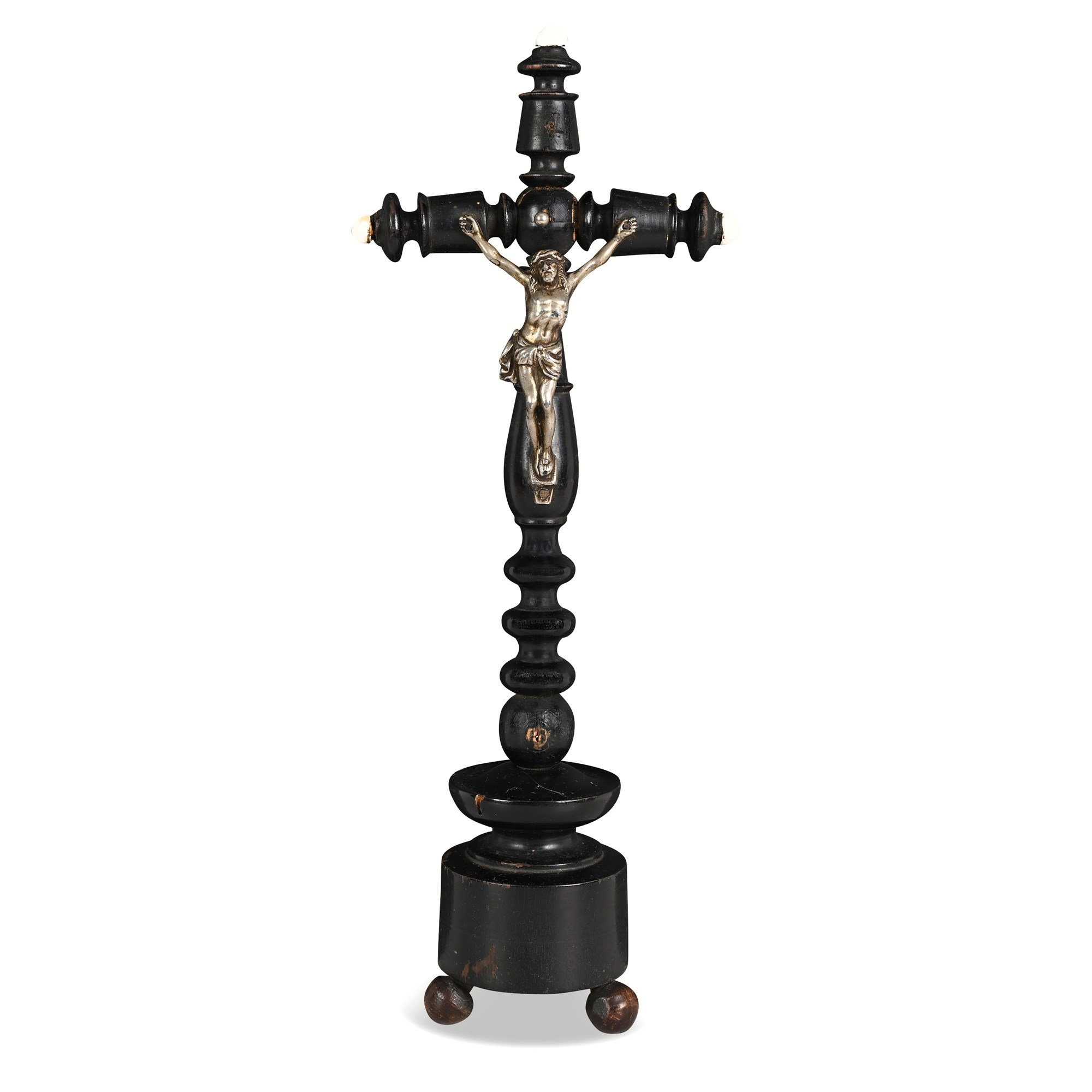
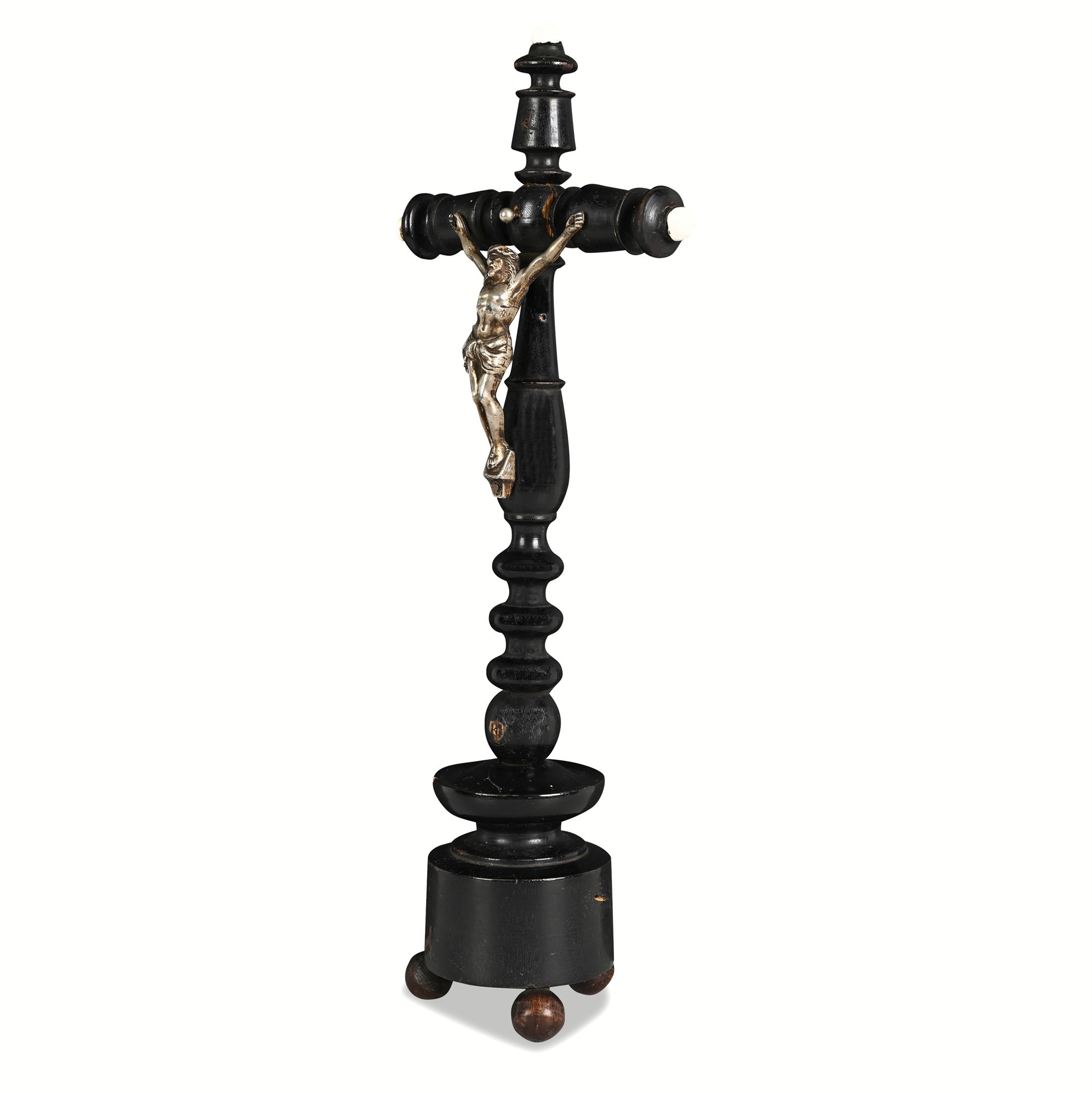
Late 19th C. Ebonized Altar Crucifix, Silvered Corpus & Porcelain Finials View Watchlist >
Seller Accepts Credit Cards
Payment and pickup instructions will be available on your invoice (under "My Account") at the conclusion of this auction.
Lot # F1122
System ID # 29822601
Start Date
End Date
2 Watching
Late 19th C. Ebonized Altar Crucifix, Silvered Corpus & Porcelain Finials
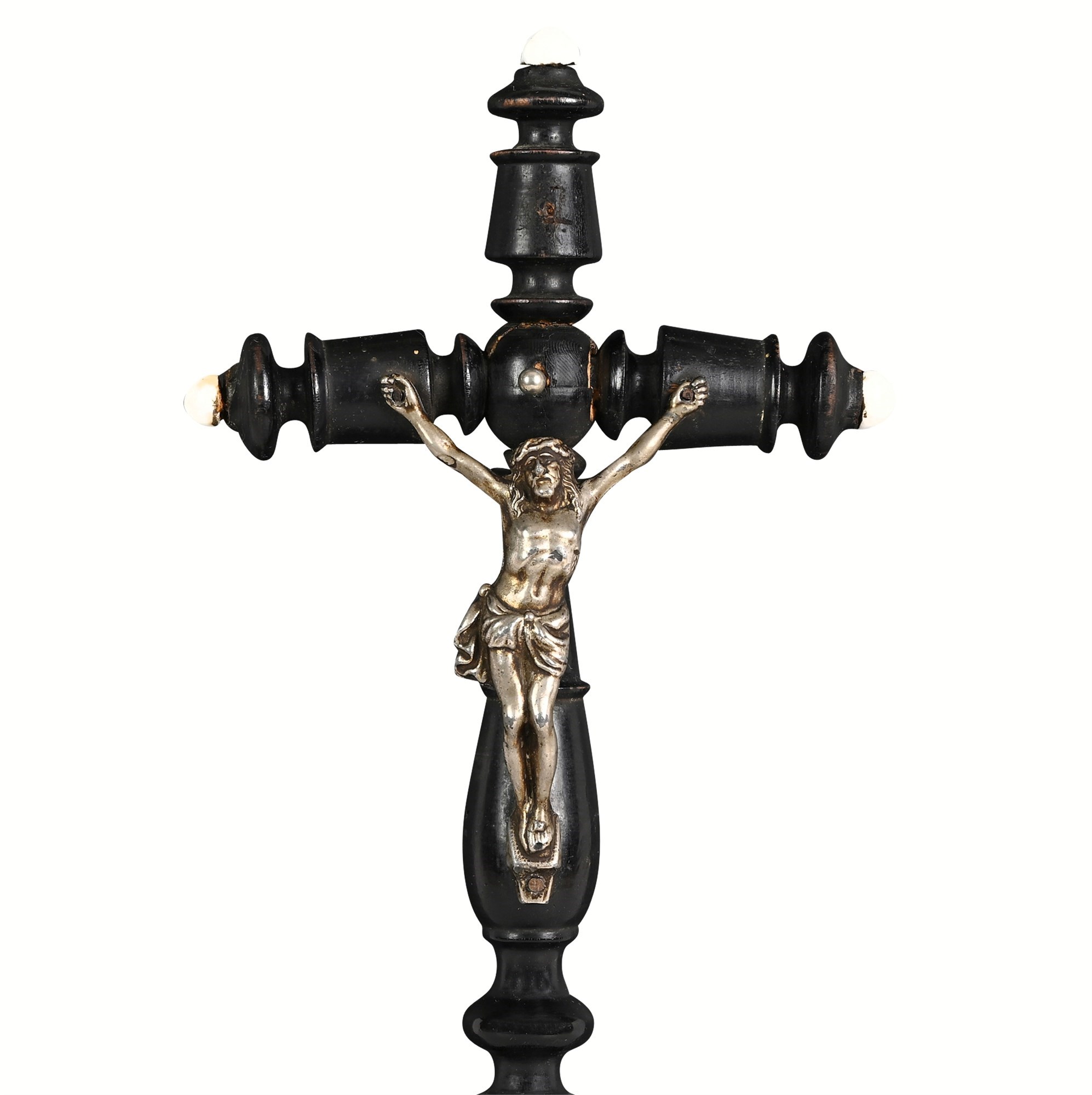
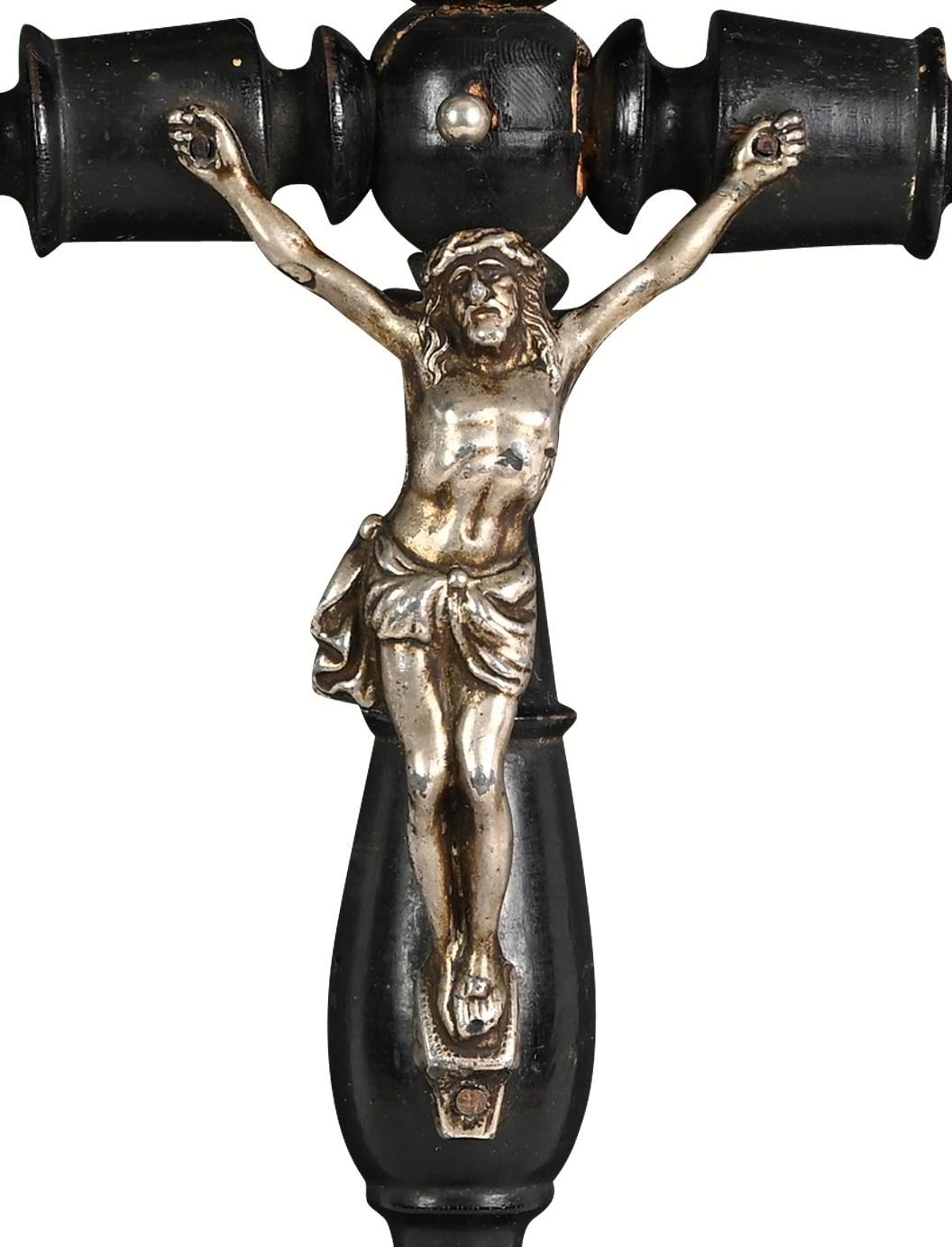
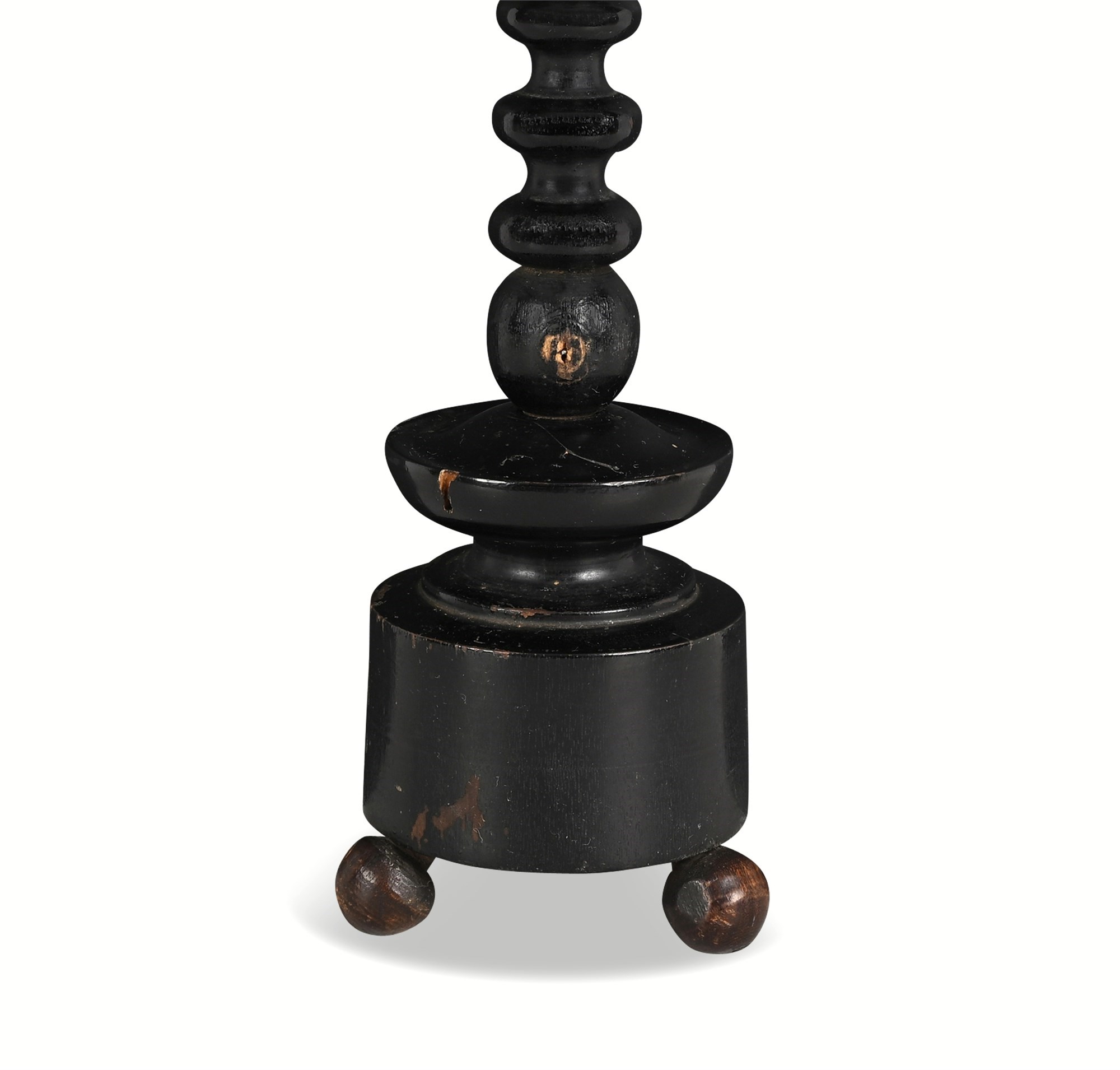
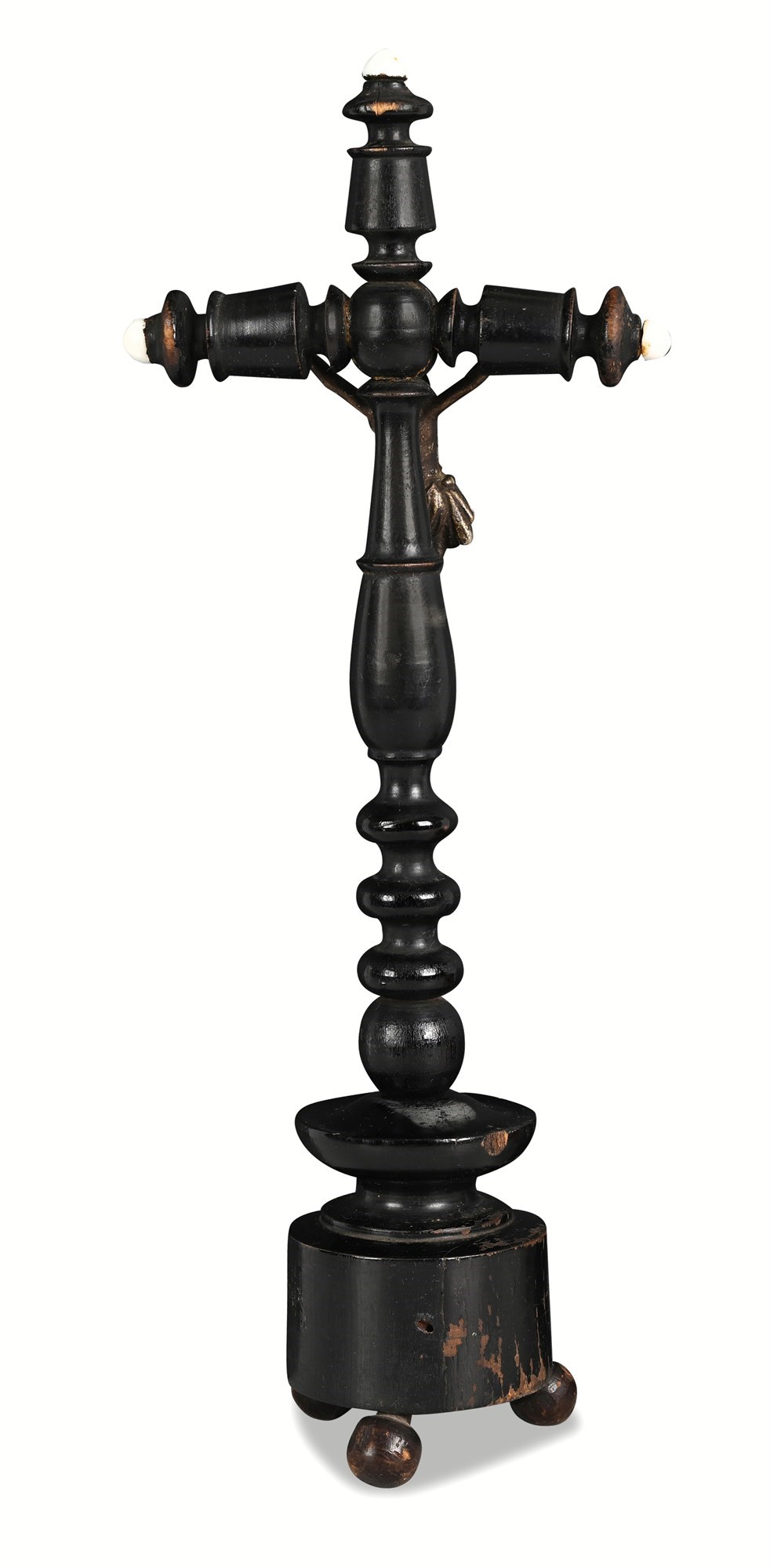
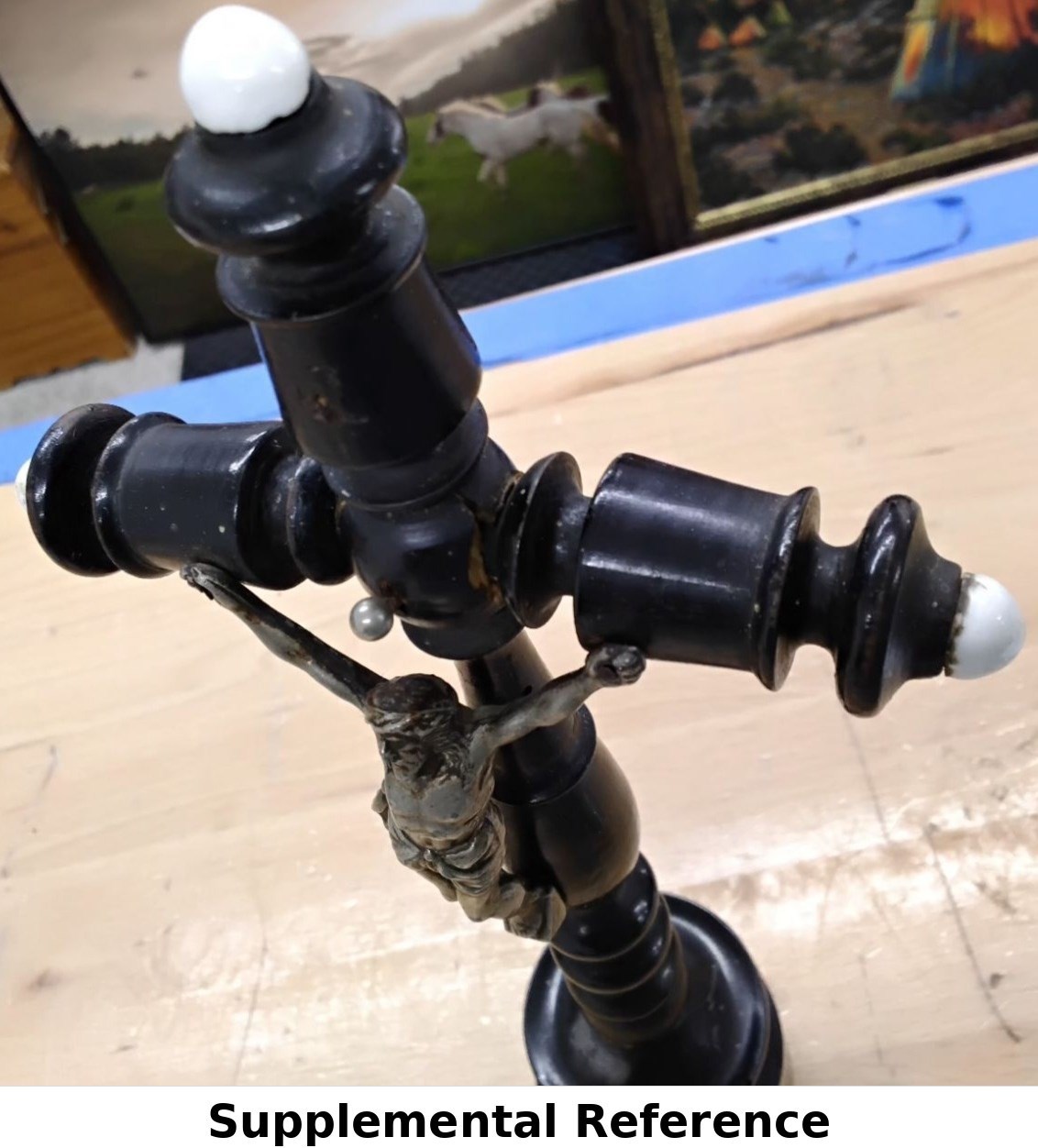
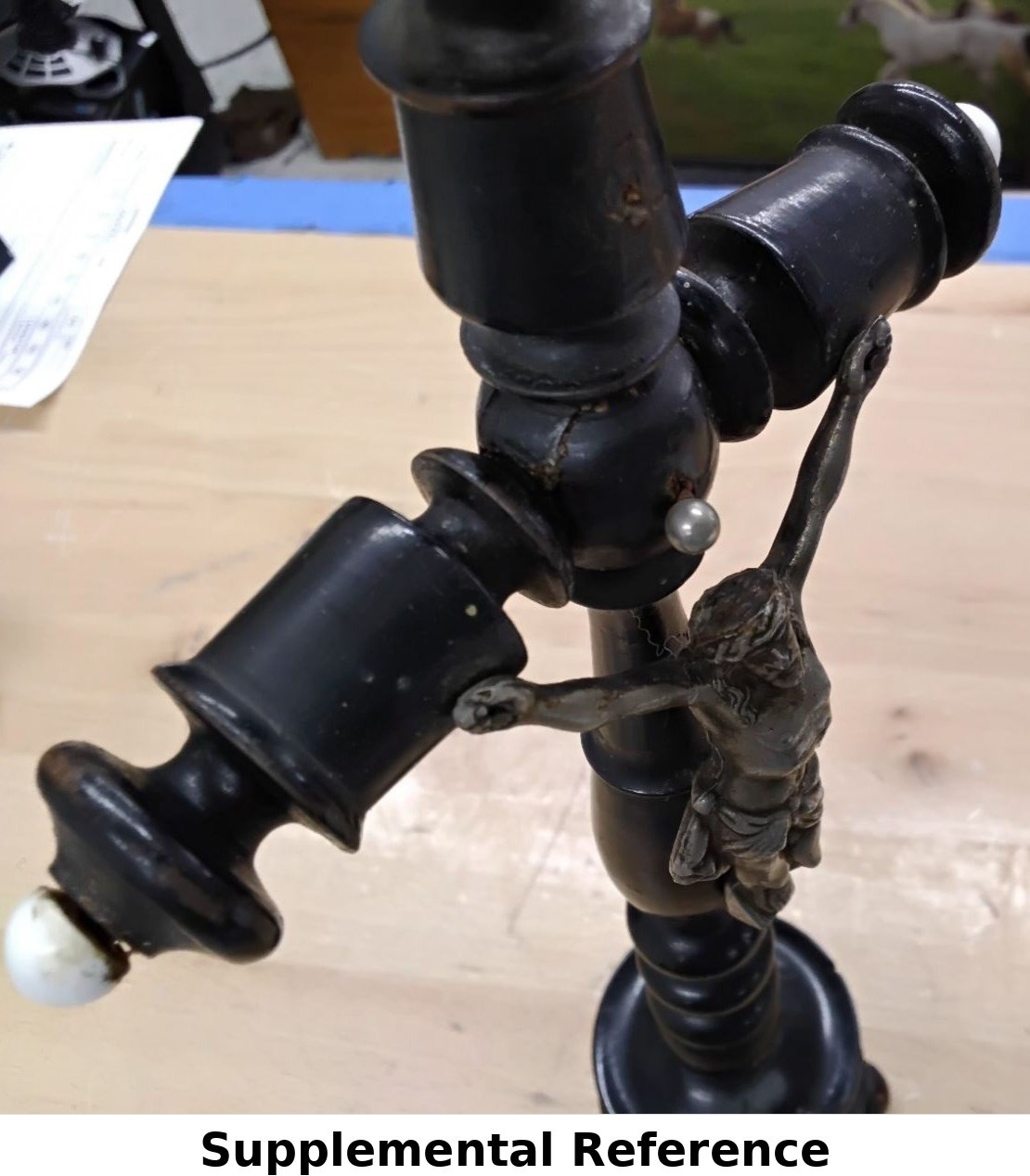
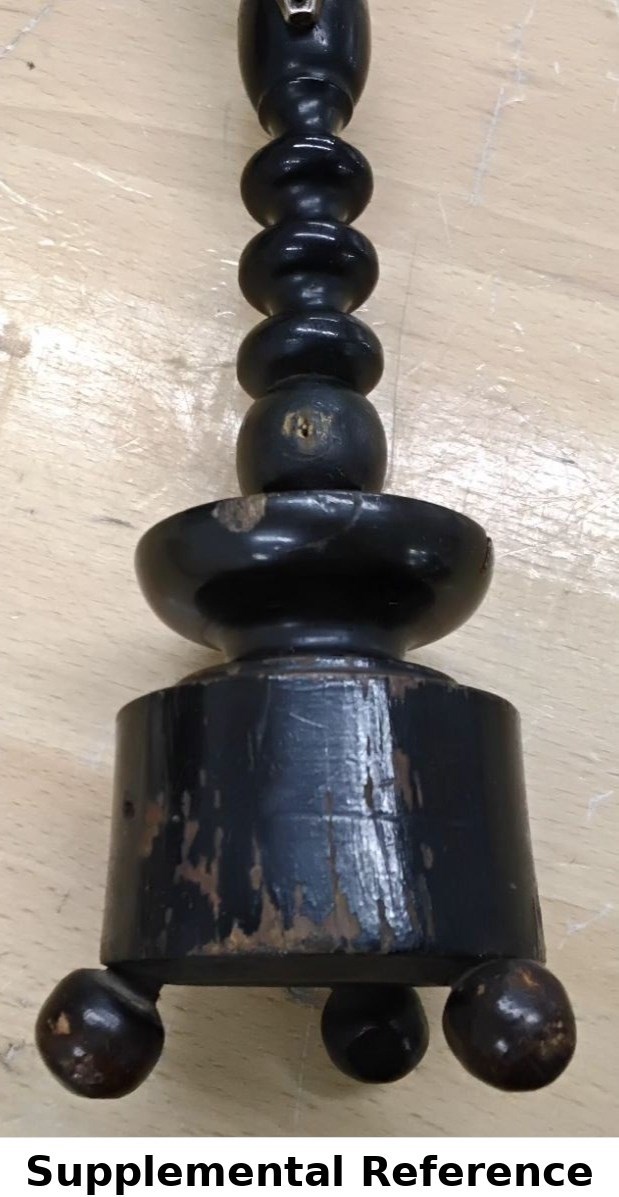
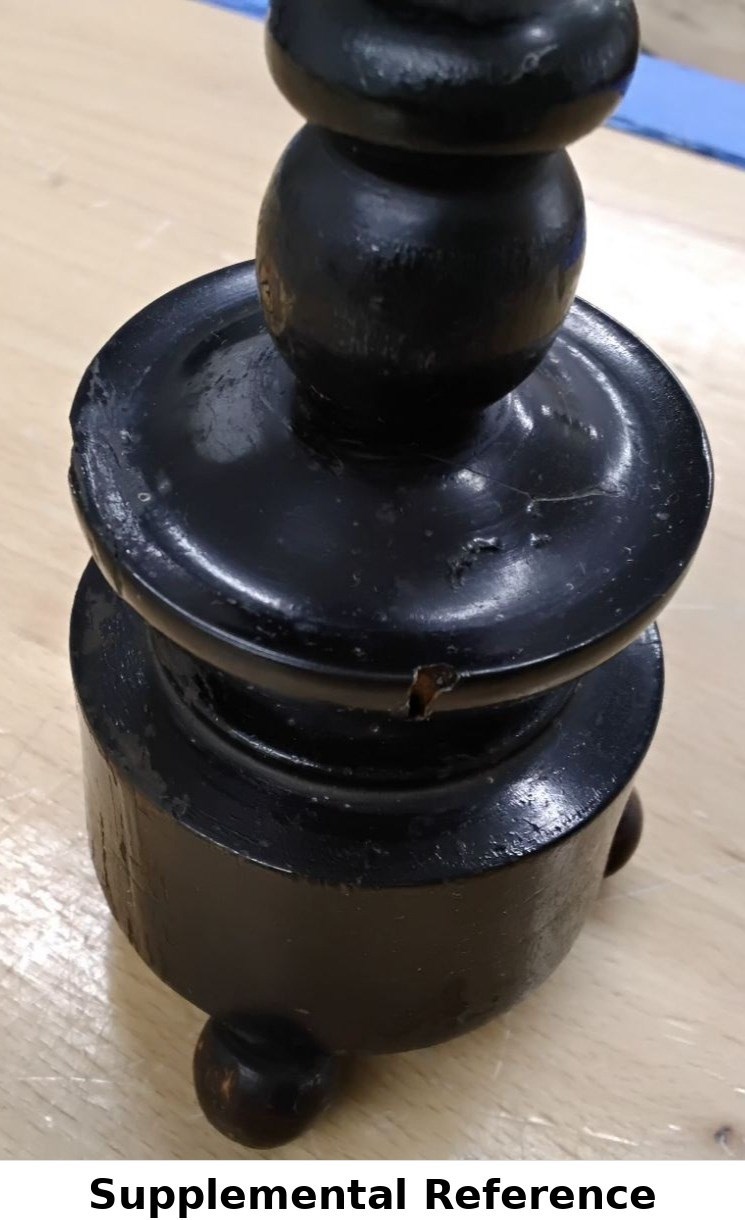
A standing home-altar crucifix assembled from elaborately turned and ebonized wood components in the Continental European devotional tradition of the late 19th century. The cruciform shaft, crossarms, and stepped columnar base are built up from stacked spool, ring, and baluster turnings — a labor-intensive vocabulary that distinguishes pieces made for the domestic sacred space from ordinary export ware. Each of the four arms terminates in a white porcelain ball finial, a finishing detail closely associated with Italian and Spanish religious goods production of the 1880s–1910s. The silvered non-ferrous metal corpus is cast with careful anatomical modeling: crown of thorns, flowing loincloth, raised arms, and a downturned head consistent with the Christus patiens iconographic type — the suffering Christ in repose, standard across Continental devotional objects of this era. The corpus is unmarked; the metal is non-ferrous but does not respond to a magnet, leaving the alloy composition open. The crucifix rises from a wide dish platform over a cylindrical drum base set on three turned ball feet.
Crucifixes of this turned-ebonized form were a staple of the late 19th-century Continental religious goods trade, produced by workshops in northern Italy, the Tyrol, and the Iberian Peninsula for parish supply houses and domestic chapels alike. The form aligns with objects catalogued under the Neo-Gothic devotional style — a revival movement that swept European ecclesiastical furnishing from the 1850s onward, emphasizing verticality, architectural ornament, and the drama of the medieval church transposed into the private home. The porcelain-tipped arm finials and the quality of the turning place this example a step above common utility pieces; comparable examples in the trade are catalogued variously as priests' ordination altar crucifixes and standing Corpus Christi Memento Mori objects — two overlapping devotional categories that share exactly this form and scale. The crucifix separates into two pieces at the join below the corpus for convenient transport and storage, a practical feature common to processional and altar objects intended to move between home, church, and feast-day use. A small element is absent from the front of the shaft just above the lower spool section, consistent in placement with a missing INRI tablet or small devotional plaque originally fixed to the upright.
CONDITION
Good overall with age-appropriate wear throughout. The ebonized wood surfaces show scratches, chipping, and finish loss with bare wood exposed at the base drum and along the high points of the turning; a crack is present at the base drum join. The silvered corpus shows oxidation and surface patina consistent with age. A small element — consistent with an INRI tablet or devotional plaque — is missing from the front of the shaft near the base.
DIMENSIONS / SPECIFICATIONS
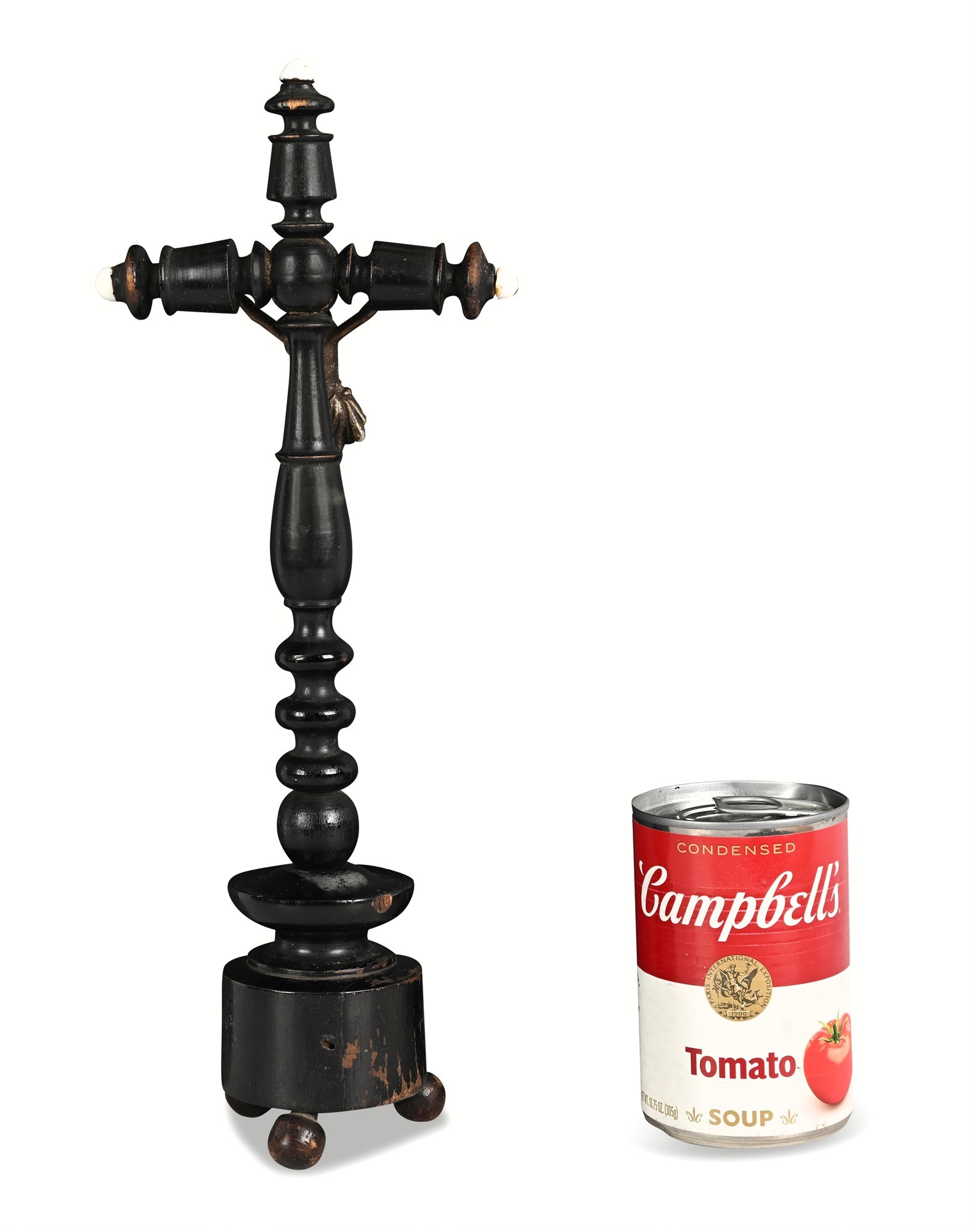
- Overall: 13" H × 5" W × 3" D
- Materials: Ebonized wood; white porcelain finials; unmarked silvered non-ferrous metal corpus (alloy composition unconfirmed; non-magnetic)
- Separates into two pieces for transport
- Campbell's Soup Can (4" H) Shown for Scale — Not Included