R.C. Gorman "Hopi" Hand-Signed Color Lithograph, 1983 — Ed. 123/200 View Watchlist >
Seller Accepts Credit Cards
Payment and pickup instructions will be available on your invoice (under "My Account") at the conclusion of this auction.
Lot # F1102
System ID # 29816532
Start Date
End Date
1 Watching
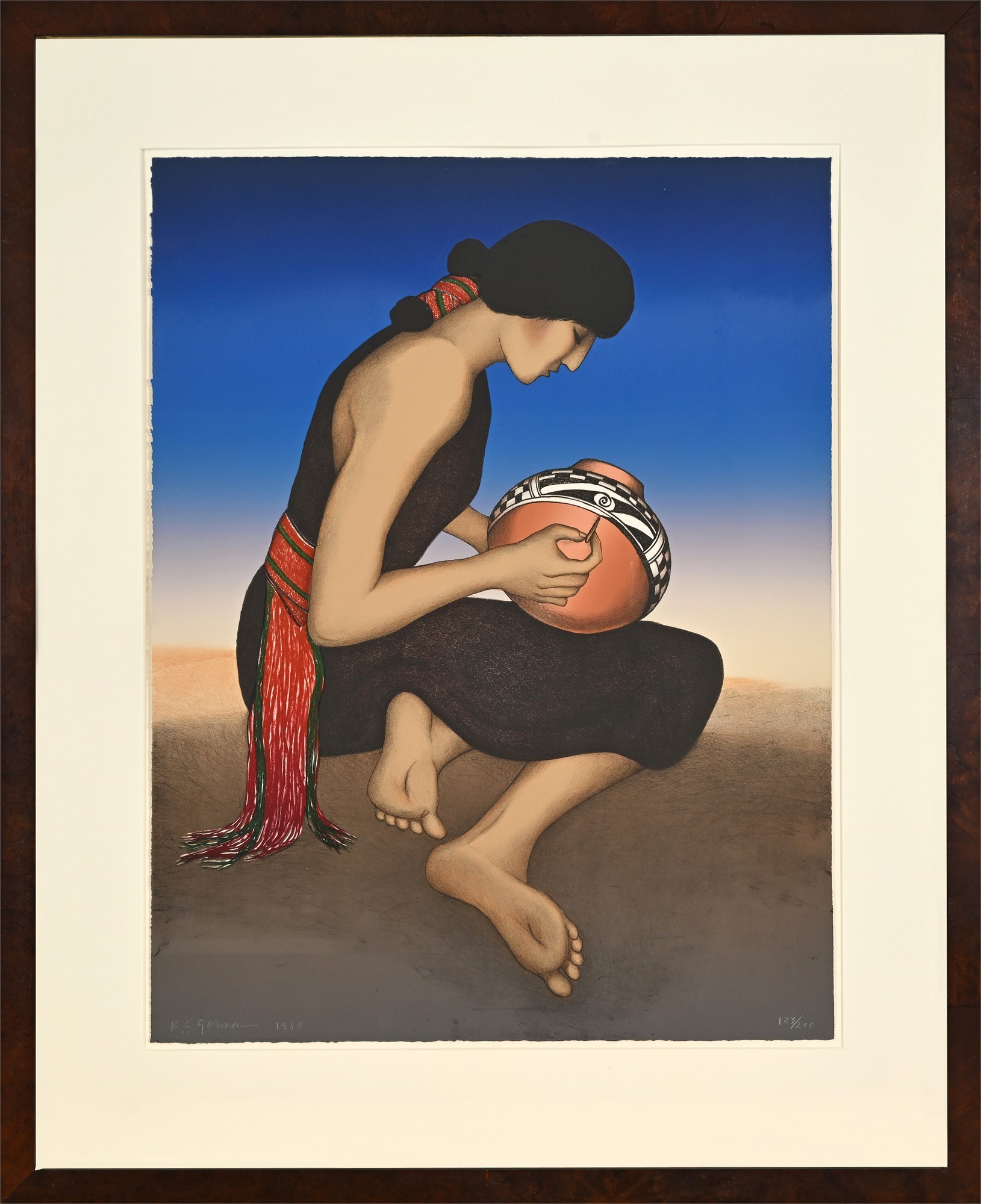
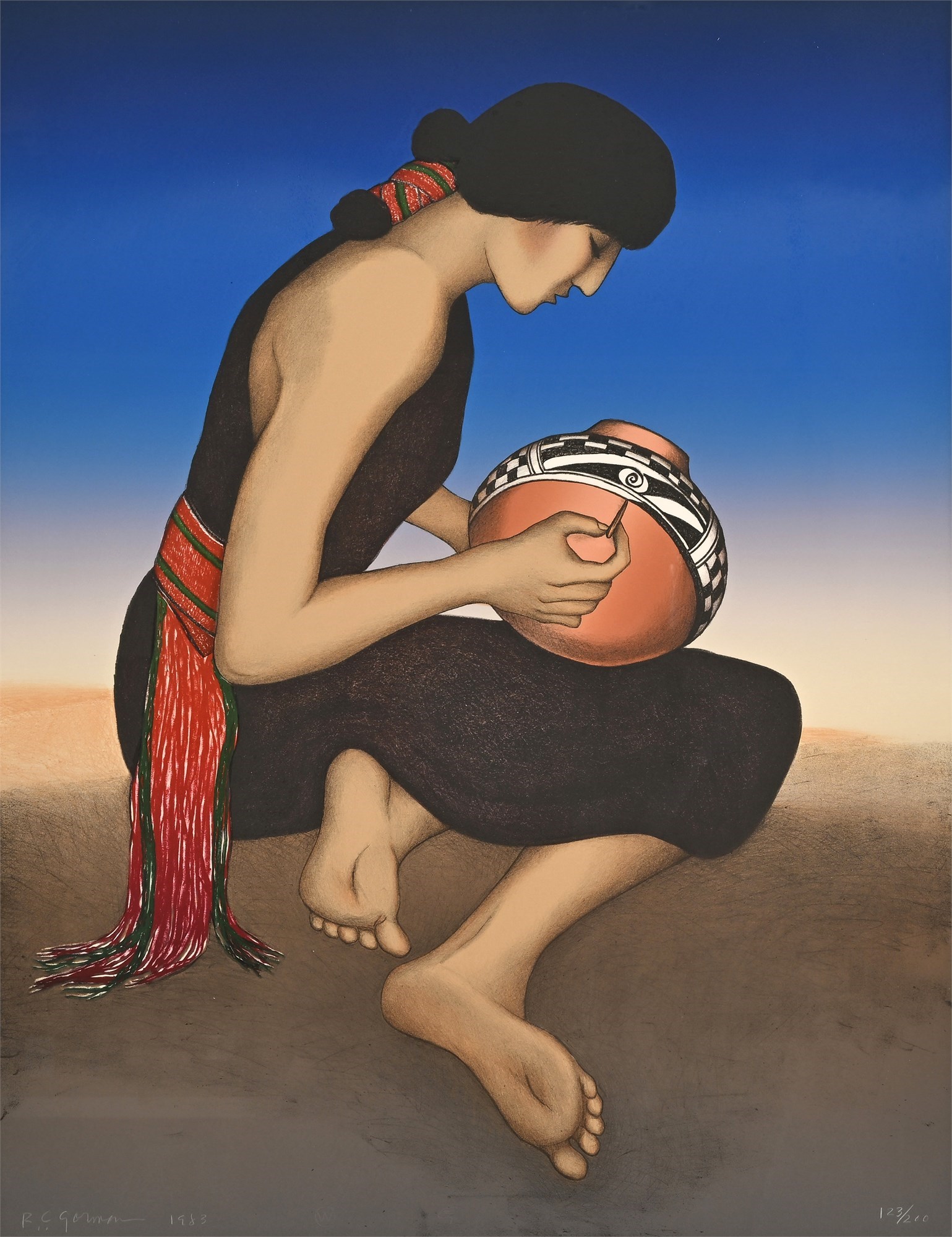
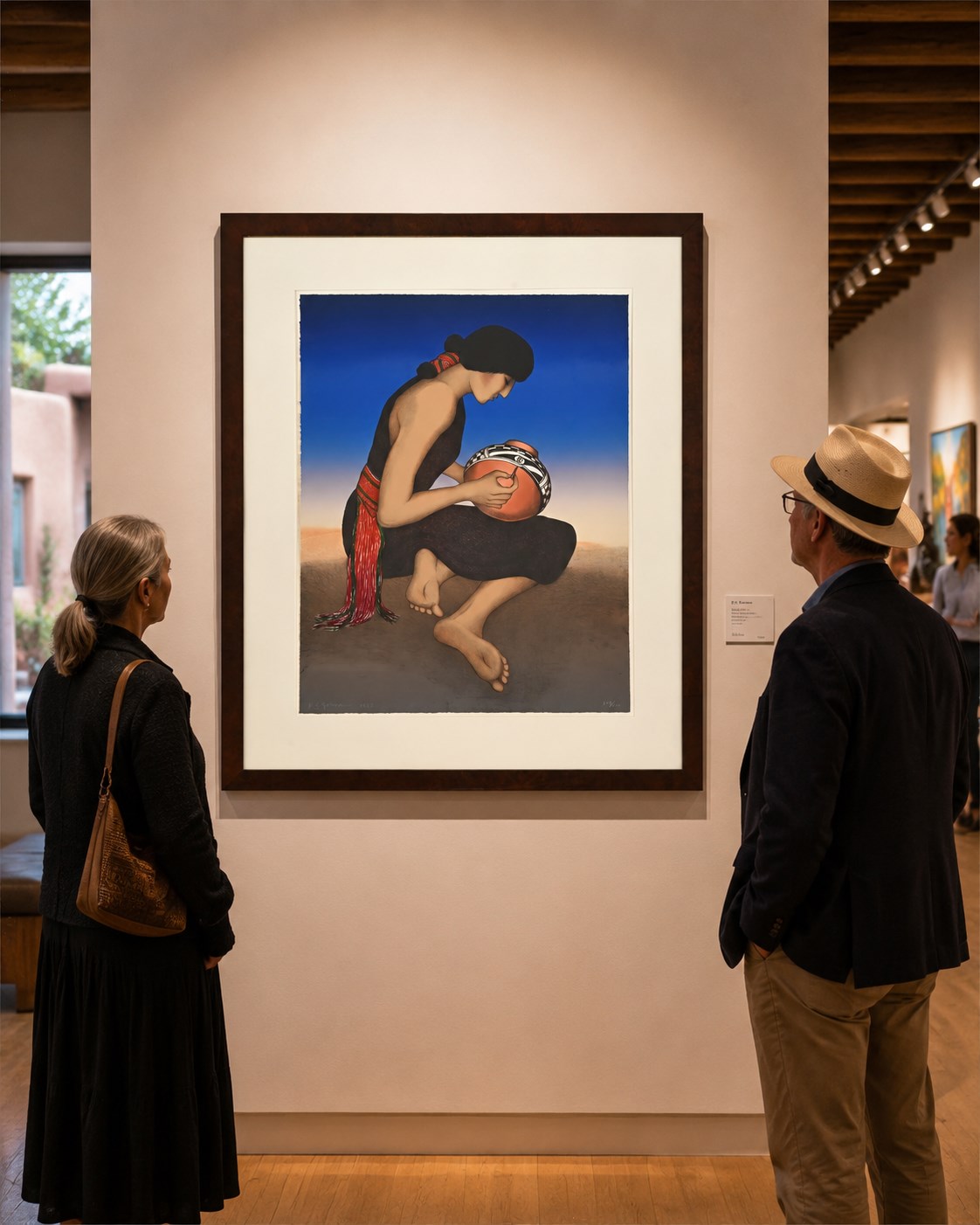
R.C. Gorman "Hopi" Hand-Signed Color Lithograph, 1983 — Ed. 123/200
She is completely absorbed. Head bowed, bare feet tucked beneath her, the potter holds an olla in her lap and touches a fine brush to its terracotta belly — the beginning stroke of the black-and-white banded design that will circle the vessel's shoulder. The long red and green sash pools in the foreground. The sky behind her moves from deep cobalt at the top to desert ochre at the horizon. Everything in the composition is still except that single point of contact between brush and clay.
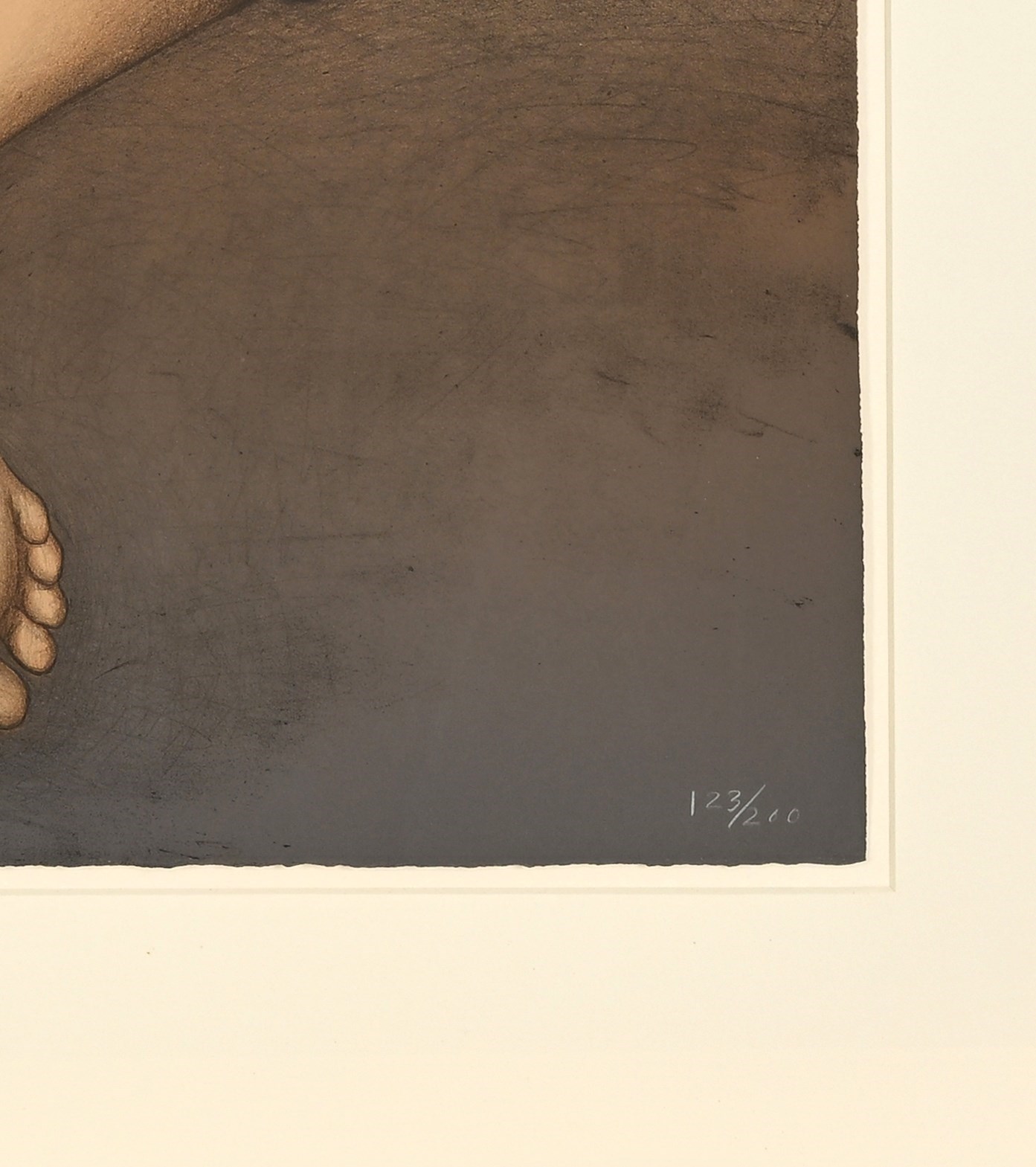
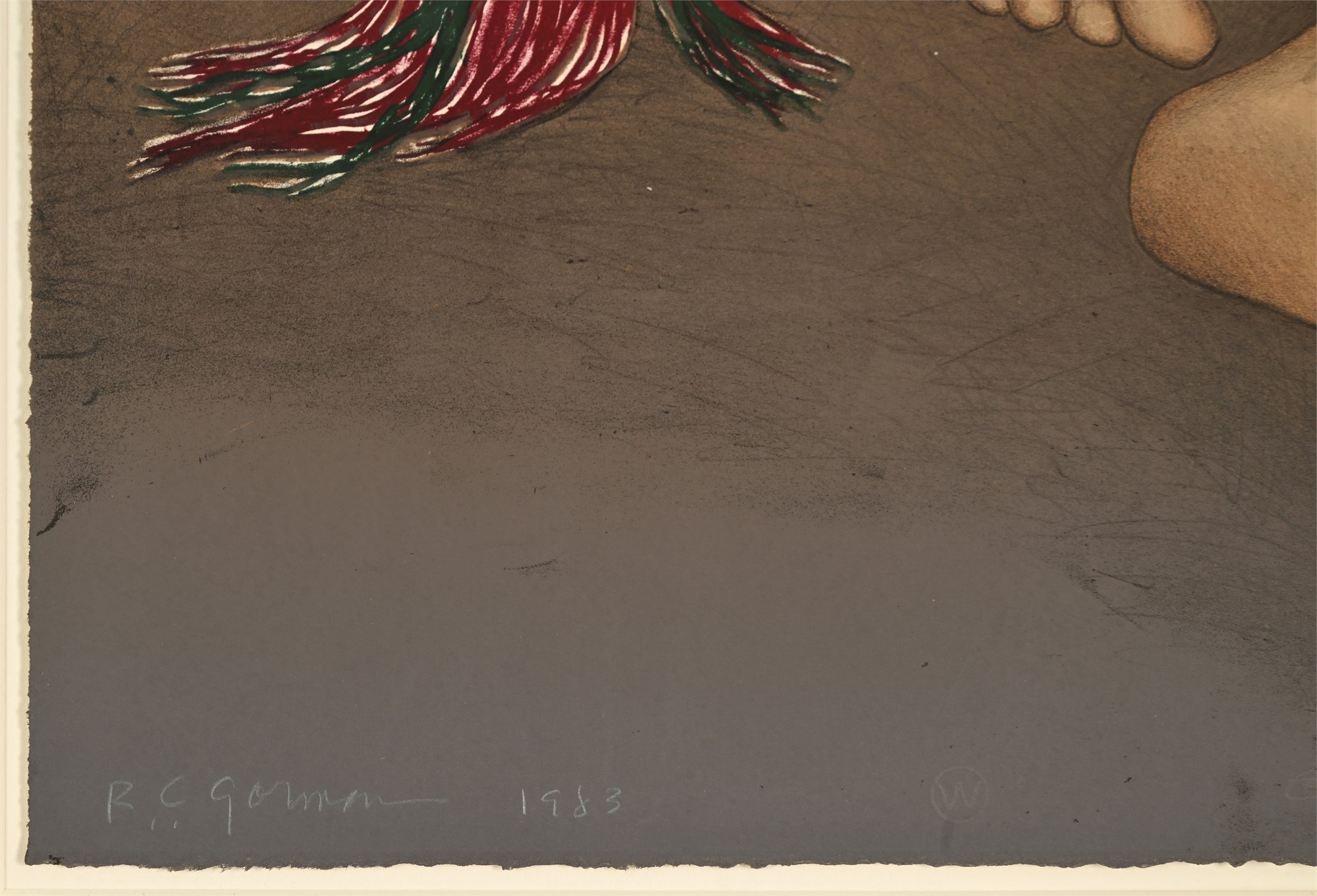
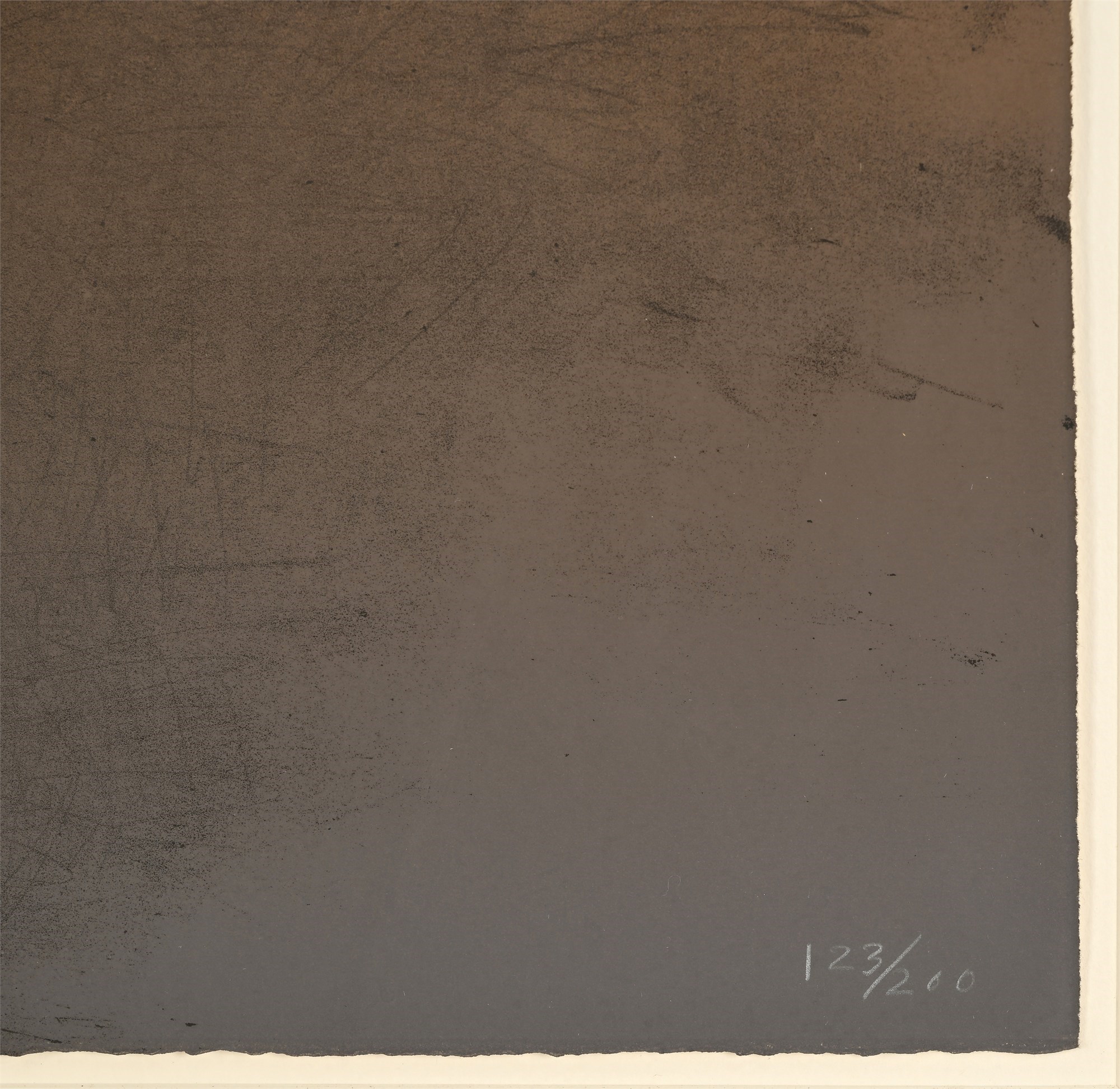
This 1983 color lithograph titled Hopi represents R.C. Gorman at the center of his mature practice — the monumental simplified figure, the warm-cool contrast between the terracotta pot and the blue ground, the iconic barefoot woman absorbed in traditional work. The sheet is pencil-signed lower left "R.C. Gorman 1983" with the artist's blindstamp at lower right, and numbered 123/200, placing this impression in the first third of the edition. Presented floated and framed under acrylic in a wood burl frame with white mat; overall presents well with no visible issues.
History
Rudolph Carl Gorman (Navajo, 1931–2005) was raised on the Navajo Nation near Chinle, Arizona, son of painter Carl Nelson Gorman — who had himself been among the original Navajo Code Talkers. R.C. studied art in San Francisco on a Navajo Tribal scholarship, and after time abroad settled in Taos, New Mexico in 1968, where his Navajo Gallery became one of the most prominent venues for Native American fine art in the country. In 1973, he became the first living Native American artist represented in the Metropolitan Museum of Art's landmark exhibition Masterworks of the Museum of the American Indian. The New York Times dubbed him "the Picasso of American Indian art," a characterization that, for better or worse, followed him for the rest of his career. His limited-edition lithographs of the 1970s and 1980s — produced through master printers and distributed nationally — carried his imagery to a far wider audience than gallery sales alone could reach, and they remain the category most actively traded in the secondary market. Hopi sits squarely in that peak decade.
Significance & Rarity
Gorman's pottery-painter subjects occupy a specific and valued place within his lithograph catalog: they fold two distinct art traditions into a single image — his own signature figurative style and the centuries-long Pueblo pottery tradition. The Hopi potter depicted here works in a recognizable Ancestral Puebloan geometric vocabulary, the black-and-white banded design on the olla consistent with historic Hopi and Sikyatki pottery patterning. An edition of 200 is not small, but demand for signed Gorman lithographs from the 1983–1985 period has been consistent at auction, with comparable signed, numbered examples in this size range regularly clearing $400–$800 and stronger subjects crossing higher. This impression — early in the edition, clean condition, original frame — is well-positioned.
CONDITION
Excellent. Floated and framed under acrylic; overall presents well with no visible issues to note. Sheet has not been examined out of frame, though the floated presentation allows examination of the deckle edges and lower margin inscriptions without removal. Signed, dated, and numbered in pencil along the lower edge, all reading clearly.
DIMENSIONS / SPECIFICATIONS
- Title: Hopi
- Year: 1983
- Medium: Lithograph in colors on paper
- Edition: 123 of 200
- Signature: Pencil, lower left — "R.C. Gorman 1983"; artist's blindstamp lower right
- Frame (overall): 40 3/4" H × 33 1/8" W × 3/4" D
- Visible (sight): 30 1/2" H × 23 1/2" W
- Frame: Wood burl, floated, matted under acrylic