Austin E. Cox / ALCOA Modernist Aluminum Chess Set in Teak Display Case, ©1962 View Watchlist >
Seller Accepts Credit Cards
Payment and pickup instructions will be available on your invoice (under "My Account") at the conclusion of this auction.
Lot # F960
System ID # 29617414
Start Date
End Date
1 Watching
Austin E. Cox / ALCOA Modernist Aluminum Chess Set in Teak Display Case, ©1962
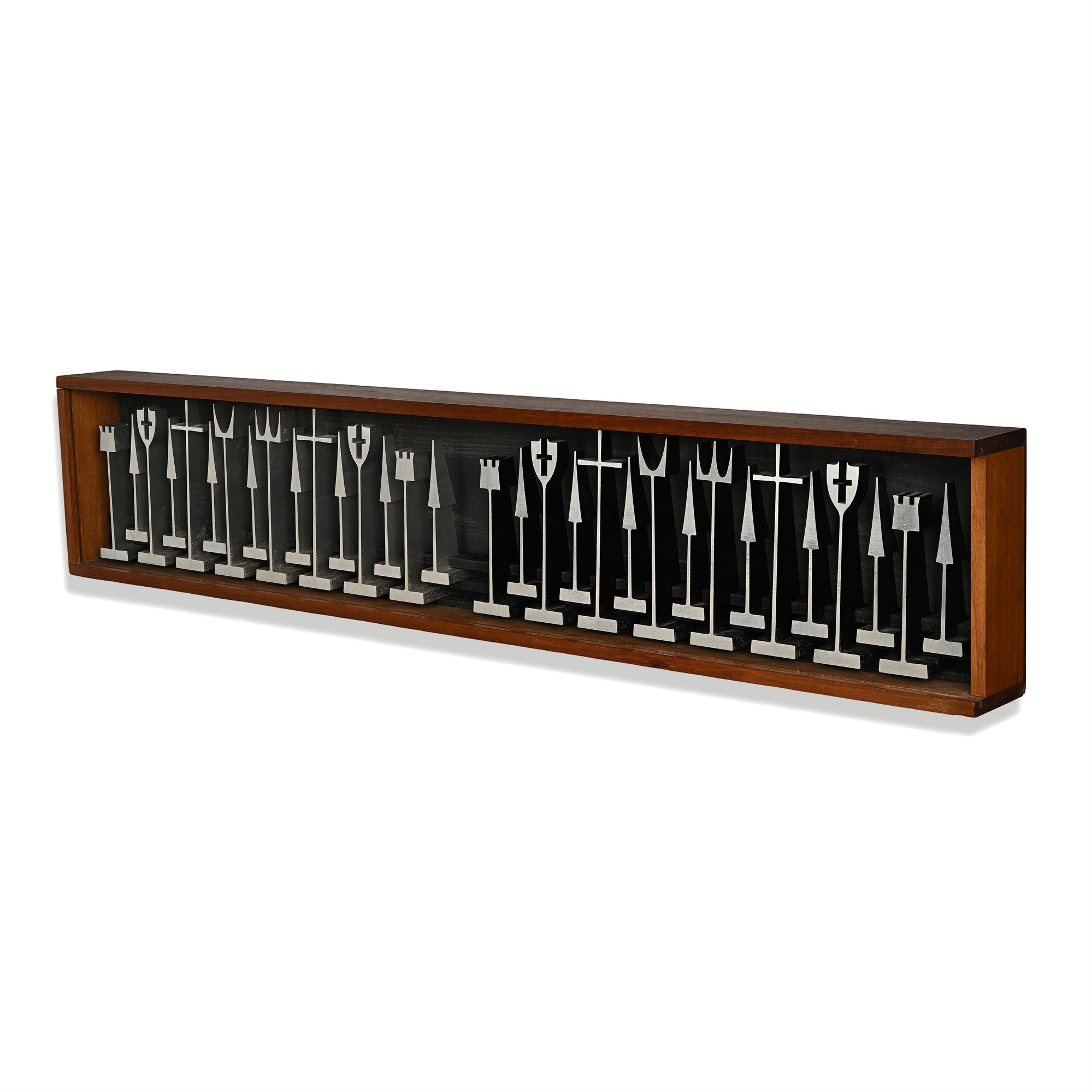
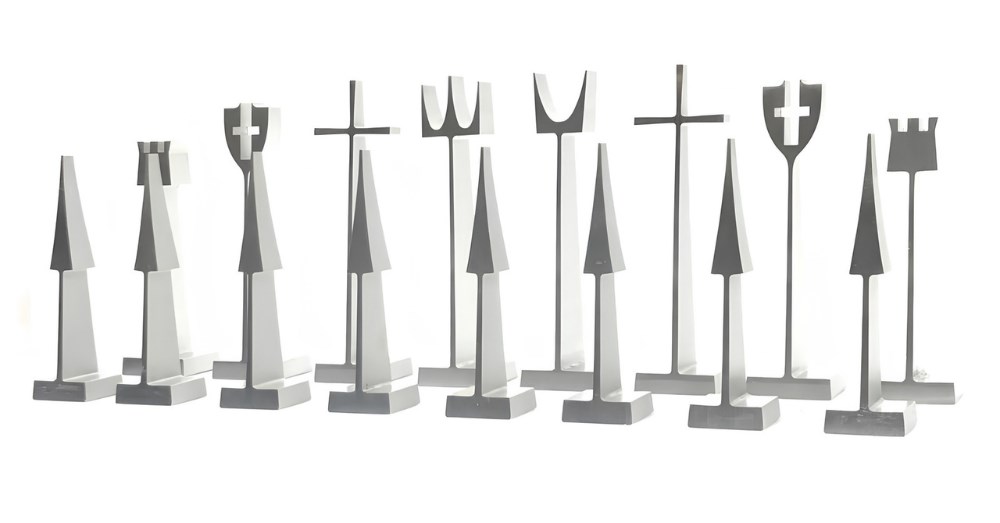
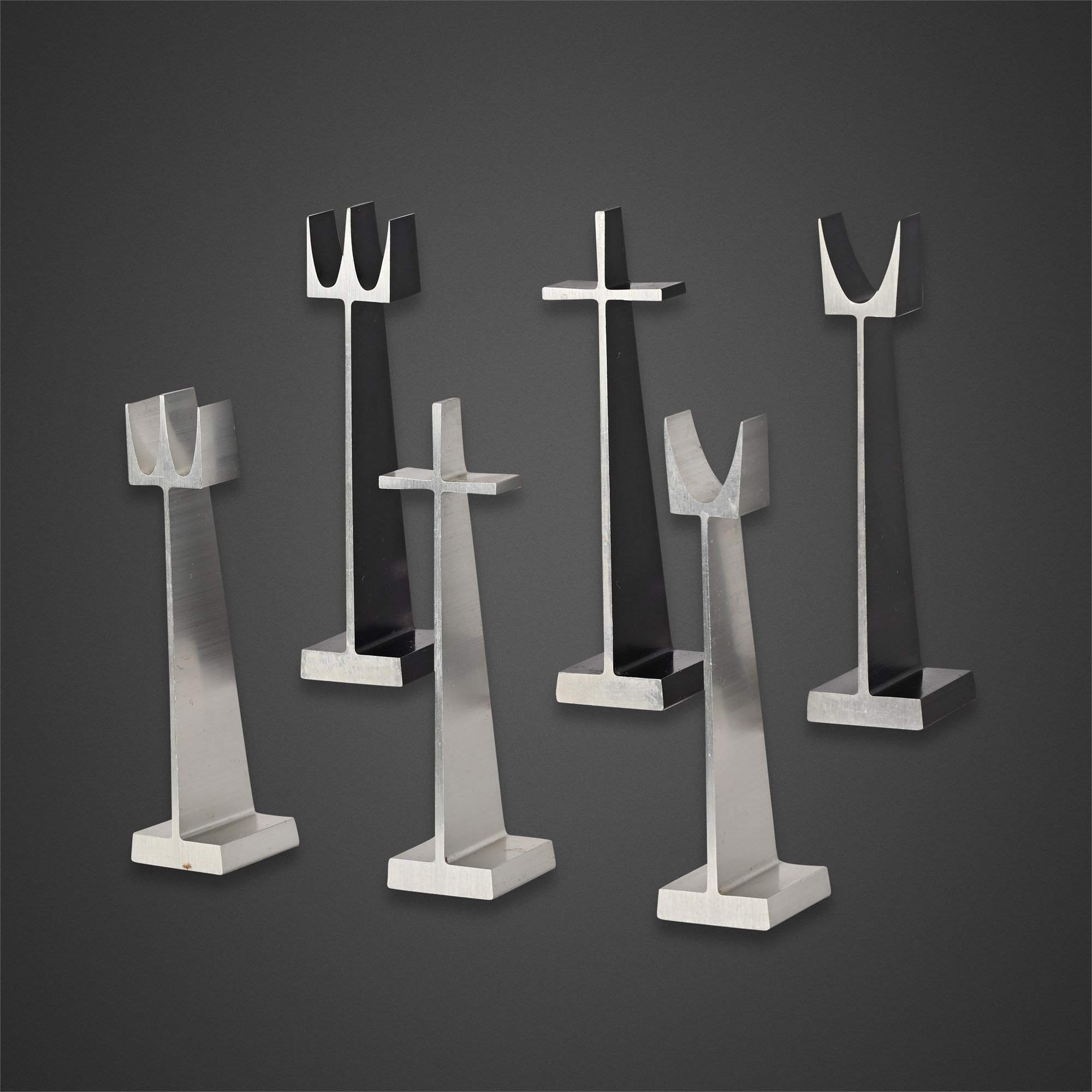
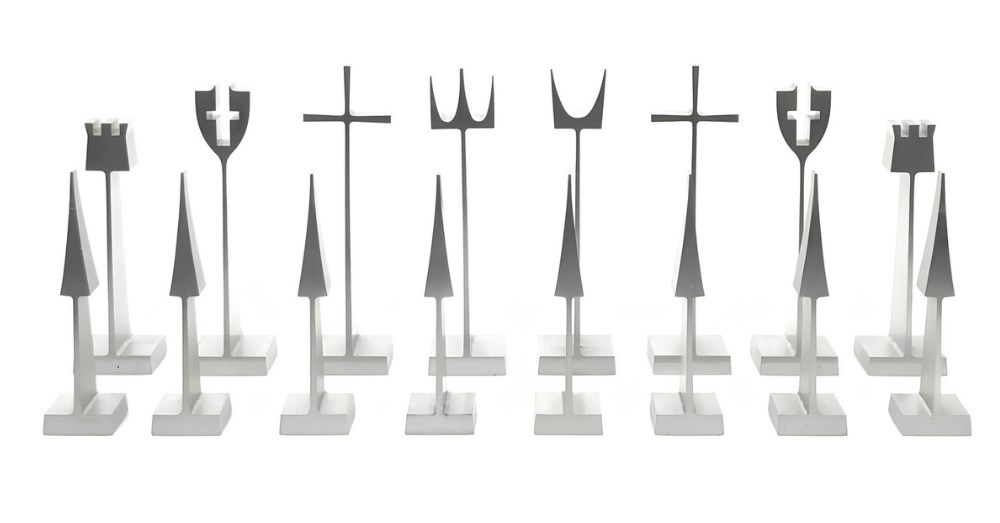
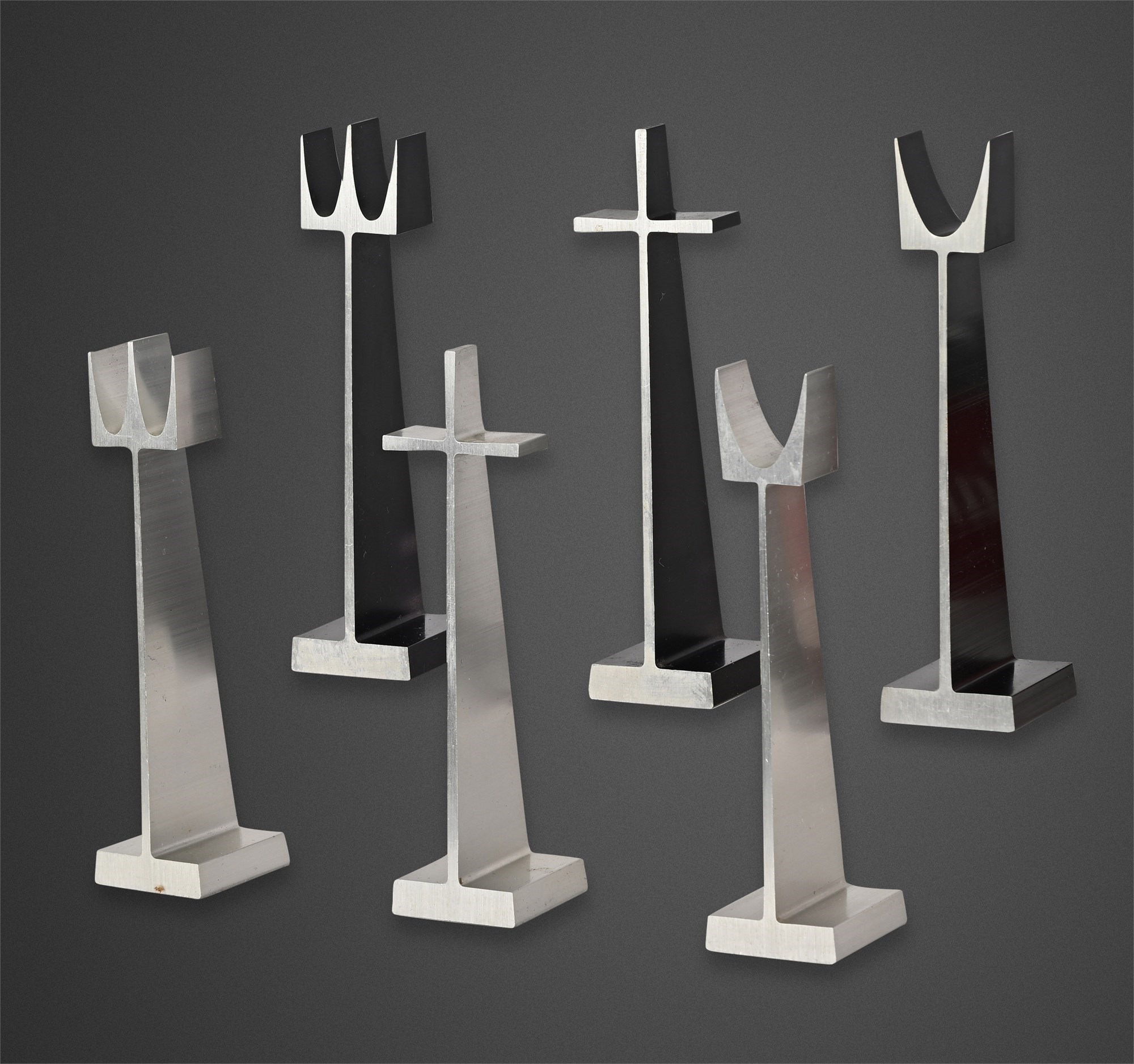
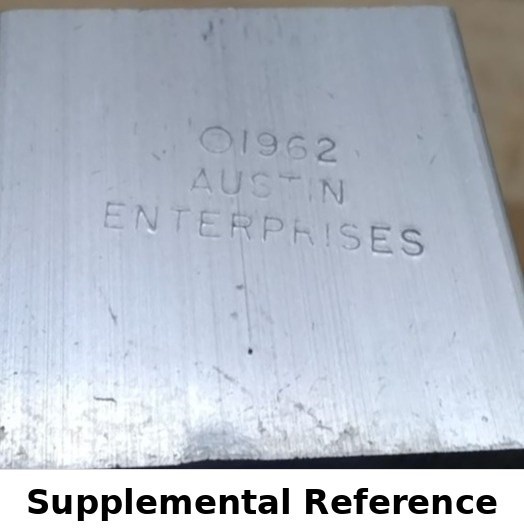
In 1962, the Aluminum Company of America (ALCOA) launched a marketing initiative to put their material in front of the executives and companies they most wanted to impress. The vehicle they chose was chess — a game associated with strategic intelligence — and the object they commissioned was one of the sharpest pieces of mid-century American industrial design to come out of a corporate gift program. Austin E. Cox, A.S.I.D. of Austin Enterprises, working with the advertising agency Ketchum, McLeod & Grove, designed a set of 32 pieces cut directly from aluminum bar stock: flat-plane, abstract, and completely legible in silhouette. The king is ALCOA's own corporate symbol. The queen wears a crenellated crown. The bishop carries a Latin cross. The knight becomes a forked shield. The rook battlements. The pawn tapers to a lance point. Every piece rises from the same architectural I-beam base, stamped on the underside: ©1962 AUSTIN ENTERPRISES.
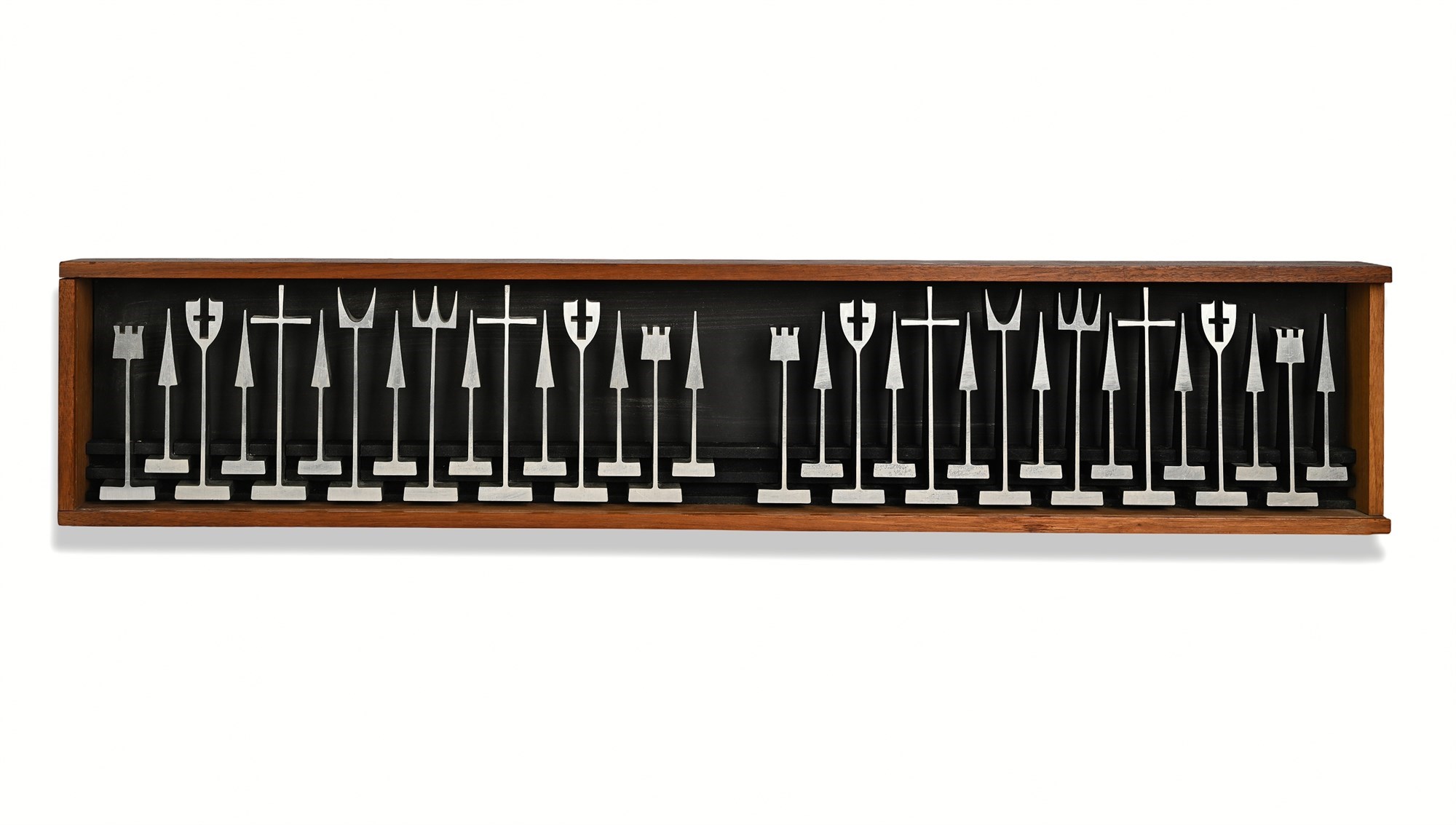
The two armies are visually differentiated with precision: the white side in natural brushed aluminum; the black side in black-anodized faces with natural aluminum edges — a two-tone treatment that reads as a deliberate graphic decision, not a finishing shortcut. The pieces were housed in a purpose-built open-face teak wall-mount cabinet with a slide-out plexiglass front and individual black-painted wooden slots that hold each piece upright and evenly spaced. ALCOA presented these sets to top clients with the expectation they would hang in executive offices — corporate provenance displayed as design object, the ALCOA DNA legible to anyone who knew what the king's silhouette represented. This example survives complete and intact: all 32 pieces, original cabinet, functioning plexiglass front.
History
The ALCOA chess set occupies a precise intersection of mid-century American corporate culture and the postwar studio-design movement. Brutalist chess design had a distinct moment in the late 1950s and early 1960s — Bauhaus-influenced designers on both sides of the Atlantic were interrogating the traditional Staunton form, asking what a chess piece actually needed to communicate and stripping everything else away. Cox arrived at one of the more coherent American answers: flat-plane aluminum silhouettes, each form reduced to its heraldic essence. That the client was ALCOA gave the exercise an additional layer of meaning — the king as corporate logo transforms a design exercise into a statement of institutional identity. The teak display cabinet, engineered as the set's permanent home rather than a storage box, confirms that the object was conceived from the outset as décor as much as game. The advertising agency's involvement explains the sophistication of the presentation strategy: this was a gift designed to be seen, and to keep working as a sales tool long after it left ALCOA's hands.
Significance & Rarity
Corporate gift programs of this caliber — original design commission, named designer, documented marketing context, institutional client — rarely survive as complete, attributed sets with original display cases intact. The ©1962 strike to the base of each piece provides a precise production date, and the collaboration between Cox, Austin Enterprises, and Ketchum, McLeod & Grove is documented. The king-as-ALCOA-logo detail gives this set a specificity that separates it from the broader mid-century brutalist chess genre: it is a design artifact with a traceable corporate narrative, not simply an anonymous modernist object. The teak cabinet's survival with functioning plexiglass front adds substantial display value. Collectors working the intersection of mid-century industrial design, American corporate history, and chess set collecting will recognize the convergence this lot represents.
CONDITION
Good overall and complete at 32 pieces with no remarkable damage. Minor scuffs to the plexiglass front and light surface handling marks to some aluminum pieces consistent with age and careful prior use. Plexiglass front slides freely; teak cabinet is structurally sound.
DIMENSIONS / SPECIFICATIONS
- Overall Case: 6" H × 30¾" W × 2 5/16" D
- King Height: 4 7/8"
- Pawn Height: 3"
- Count: 32 pieces (complete set)
- Pieces: Aluminum bar stock — brushed natural finish (white army) and black-anodized with natural aluminum faces (black army)
- Case: Teak with slide-out plexiglass front; wall mountable
- Maker's Mark: "©1962 Austin Enterprises" struck to underside of each piece base
- Designer: Austin E. Cox, A.S.I.D. / Austin Enterprises
- Client / Commissioning Entity: Aluminum Company of America (ALCOA)
- Advertising Agency: Ketchum, McLeod & Grove
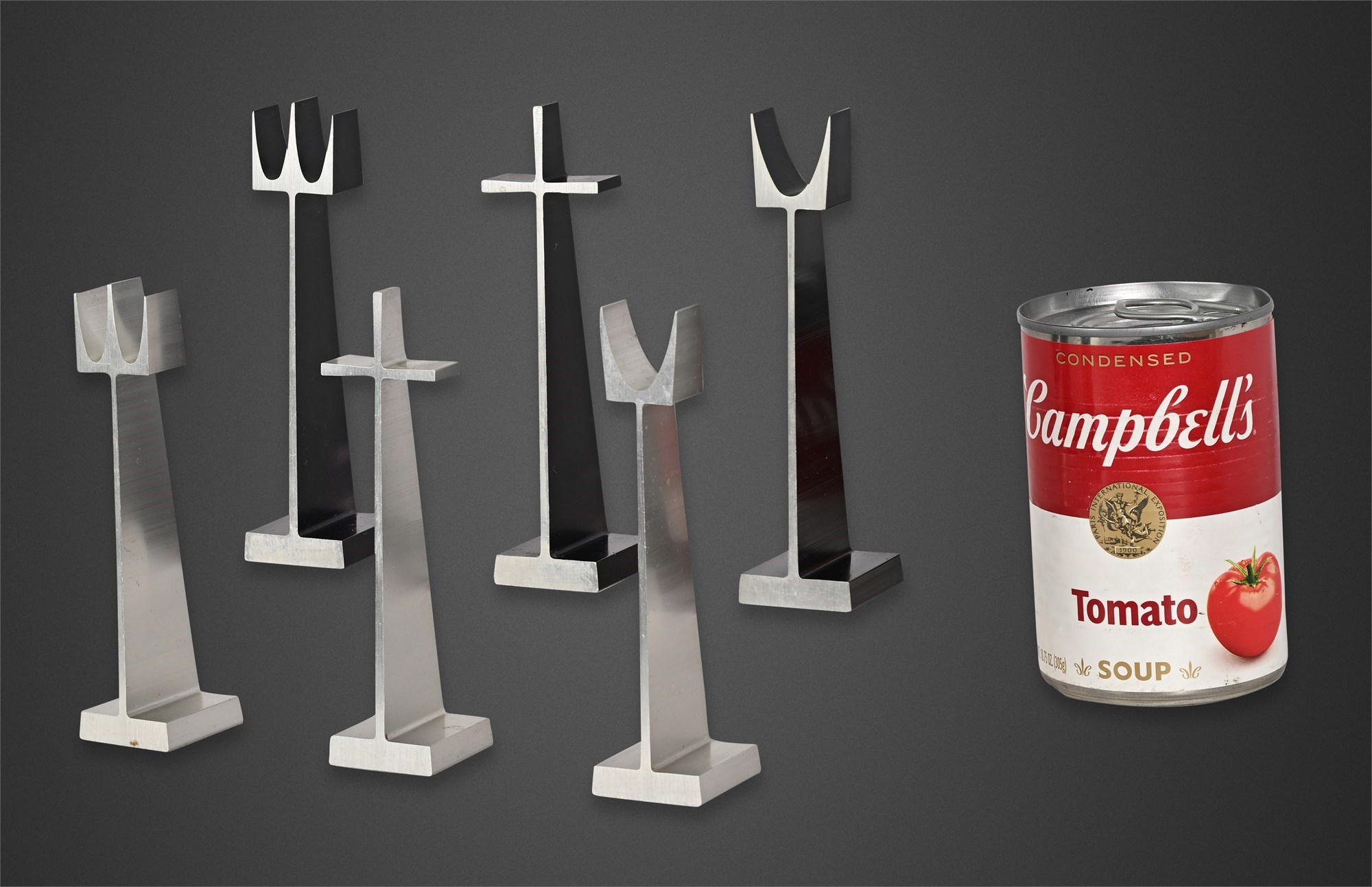
- Campbell's Soup Can (4" H) Shown for Scale — Not Included