Edwardian Oak & Brass Three-Decanter Tantalus with Cut Crystal & Locking Drawer View Watchlist >
Seller Accepts Credit Cards
Payment and pickup instructions will be available on your invoice (under "My Account") at the conclusion of this auction.
Lot # F804
System ID # 29485601
Start Date
End Date
11 Watching
Edwardian Oak & Brass Three-Decanter Tantalus with Cut Crystal & Locking Drawer
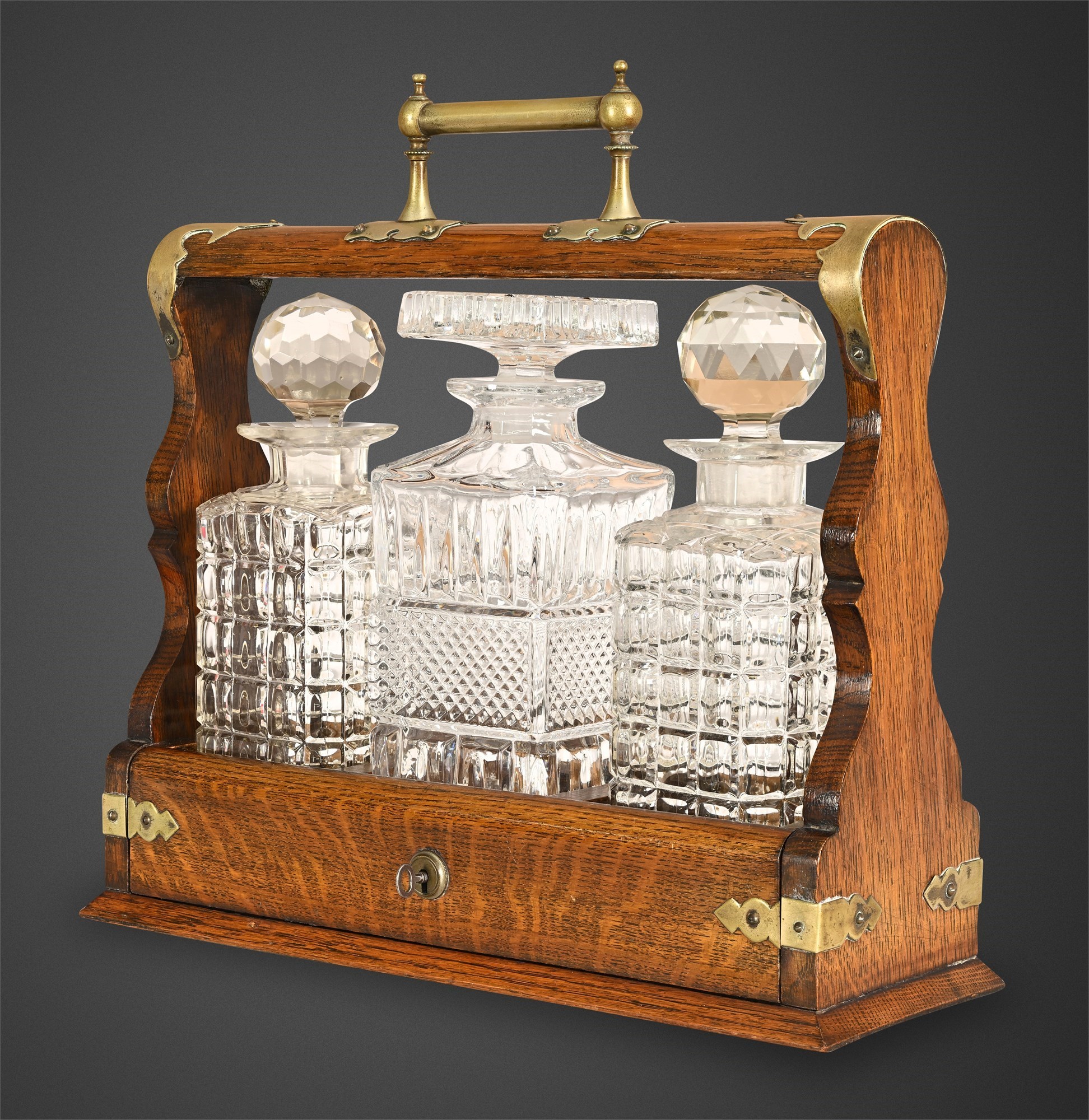
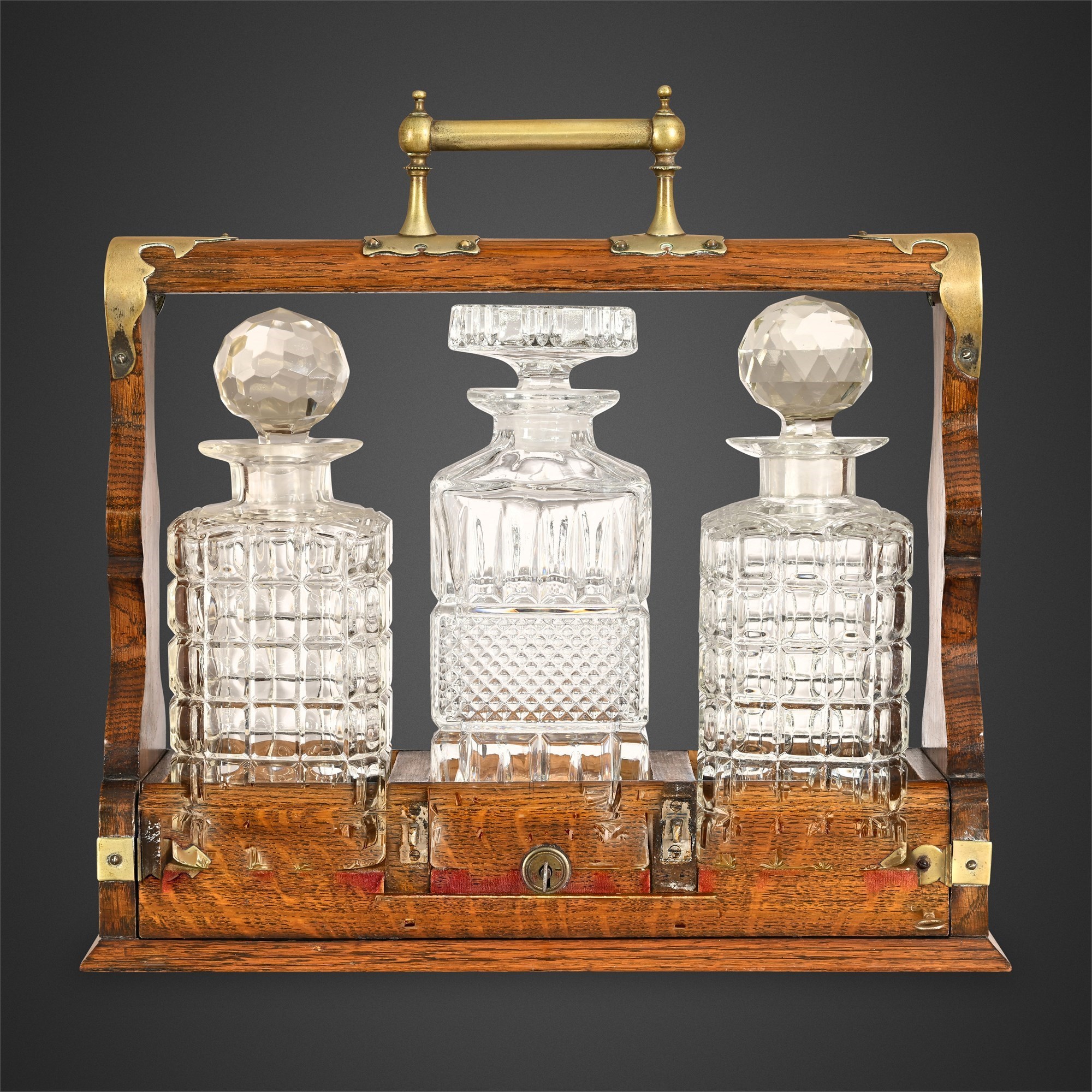
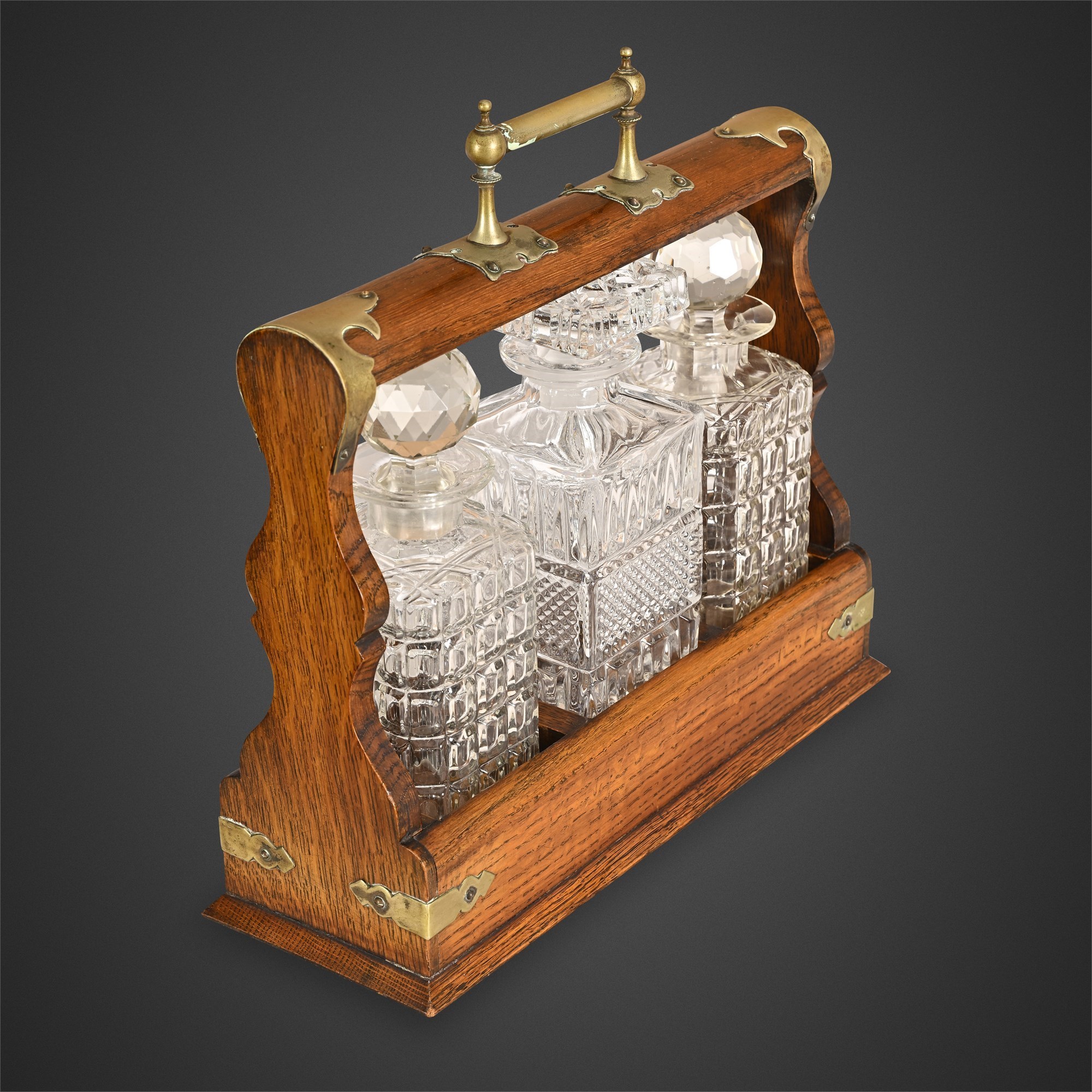
An English oak tantalus of the late Victorian to Edwardian period, built to display and secure three cut-glass spirit decanters behind a brass-mounted frame. The shaped oak sides rise to a turned brass carrying handle set on cast scrolled mounts, with conforming brass corner brackets and decorative escutcheon plates throughout. A pivoting front bar locks the decanters in place — the device that gives the tantalus its name and its purpose: the bottles stand in full view, tantalizingly accessible, but no one pours without the key. The name itself comes from the Greek myth of Tantalus, condemned to stand chin-deep in water beneath fruit-laden branches — everything visible, nothing within reach. The Victorian household found this an apt metaphor for the butler's dilemma.
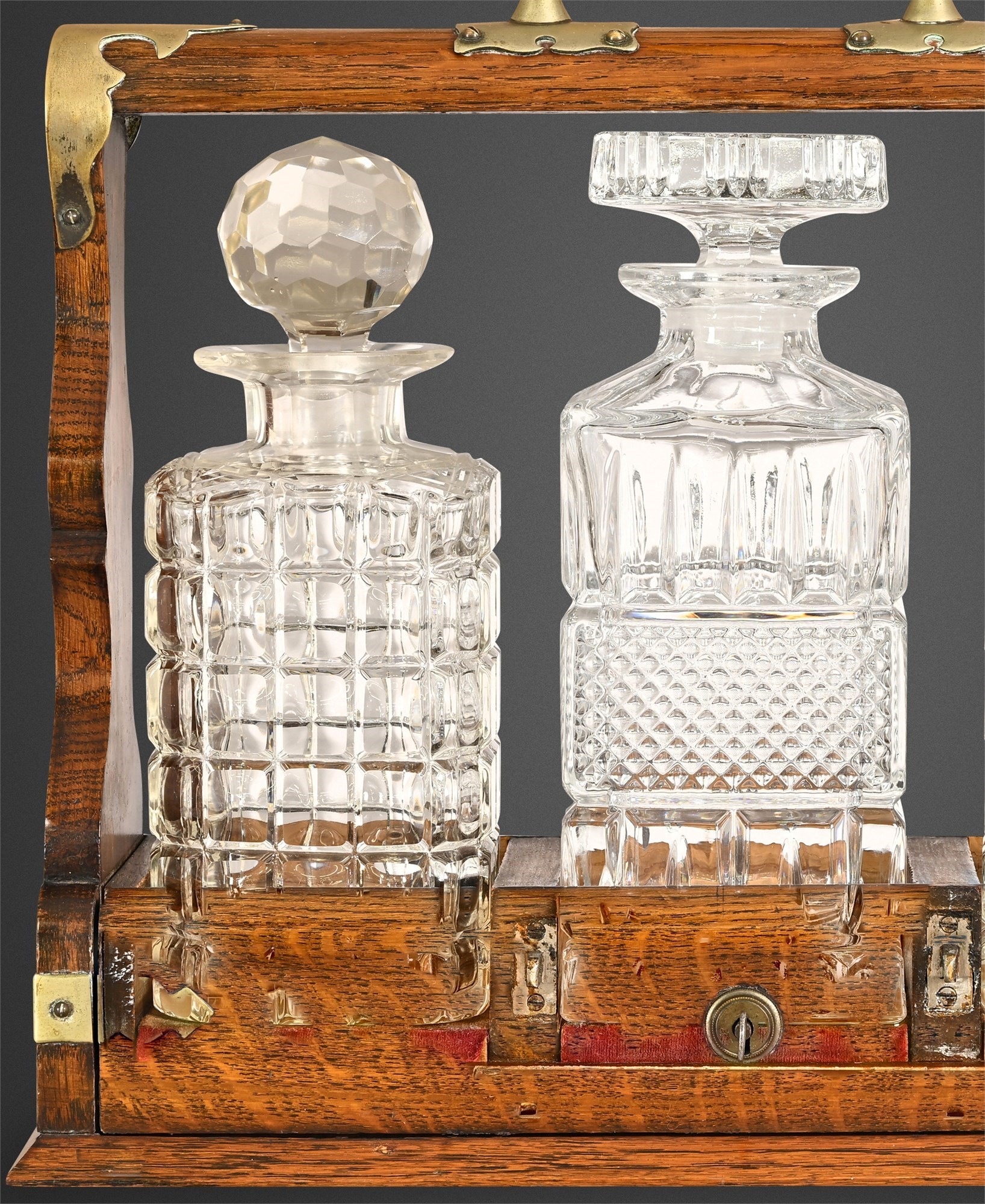
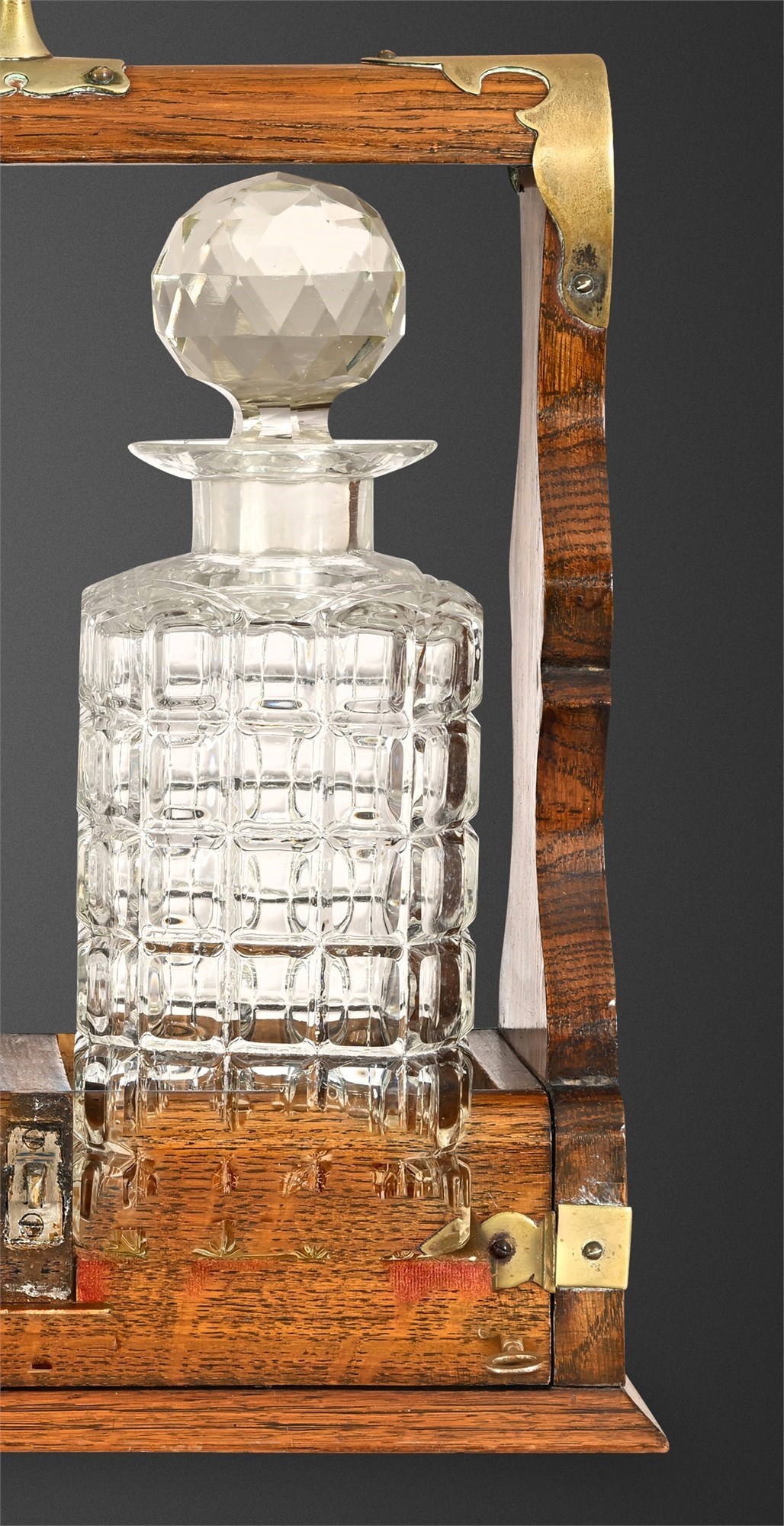
The three decanters are not a matched set. Two are square-form in an allover block-and-button cut, each fitted with a large faceted ball stopper; the central decanter is a heavier tapered piece combining vertical panel cuts above a broad diamond-hobnail band, with a stepped rectangular stopper. All are unmarked. The base houses a small drawer fitted with a functional lock, retaining its original key — a feature typical of the better Edwardian tantalus, intended to secure a corkscrew, cigar cutter, or the household's other drinks accessories from staff access.
History
The tantalus was a distinctly British invention, patented in 1881 by George Betjemann & Sons of London — cabinet makers who supplied the upper-middle-class Victorian home with everything from overmantels to music cabinets. Betjemann's "BB Tantalus" became the definitive form: a frame of oak or mahogany, brass fittings, a locking bar across the decanter necks, and a small drawer for accessories. The design addressed a specific social anxiety: servants could not easily filch from a tantalus without the household noticing the decanters disturbed, yet the whisky, brandy, and sherry remained on glorious display for guests. Production spread quickly across the trade in the 1880s through the Edwardian era, with numerous Birmingham and Sheffield metalwork firms supplying hardware to furniture makers throughout England. This example, with its scrolled brass mounts, shaped and scalloped oak side panels, and turned brass ball finials, is consistent with quality trade production of approximately 1890–1910.
CONDITION
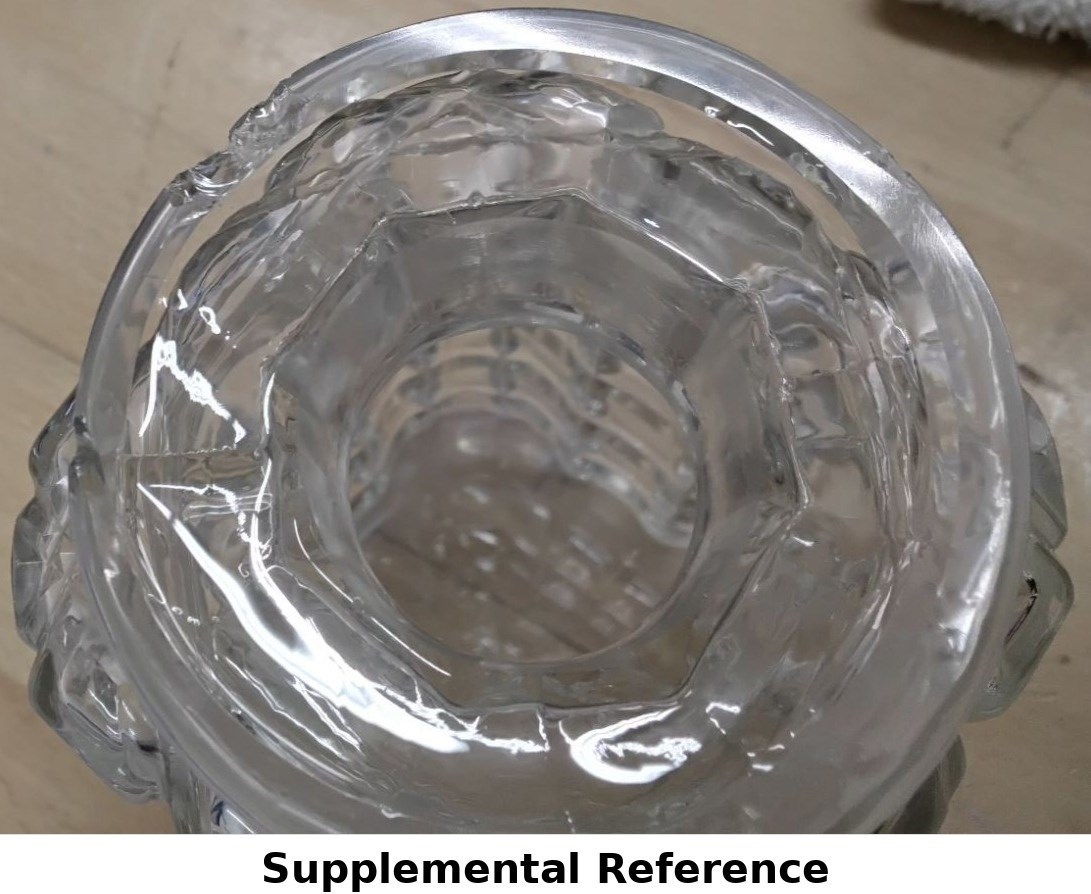
Good with age-appropriate wear throughout. The oak frame is sturdy, the locking bar mechanism functions correctly, and the drawer lock is operational with its original key present. One decanter is chipped on both the rim and the stopper . Light surface tarnish to the brass mounts and minor patination to the hardware are consistent with age and do not detract from display.
DIMENSIONS / SPECIFICATIONS
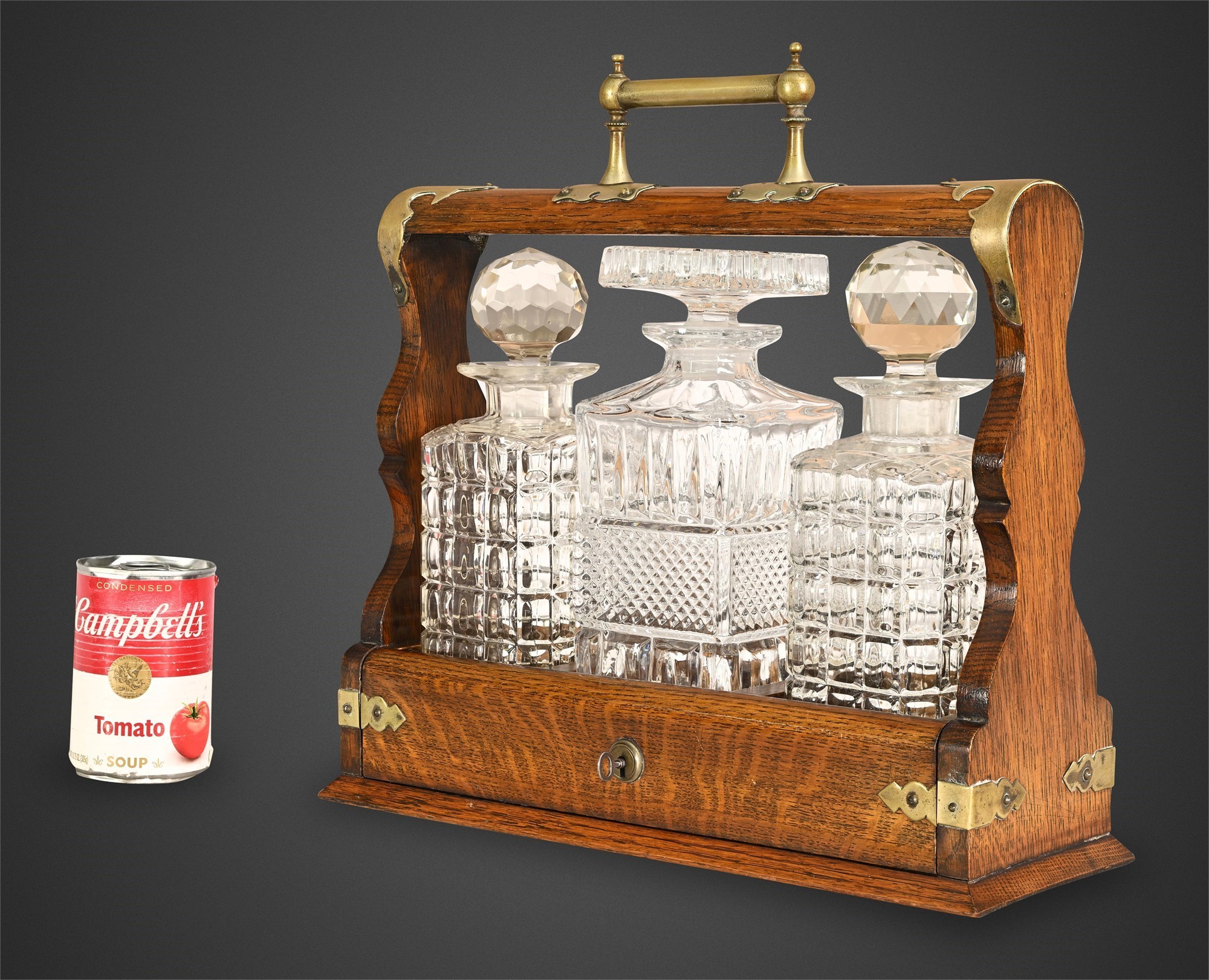
- Overall: 13½" H × 14¼" W × 5" D
- Weight: 12.5 lbs
- Materials: Oak, brass, cut glass
- Markings: Unmarked
- Decanters: 3 (two matched square block-and-button form with ball stoppers; one tapered panel-and-diamond cut with rectangular stopper) — not a matched set
- Includes: 3 decanters with stoppers, drawer key
- Campbell's Soup Can (4" H) Shown for Scale — Not Included