19th C. Mexican Folk Retablo — Virgin of Guadalupe on Tin View Watchlist >
Seller Accepts Credit Cards
Payment and pickup instructions will be available on your invoice (under "My Account") at the conclusion of this auction.
Lot # F464
System ID # 29153959
Start Date
End Date
27 Watching
19th C. Mexican Folk Retablo — Virgin of Guadalupe on Tin
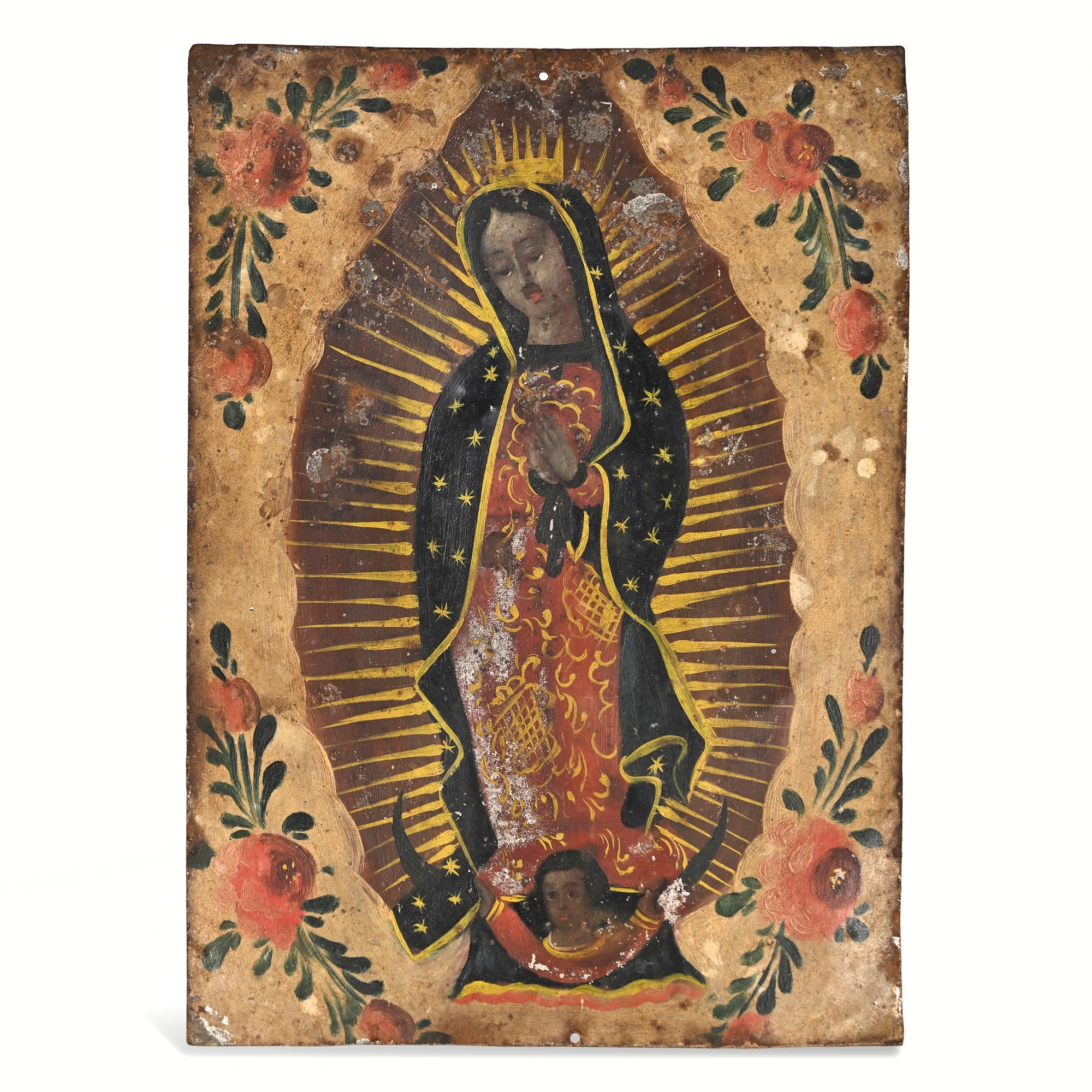
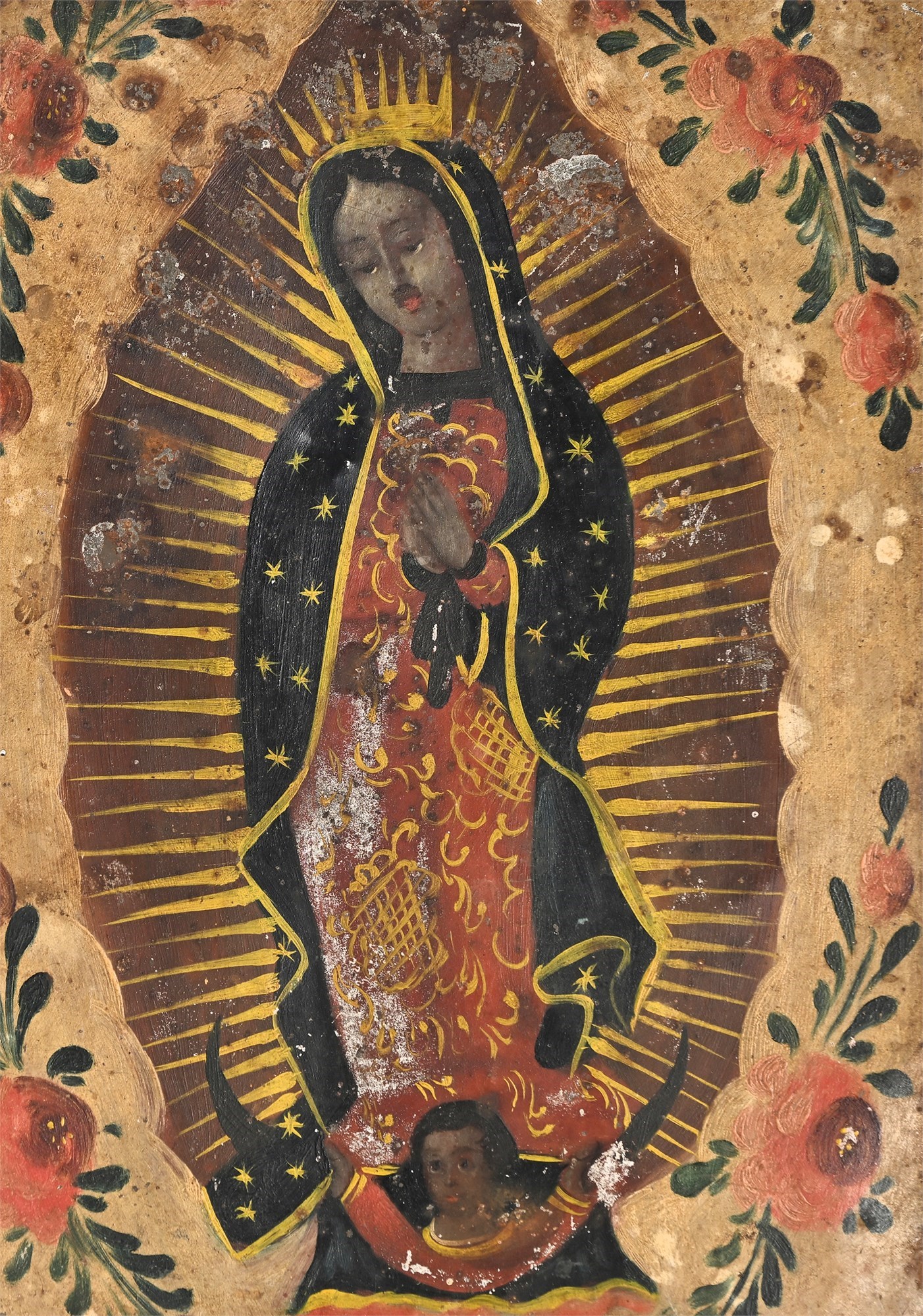
A devotional retablo santo hand-painted in oil on a hammered tin sheet, depicting Nuestra Señora de Guadalupe in her familiar iconography: hands joined in prayer, draped in a star-spangled mantle, framed by a golden mandorla of rays, and supported by a cherub atop the crescent moon. The corners are filled with painted roses and foliage — a folk flourish referencing the Castilian roses of the Tepeyac apparition. The painter's hand is unschooled but confident, with bold linework, a warm earth-toned palette, and the slightly stylized facial features typical of provincial Mexican santeros working in the 19th century.
Small retablos like this one — painted on inexpensive tinplate salvaged from cans and roofing — emerged as a deeply personal form of Catholic devotion across central and northern Mexico after the 1820s, when the material became widely available. They were hung in home altars, carried on pilgrimage, and offered as ex-votos in gratitude for prayers answered. Surface losses, oxidation, and the warm patina of the tin all read as honest evidence of nearly two centuries of veneration. .
History
The Virgin of Guadalupe — La Morenita — is the patroness of Mexico and the central Marian image of the Americas, said to have appeared to Juan Diego on the hill of Tepeyac in December 1531. Her image became the most widely reproduced devotional subject in Mexican folk art, particularly in the small retablos santos painted on tin that flourished from roughly 1820 through the early 20th century. Painted by anonymous itinerant santeros for working-class households, these images carried the sacred into the everyday — a tradition that continued strongly across the northern Mexican states and the borderland reaching into southern New Mexico and the Mesilla Valley.
CONDITION
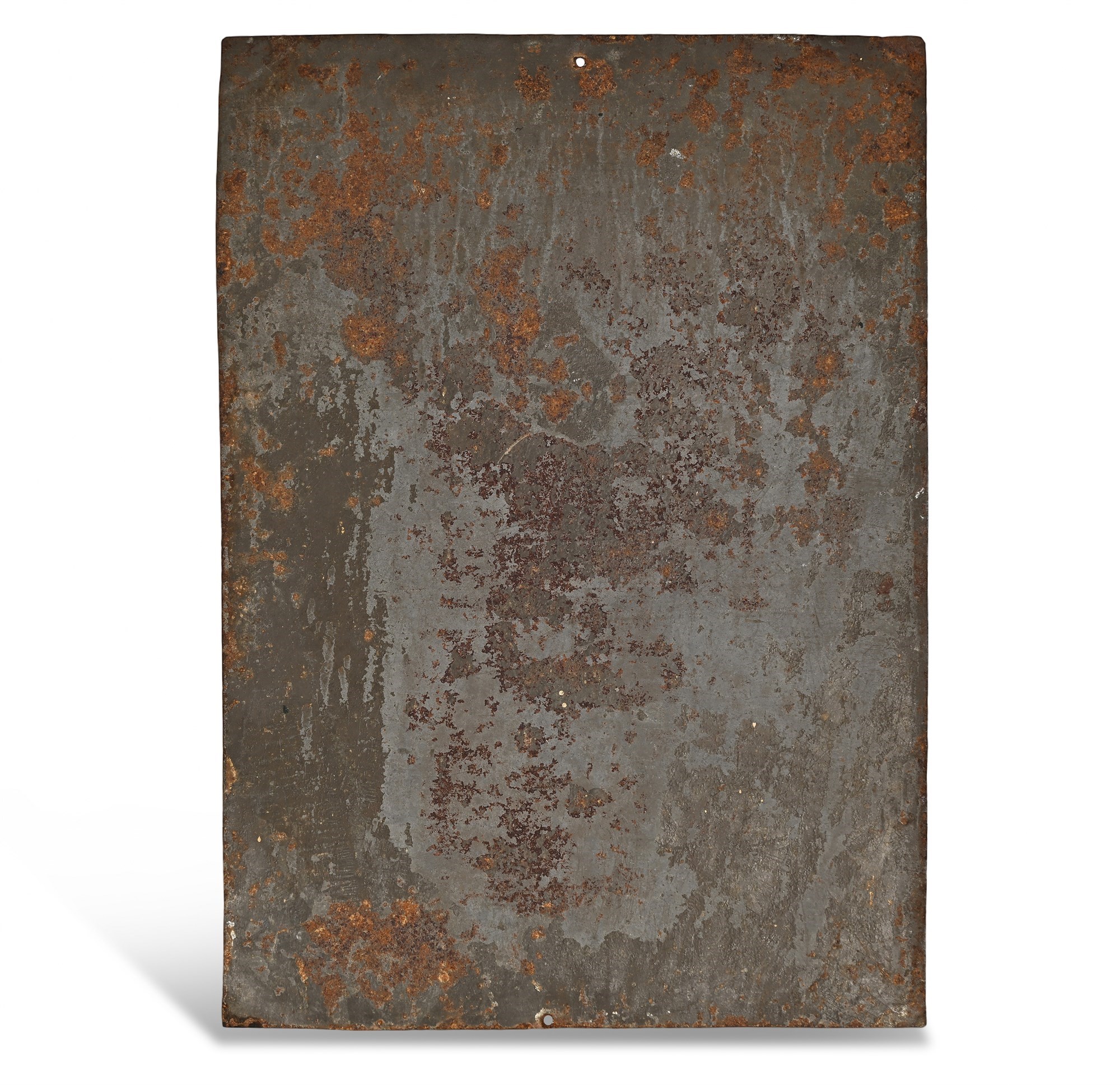
Good for age with substantial honest wear. Paint surface shows scattered loss, flaking, and abrasion throughout, with the heaviest losses across the Virgin's robe and the central mandorla. Tin support shows surface corrosion, oxidation, and rust spotting across both faces; verso is heavily oxidized with stable surface rust. Two small hanging holes at top and bottom edges. Stable, presentable, and entirely consistent with a working devotional object of considerable age.
DIMENSIONS / SPECIFICATIONS
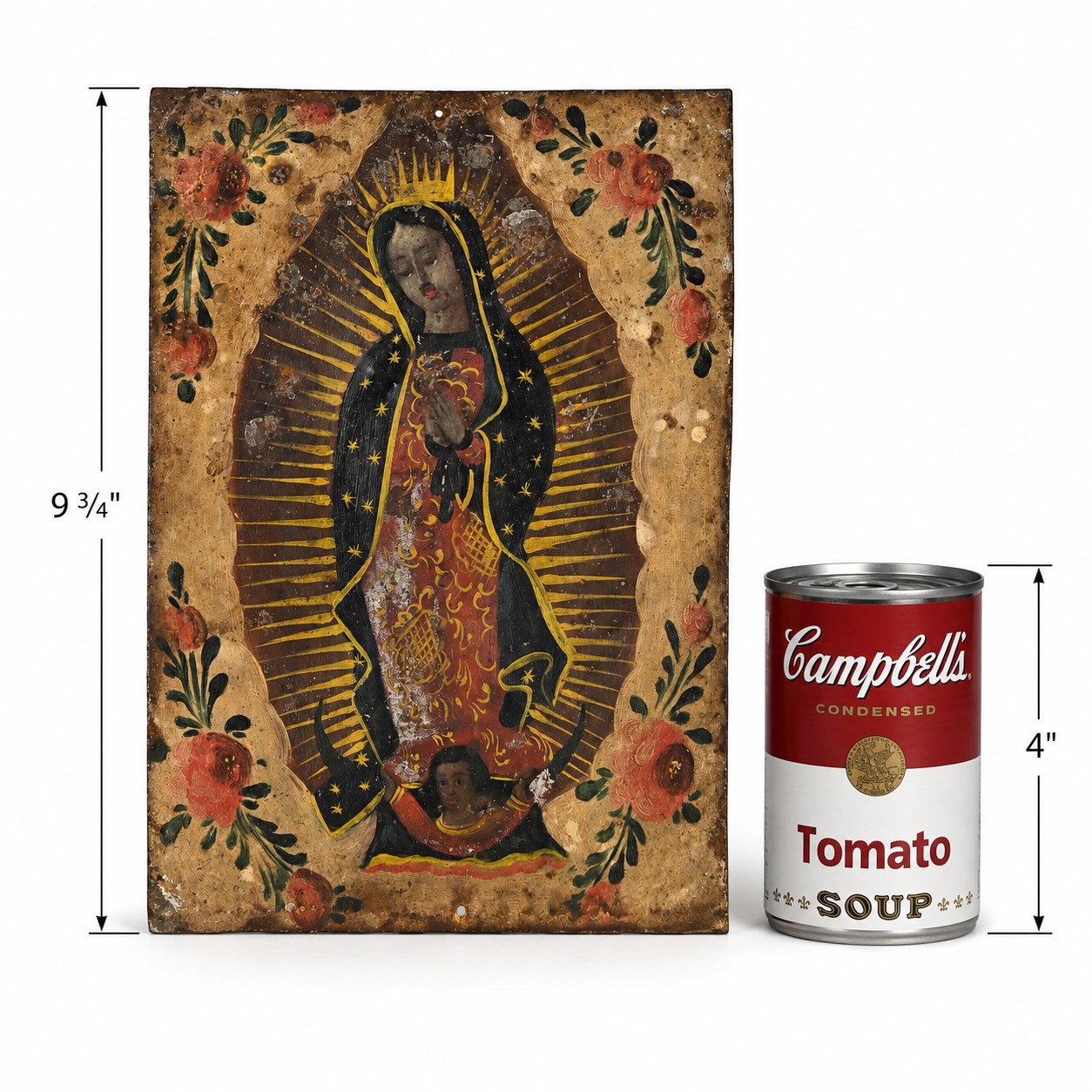
- Overall: 9 3/4" H × 6 7/8" W × 1/32" D
- Medium: Oil on tinplate
- Support: Hand-cut steel/tin sheet
- Markings: Unmarked
- Mounting: Two pierced holes for wall display