Joseph A. Couvin Belgian Cast Iron Parlor Stove Cabinet, Red Enamel, c. 1900 View Watchlist >
Seller Accepts Credit Cards
Payment and pickup instructions will be available on your invoice (under "My Account") at the conclusion of this auction.
Lot # F172
System ID # 28902185
Start Date
End Date
13 Watching
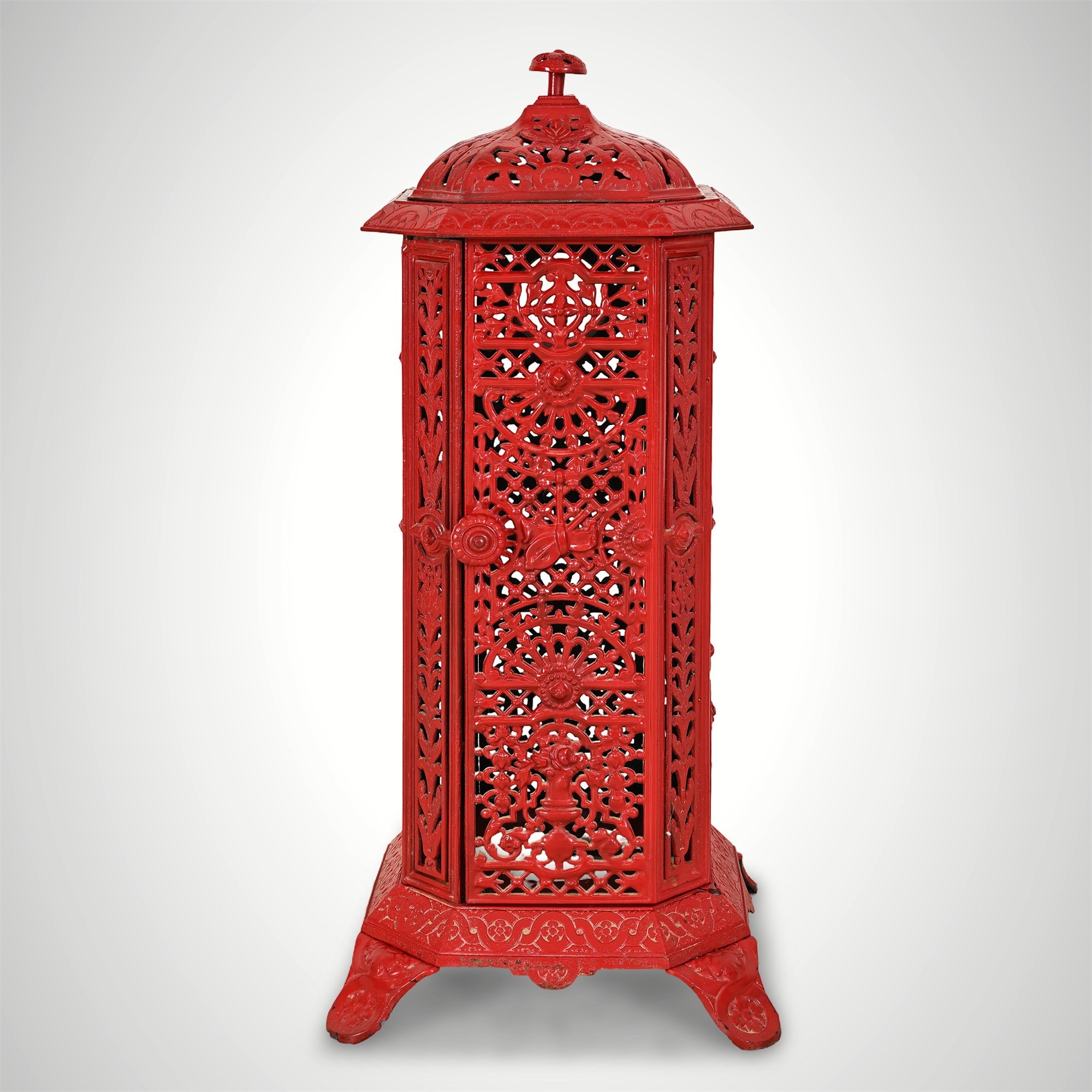
Joseph A. Couvin Belgian Cast Iron Parlor Stove Cabinet, Red Enamel, c. 1900
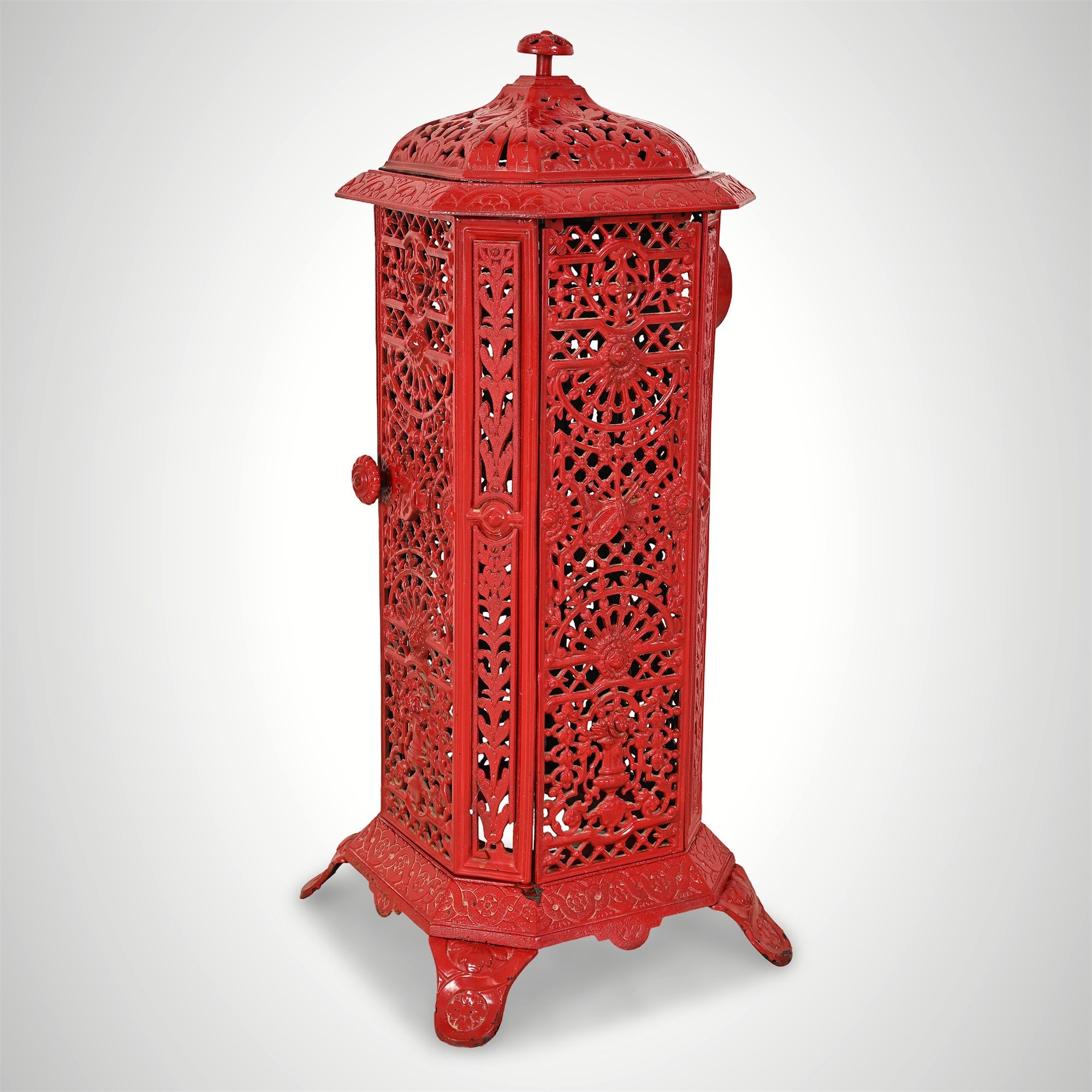
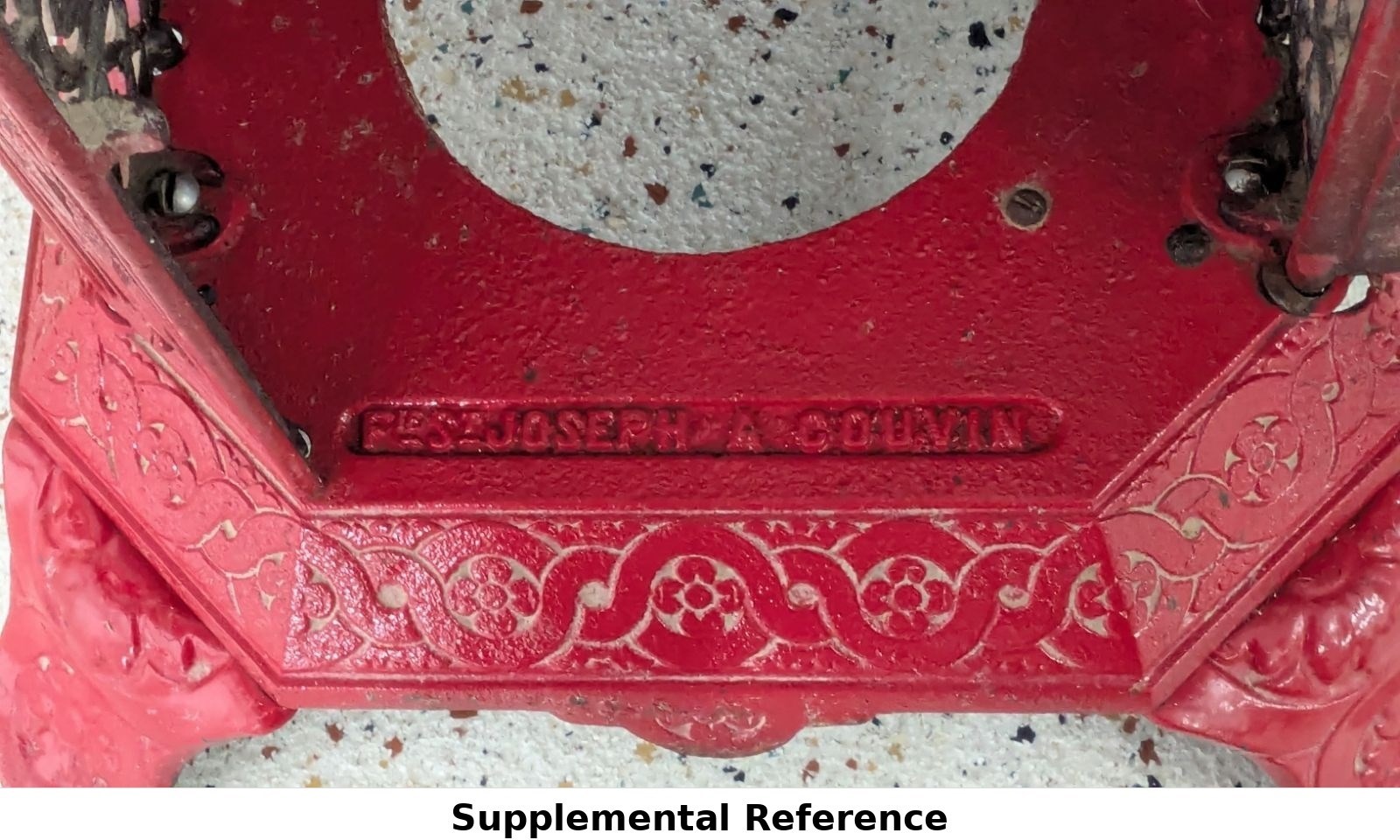
The heating unit is gone. What remains is the reason people kept these things in the first place. This hexagonal tower of pierced cast iron by Joseph A. Couvin — foundry mark cast into the base panel, "Pˢᵗᵉ Joseph A. Couvin" — was built to enclose a fuel column and radiate heat into a parlor or shop. Strip the burner out and the object doesn't diminish; it clarifies. The openwork panels that made it an efficient radiator make it an equally capable lantern housing, a dramatic planter column, an umbrella or cane stand, a bar or foyer pedestal, or simply a sculptural presence that stops a room cold. The form was designed to be looked at. It still is.
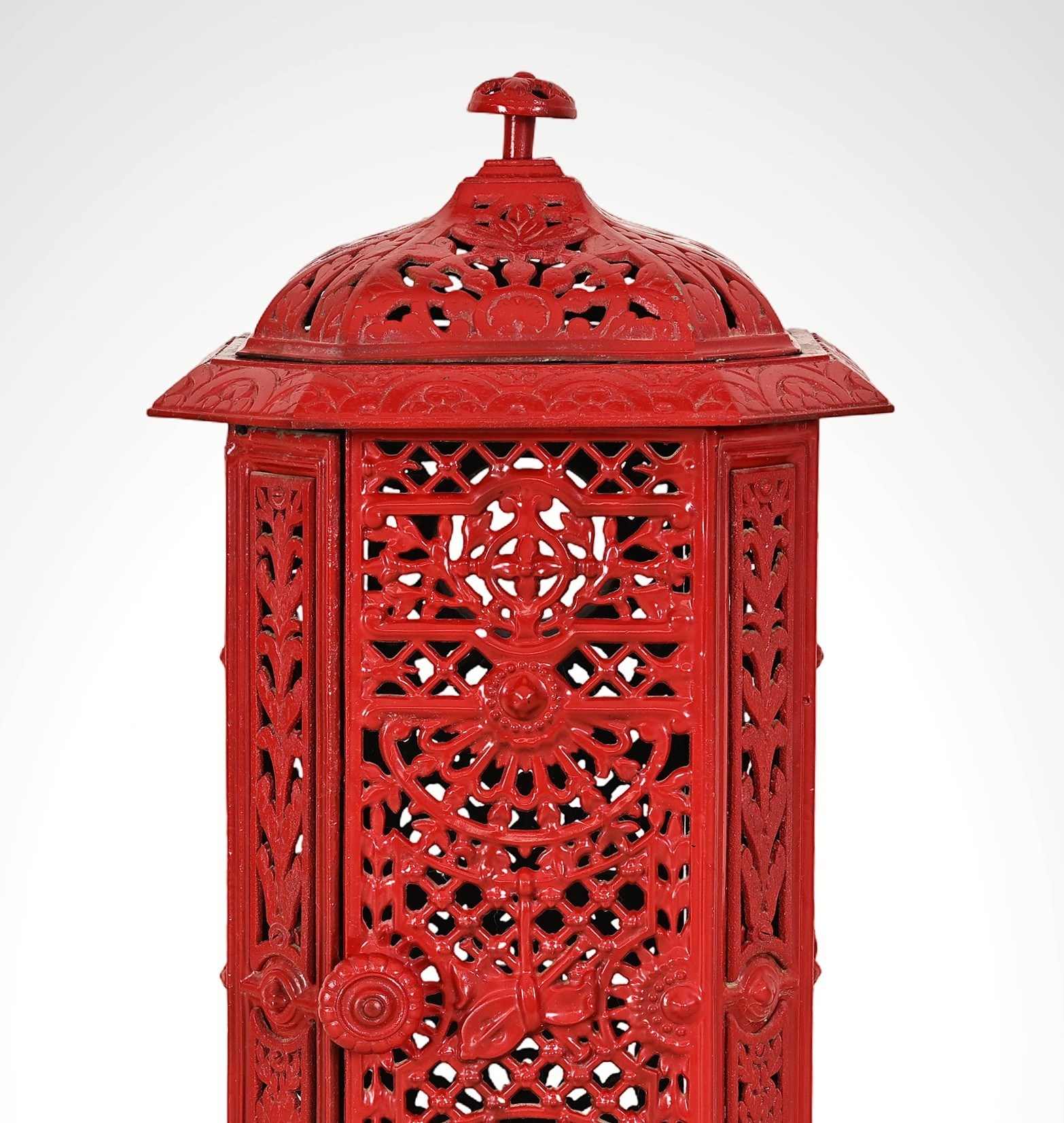
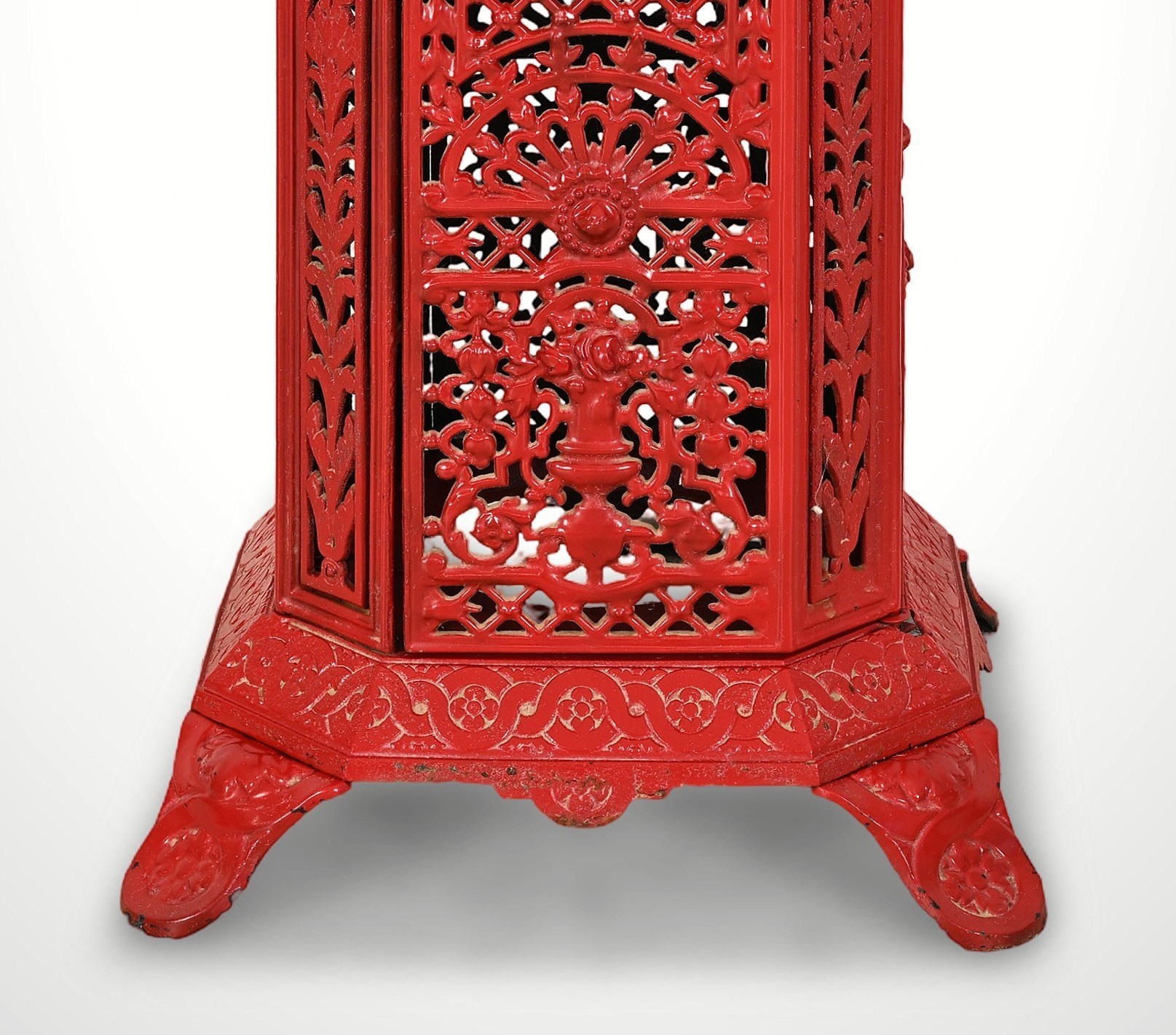
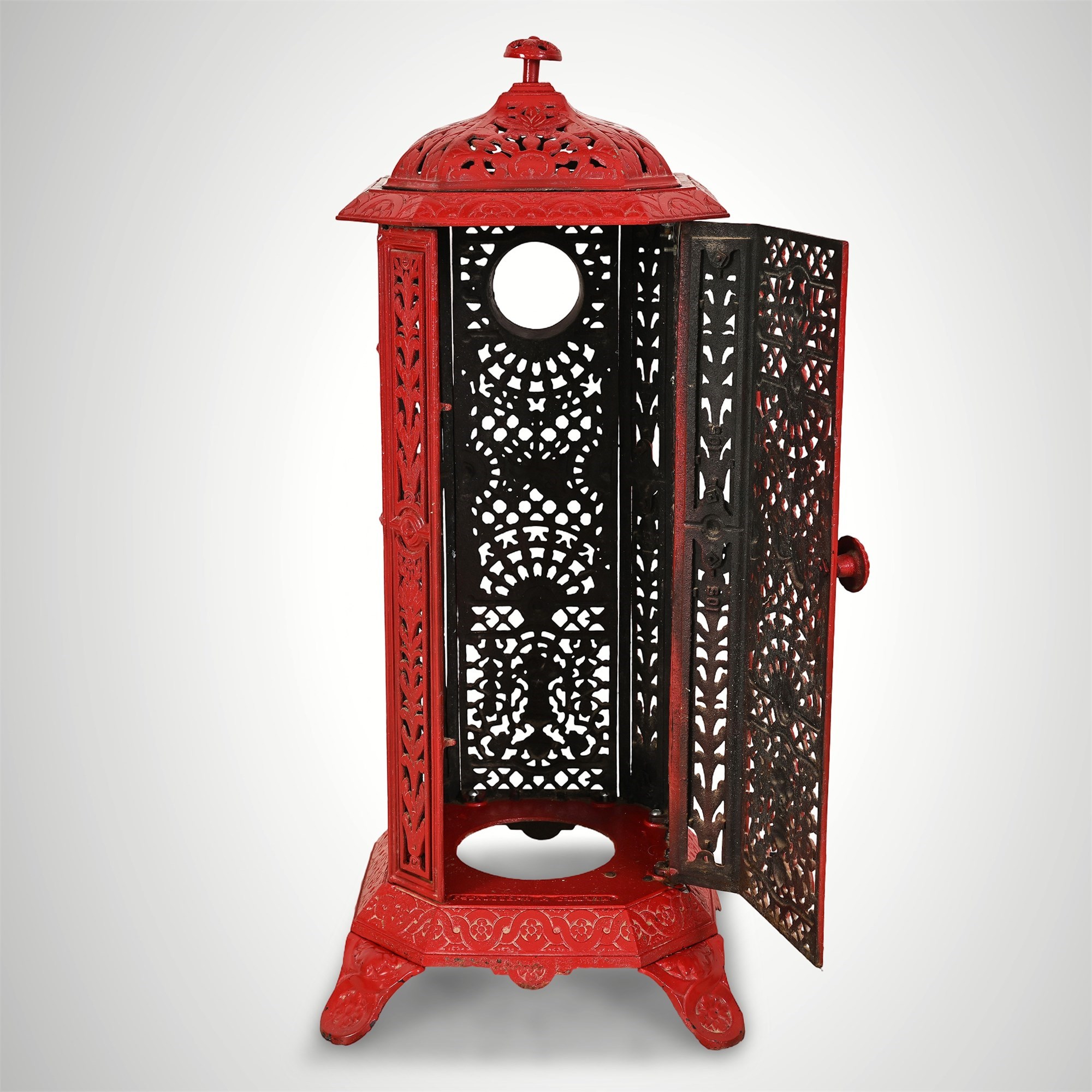
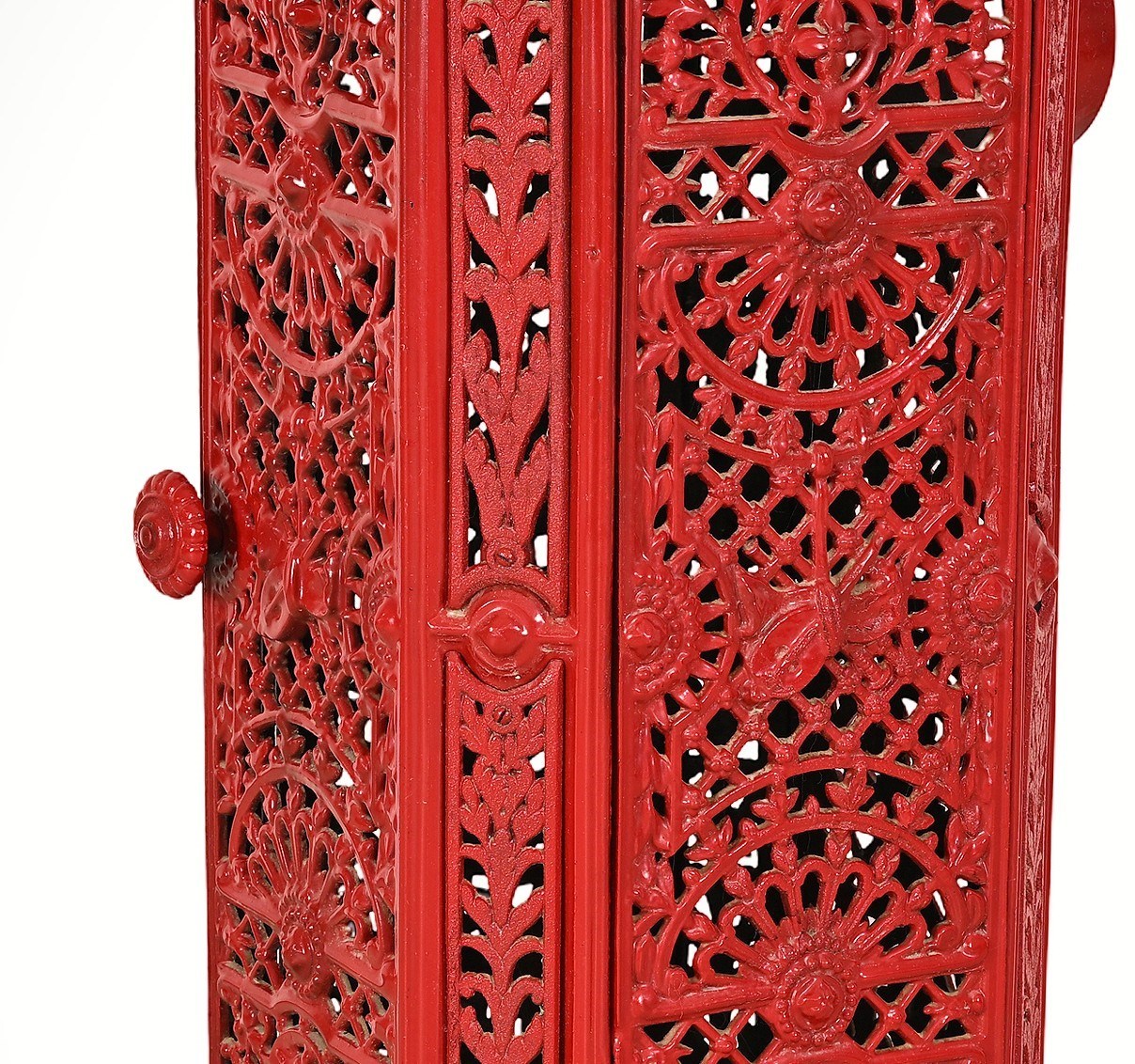
The cabinet is hexagonal in section, rising from a stepped, scroll-footed base through four registers of reticulated panels — fan medallions, rosette bosses, urns of stylized flowers, arabesque lattice, and figural ornament at the pilaster junctions — to a domed, similarly pierced crown topped with a cast finial. Every surface is worked. The red enamel finish is a later repaint, even and bright, that has shifted this from furnace equipment to object d'art. The hinged door opens on its original hinges; interior surfaces retain their blackened, oxidized patina from years of use. The flue-collar opening at the rear is open — exactly the right aperture for wiring if a buyer wants to drop in a lamp socket and turn the entire column into a lantern.
History
Couvin is a small town in the Walloon region of southern Belgium, close to the French border, that became one of the great European foundry centers of the 19th century. Its ironworks shipped stoves, heating cabinets, and architectural ornament throughout France, the Low Countries, and beyond. The tall hexagonal column stove — designed for salons, hotel lobbies, and pharmacies — was a prestige heating form: more expensive than a plain box stove, more sculptural than a cylinder, engineered to fill a corner or anchor a room. Foundries marked their work proudly; Joseph A. Couvin is among the documented names from this tradition. Stove cases bearing the Couvin stamp are sought by collectors of Belle Époque ironwork and by designers sourcing functional-scale decorative objects for interiors.
CONDITION
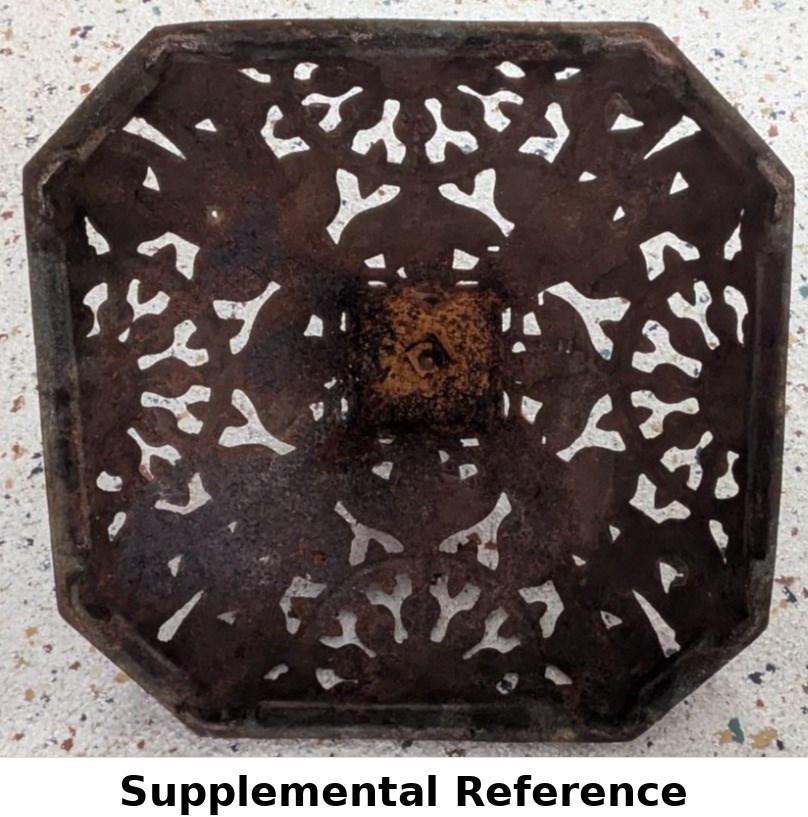
Very Good. Red enamel finish is even with light wear, minor chips, and paint thinning at high-relief edges and feet — most pronounced on the base skirt, consistent with handling. Interior surfaces show light rust and oxidation from original heating use; the exterior panels are intact with no cracks or losses detected. Door operates on its hinges; dome, finial, and all six body panels present and sound. Heating unit is absent — this lot is the ornamental cast iron cabinet and case only.
DIMENSIONS / SPECIFICATIONS
- Overall: 35½" H × 15" W × 15" D
- Weight: 50 lbs
- Form: Hexagonal column, six pierced body panels, hinged door, domed crown with finial, stepped base on six scroll feet
- Material: Cast iron with red enamel finish (later repaint)
- Maker's Mark: "Pˢᵗᵉ Joseph A. Couvin" cast at base panel
- Origin: Couvin, Belgium
- Era: Late 19th / early 20th century
- Lot Includes: Ornamental cast iron cabinet/case only — heating unit not present
- Potential Uses: Lantern housing (flue collar opening accommodates wiring), umbrella/cane stand, planter pedestal, foyer or bar column, decorative sculpture