Renaissance Revival Bronze Figural Jardinière, 85 lbs — 19th/Early 20th C. View Watchlist >
- Winning Bid: $1,055.00
- 61 Bid(s) View Bid History
- High Bidder: jalapenobrown
Seller Accepts Credit Cards
Payment and pickup instructions will be available on your invoice (under "My Account") at the conclusion of this auction.
Lot # F517
System ID # 29386917
Start Date
End Date
14 Watching
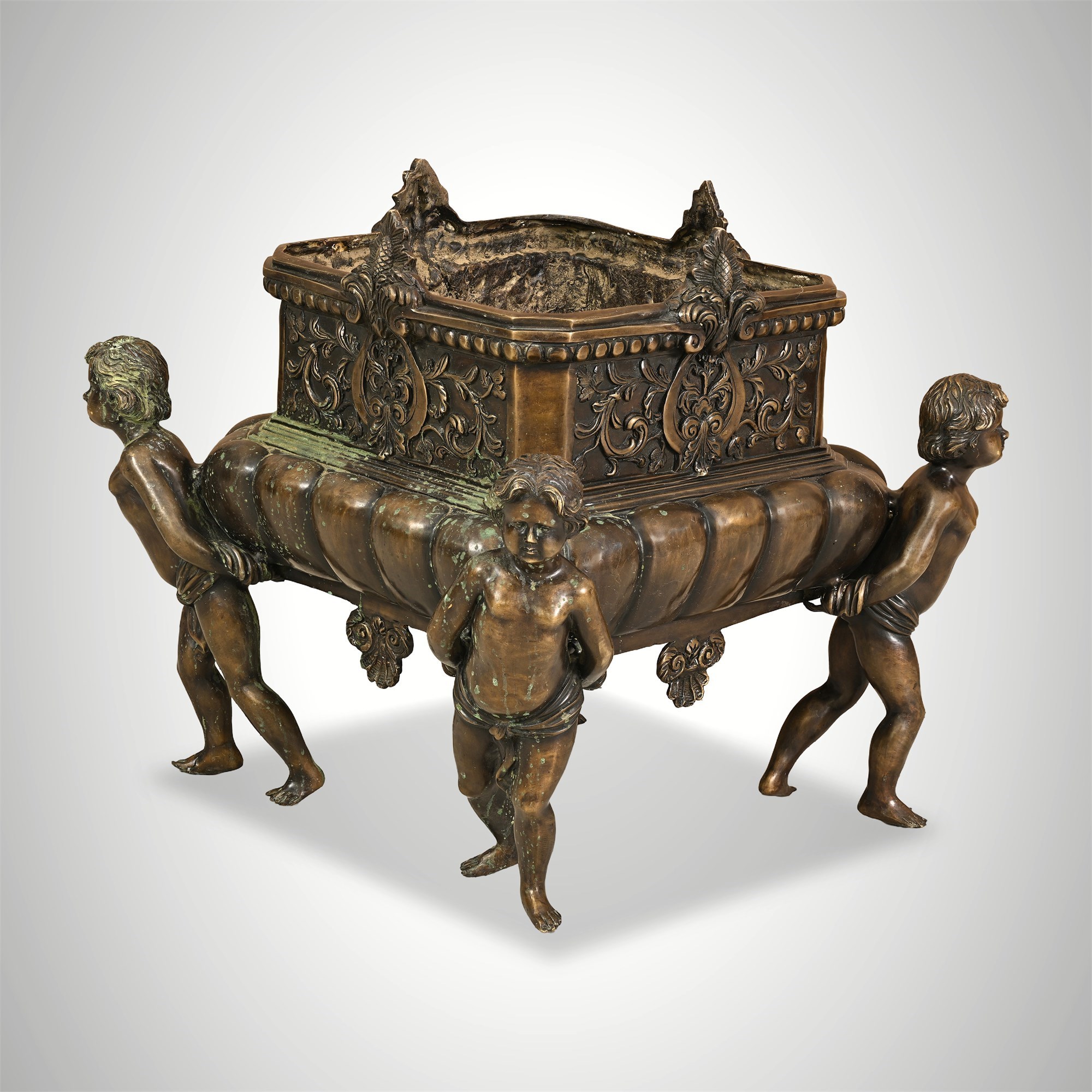
Renaissance Revival Bronze Figural Jardinière, 85 lbs — 19th/Early 20th C.
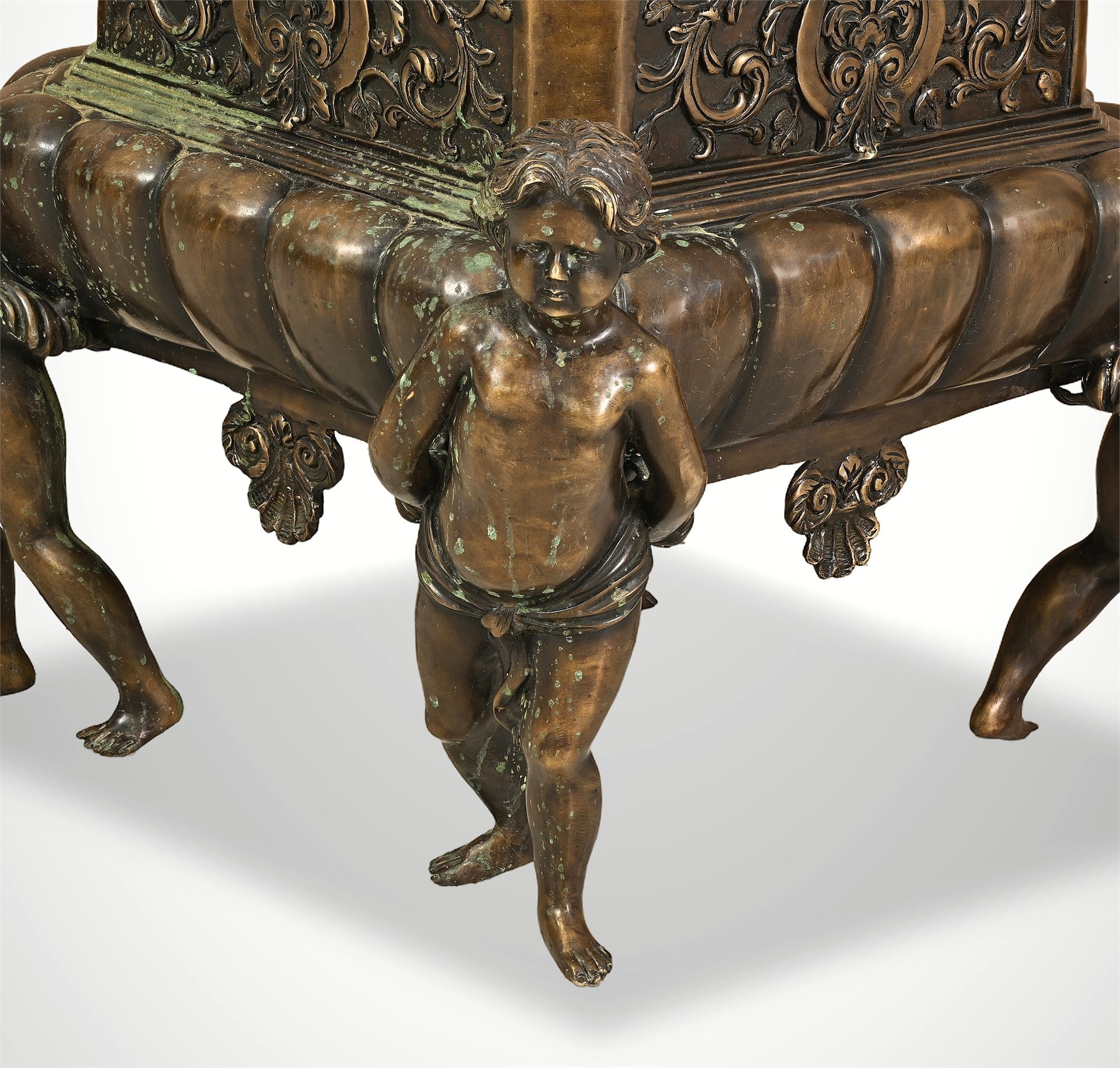
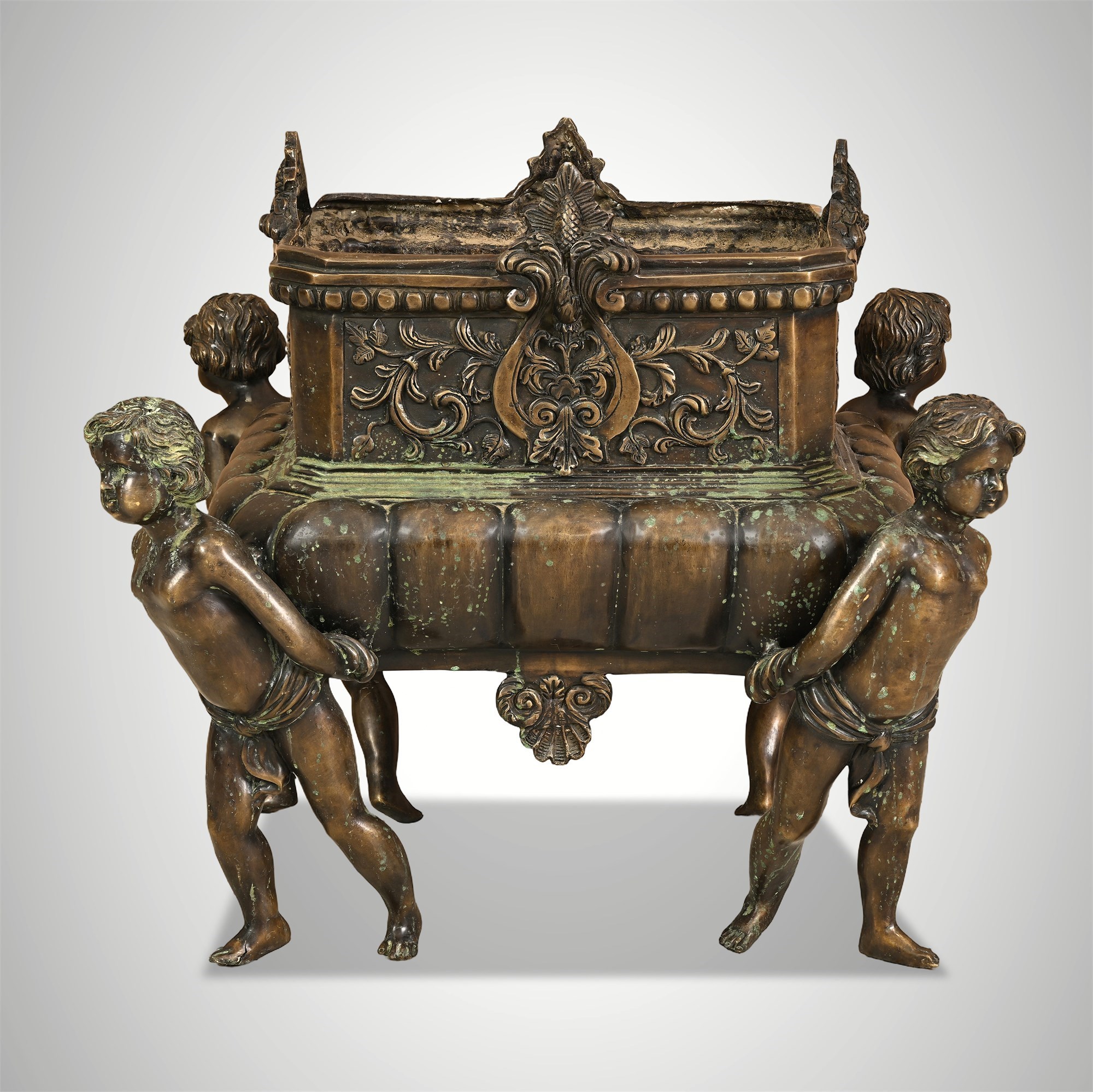
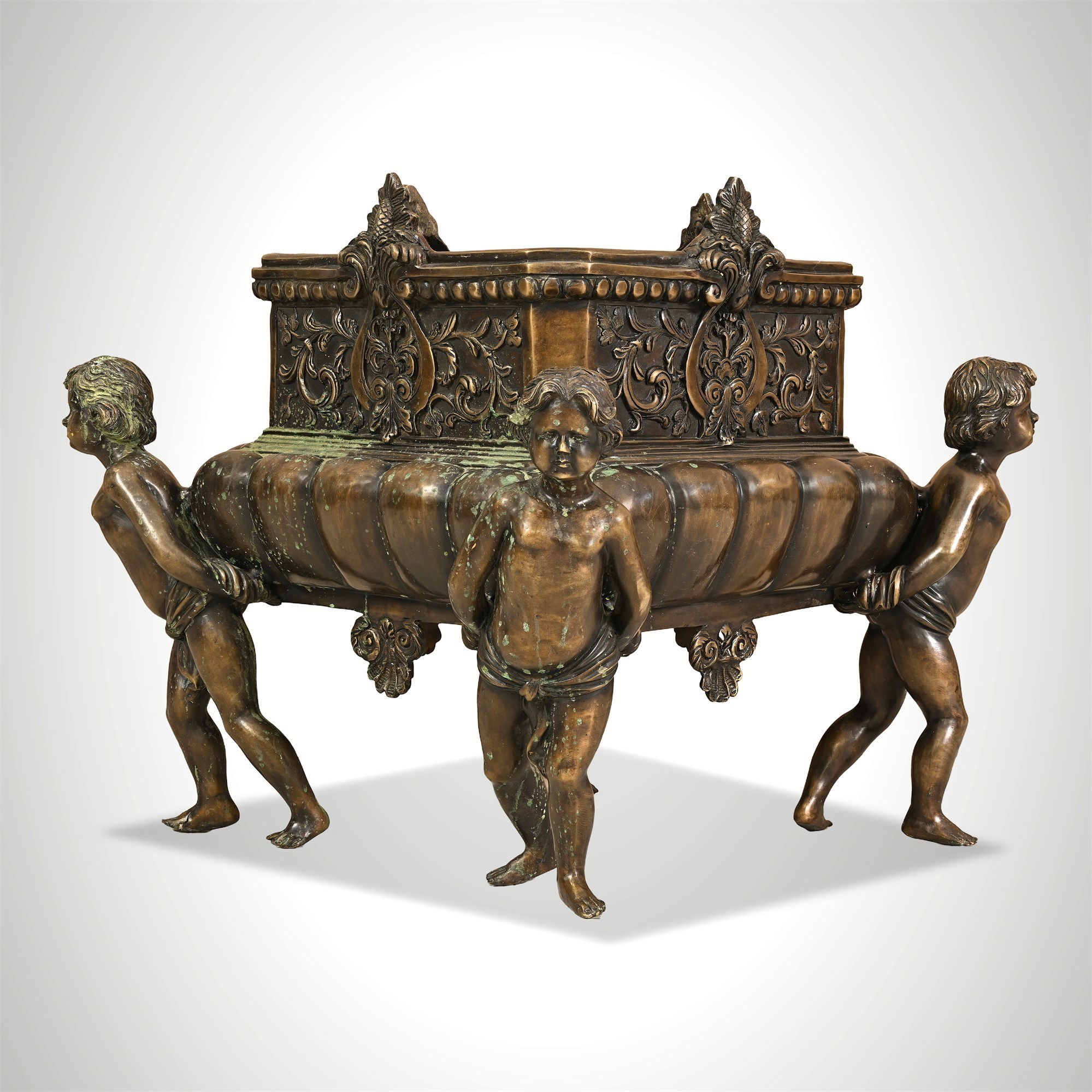
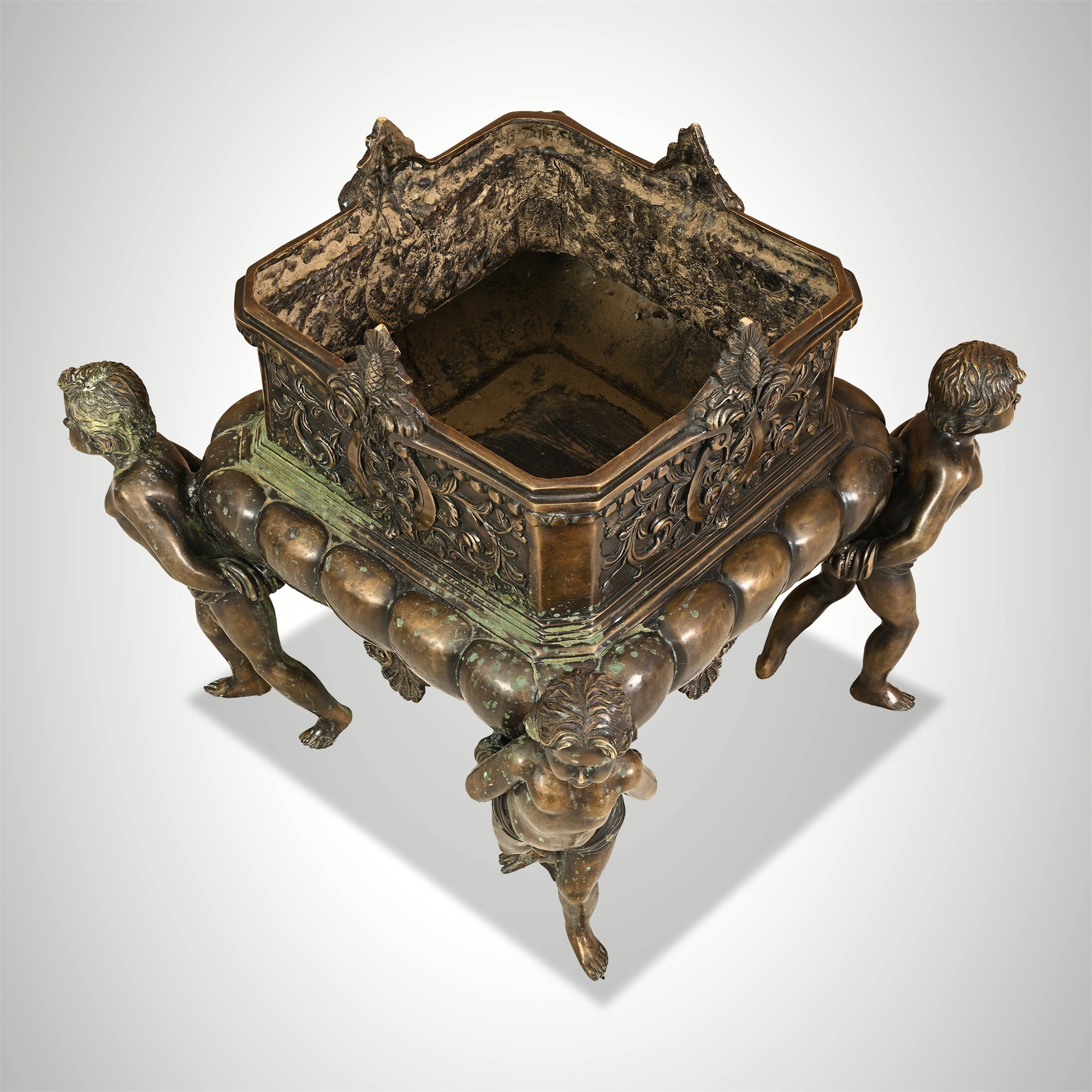
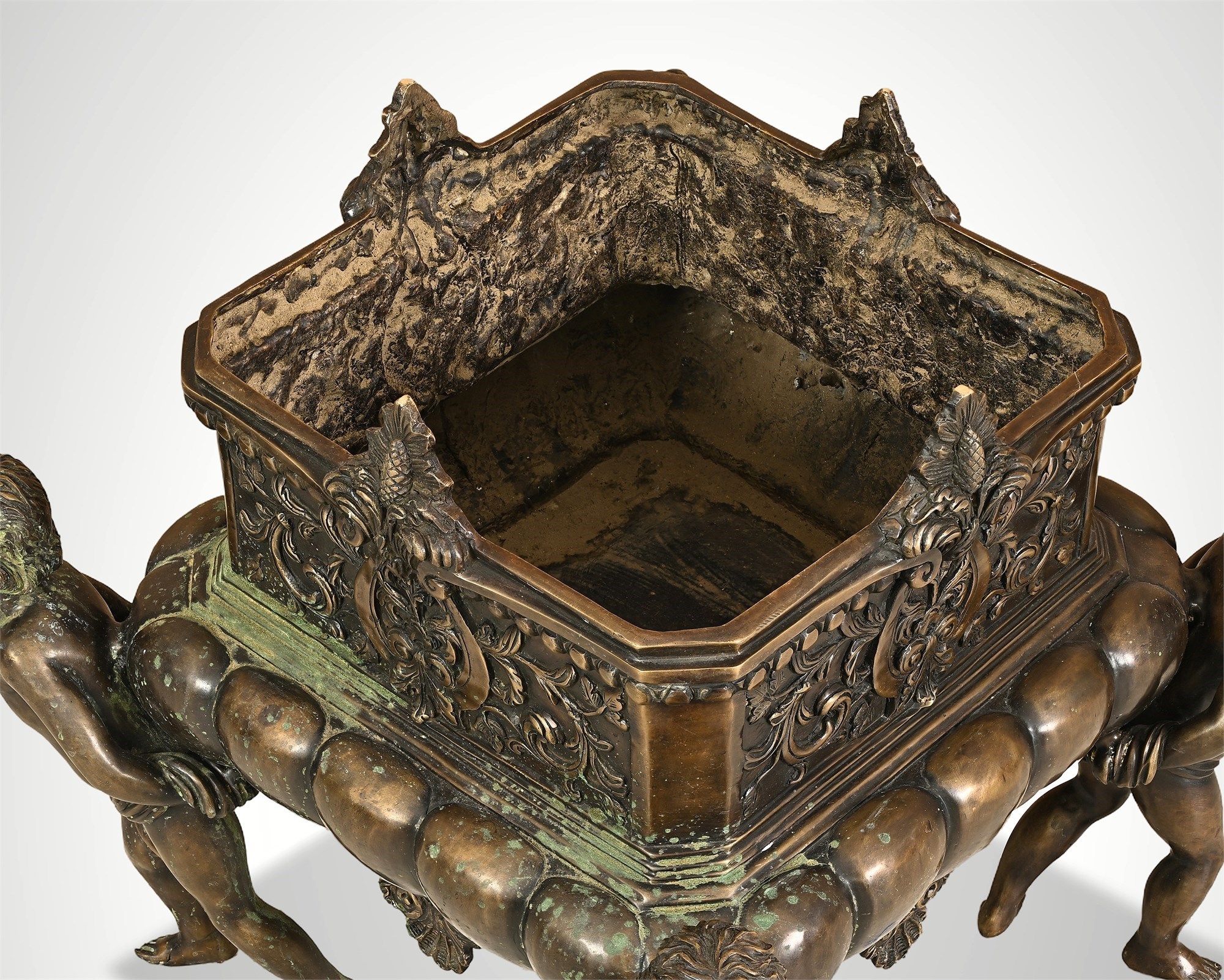
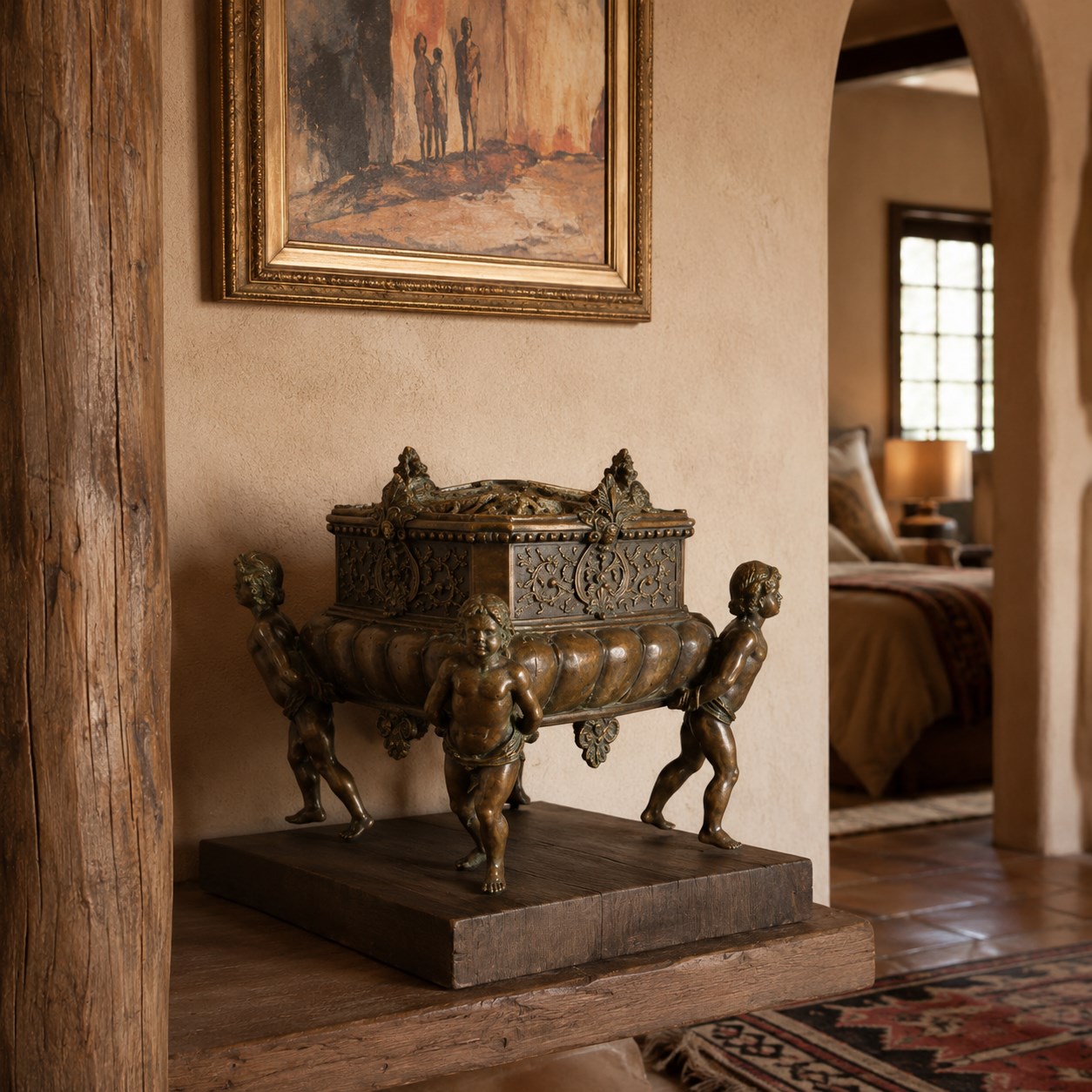
Four striding putti — each draped at the hip, each leaning into the weight — carry an octagonally-canted, casket-form planter on their shoulders while a lobed, melon-ribbed torus body separates base from vessel. The planter walls are packed with Renaissance Revival foliate scrollwork in high relief: acanthus tendrils, anthemion centers, flowering reserves, all framed by egg-and-dart molding at the rim and canted corner pilasters that break the mass. Raised foliate and fish-form finials crown the upper corners; shell-and-scroll consoles anchor the base between each figure. The interior is an open, unlined well with a raw cast texture — designed from the start to accept a removable zinc or copper liner for live planting. Cast solid bronze throughout, no seams, no fill. Weight confirmed at 85 lbs.
The design lineage runs directly to Italian Renaissance putti-support compositions — the laboring infant as architectural element — a motif that moved through Mannerist decorative arts into Baroque silver and ceramics and was revived with force in the ornamental bronzes produced by French, Italian, and Belgian foundries from roughly 1860 through 1920. The lobed body, beaded borders, dense acanthus vocabulary, and four-figure symmetry are all hallmarks of high-quality foundry work from that window. This is not a resin casting with bronze powder finish, not a hollow shell: the density, the crispness of the relief, and the patina chemistry confirm solid cast bronze. The many lightweight reproductions in circulation — cast resin or zinc alloy, often under 20 lbs — have trained buyers to be skeptical; 85 lbs at this scale ends that conversation. Unmarked, which is common for Continental decorative foundry work of the period; the absence of a stamp here is not unusual and does not diminish attribution to the production context. A closely related example — same four-putto support, Renaissance Revival casket planter — is offered separately in this sale executed in wood.
Collector's Note
Solid bronze jardinières of this pattern and scale appear regularly in major auction catalogs from Sotheby's, Christie's, and Dorotheum, typically attributed to French or Italian foundries, late 19th to early 20th century, and estimating in the $1,500–$4,000 range depending on condition and provenance. The weight differential between originals and reproductions is the first test any buyer applies; this piece passes it. The interior encrustation and verdigris distribution are consistent with genuine age. An unmarked example at auction represents the most accessible entry point into the form.
CONDITION
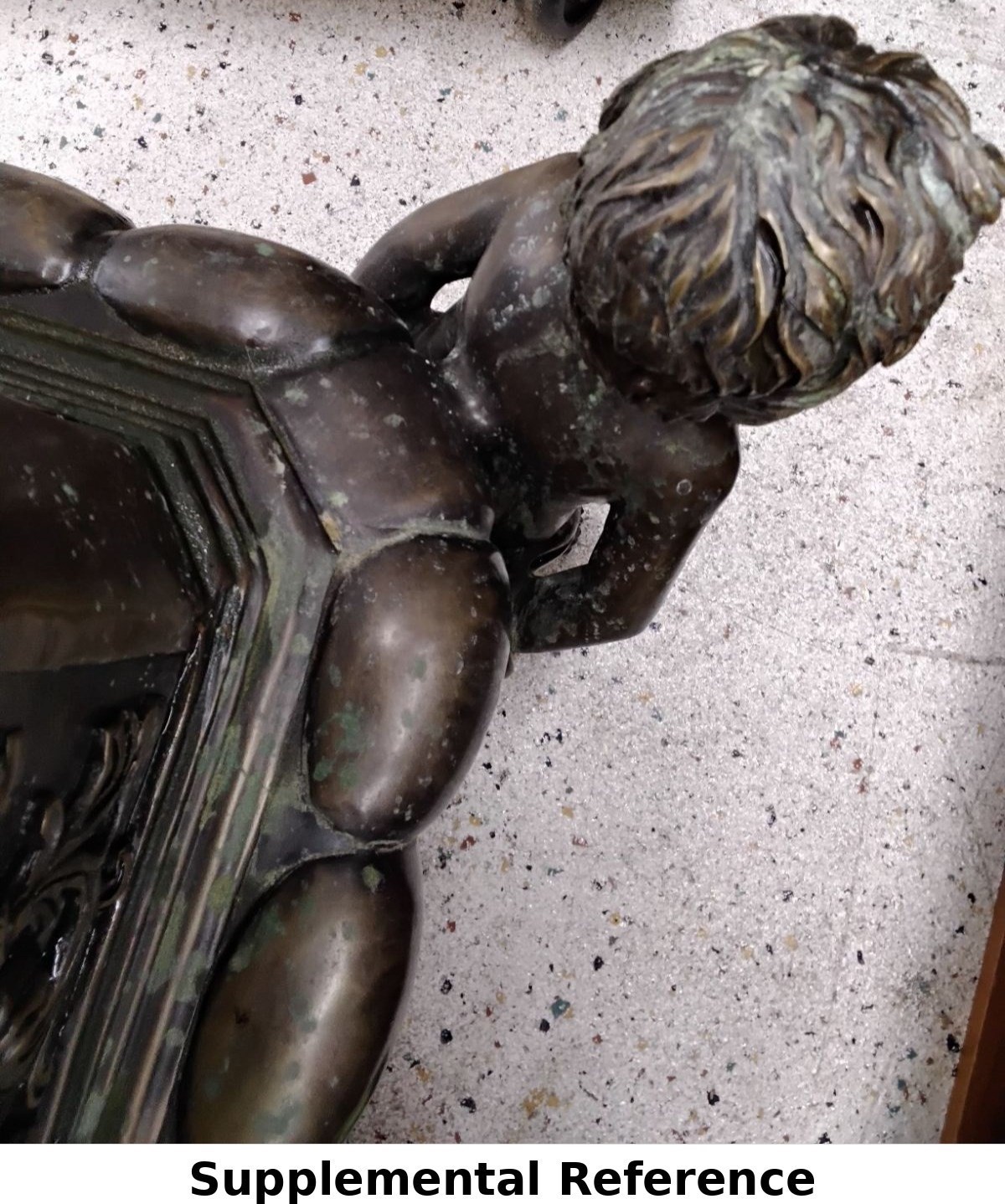
Good with age-appropriate wear throughout. Surface shows scattered verdigris speckling across the figures, base, and canted planter body, with rust and oxidation at recessed areas consistent with long-term exposure. The interior well carries a heavily encrusted, textured surface suggesting active use as a planter; the exterior patina is warm and even on the high-relief areas.
DIMENSIONS / SPECIFICATIONS
- Overall: 21½" H × 24½" W × 24½" D
- Internal Well: 10⅞" H × 14½" W × 14½" D
- Weight: 85 lbs
- Material: Cast solid bronze
- Marks: Unmarked; no visible foundry stamp or signature