19th Century European Majolica Floor Jar with Applied Grapevine Decoration View Watchlist >
Seller Accepts Credit Cards
Payment and pickup instructions will be available on your invoice (under "My Account") at the conclusion of this auction.
Lot # F526
System ID # 29265331
Start Date
End Date
8 Watching
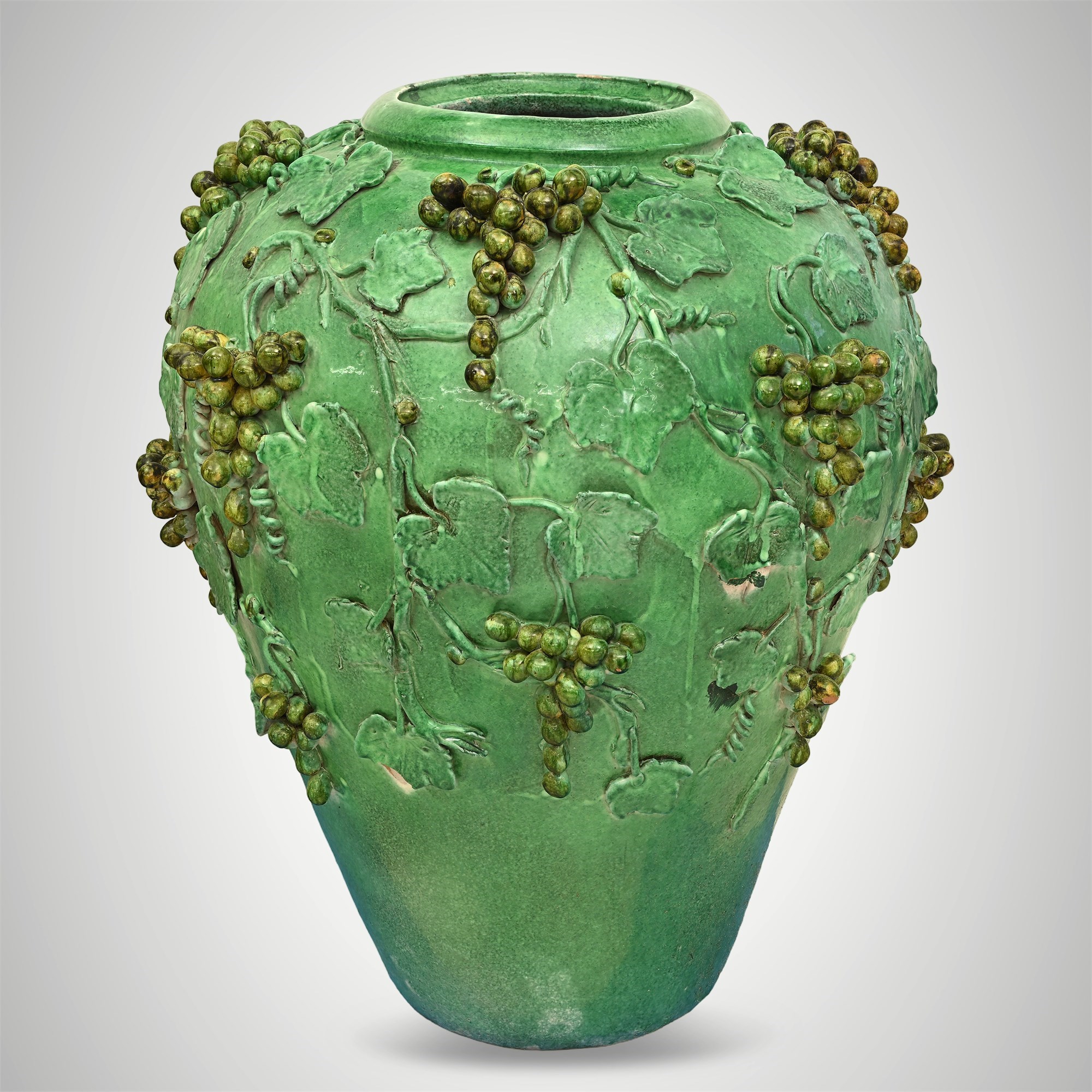
19th Century European Majolica Floor Jar with Applied Grapevine Decoration
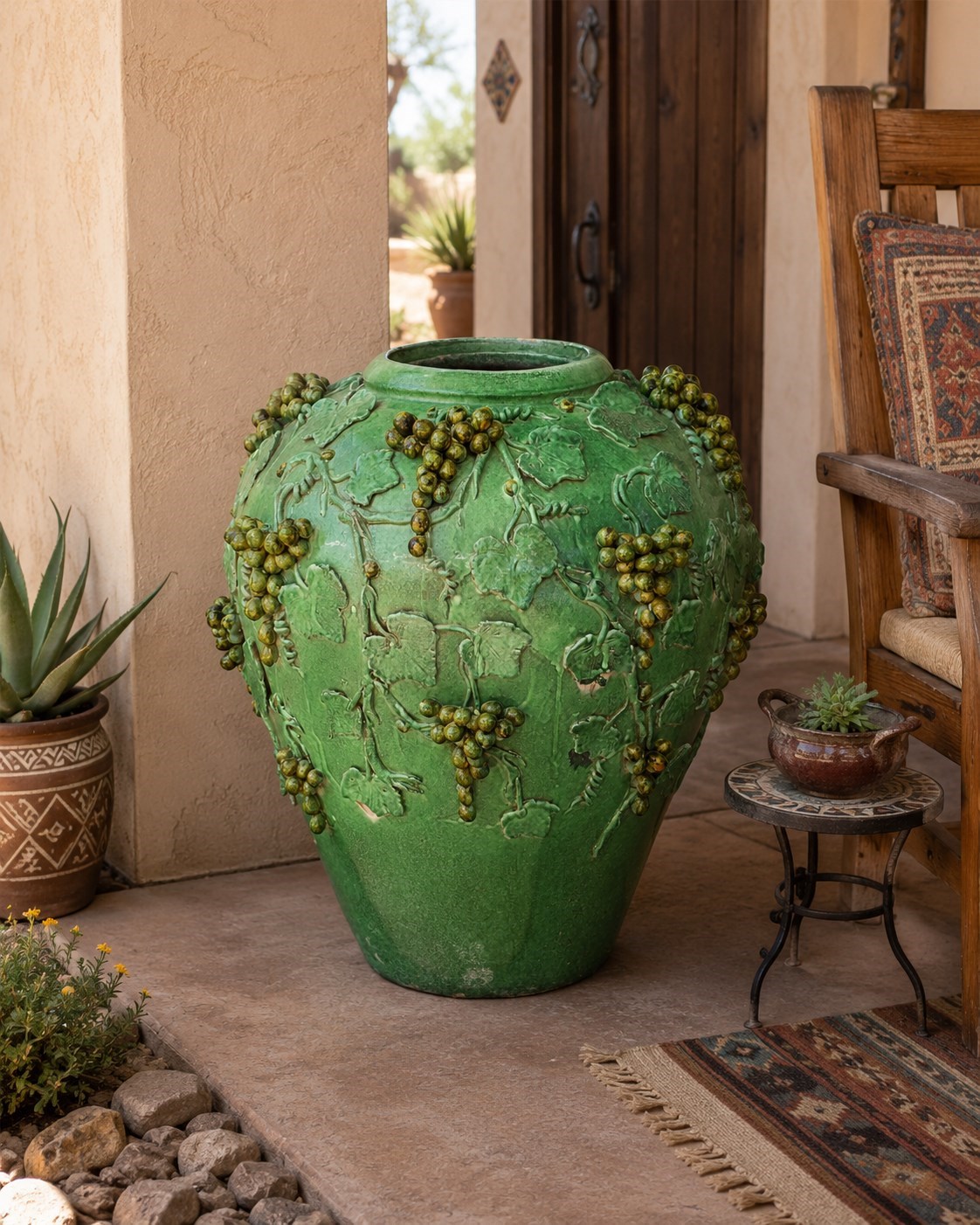
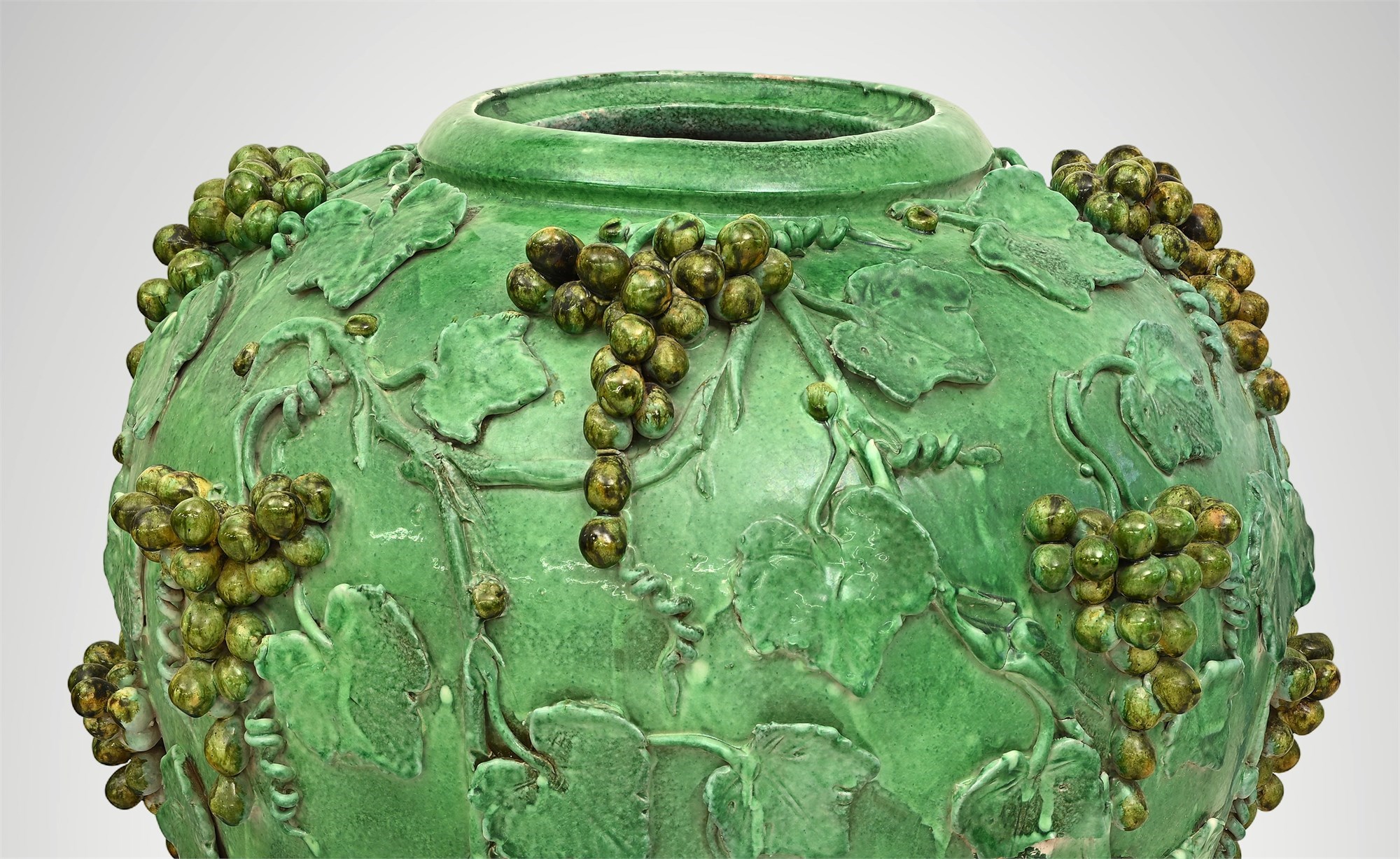
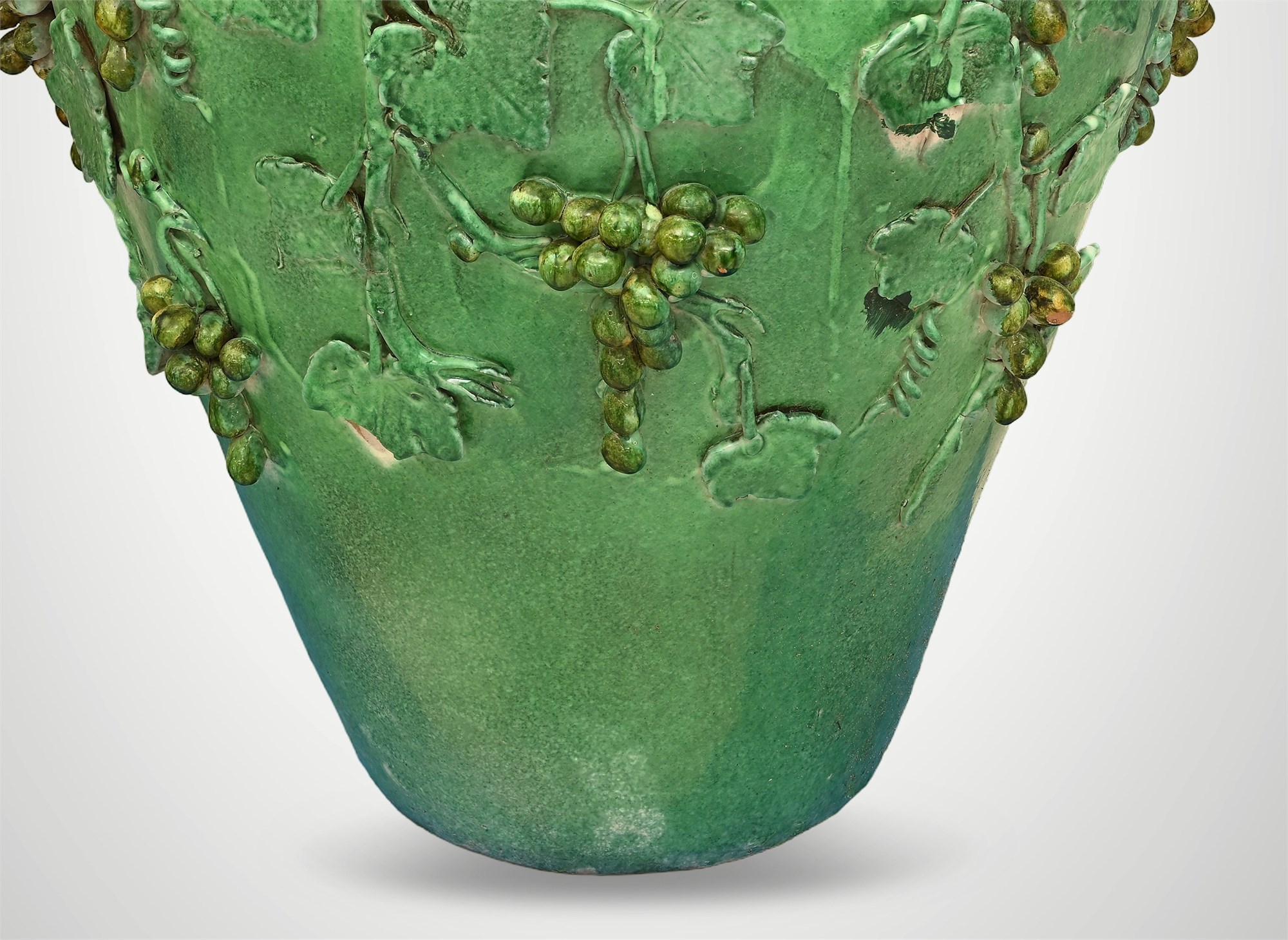
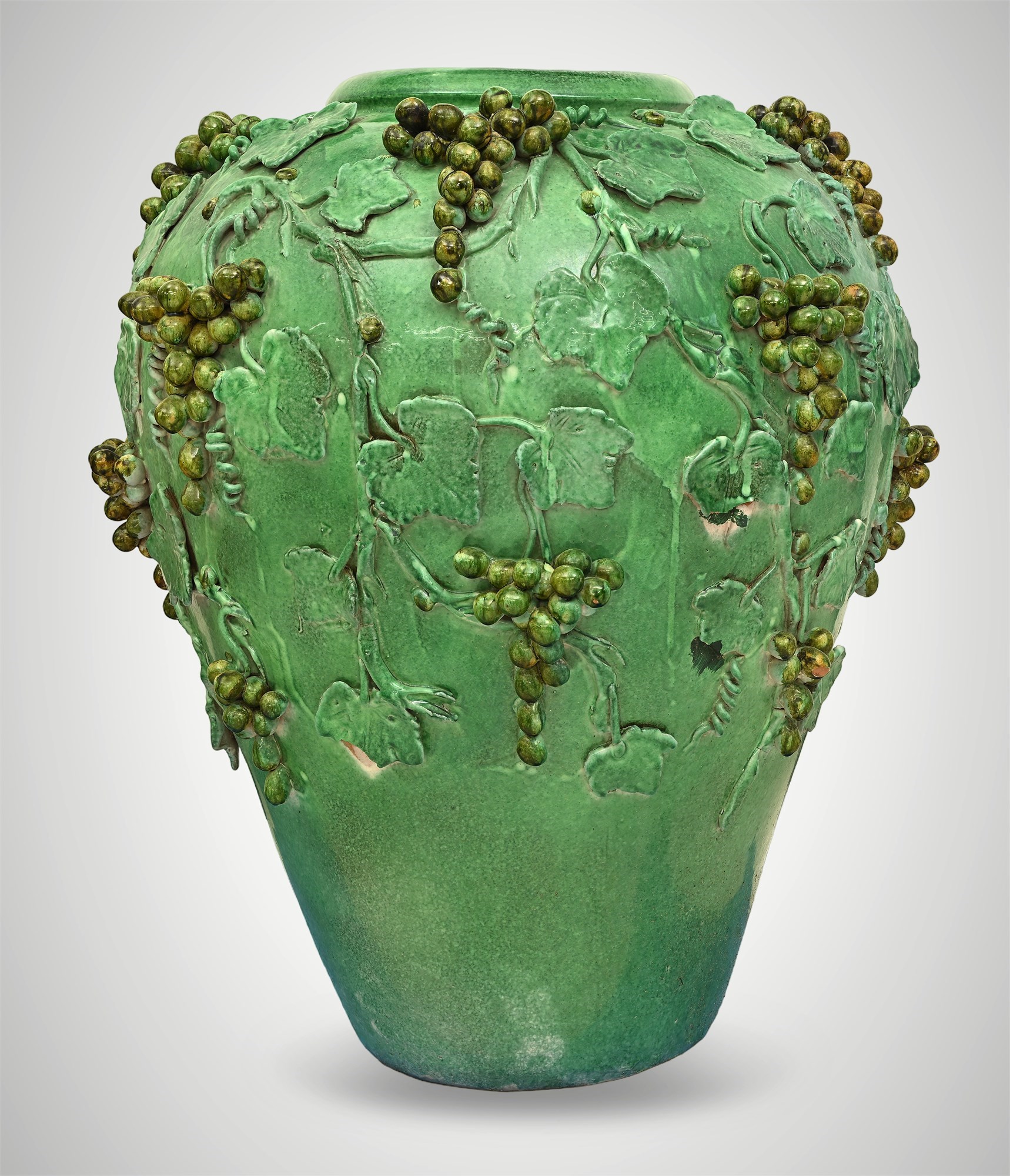
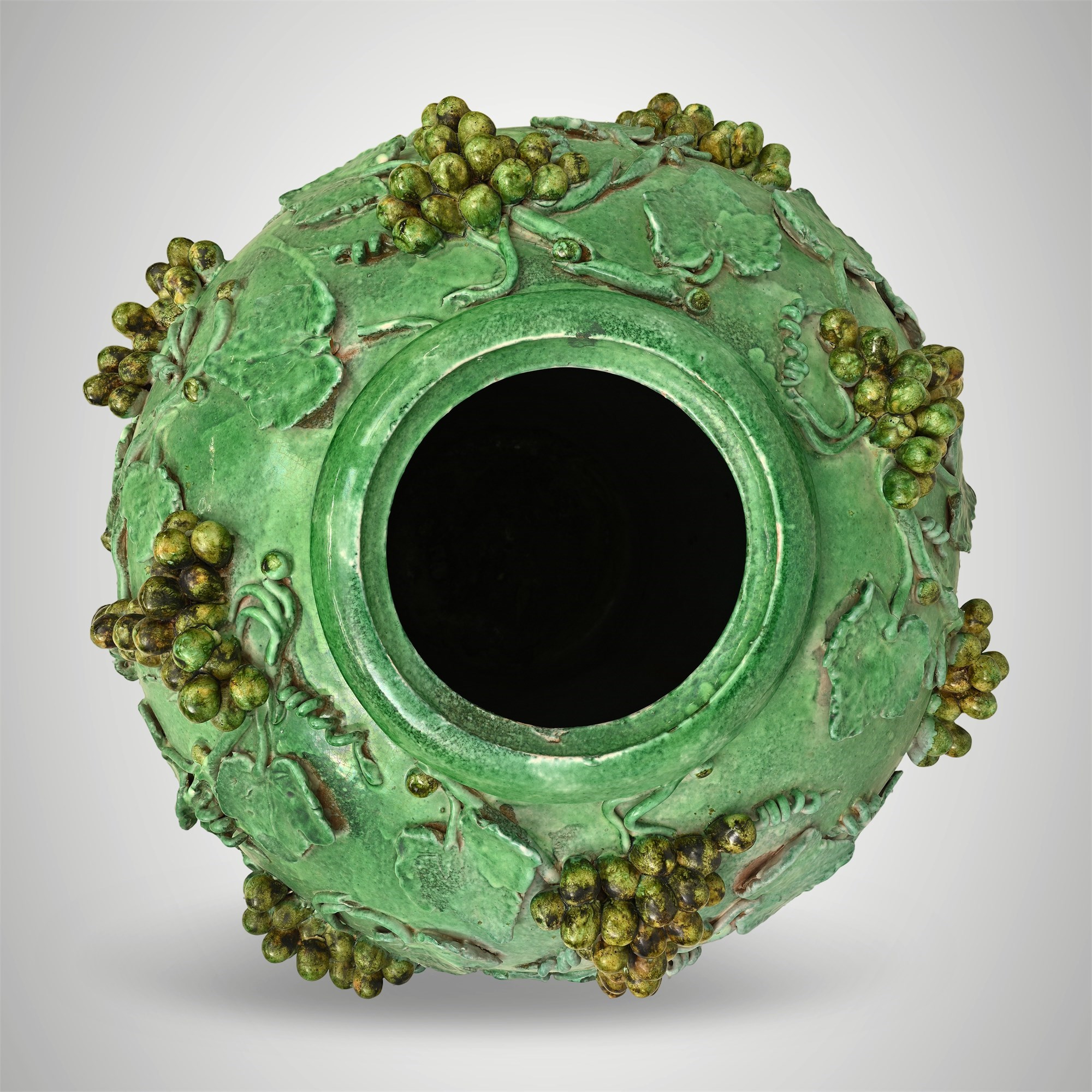
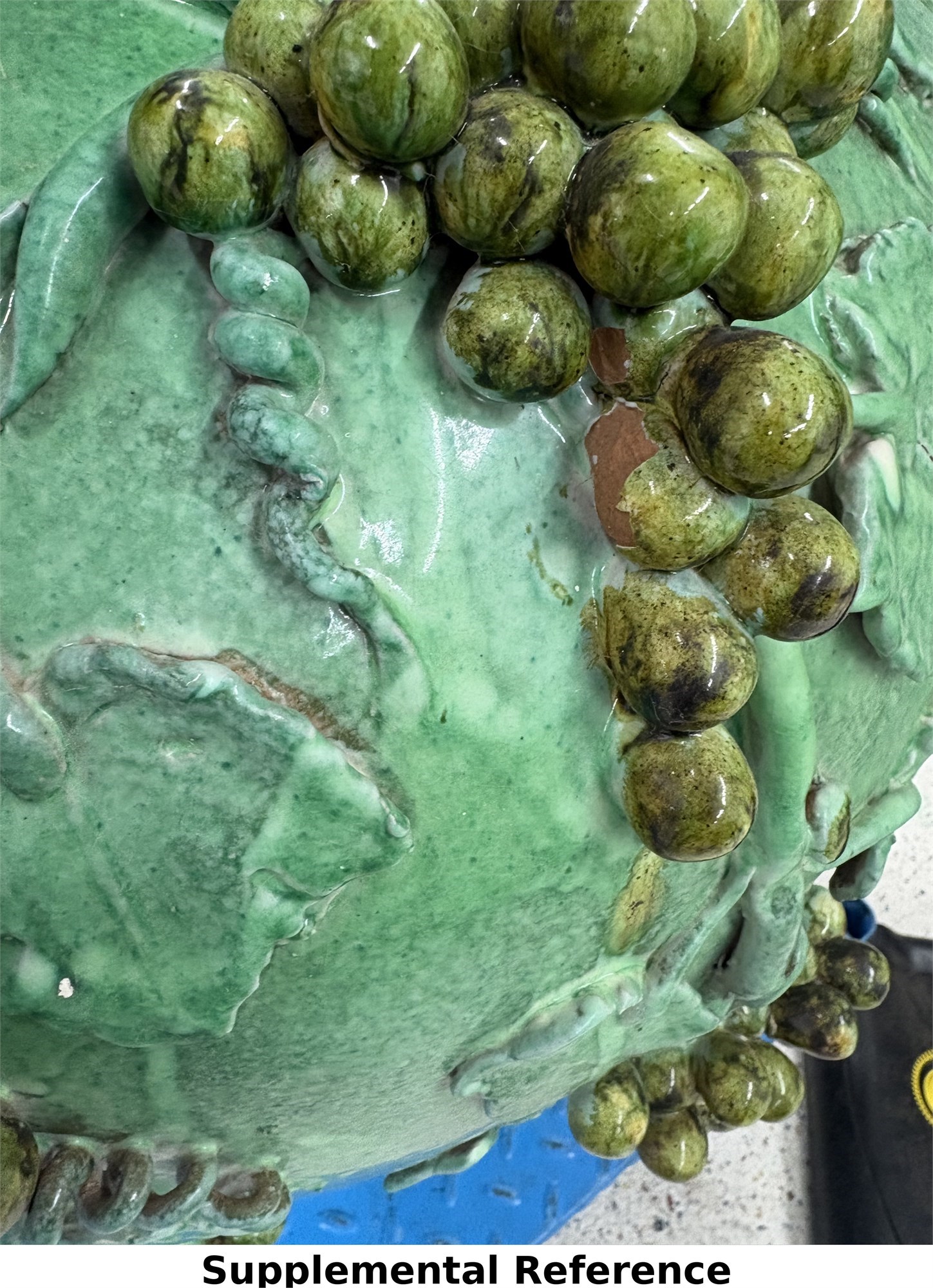
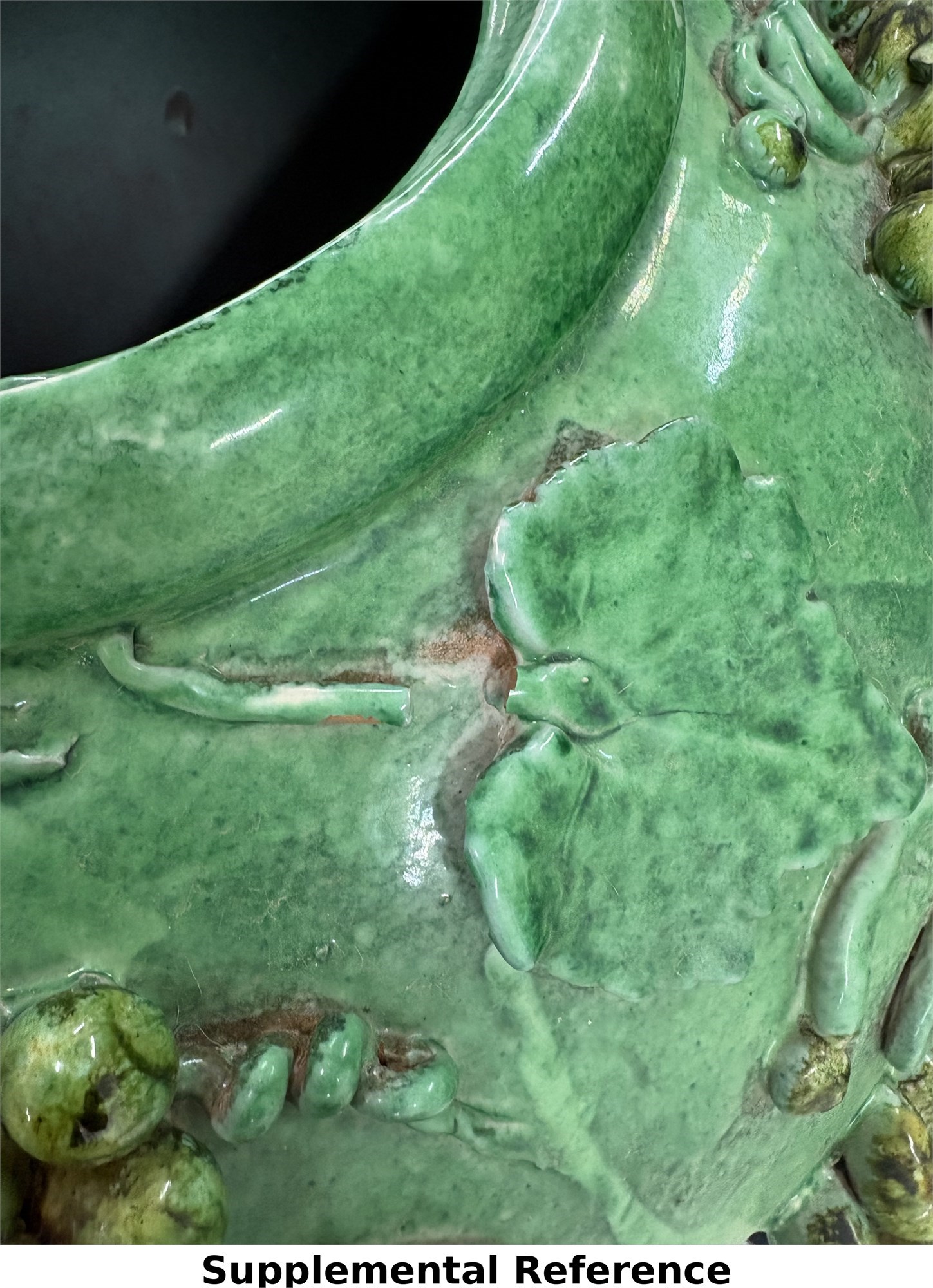
A substantial ovoid floor jar standing 28 inches tall, decorated overall with hand-applied grape clusters, incised vines, and relief leaves across a mottled green glaze. The grape berries are individually applied pellets — dozens of clusters circling the shoulder and body — finished in a higher-gloss variegated olive-to-amber green that contrasts against the satin field of the body. Vines twist between the clusters; broad relief leaves fill the spaces. The earthenware body shows through at the unglazed base and at scattered glaze losses.
This is genuine 19th century majolica in the European decorative tradition — the kind of ambitious, labor-intensive garden and interior ware produced by Italian, French, and Spanish workshops through the latter half of the 1800s. Every berry was rolled and applied by hand, every leaf and tendril worked into the surface before glazing. At roughly 75 pounds and over two feet tall with a 24-inch girth, it reads as a sculptural floor piece rather than a planter — the scale and decoration place it firmly in the category of statement pieces made for grand interiors, conservatories, and formal gardens.
History
The European majolica revival of the mid-to-late 19th century produced some of the most ambitious decorative earthenware of the period. Workshops in Italy (notably around Florence and the Tuscan tradition), France (the Palissy school and its inheritors), and Spain (Triana and Valencia) competed to produce ever more elaborate applied and modeled ornament. Grapevine motifs were favored for their classical associations with abundance and Bacchic ritual, and for the technical challenge: each berry, leaf, and tendril is a separate piece of clay, applied wet, and required to survive both the bisque and glaze firings. Pieces at this scale with this density of applied ornament represent significant workshop investment.
CONDITION
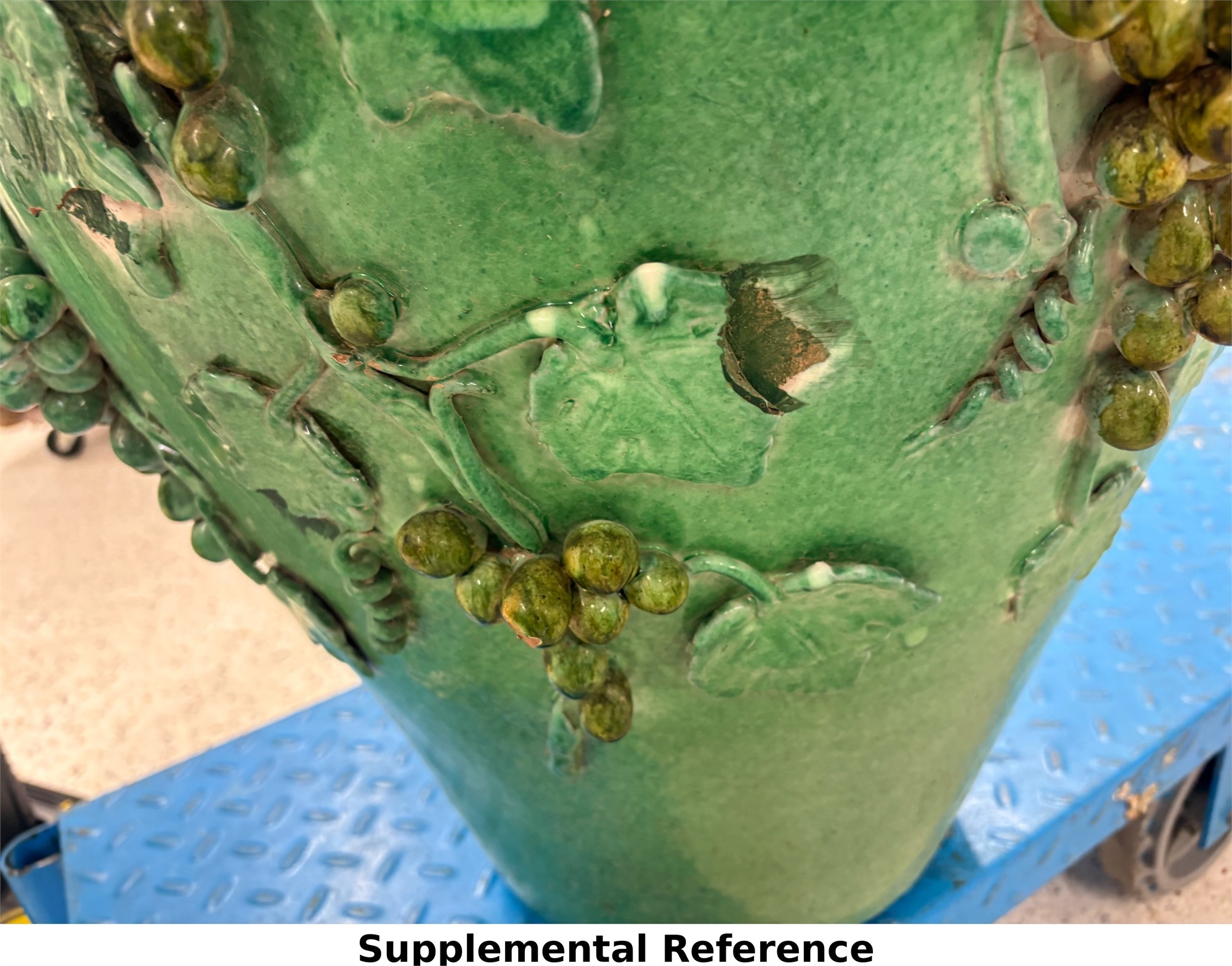
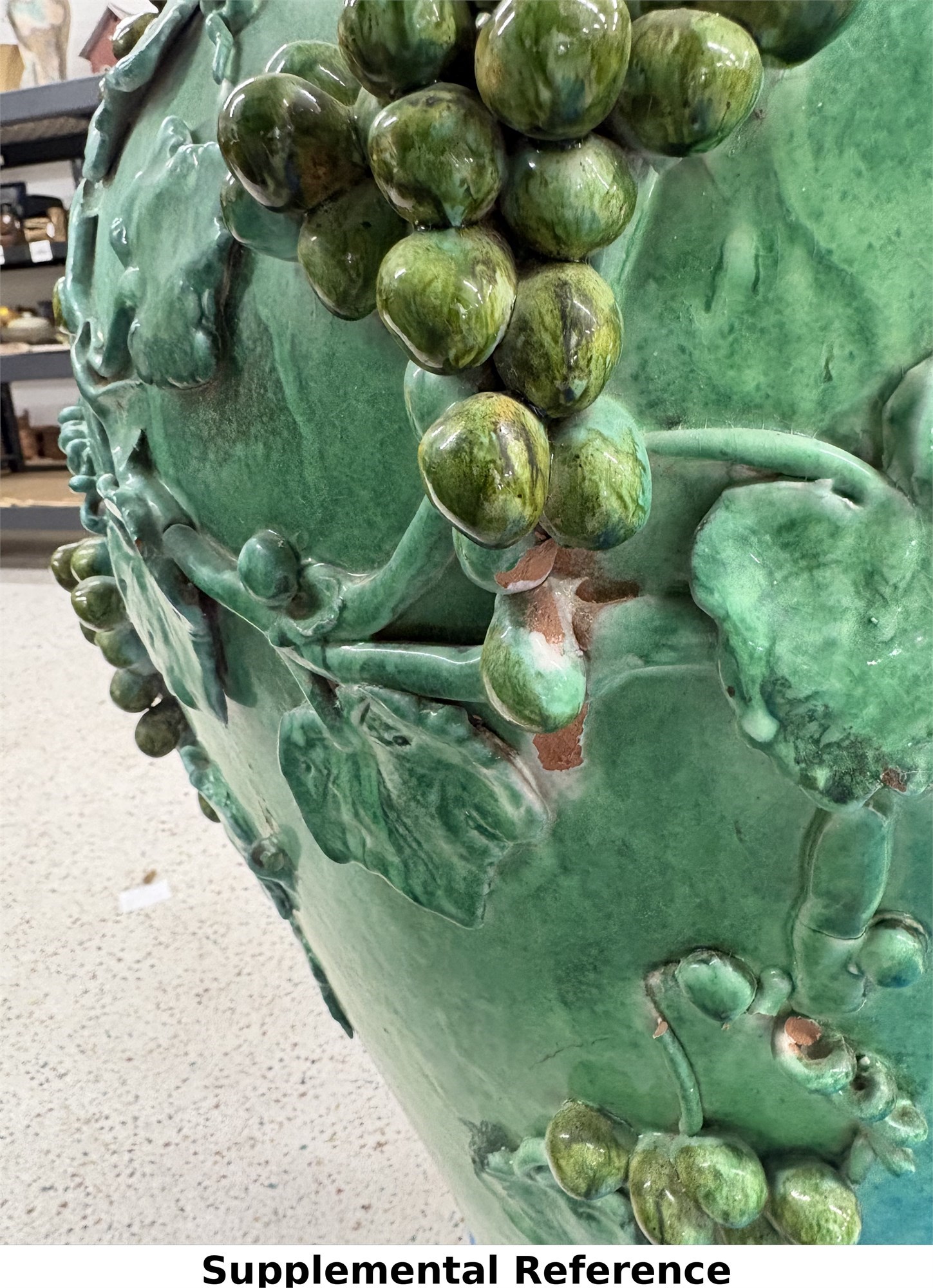
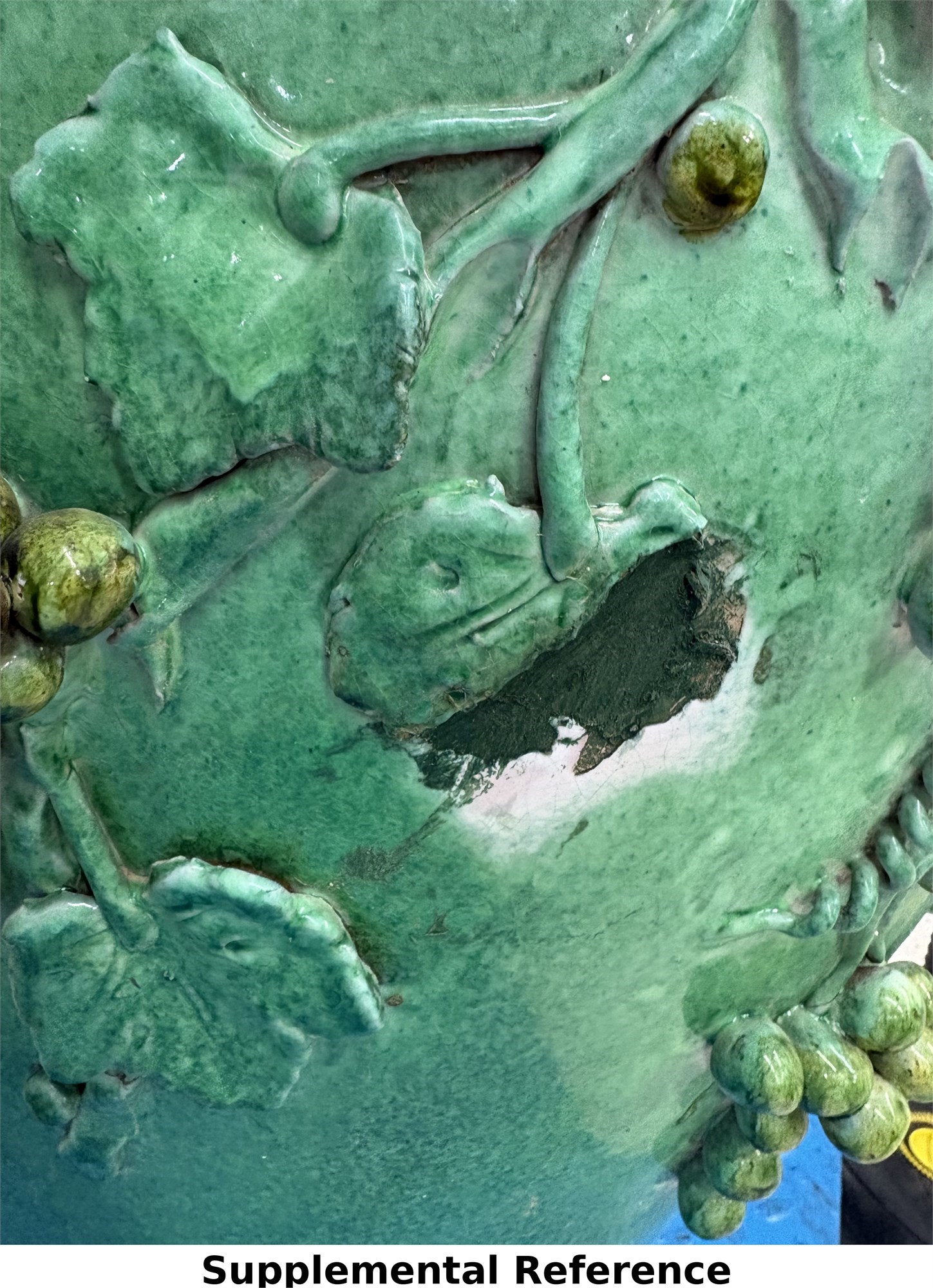
Good with notable losses appropriate to age. Multiple glaze loss patches expose the earthenware body, including one larger area approximately 2–3 inches across with darkened staining. Several grape berries are missing or broken off across various clusters. Surface wear and minor chips throughout consistent with a 19th century earthenware piece of this scale. Structurally sound; no through-body cracks observed.
DIMENSIONS / SPECIFICATIONS
- Height: 28"
- Width: 24½"
- Depth: 24½"
- Weight: Approx. 75 lbs
- Material: Glazed earthenware (majolica)