Bernadette Pino 1995 Carved & Painted New Mexican Triptych Retablo View Watchlist >
- Winning Bid: $1,450.00
- 72 Bid(s) View Bid History
- High Bidder: lmbcm
Seller Accepts Credit Cards
Payment and pickup instructions will be available on your invoice (under "My Account") at the conclusion of this auction.
Lot # F552
System ID # 29260467
Start Date
End Date
24 Watching
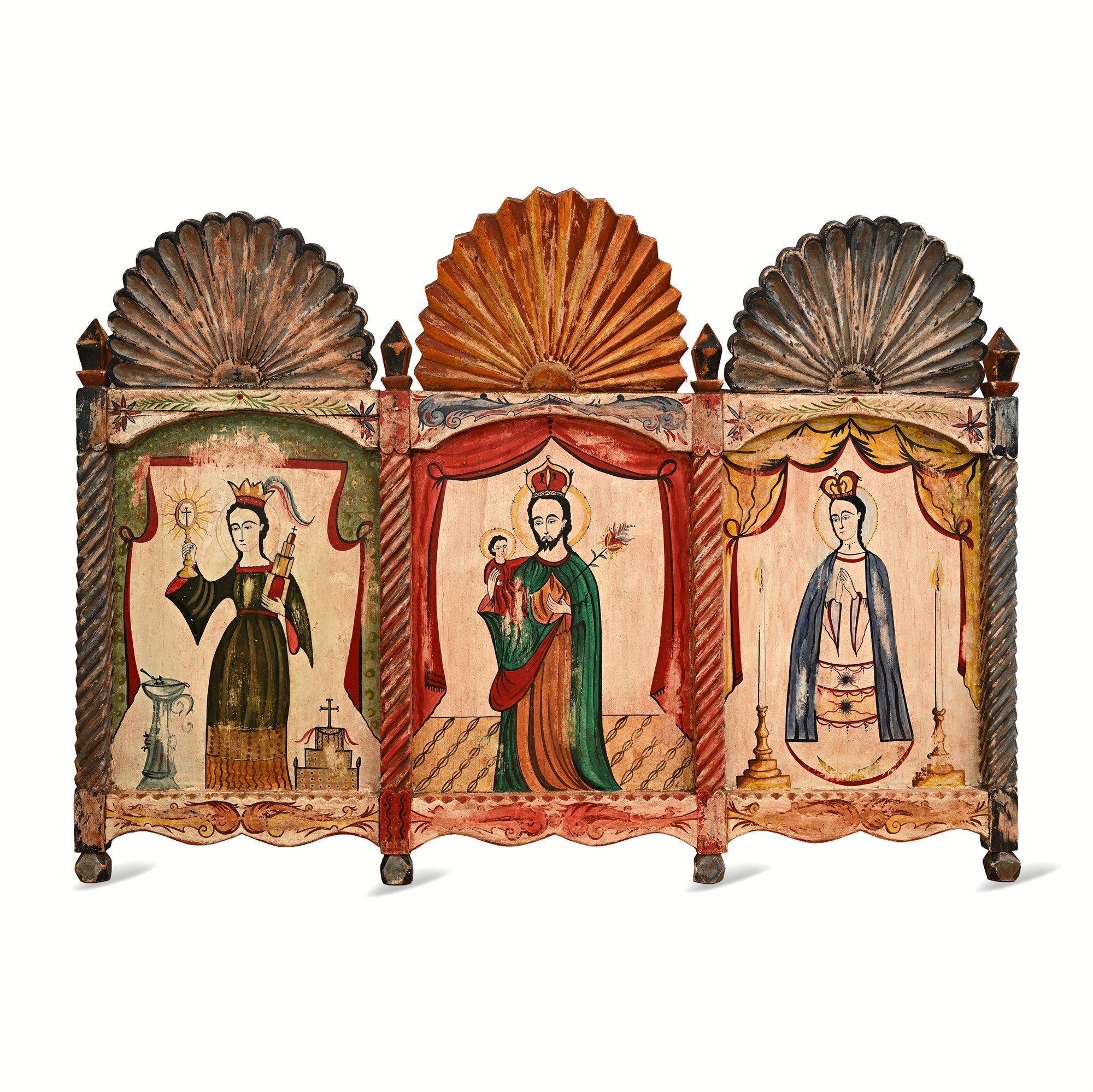
Bernadette Pino 1995 Carved & Painted New Mexican Triptych Retablo — San José, Santa Bárbara, Nuestra Señora de los Lagos
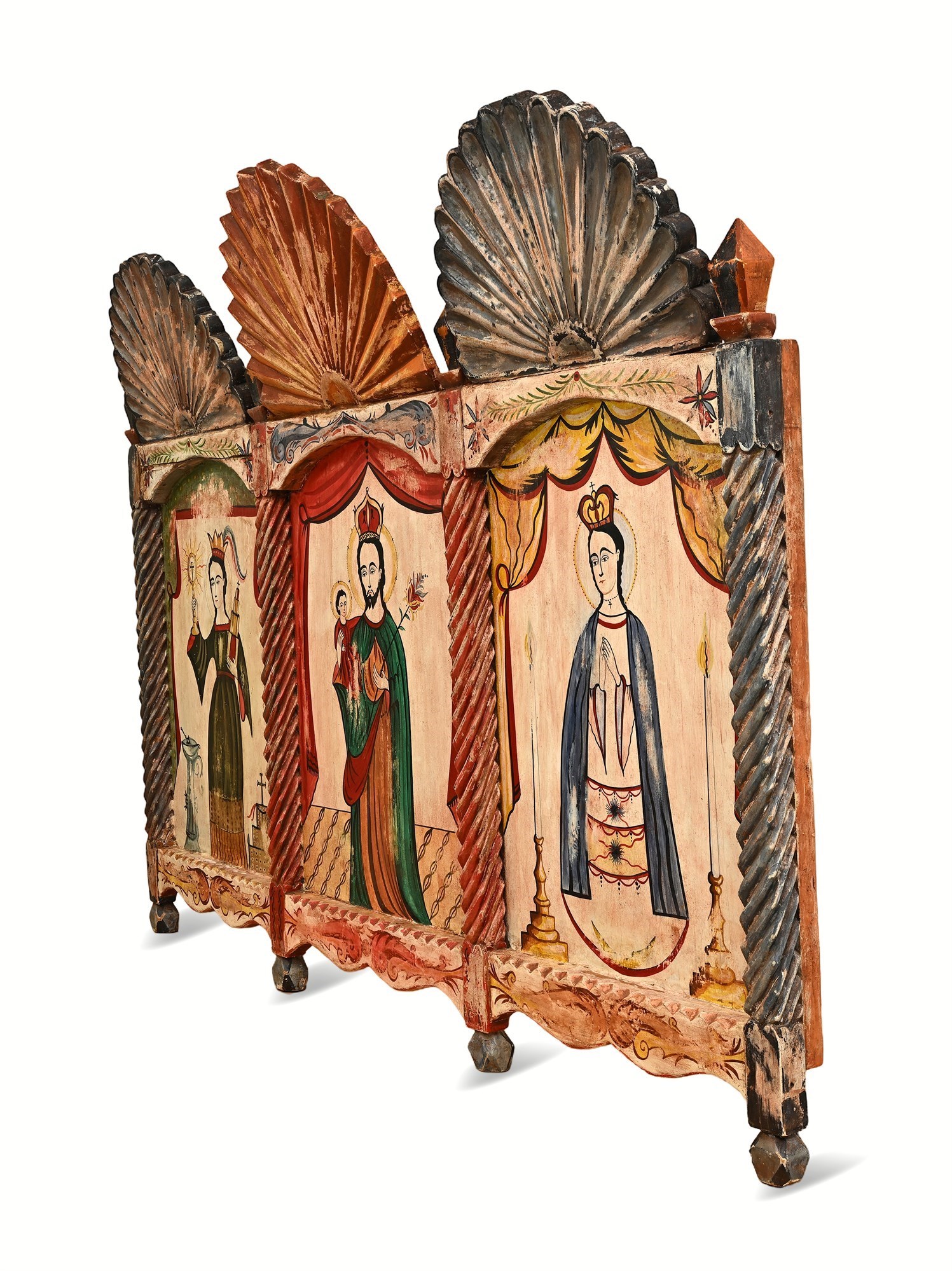
This is not a decorative object. It is a working altarpiece — built for prayer, scaled for a home oratory or chapel niche, and made by a hand that understood the weight of each saint she invoked. Bernadette Pino signed and dated the central panel's verso in 1995, and the inscription she left there — saint by saint, patronage by patronage, in her own hand — makes clear that this piece was conceived as functional devotional furniture, not folk art product. She is working squarely inside the New Mexican santero tradition, a lineage that runs from the anonymous 19th-century workshop masters of Chimayó, Taos, and the Rio Arriba villages through the 20th-century revival figures who fought to keep the tradition alive as living practice rather than museum artifact. The piece is carved, painted, inscribed, and complete.
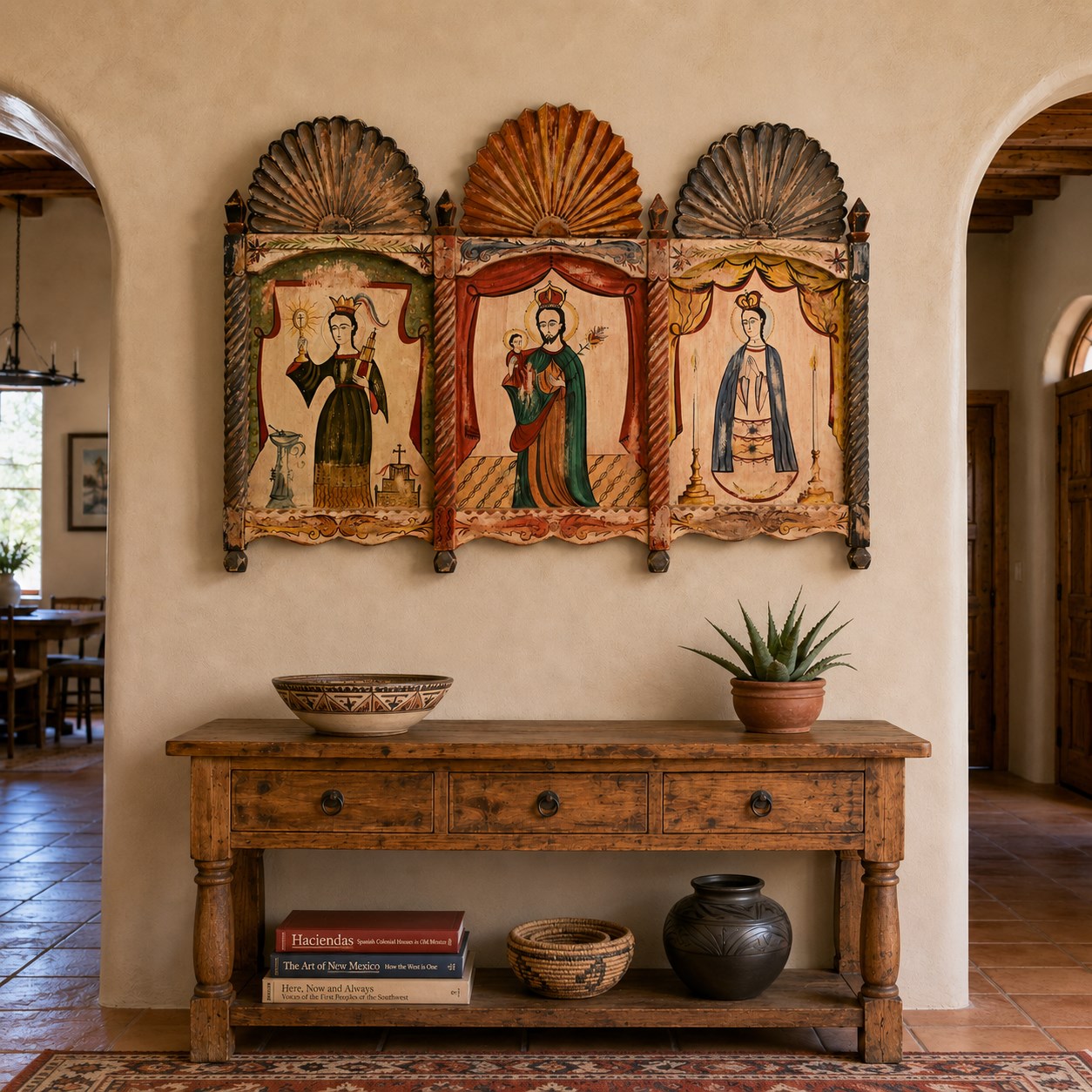
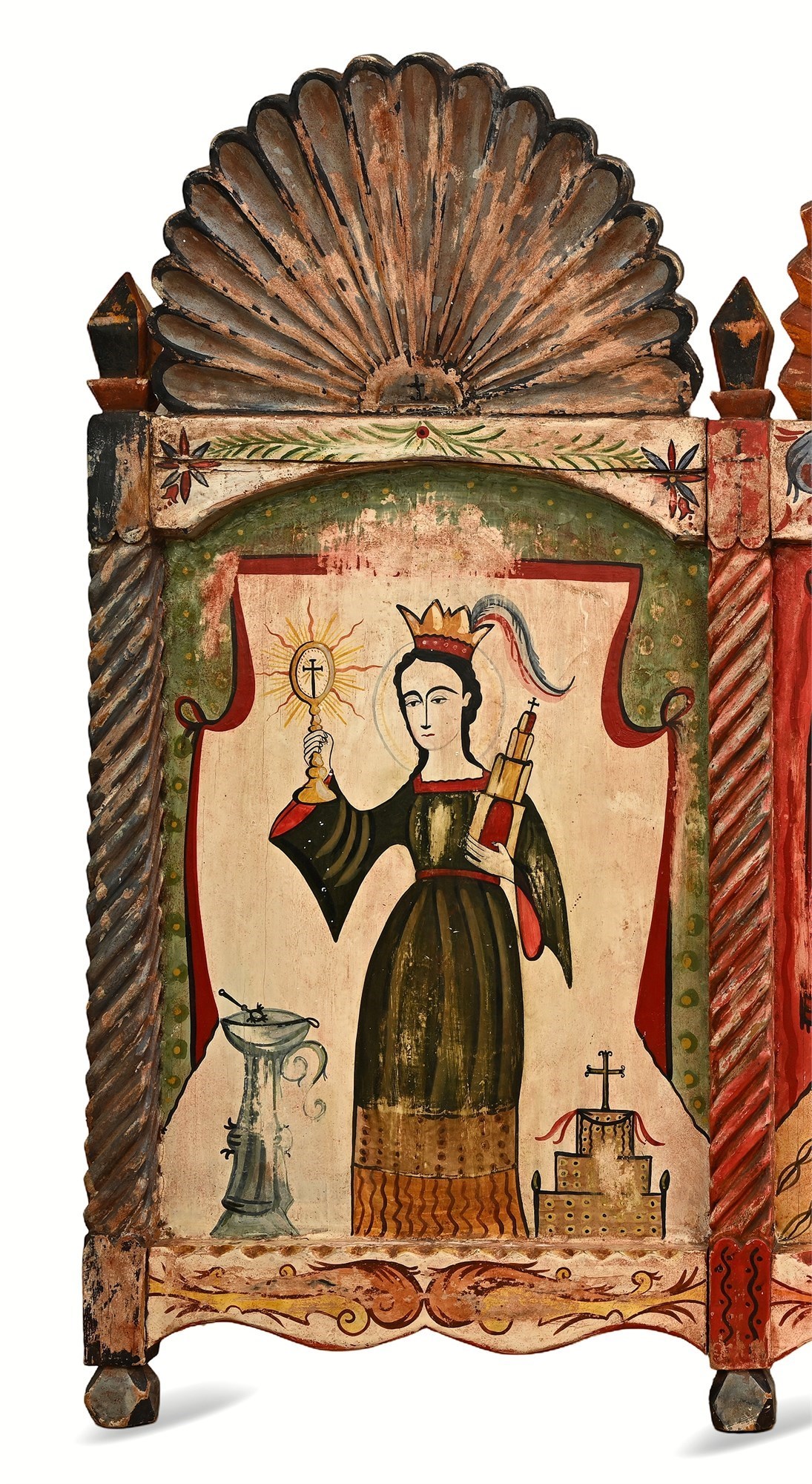
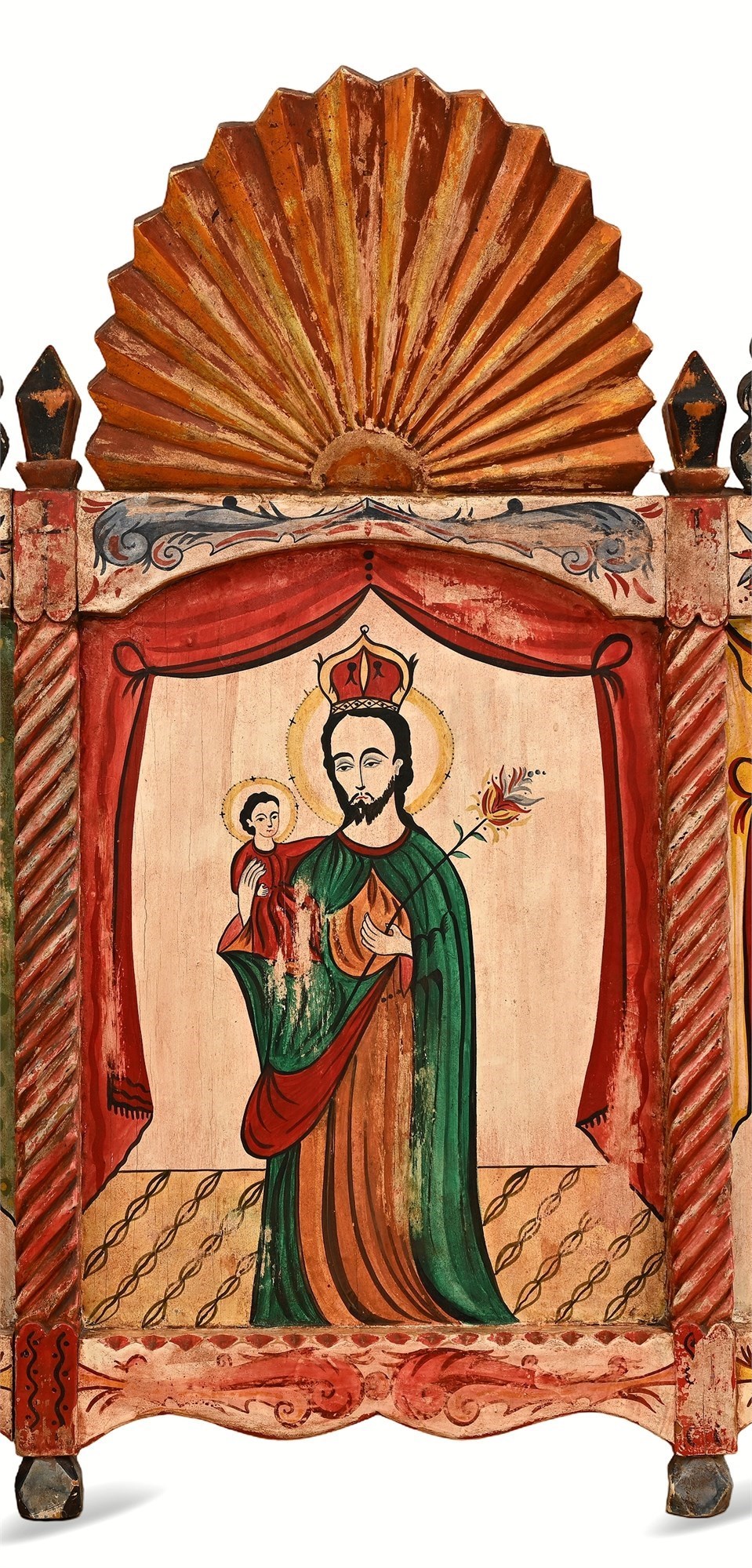
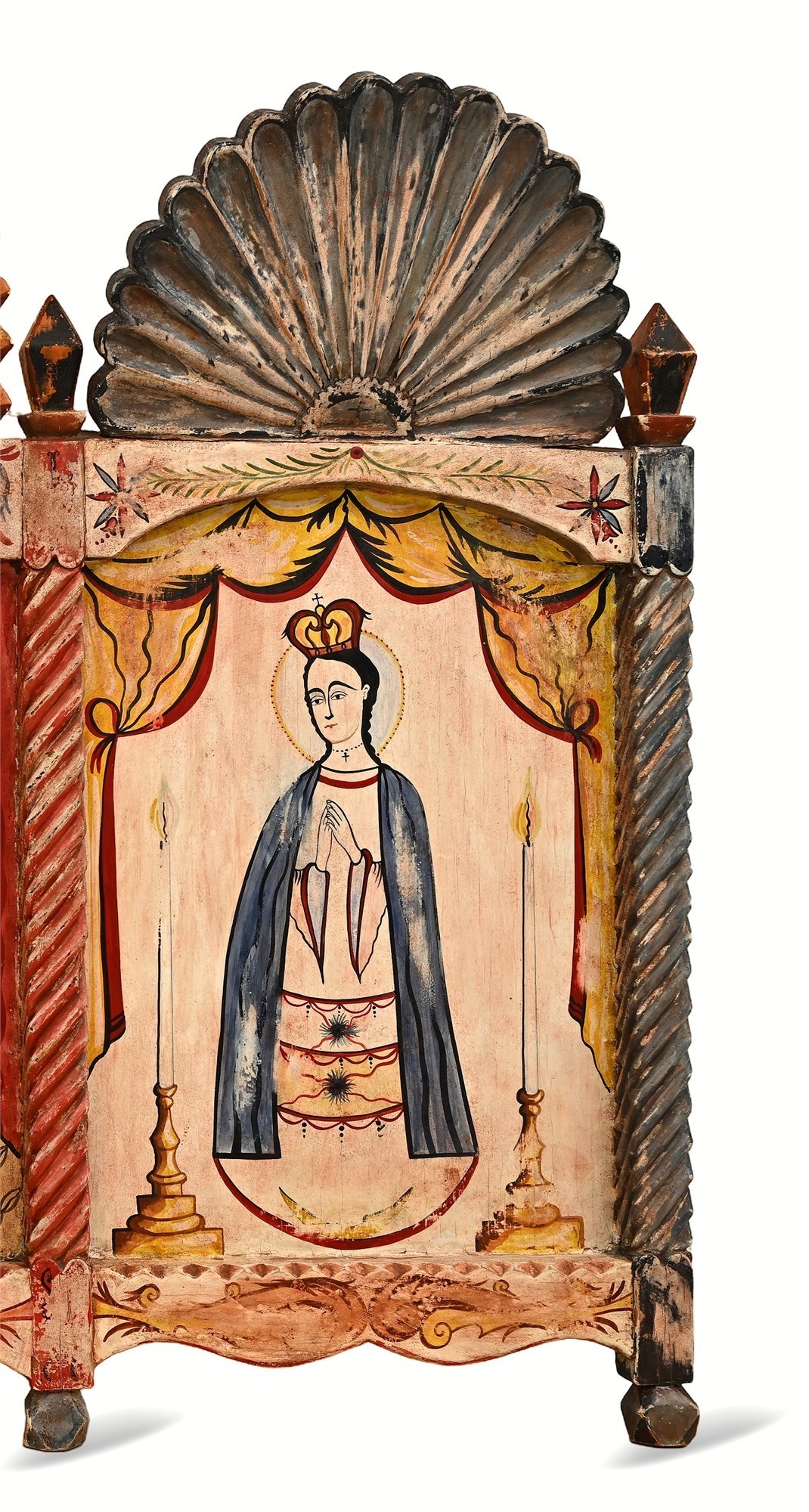
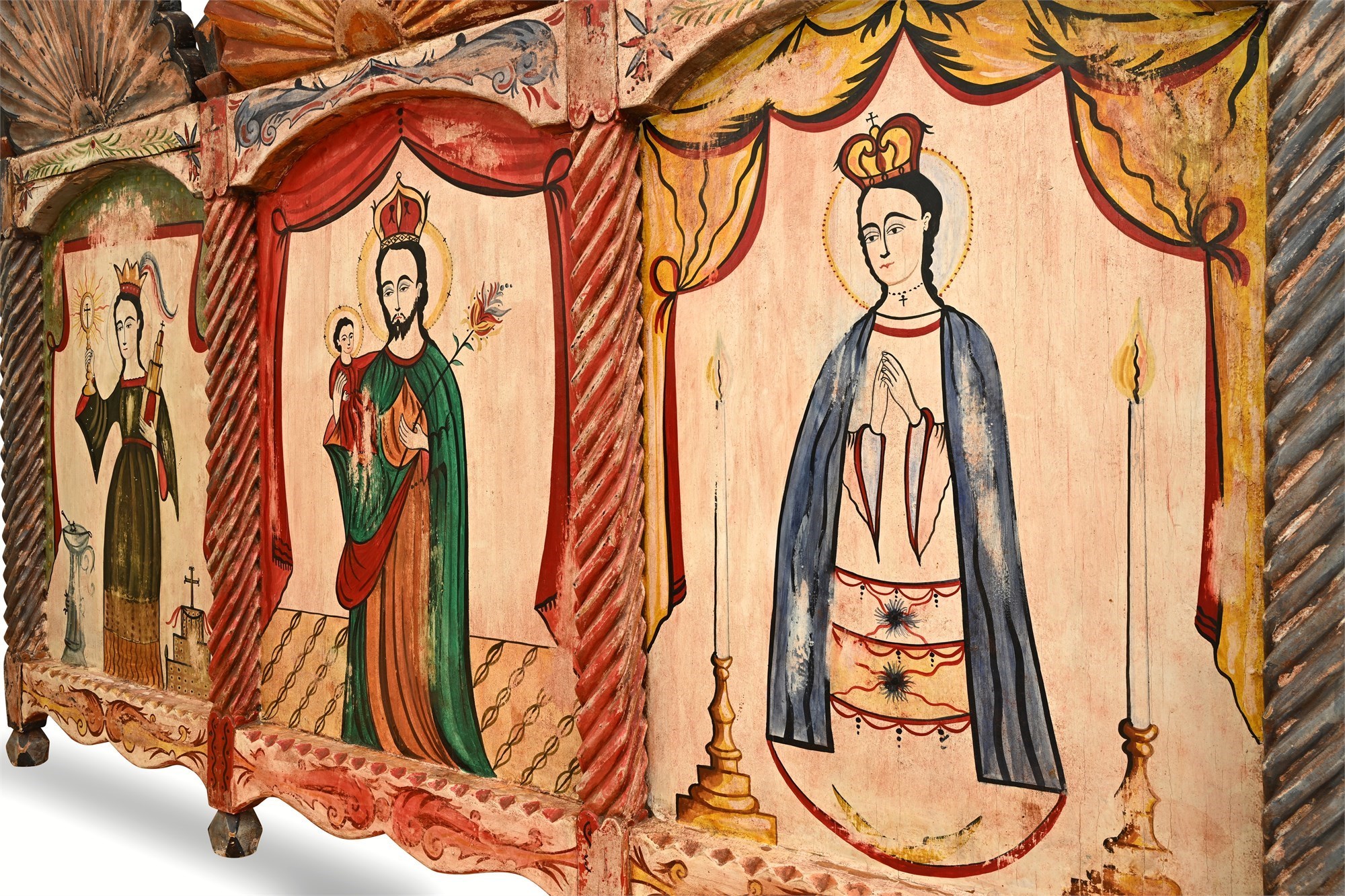
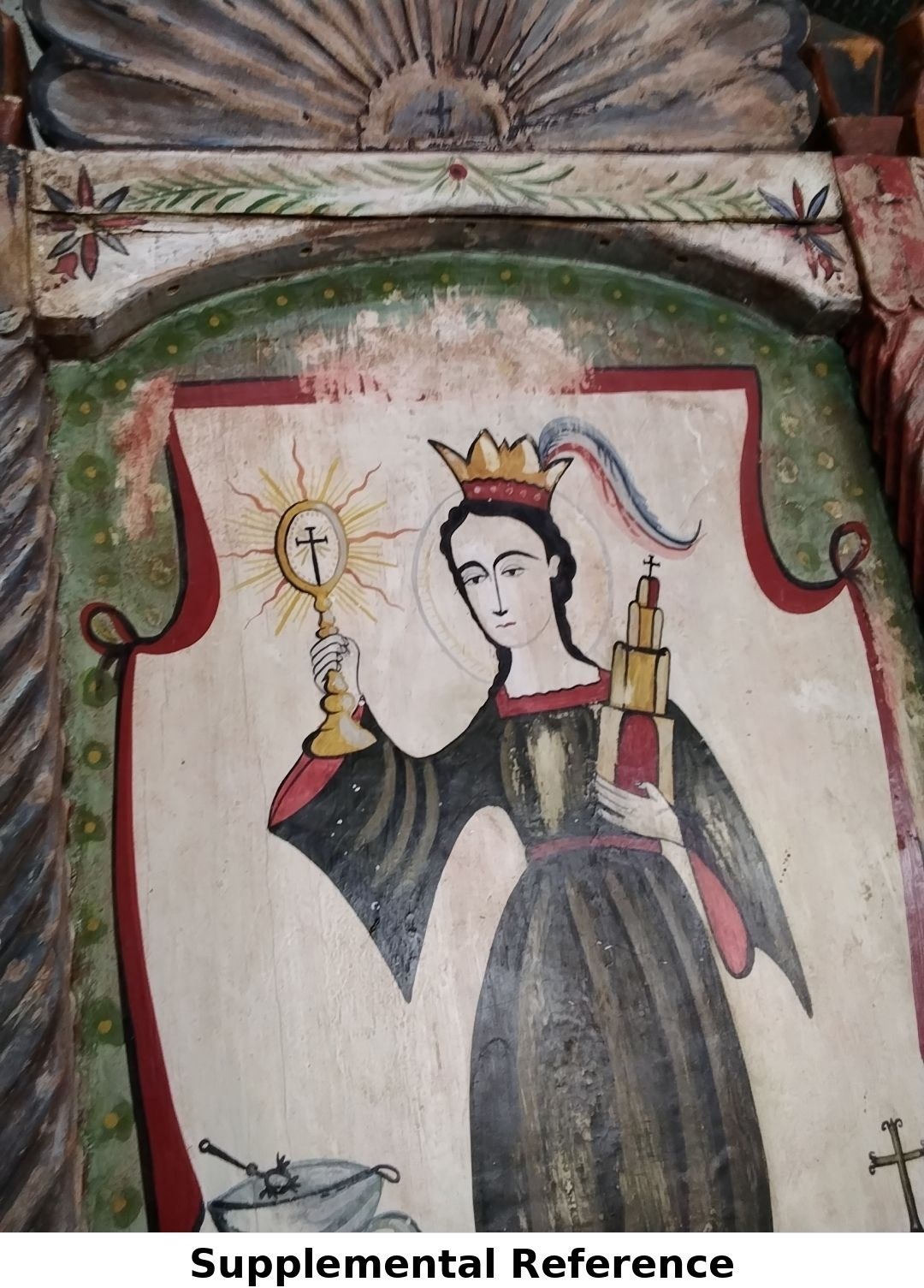
The structure is a three-panel joined screen — a retablo triptych — with each arched bay crowned by a deeply carved scalloped shell: the center shell cut with radiating ribs and finished in warm red-orange, the flanking pair silvered in gray-black, all three rising above painted-wood spire finials and spiral rope-twist columns. The scallop shell in New Mexican religious folk art is a direct inheritance from the Spanish Baroque estipite retablo tradition — the same device that organizes the altarscreens of the colonial churches at Chimayó and Las Trampas. The apron rail is scallop-cut and scroll-painted in red and ochre; six hand-carved bun feet carry the weight. Each panel houses its saint under a painted curtain or niche canopy in the conventions of Spanish Colonial devotional painting: Santa Bárbara at left, crowned and plumed, bearing her attribute monstrance in her right hand and her three-tiered tower in her left, a chalice-font and fortified tower with cross at her feet; San José at center beneath full red theatrical drapery, the Christ Child on his left arm and the flowering lily staff in his right, the whole figure crowned and haloed in the manner of a sovereign rather than a humble carpenter; and Nuestra Señora de los Lagos at right beneath gold and crimson swags, hands joined at her chest, swords of sorrow crossing her midriff, the crescent moon beneath her feet and tall candlesticks flanking — identifying her as the miraculous image venerated at the Basílica de Nuestra Señora de San Juan de los Lagos in Jalisco, one of the most-visited pilgrimage sites in Mexico.
The Artist
Bernadette Pino works in the living New Mexican santero tradition — a craft revival sustained through the second half of the 20th century by artists, scholars, and institutions determined to maintain devotional woodcarving as practice rather than artifact. The tradition she draws from is a direct descendant of the anonymous masters active in northern New Mexico from roughly 1790 through the 1860s — the so-called "Laguna Santero," the "Truchas Master," José Aragón — who supplied the mission churches and home oratories of a colony too remote and too poor to import academic religious art from Mexico City or Spain. What those carvers made instead was something entirely their own: flat planes, bold local color, frontally composed figures that owe as much to the indigenous visual environment as to European devotional prints. Pino's 1995 triptych is built on exactly that grammar — the rope-twist columns, the scallop shell crests, the curtained niches, the attributes held flat against the picture plane. The piece dates from a period when the Contemporary Hispanic Market in Santa Fe had become a recognized venue for serious new work in the tradition, and large-format carved retablos of this ambition were understood as significant commissions. That Pino also inscribed each panel's verso with the saint's name and patronage — in her own hand, in a careful English that reads almost like a votive card — suggests she intended this piece for use.
Iconography & Inscriptions
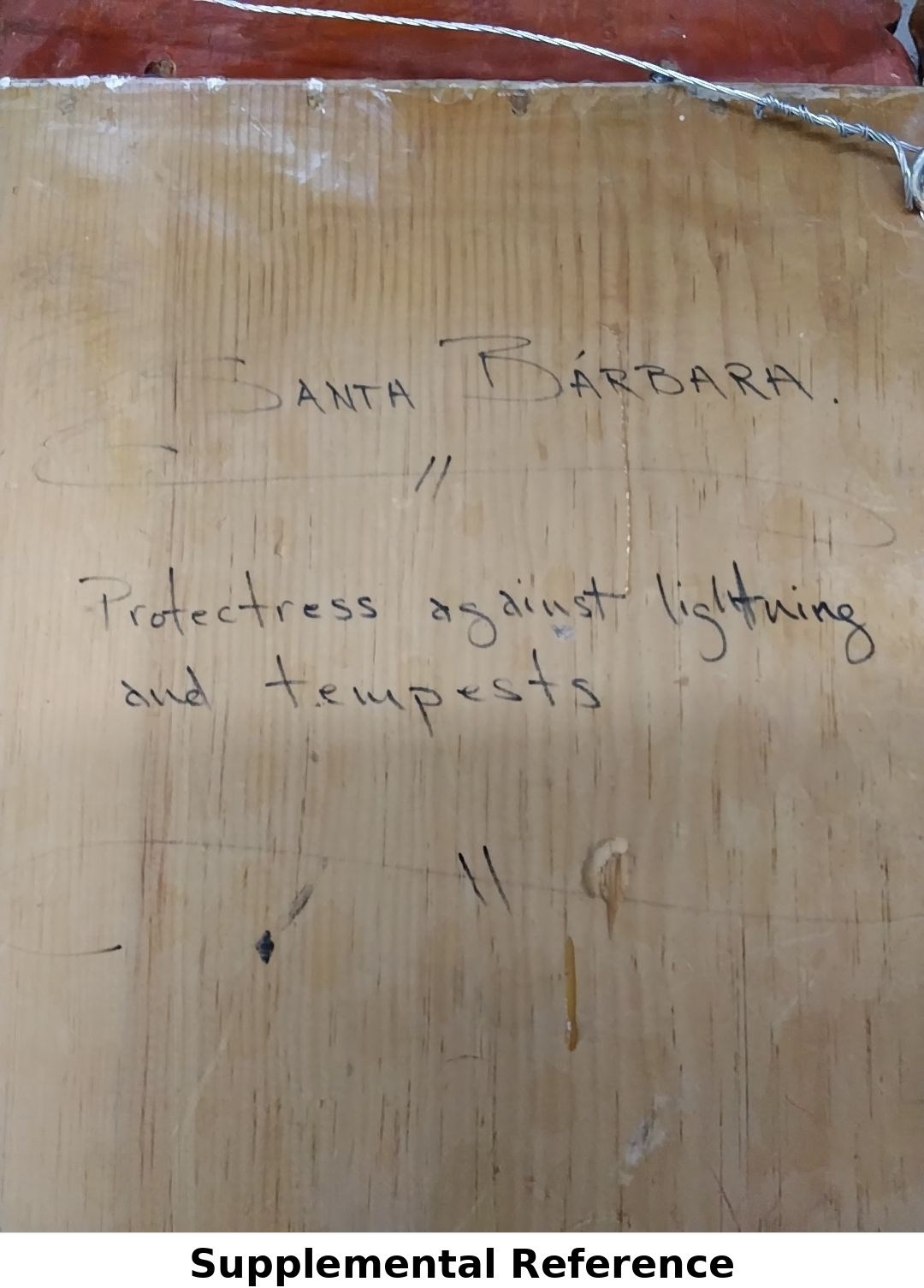
- Left panel — Santa Bárbara: Crowned with plume, bearing monstrance in right hand and three-tiered tower in left; chalice-font and fortified tower with cross at her feet. Verso inscribed: "Santa Bárbara — Protectress against lightning and tempests." Barbara's tower — in which her pagan father imprisoned her — is her universal attribute; the three windows she reportedly cut into it to honor the Trinity are sometimes represented in the tower's tiers. In popular devotion across the Spanish-speaking world she is also the patron of artillerymen and miners, and by extension a protector against all sudden violent death.
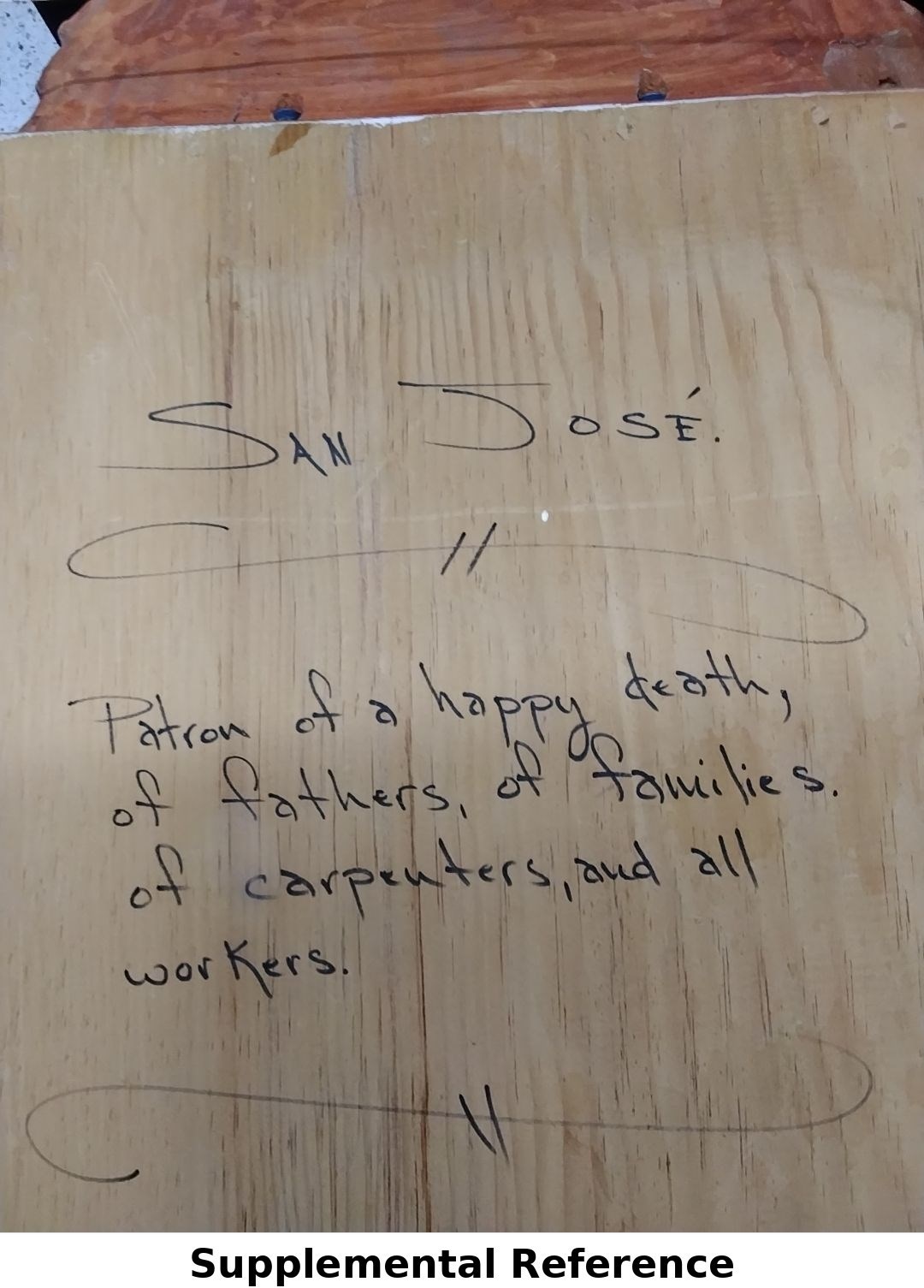
- Center panel — San José: Crowned, haloed, holding the Christ Child on one arm and the flowering lily staff in the other, beneath red theatrical drapery. Verso inscribed: "San José — Patron of a happy death, of fathers, of families, of carpenters, and all workers." The lily staff — flowering as a sign of Joseph's divine election as Mary's spouse — is his primary attribute. His patronage of carpenters is ancient; his patronage of a "happy death" (dying in the presence of Jesus and Mary) made him one of the most widely petitioned saints in New Mexican home devotion.
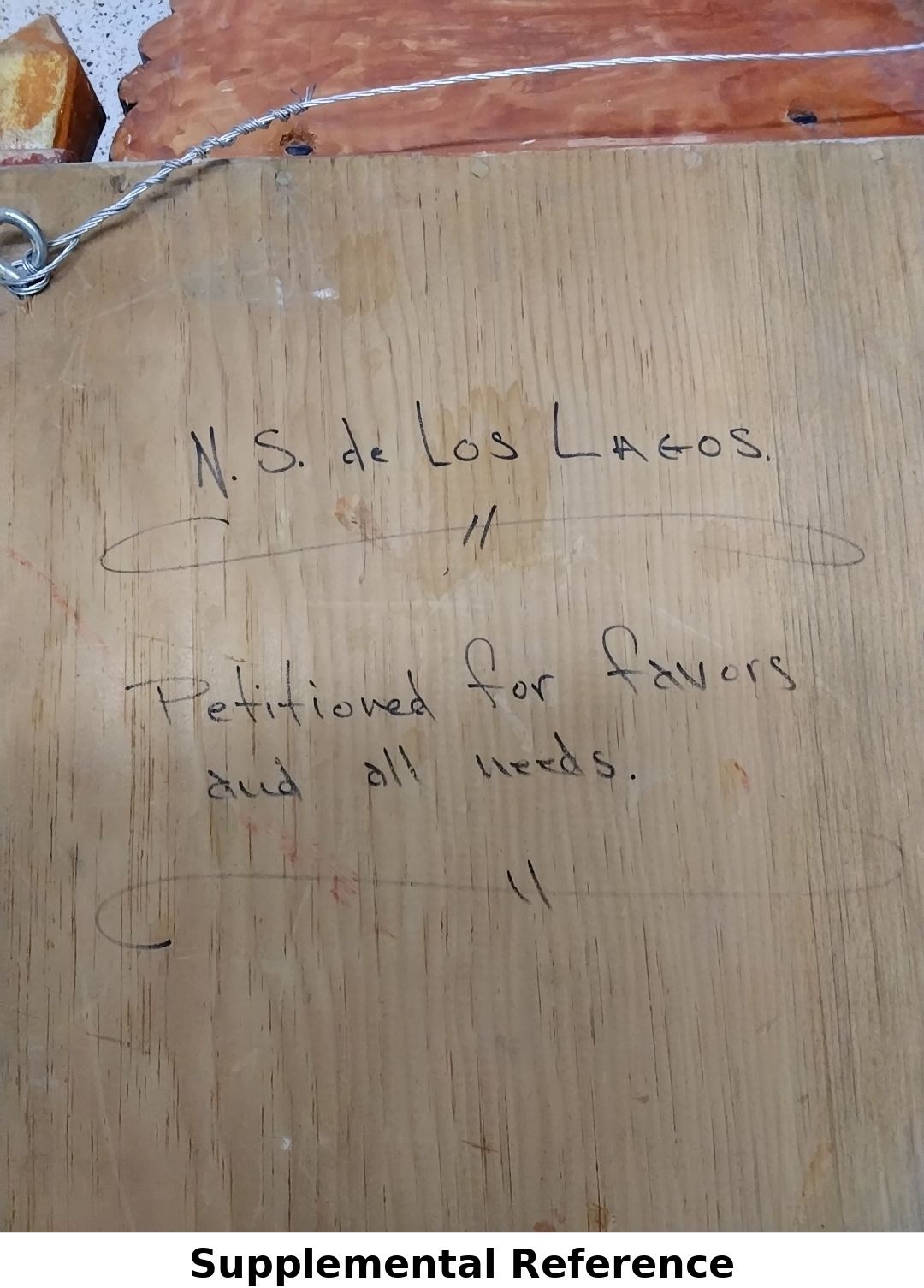
- Right panel — Nuestra Señora de los Lagos: Crowned Marian figure with swords of sorrow crossing her breast, crescent moon beneath her feet, flanked by two tall tapers on gilded candlesticks. Verso inscribed: "Nuestra Señora de los Lagos — Petitioned for favors and all needs." The image venerates the miraculous statue at the Basílica de Nuestra Señora de San Juan de los Lagos, Jalisco — one of the most-visited pilgrimage destinations in the Americas, drawing millions of pilgrims annually. The iconography combines elements of the Immaculate Conception (crescent moon, joined hands) with the Dolorosa (swords at the breast), a syncretic reading common in popular Mexican and New Mexican devotion.
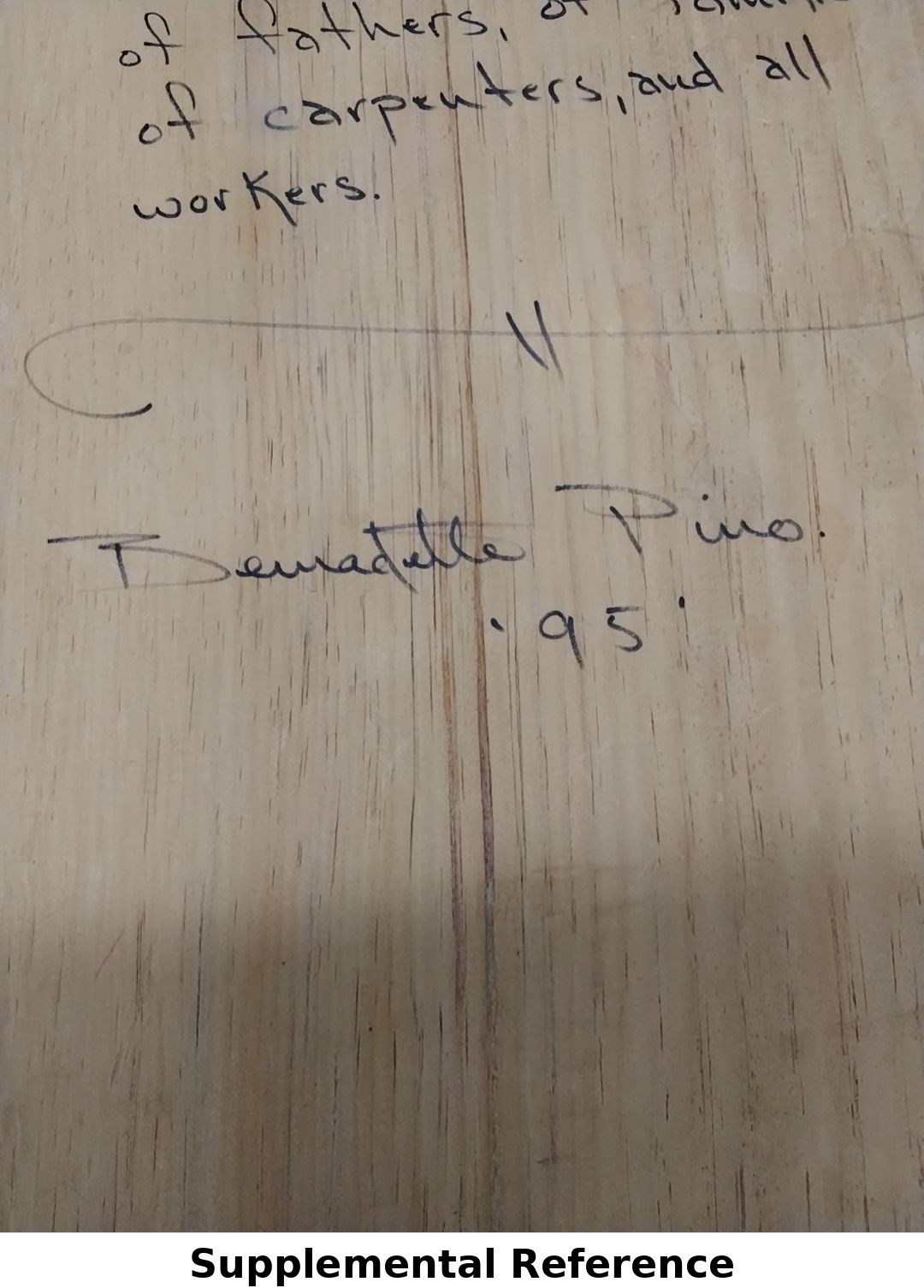
- Signed and dated on verso of center panel: Bernadette Pino, 1995
CONDITION
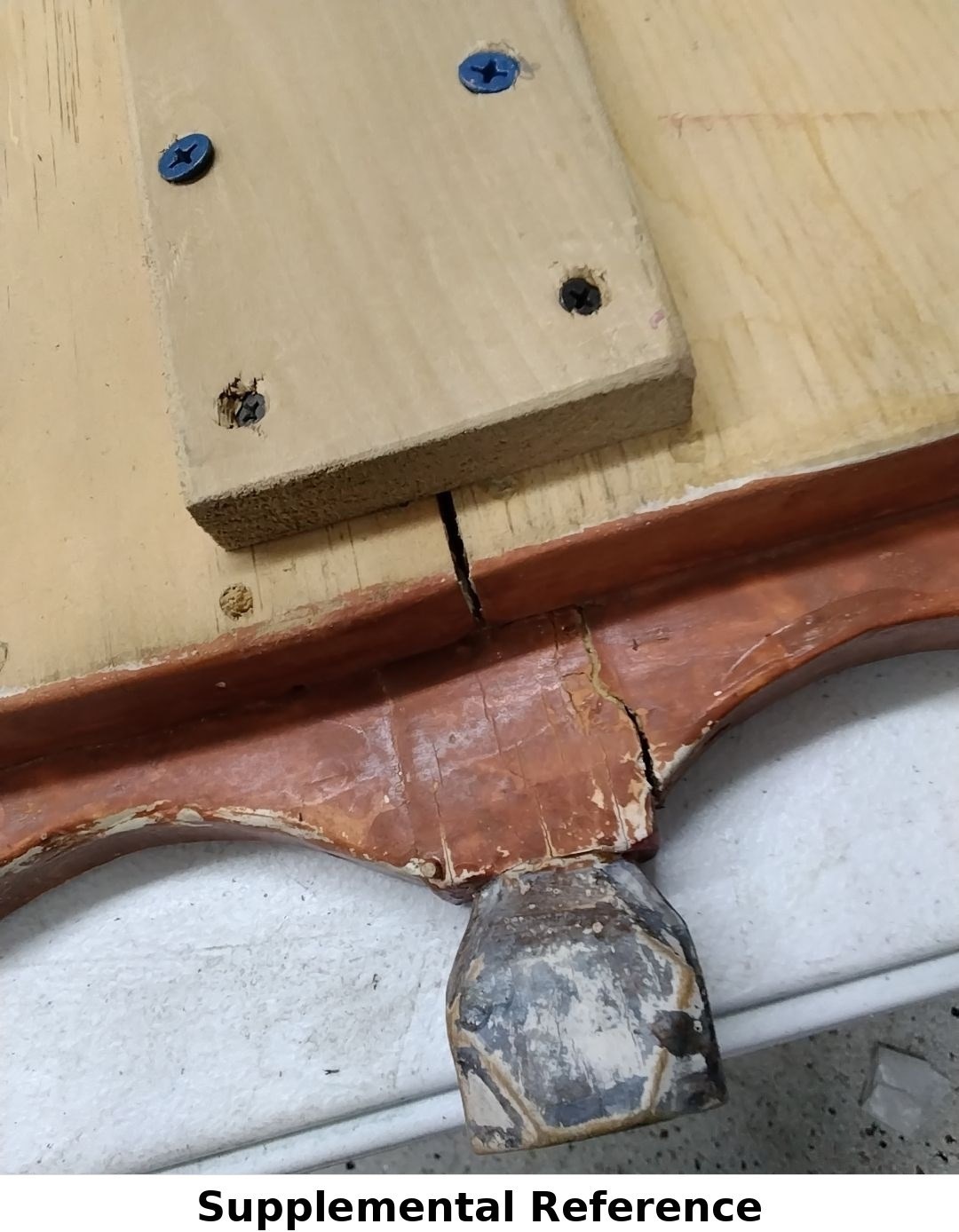
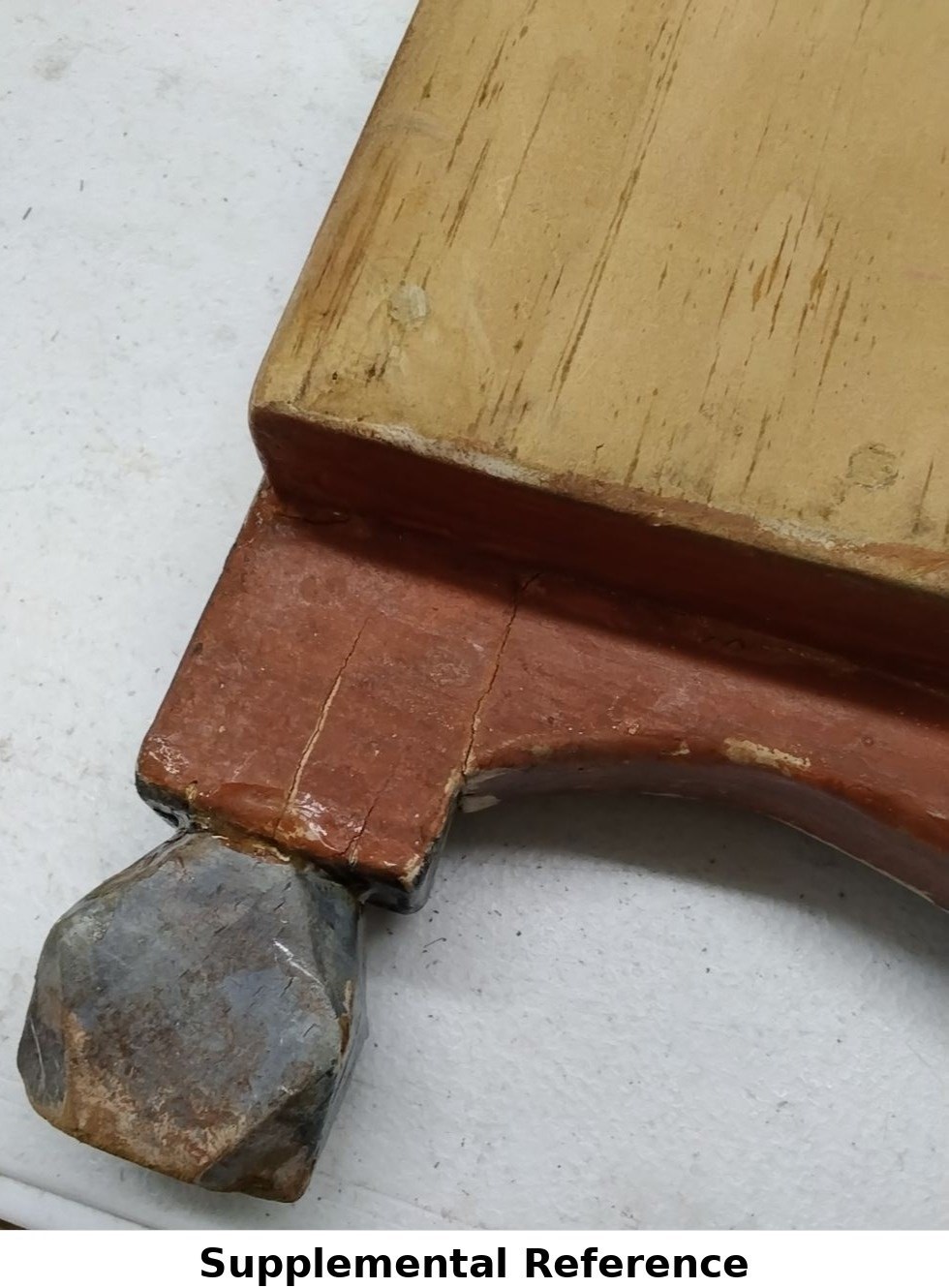
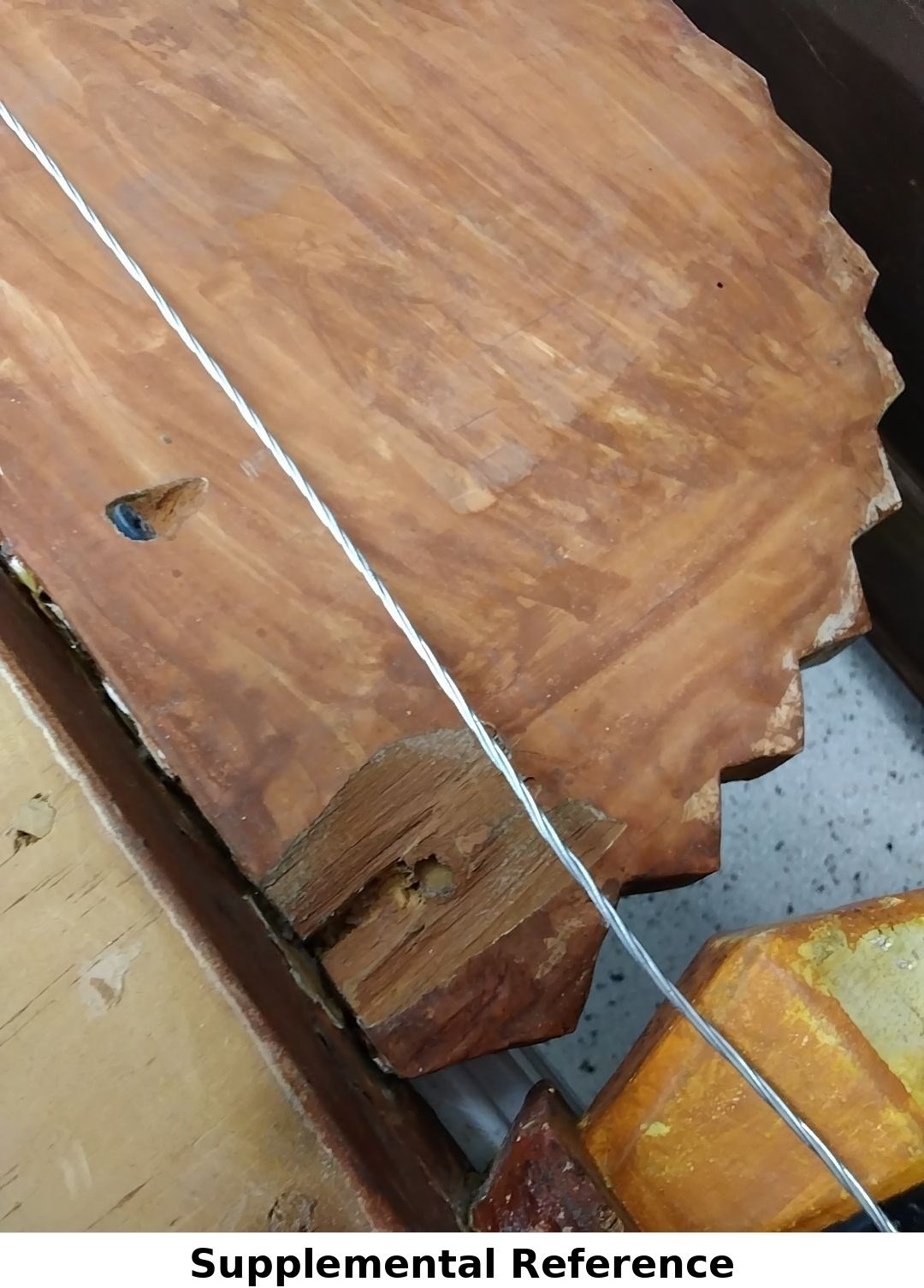
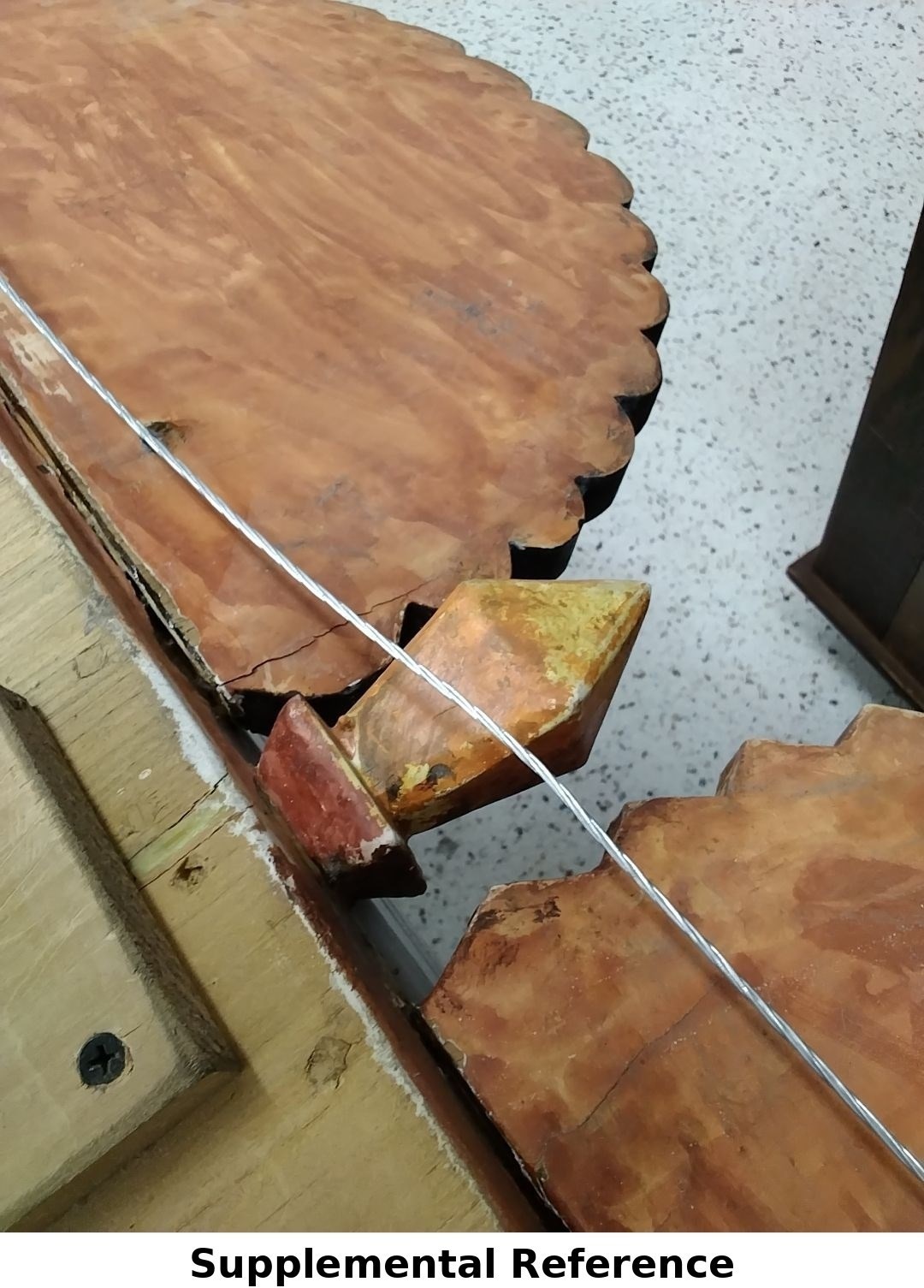
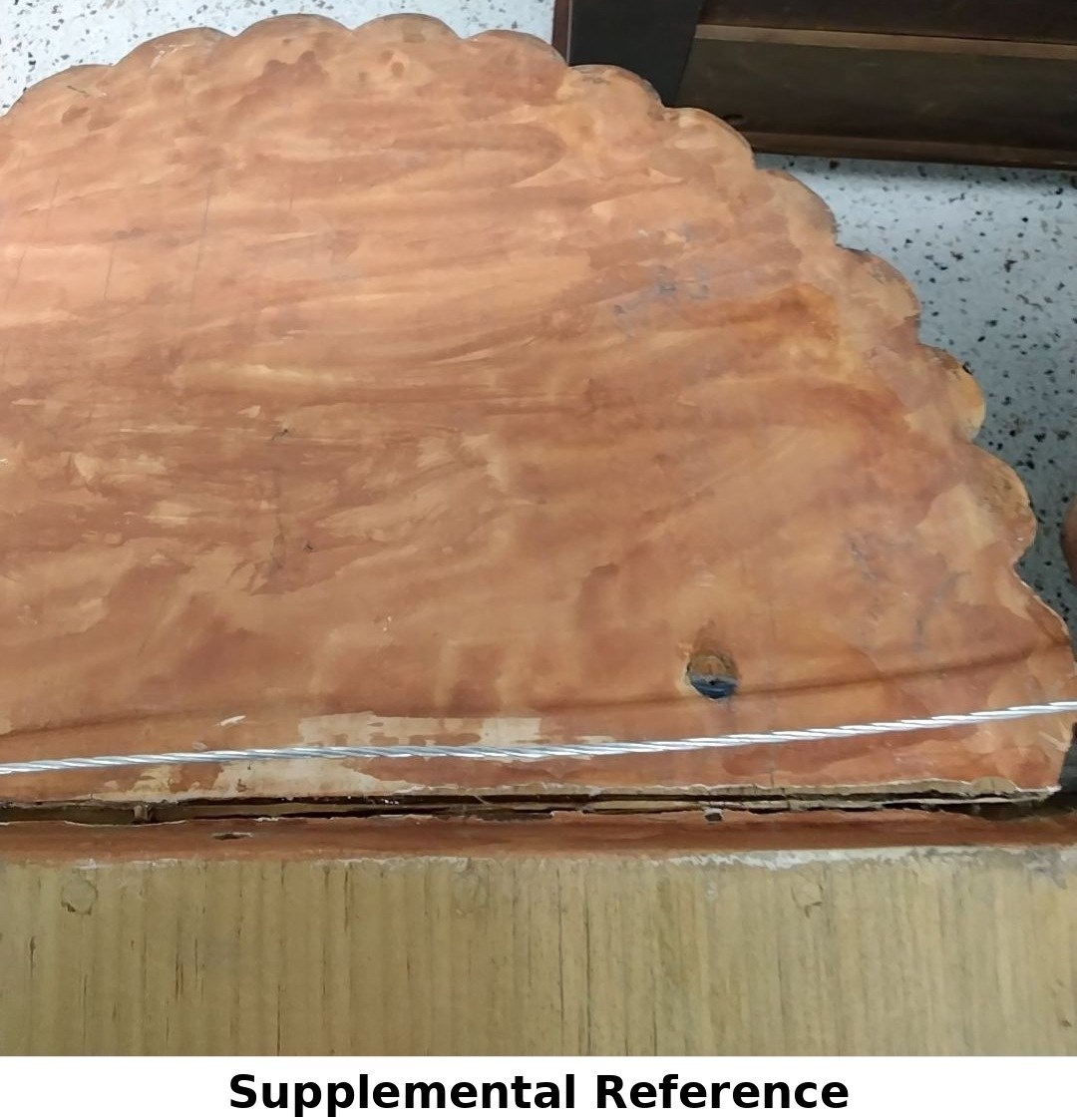
Good overall. Painted surfaces are stable with light surface soiling and minor rubs to high points consistent with handling and display. Wood splits are present, with previously glued and repaired areas — most notably at the base of the right outer panel where a foot block and apron section show old glue repair and a crack through the apron rail, and along the upper crossmember join where the right shell crest meets the frame. Small modern screws are present at attachment points on the verso of the central panel. The piece retains full structural integrity and displays well.
DIMENSIONS / SPECIFICATIONS
- Overall: 39" H × 56" W × 6" D
- Construction: Hand-carved and hand-painted wood
- Format: Three-panel joined triptych screen (retablo)
- Artist: Bernadette Pino
- Date: 1995, signed and dated on verso of center panel
- Inscriptions: Saint identifications and patronage texts in artist's hand on verso of each panel