Ortega Signed Mexican Folk Art Tree of Life Candelabra — Adam, Eve & Serpent View Watchlist >
- Winning Bid: $46.99
- 24 Bid(s) View Bid History
- High Bidder: Leticia12
Seller Accepts Credit Cards
Payment and pickup instructions will be available on your invoice (under "My Account") at the conclusion of this auction.
Lot # F155
System ID # 28836576
Start Date
End Date
8 Watching
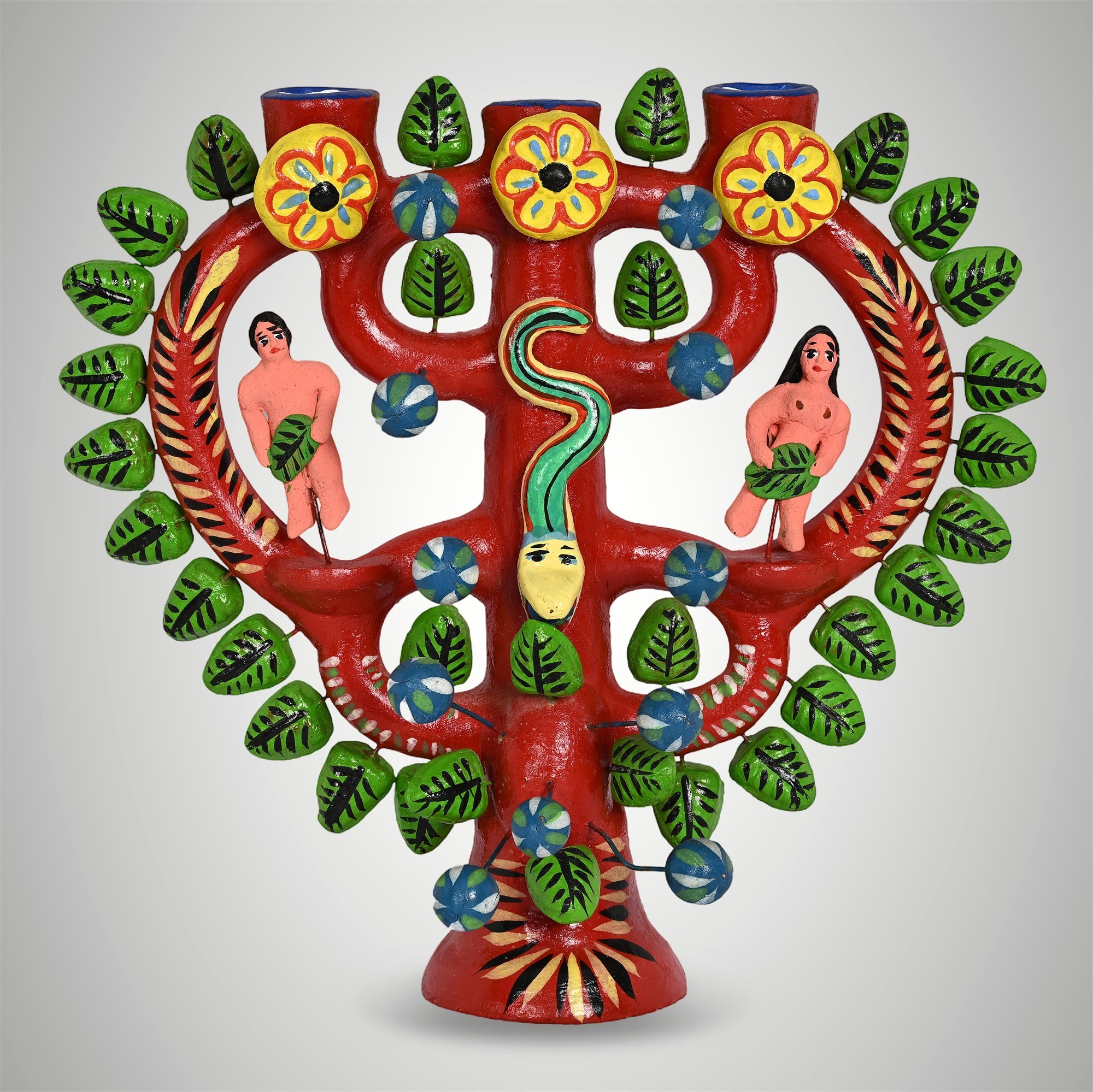
Ortega Signed Mexican Folk Art Tree of Life Candelabra — Adam, Eve & Serpent
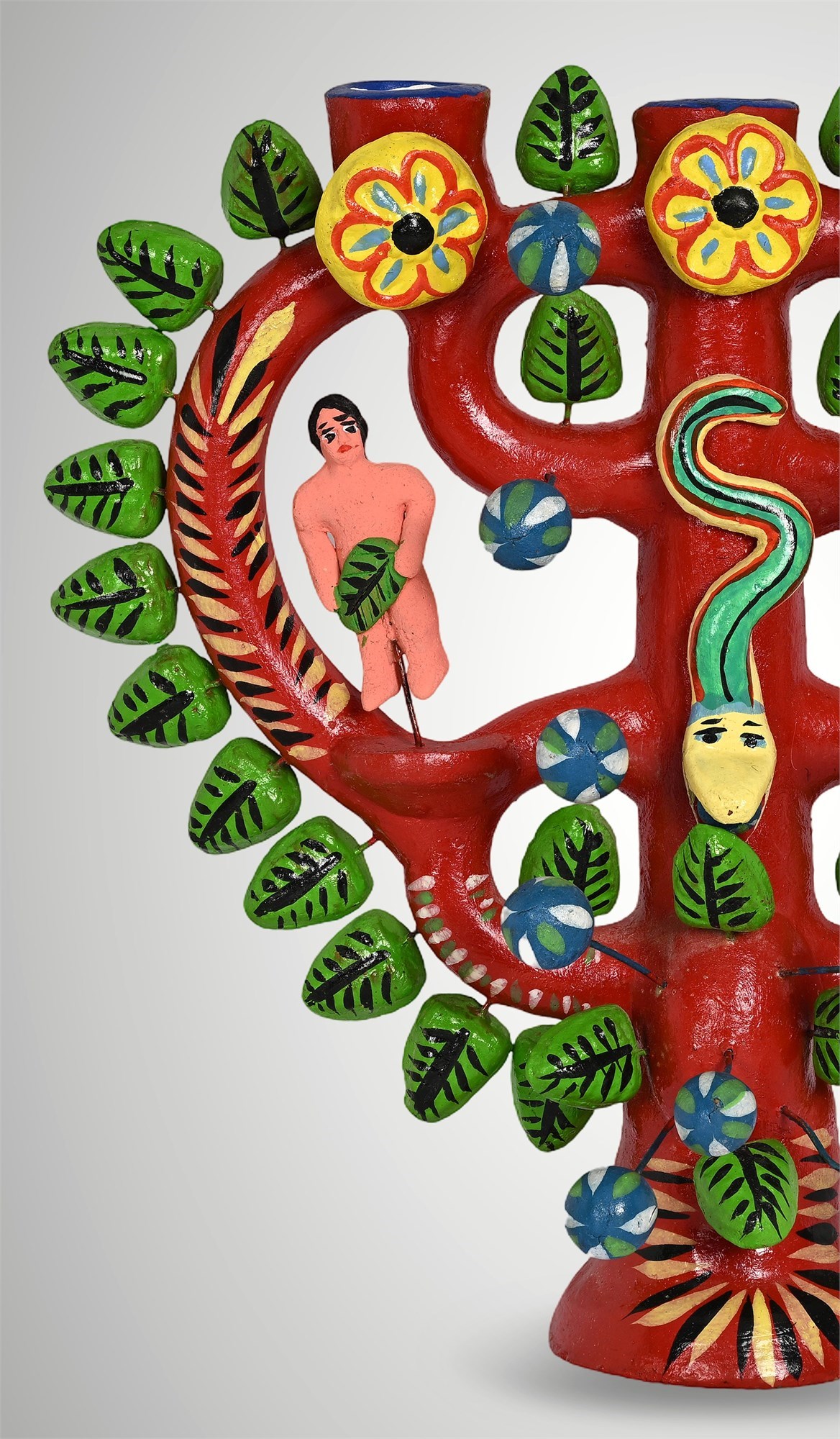
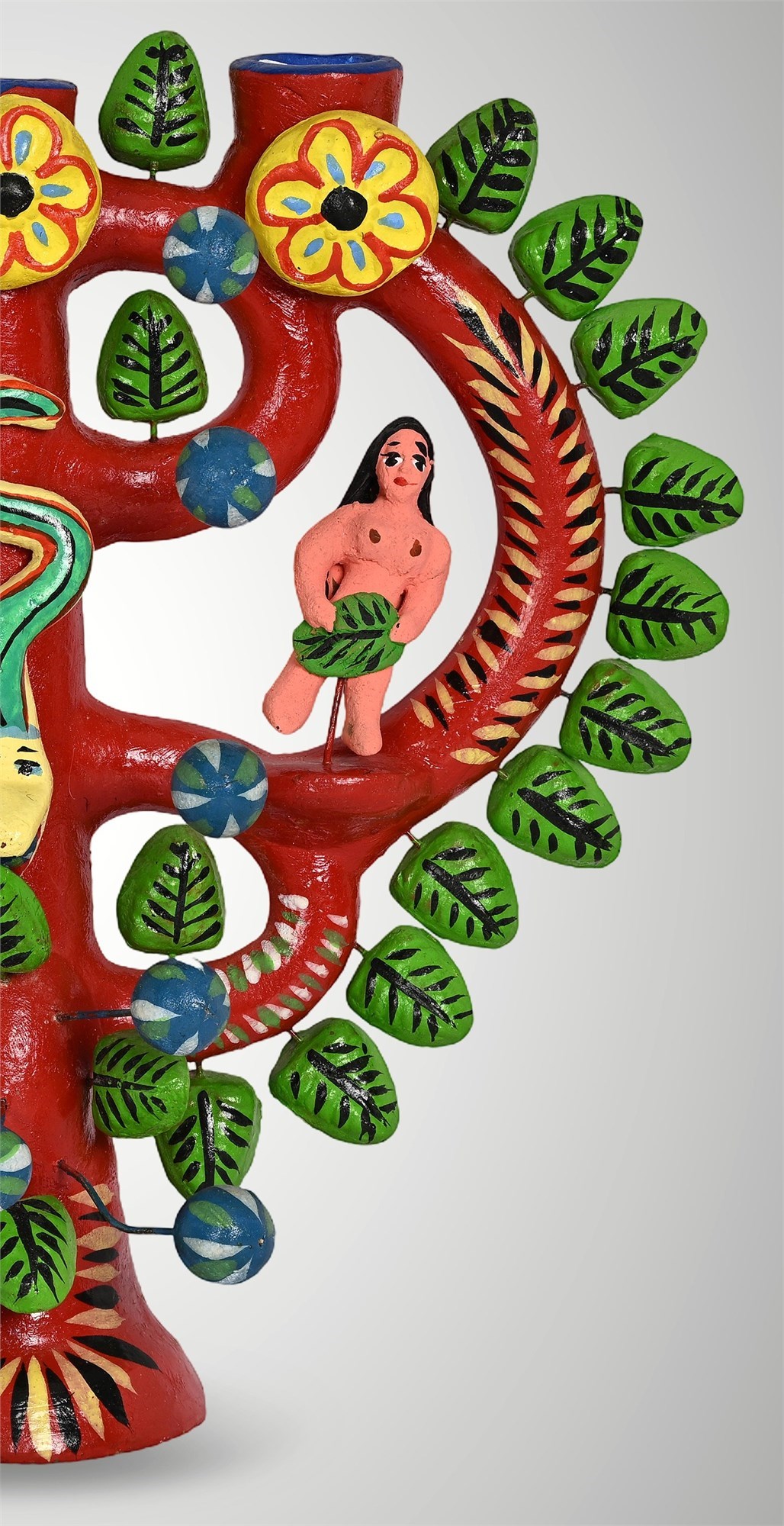
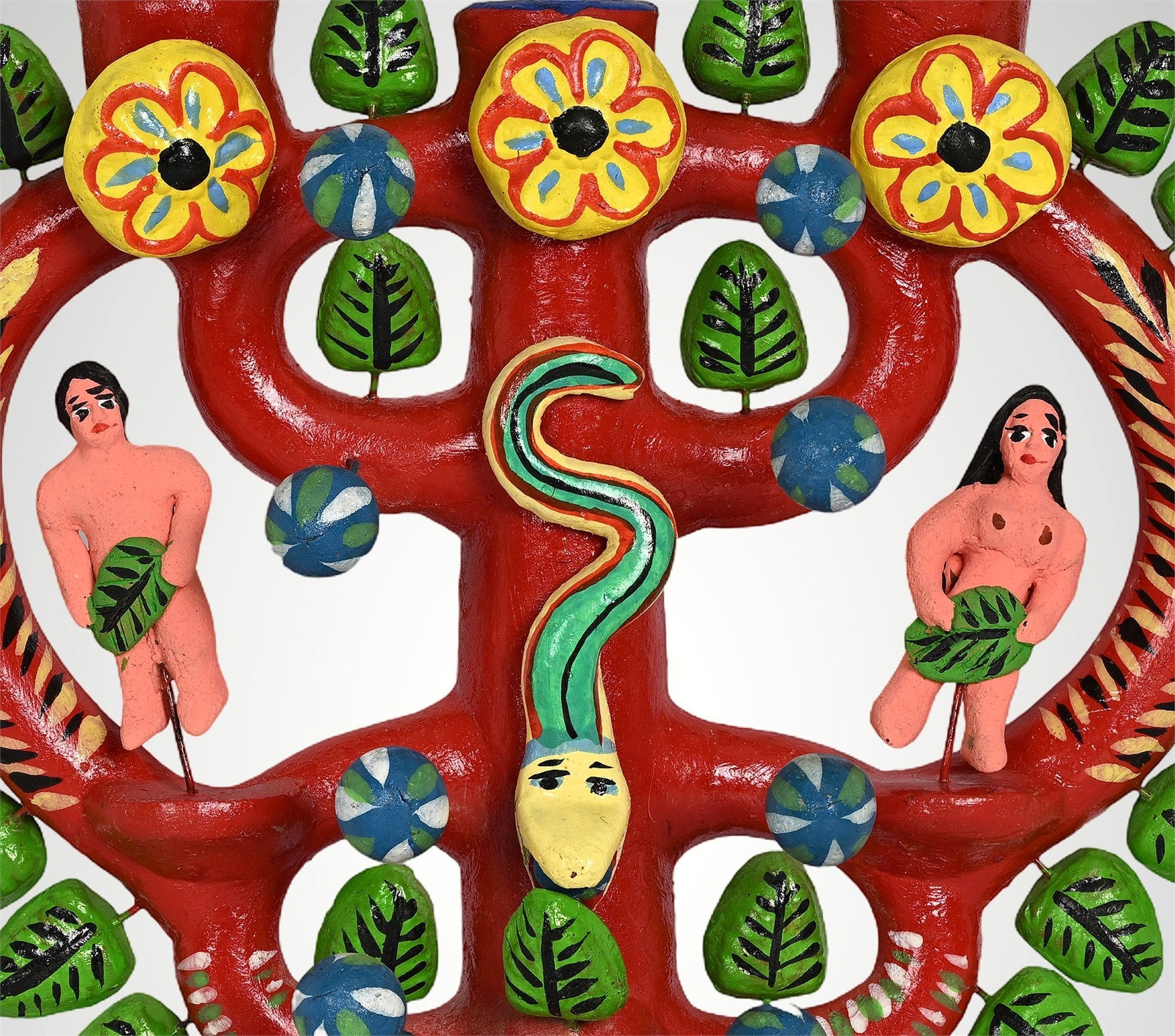
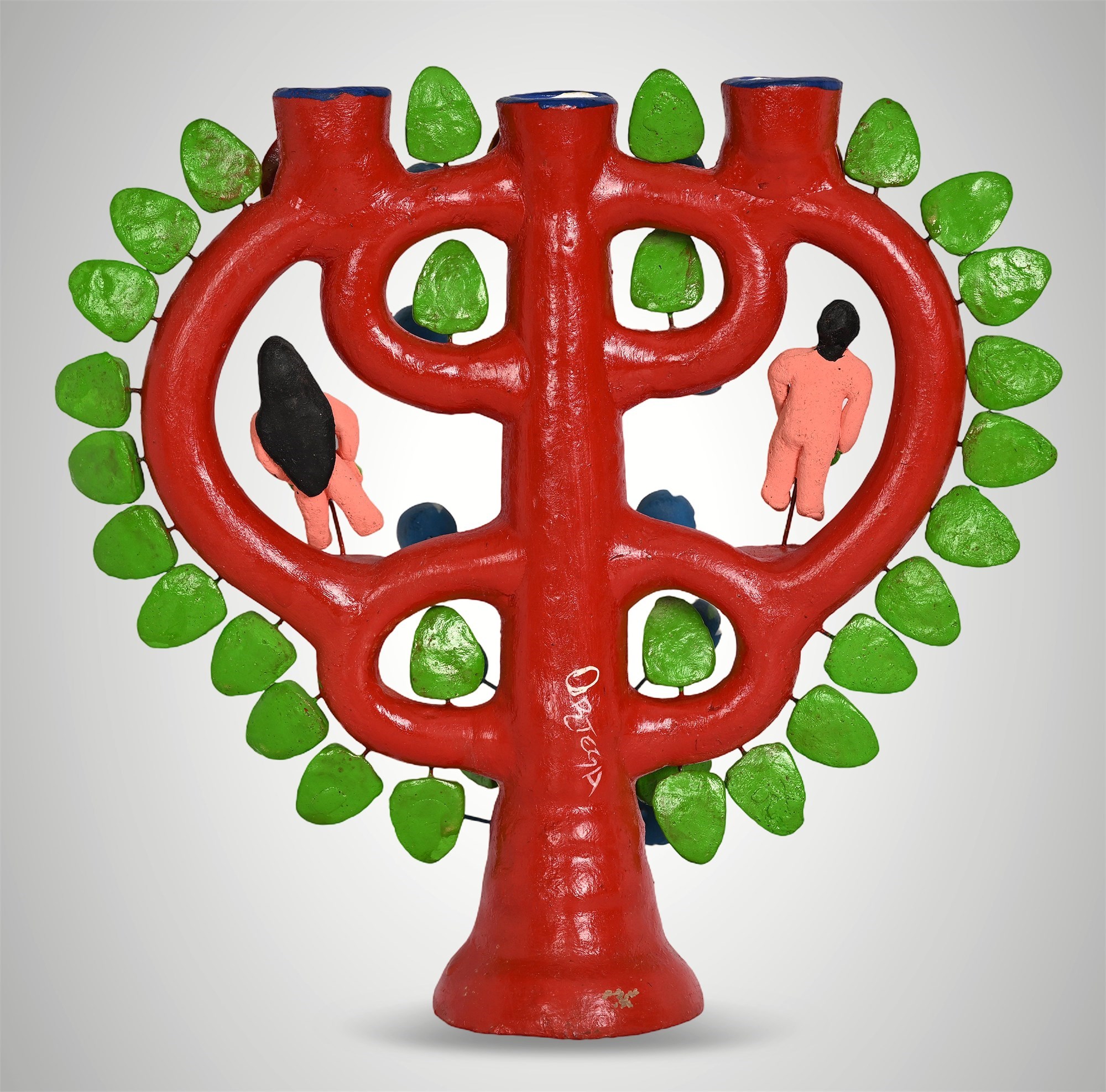
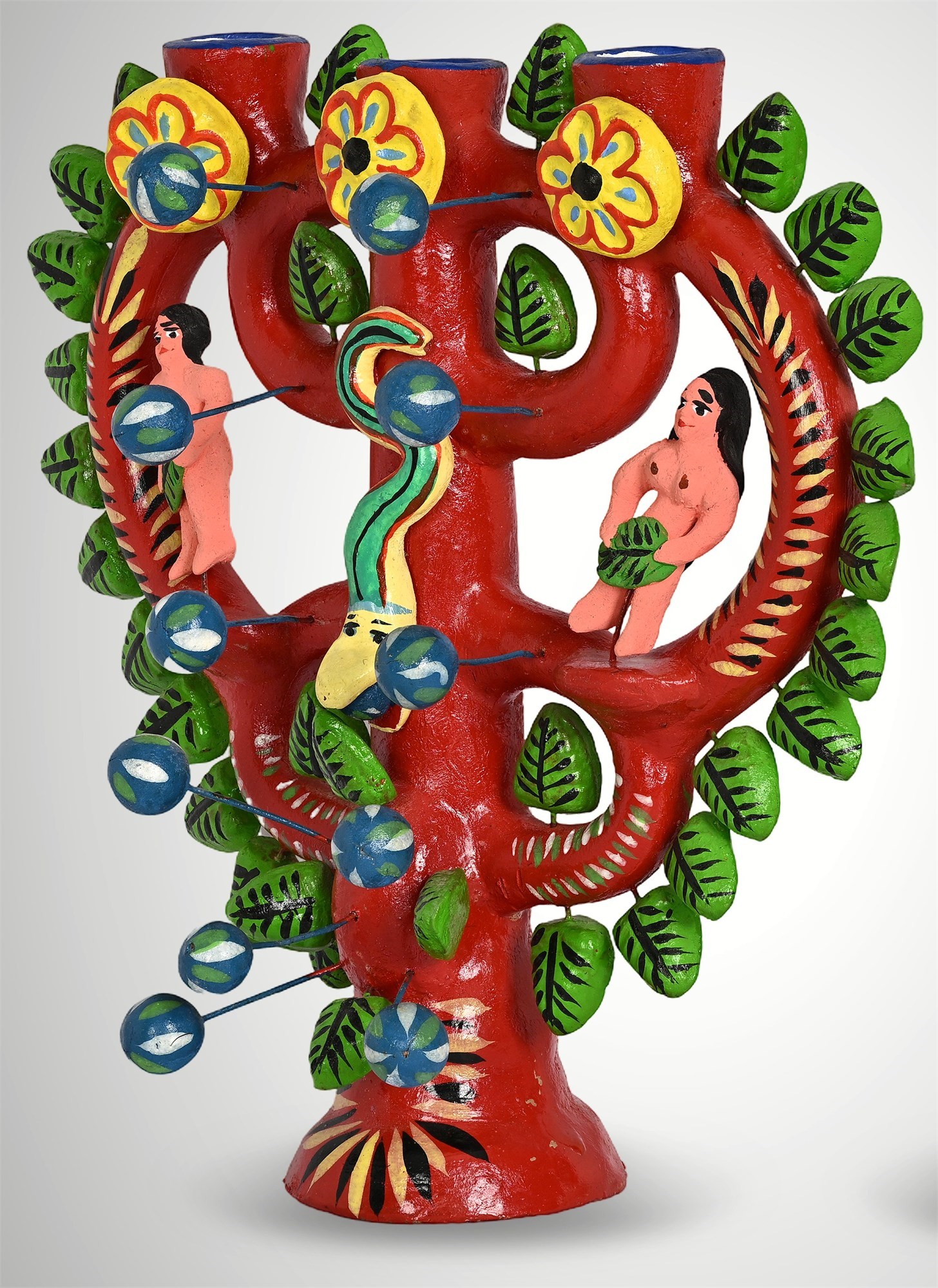
A vividly painted Mexican árbol de la vida (Tree of Life) ceramic candelabra signed Ortega on the verso, rendered in the saturated red, green, yellow, and cobalt palette characteristic of the Metepec and Izúcar de Matamoros traditions. The composition presents the Garden of Eden tableau: a stylized tree with a heart-shaped leaf canopy frames Adam and Eve on either side, each modeled in clay with painted hair, fig-leaf coverings, and wire-pin attachments to the armature. At the center, a polychrome serpent with a human face descends head-down through the branches — a recurring iconographic device in this folk tradition. Three candle cups rise from the top, fitted for standard 1" taper candles, their interiors washed in deep blue. Wire-mounted leaves, fruit spheres, and sunflower-form blossoms attach individually to the red-lacquered trunk and looping frame border.
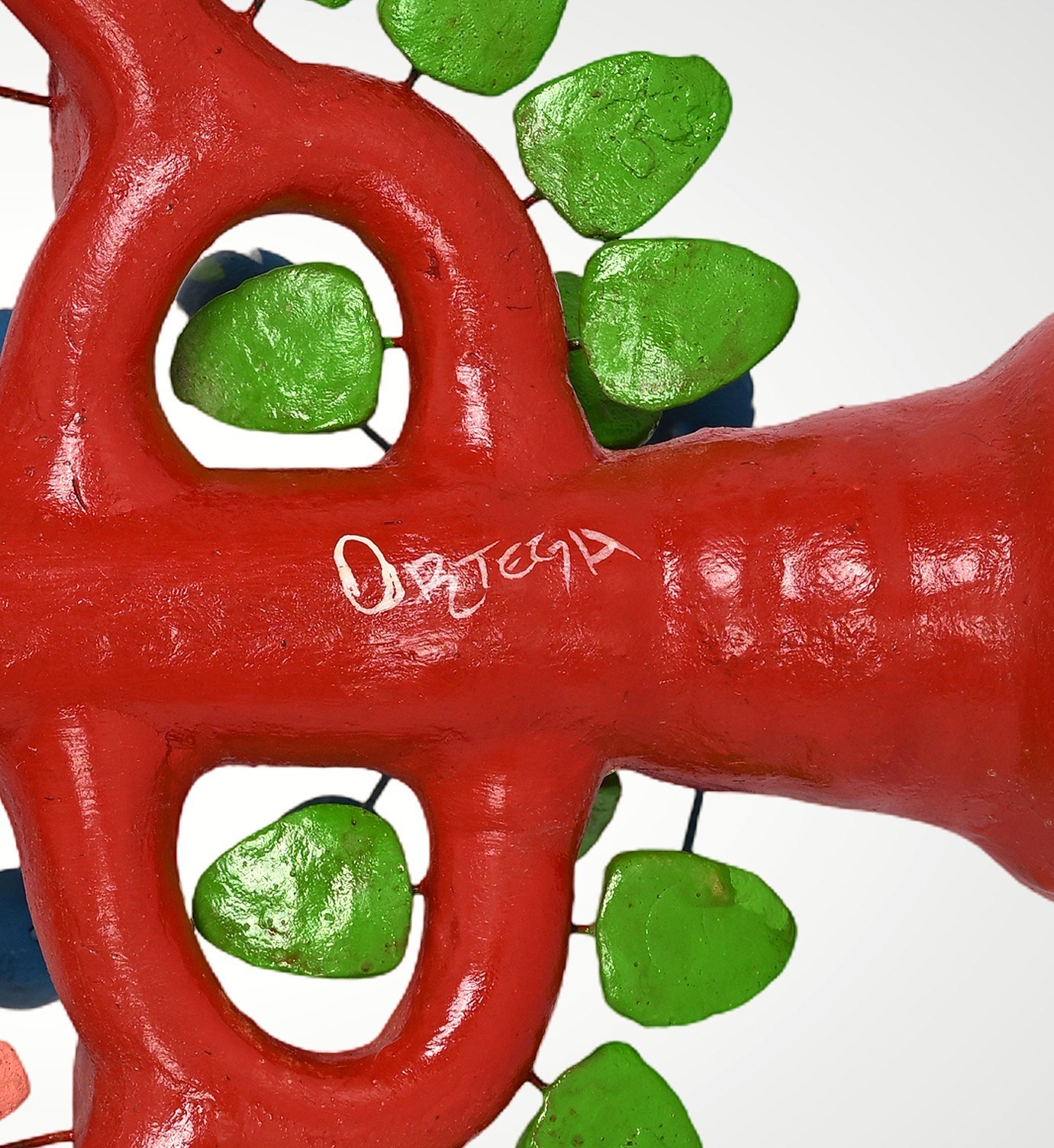
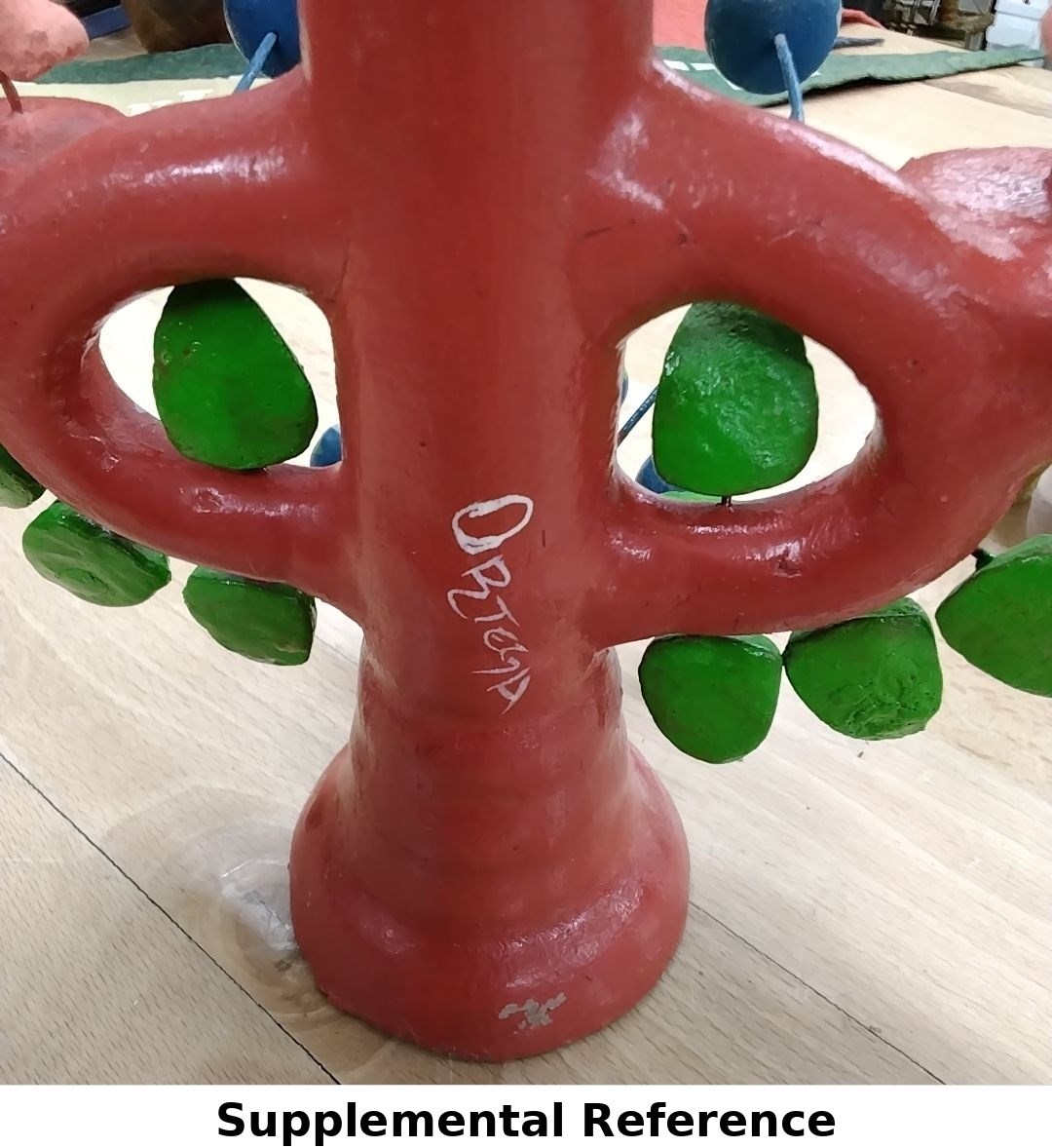
Trees of Life originated as catechistic objects produced in the pottery villages of central Mexico and evolved into one of the most recognized forms of Mexican folk sculpture. The Eden variant — Adam, Eve, the serpent, and the fruit-bearing tree — remains the canonical subject of the form. The piece carries a painted white signature reading "Ortega" on the verso, consistent with work attributed to the Ortega family workshop of Izúcar de Matamoros, Puebla, one of the principal producing centers of the árbol de la vida tradition alongside Metepec in the State of Mexico. Izúcar pieces are typically distinguished by their deeply saturated lacquerware-influenced color, compact figural modeling, and the characteristic human-faced serpent — all present here. The surname Ortega appears across several generations of folk artists in the Izúcar tradition; the specific maker within this workshop lineage is not confirmed from the signature alone.
History
The árbol de la vida as a ceramic form has roots in colonial-era missionary practice, when Spanish clergy commissioned local potters in central Mexico to produce devotional objects depicting biblical narratives. The Tree of Life — with its layered symbolism drawn from both Christian cosmology and pre-Columbian Mesoamerican world-tree traditions — became the dominant subject. By the twentieth century, the form had evolved from a purely religious object into a celebrated genre of folk art with a robust collector and export market. The town of Izúcar de Matamoros in Puebla emerged alongside Metepec as one of the two great producing centers, each developing its own stylistic vocabulary. Izúcar's production is associated with bold lacquer-red grounds, human-faced serpents, and the Eden narrative. The Metepec tradition more frequently employs polychrome sunburst or multi-figure compositions. The Ortega name is documented in connection with Izúcar de Matamoros workshops producing signed Trees of Life that have appeared in gallery and auction contexts in the United States, though the extended Ortega family produced multiple makers across generations, and individual attribution within the workshop lineage typically requires additional documentation.
CONDITION
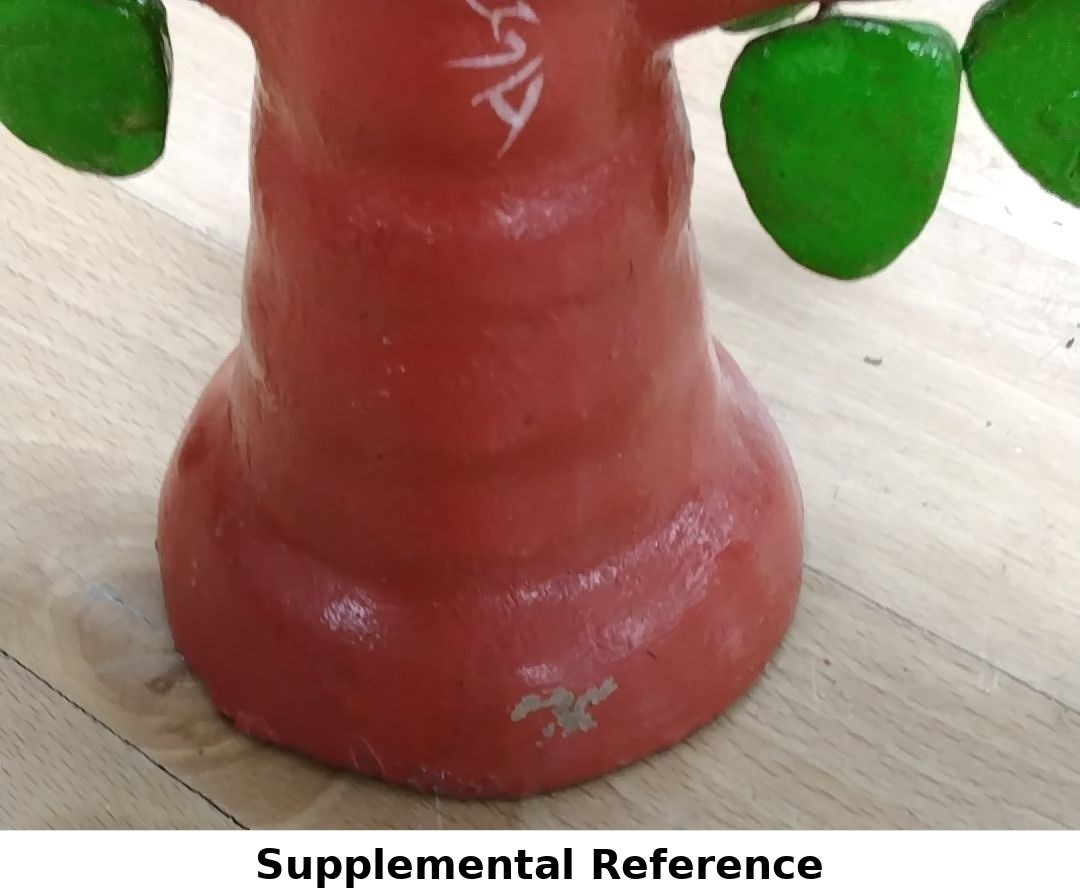
Good. Finish wear and minor paint loss throughout, consistent with handling and display; no chips or cracks noted. Additional finish wear and loss to the verso as shown in photographs.
DIMENSIONS / SPECIFICATIONS
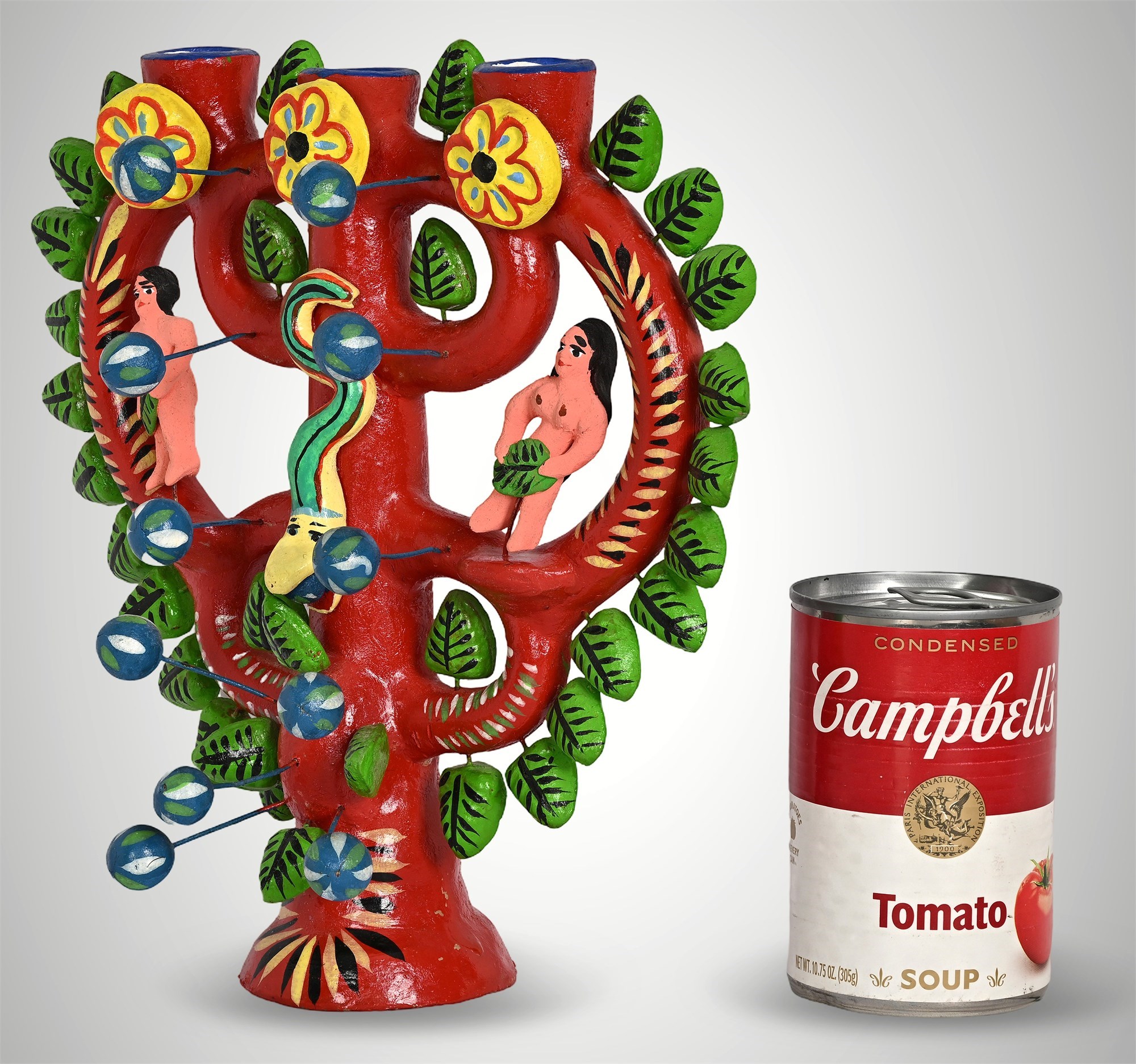
- Overall: 9.5" H × 10" W × 3" D
- Material: Pottery / clay, hand painted
- Capacity: Holds three standard 1" taper candles
- Signature: "Ortega" painted in white on verso
- Attributed Workshop: Ortega family, Izúcar de Matamoros, Puebla, Mexico (specific maker within workshop lineage not confirmed)
- Campbell's Soup Can (4" H) Shown for Scale — Not Included