Mexican Tin Nicho, Nuestra Señora de la Luz Chromolithograph, ca. 1900 View Watchlist >
- Winning Bid: $136.00
- 30 Bid(s) View Bid History
- High Bidder: Terrycampbell
Seller Accepts Credit Cards
Payment and pickup instructions will be available on your invoice (under "My Account") at the conclusion of this auction.
Lot # F144
System ID # 28833706
Start Date
End Date
11 Watching
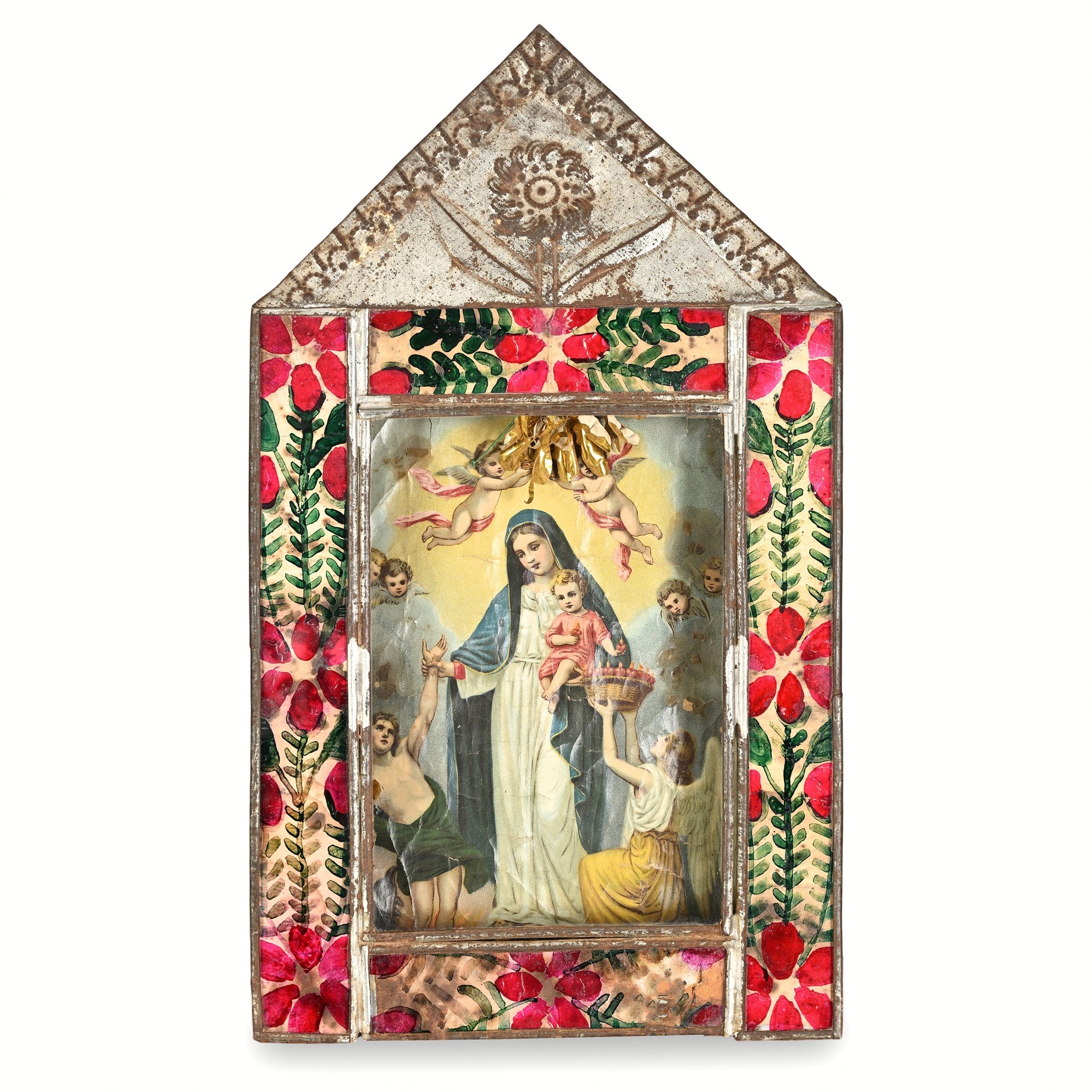
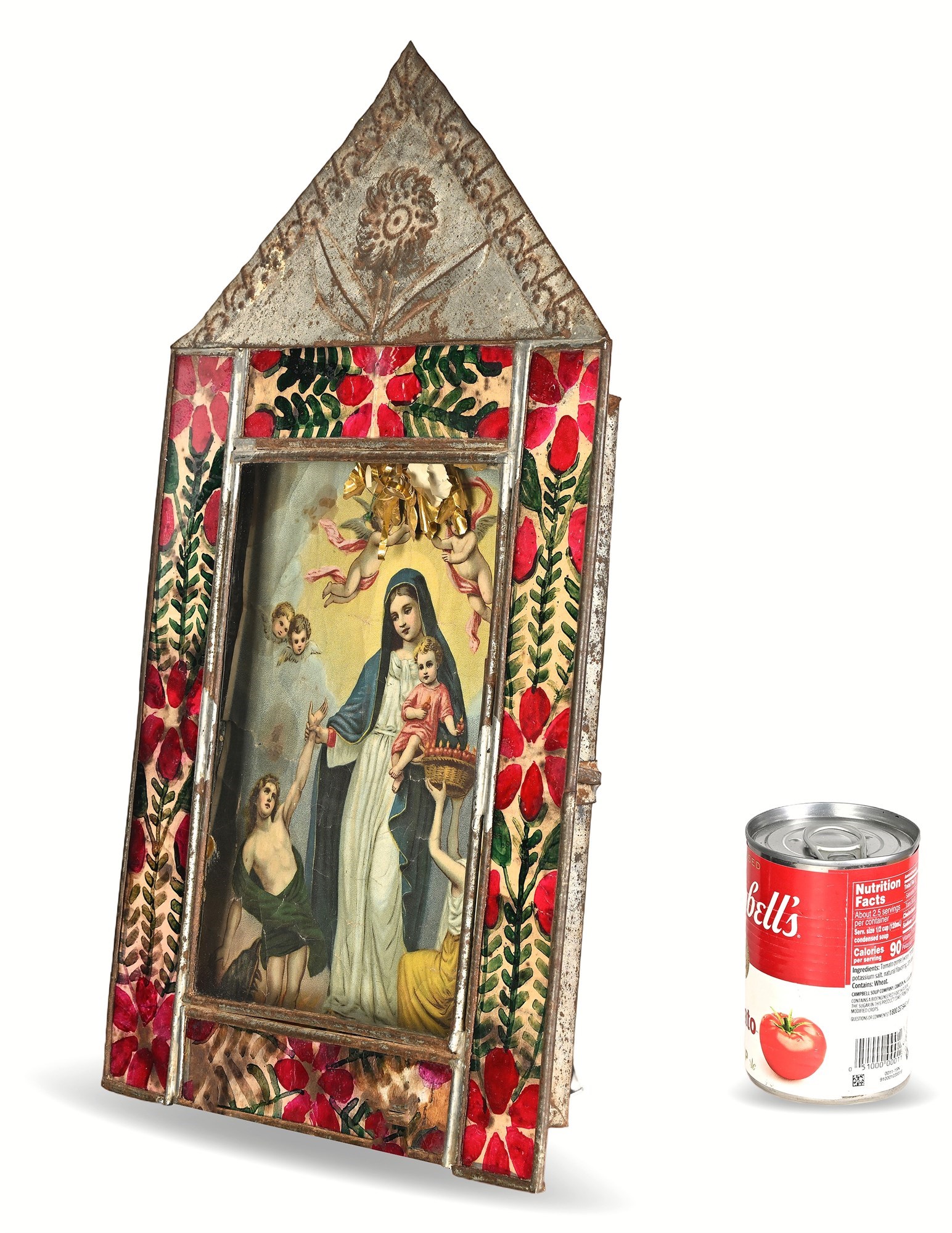
Mexican Tin Nicho, Nuestra Señora de la Luz Chromolithograph, ca. 1900
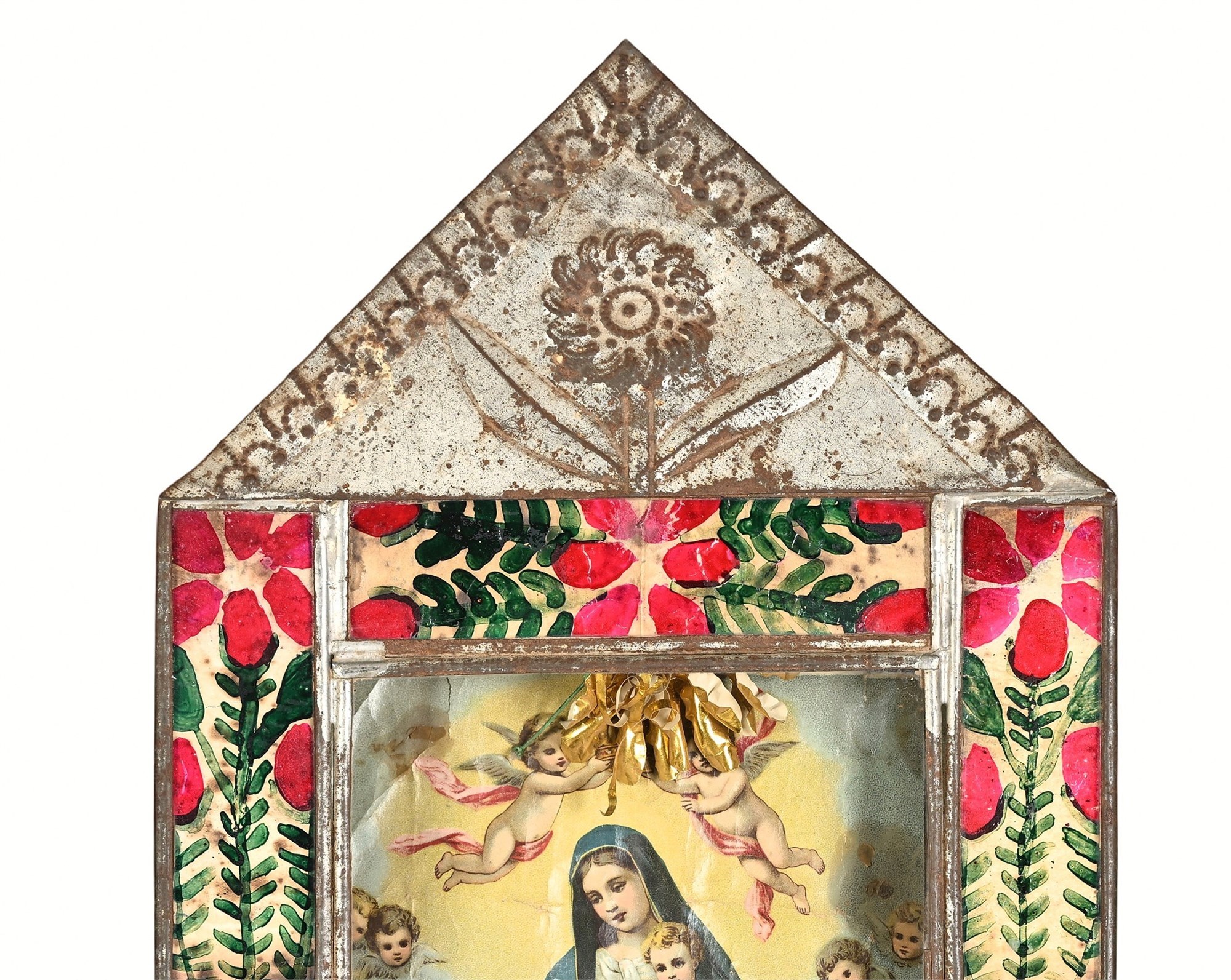
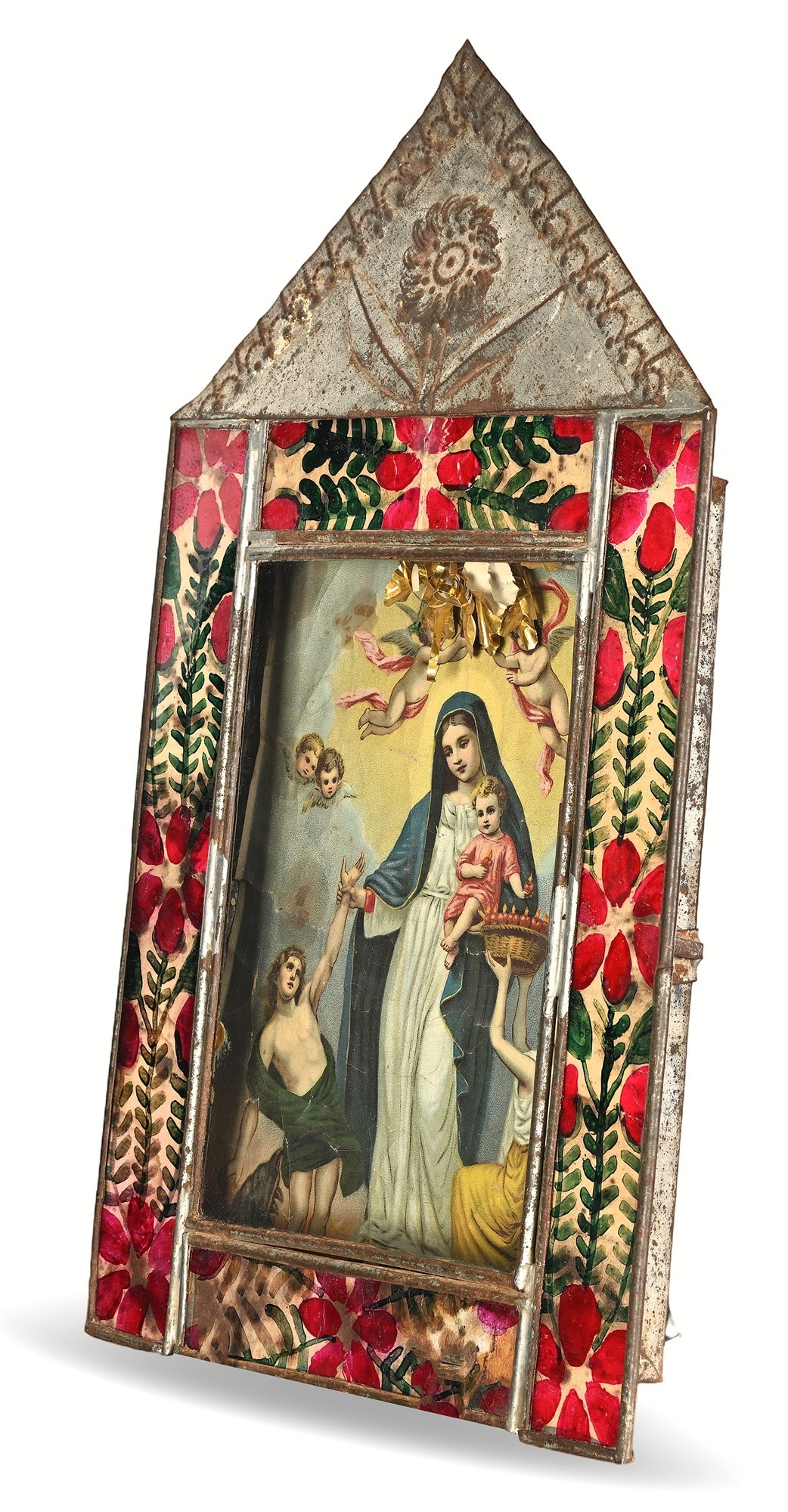
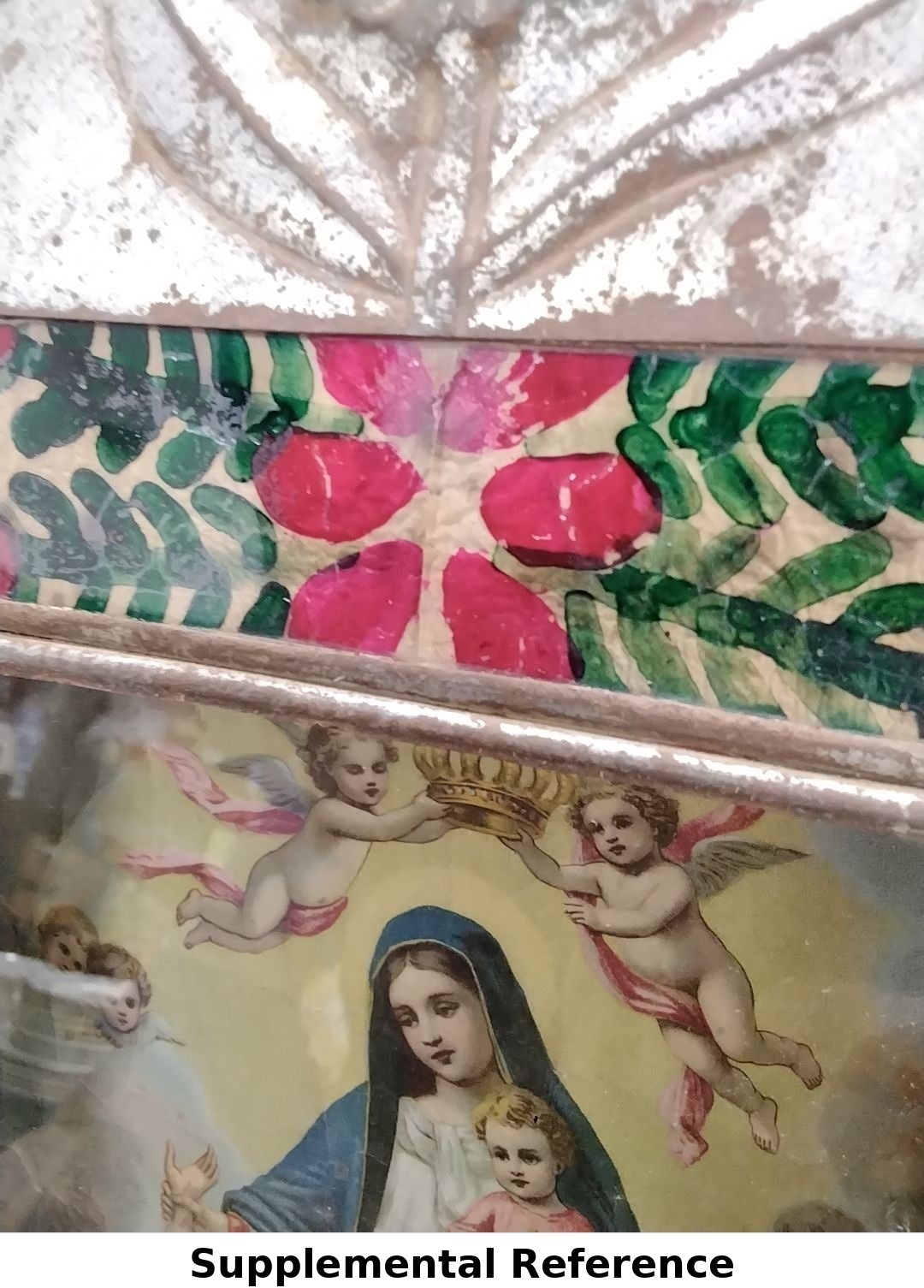
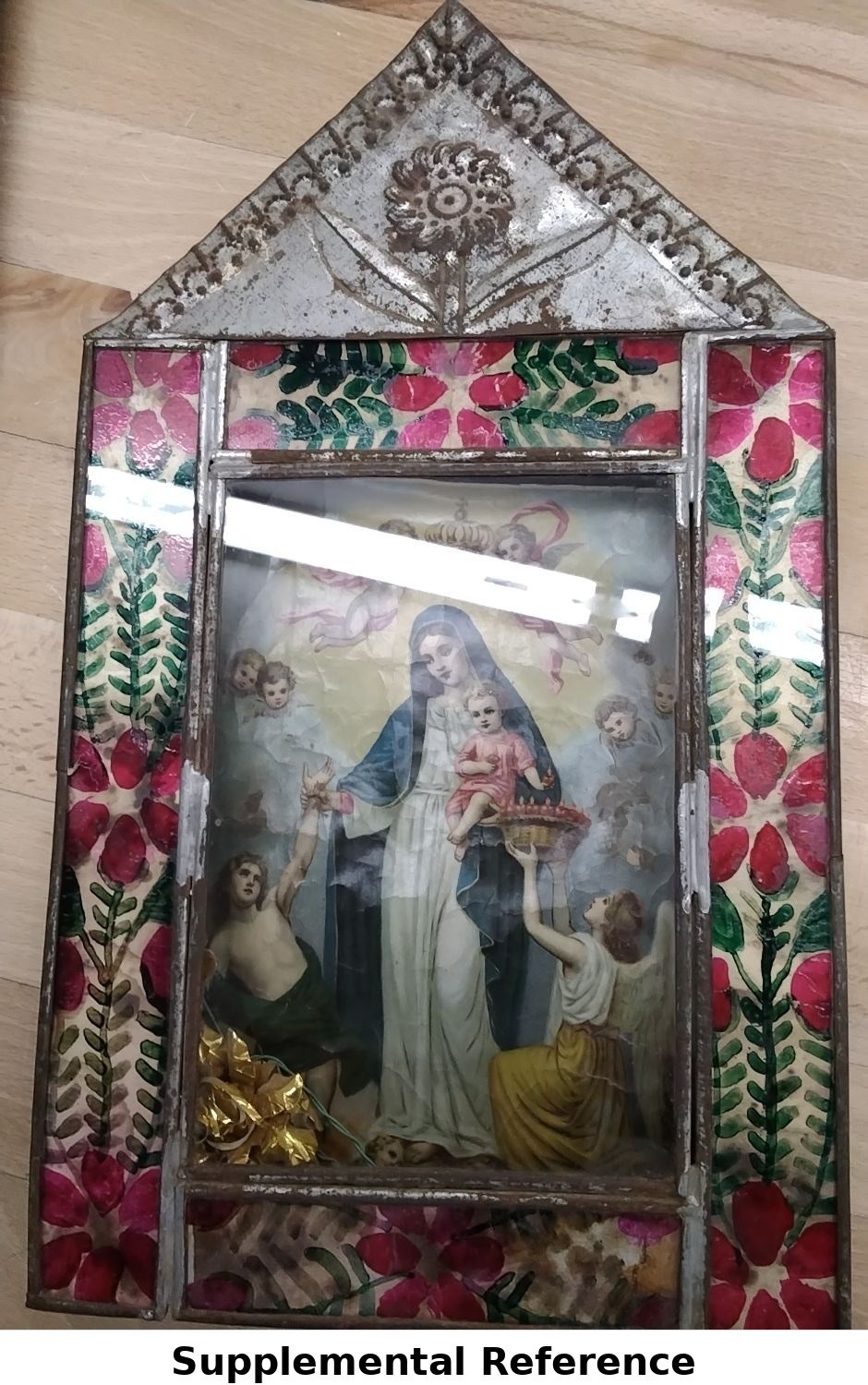
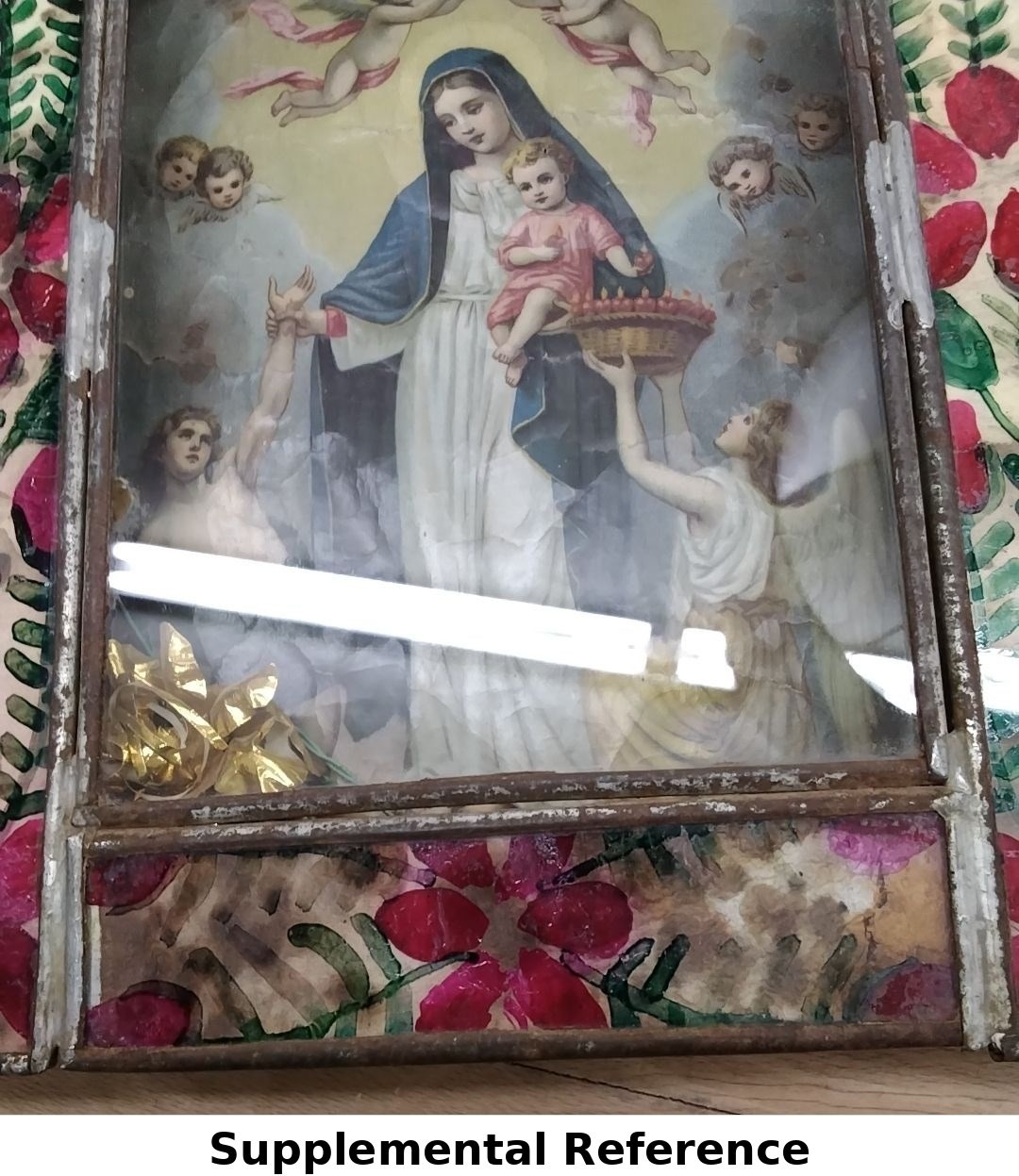
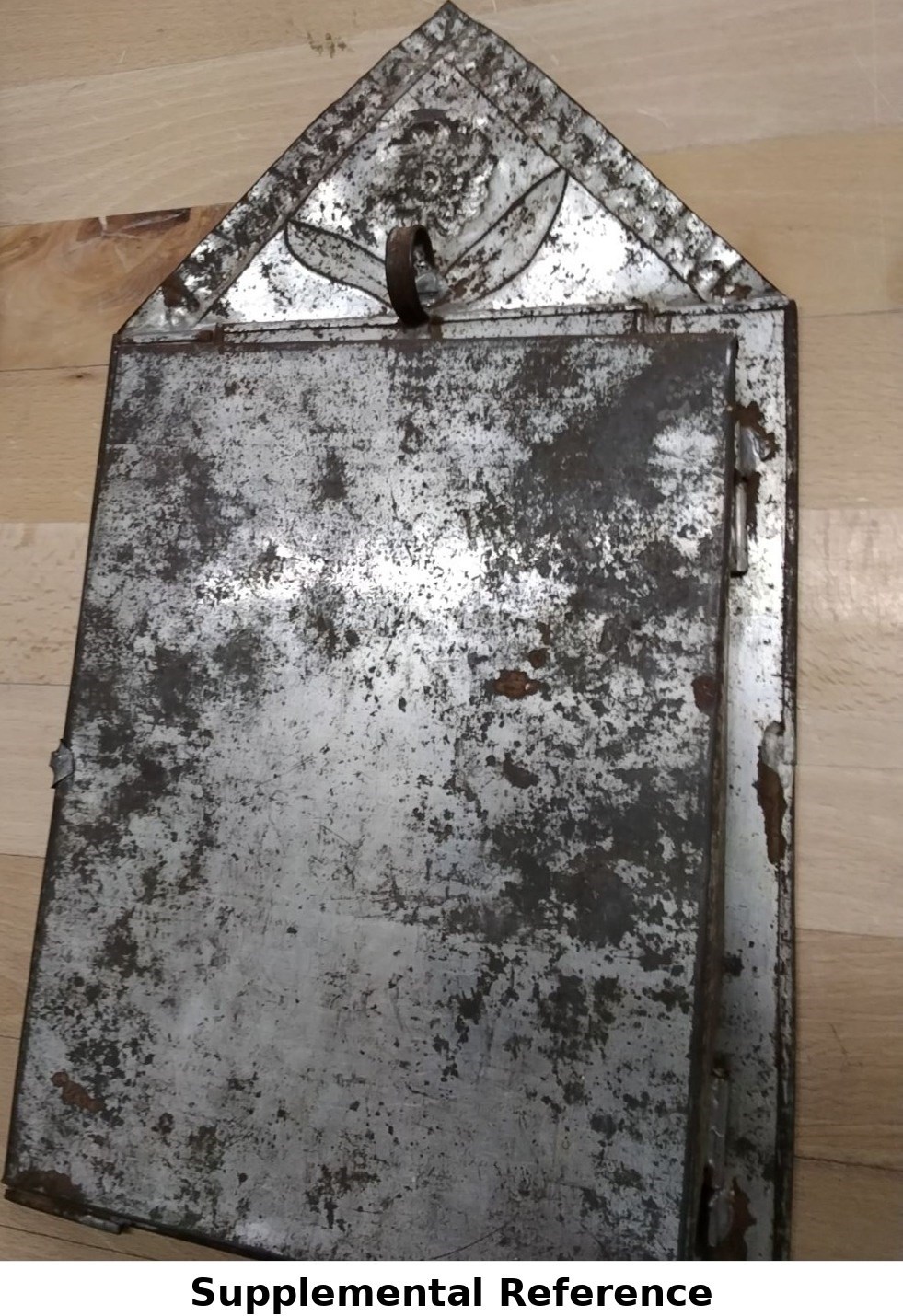
A late 19th to early 20th century Mexican folk art tin nicho — a domestic shadow-box shrine — built around a chromolithograph of Nuestra Señora de la Luz (Our Lady of Light). The pressed and tooled tin frame rises to a pointed pediment crowned with an embossed floral rosette and incised linear sprigs, the tin showing the soft silvered patina and scattered oxidation of a piece that lived on a household altar for generations. Behind glass along the sides and inner borders, hand-painted paper panels in vivid red blossoms and green foliage on a cream ground form a garden surround for the central image — a survival often missing on nichos of this age. Production attributed to central or northern Mexico, circa 1900.
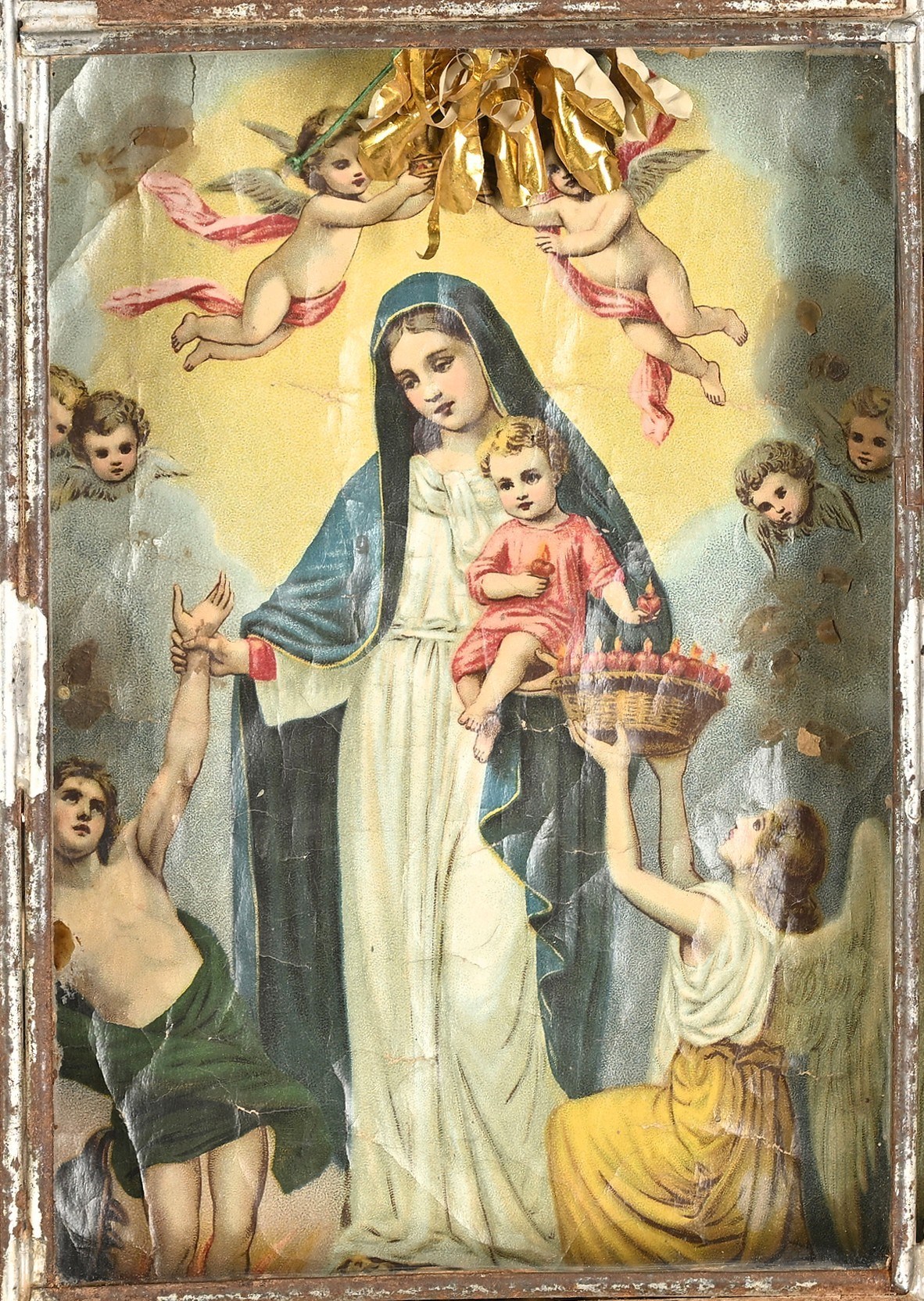
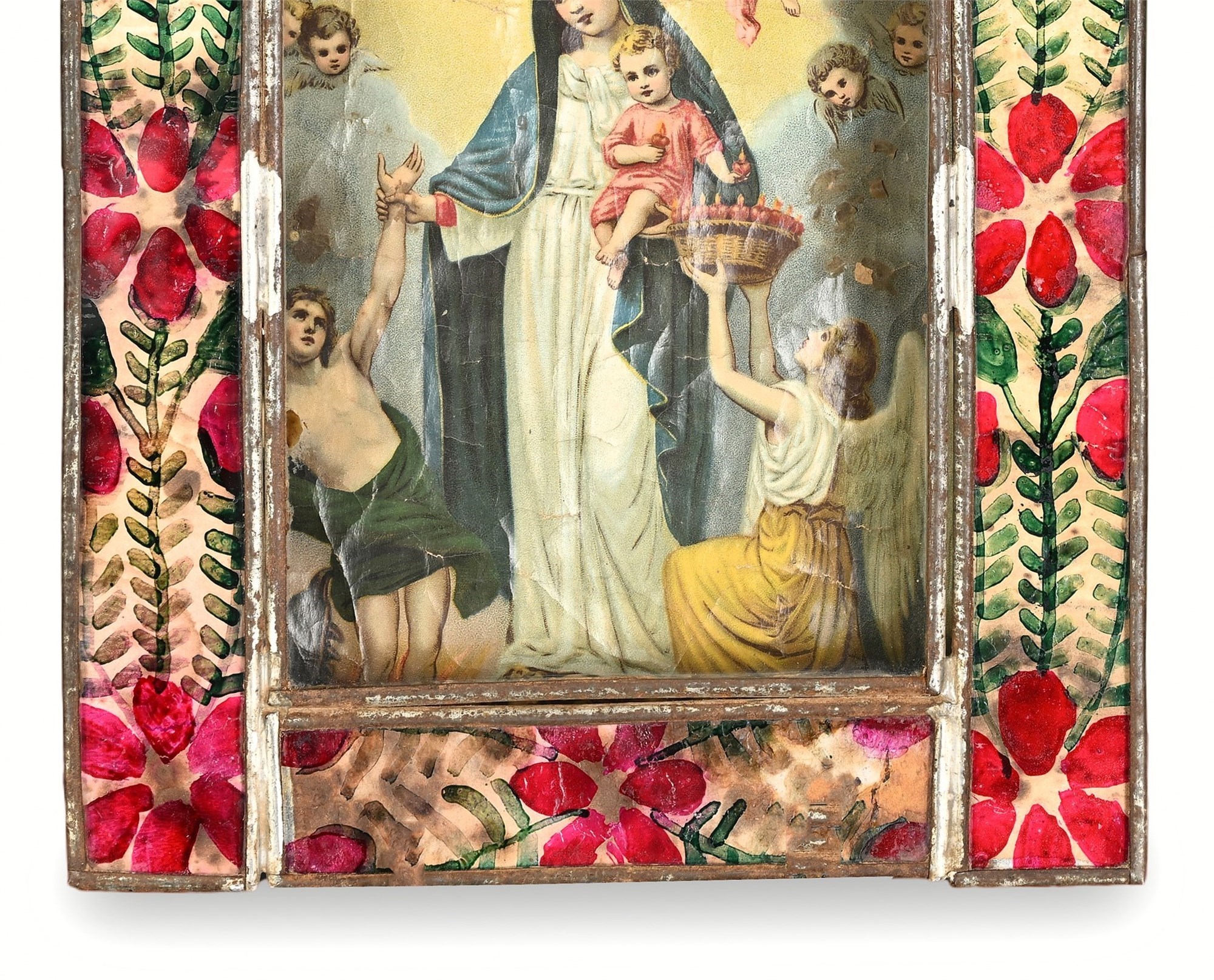
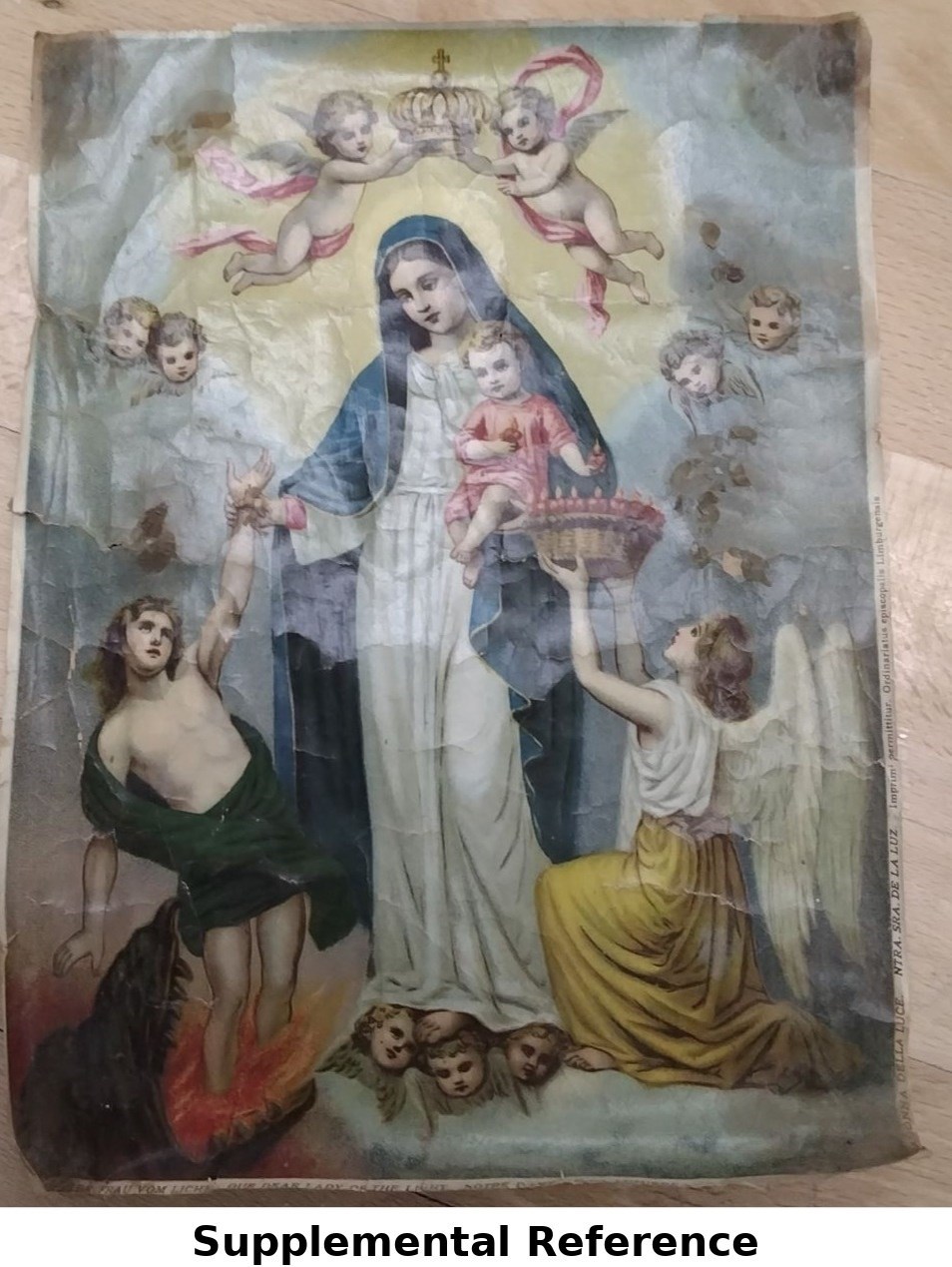
The interior holds a chromolithograph print of the Virgin and Child surrounded by angels, one freeing a soul and another offering a basket of hearts — the iconography of Our Lady of Light, a Jesuit-introduced devotion strongly tied to Guanajuato and widely venerated across northern Mexico and the borderland of southern New Mexico and West Texas. A three-dimensional gold foil element — likely a crown or ex-voto offering — has been added inside the shadow box, folk customization that personalized the shrine for its household. Hinged side panels and an interior glass door complete the construction. This is a chromolithograph image, not a hand-painted retablo.
History
Tin nichos of this type were a standard domestic devotional object in Mexican and Mexican-American Catholic homes from the late 19th century into the mid-20th. Itinerant tinsmiths (hojalateros) produced the frames using salvaged or imported tinplate, working the surface with simple punches and chisels. The interior images were almost always commercially printed chromolithographs — affordable, brightly colored holy cards and prints distributed through religious supply houses across Mexico and the borderland. The decorative paper-and-glass borders were added by the family or maker to elevate the print into a true shrine. In New Mexico and southern Colorado, pieces like this hung in nearly every Hispano household well into living memory.
Iconography
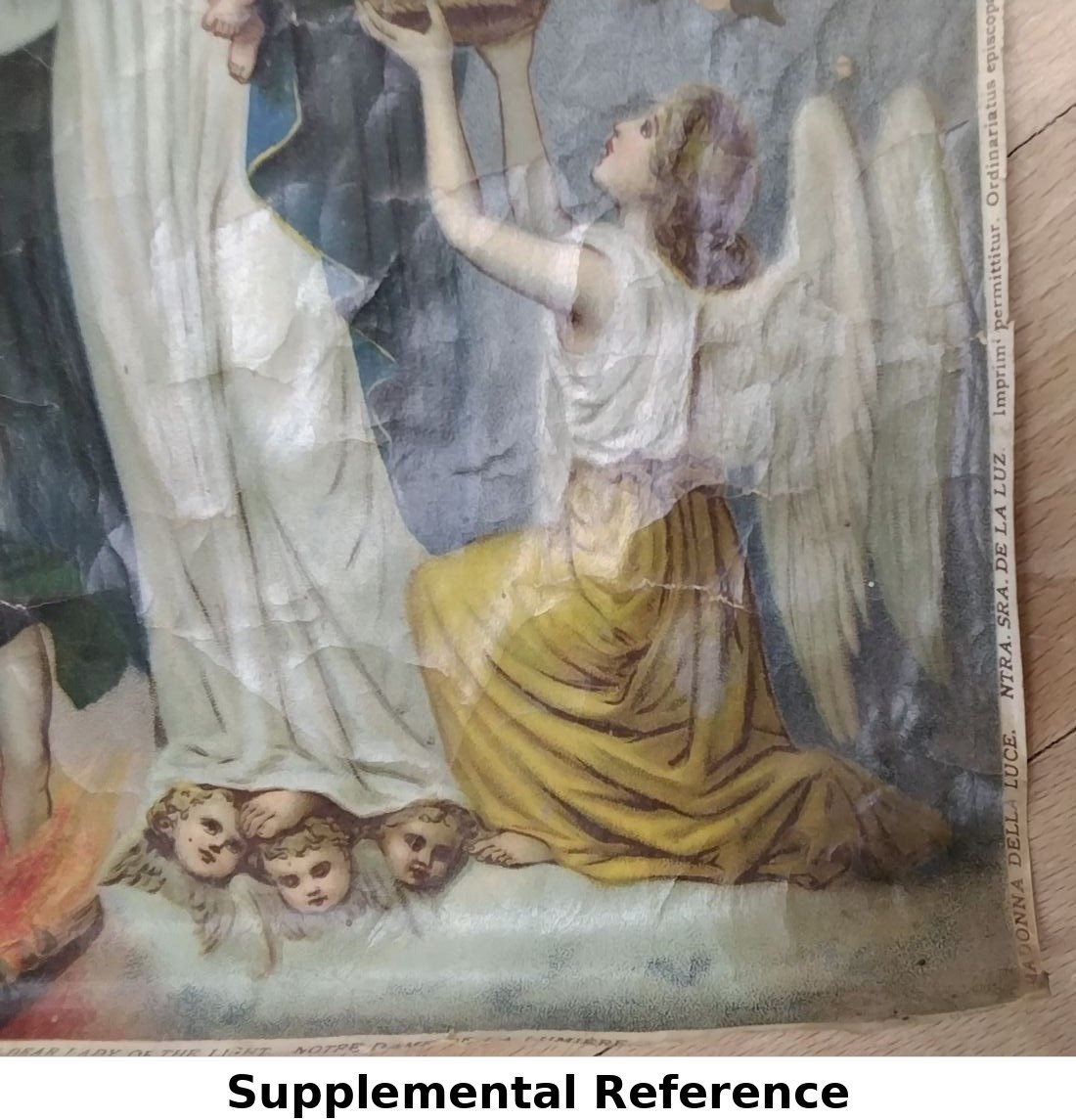
Nuestra Señora de la Luz is depicted rescuing a soul from the jaws of hell (the bare-chested figure at left) while an angel offers her a basket of flaming hearts representing souls in need of grace. Two cherubs above carry a crown; six smaller cherub heads attend the Virgin. The devotion originated with the Jesuits in Palermo in 1722 and was carried to Mexico, where it took deep root in Guanajuato. The Spanish, Italian, and French margin text on the original print — confirmed by the supplemental reference image of the loose chromolithograph — places this among the widely distributed European-printed holy images that fueled domestic altar culture across the borderland.
CONDITION
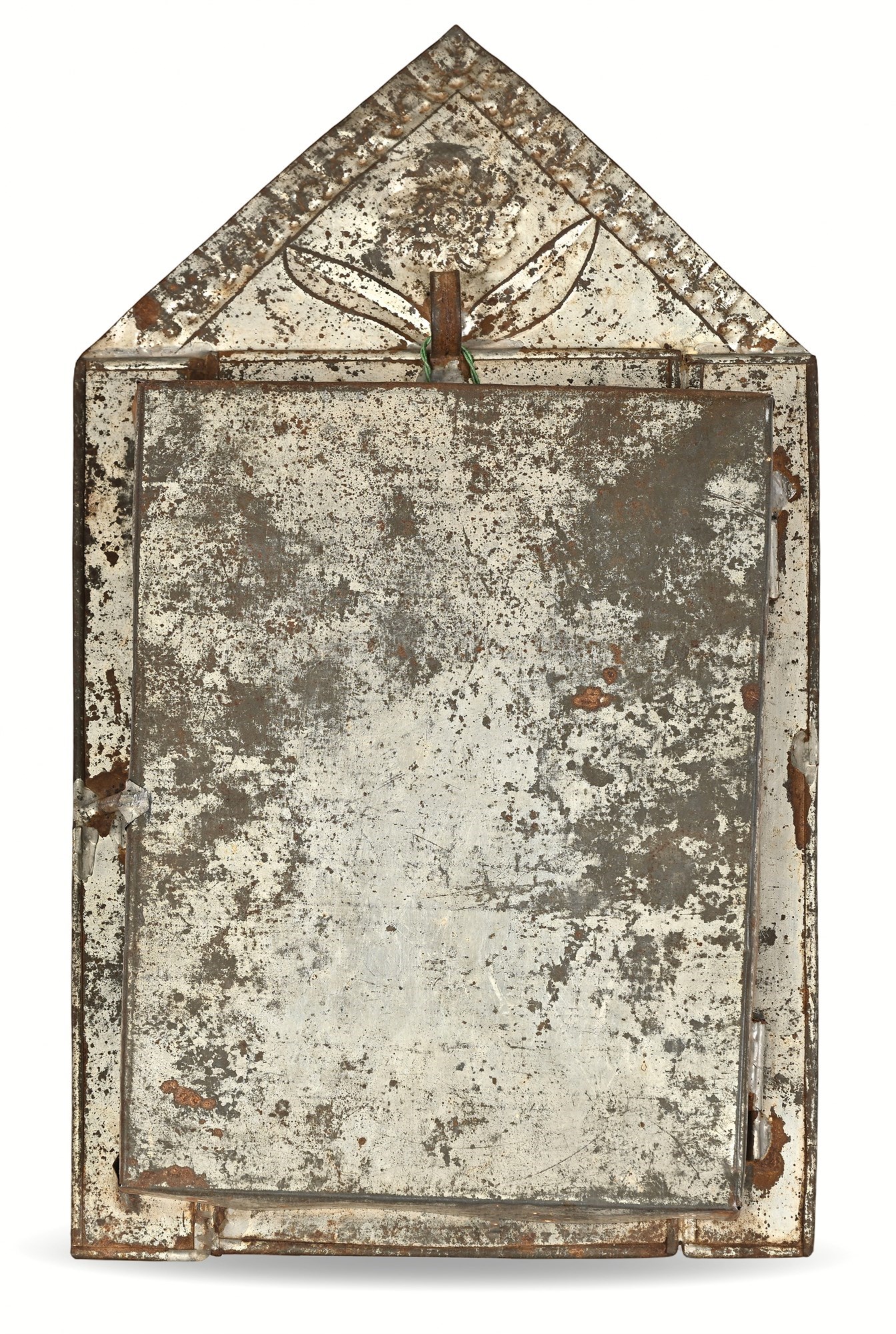
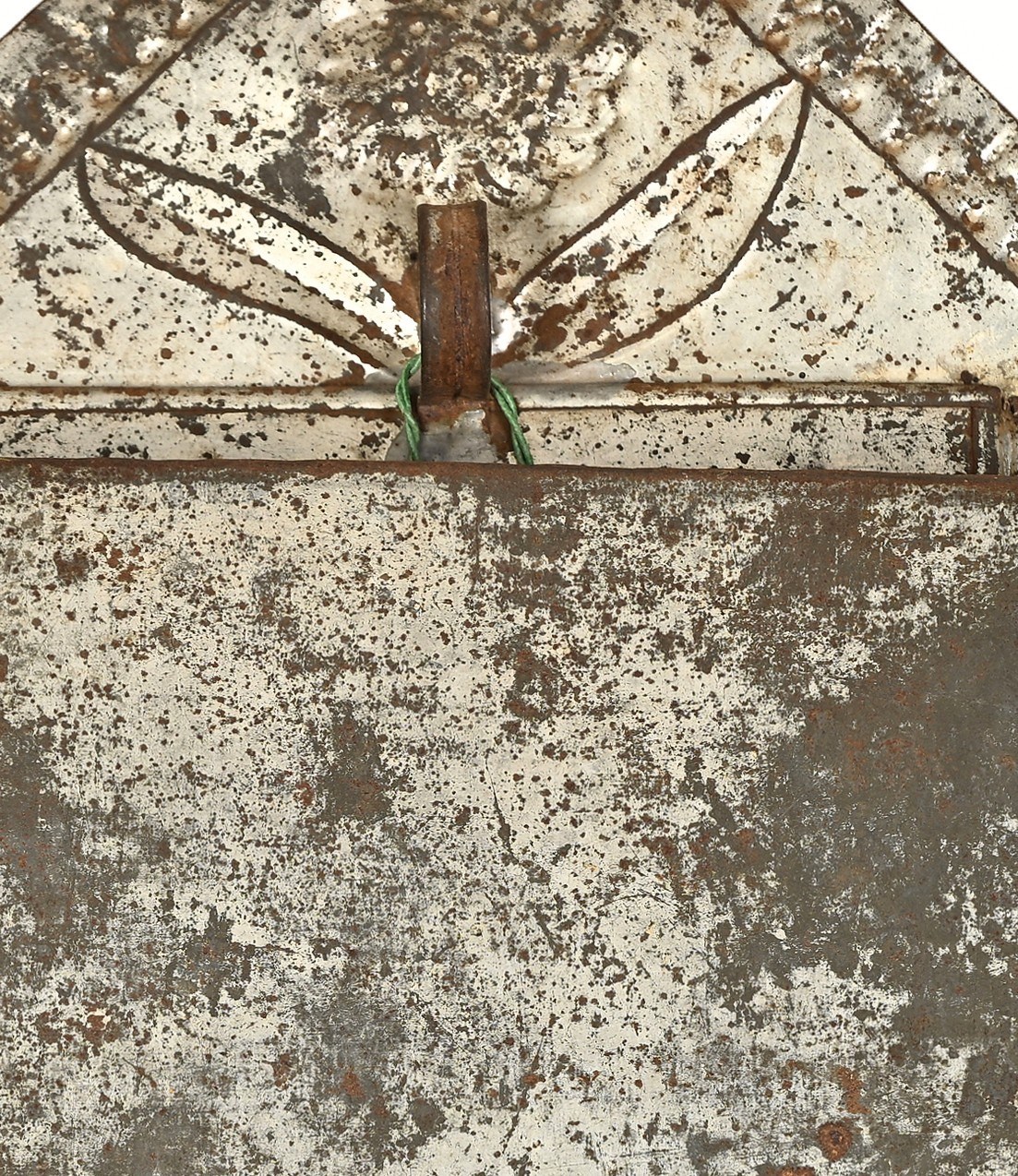
Good overall with age-appropriate wear throughout. Tin shows rust and oxidation across the frame and back panel, with the original silvered and painted surface worn to a soft mottled patina. One glass panel is cracked. The chromolithograph shows creasing, edge loss, and small areas of paper loss, with overall toning consistent with age. The hand-painted floral paper borders remain bright and largely intact. Hinges and closures functional.
DIMENSIONS / SPECIFICATIONS
- Overall: 17" H × 9.5" W × 2.5" D
- Frame: Pressed and tooled tinplate
- Interior Image: Chromolithograph print of Nuestra Señora de la Luz
- Borders: Hand-painted paper panels behind glass
- Interior Addition: Folded gold foil element (crown or ex-voto)
- Origin: Mexico, attributed central or northern region
- Period: Circa 1900
- Campbell's Soup Can (4" H) Shown for Scale — Not Included