Hopi-Style Double Clown Koshare Katsina Doll, Signed "Paul" — Two-Figure View Watchlist >
- Winning Bid: $80.00
- 15 Bid(s) View Bid History
- High Bidder: McFrijol57
Seller Accepts Credit Cards
Payment and pickup instructions will be available on your invoice (under "My Account") at the conclusion of this auction.
Lot # E755
System ID # 28641568
Start Date
End Date
4 Watching
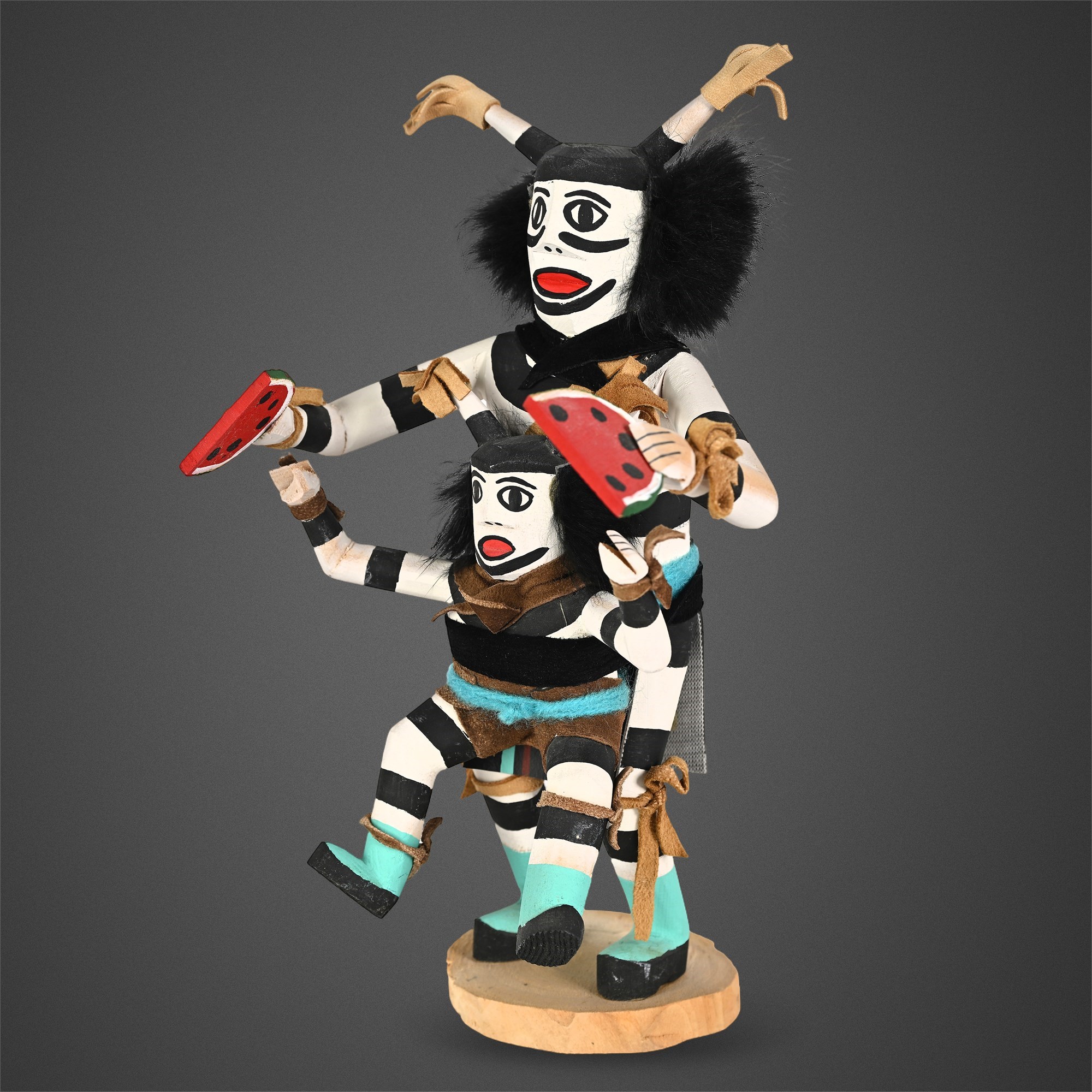
Hopi-Style Double Clown Koshare Katsina Doll, Signed "Paul" — Two-Figure Composition
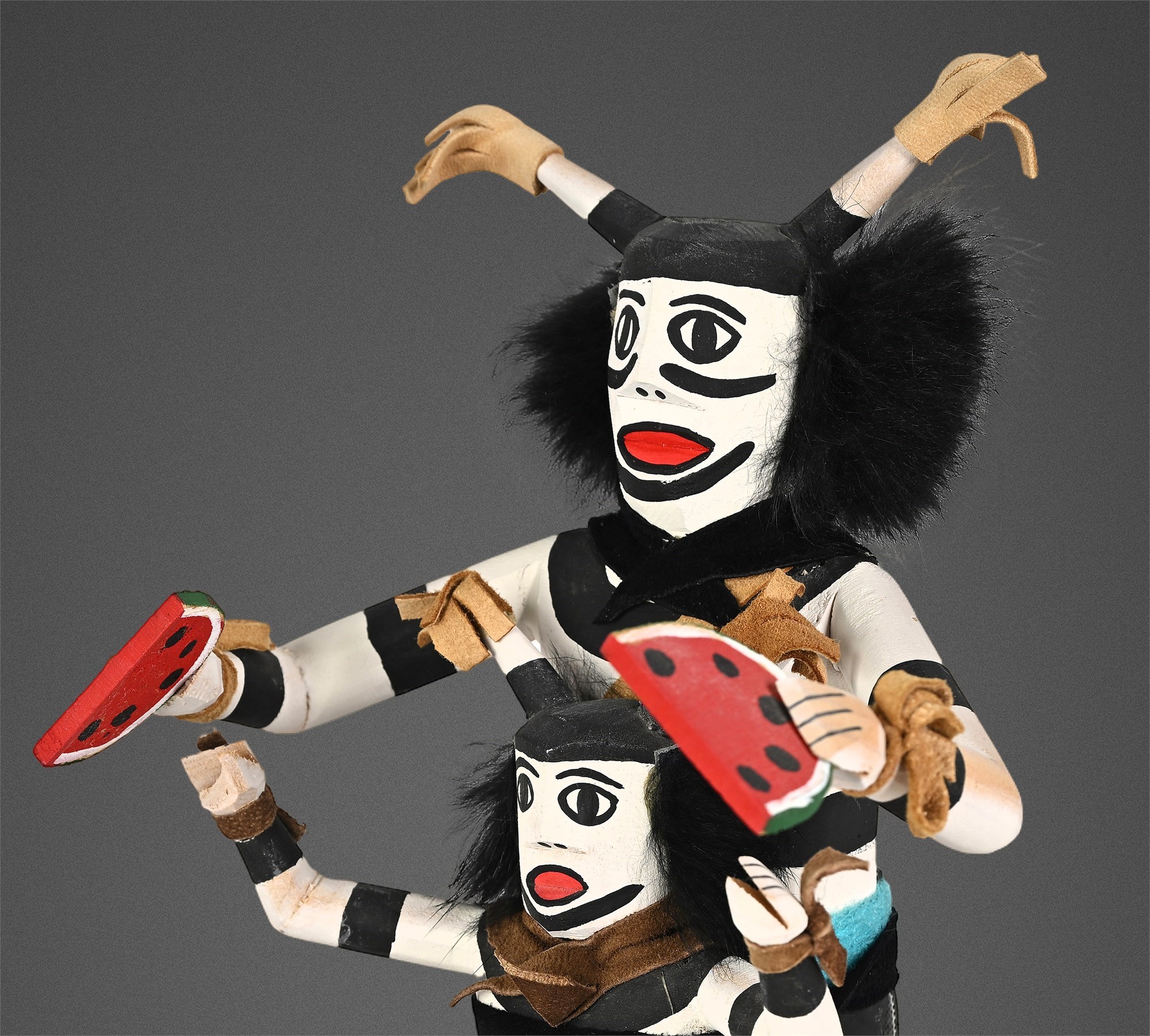
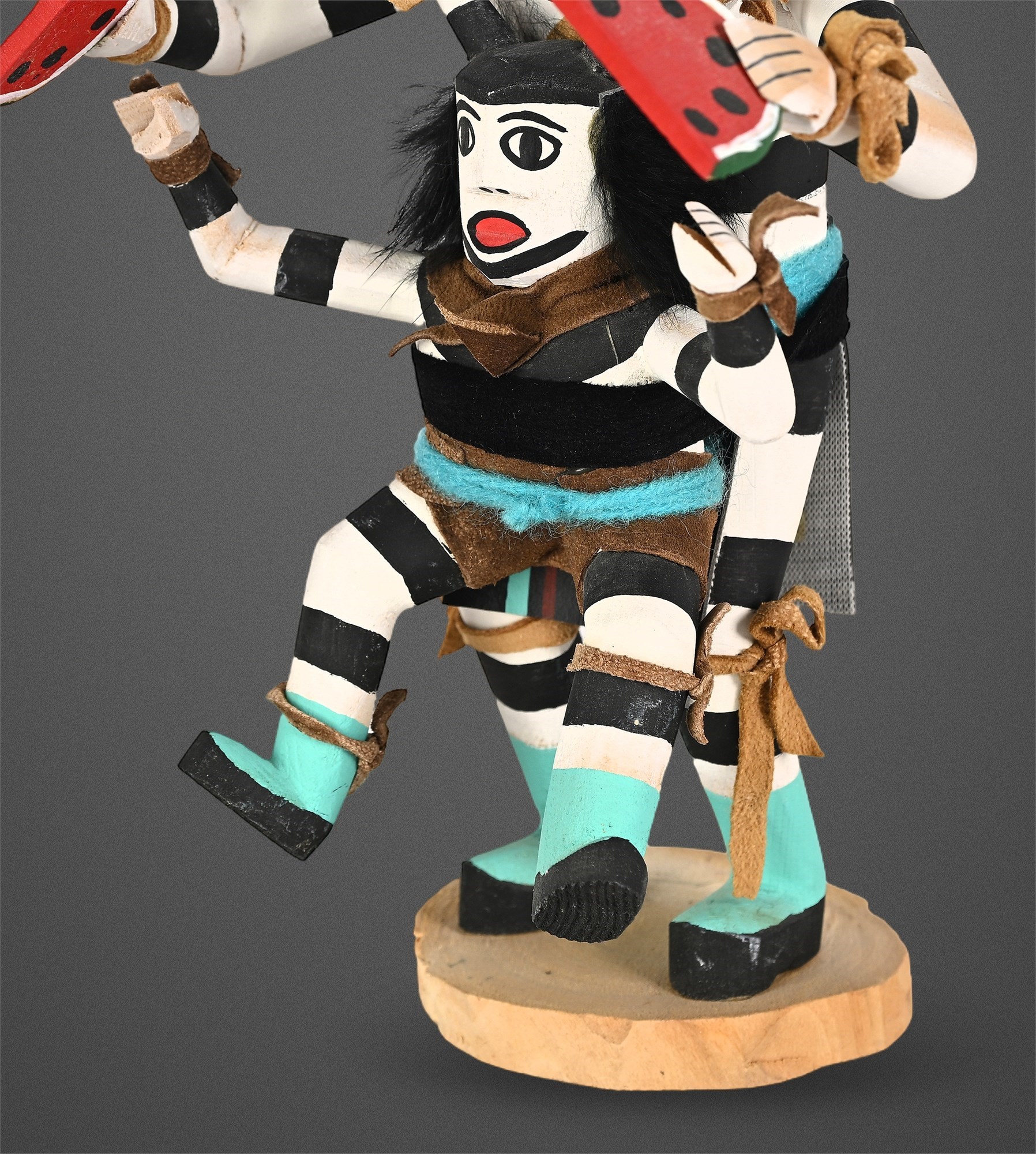
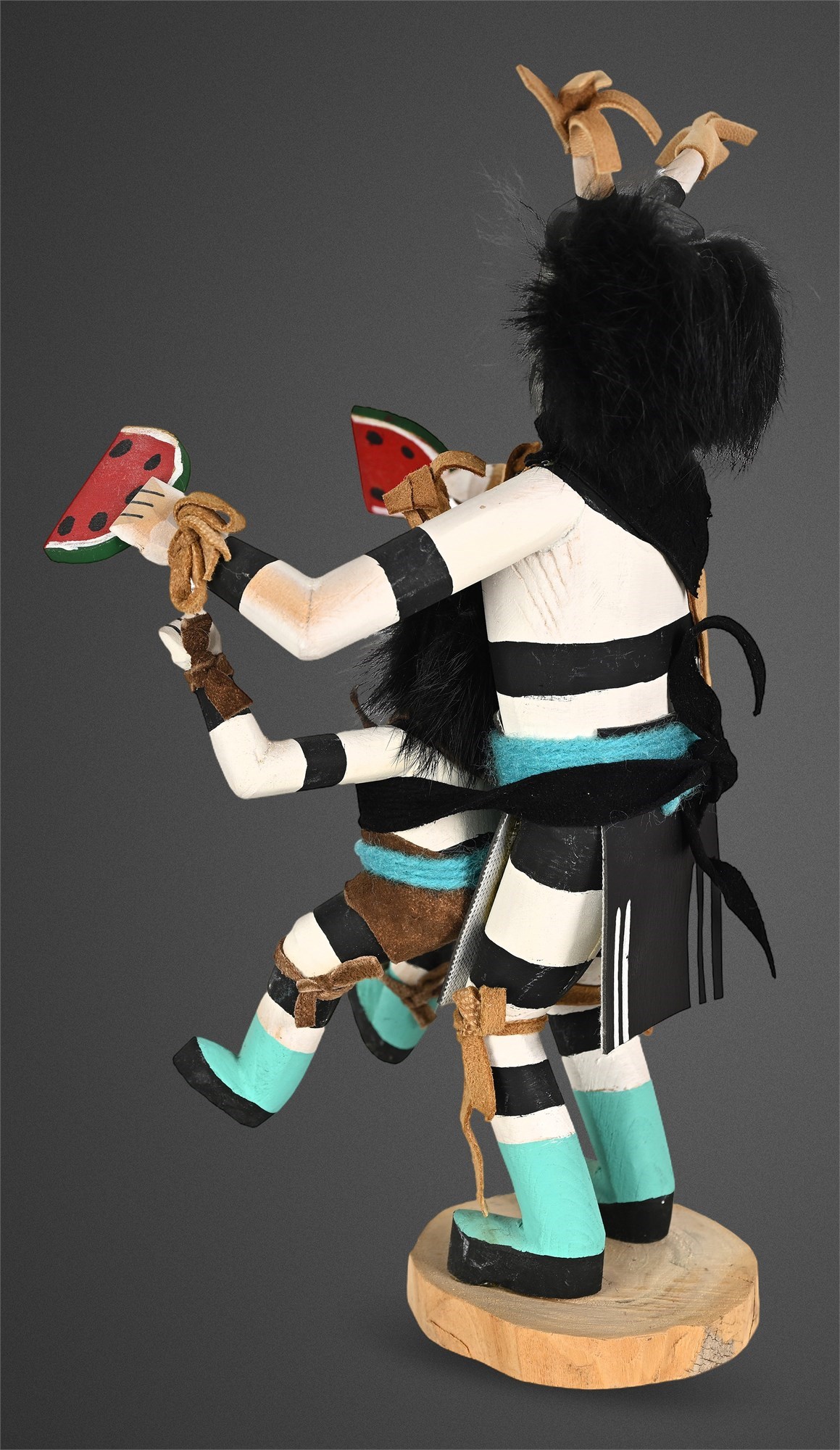
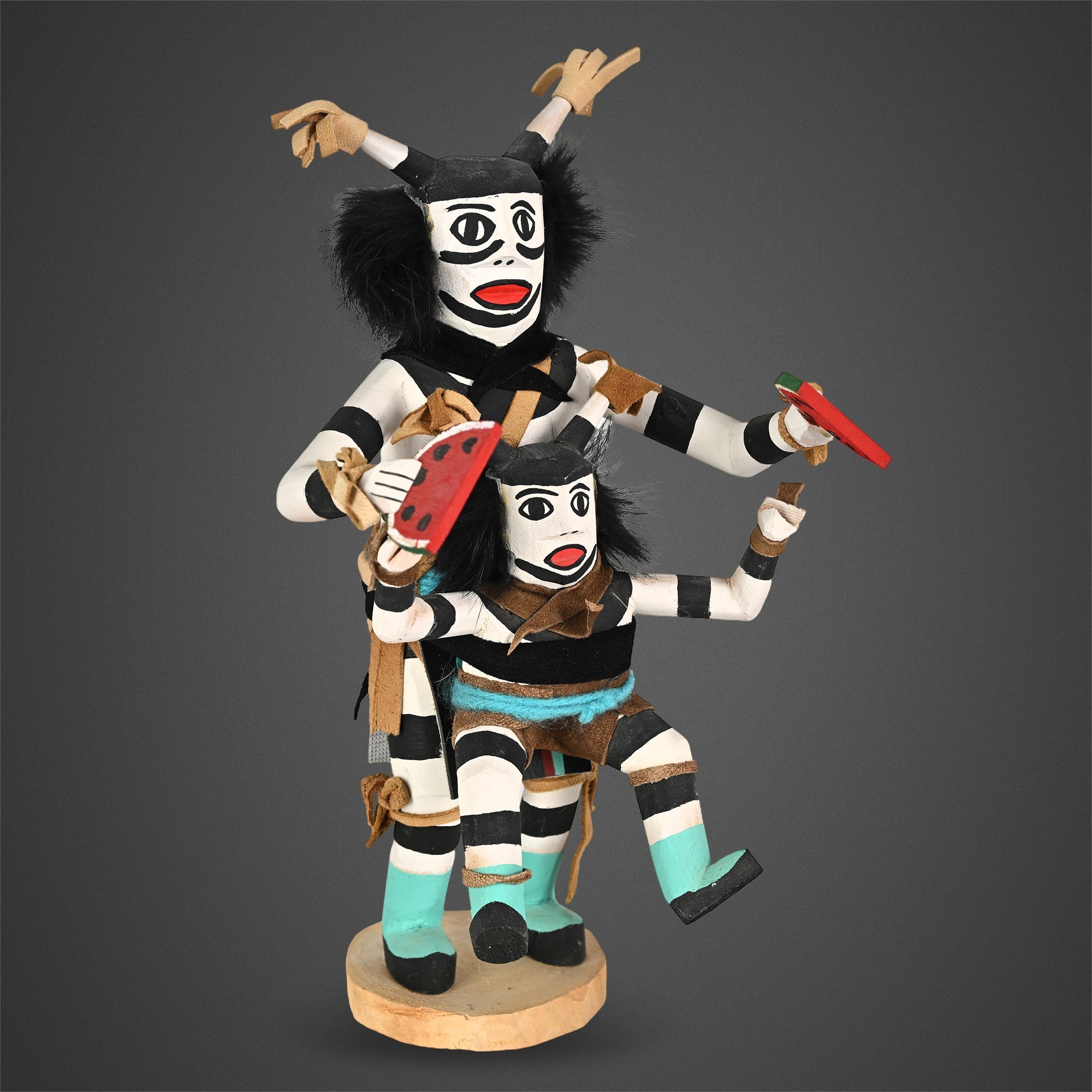
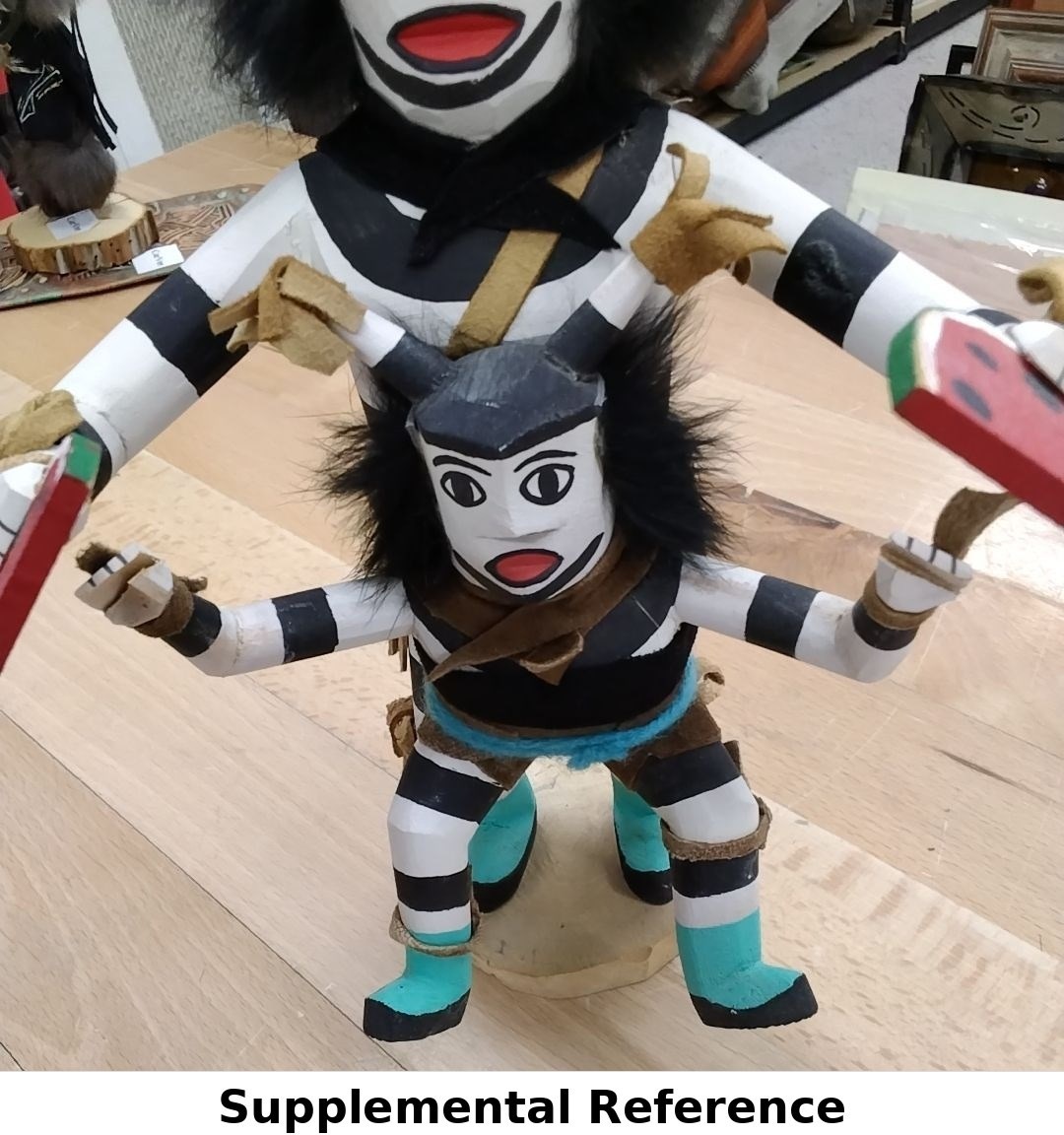
A carved and painted Koshare (clown) katsina figure depicting a larger sacred clown and a smaller companion in a moment of ceremonial play. Both figures carry the signature black-and-white horizontal striping that identifies the Koshare across Pueblo dance traditions, with soft black fur side-locks, leather-tipped horn projections, and turquoise-painted boots. Each holds carved watermelon slices — a recurring Koshare attribute tied to the clowns' theatrical association with summer abundance, appetite, and good-natured disruption during plaza performances.
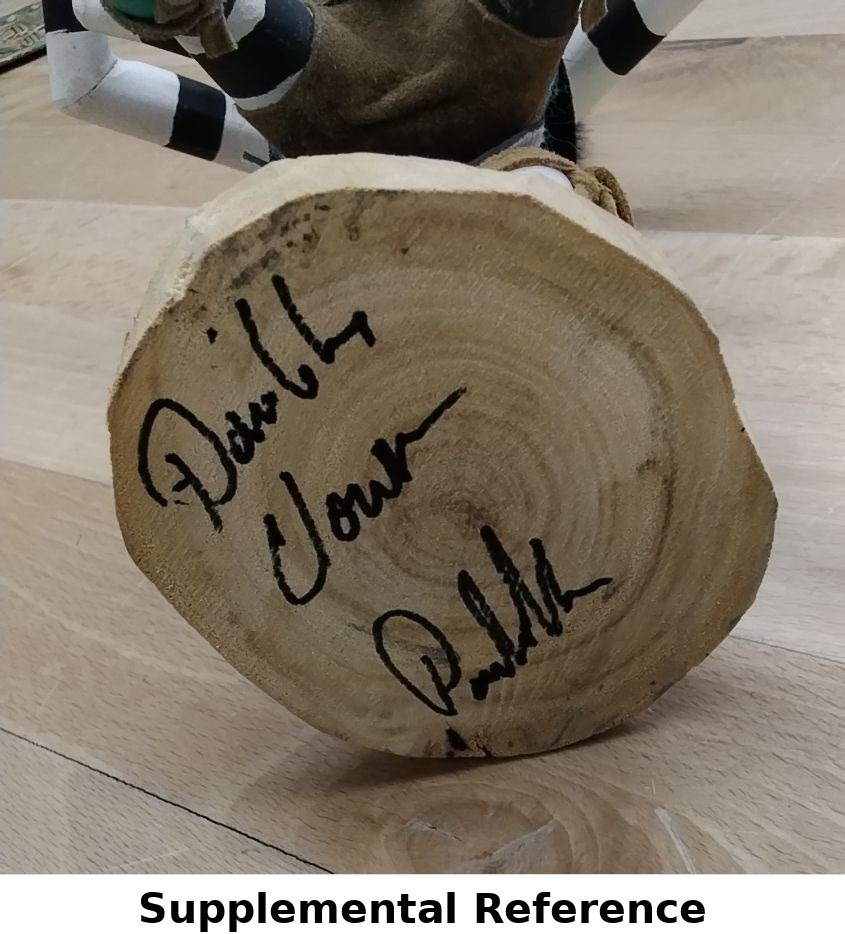
Constructed of hand-carved cottonwood root — the traditional medium for Hopi katsina dolls — with hand-painted detailing and dressed in leather, fur, yarn, and cotton textile elements throughout. The figure stands on a natural cottonwood slab base signed in black marker "Double Clown" with what reads as the carver's first name, Paul. The two-figure composition — adult Koshare paired with a smaller figure — captures the layered, acrobatic energy of Koshare performance, where humor, inversion, and communal instruction are inseparable.
The Double Clown Figure
In Hopi and broader Pueblo ceremonial tradition, the Koshare — also known as the sacred clown — occupies a role that is simultaneously comic and spiritually serious. These striped figures appear during plaza dances to entertain, satirize, and instruct; their buffoonery is purposeful, using laughter as a vehicle for social commentary and communal cohesion. The Double Clown composition carries that symbolism a step further. The pairing of a larger Koshare with a smaller companion figure is understood to represent the transmission of clown knowledge across generations — elder and apprentice, teacher and student — bound together in the same irreverent, instructive act. The smaller figure learns by doing, mirroring the elder's posture, dress, and props. In this reading, the watermelon slices both figures carry are not incidental; they mark both as full participants in the same ceremonial role, however asymmetric in scale. Some carvers and scholars also interpret the double figure as a single spirit manifesting in two bodies simultaneously — a formal expression of the Koshare's boundary-crossing nature, at once present and doubled, singular and plural. The composition is less common than single-figure Koshare carvings, and carvers who choose it are typically making a deliberate statement about lineage and continuity within the clown tradition.
CONDITION
Good overall. Paint and applied materials are intact with crisp detail throughout the larger figure. The two watermelon slices originally held by the smaller clown are absent; the larger figure retains both of its watermelon slices. Leather ties and fur trim remain secure with no loose elements noted.
DIMENSIONS / SPECIFICATIONS
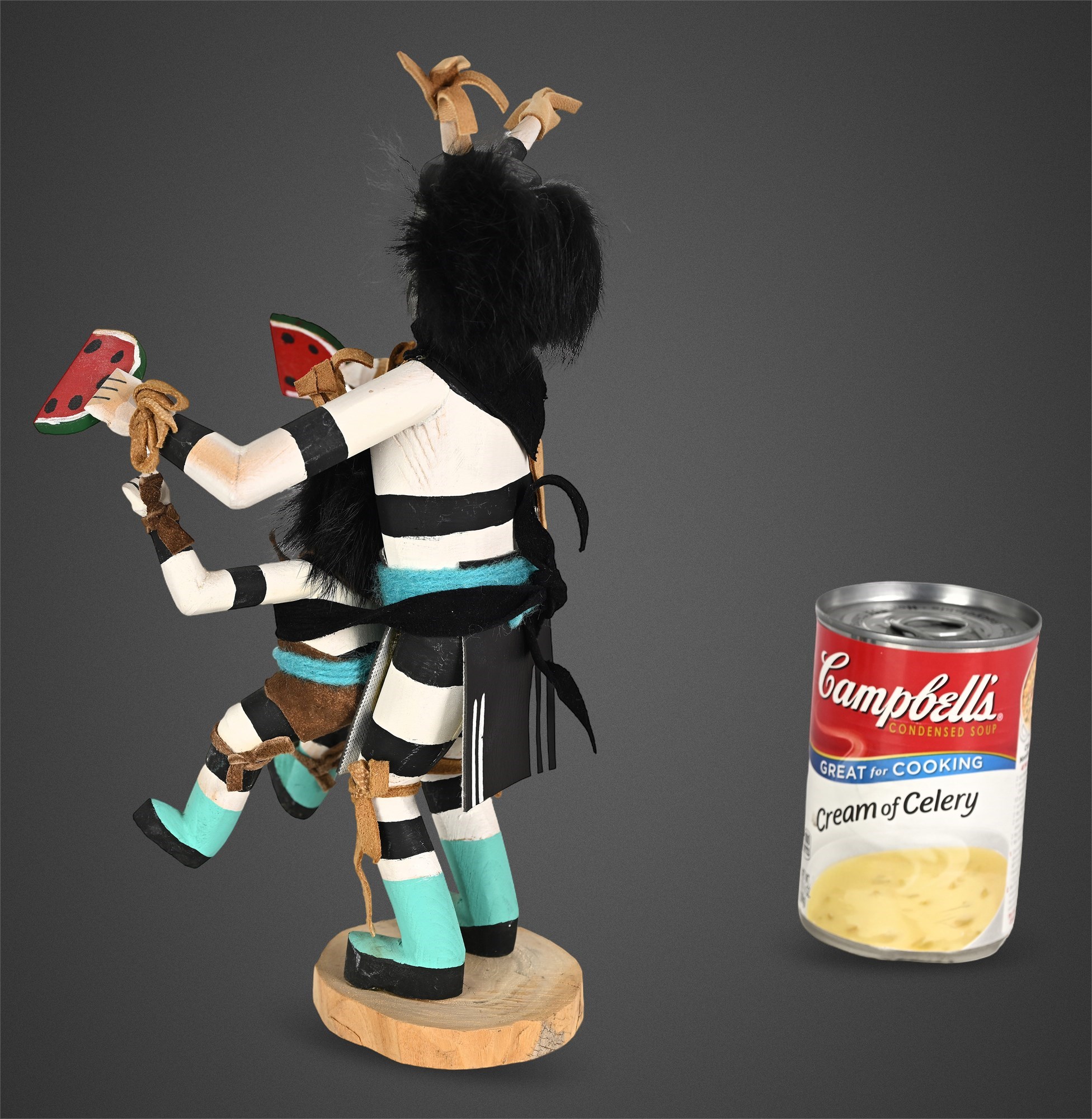
- Overall: 10" H × 6" W × 5" D
- Materials: Cottonwood root, leather, fur, yarn, cotton textile, paint
- Base: Natural cottonwood slab
- Signed: "Double Clown" / Paul
- Campbell's Soup Can (4" H) Shown for Scale — Not Included