Judy Toya Jemez Pueblo Polychrome Storyteller Figure with Six Children View Watchlist >
- Winning Bid: $95.01
- 33 Bid(s) View Bid History
- High Bidder: Yesdear1953
Seller Accepts Credit Cards
Payment and pickup instructions will be available on your invoice (under "My Account") at the conclusion of this auction.
Lot # E541
System ID # 28456899
Start Date
End Date
3 Watching
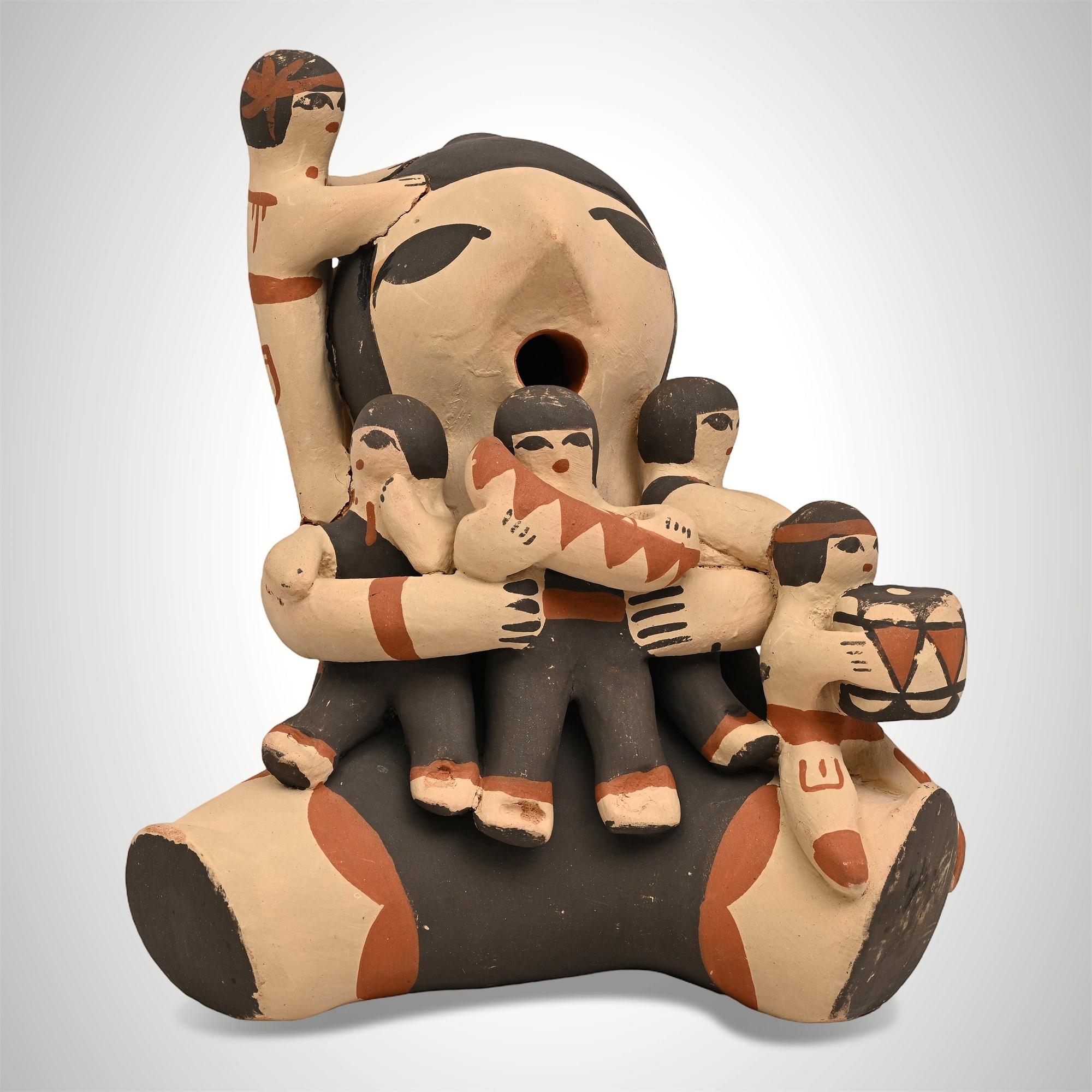
Judy Toya Jemez Pueblo Polychrome Storyteller Figure with Six Children
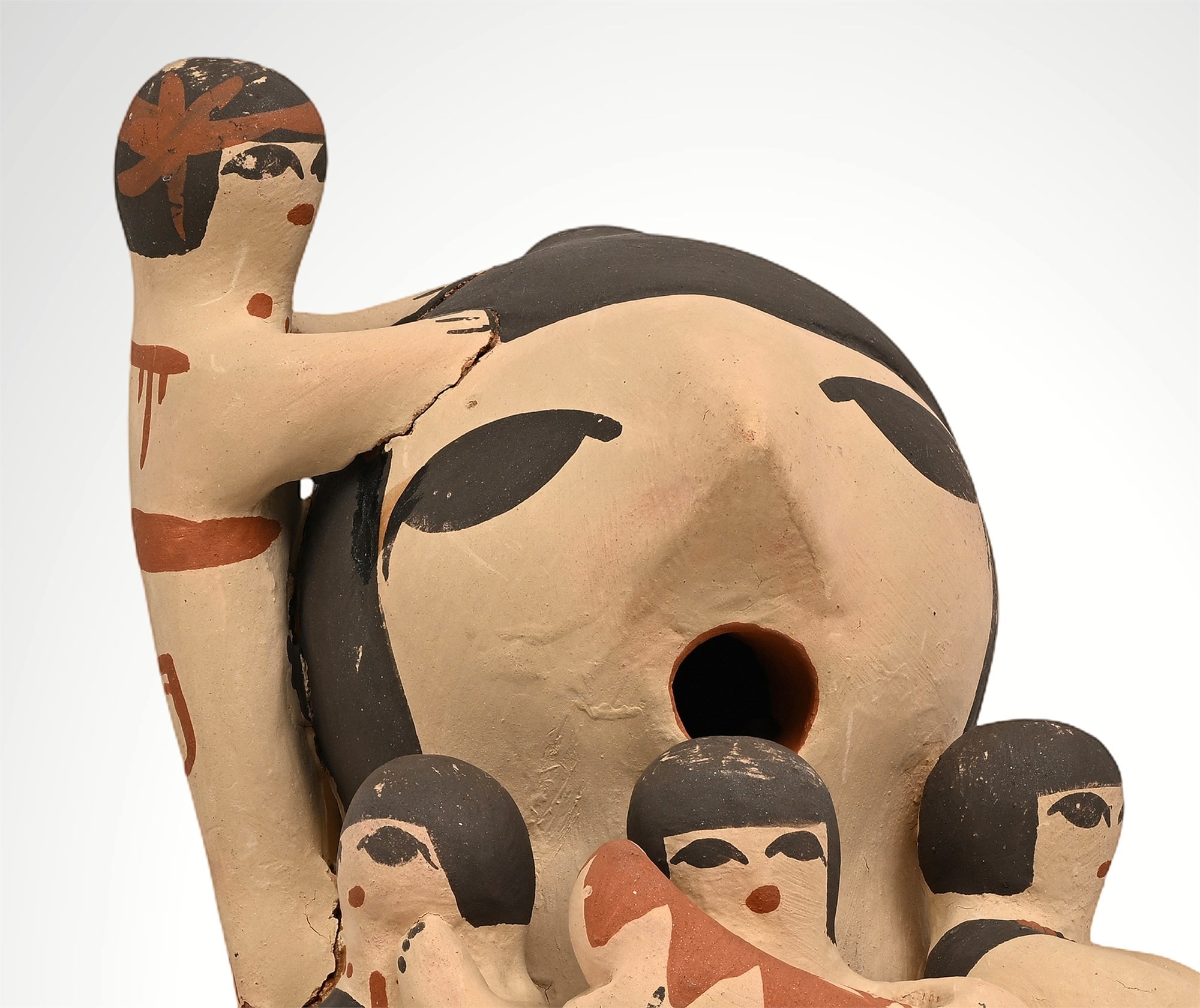
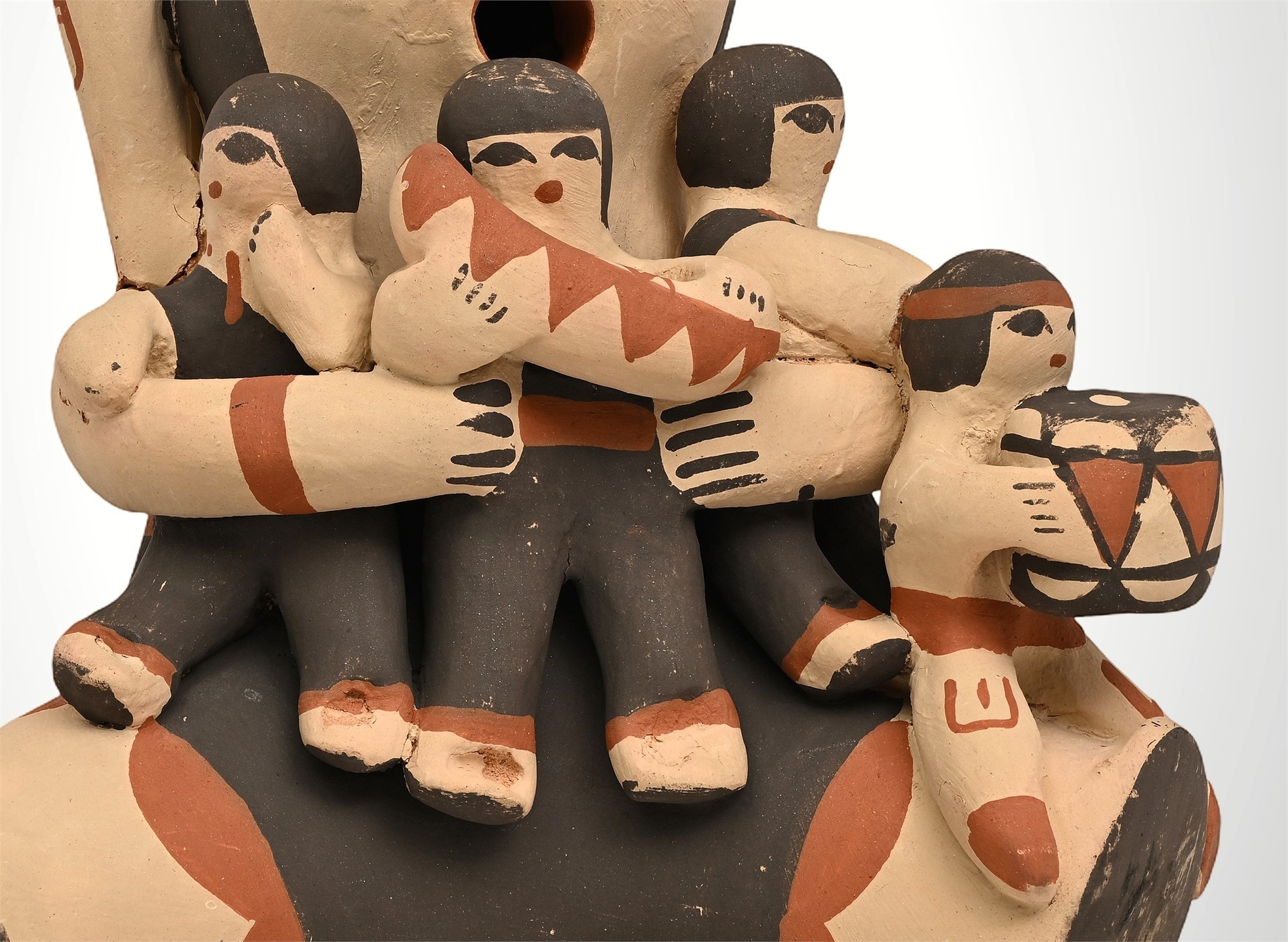
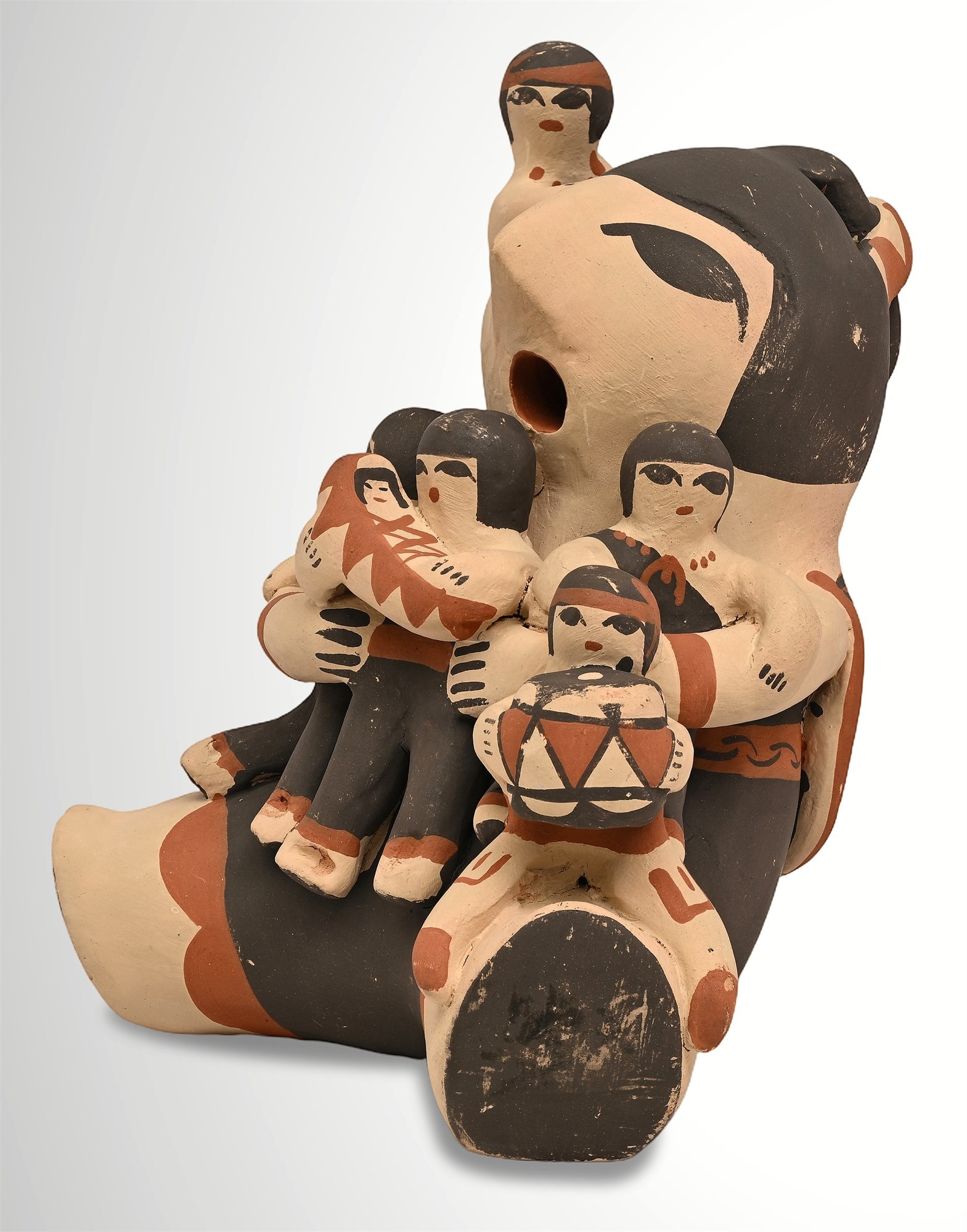
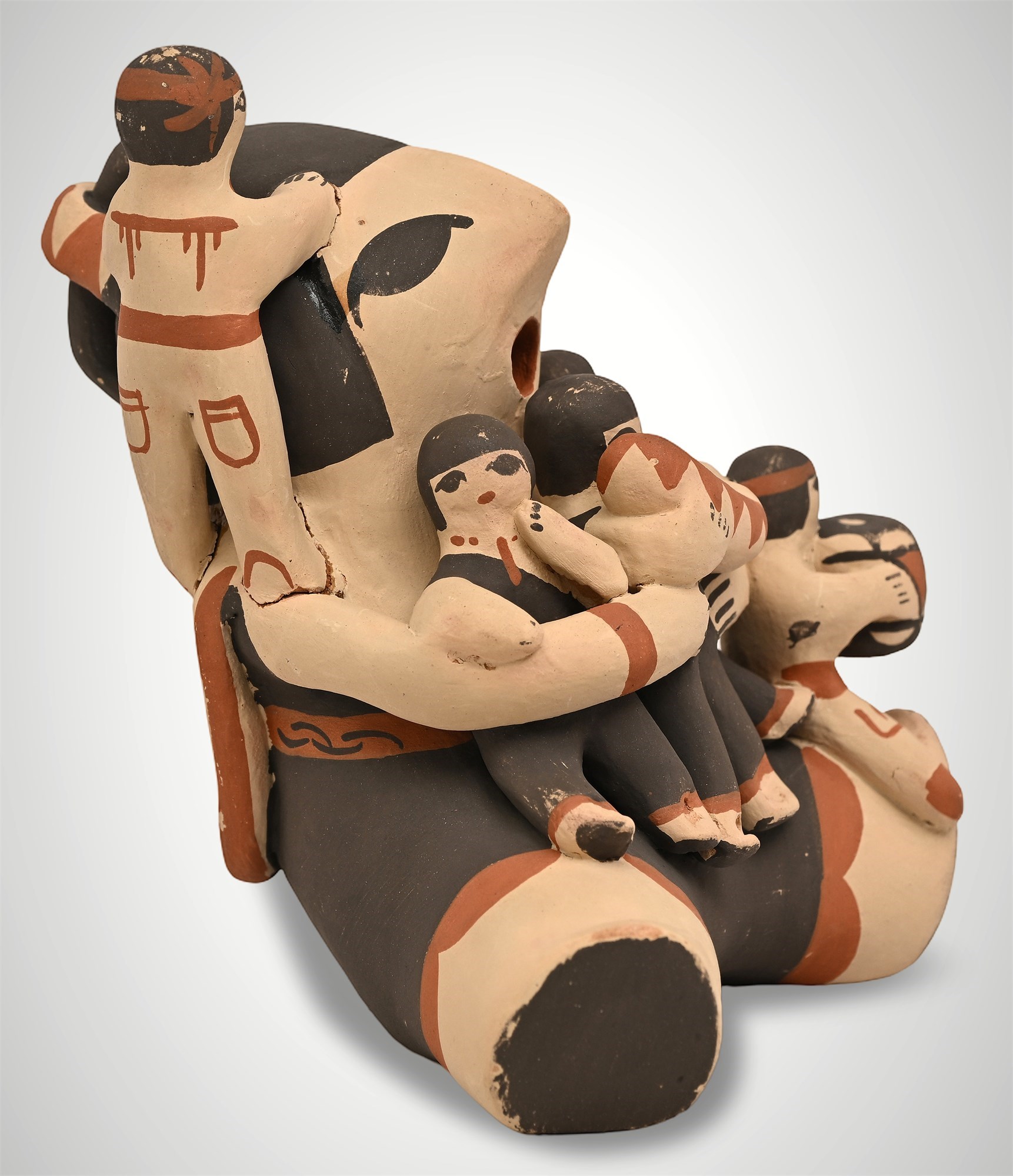
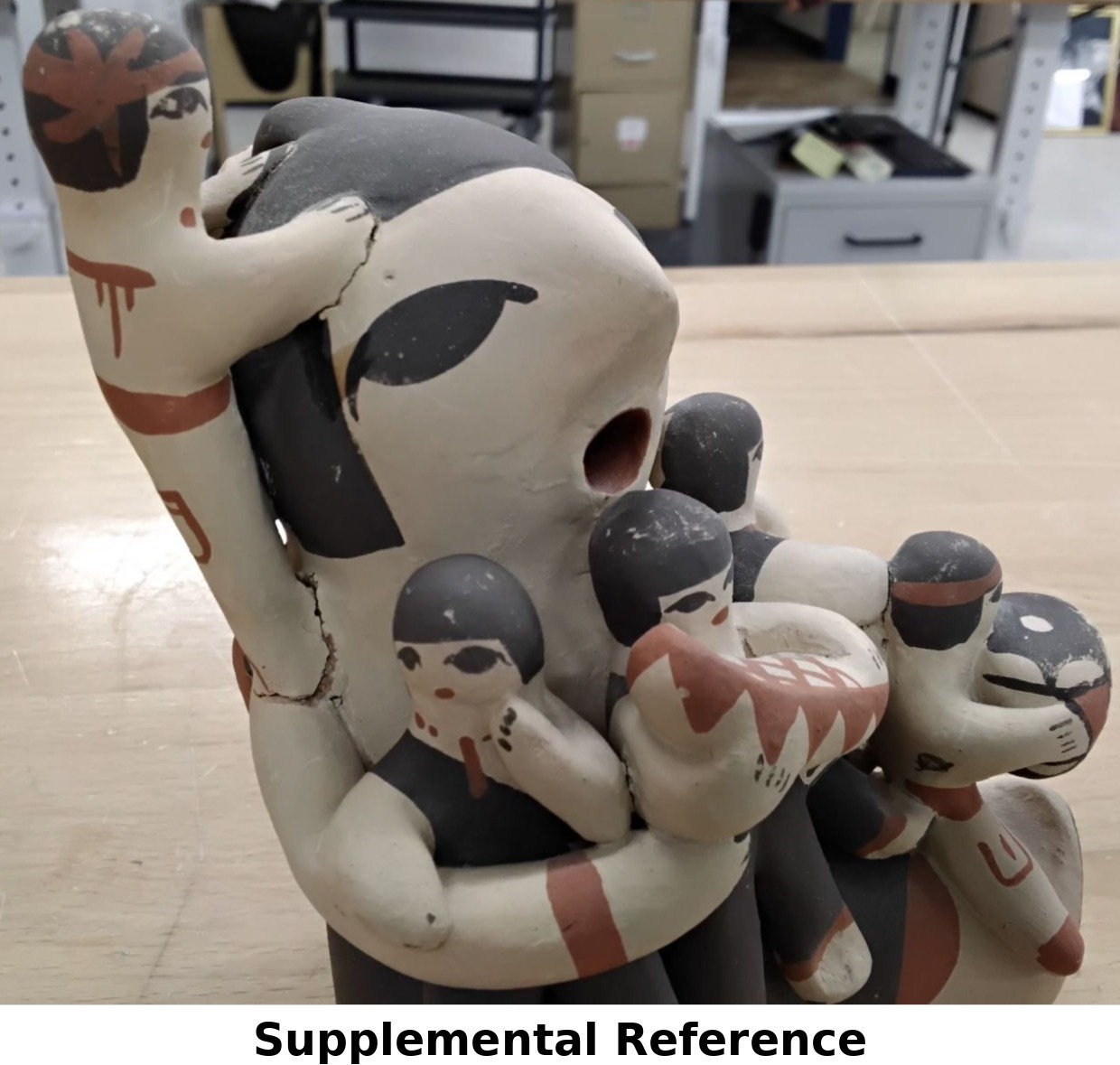
The children are everywhere — draped across the matriarch's arms, stacked along her shoulder, perched at the crown of her head, one small figure leaning in close as if straining not to miss a single word. Eyes closed, mouths open, they are deep inside the story. This is the essential image of the Pueblo storyteller figure: not a decorative object, not a curio, but a clay record of the most important thing a community can do — pass what it knows to the ones who will carry it forward. Judy Toya of Jemez Pueblo understood that image from the inside.
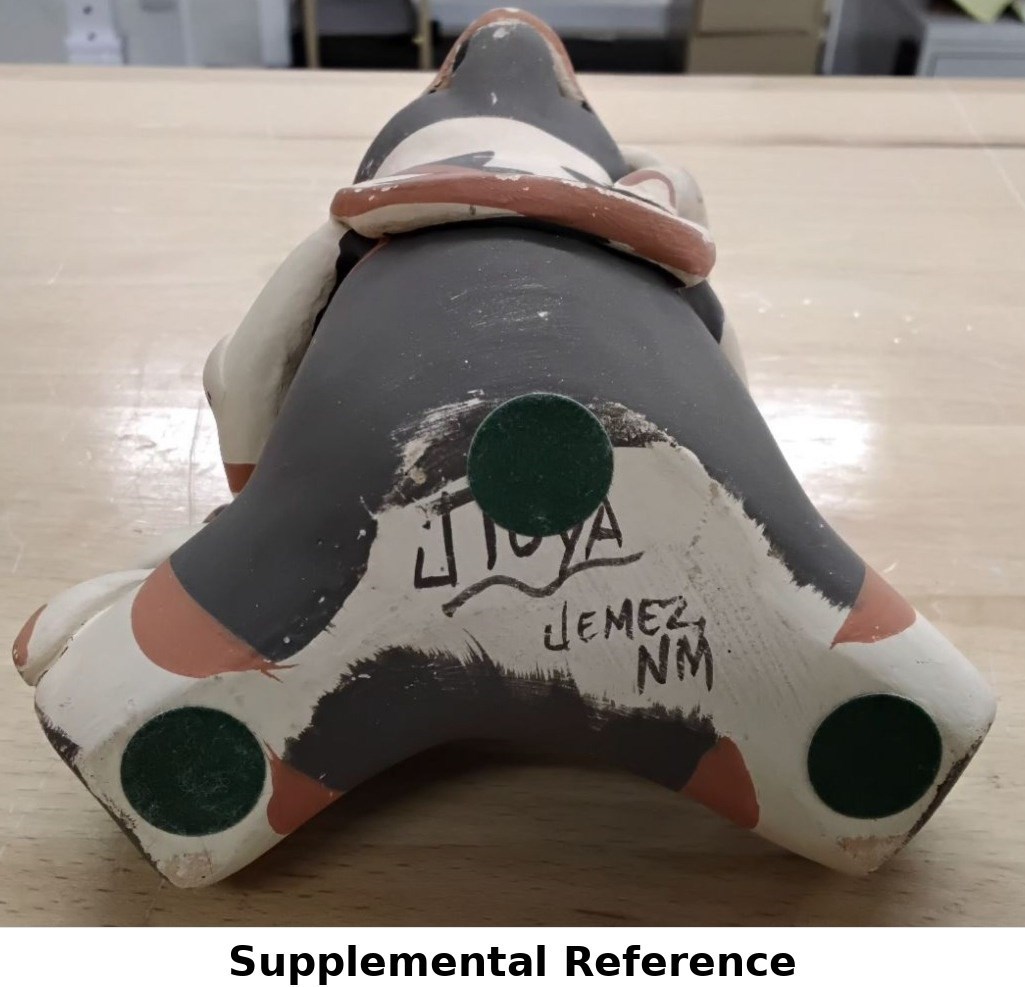
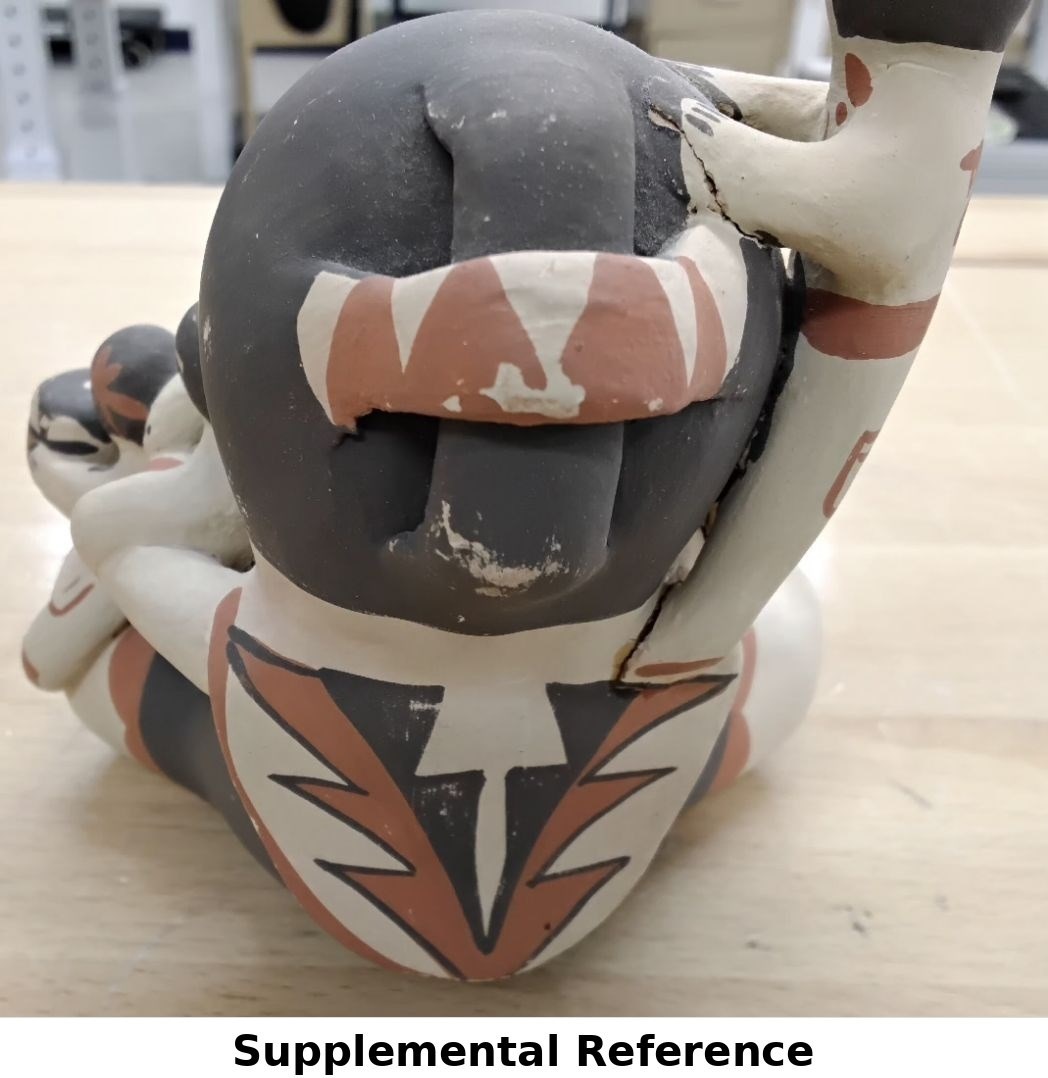
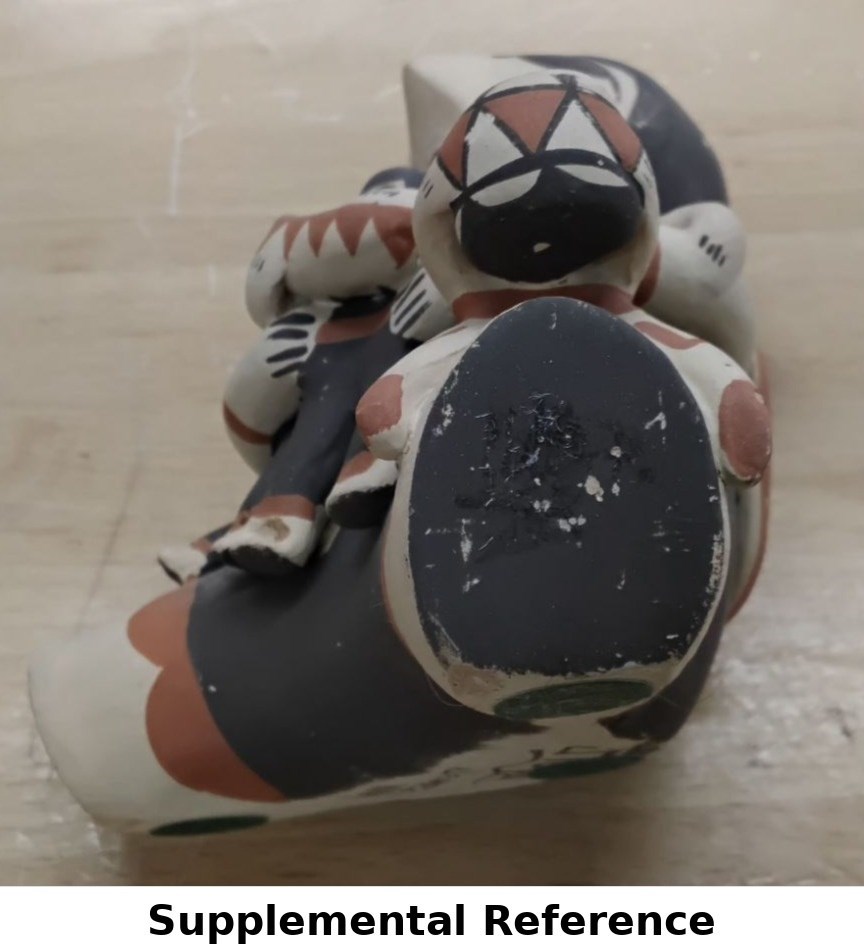
The seated matriarch is hand-built from earthenware clay and painted in the traditional Jemez polychrome palette: matte black, terracotta red, and cream slip, with geometric textile patterning across the figure's skirt, large leaf-form motifs on the torso, and a stylized blossom painted into the matriarch's hair. One child holds a drum decorated with triangular Pueblo motifs; another climbs the raised arm, small fingers gripping for purchase. The rear of the figure carries a bold geometric composition — arrowhead and lightning motifs in black and terracotta — that faces outward as a complete painted field. Six children is a generous count; within the tradition, the number of children a storyteller carries is understood as a measure of her stature and the depth of what she holds. The underside bears a clear hand-written signature: "J. Toya, Jemez, NM."
History
The storyteller form as a distinct figurative type was created at Cochiti Pueblo in 1964 by Helen Cordero, who modeled her first storyteller after her grandfather, Santiago Quintana — a man known throughout Cochiti as a keeper of songs and tales. Cordero's figure was shown at the 1964 Spanish Market in Santa Fe and recognized immediately as something new and important. By the 1970s the form had spread across the Pueblo world, adopted and transformed by potters at Acoma, Laguna, Santo Domingo, Zia, and Jemez, each community inflecting the tradition through their own clay bodies, slips, and design vocabularies.
At Jemez, the Toya family became one of the defining voices in the storyteller tradition. Judy Toya worked within a family that included Maxine Toya, Mary Rose Toya, and Camilla Toya — each developing an individual approach to the form, some favoring tightly grouped compositions, others spreading figures in cascading arrangements that fill every surface of the matriarch's body. Judy's work is characterized by an ease with complex multi-figure groupings and a confident, expressive brushwork that keeps Jemez geometric vocabulary alive within a fully figurative form. The Toya family's storytellers appear in institutional collections documenting Pueblo ceramic arts, including the Heard Museum, the Museum of Indian Arts and Culture in Santa Fe, and the Millicent Rogers Museum in Taos — a lineage that places this figure squarely within the living canon of the tradition.
Collector's Note
A six-child storyteller signed by Judy Toya is an active piece of that canon, not a reproduction of it. The repair and wear this figure has accumulated do not diminish that standing — they confirm it was handled, displayed, and valued in exactly the way such objects are meant to be. For collectors of Pueblo figurative ceramics, the Toya name at Jemez carries the same weight as Cordero at Cochiti: a family that didn't follow a tradition so much as shape one.
CONDITION
Fair. Scratches, scuffs, and paint loss throughout, consistent with years of handling and display. One child figure has been reattached; a visible repair crack runs from the matriarch's right shoulder down through the upper torso. Additional paint loss to several extremities and to the rear of the head.
DIMENSIONS / SPECIFICATIONS
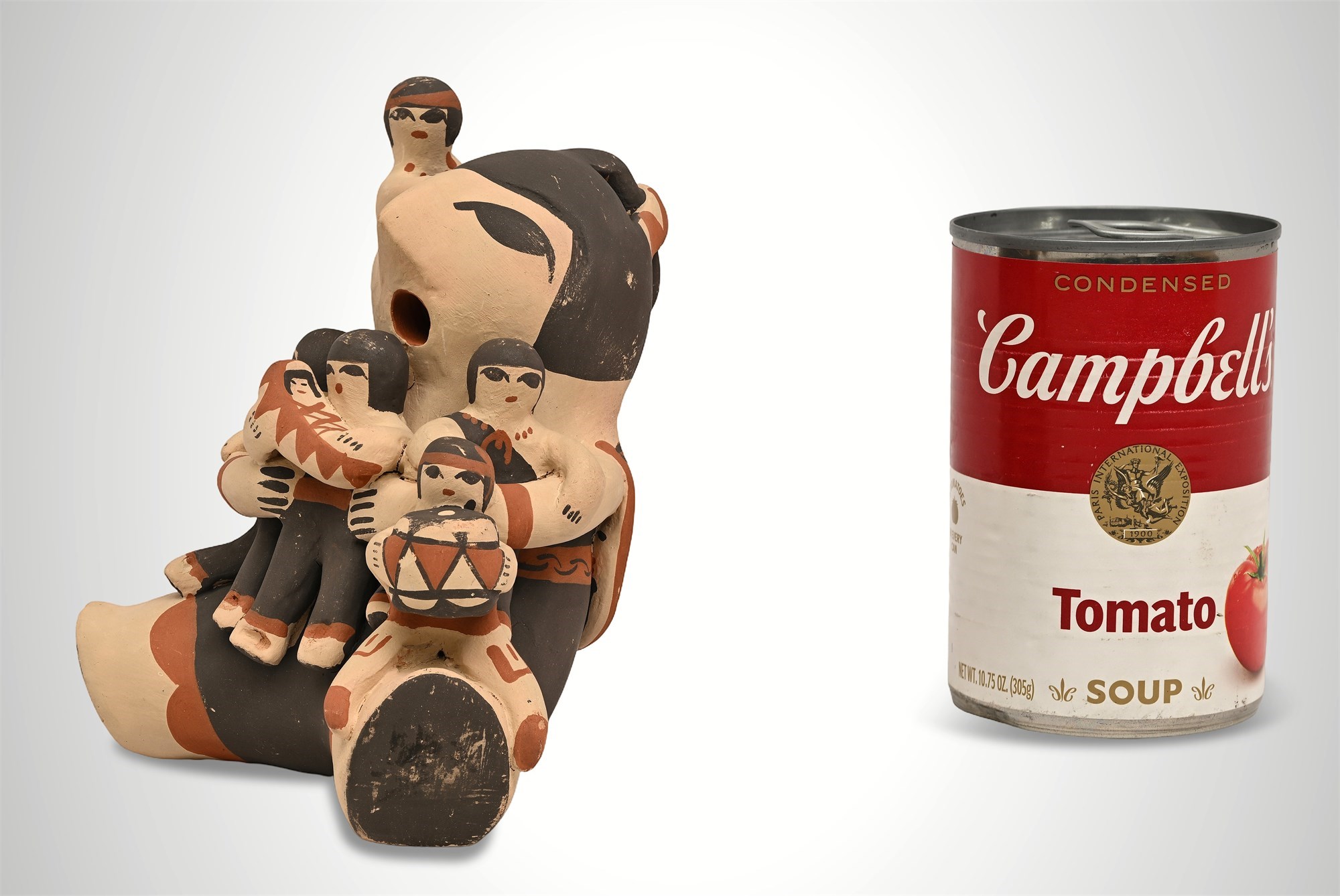
- 5" H × 5" W × 4.5" D
- Six attached children figures
- Signed: "J. Toya, Jemez, NM" on underside
- Hand-sculpted, hand-painted earthenware
- Palette: matte black, terracotta red, cream slip
- Origin: Jemez Pueblo, New Mexico
- Campbell's Soup Can (4" H) Shown for Scale — Not Included