Antique Cast Iron & Maple Combination School Desk, Marked "3R" / "3L" View Watchlist >
- Winning Bid: $55.00
- 26 Bid(s) View Bid History
- High Bidder: Colettewilson89
Seller Accepts Credit Cards
Payment and pickup instructions will be available on your invoice (under "My Account") at the conclusion of this auction.
Lot # E501
System ID # 28404298
Start Date
End Date
6 Watching
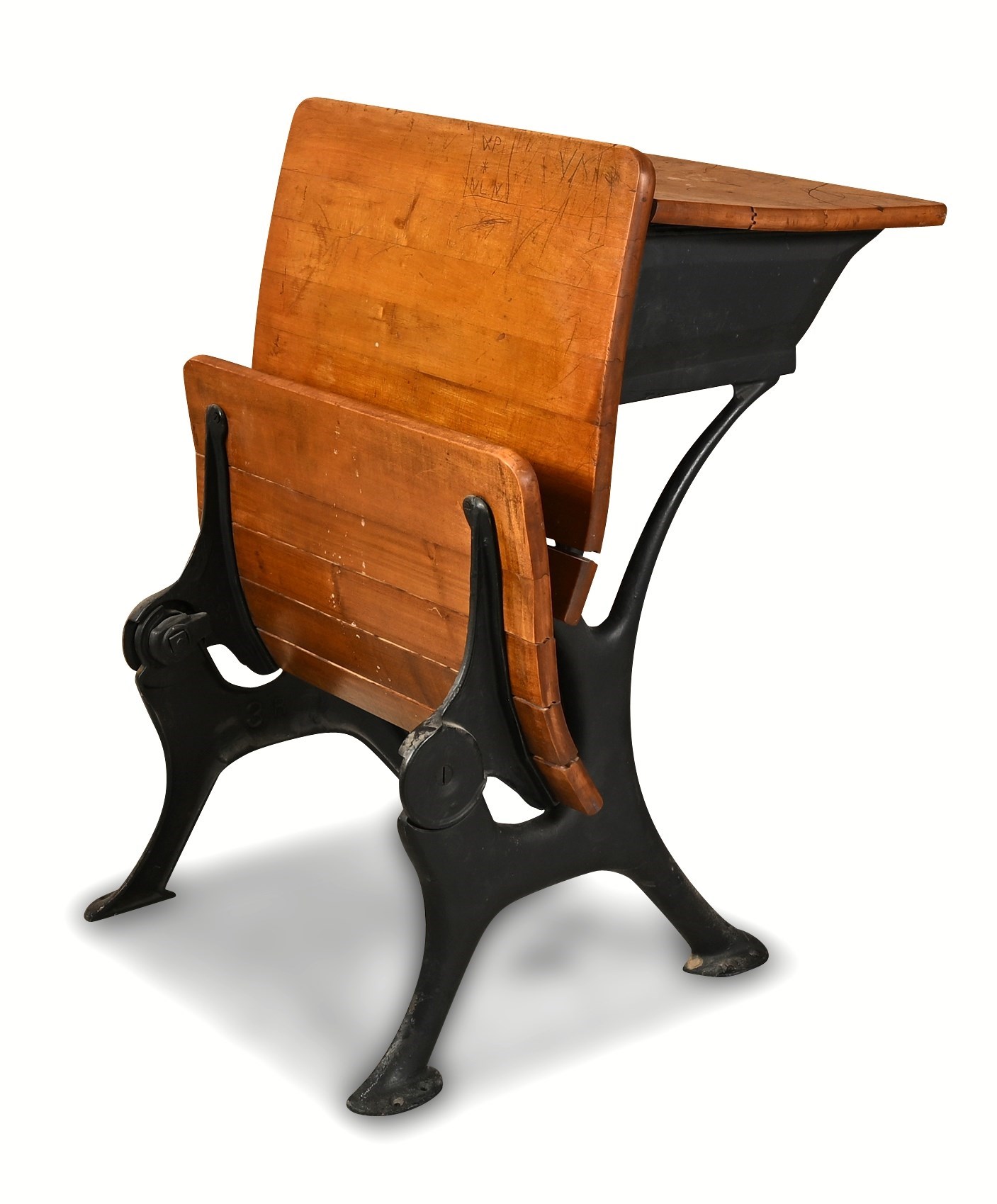
Antique Cast Iron & Maple Combination School Desk, Marked "3R" / "3L"
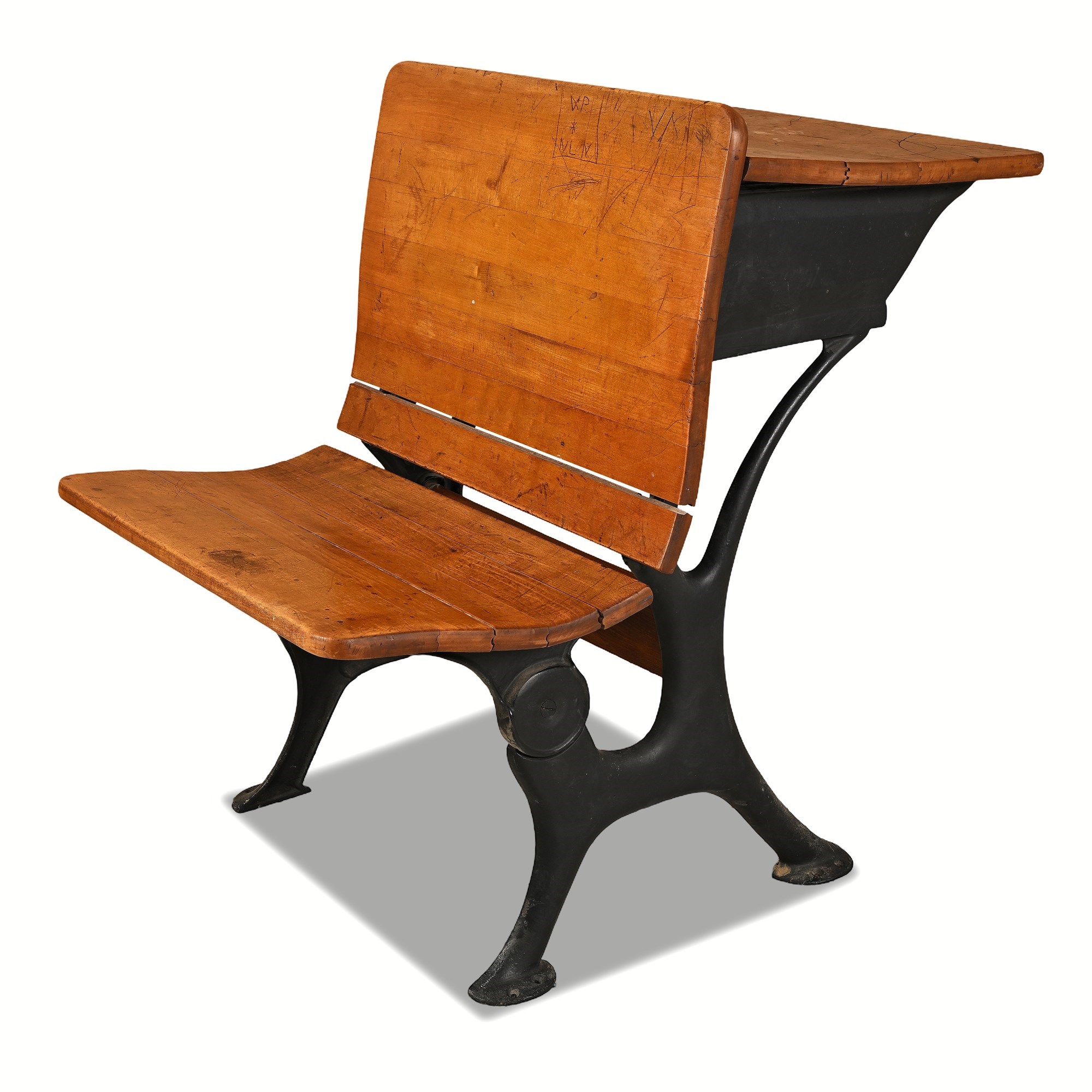
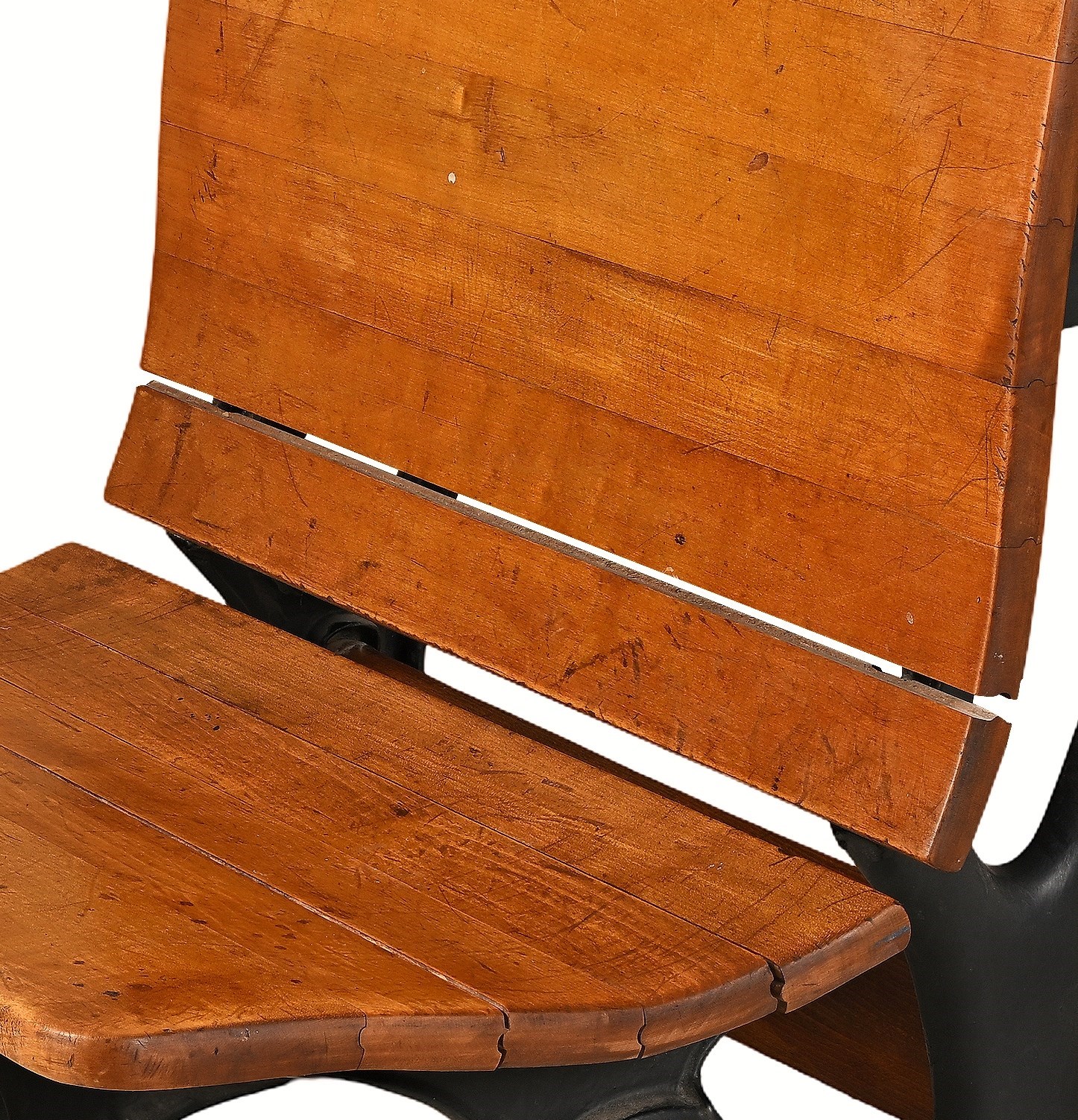
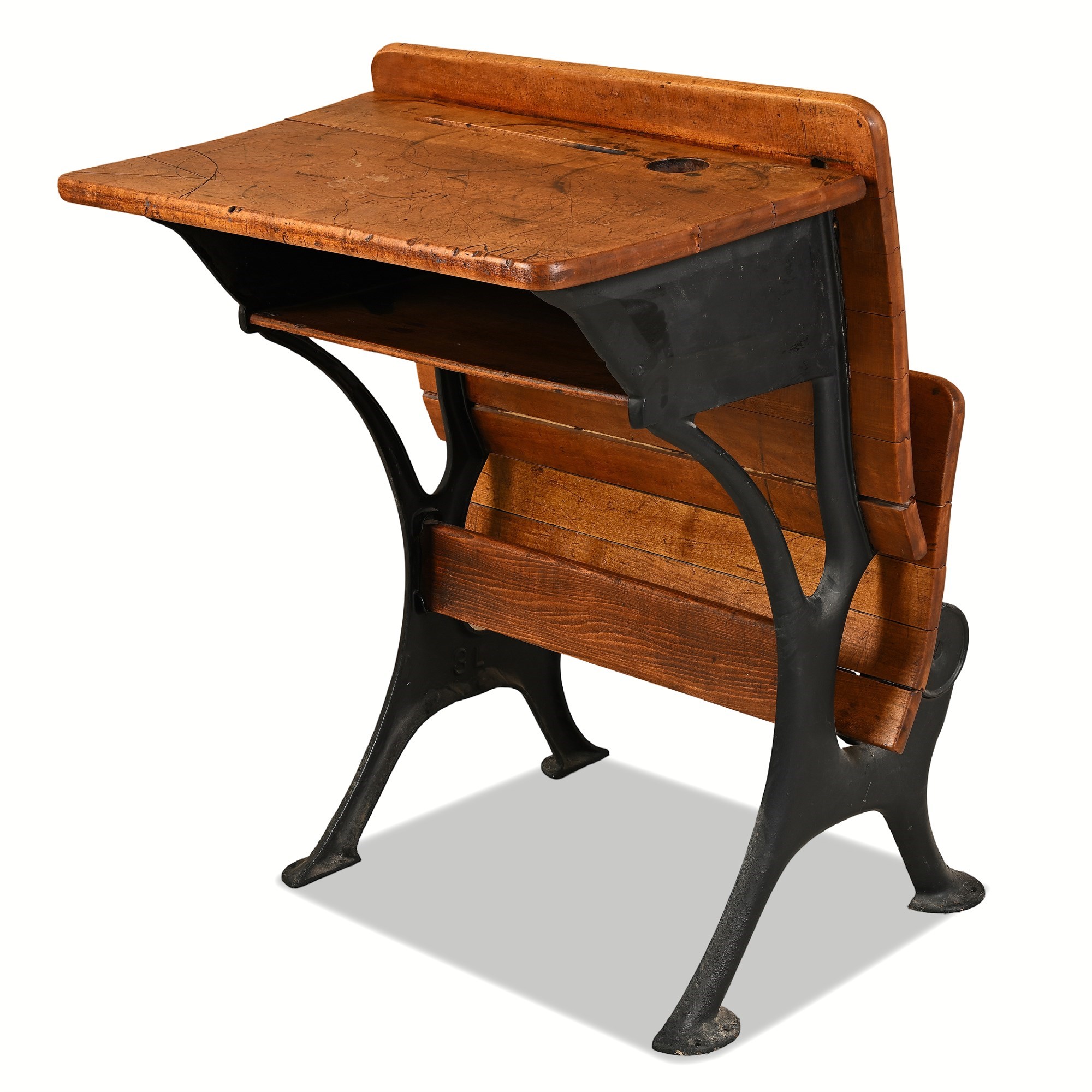
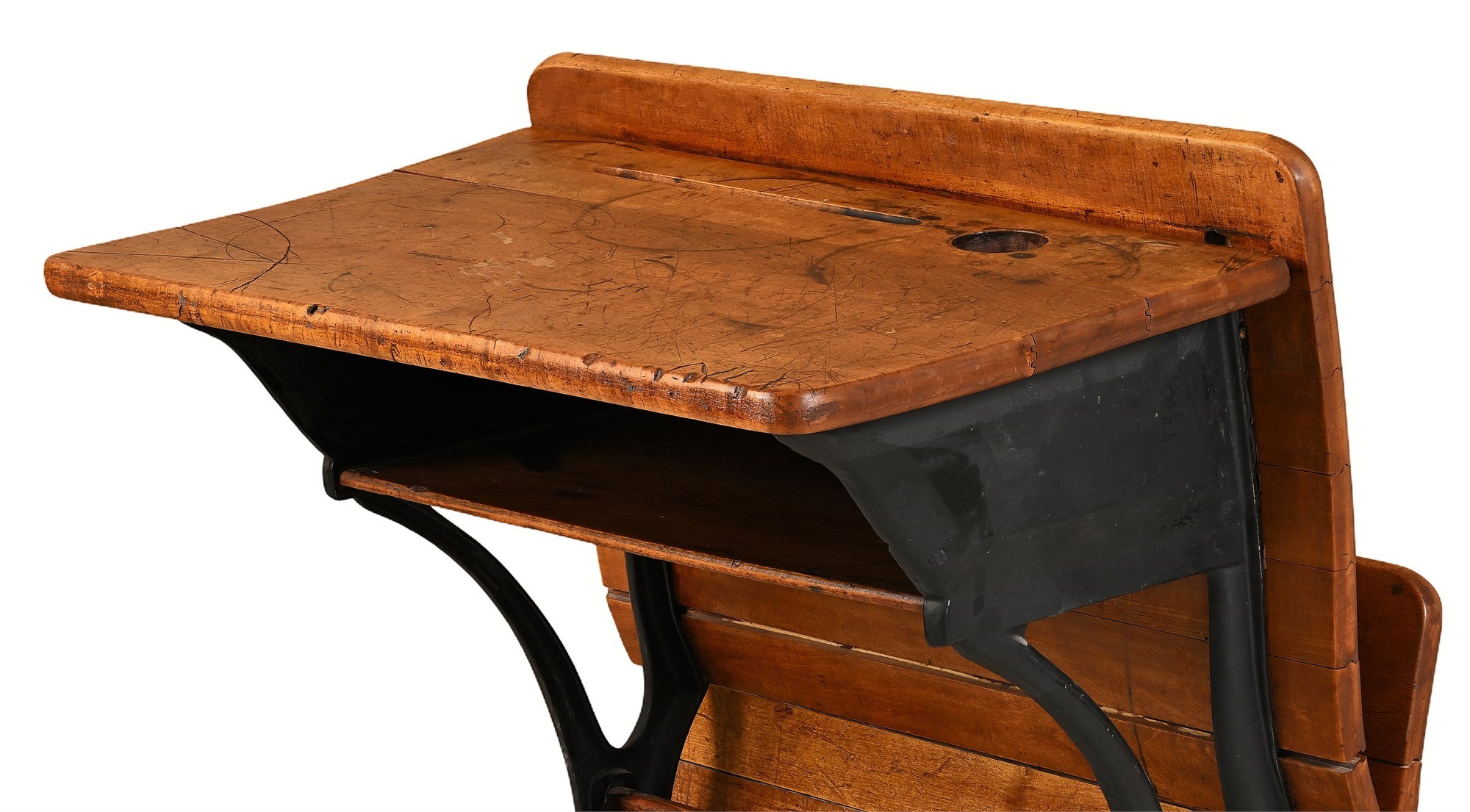
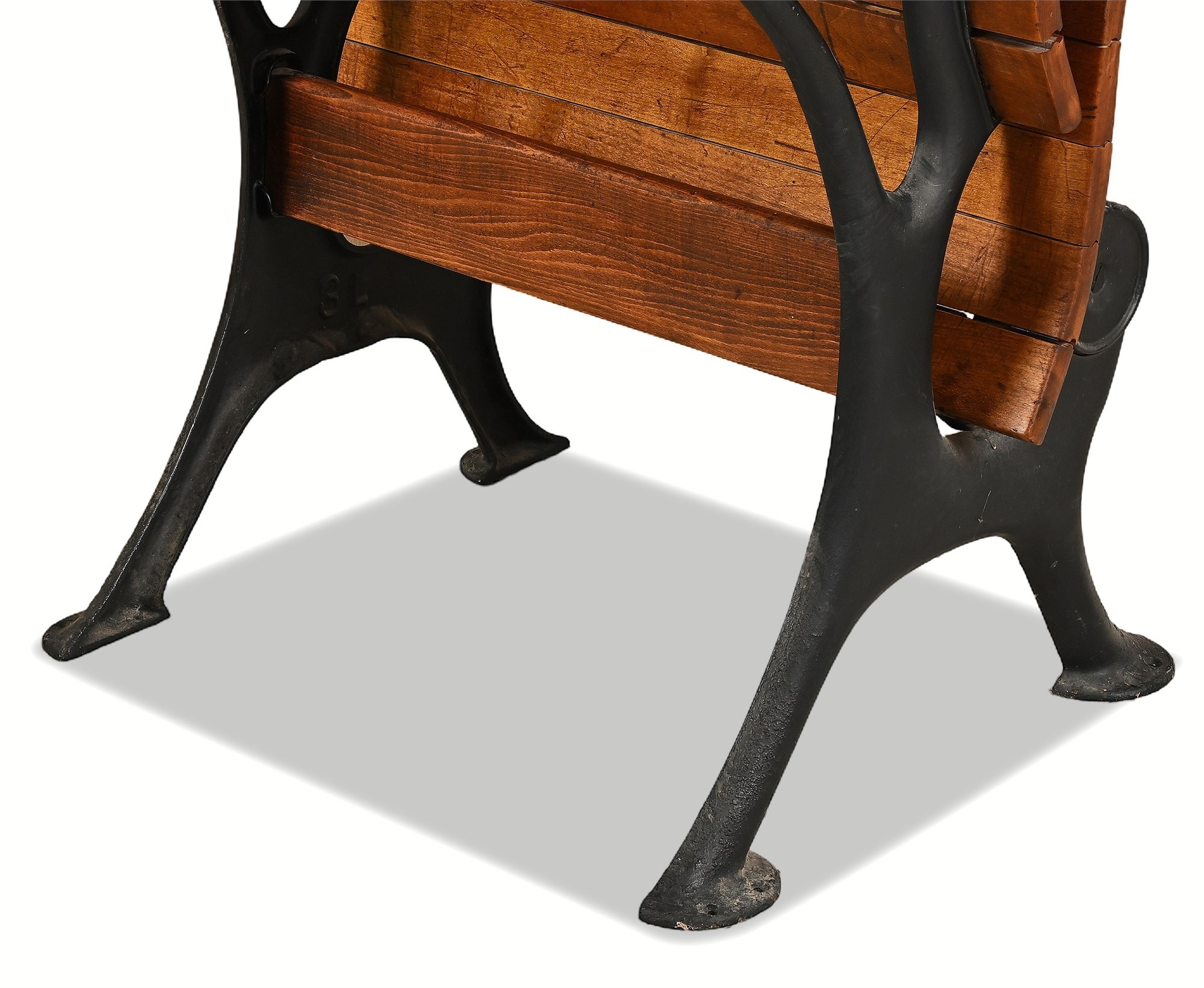
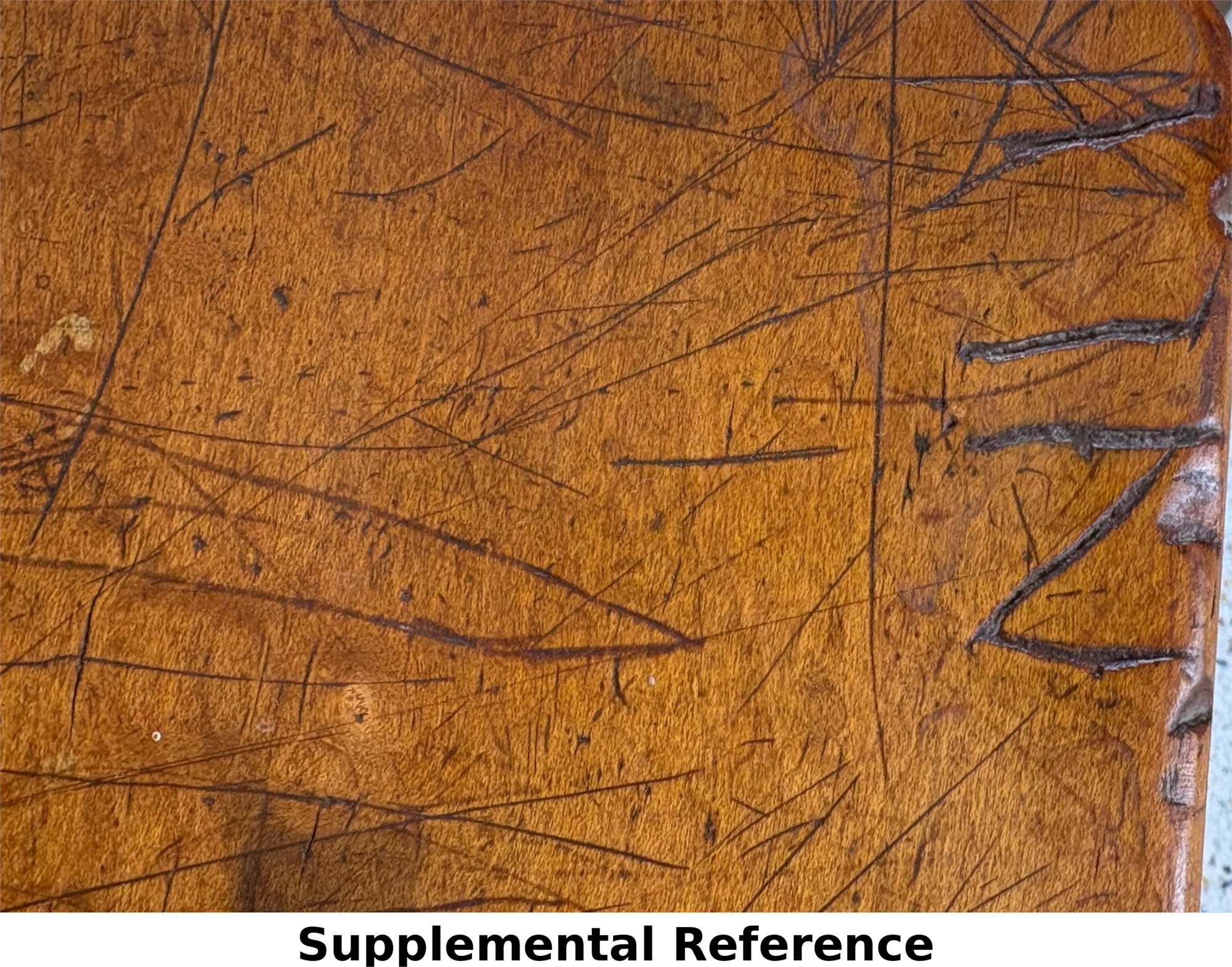
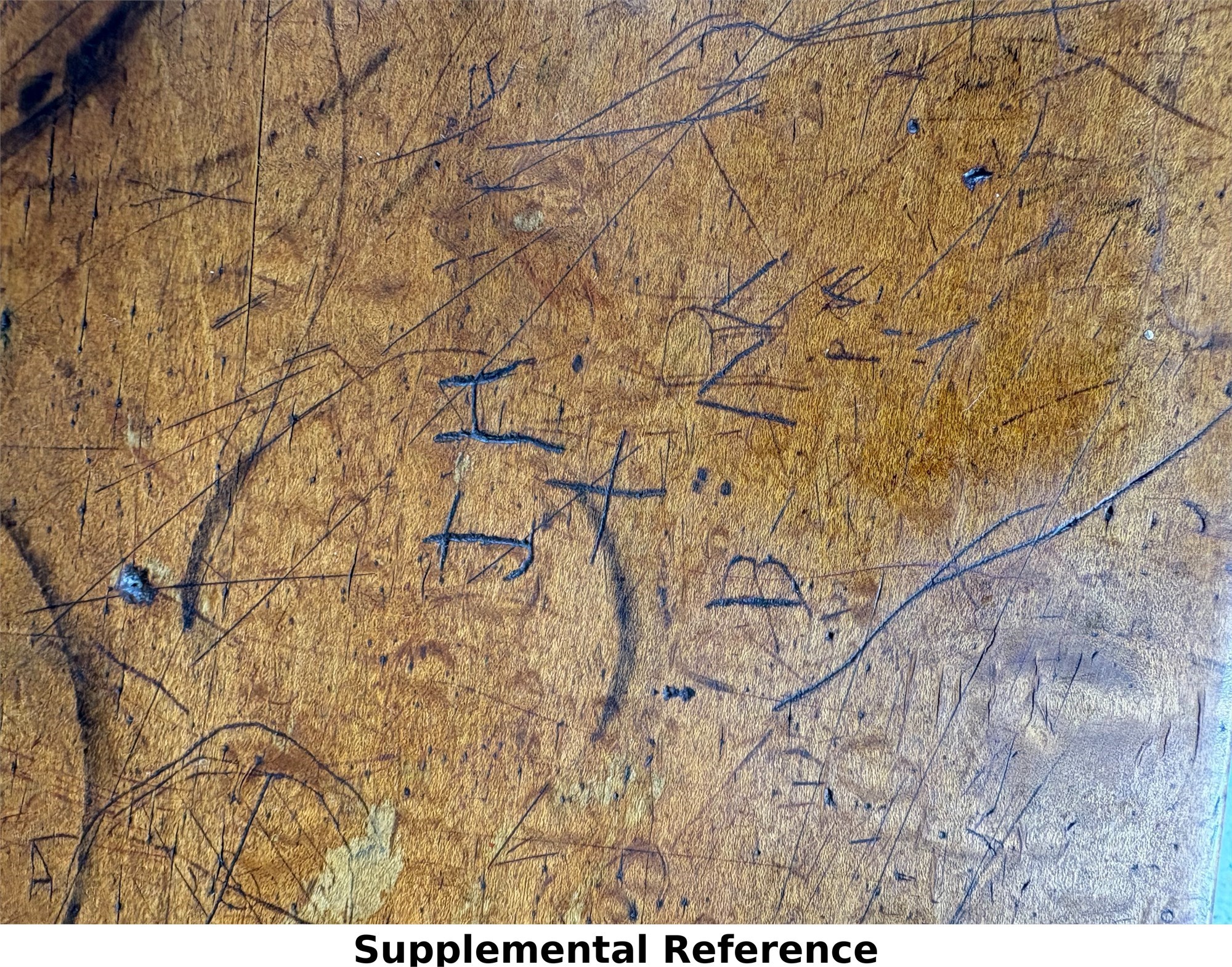
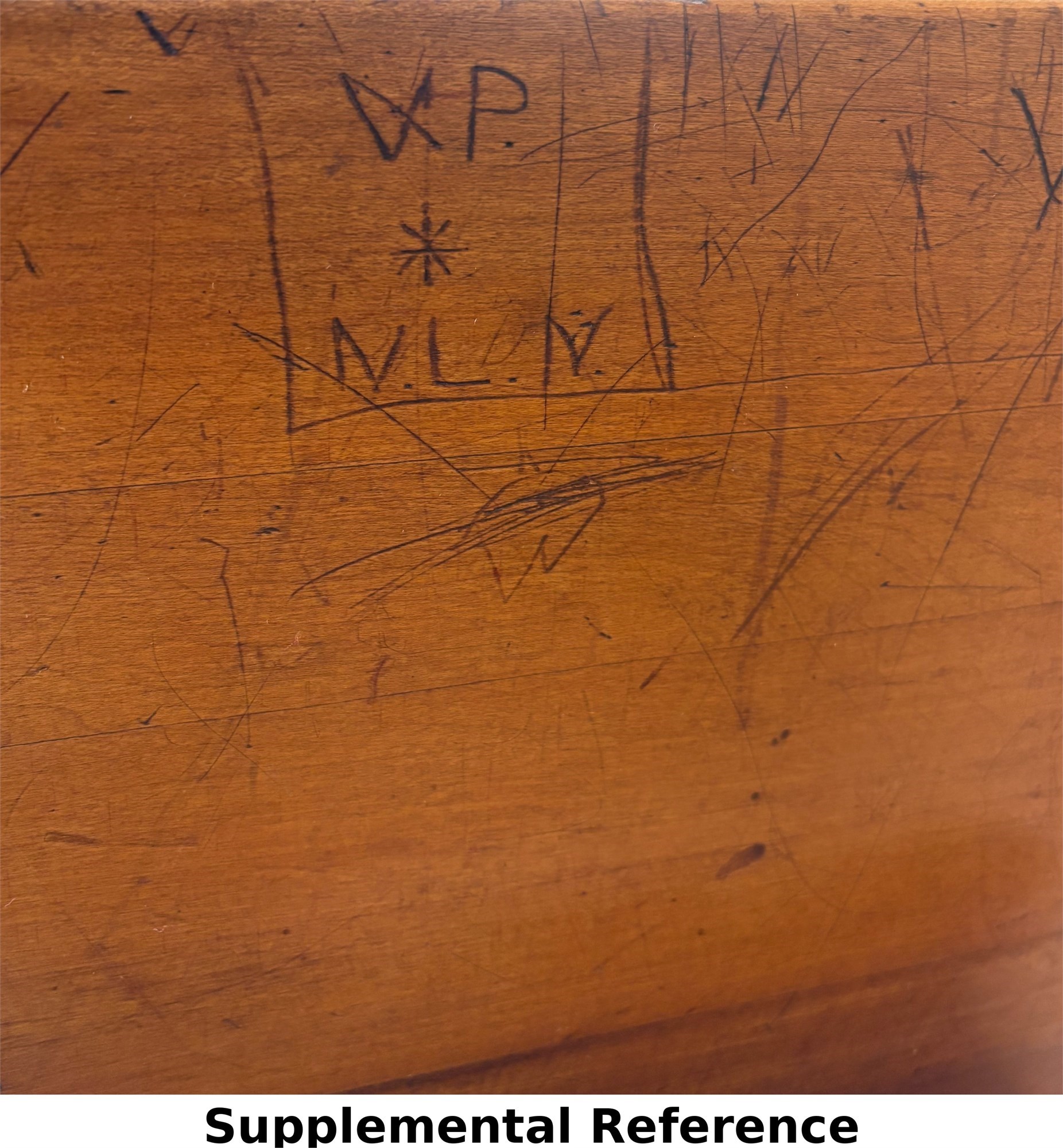
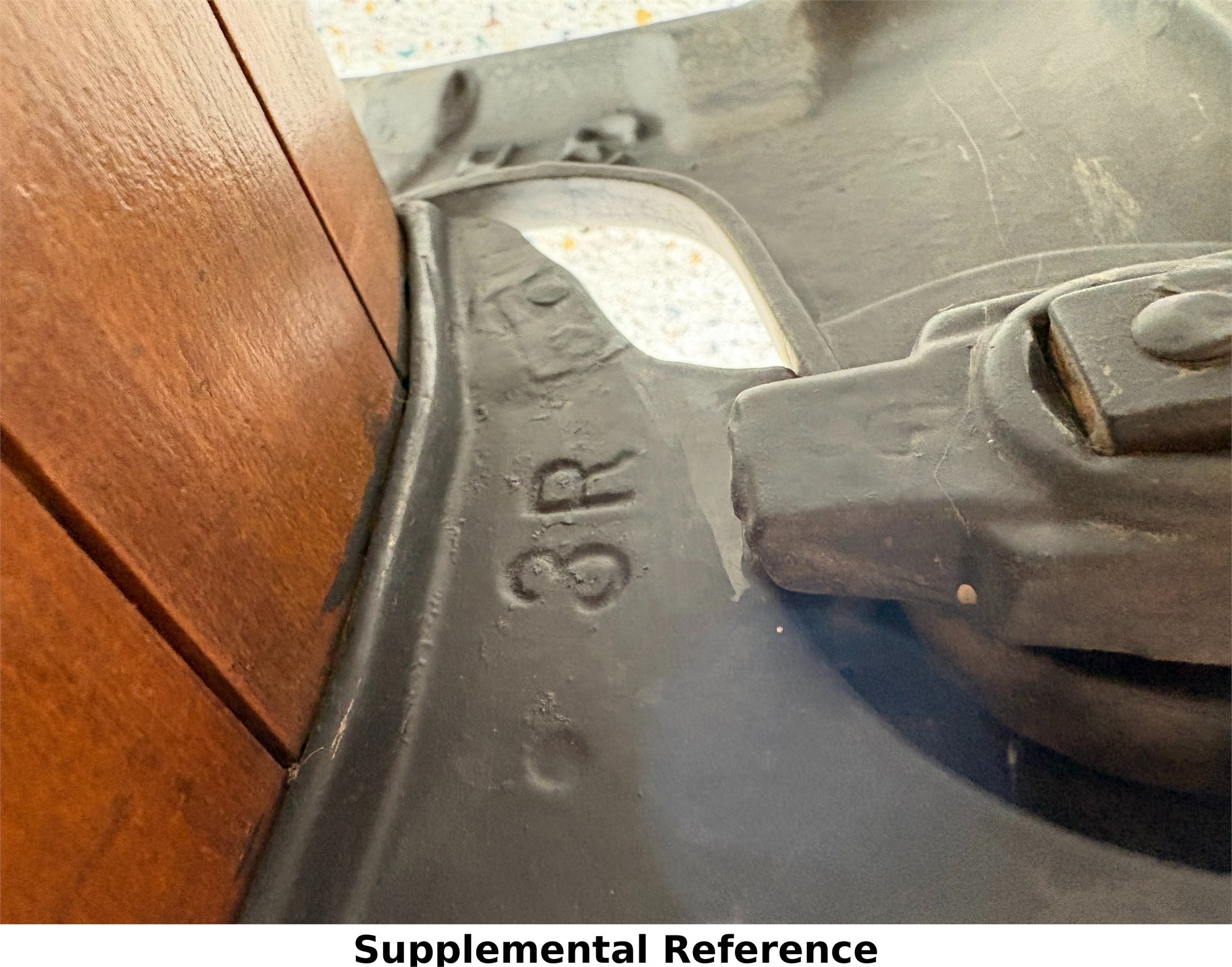
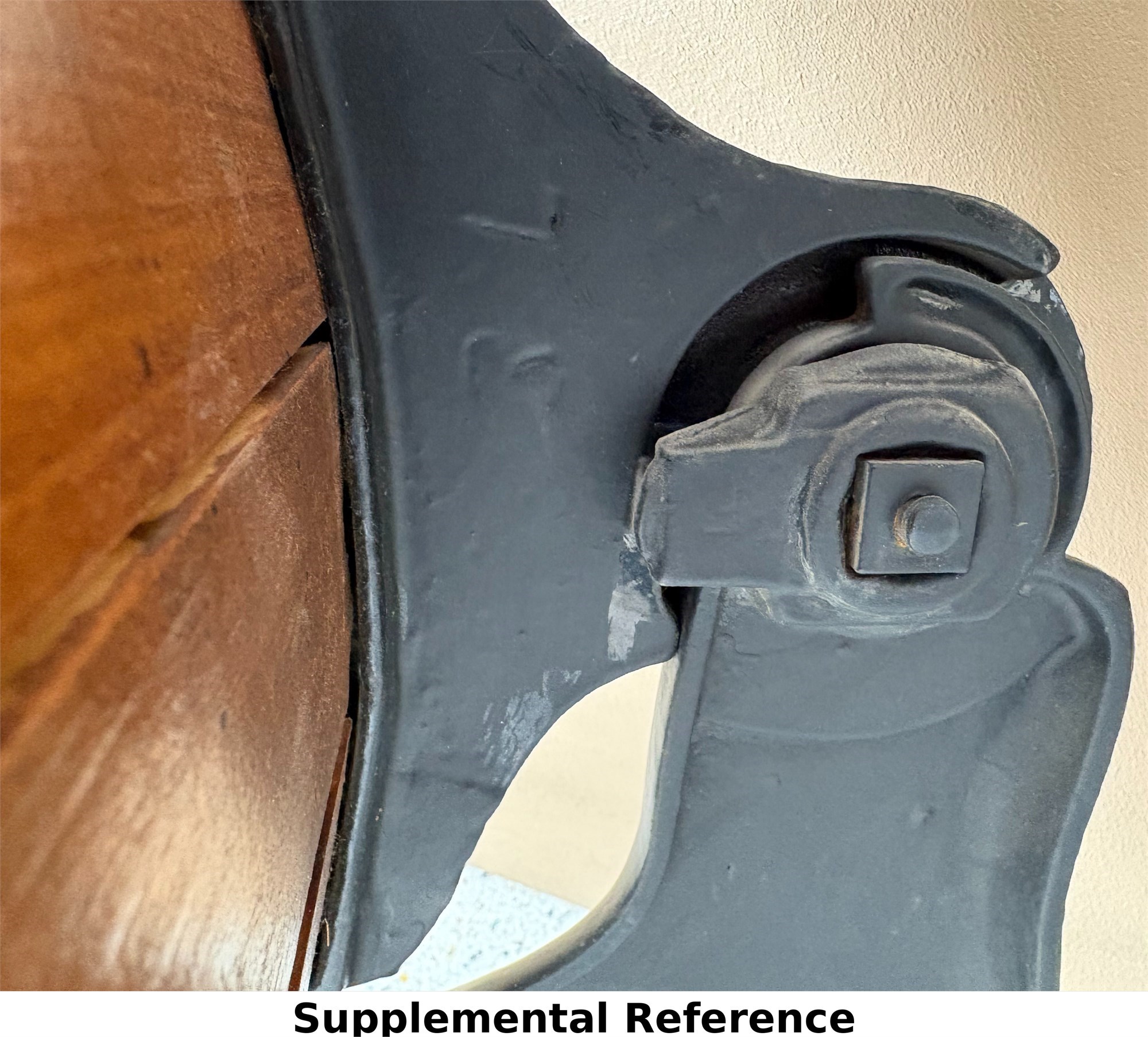
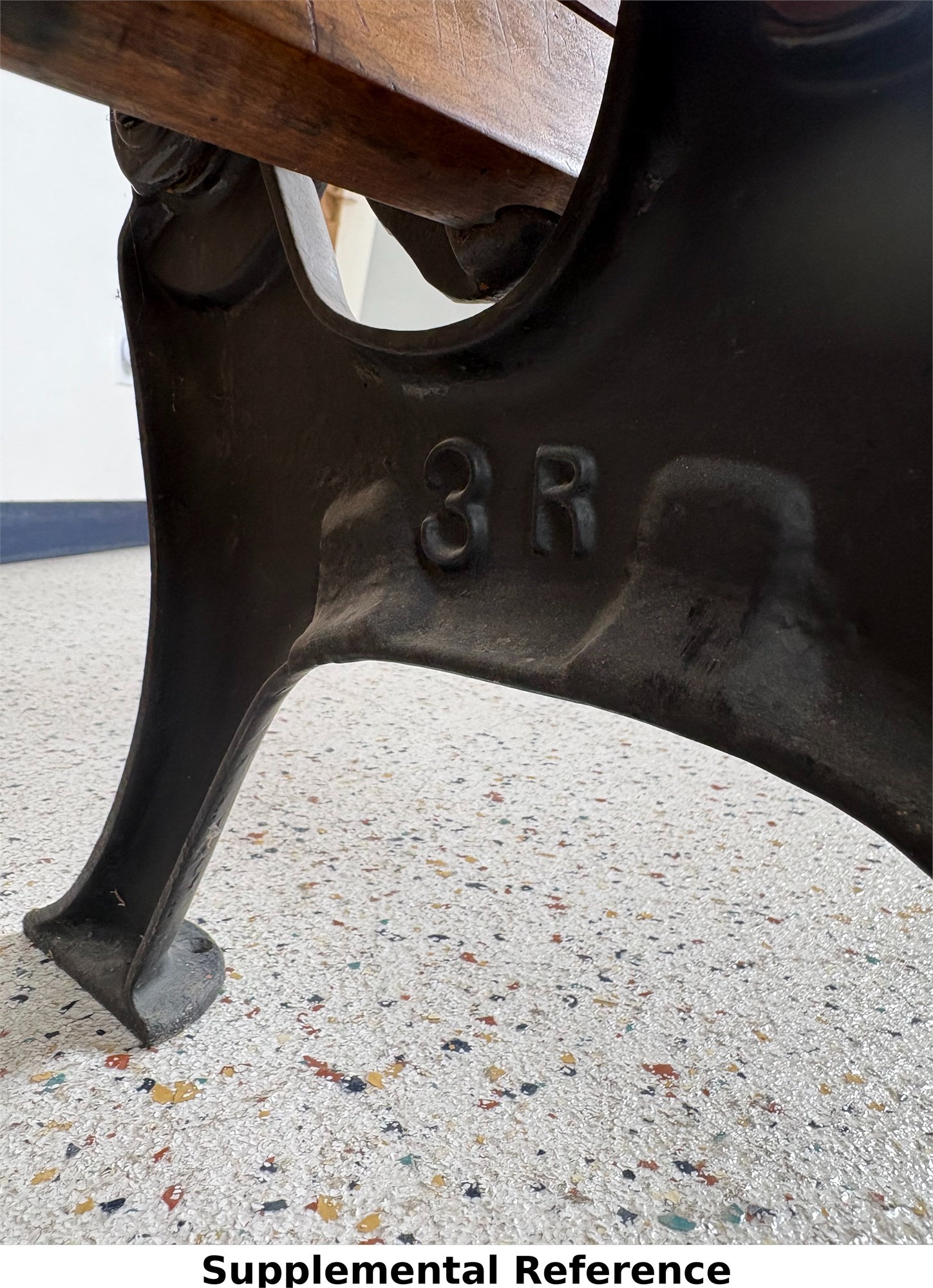
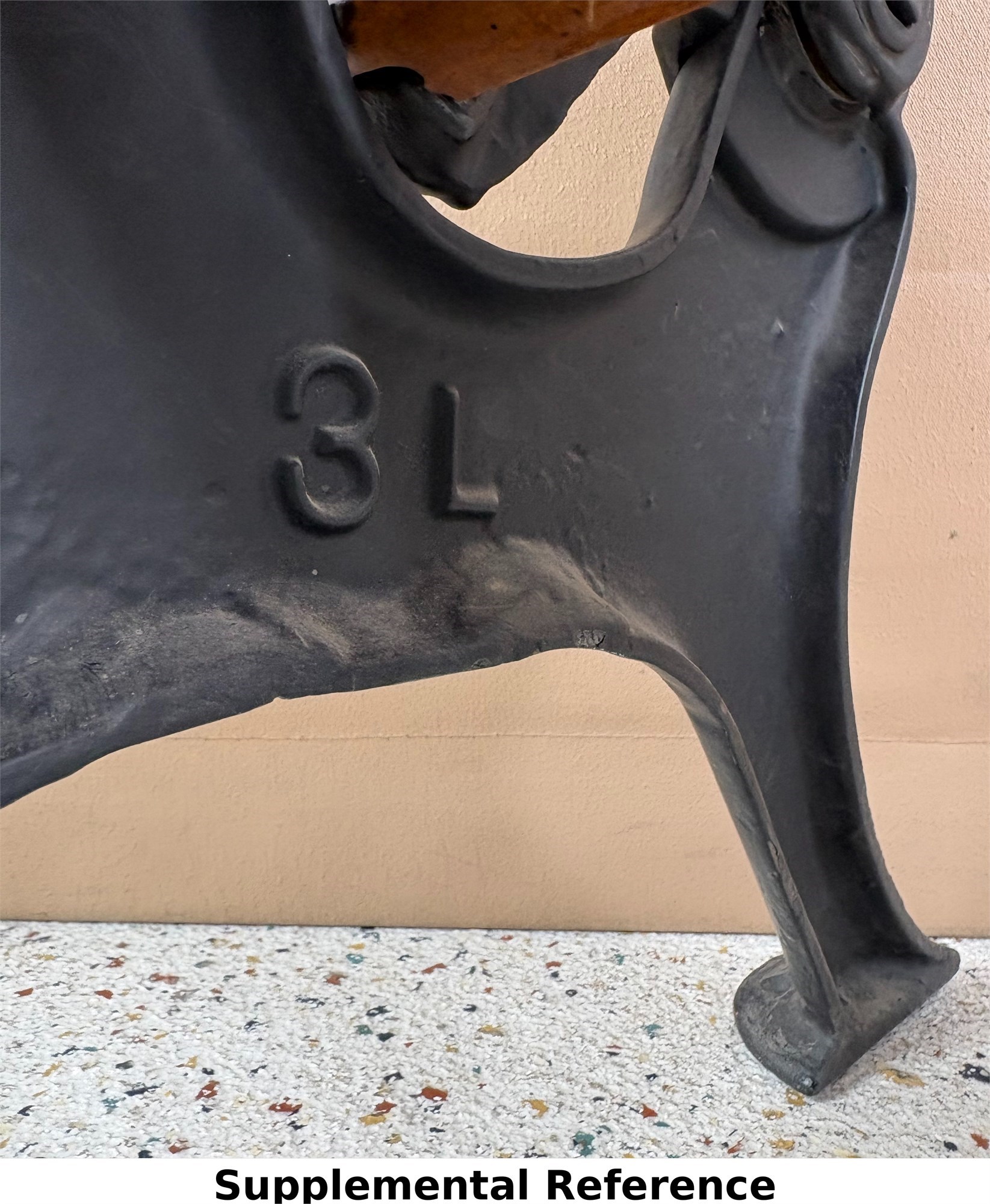
The quintessential American classroom desk in its most enduring form — a cast iron and hardwood combination desk-and-seat unit consistent with production from the late 19th through early 20th century. The sculptural cast iron frame sweeps up from four splayed feet through elegantly arched legs to a central pivot assembly, supporting both the fold-down seat and the cantilevered writing surface above. The slanted desk top opens on a hinged mechanism to reveal a cast iron book box below, and retains its original ink well port at the upper right corner. A raised pencil ledge runs across the top edge. The seat and backrest are each built from multi-board hardwood slats — consistent with maple — finished in warm amber with a bullnose edge treatment on both pieces. The cast iron frame carries foundry markings "3R" on the right side casting and "3L" on the left, indicating a matched pair of molds — a production-floor designation common to school furniture manufacturers of the period who cast left and right frames separately. The desk top and backrest surfaces carry extensive period graffiti including scratched initials, geometric drawings, and the carved inscription "W.P. / ✳ / M.L.M." — the accumulated record of generations of students who sat here.
Combination desk-and-seat units of this form were the dominant American classroom furniture standard from roughly the 1880s through the 1930s, produced by a handful of major school furniture manufacturers — among them American Seating, Heywood Brothers, and the Triumph School Furniture Company — and specified by school districts nationwide. The cast iron frames were designed to bolt to the floor in rows, though many surviving single units were never floor-mounted or were later unbolted for use as standalone pieces. This example stands free without floor hardware. The graffiti record on the desk top is, practically speaking, a document of use — each scratch and carved initial representing a child who passed through a classroom that no longer exists.
CONDITION
Good overall with age-appropriate wear throughout; sturdy and functional. The cast iron frame is solid with no cracks observed; black paint shows surface wear and minor chips consistent with age. Joint separation is present in the multi-board seat and backrest slats — the boards have opened slightly at their seams but remain structurally attached to the frame. The desk top shows heavy surface scratching and period graffiti across its full face, which is consistent with a century of classroom use rather than damage.
DIMENSIONS / SPECIFICATIONS
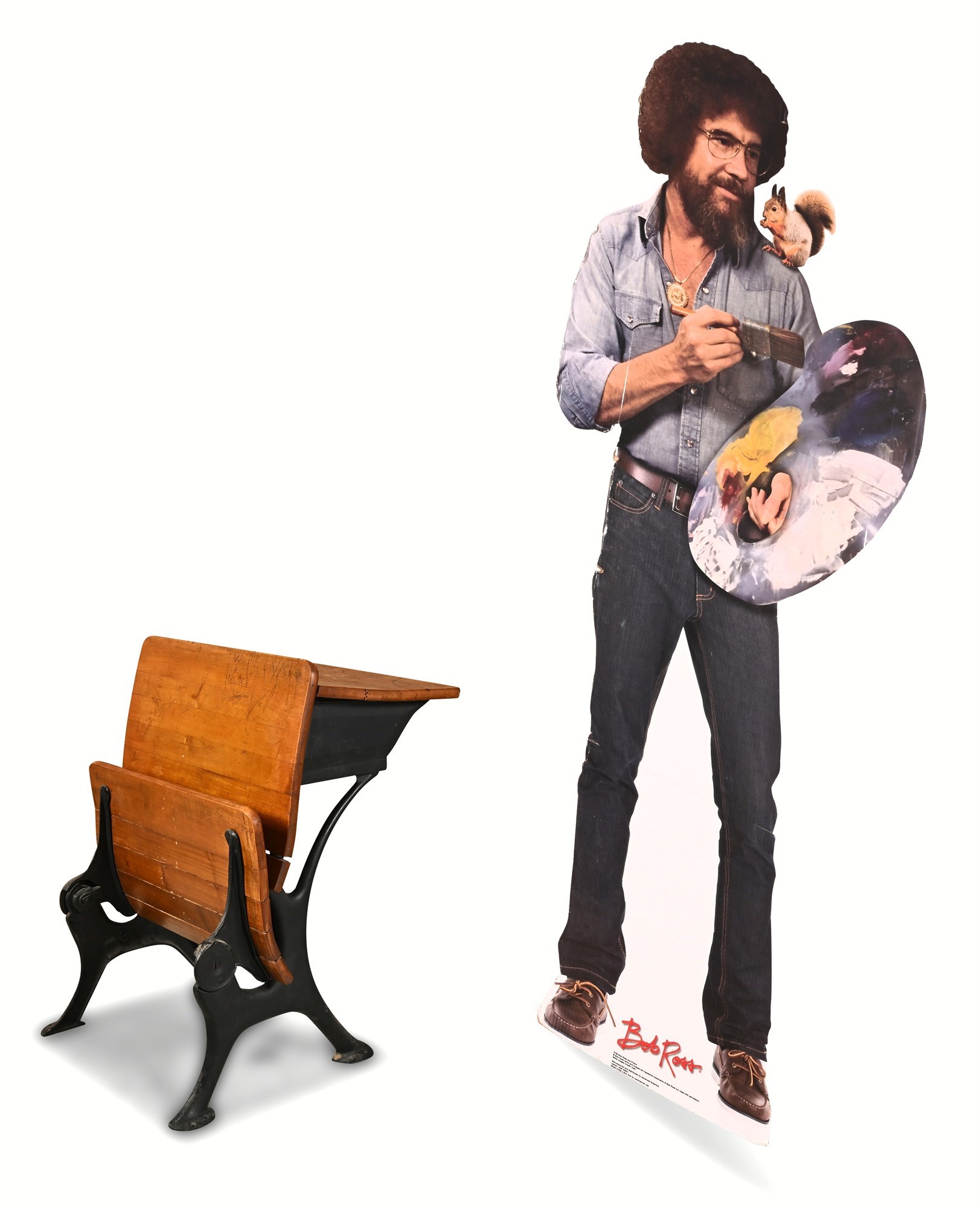
- Overall: 29" H × 22" W × 29" D
- Construction: Cast iron frame; hardwood (maple-consistent) seat, backrest, and desk top slats
- Foundry Marks: "3R" (right casting), "3L" (left casting)
- Features: Hinged slant-top desk with cast iron book box; original ink well port; raised pencil ledge; fold-down seat
- Floor Mounting: Designed for floor bolt installation; stands free as offered
- Bob Ross (6'2") Shown for Scale — Not Included