Anglo-Indian Kashmiri Carved Walnut Folding Table with Bone Inlay c.1880-1920 View Watchlist >
- Winning Bid: $310.22
- 46 Bid(s) View Bid History
- High Bidder: mrjomaled
Seller Accepts Credit Cards
Payment and pickup instructions will be available on your invoice (under "My Account") at the conclusion of this auction.
Lot # E385
System ID # 28302844
Start Date
End Date
6 Watching
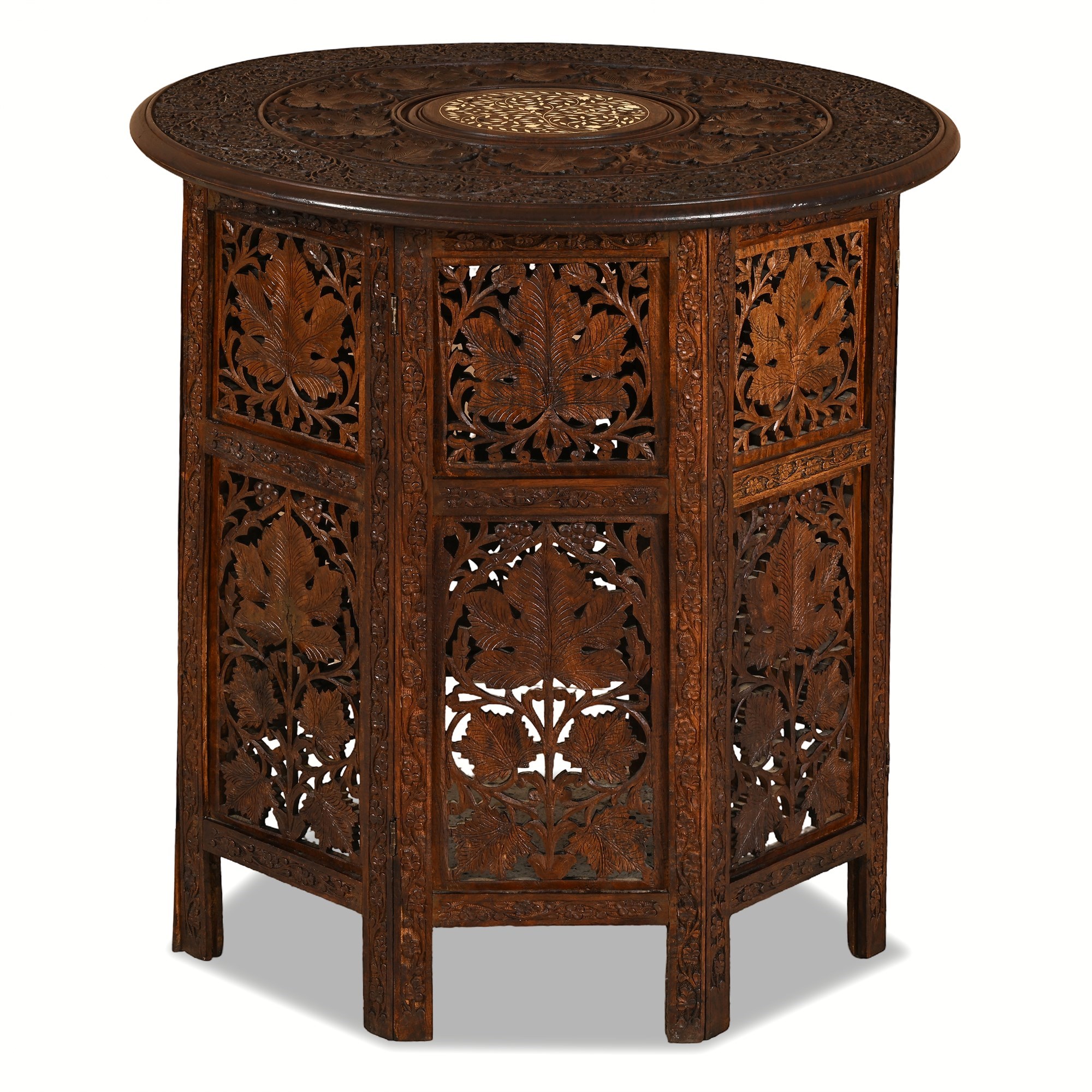
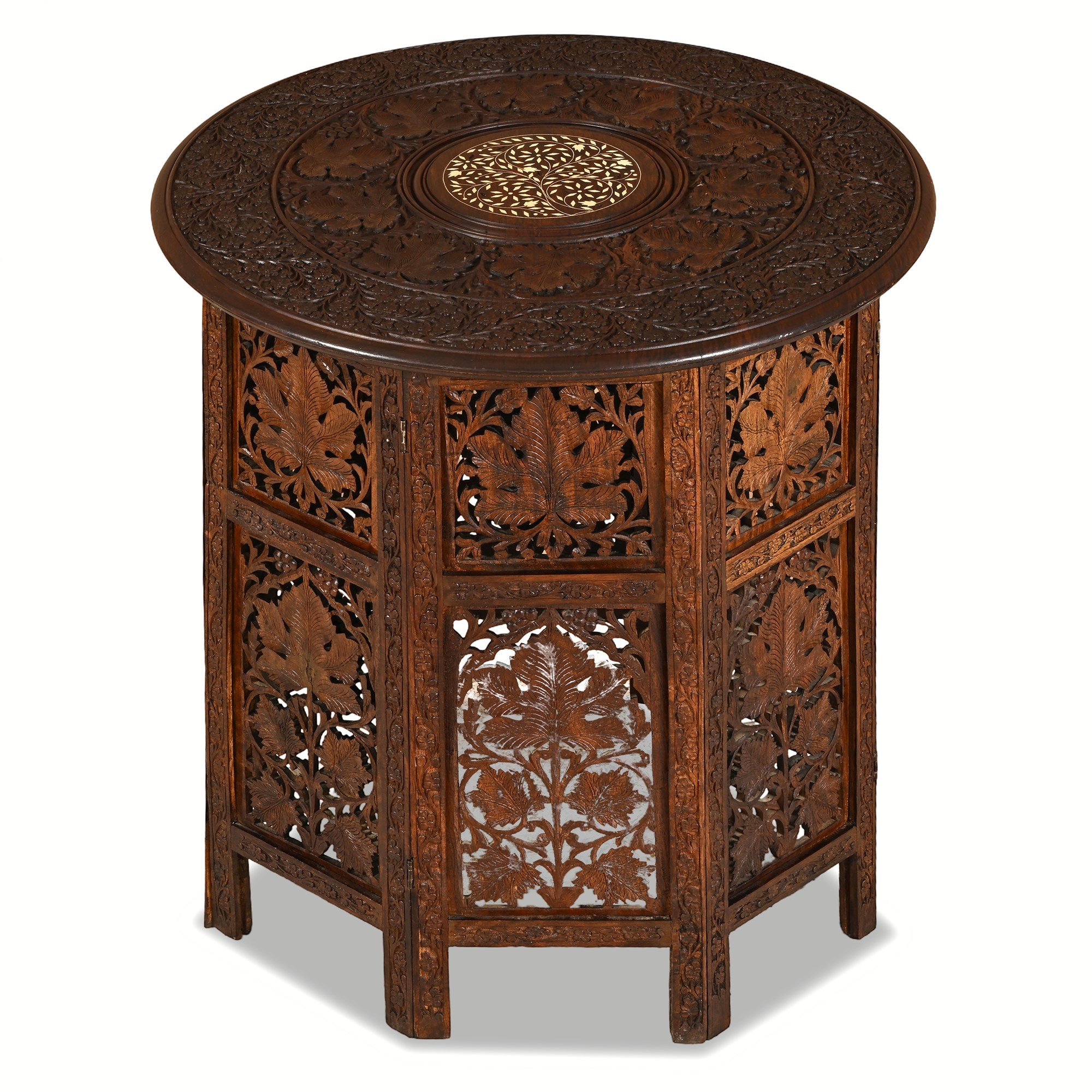
Anglo-Indian Kashmiri Carved Walnut Folding Table with Bone Inlay c.1880-1920
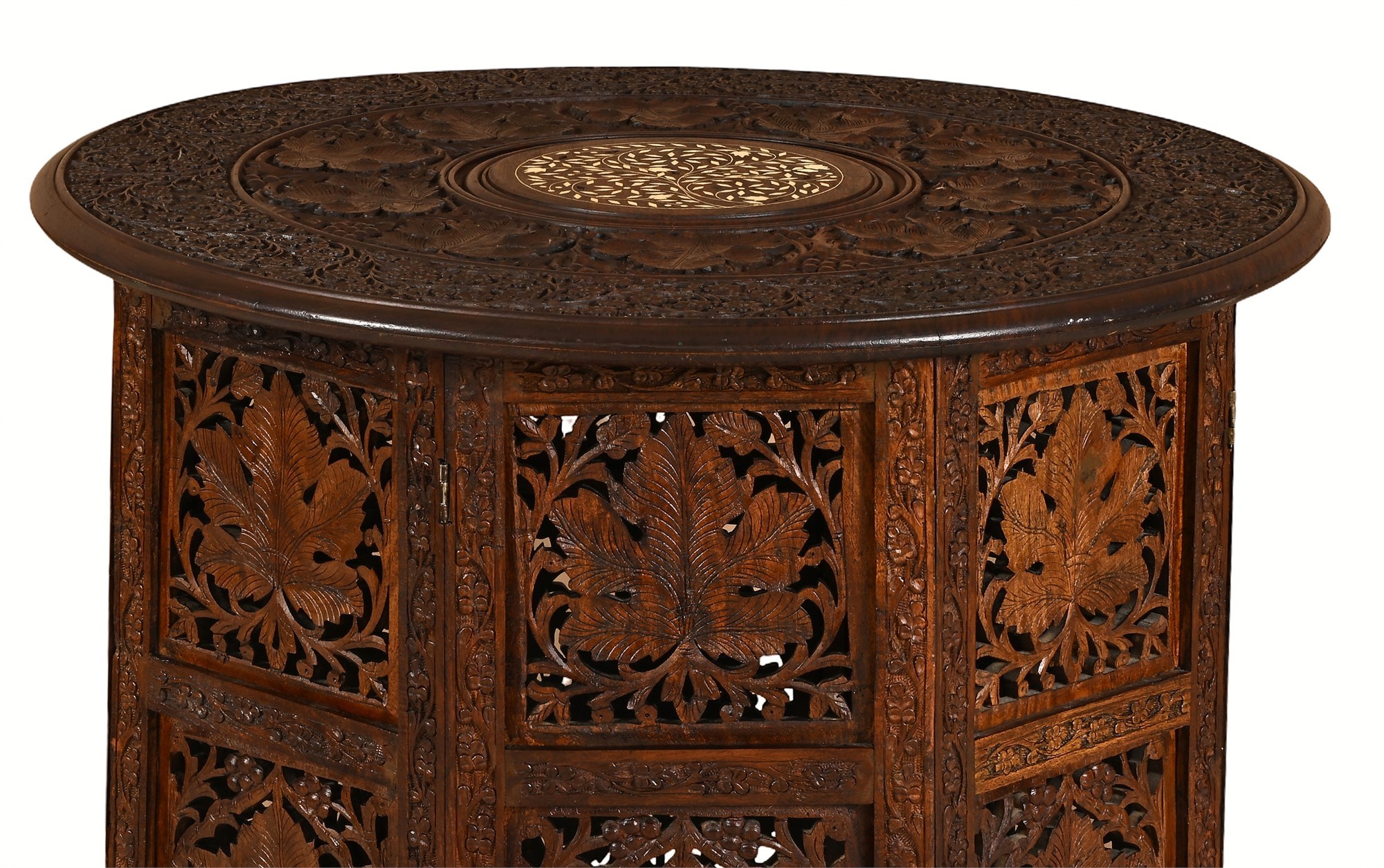
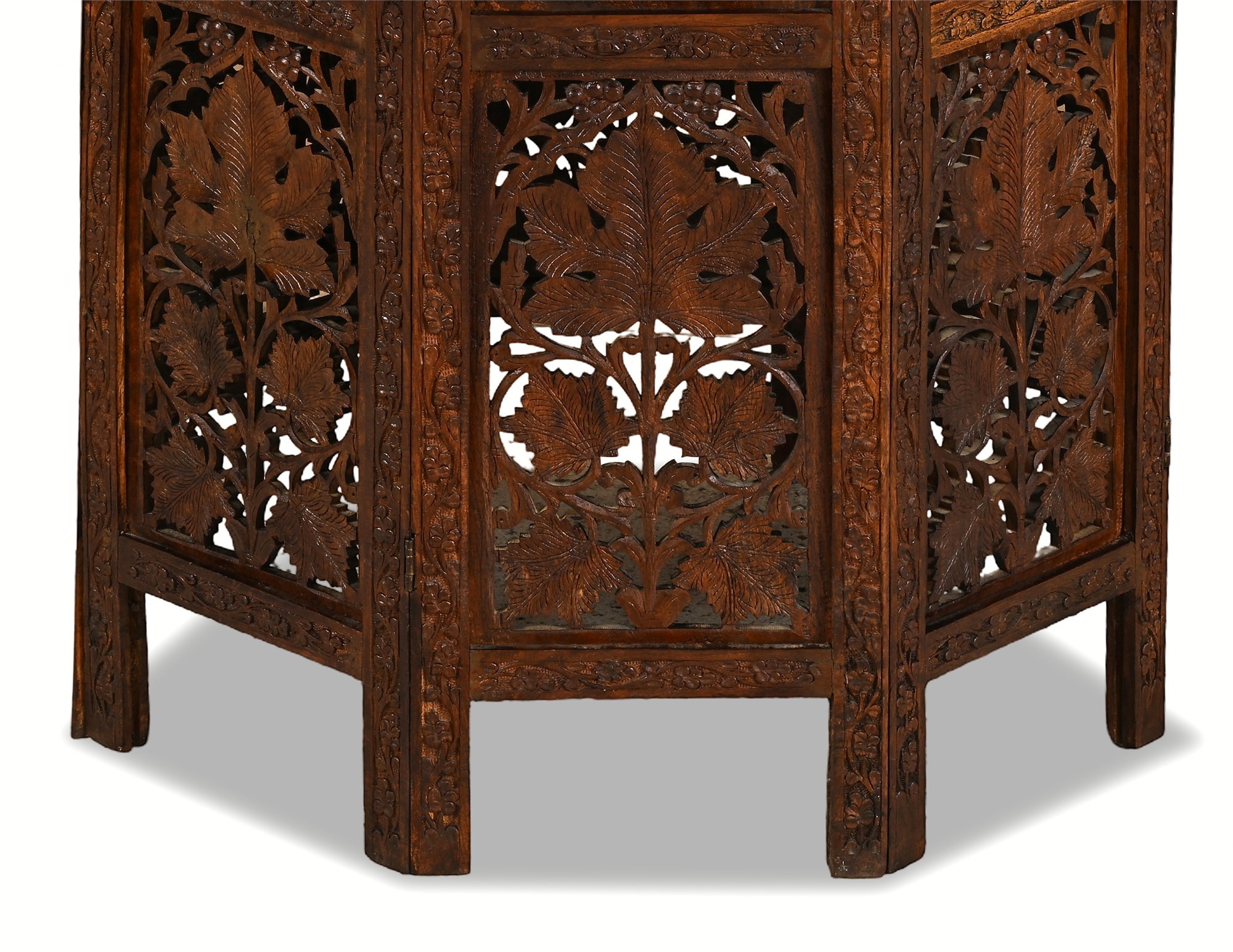
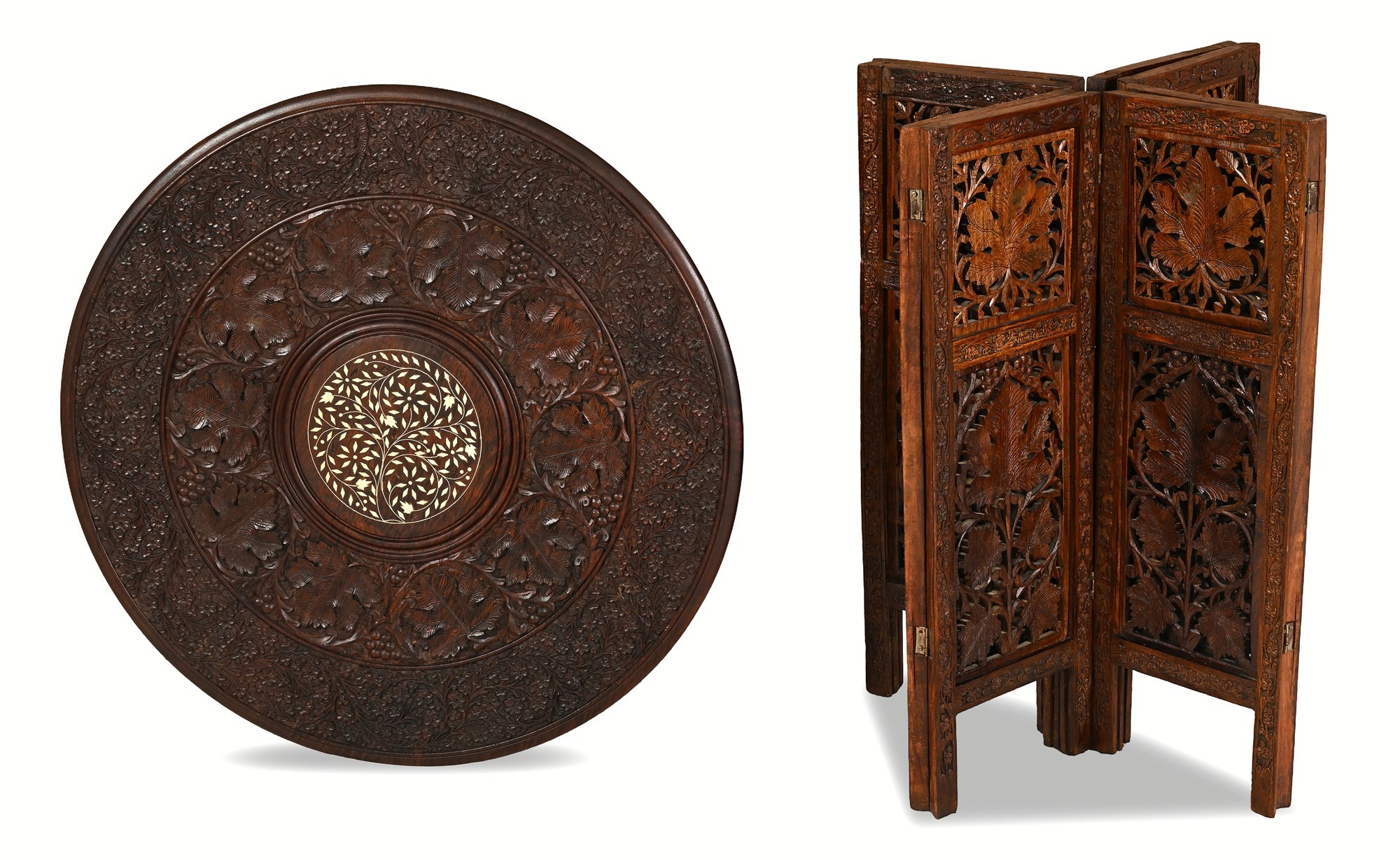
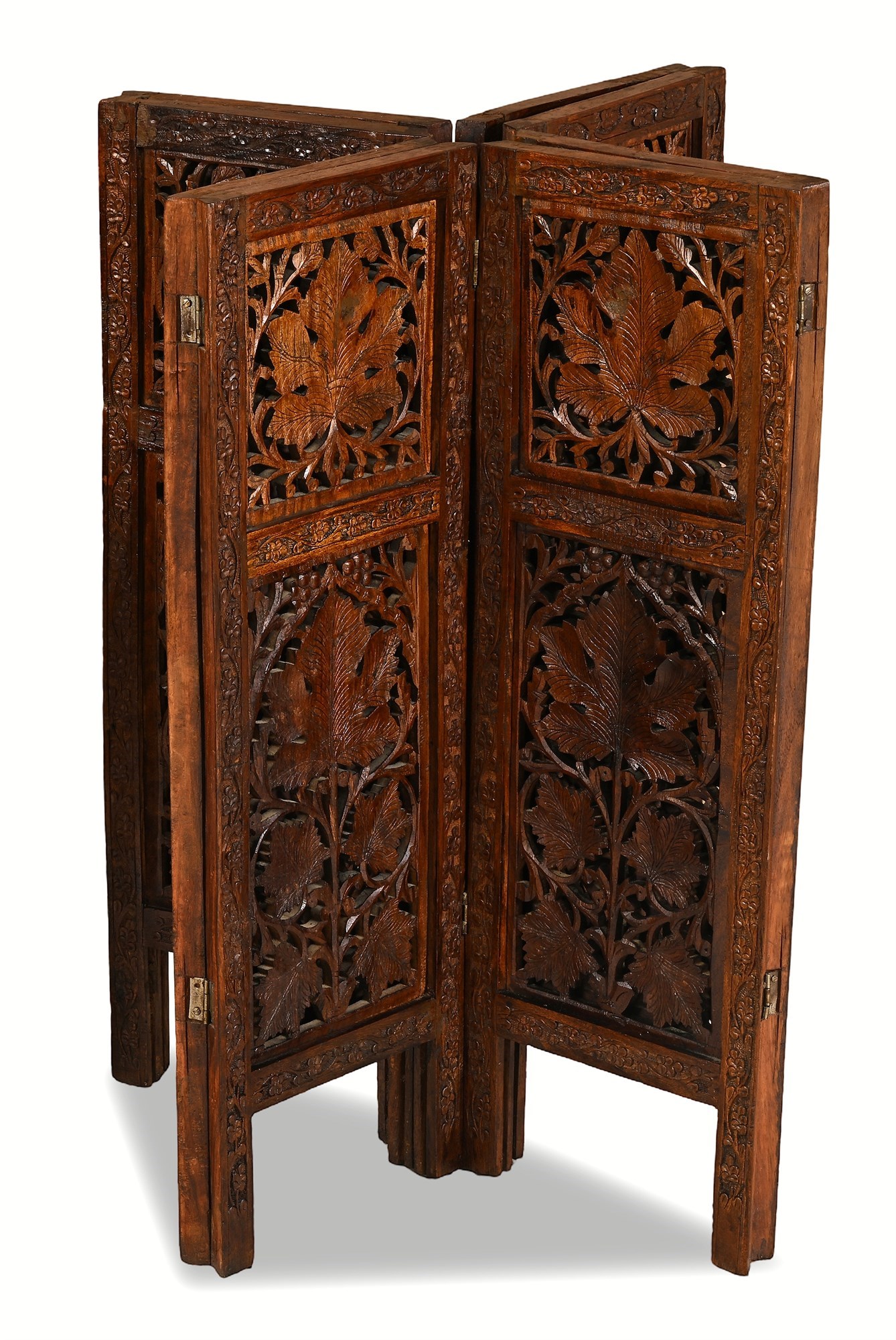
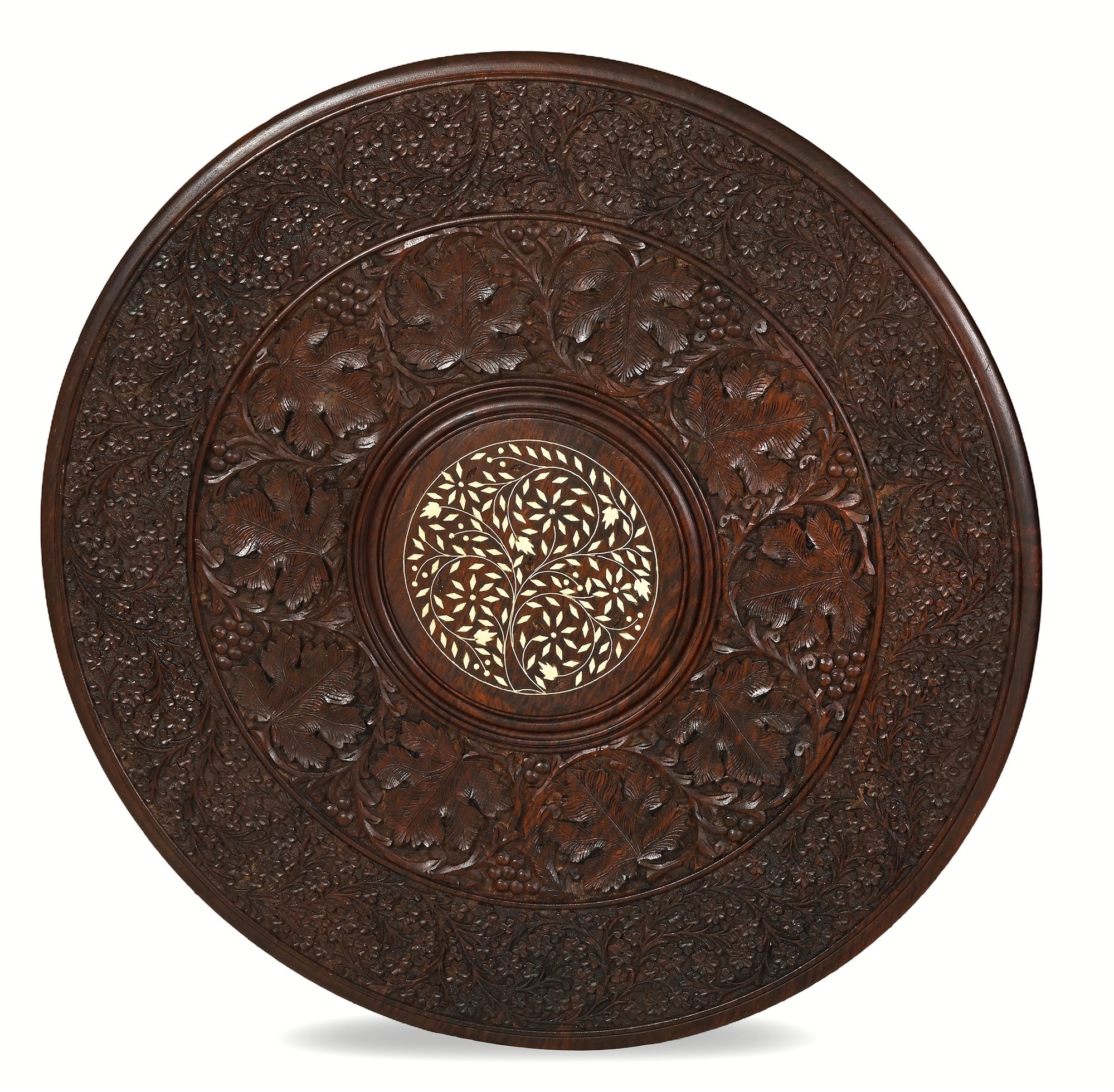
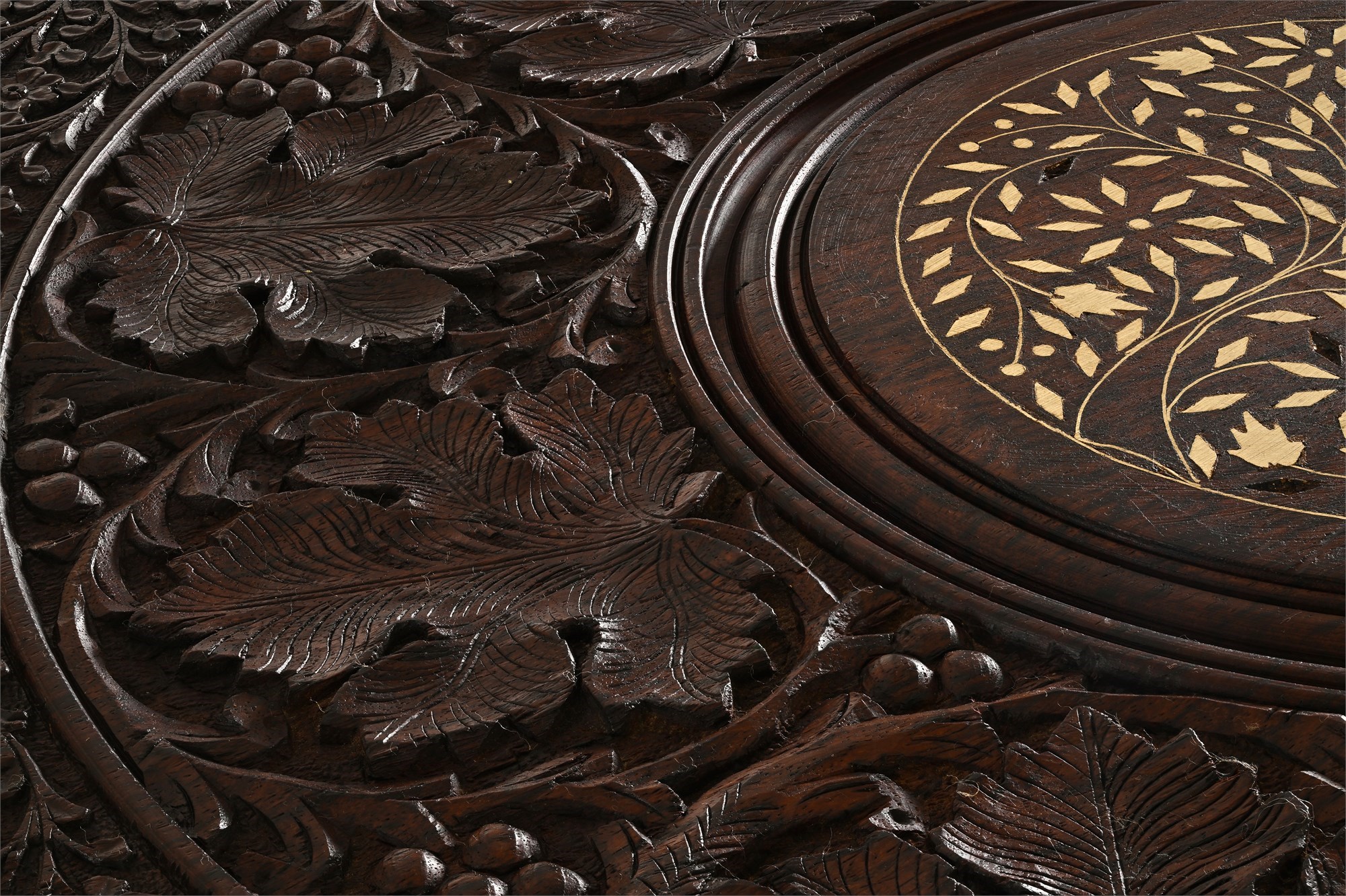
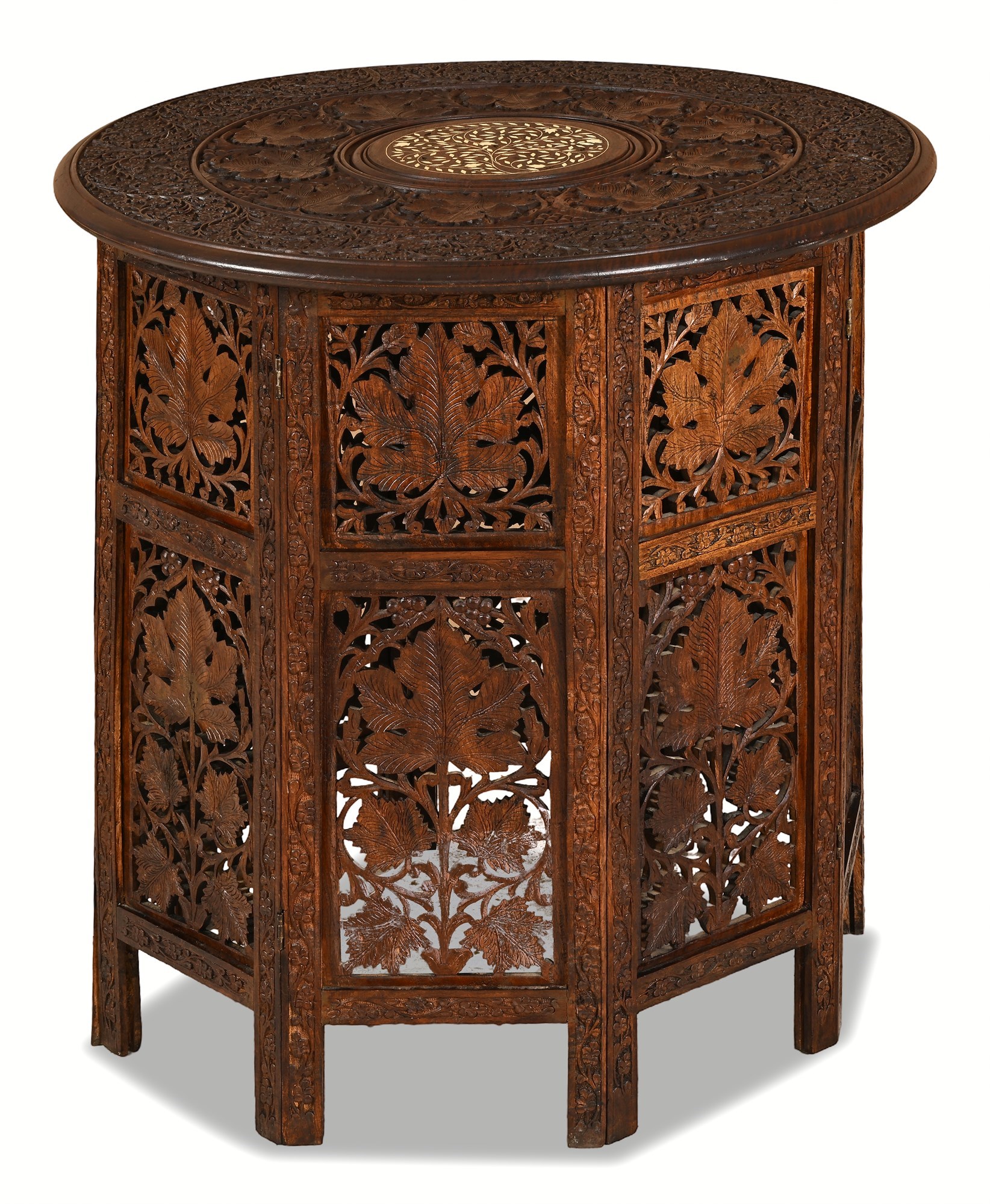
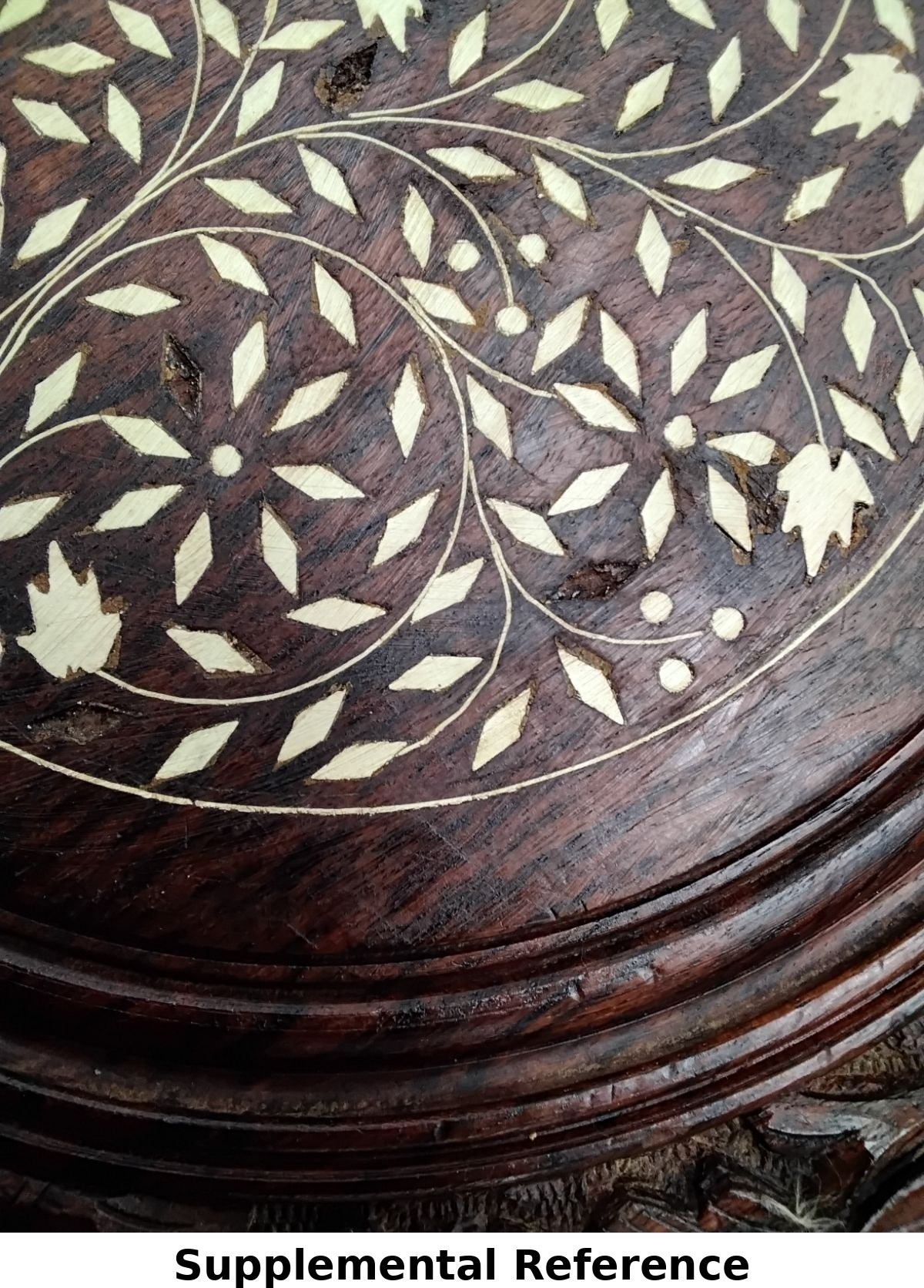
Anglo-Indian folding occasional table, consistent with Kashmiri craft production circa 1880–1920, executed in walnut with an octagonal eight-panel folding base and a removable circular top. The tabletop is densely relief-carved with chinar leaves (Platanus orientalis) and grape vines radiating around a central bone inlay medallion of flowering scrolling vine — the chinar leaf being the signature motif of Kashmir Valley woodwork. Each of the eight base panels is hand-carved and pierced (jali work) with bold leaf forms framed by floral borders, supported on integral block feet and joined by brass hinges that allow the base to collapse flat.
The knockdown construction — removable top over a folding eight-panel base — is a hallmark of furniture produced for the British colonial export trade, prized then and now for its portability.
CONDITION
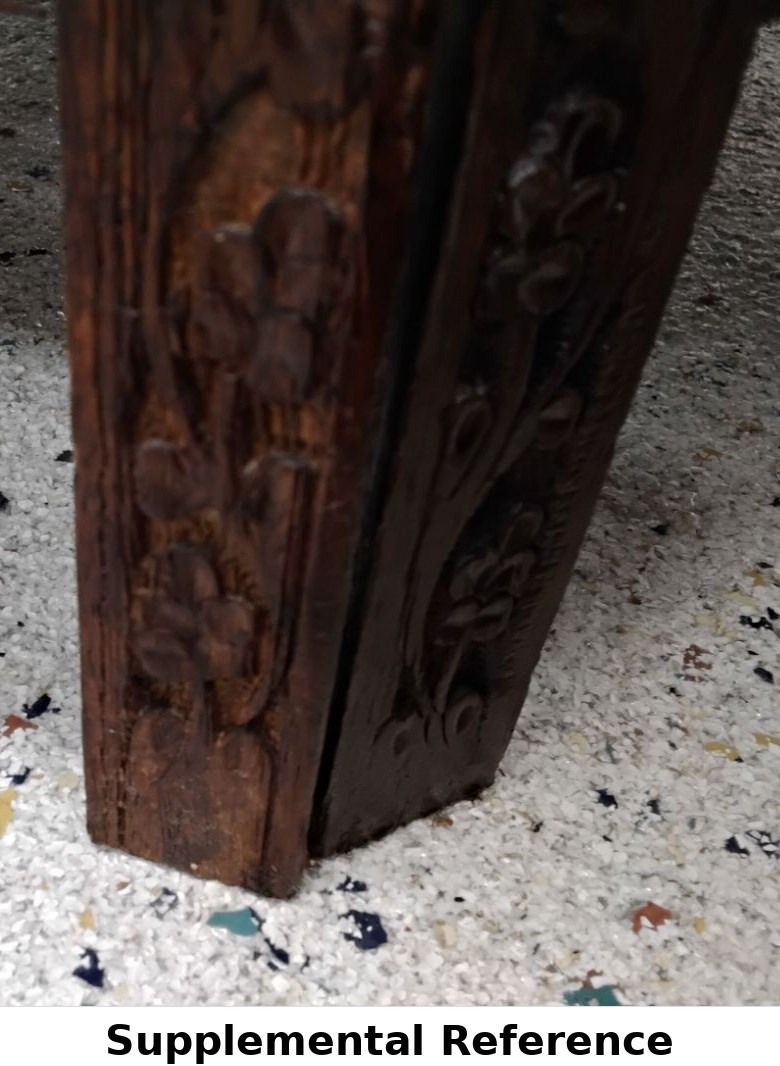
Good overall and structurally sturdy. Minor wear to one hinge and minor scuffs to the feet. Several pieces of bone inlay are absent from the central medallion; remaining inlay is secure and the carved surfaces are crisp with no remarkable damage.
DIMENSIONS / SPECIFICATIONS
- Overall Base: 23 3/4" H × 20 1/8" W × 18 7/8" D
- Each Panel: 23 3/4" H × 8" W × 18 7/16" D
- Construction: Walnut, octagonal eight-panel folding base, brass hinges, removable circular top
- Decoration: Hand-carved chinar leaf and floral relief; pierced jali panels; bone inlay medallion to top
- Origin: Kashmir, India
- Period: Late 19th to early 20th century (c.1880–1920)