Imagen de Vestir Santos Figure — Articulated, Published, c. 1880 View Watchlist >
- Winning Bid: $225.00
- 38 Bid(s) View Bid History
- High Bidder: GLCruces
Seller Accepts Credit Cards
Payment and pickup instructions will be available on your invoice (under "My Account") at the conclusion of this auction.
Lot # D317
System ID # 27558871
Start Date
End Date
7 Watching
Imagen de Vestir Santos Figure — Articulated, Published, c. 1880
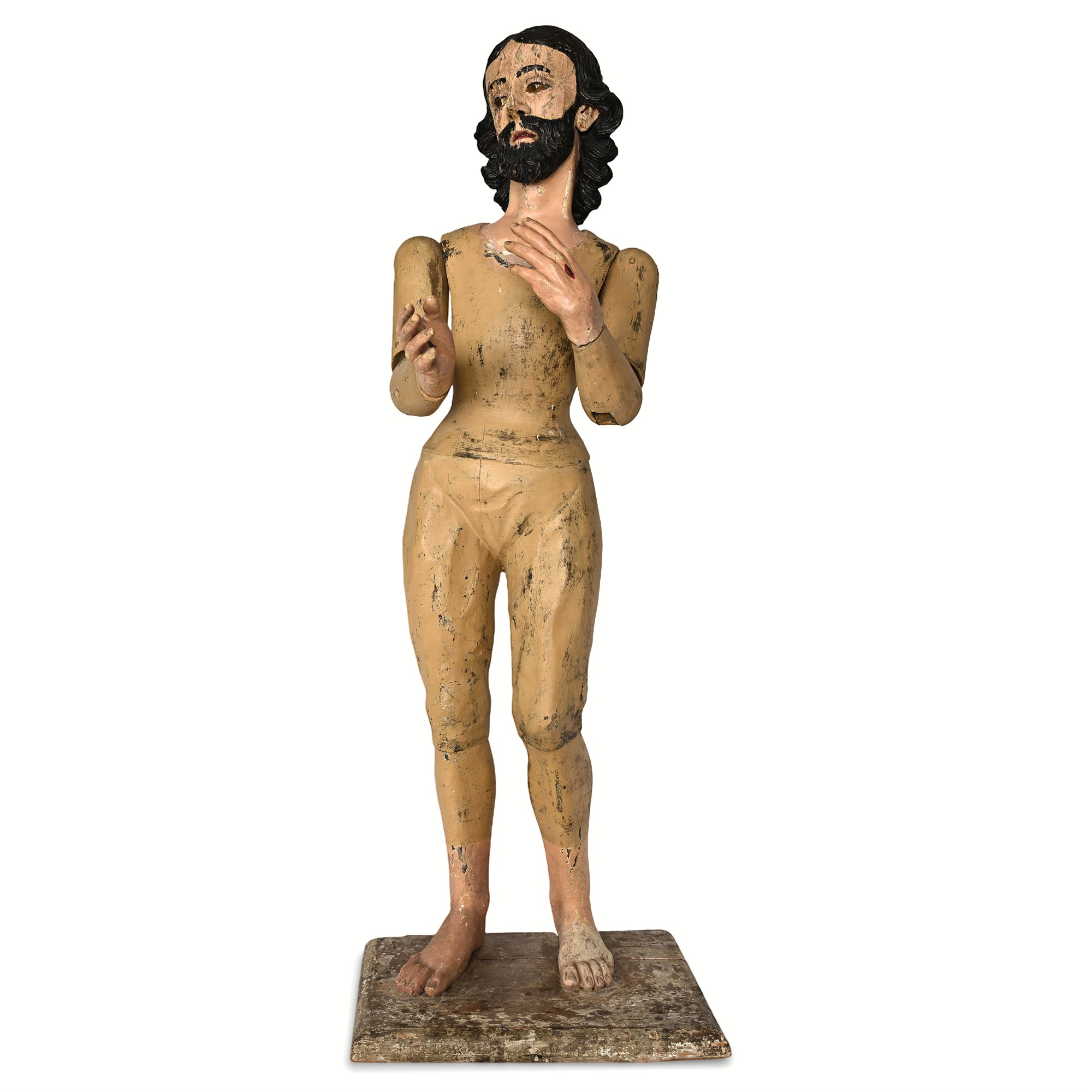
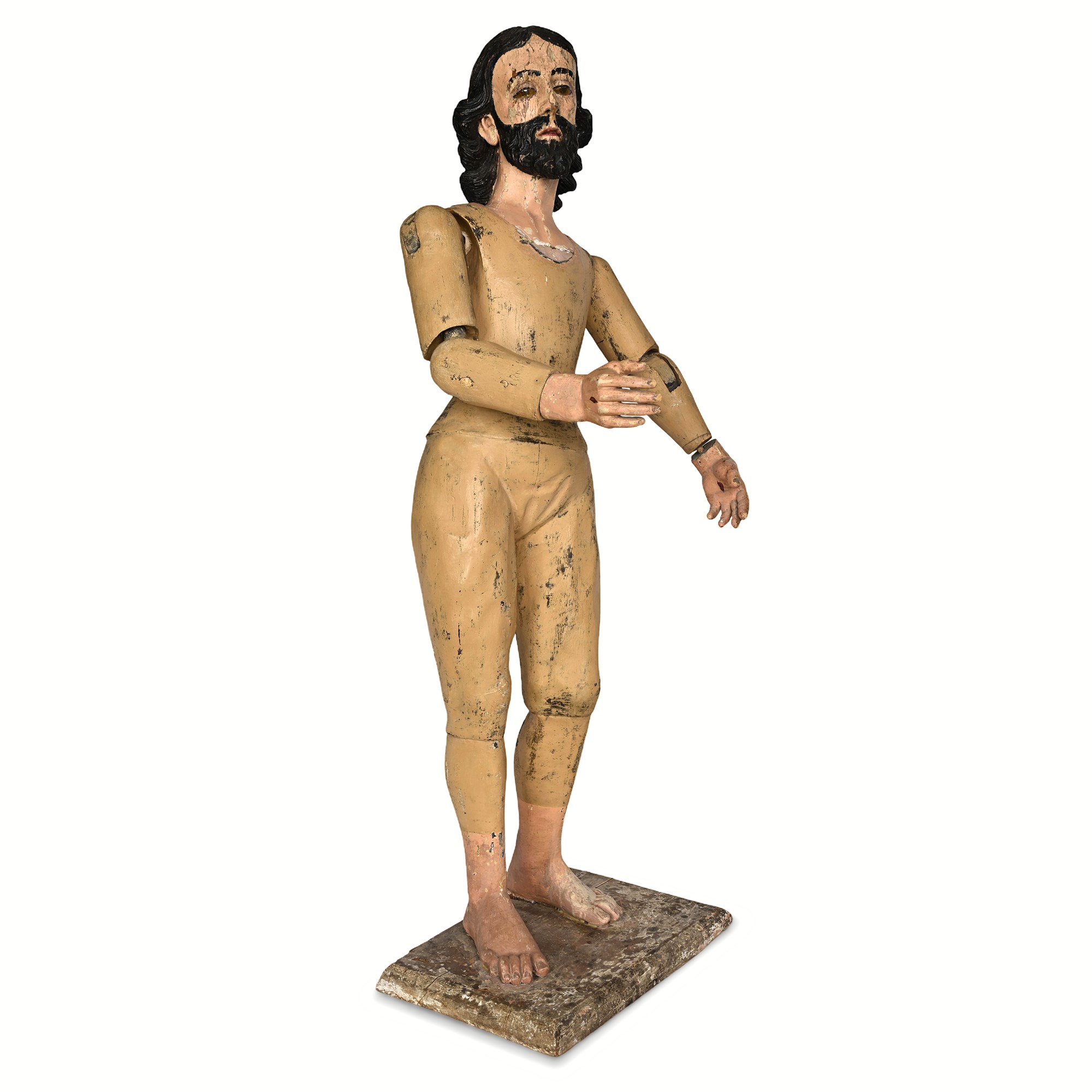
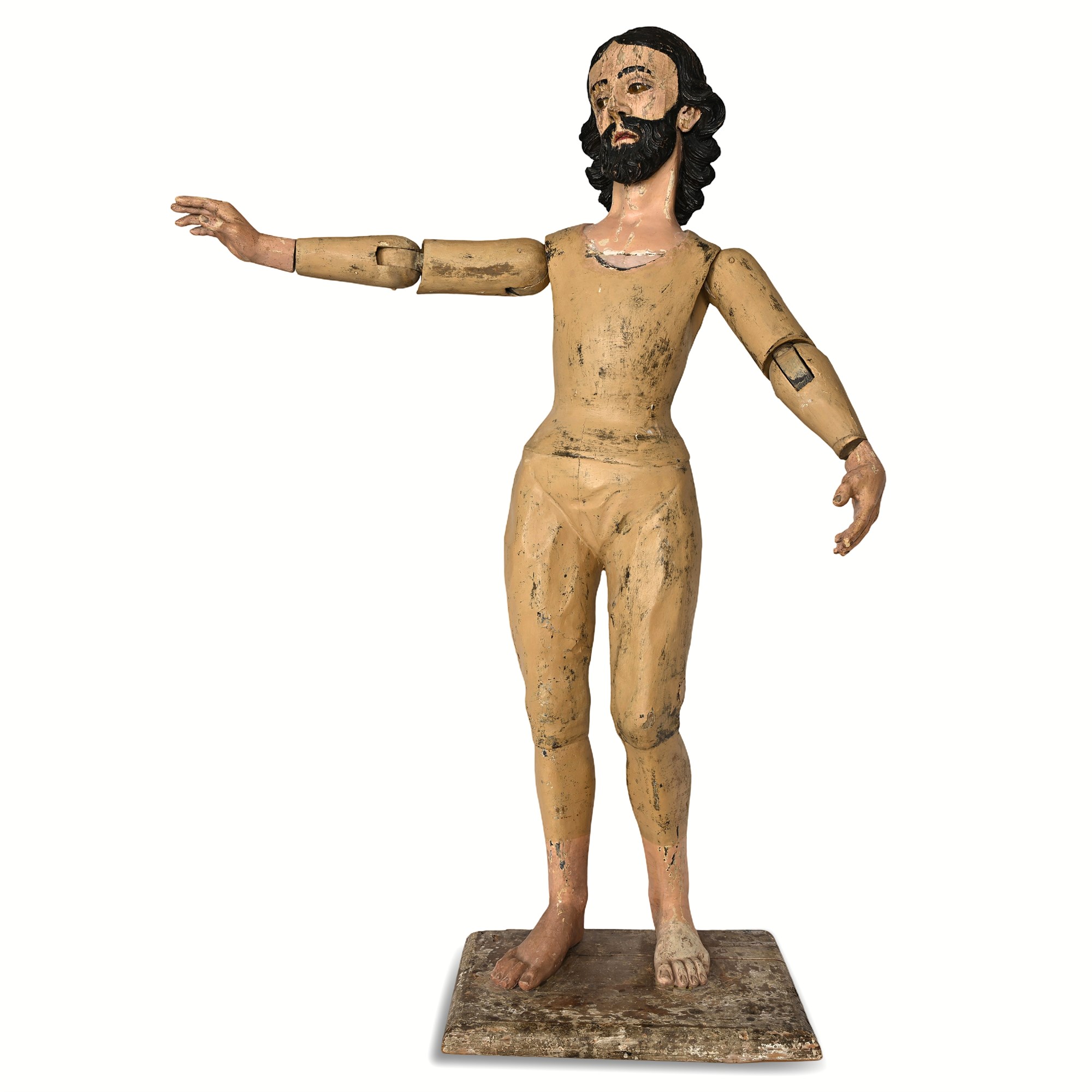
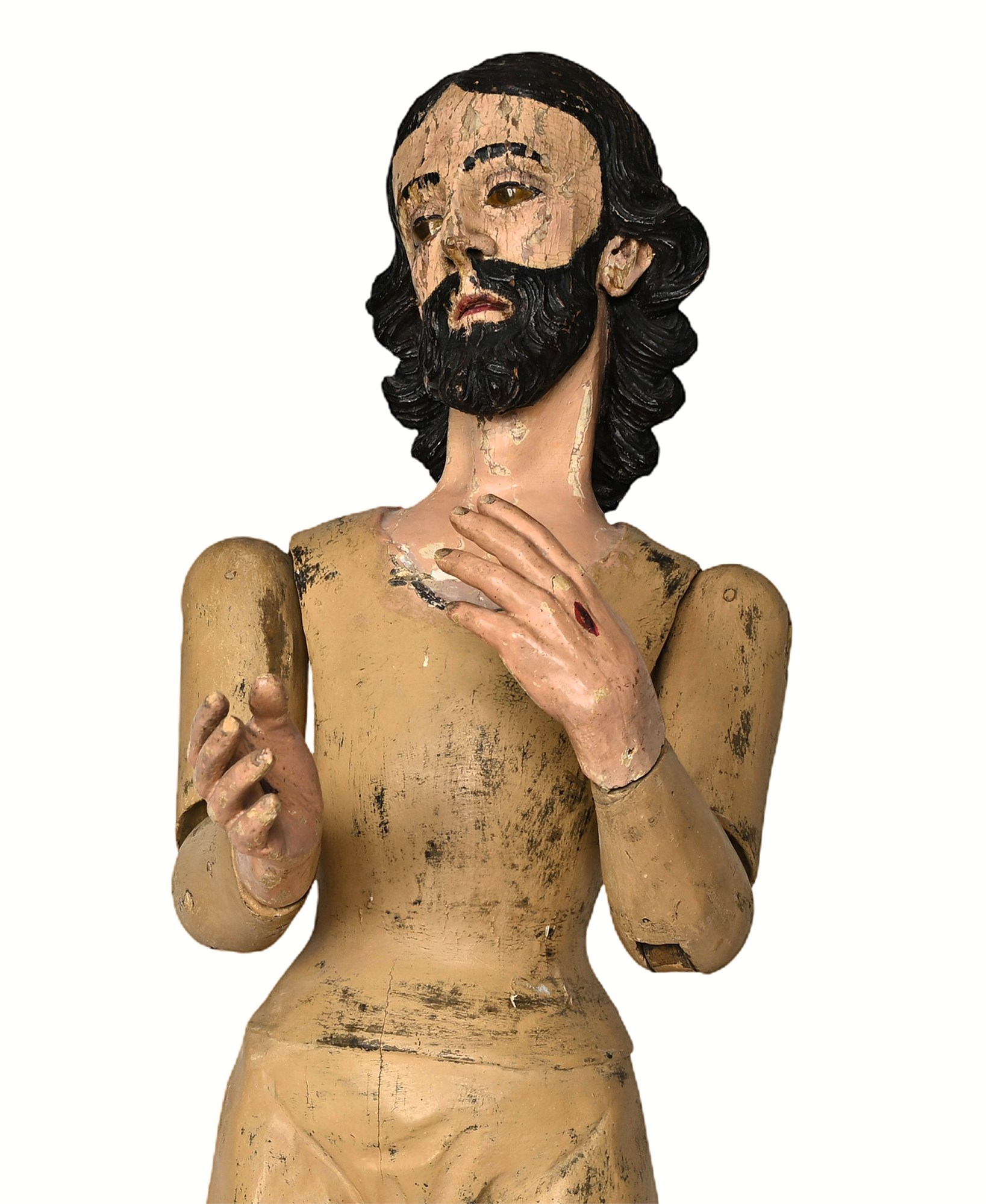
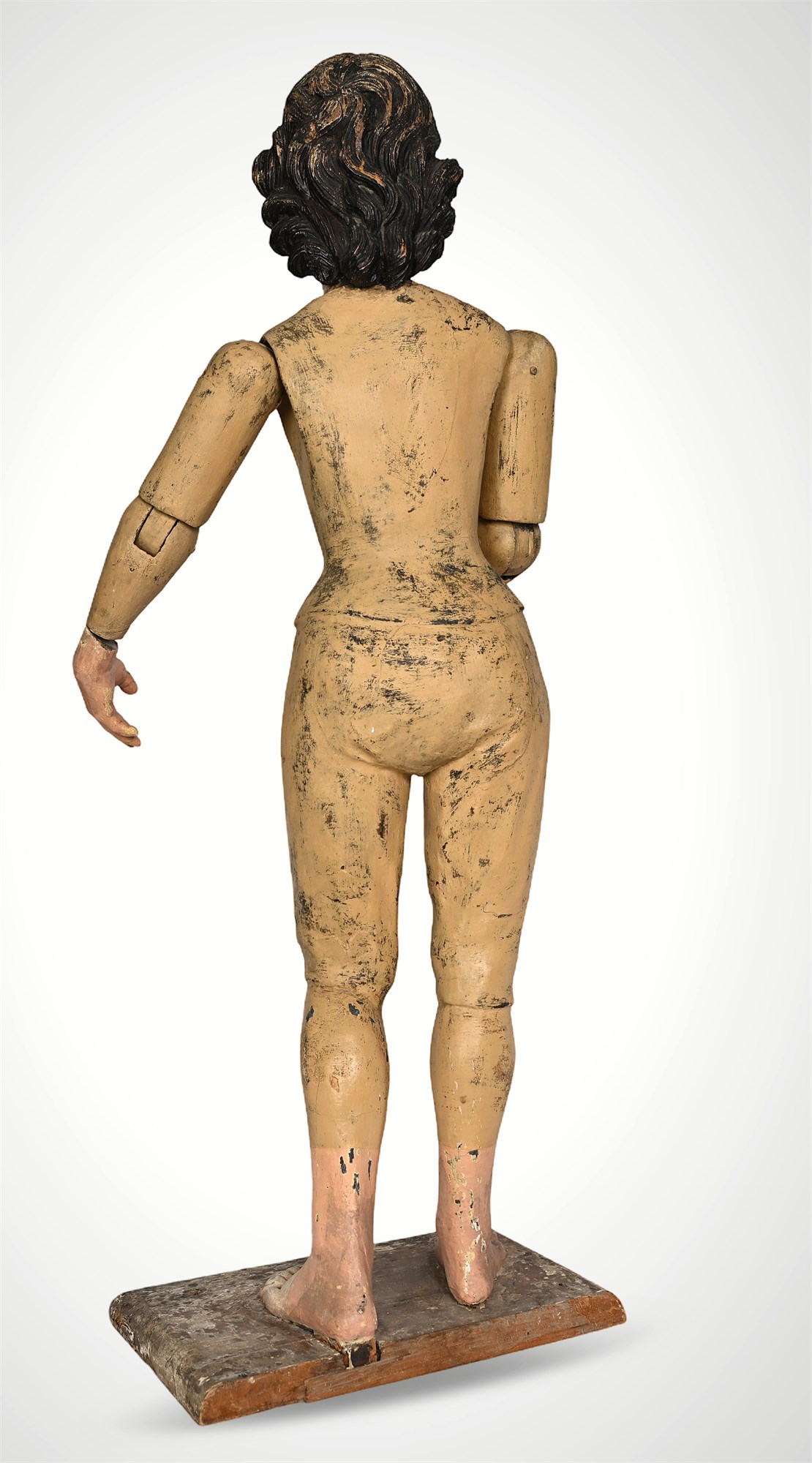
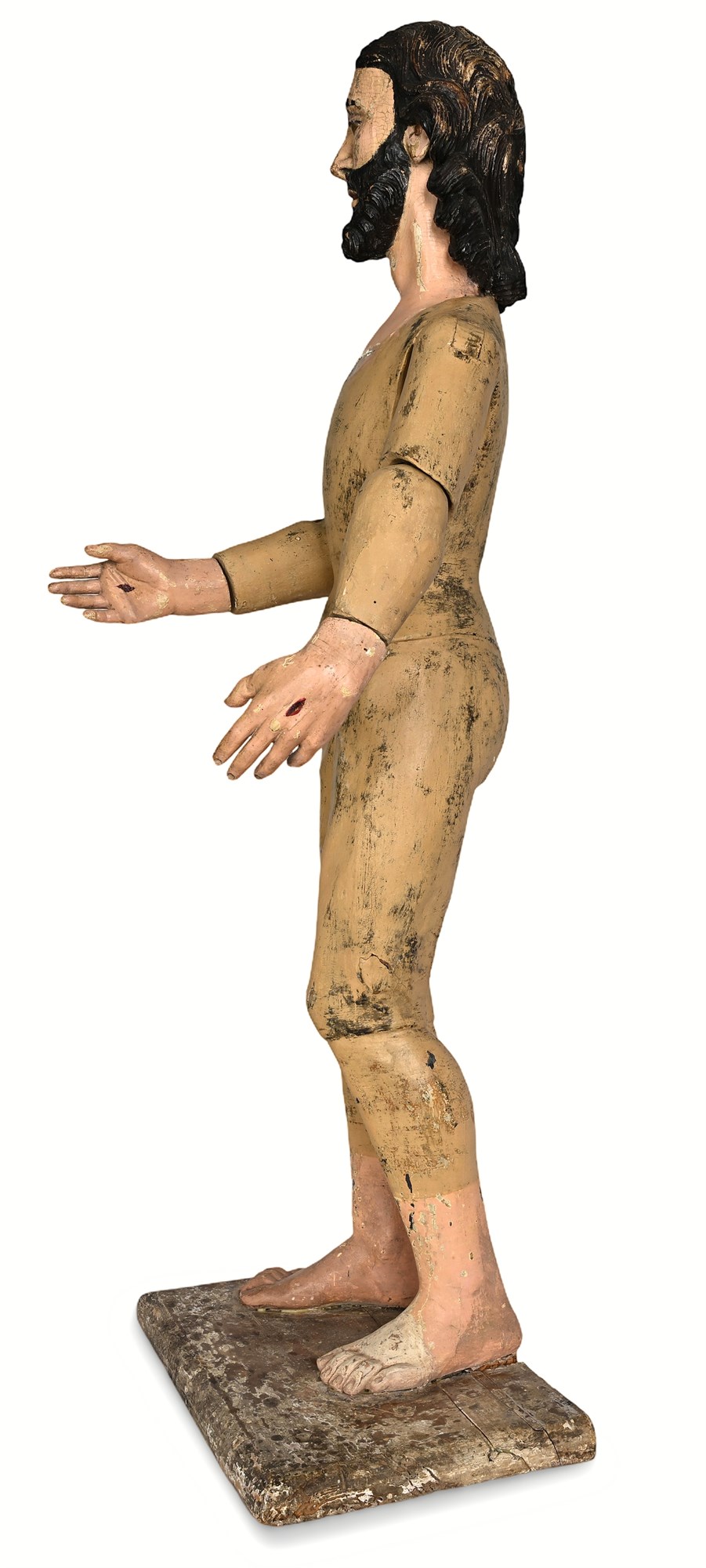
An imagen de vestir is not simply a carved santo. It is a devotional instrument — a figure engineered from the beginning to receive real clothing, to be dressed and undressed for the liturgical calendar, repositioned for feast days, carried in procession, and returned to the altar in a new gesture of prayer. The body is hollow to receive the weight of fabric vestments without toppling; the limbs are jointed so the figure can be posed in supplication, blessing, or grief depending on the occasion. This is sacred theater built in wood, and the carpenters who made them were not folk artists working naively — they were workshop craftsmen operating within a precise devotional tradition inherited from Spain and refined across three centuries of Mexican colonial practice.
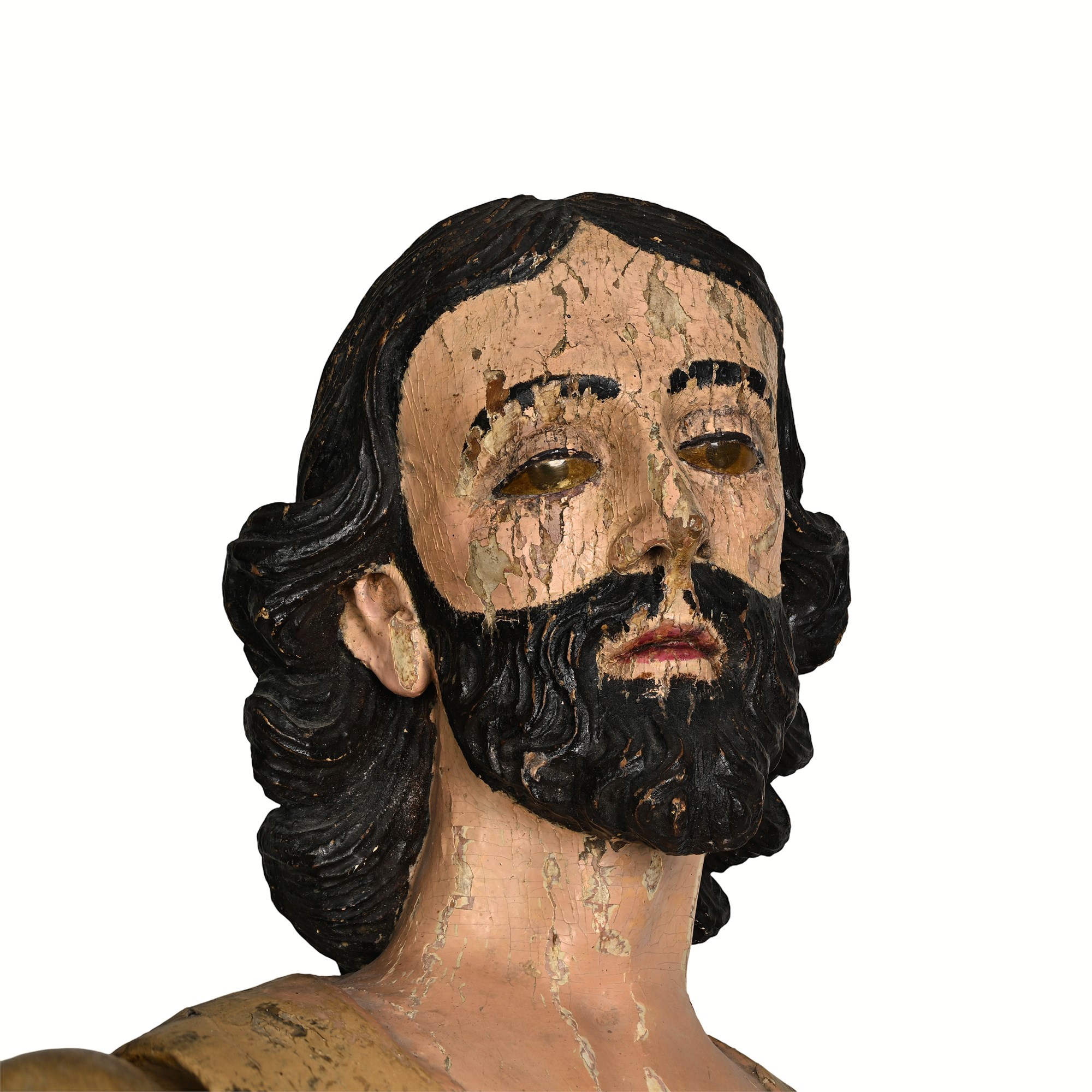
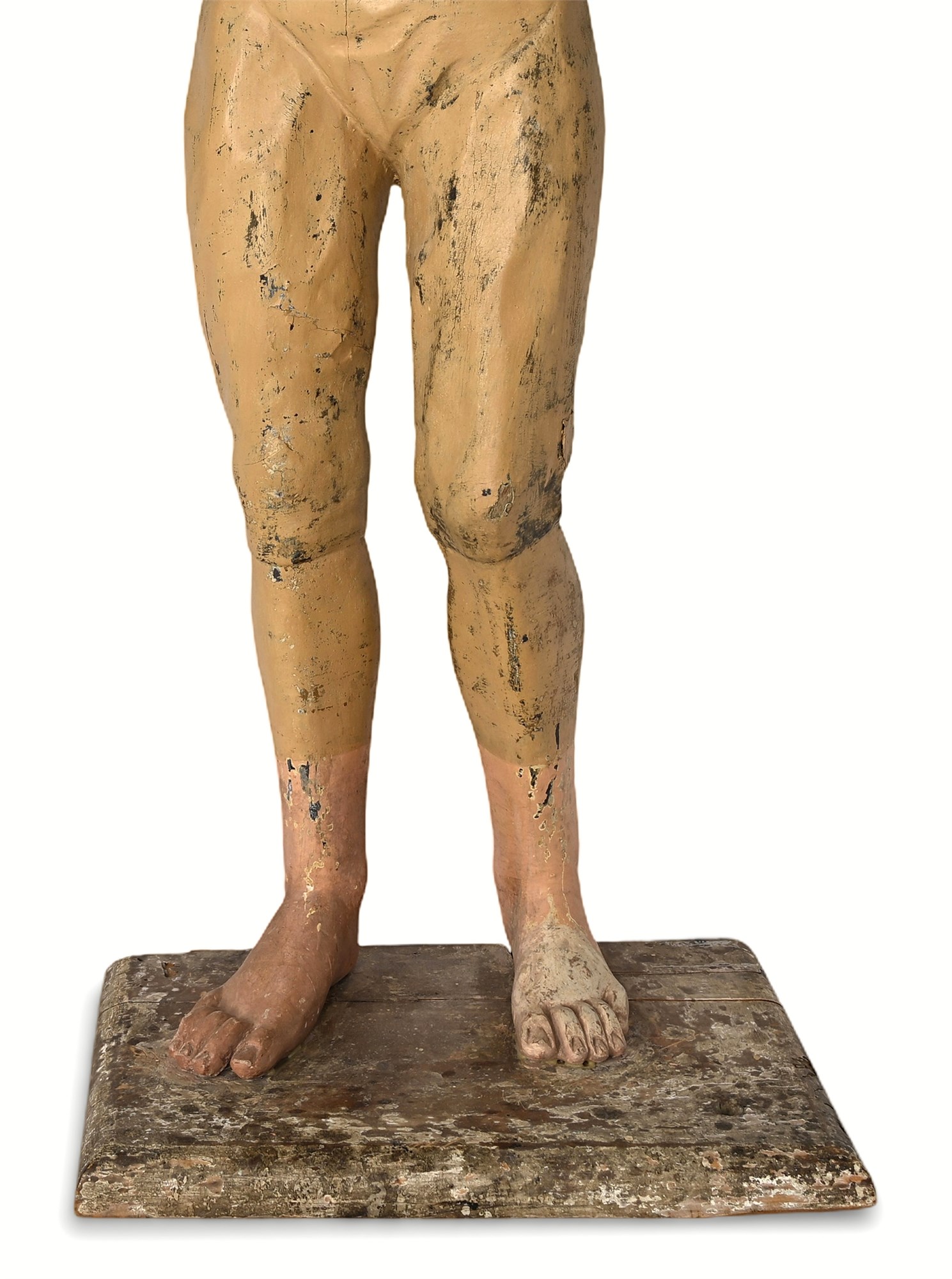
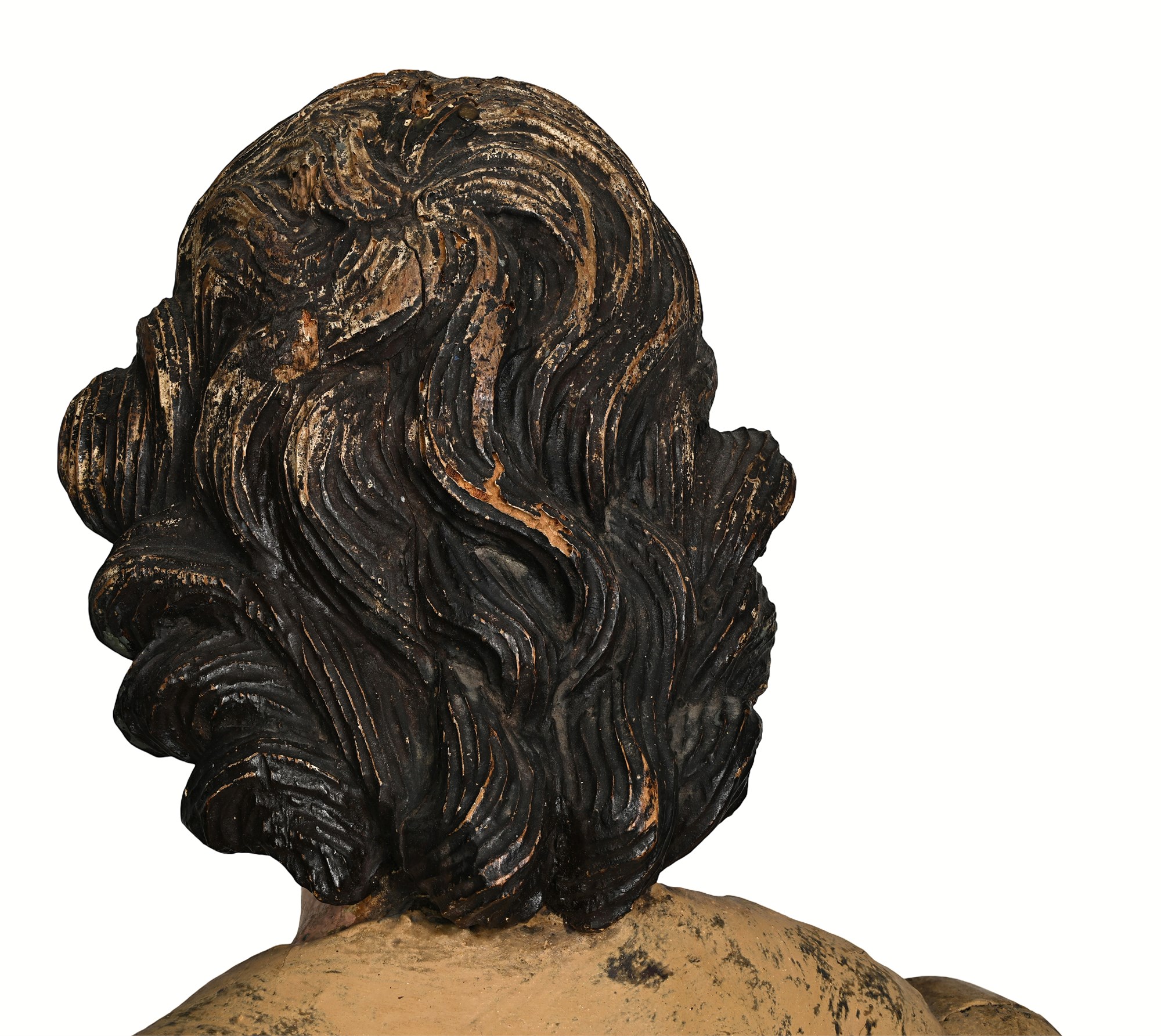
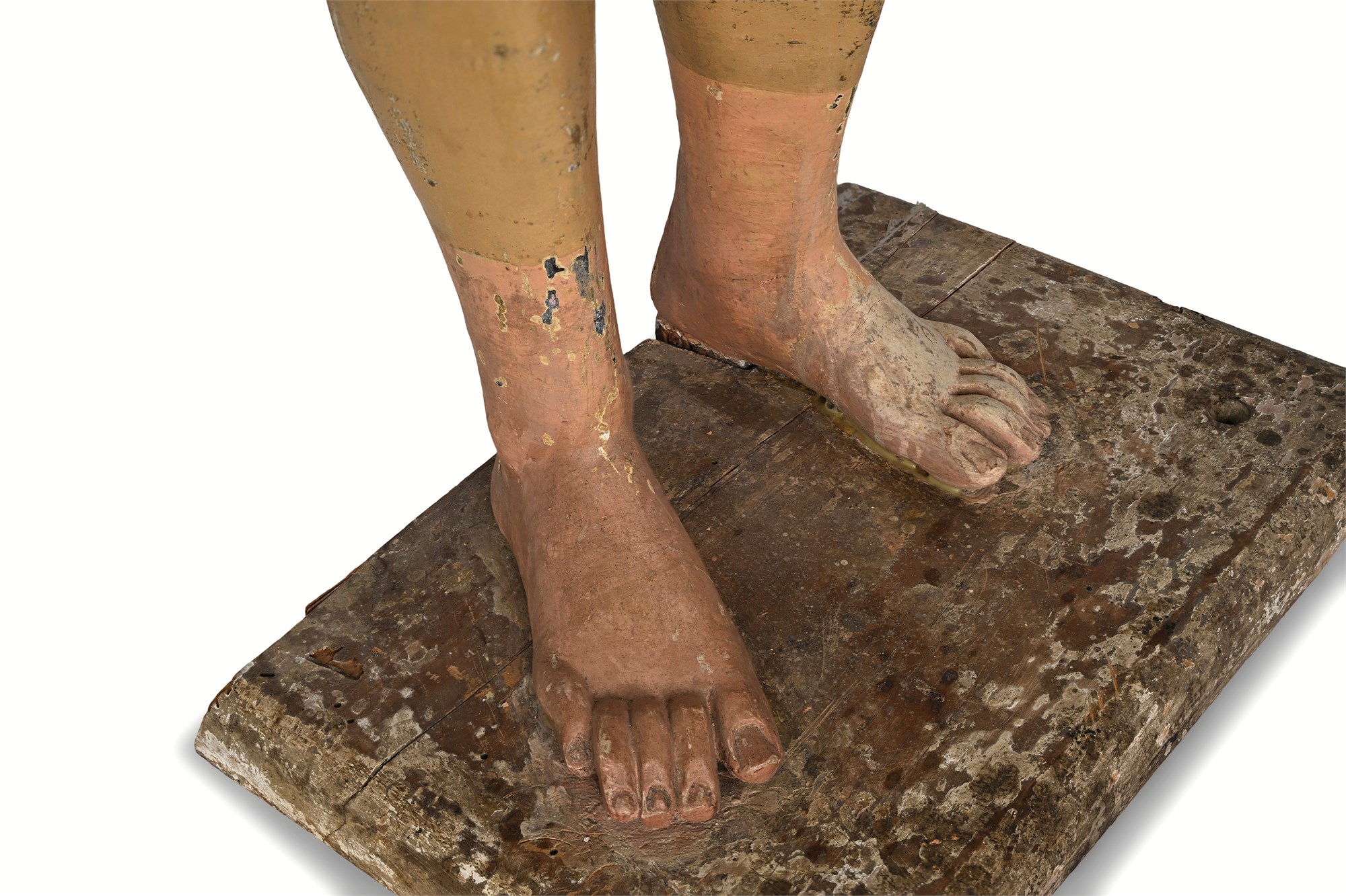
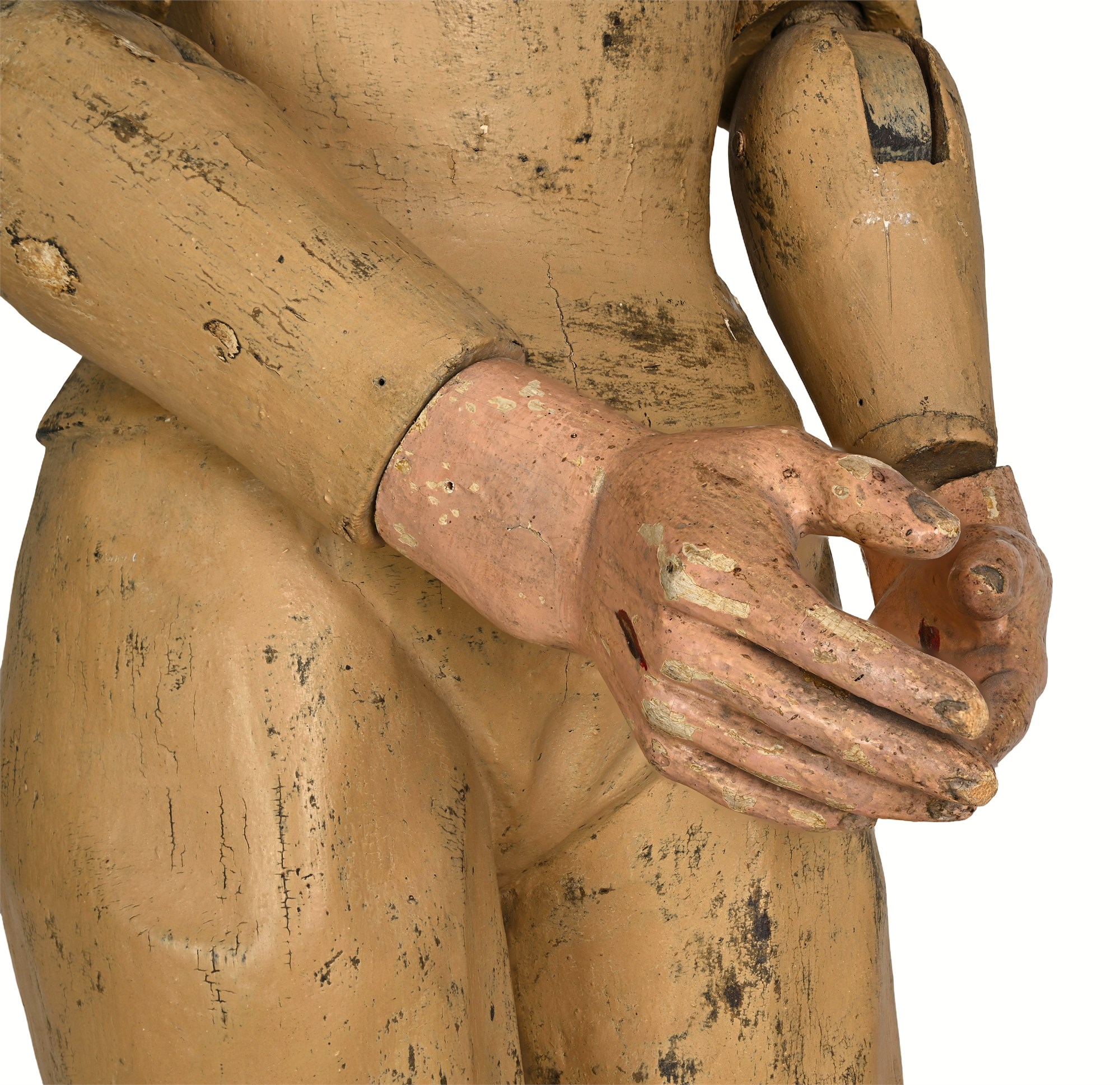
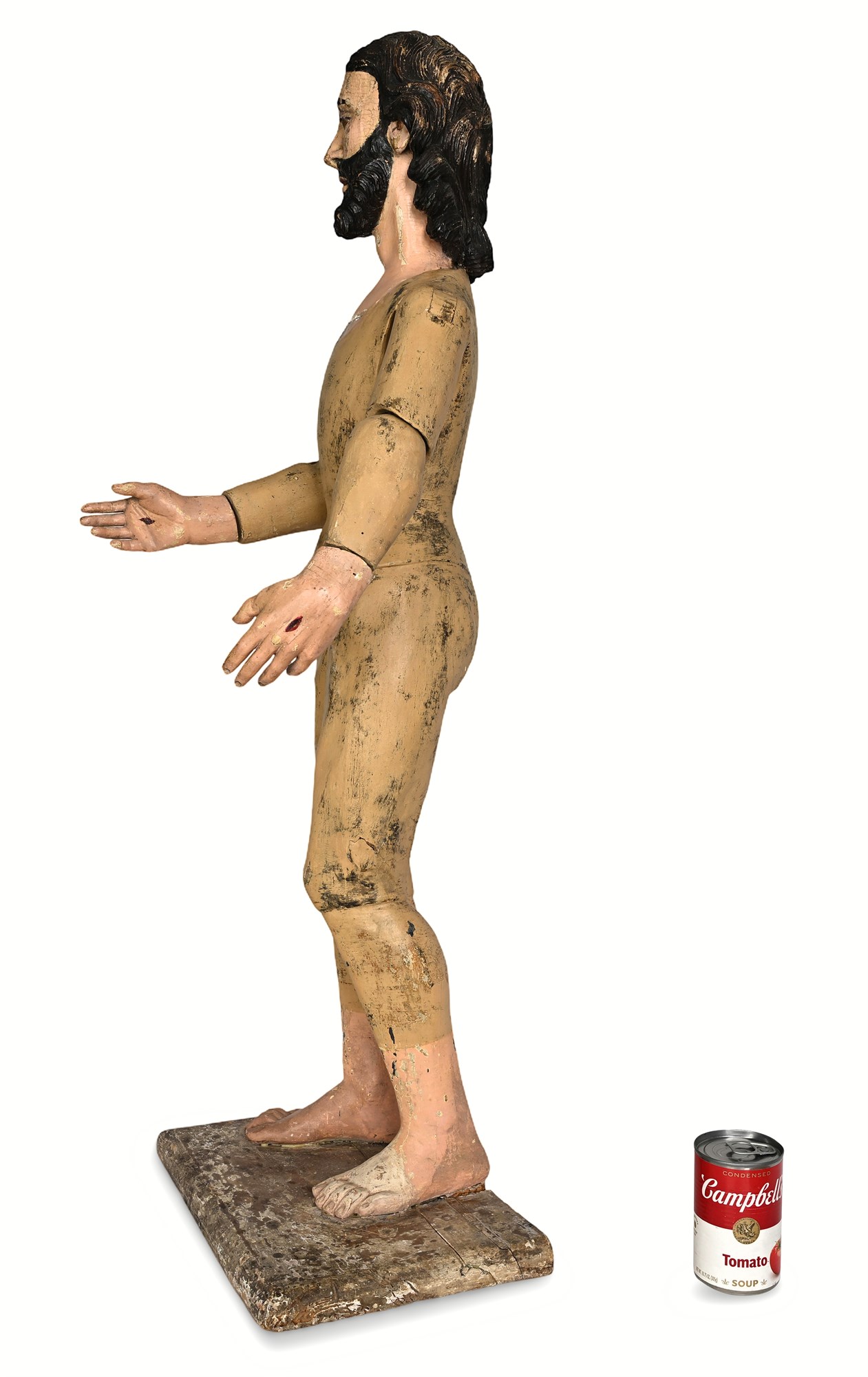
This figure is a large and technically accomplished example: altar-scale at 38 inches, with full articulation at the shoulders, elbows (two joints per arm, three total per limb), hips, and knees. Most articulated santos reaching the market have two joints per arm at best. The level of posability here — six functional joints across the body — reflects a figure made for active devotional use in a well-resourced hacienda chapel or parish sacristy, not a minor household piece. The face is carved with strong individual character: a full beard, long flowing hair rendered in deeply tooled black polychrome, and laminated-glass eyes set over carved wooden irises — a transitional technique that places the figure squarely in the late 19th to early 20th century workshop tradition of Central Mexico, after imported glass eyes became available but before factory production displaced hand-carving entirely. The hands are naturalistically modeled and painted in a warm flesh tone distinct from the body ground; the left palm displays a painted stigmata wound, suggesting the figure represents Christ or a Passion-related saint — identity unconfirmed, but the iconography is deliberate and specific.
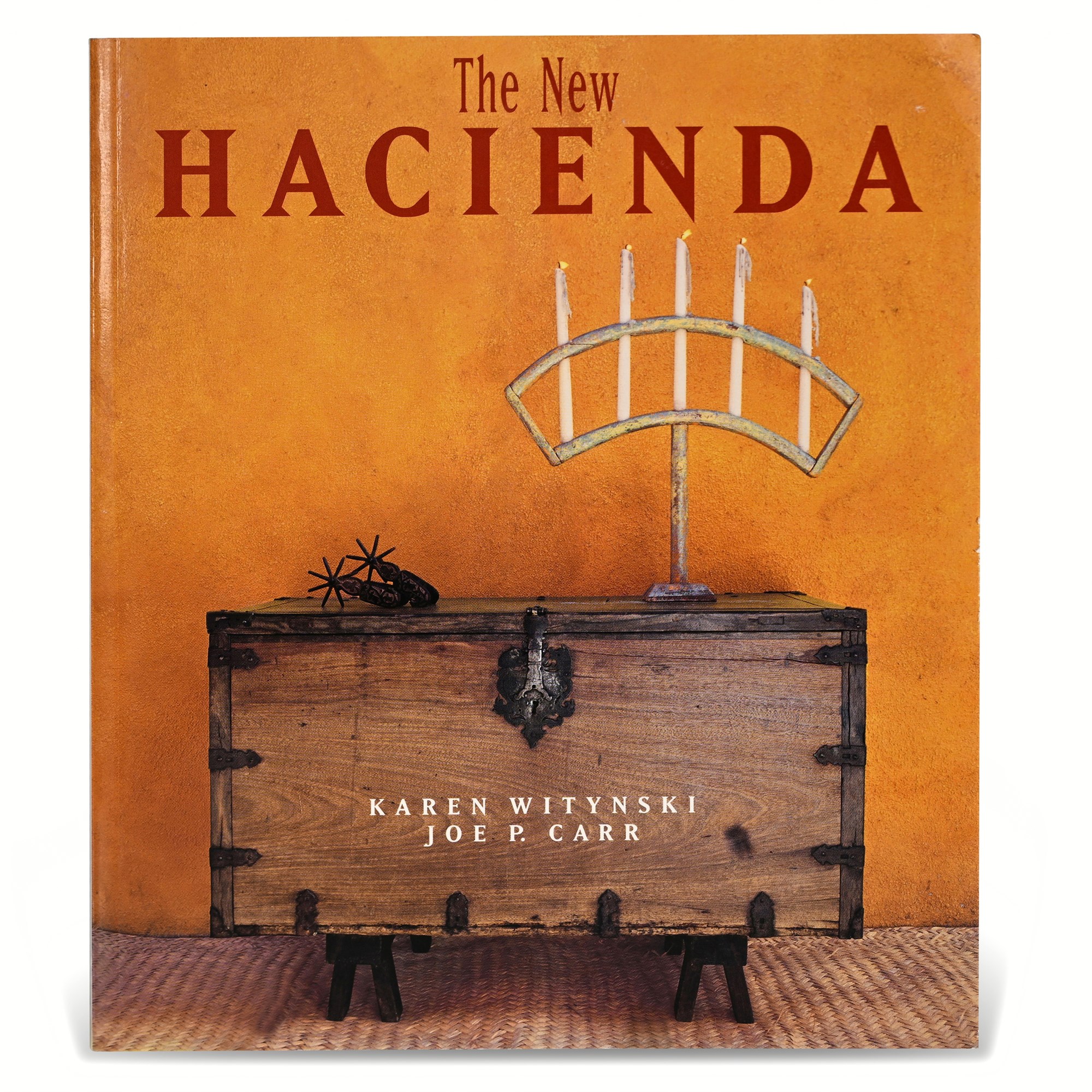
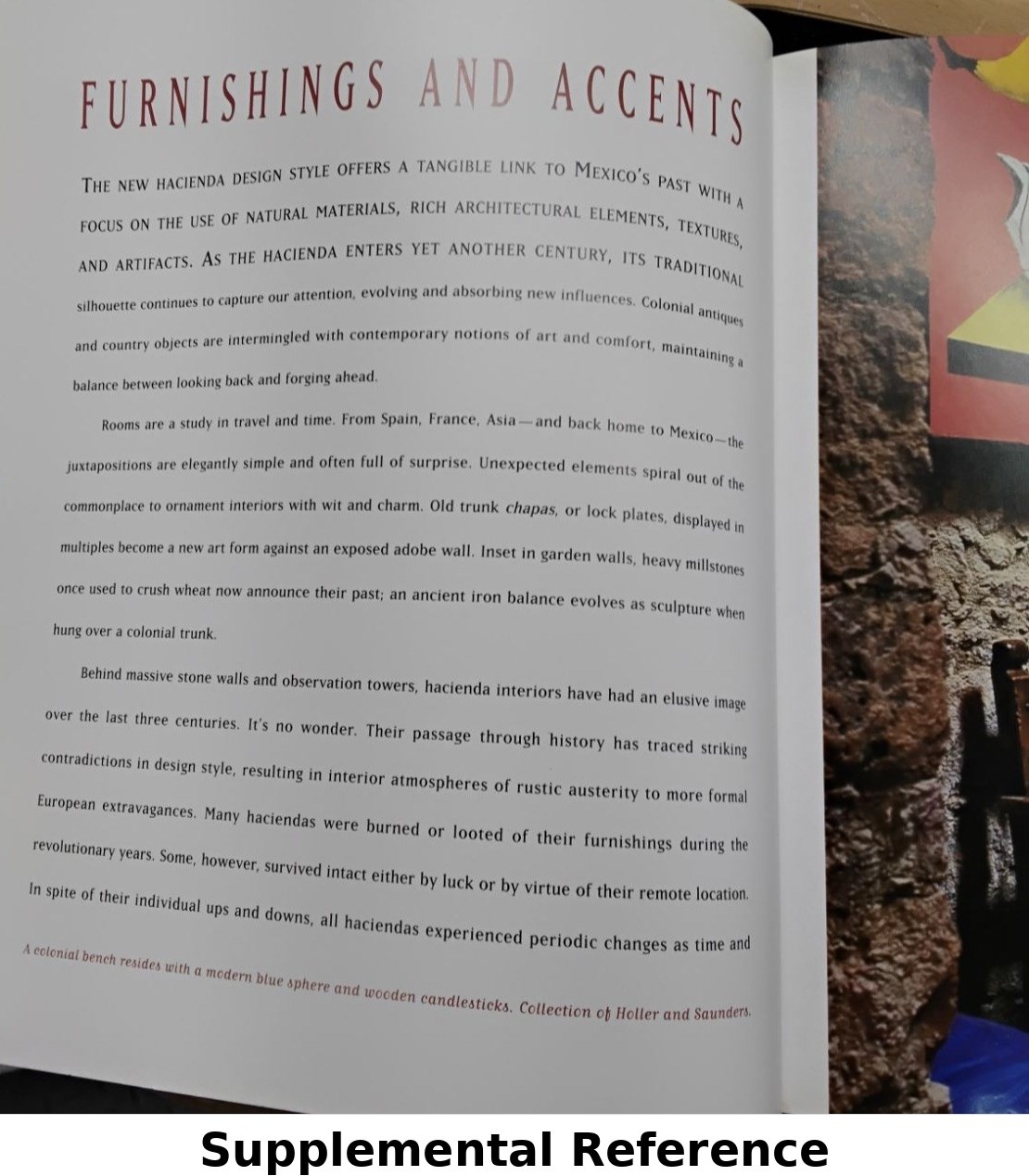
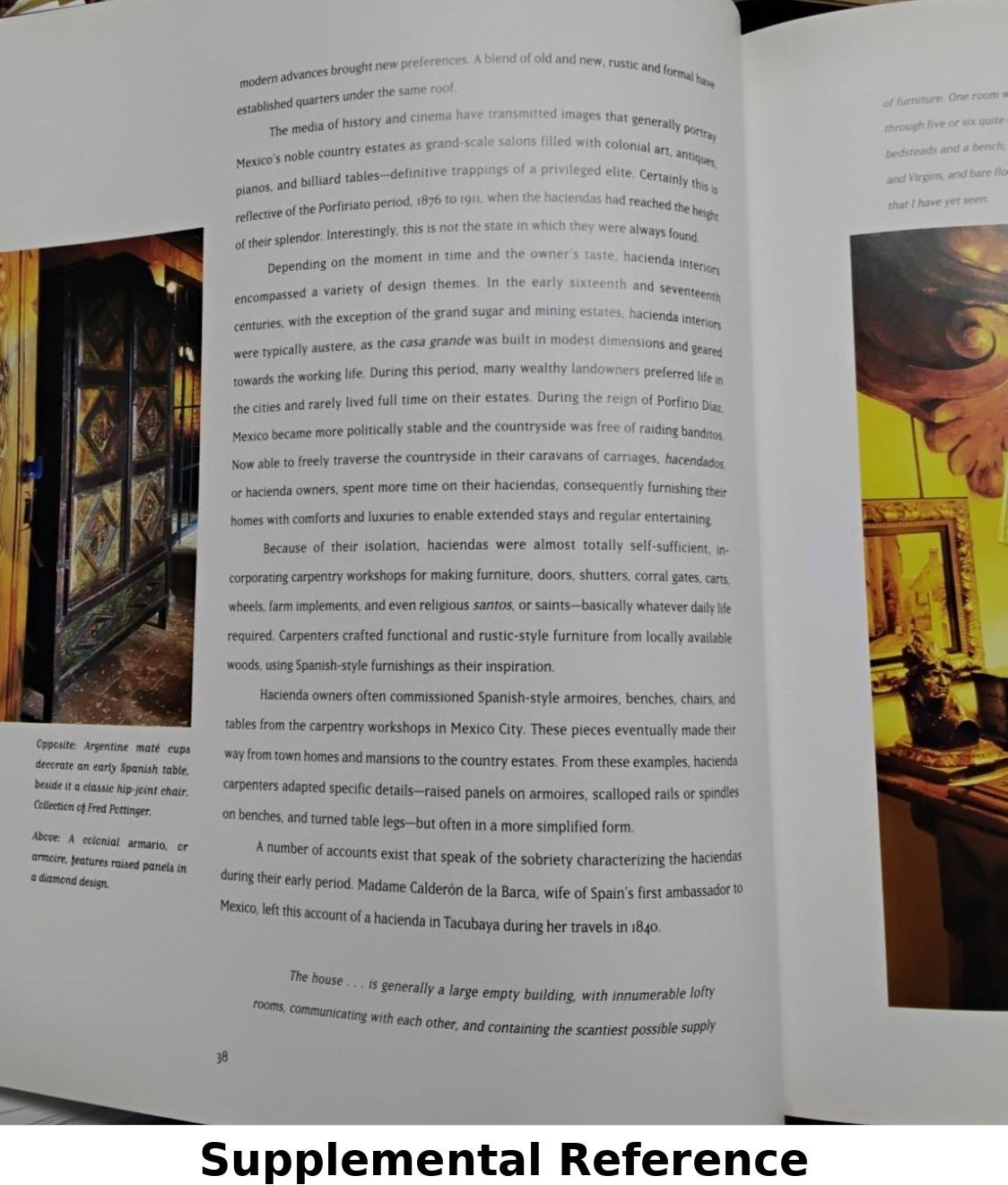
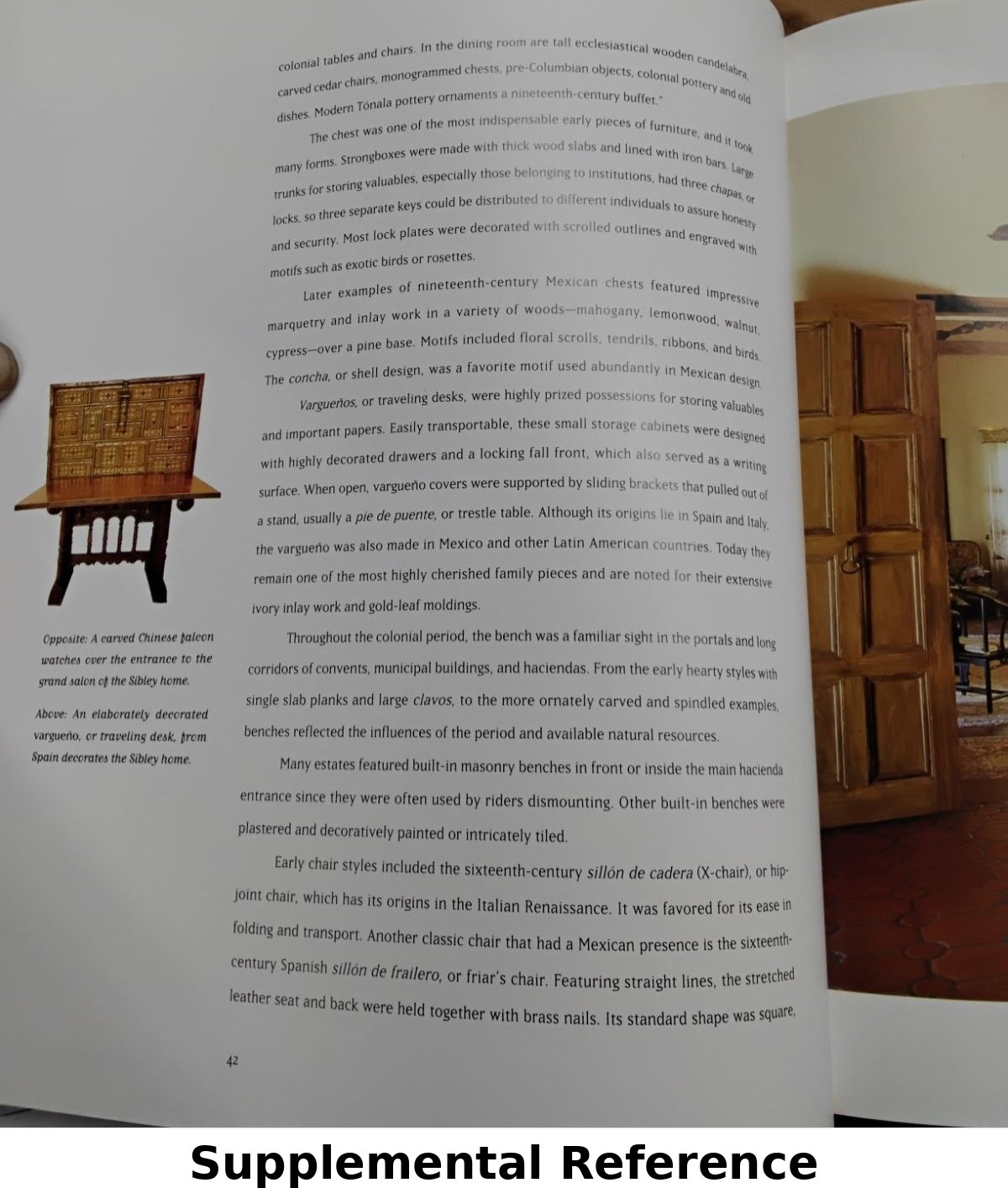
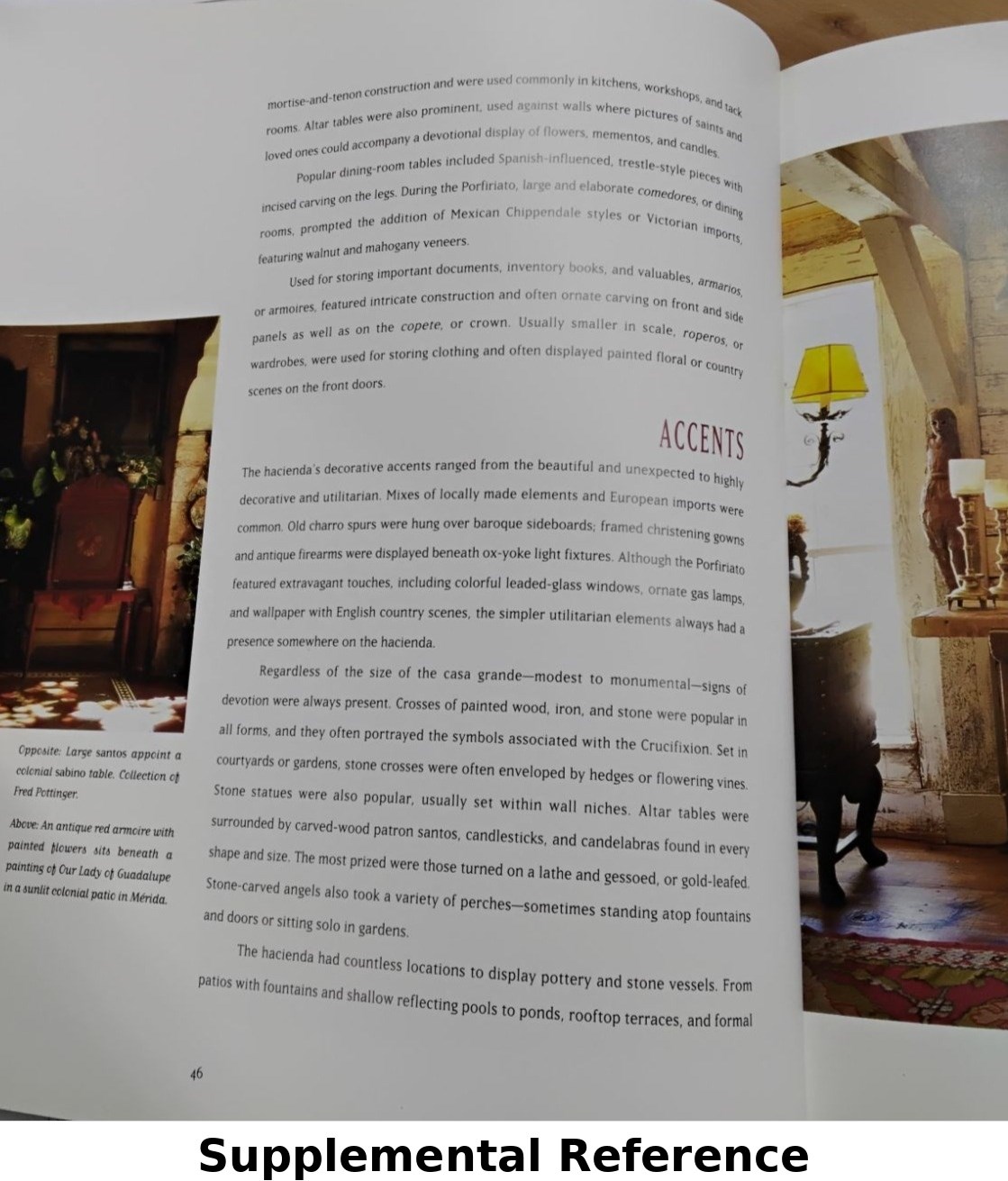
This figure is documented. It appears on page 47 of The New Hacienda by Karen Witynski and Joe P. Carr — the definitive photographic study of Mexican hacienda interiors and their devotional material culture — positioned as the second santos from the right in a curated altar tableau. For collectors who work within this tradition, that publication is not an incidental detail. It places this figure within a curated canon of authenticated Mexican devotional objects, photographed in context, at a moment before these pieces began dispersing widely into the international market. Published provenance at this level is uncommon in the santos category; most figures sell anonymous.
CONDITION Good. Age-appropriate wear throughout — chipped and flaking paint across the torso, legs, and ankles with scattered losses to the gesso ground; surface soiling and scuffs consistent with generations of handling. Old repairs are present. The laminated-glass eyes are intact. The wooden base shows heavy weathering and minor splitting along the plank join. All articulated joints are functional; figure is structurally stable.
DIMENSIONS / SPECIFICATIONS
- Height: 38 in.
- Width: 11 in.
- Depth: 9 in.
- Weight: 14 lbs
- Type: Imagen de vestir (articulated devotional figure)
- Origin: Central Mexico
- Date: ca. 1880–1930
- Materials: Carved wood, gesso, pigment, laminated-glass eyes over carved irises
- Articulation: Shoulders, elbows (×2 per arm), hips, knees — 3 joints per arm, 6 total
- Torso: Hollow (designed for textile dressing)
- Provenance: Published — The New Hacienda, Witynski & Carr, p. 47