Madre Protectora Folk Santos — Polychrome, Multi-Figure, c. 1900 View Watchlist >
- Winning Bid: $306.99
- 55 Bid(s) View Bid History
- High Bidder: JDMARTINEZ66
Seller Accepts Credit Cards
Payment and pickup instructions will be available on your invoice (under "My Account") at the conclusion of this auction.
Lot # D316
System ID # 27557880
Start Date
End Date
6 Watching
Madre Protectora Folk Santos — Polychrome, Multi-Figure, c. 1900
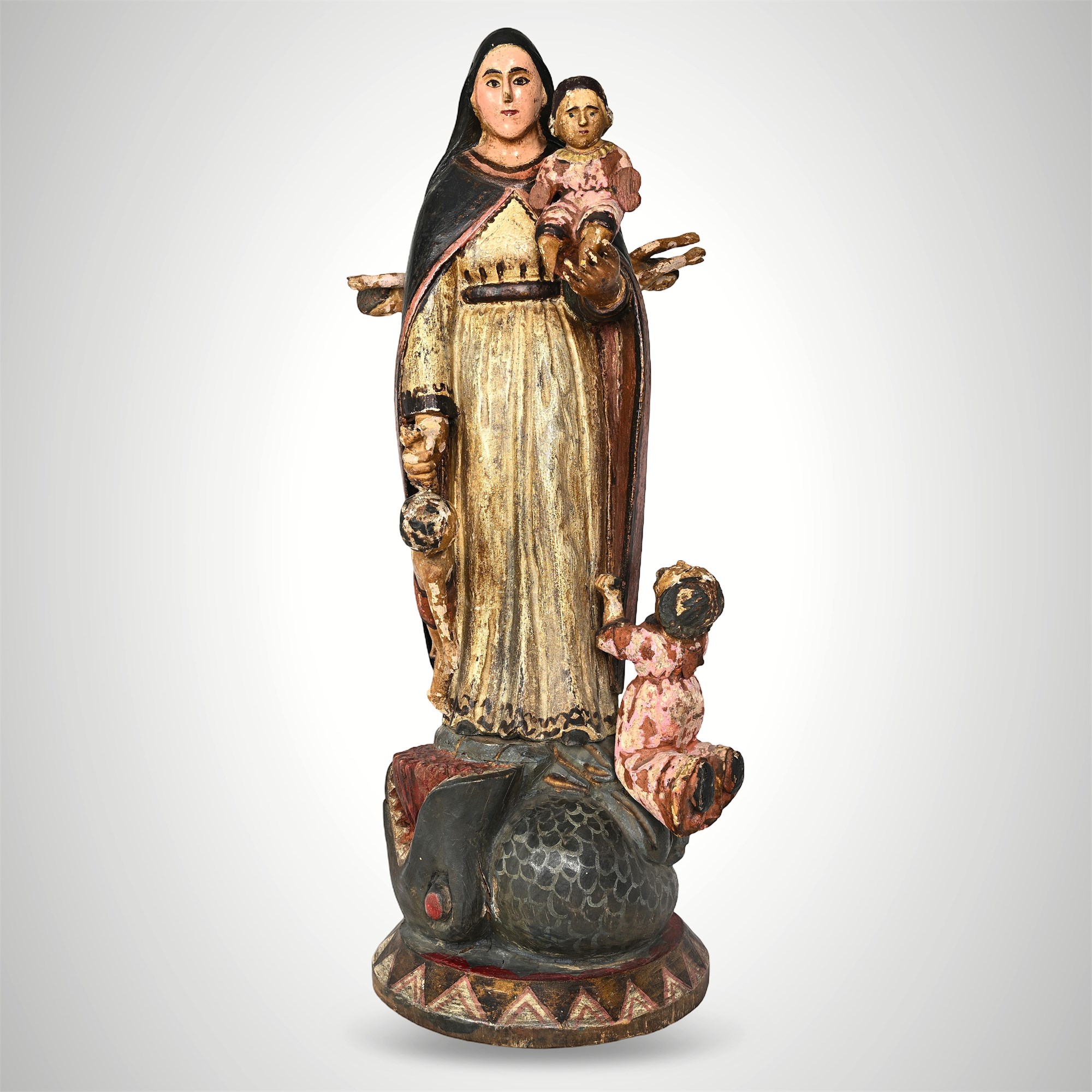
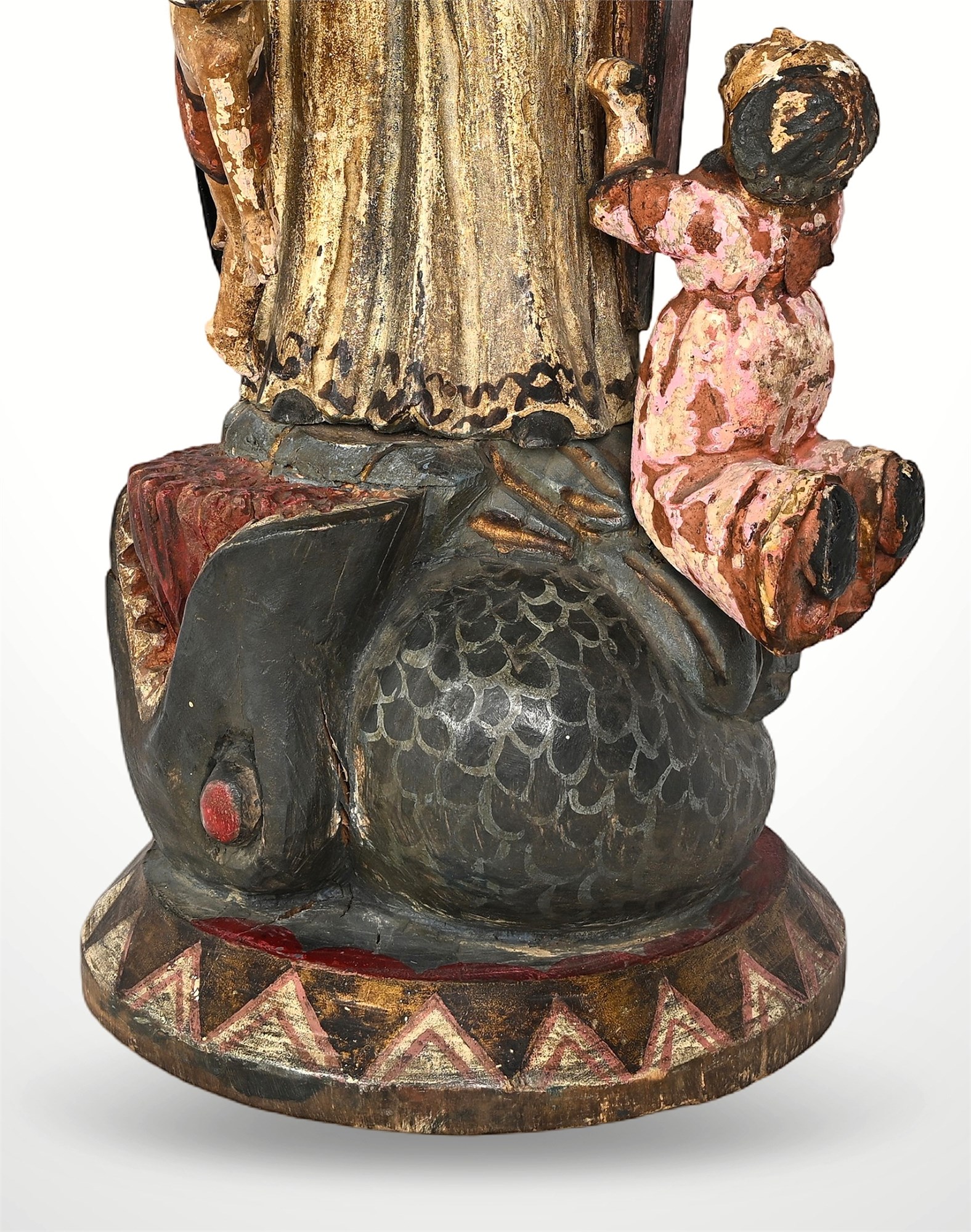
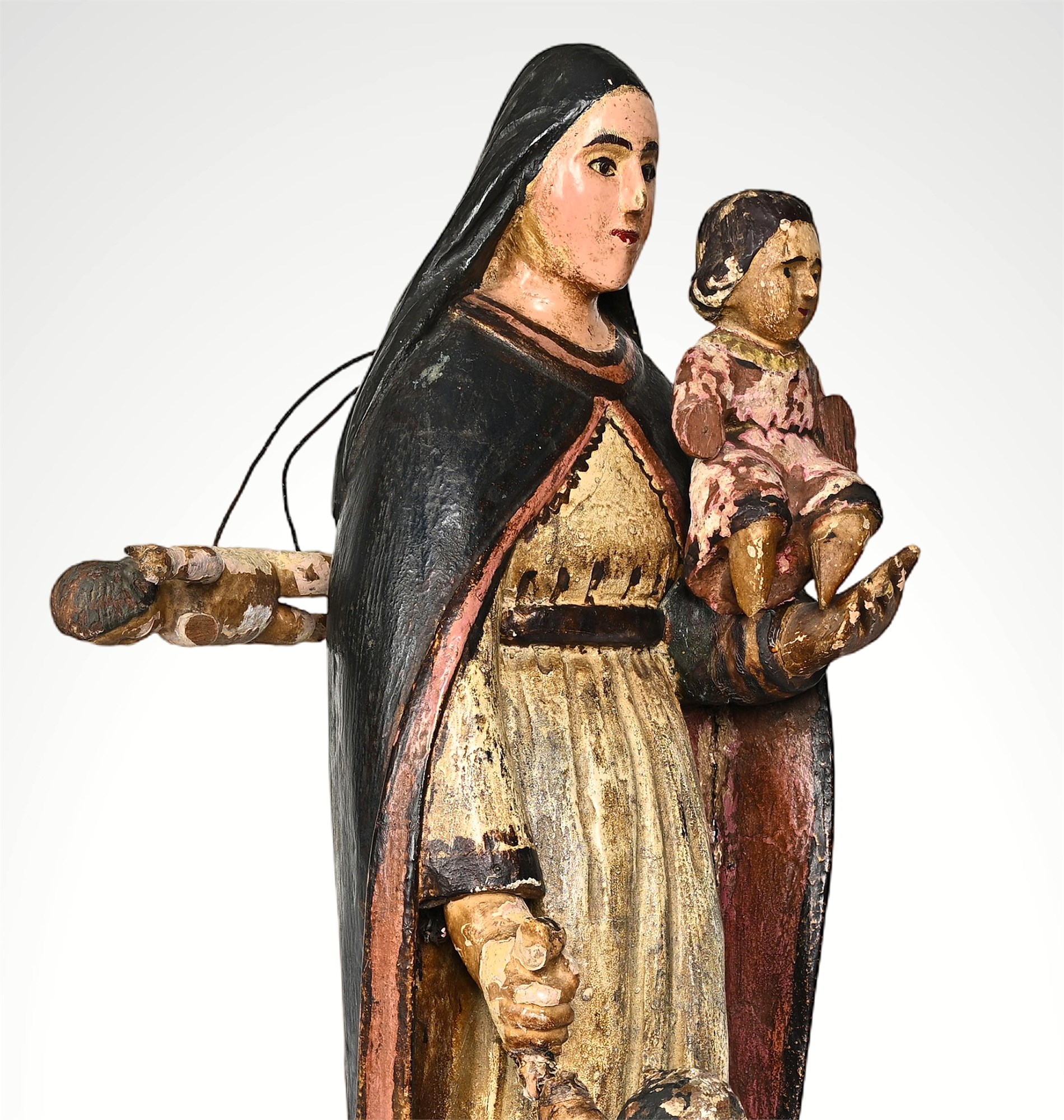
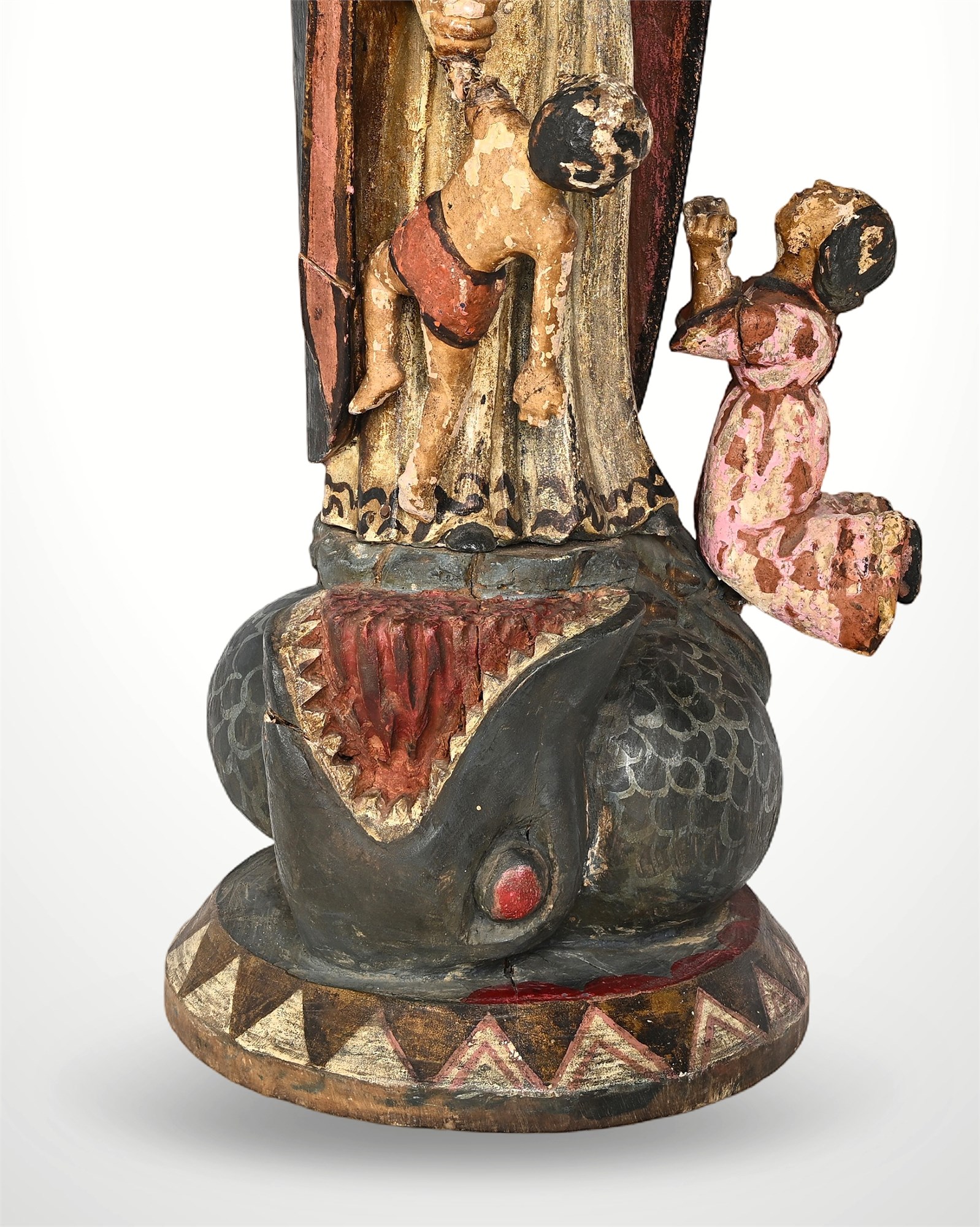
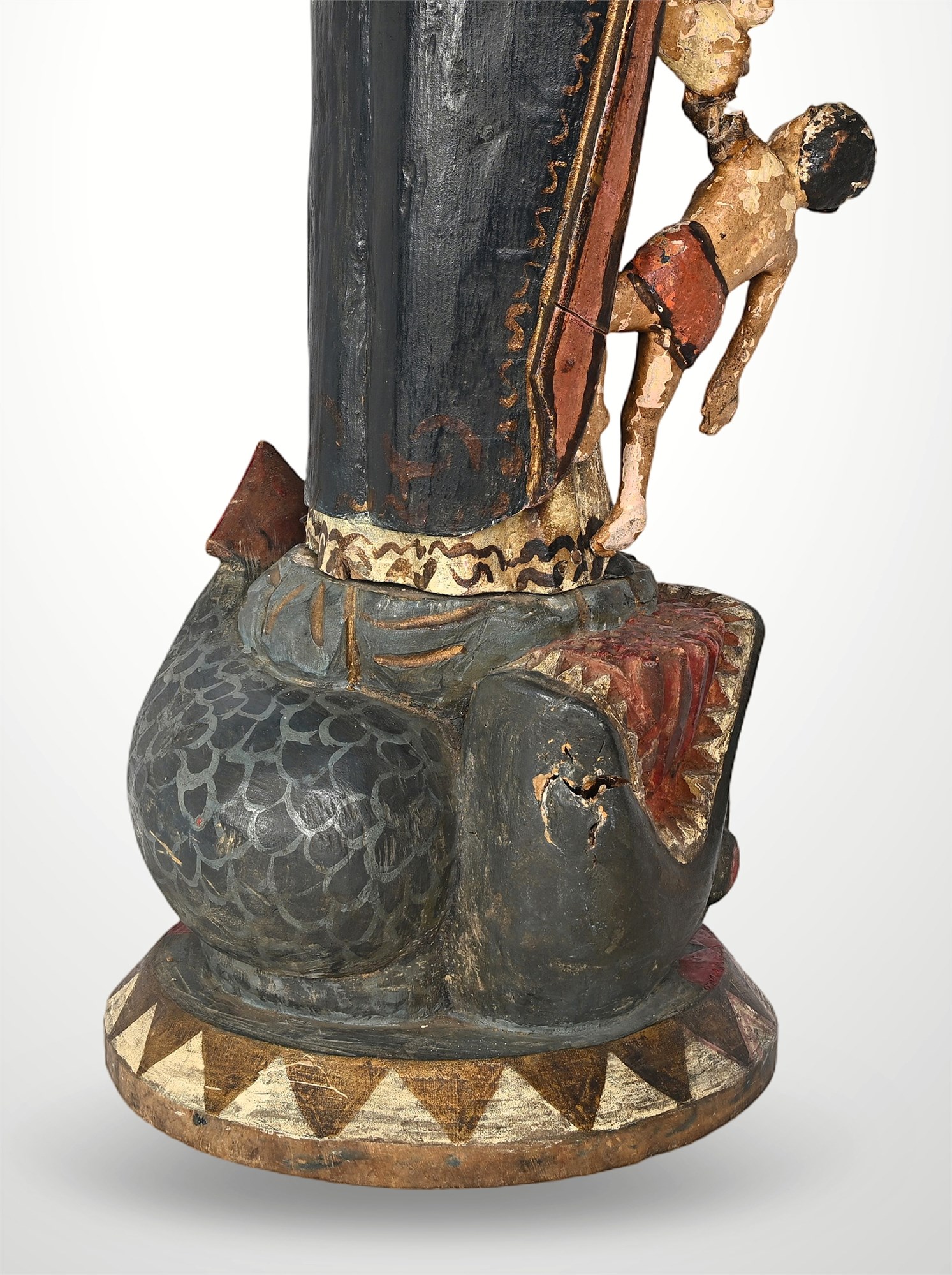
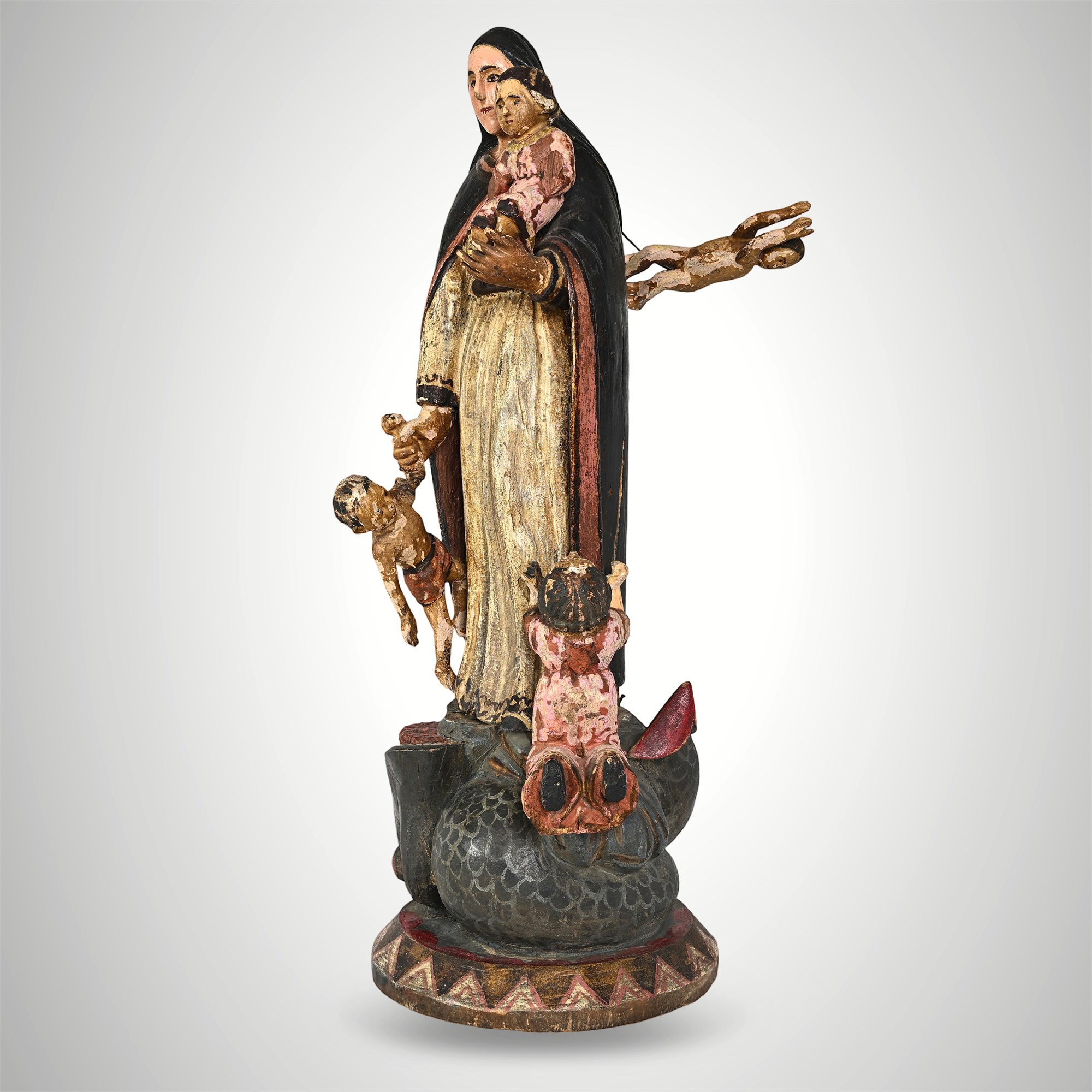
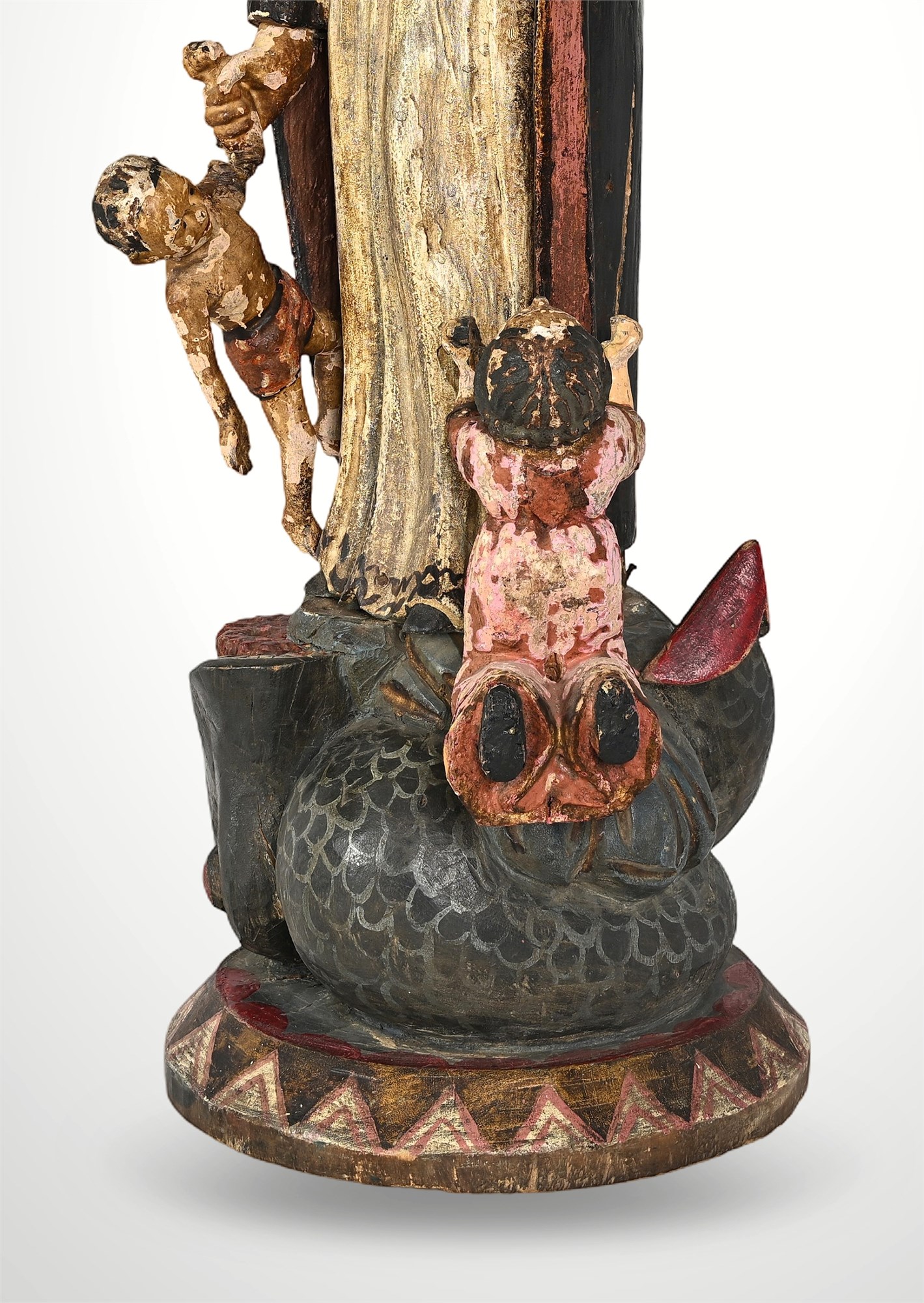
Start with the serpent, because that's where the carver started. It coils beneath her feet — scaled, open-mouthed, one red eye fixed forward — and it is not decorative. It is the entire argument. Every culture that contributed to this figure brought its own name for what that serpent means: the dragon of Revelation that the Woman of the Apocalypse crushes underfoot, the ancient enemy of Genesis, the feathered deity Quetzalcoatl whose dominion the new faith claimed to supersede, the coiled force of harm and misfortune that stalks children and the vulnerable. The carver who made this figure in a central Mexican workshop — Puebla, Tlaxcala, Hidalgo, somewhere in that corridor — compressed three centuries of syncretic devotional theology into a single coiled form in wood, and then stood a woman on top of it. Unmoved. Holding a child.
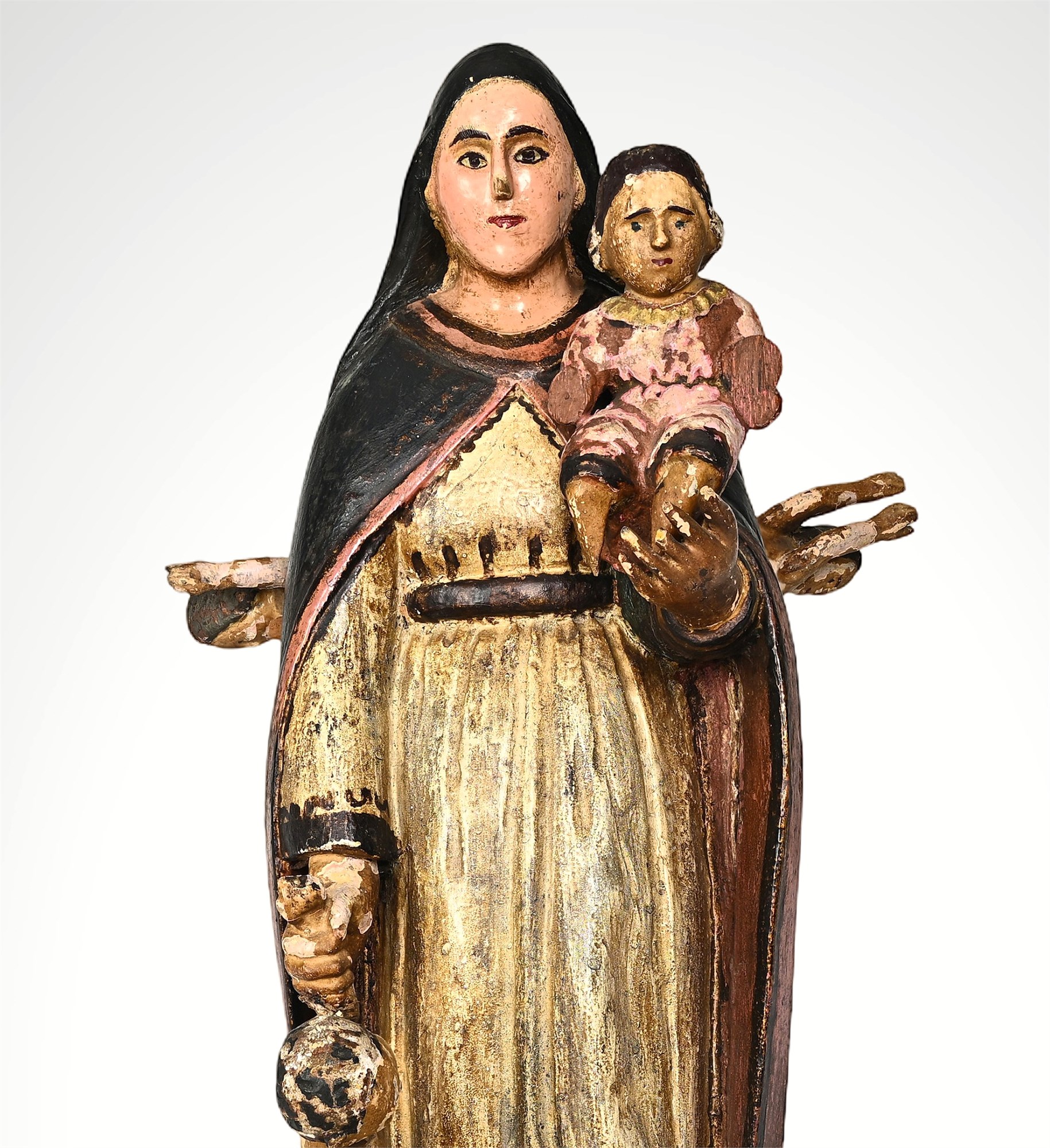
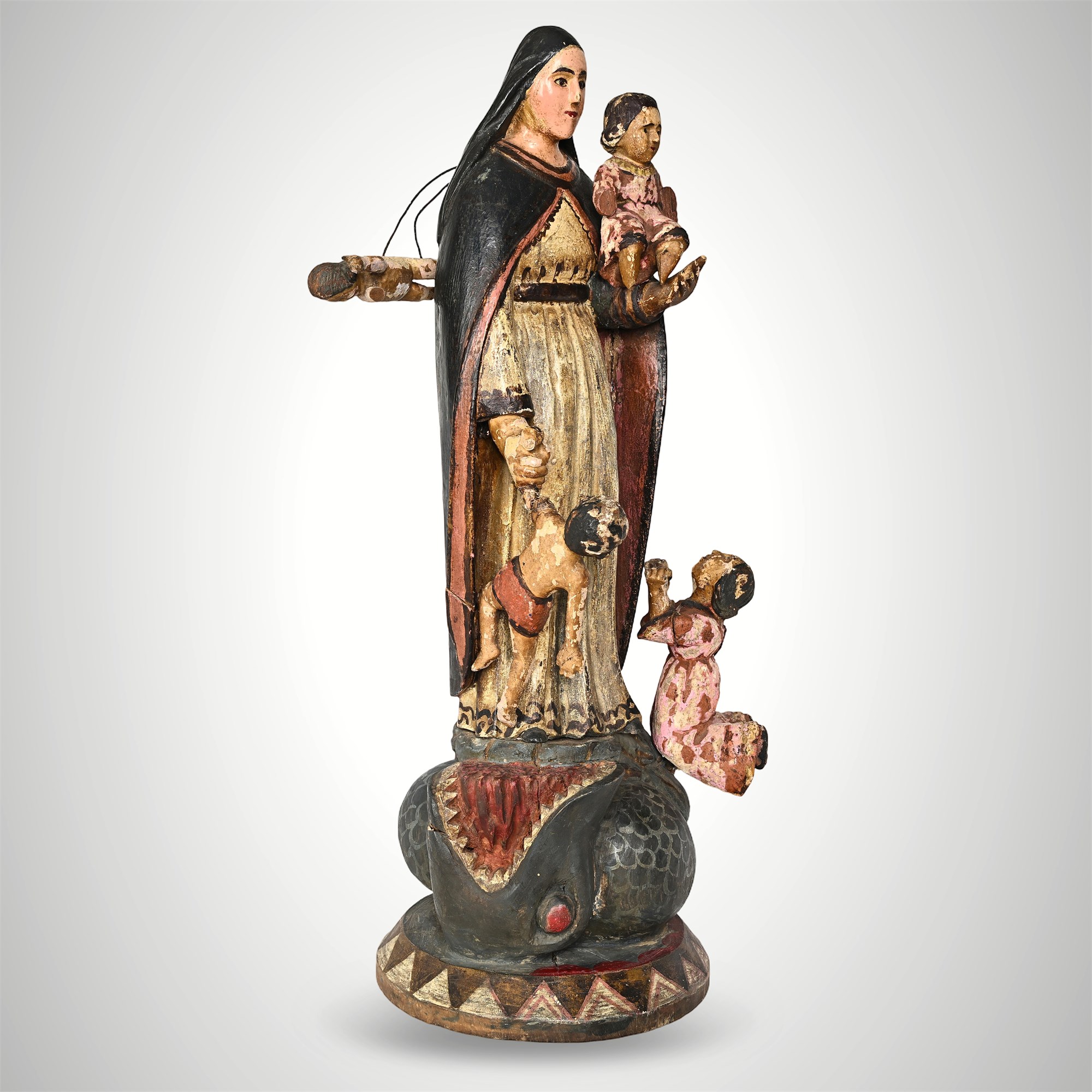
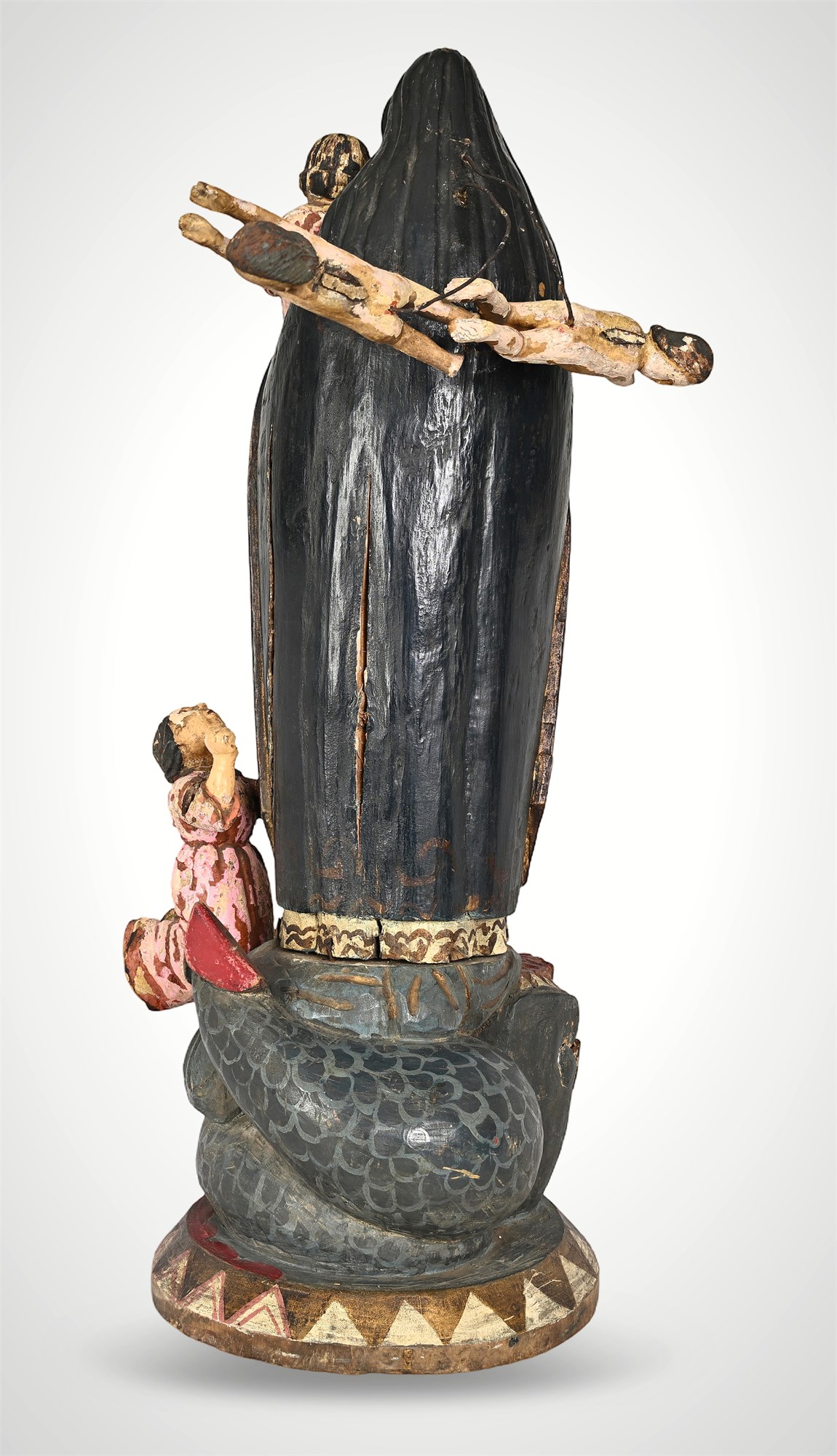
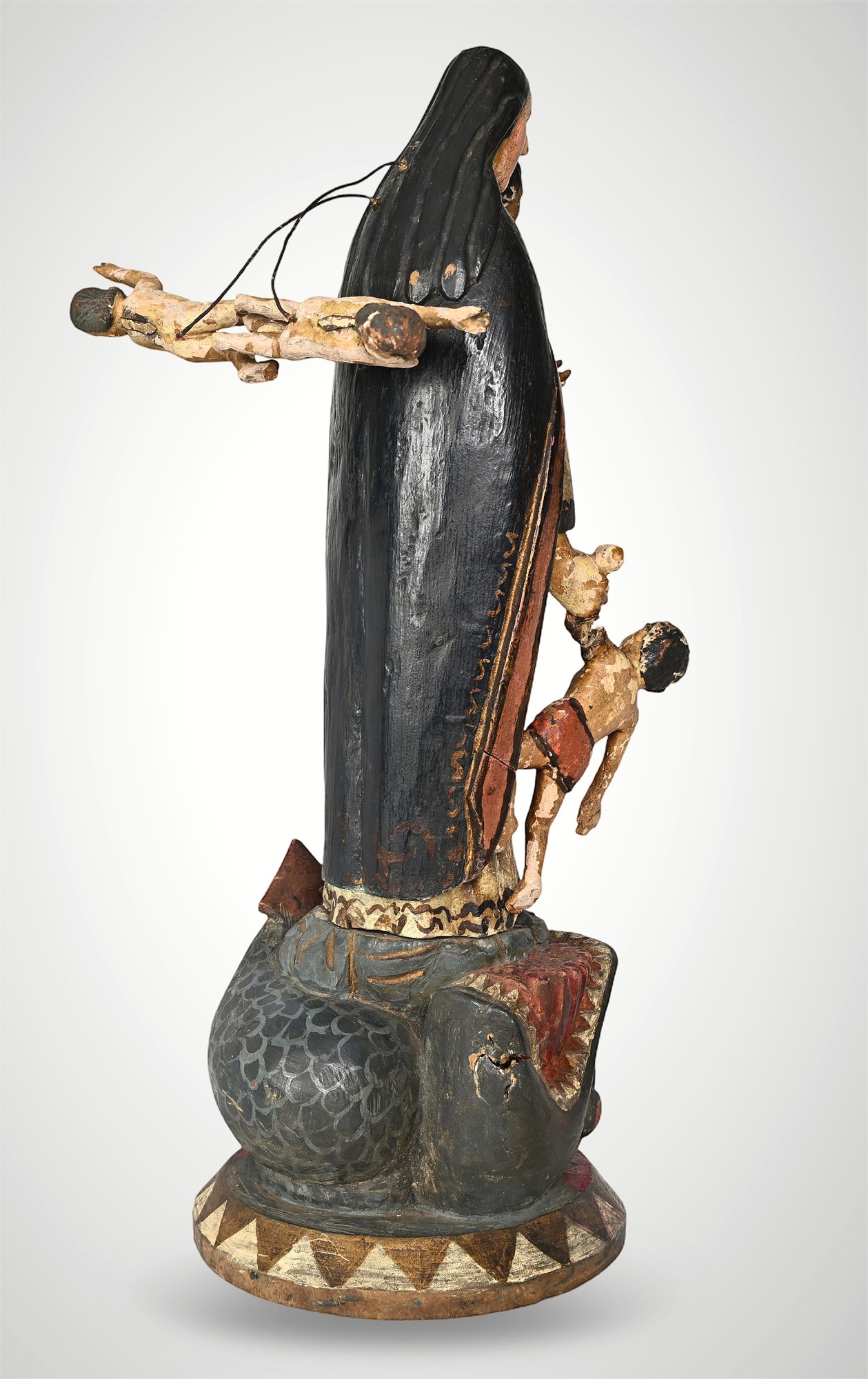
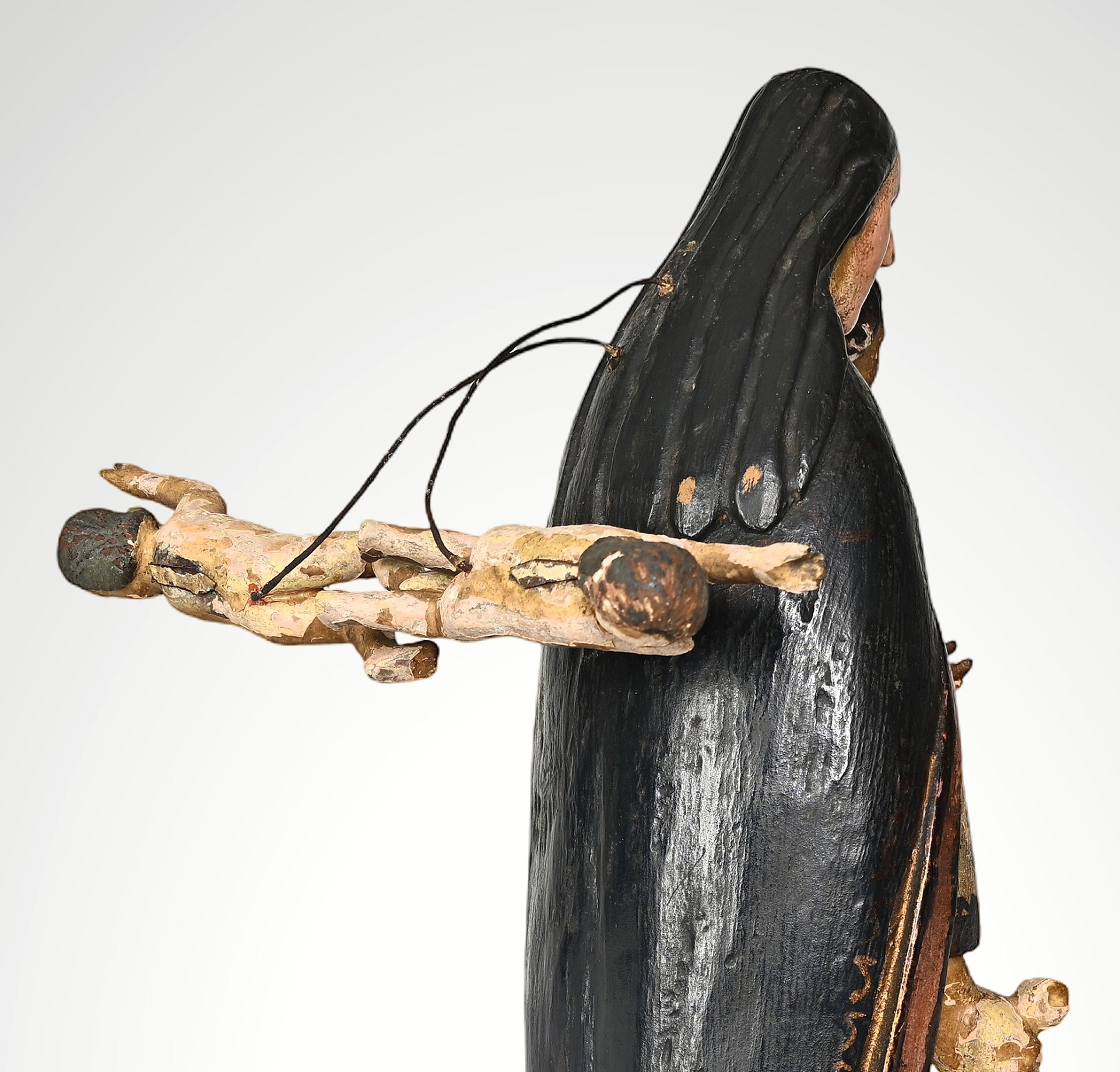
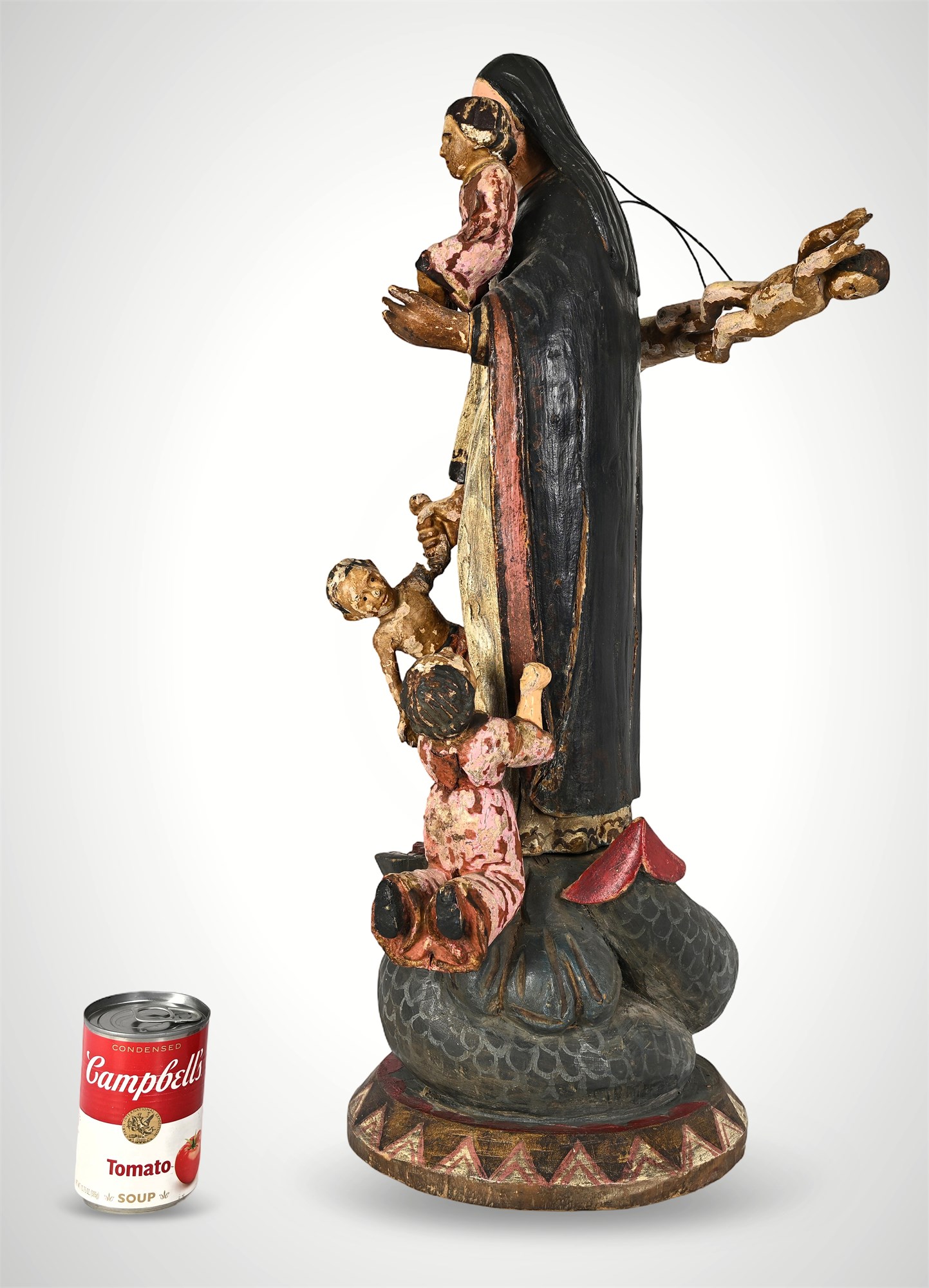
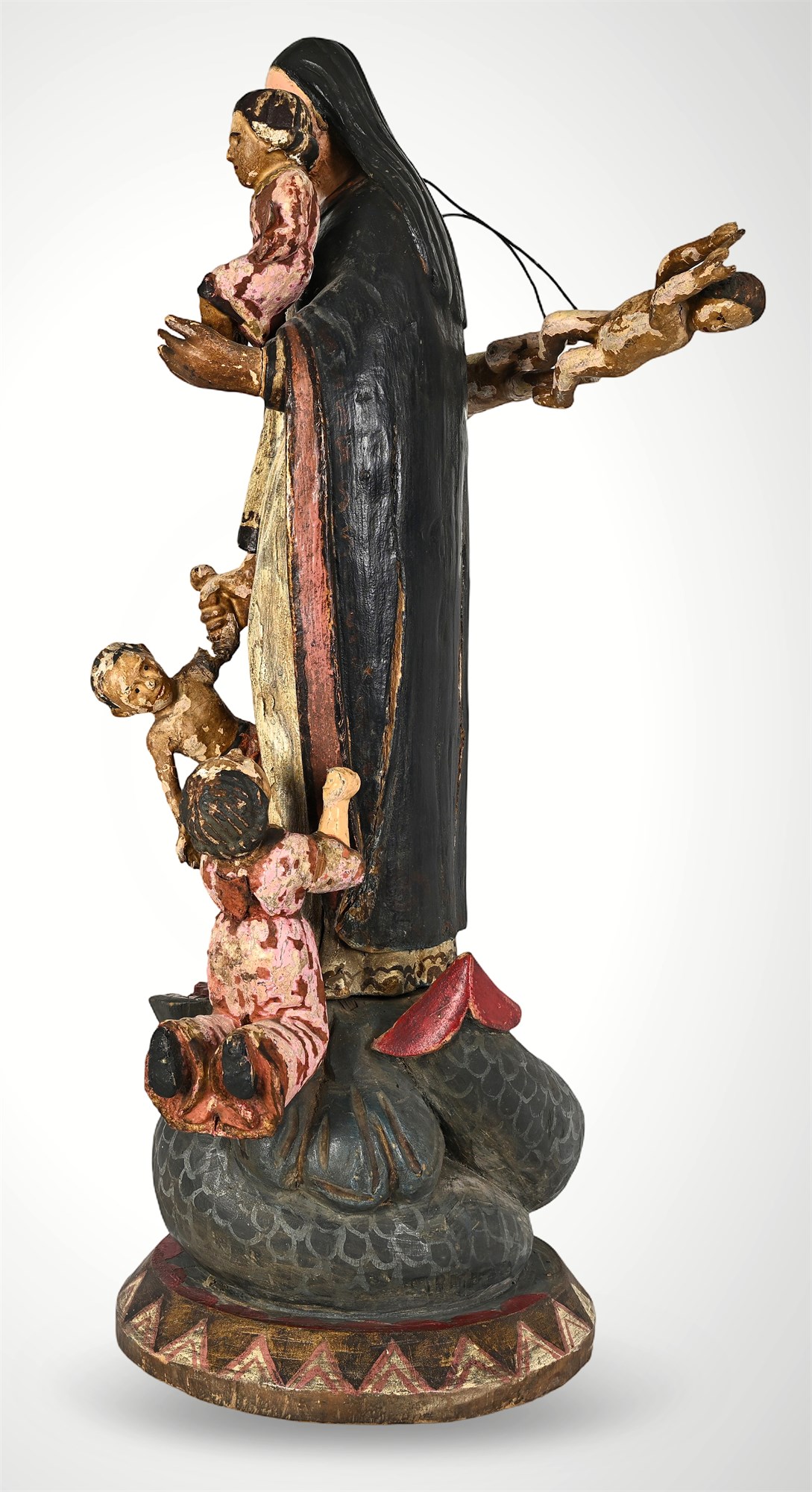
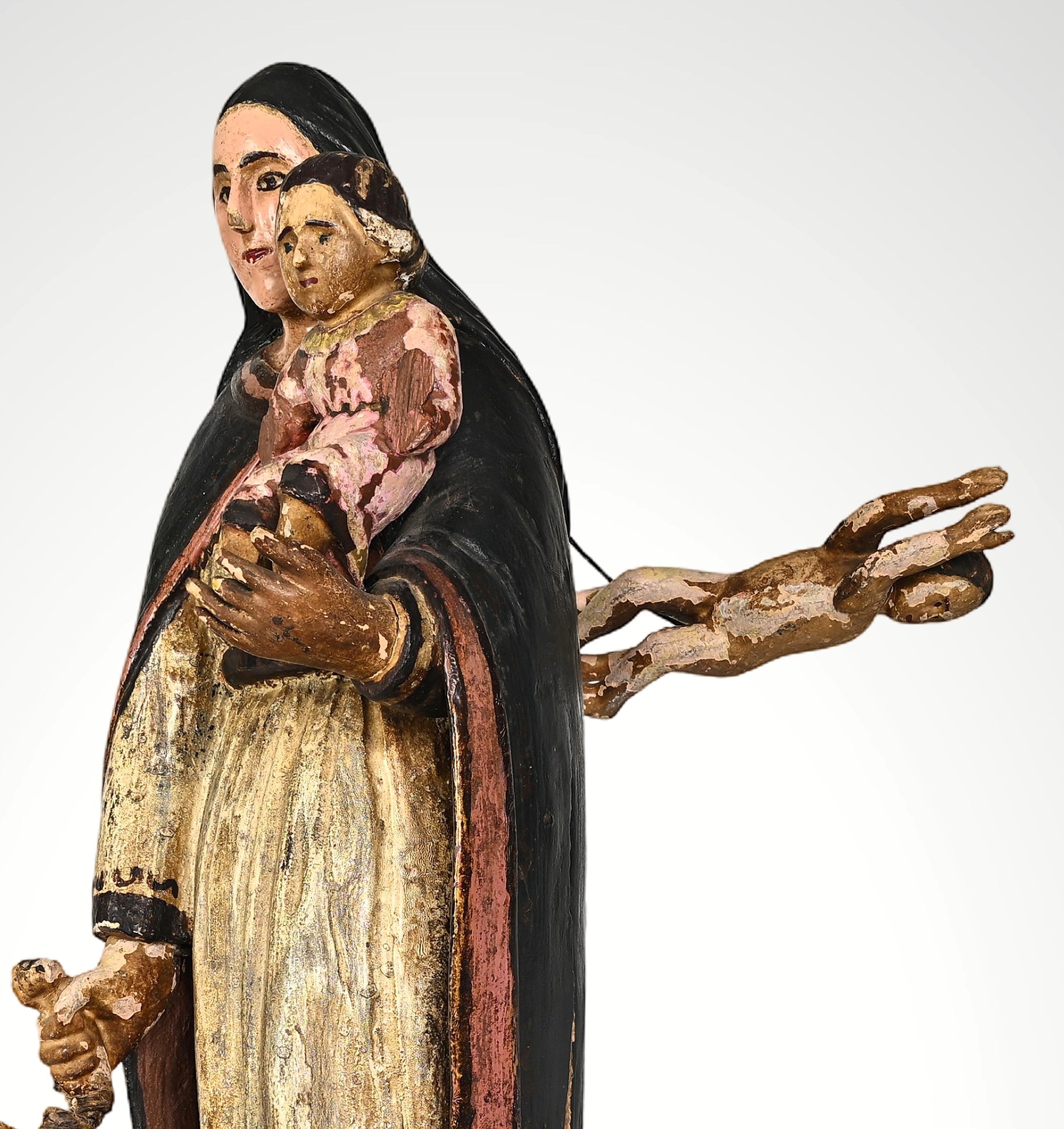
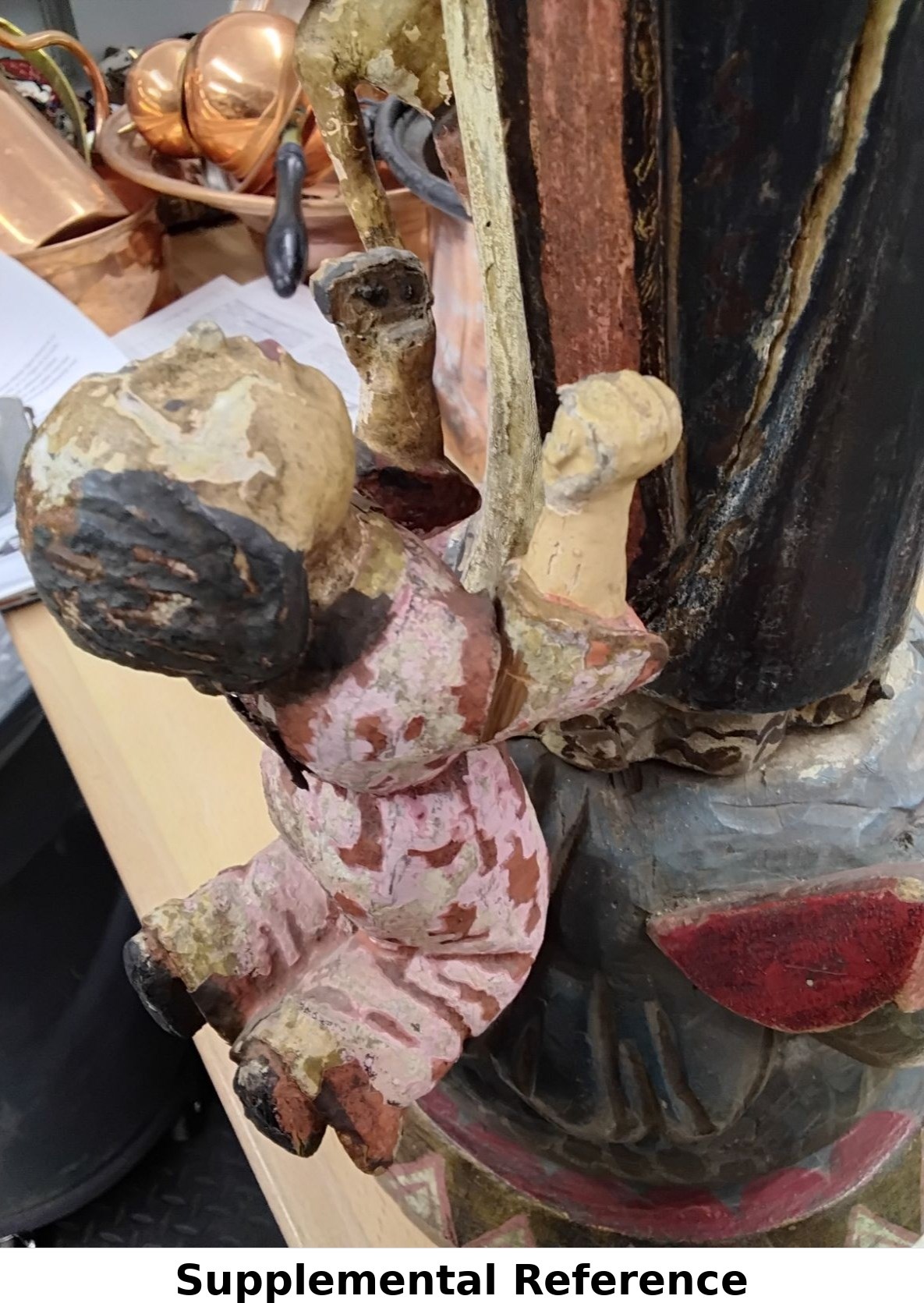
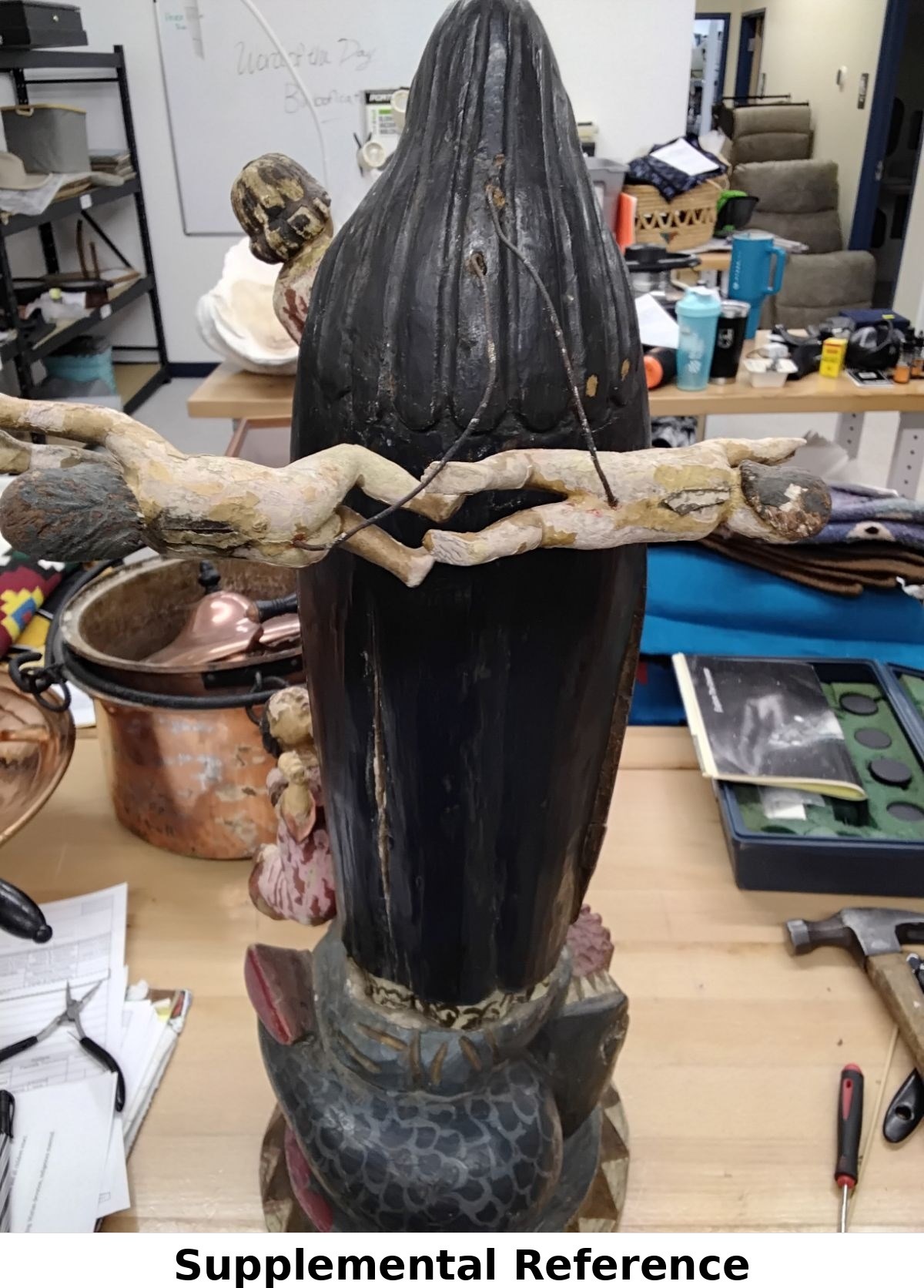
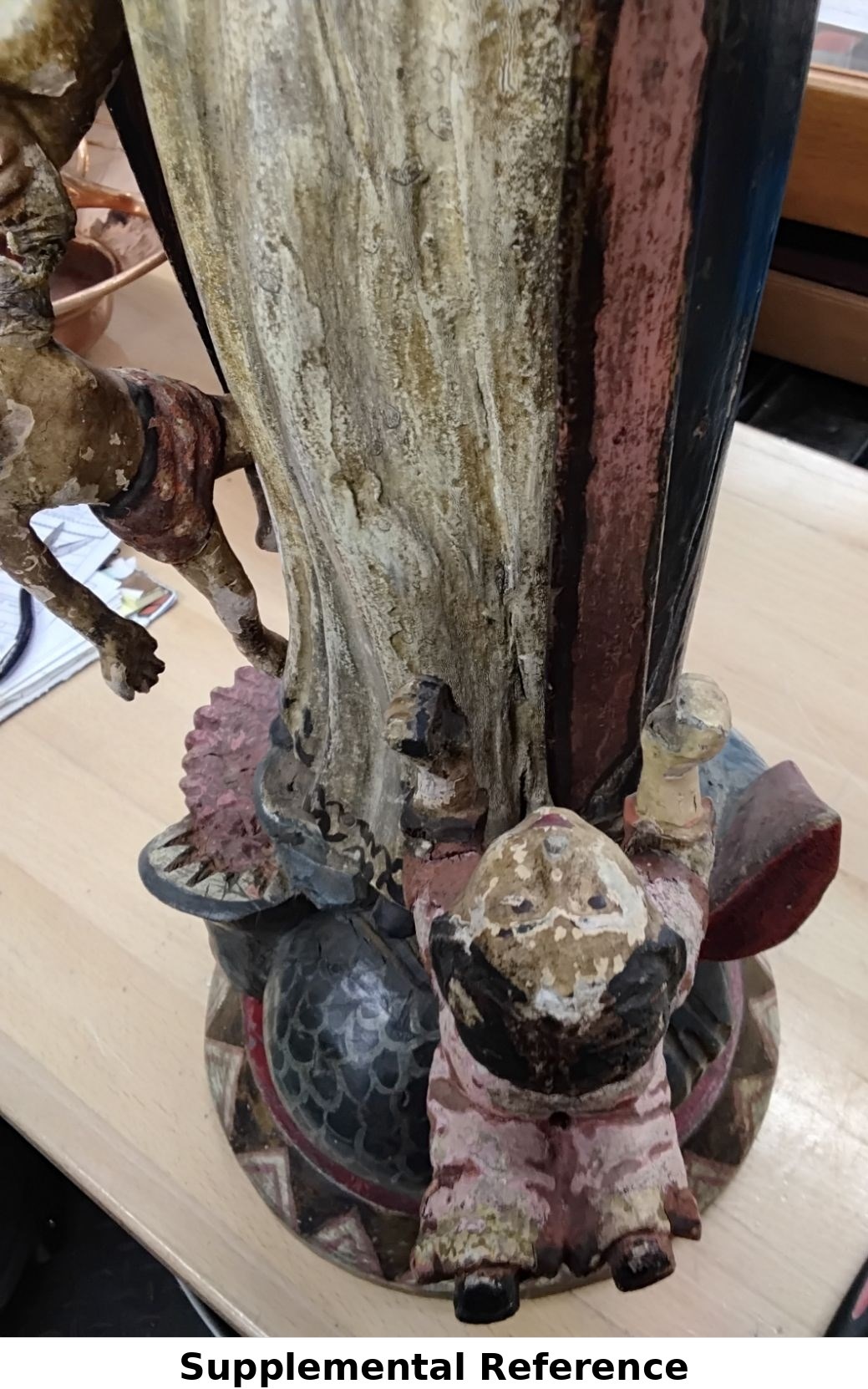
This is La Madre Protectora — also known as La Virgen de los Niños, Virgen de la Protección, Virgen de la Leche — a distinctly Mexican Marian type that the institutional Church never fully formalized and rural communities never stopped practicing. She stands 26 inches tall in a long black mantle over a cream and gold inner garment with a rose-red accent stripe: mourning colors, intercession colors, Nuestra Señora de los Dolores tonality rather than the triumphant solar imagery of Guadalupe. Her right arm extends outward in a gathering gesture; her left cradles a child against her chest. Three additional child figures cling to her body — one pressed to her side, one climbing toward her, one kneeling at the base near the serpent's head — and they represent exactly what they look like: humanity seeking shelter, the faithful reaching for the one thing standing between them and what threatens. The globe-form base beneath the serpent, painted with repeating geometric triangles in red and gold, declares her cosmic jurisdiction: she stands on the world, and the serpent is under both.
The carving is workshop quality — expressive, intentional, unpolished in the best sense — which is precisely what places it within the genuine folk devotional tradition rather than the tourist-market reproduction stream. The multi-figure composition required real planning; figures like the kneeling child at the base and the one climbing her side are attached secondary carvings integrated with care into a primary block. The earth-tone polychrome palette, the serpent's form and treatment, and the geometric base decoration are all consistent with the Puebla-region workshop tradition of the late 19th to early 20th century. There is no evidence of modern repainting, machine tooling, or materials. This is an object that was made to be prayed in front of, and it shows.
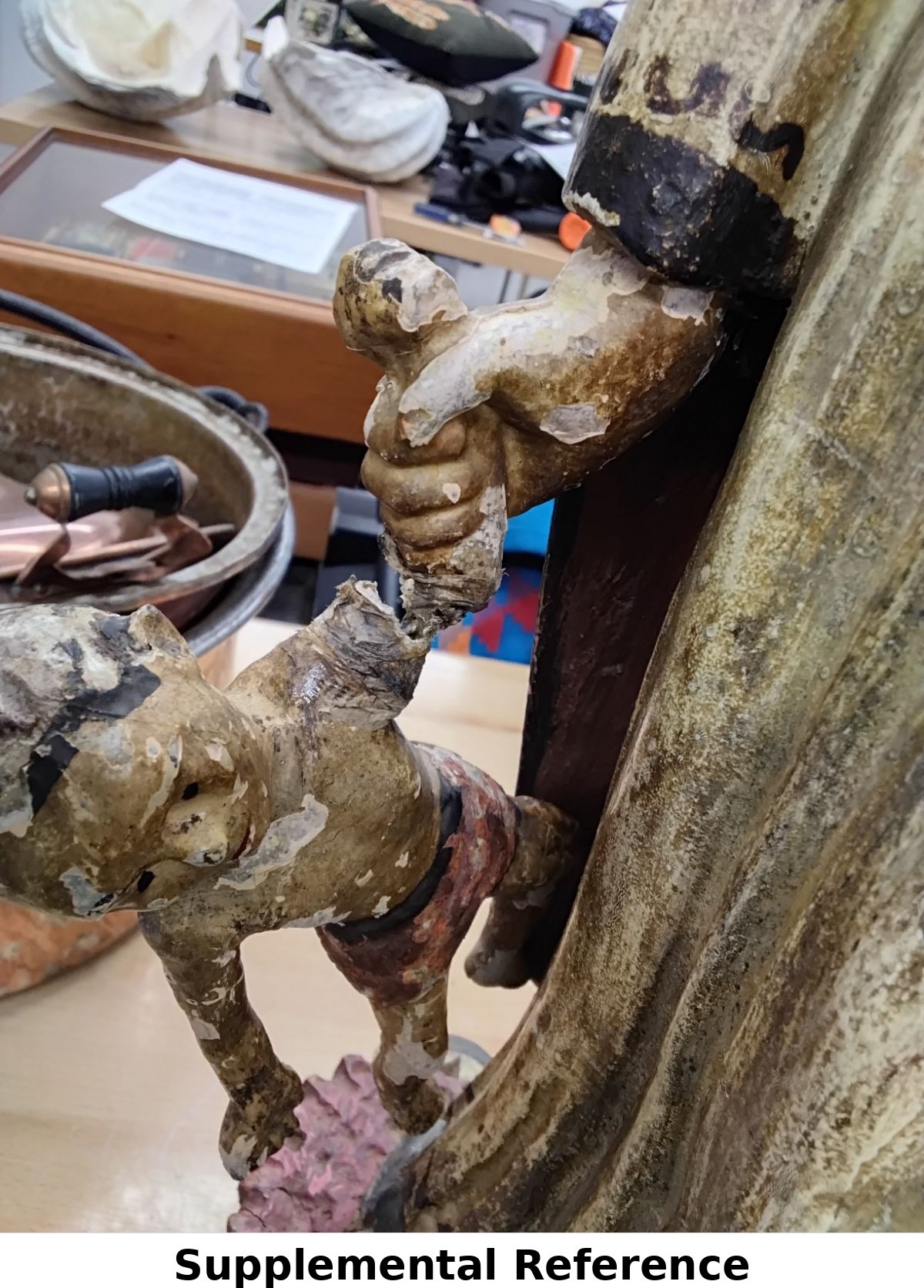
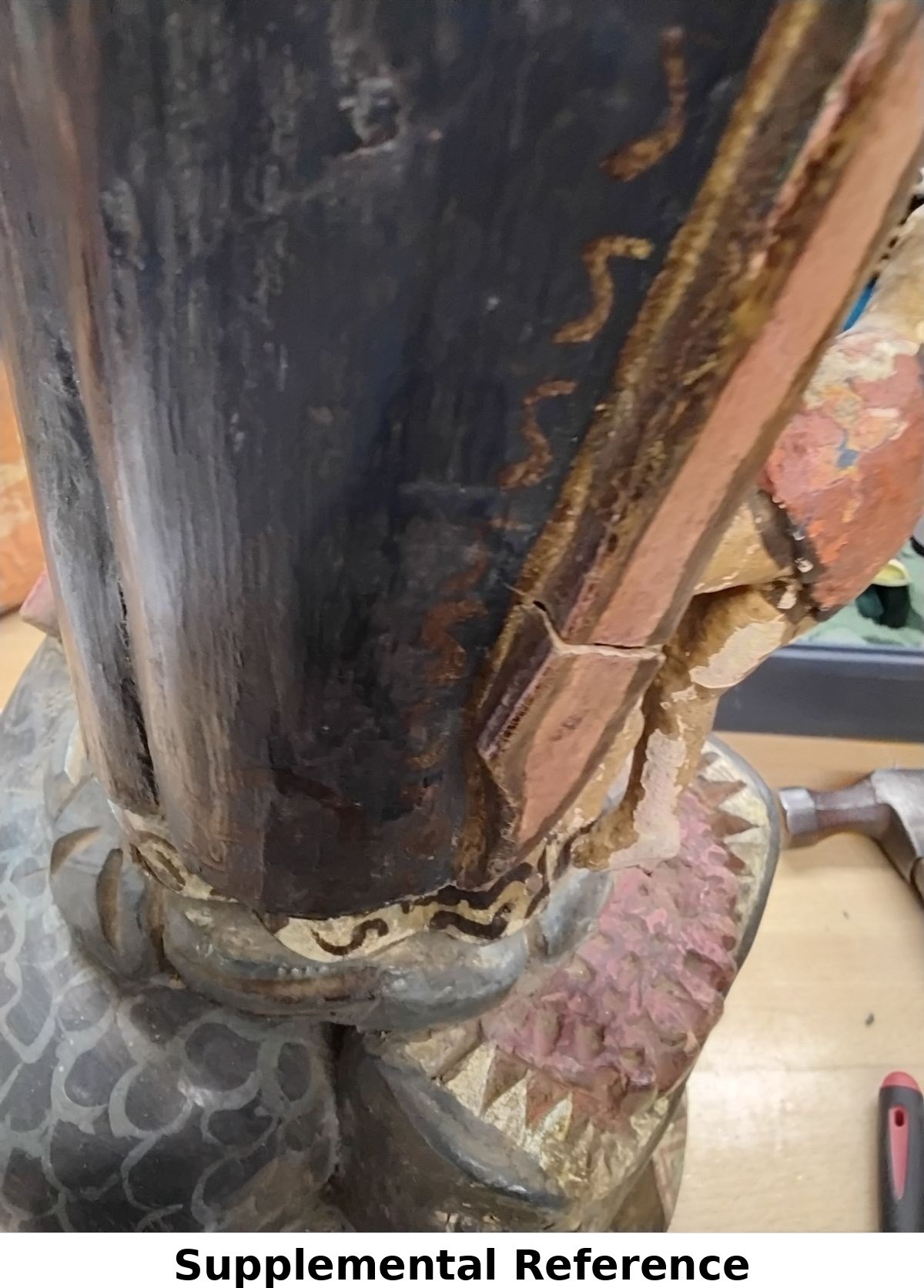
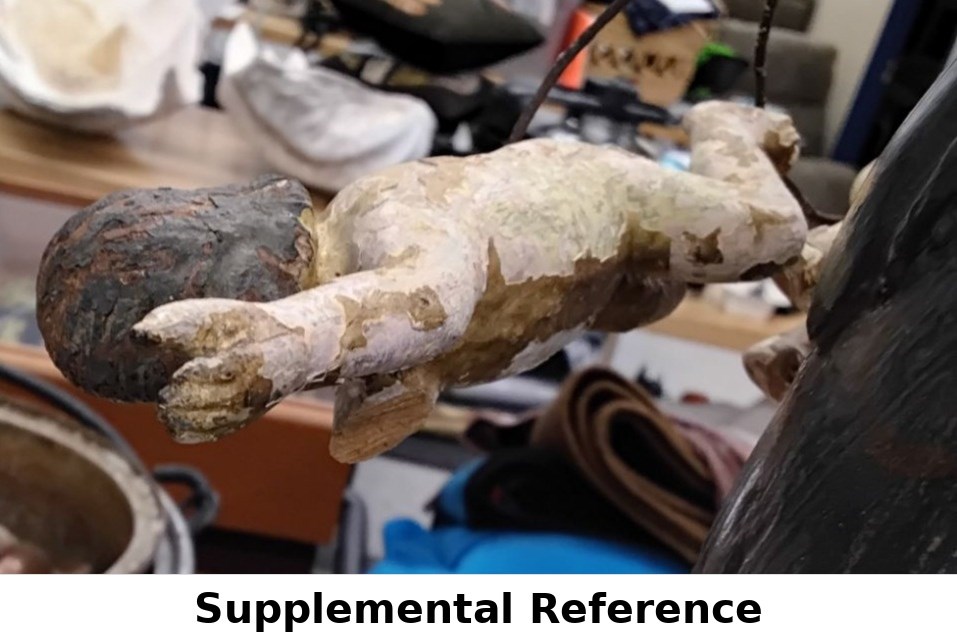
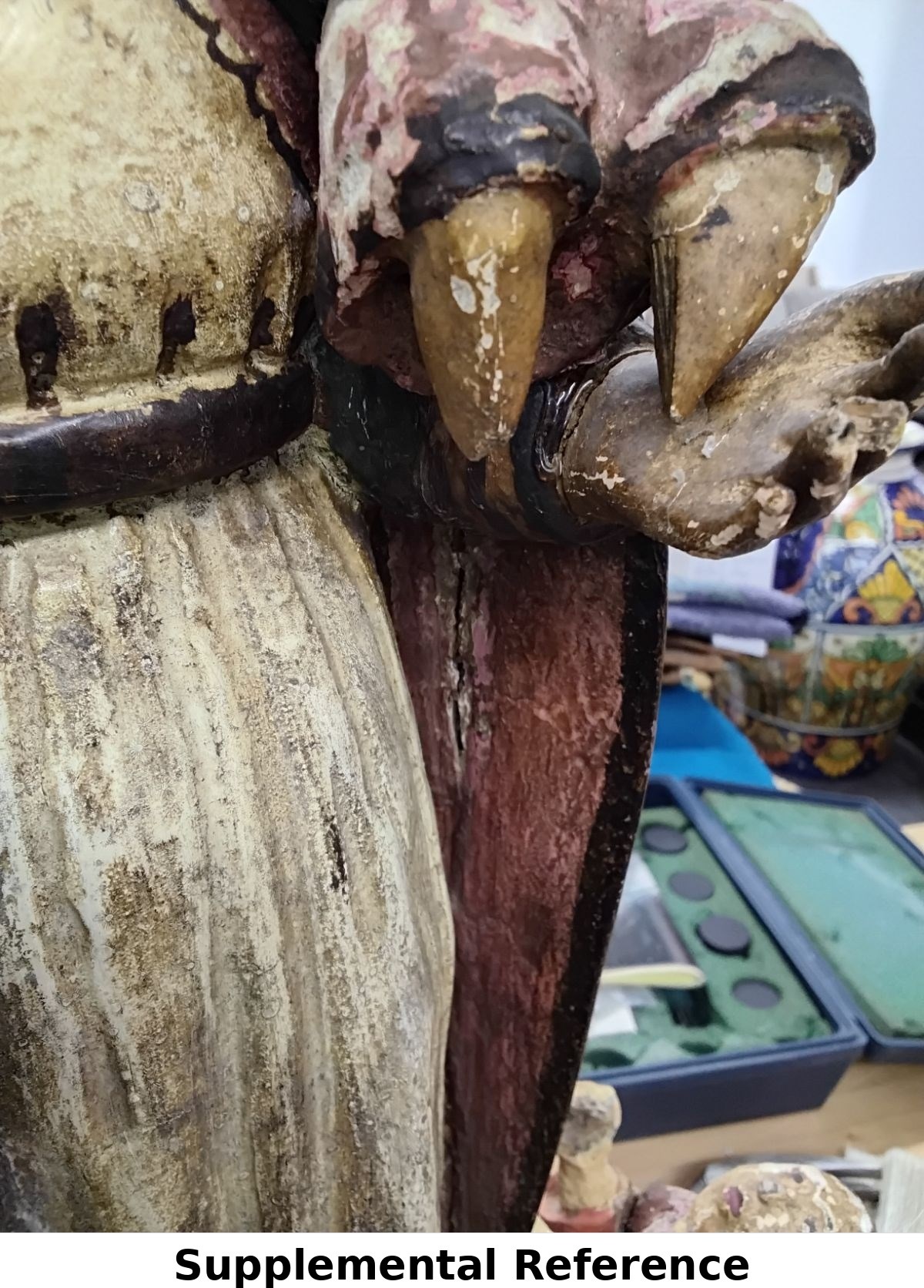
CONDITION Good overall, with age-appropriate wear consistent with active devotional use. Paint loss is concentrated on high points — the mantle edges, the extended arm, and the children's faces — with stable polychrome elsewhere and no evidence of modern repainting. The serpent base and primary figure are structurally intact. Some secondary figures have absent or loose limbs; the figures at the rear do not remain fully erect without support; the kneeling figure at the base appears to be missing a held object. Old repairs are present. No structural breaks to the primary figure.
DIMENSIONS / SPECIFICATIONS
- Height: 26 in.
- Width: 10 in.
- Depth: 12 in.
- Weight: 13 lbs
- Iconographic Type: Madre Protectora / Virgen de los Niños / Virgen de la Protección
- Origin: Central Mexico, attributed (Puebla / Tlaxcala / Hidalgo region)
- Date: ca. 1880–1930
- Materials: Carved wood, gesso, polychrome pigment
- Construction: Primary block with attached secondary figures; no machine tooling; no modern materials
- Secondary figures: 3 child figures (one held, two clinging/kneeling)
- Base: Coiled serpent with open mouth and red painted eye; globe-form sphere; circular platform with painted geometric border
- Authenticity: Genuine devotional object; not a tourist reproduction
Campbell's Soup Can (4" H) Shown for Scale