Barro Betus Folk Art Bus — J.J. Ramos Medrano, Tonalá — Rancho La Cruz View Watchlist >
- Winning Bid: $75.99
- 30 Bid(s) View Bid History
- High Bidder: SkeeterG
Seller Accepts Credit Cards
Payment and pickup instructions will be available on your invoice (under "My Account") at the conclusion of this auction.
Lot # D128
System ID # 27441780
Start Date
End Date
1 Watching
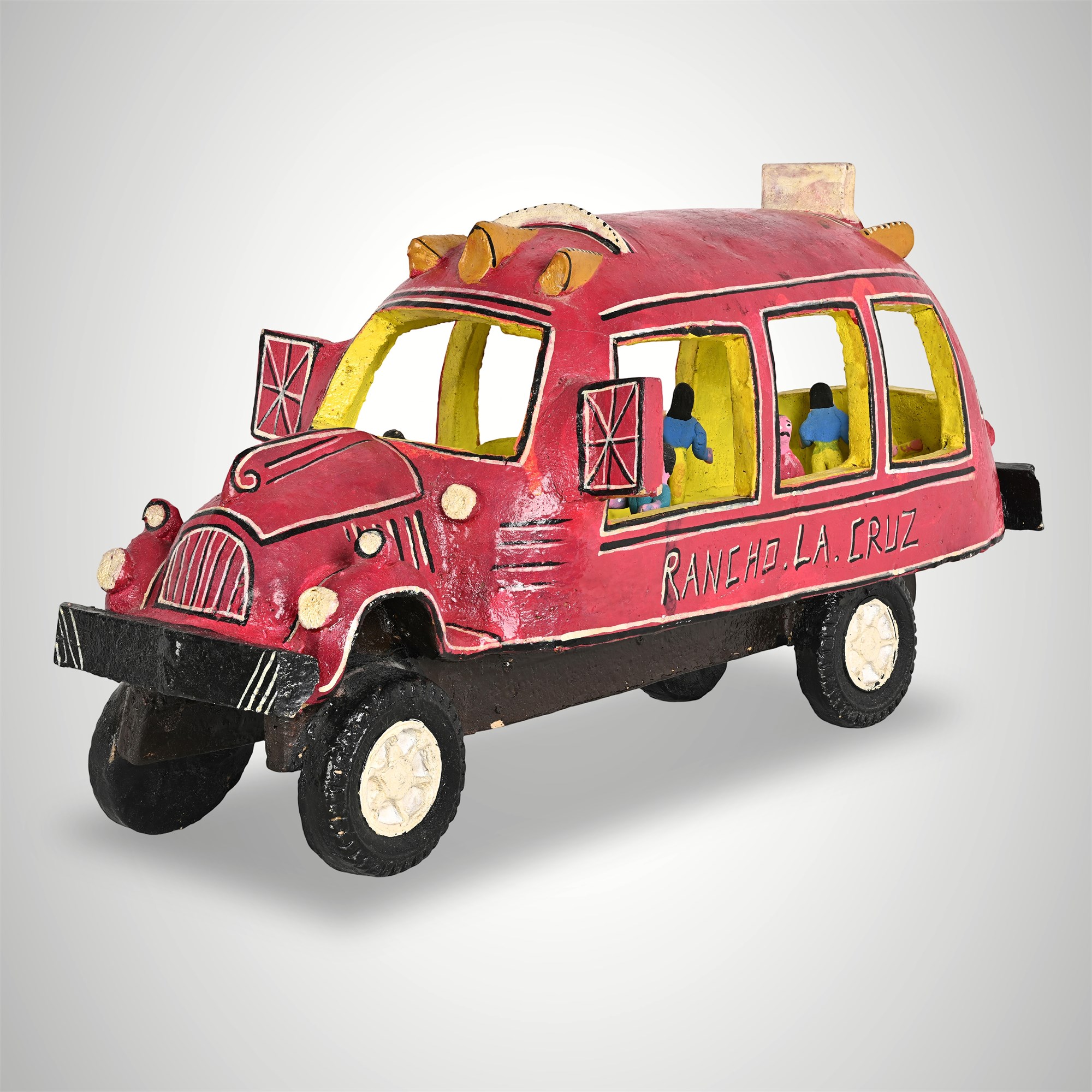
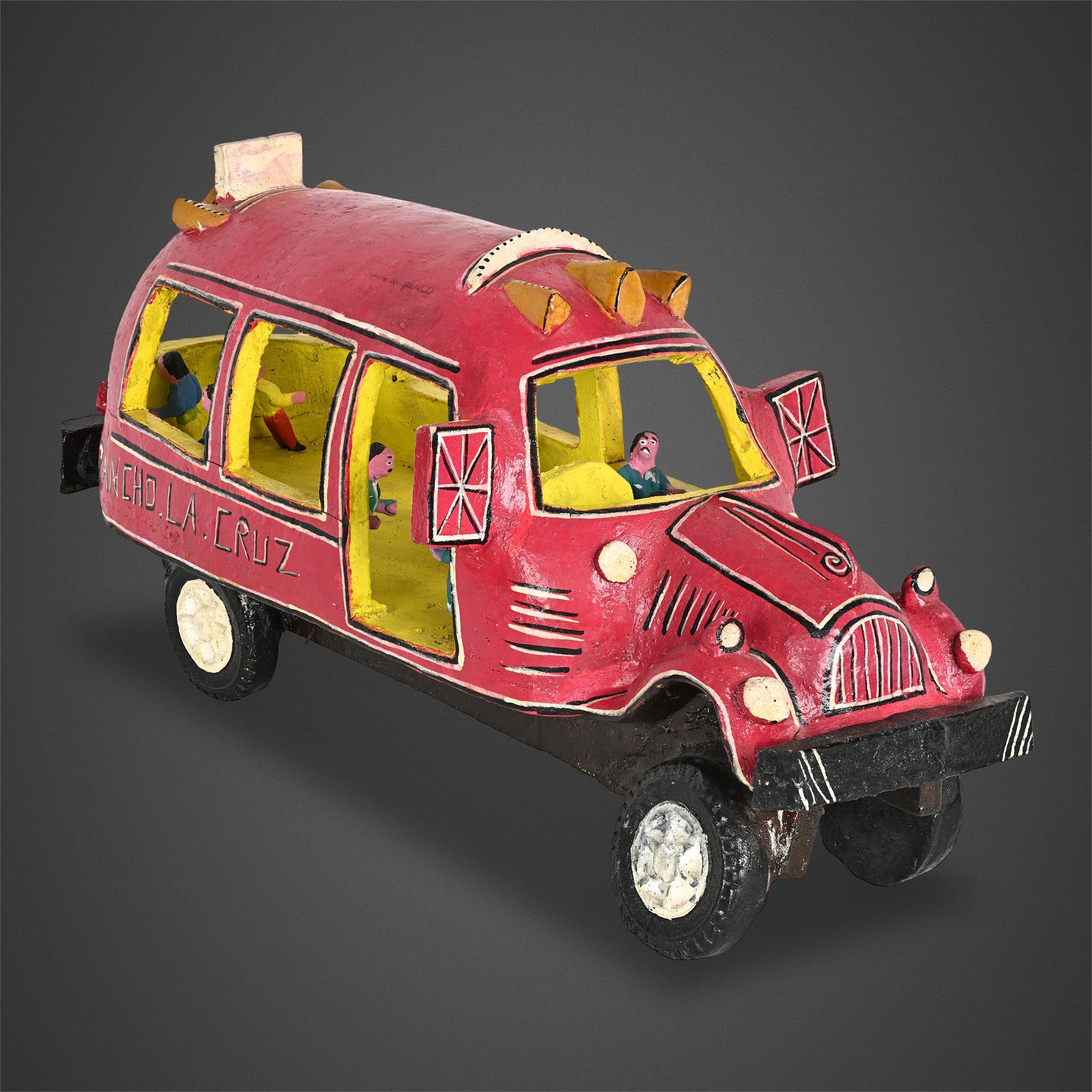
Barro Betus Folk Art Bus — J.J. Ramos Medrano, Tonalá — Rancho La Cruz
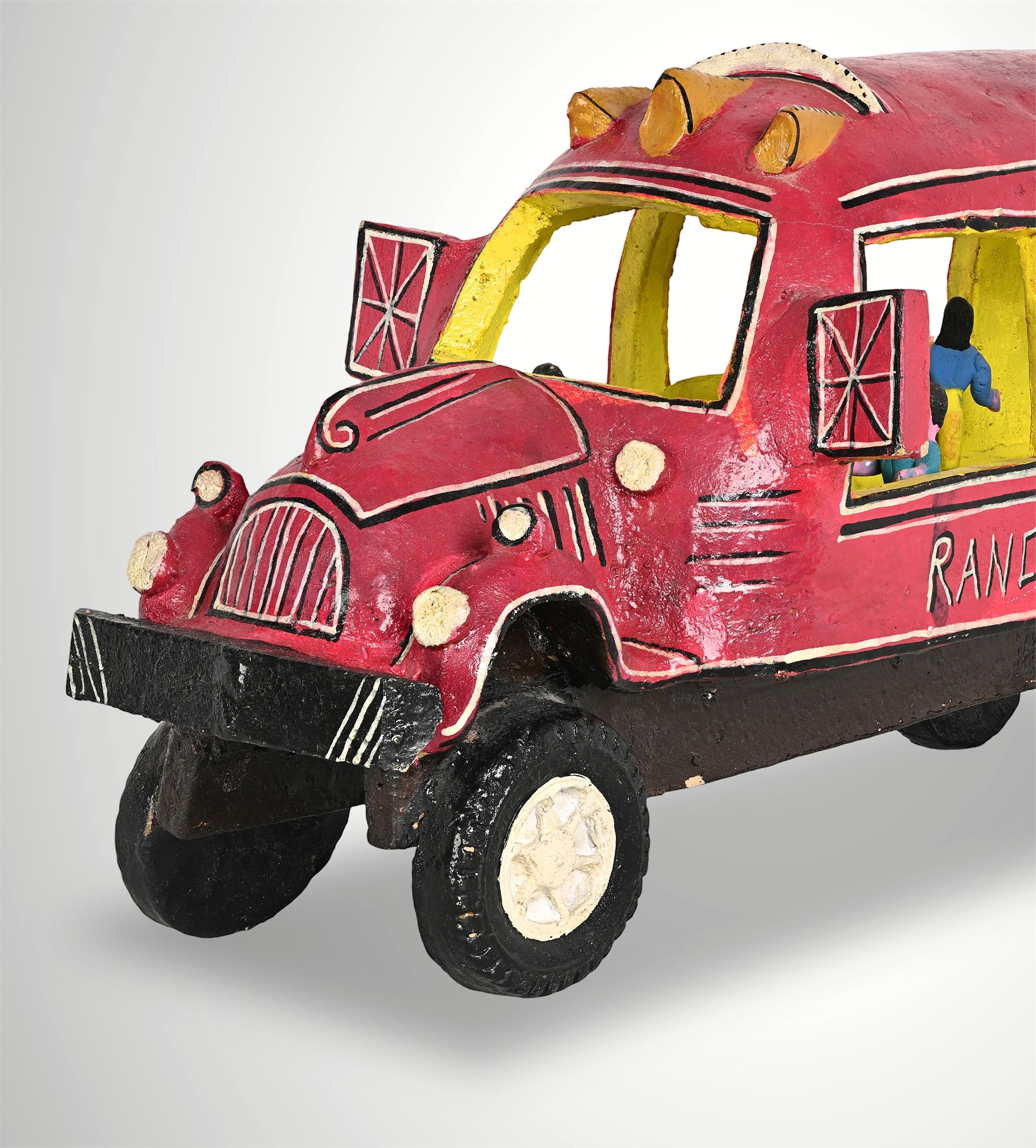
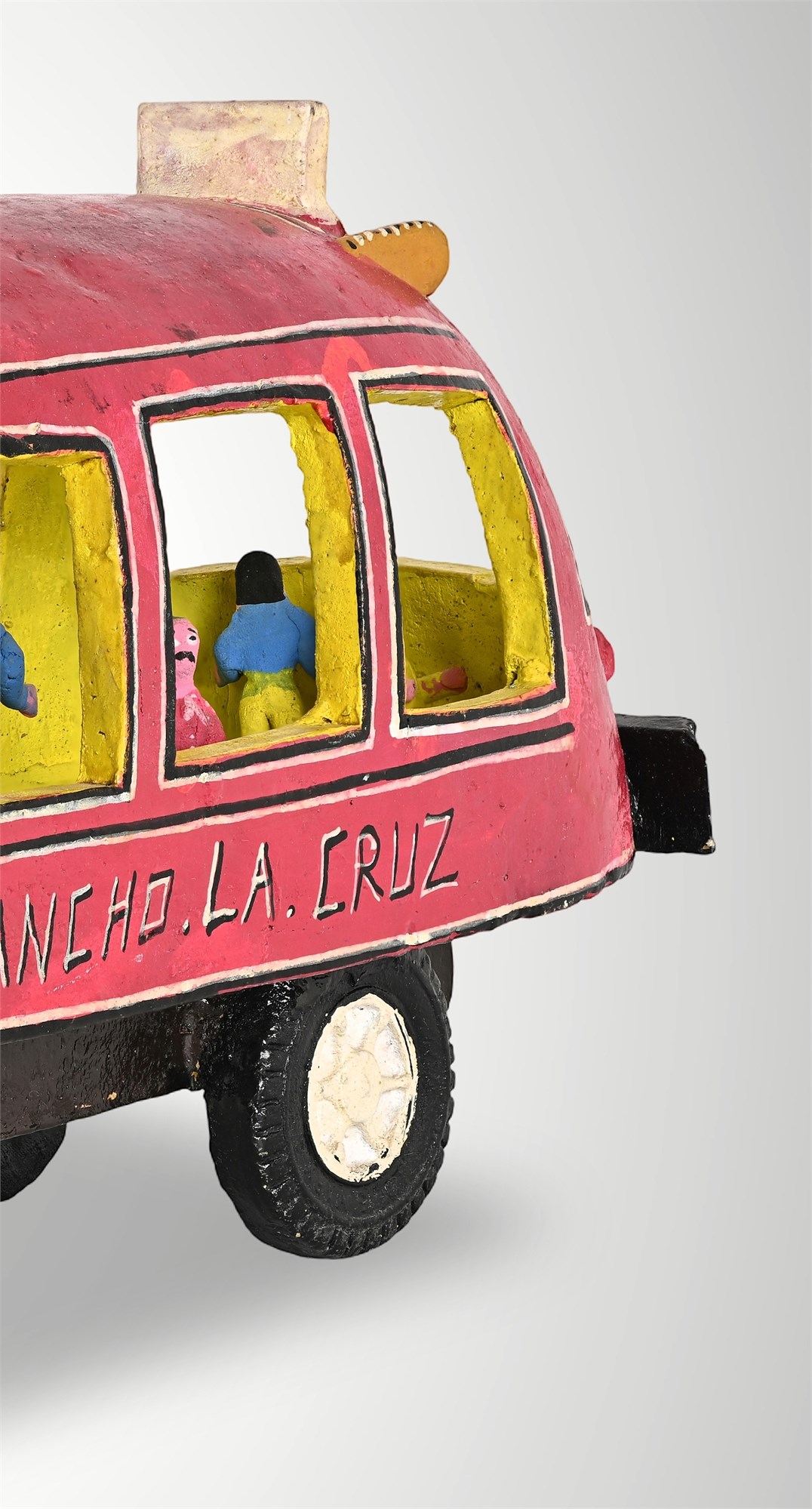
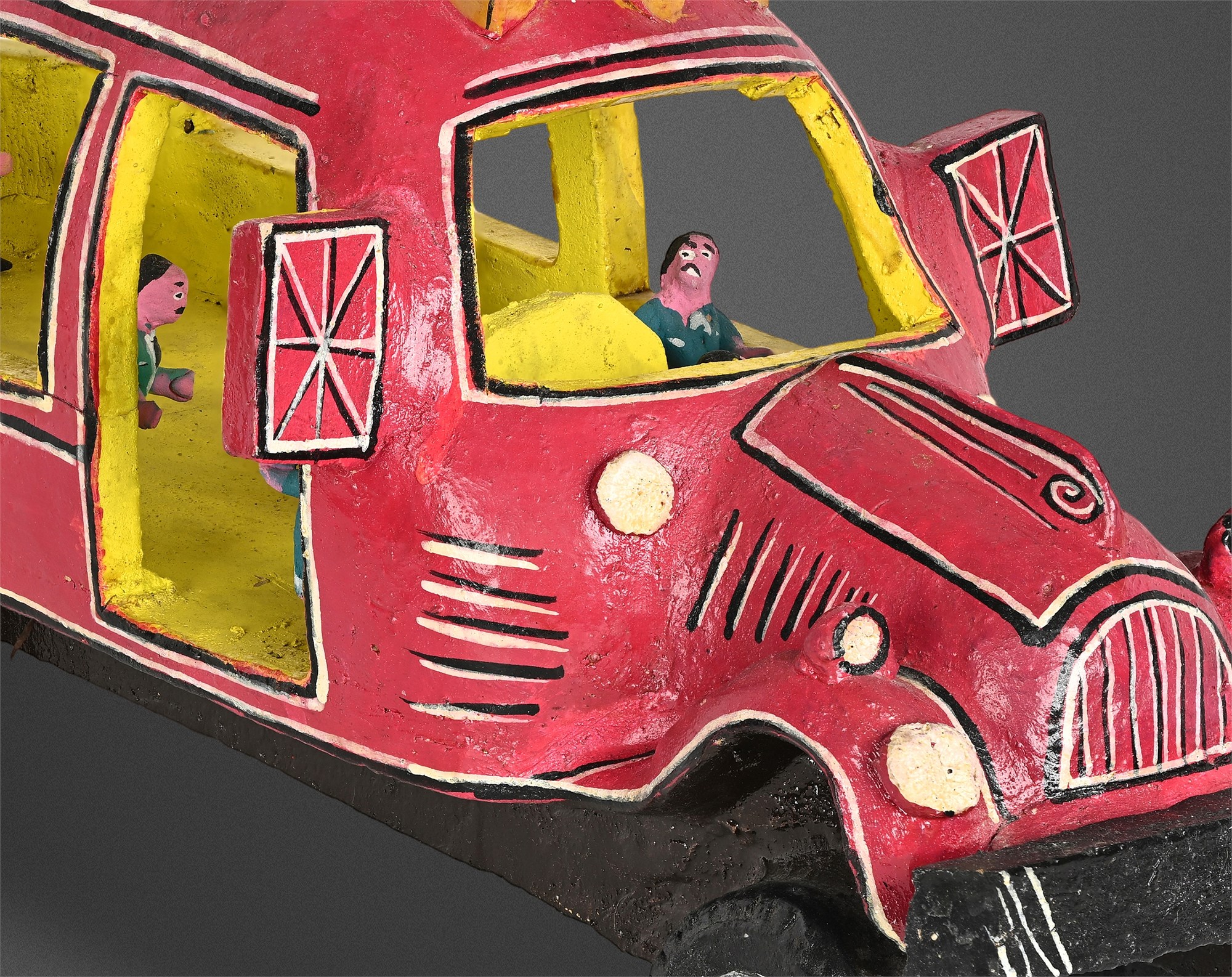
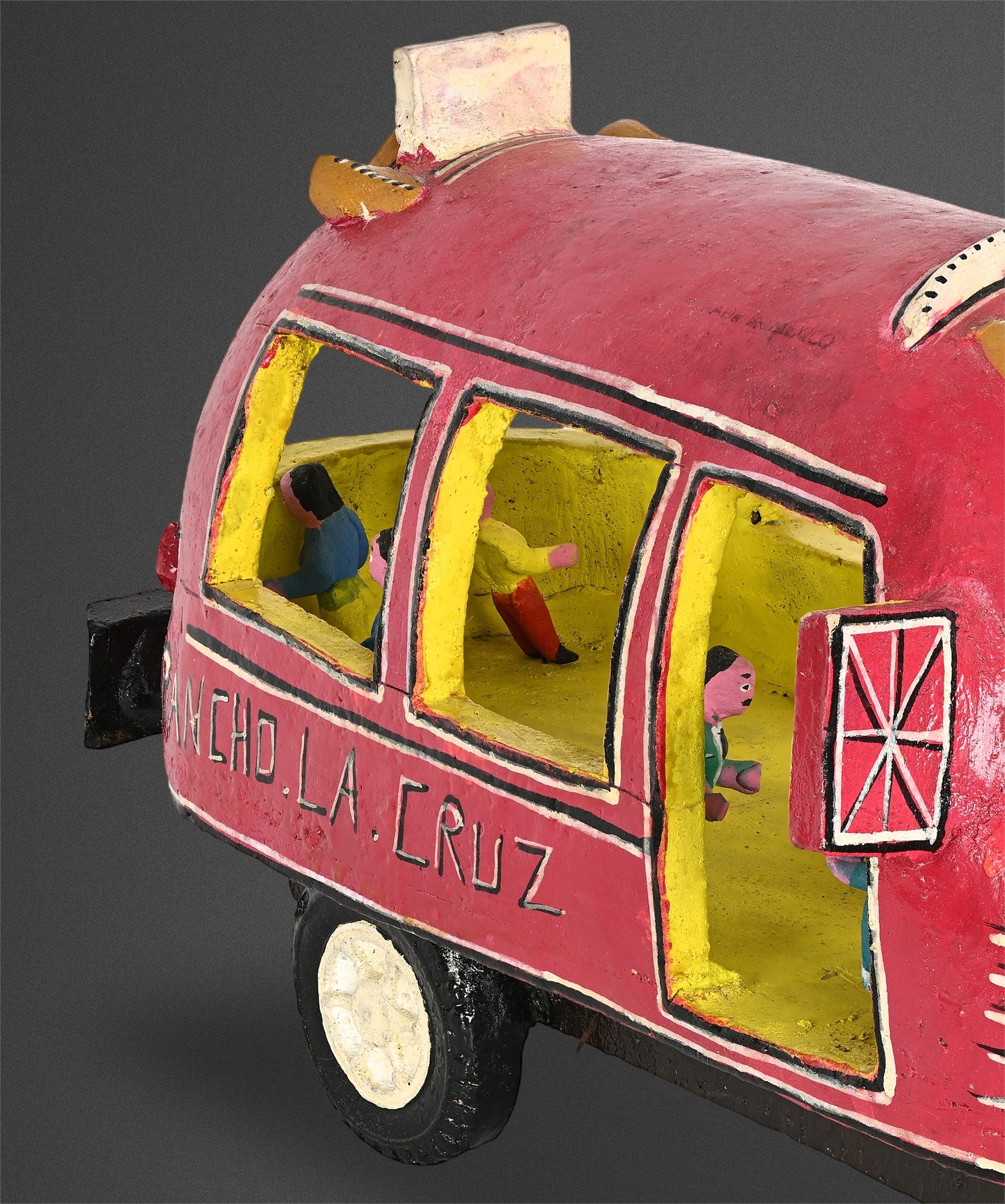
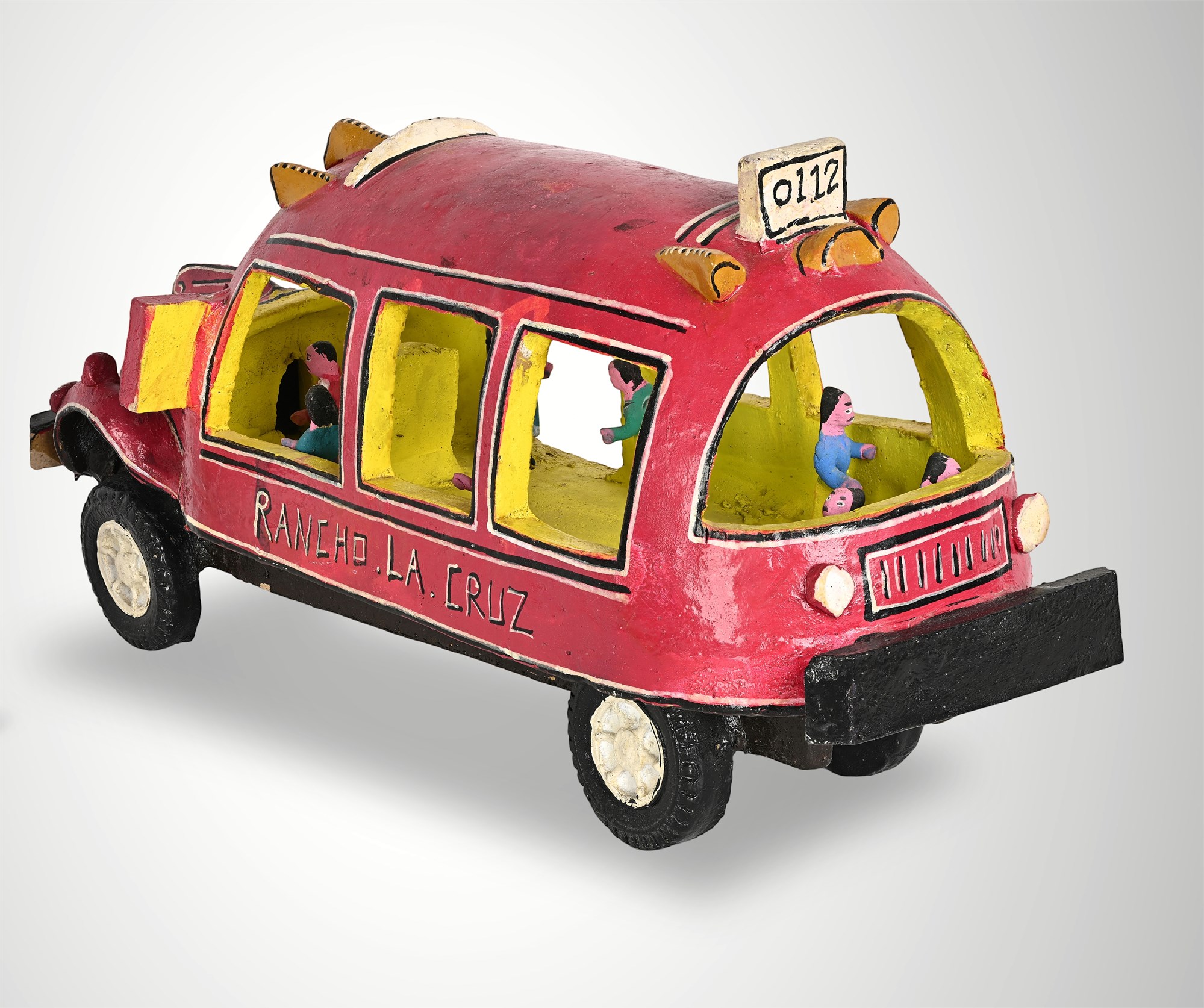
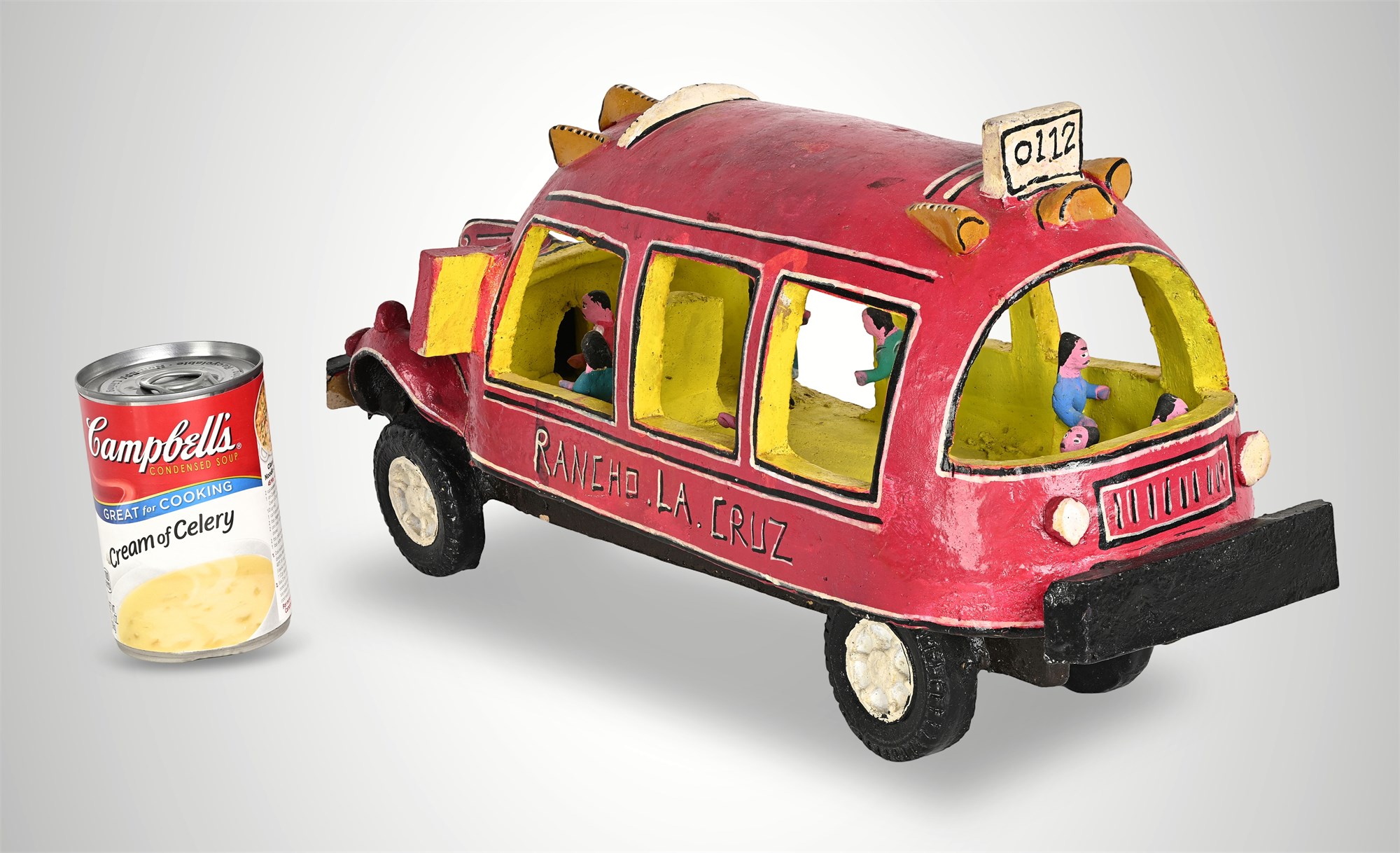
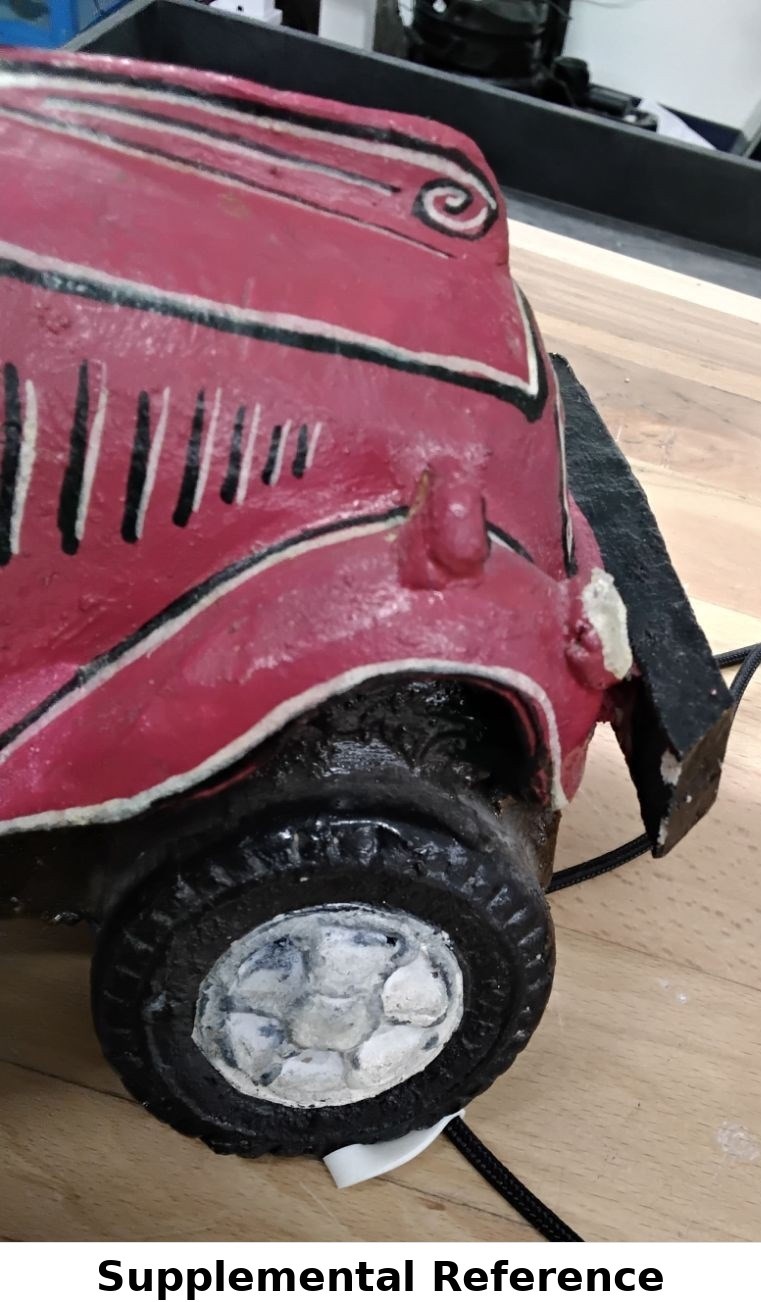
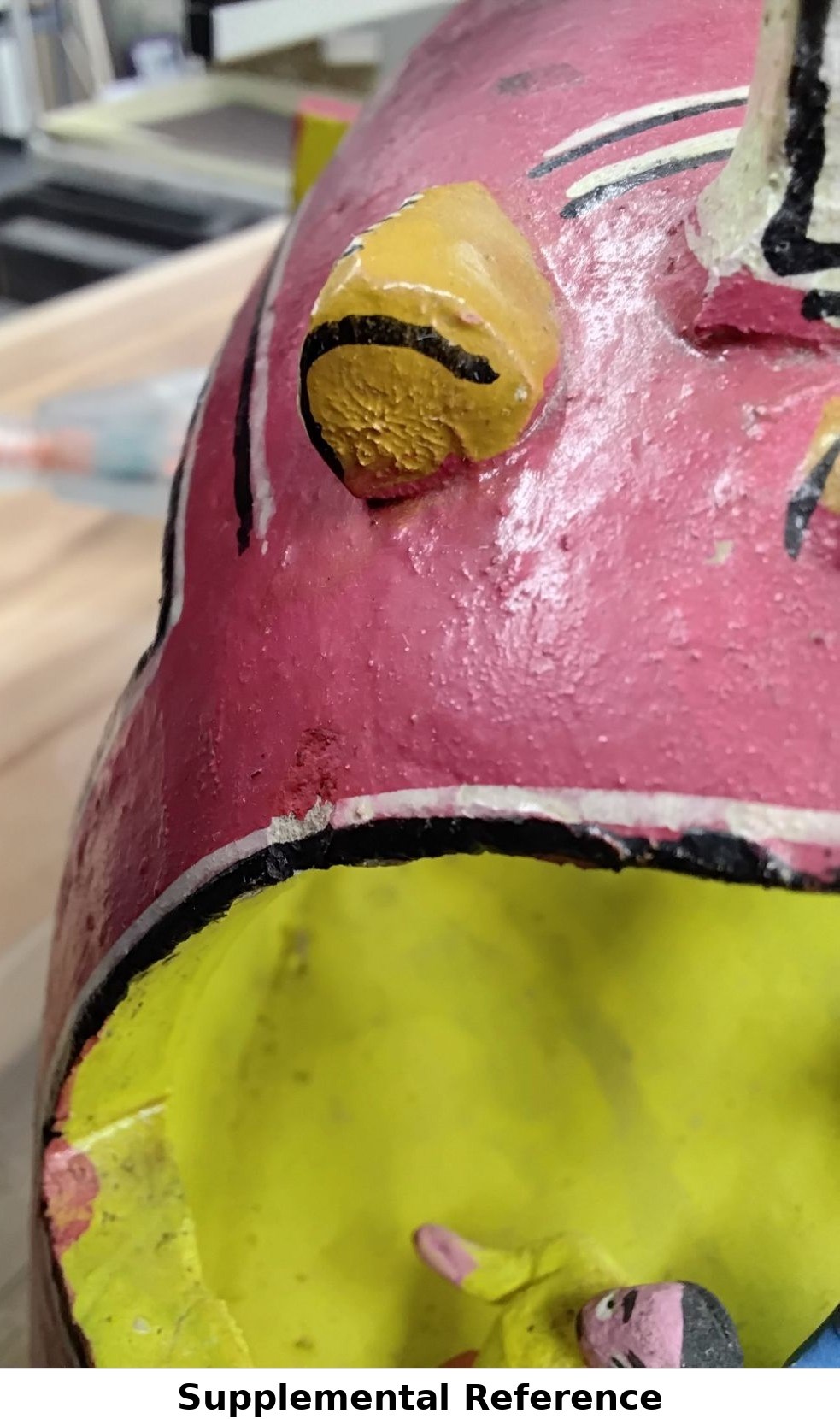
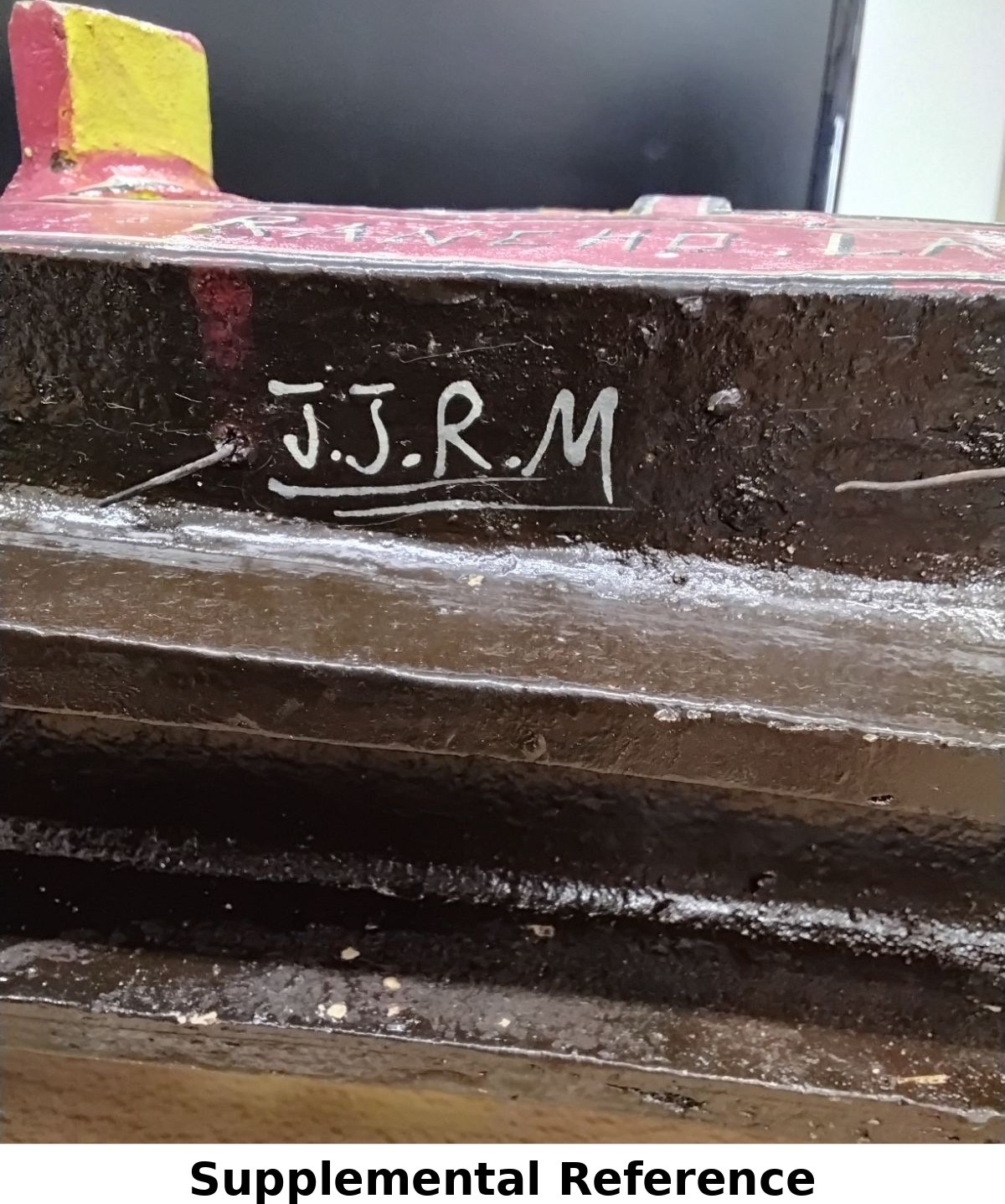
A hand-built barro betus camión by Juan José Ramos Medrano (J.J.R.M.) of Santa Cruz de las Huertas, Tonalá, Jalisco — grandson of Candelario Medrano (1918–1986), the self-taught master whose vehicle and figurative sculptures entered museum and institutional collections across Mexico and the United States. The form follows the iconic rural bus of the Mexican countryside, faithfully rendered in low-fired earthenware and finished with birch resin oil (aceite de betus), which imparts the tradition's characteristic warm luster. Crimson and magenta exterior paint is outlined throughout in bold black linework defining the stylized grille, scroll hood detail, painted headlamps, and X-patterned shuttered end windows. "RANCHO LA CRUZ" is lettered freehand along both sides — the named route of a real community outside Tonalá — and the rooftop sign reads "0112," the bus route number. Eight hand-modeled polychrome figures populate the bright yellow interior: a driver and seven passengers, each individually sculpted and painted in primary colors. Signed "J.J.R.M." in paint on the underside of the chassis.
Ramos Medrano's work is held in the permanent collection of the Mexic-Arte Museum in Austin, Texas, and has been exhibited in institutional surveys of Tonalá ceramics. His output is deliberately small — pieces are made in limited numbers and seldom appear on the open market. One specialist in Mexican folk ceramics, shown a J.J.R.M. work without a label, attributed it immediately to Candelario; only the initials on the base gave the generation away. This piece was acquired directly from the artist circa 1985, placing it among his early mature work.
CONDITION
Good; no remarkable damage. One roof horn ornament carries a chip with minor associated paint loss at its tip, visible on close inspection. Scattered light surface nicks to the exterior paint consistent with age and handling.
DIMENSIONS / SPECIFICATIONS
- Height: 8½"
- Length: 16¾"
- Width: 6"
- Weight: 5 lbs 6 oz
- Medium: Barro betus (low-fired earthenware, birch resin oil finish)
- Figures: 8 hand-modeled polychrome figures (driver + 7 passengers)
- Inscription (sides): RANCHO LA CRUZ
- Inscription (roof): 0112
- Signature: J.J.R.M. (painted, underside of chassis)
- Artist: Juan José Ramos Medrano, Santa Cruz de las Huertas, Tonalá, Jalisco, Mexico
- Campbell's Soup Can (4" H) Shown for Scale
About the Artist
Juan José Ramos Medrano — who signs his work J.J.R.M. — works from a home studio in Santa Cruz de las Huertas, a small community on the outskirts of Tonalá, Jalisco, at the heart of Mexico's most storied ceramics region. He is the grandson of Candelario Medrano (1918–1986), the self-taught master whose fantastical clay sculptures entered the Nelson Rockefeller Collection and the permanent holdings of museums across Mexico, the United States, and Europe. Juan José carries that inheritance directly — one expert in the field, shown his work without the signature, attributed it immediately to Candelario. Only the initials on the base gave the generation away.
His medium is barro betus: low-fired earthenware hand-kneaded, painted, and finished with a coating of birch resin oil that gives the surface its characteristic warm luster. The process is unhurried and deeply physical — the kiln is prepared days in advance, fired slowly to protect the fragile clay body. Juan José is not a prolific artist. Pieces are made in small numbers, and visits to his studio often find little available. When work does surface in the market, collectors who know the tradition move quickly.
His subjects draw from the Nagual — the shape-shifting supernatural figure of Mexican folk belief, a being that moves fluidly between animal, human, and fantastical forms. This animating idea gives his sculptures their edge: creatures that transgress natural categories, where anatomy is rearranged not by accident but by intent. His work has been recognized in national competitions and is held in the permanent collection of the Mexic-Arte Museum in Austin, Texas.