Carl Faber Abstract Oil on Masonite Framed View Watchlist >
- Winning Bid: $331.00
- 59 Bid(s) View Bid History
- High Bidder: AnthonyIPA
Seller Accepts Credit Cards
Payment and pickup instructions will be available on your invoice (under "My Account") at the conclusion of this auction.
Lot # C983
System ID # 27408926
Start Date
End Date
9 Watching
Carl Faber Abstract Oil on Masonite Framed
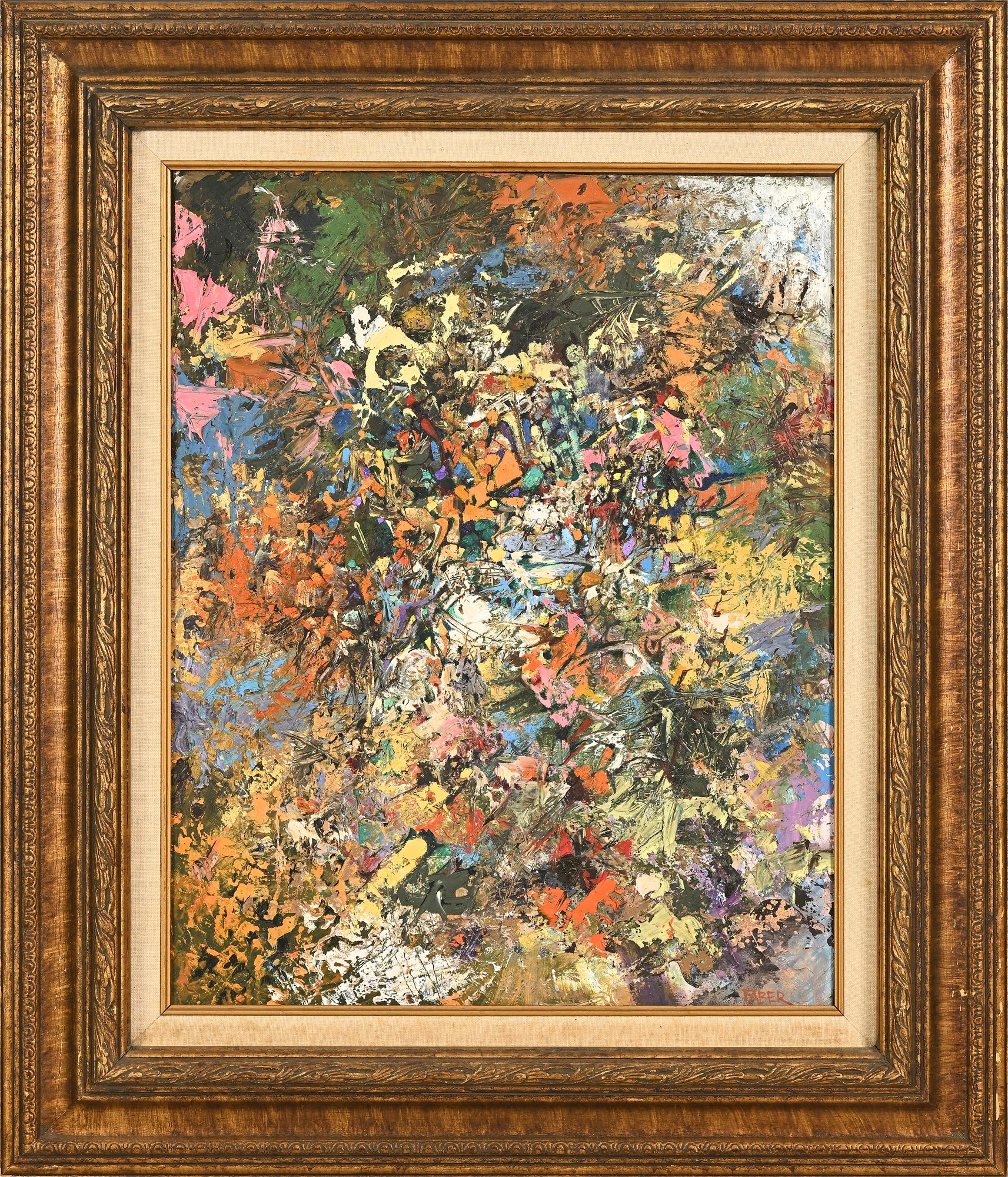
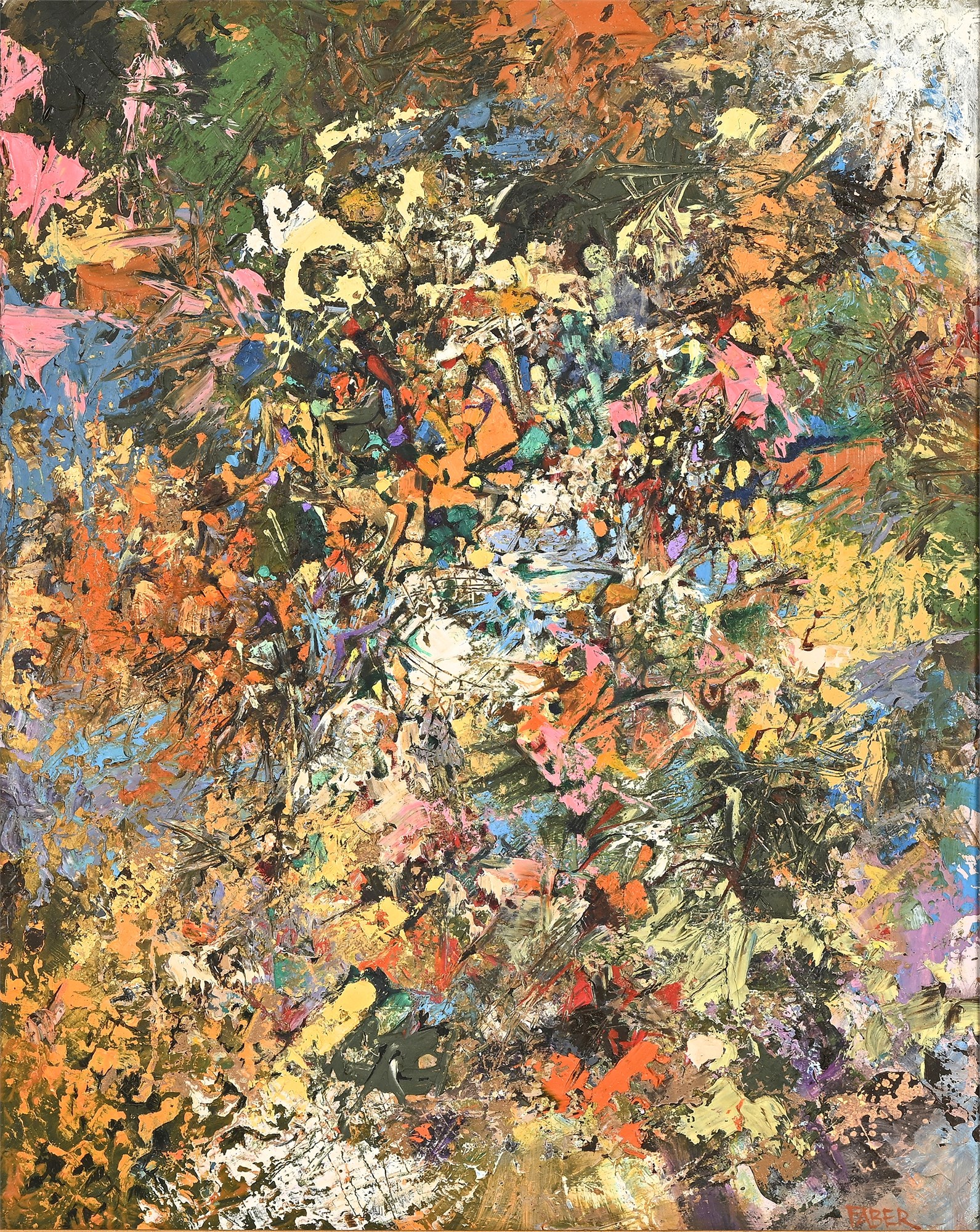
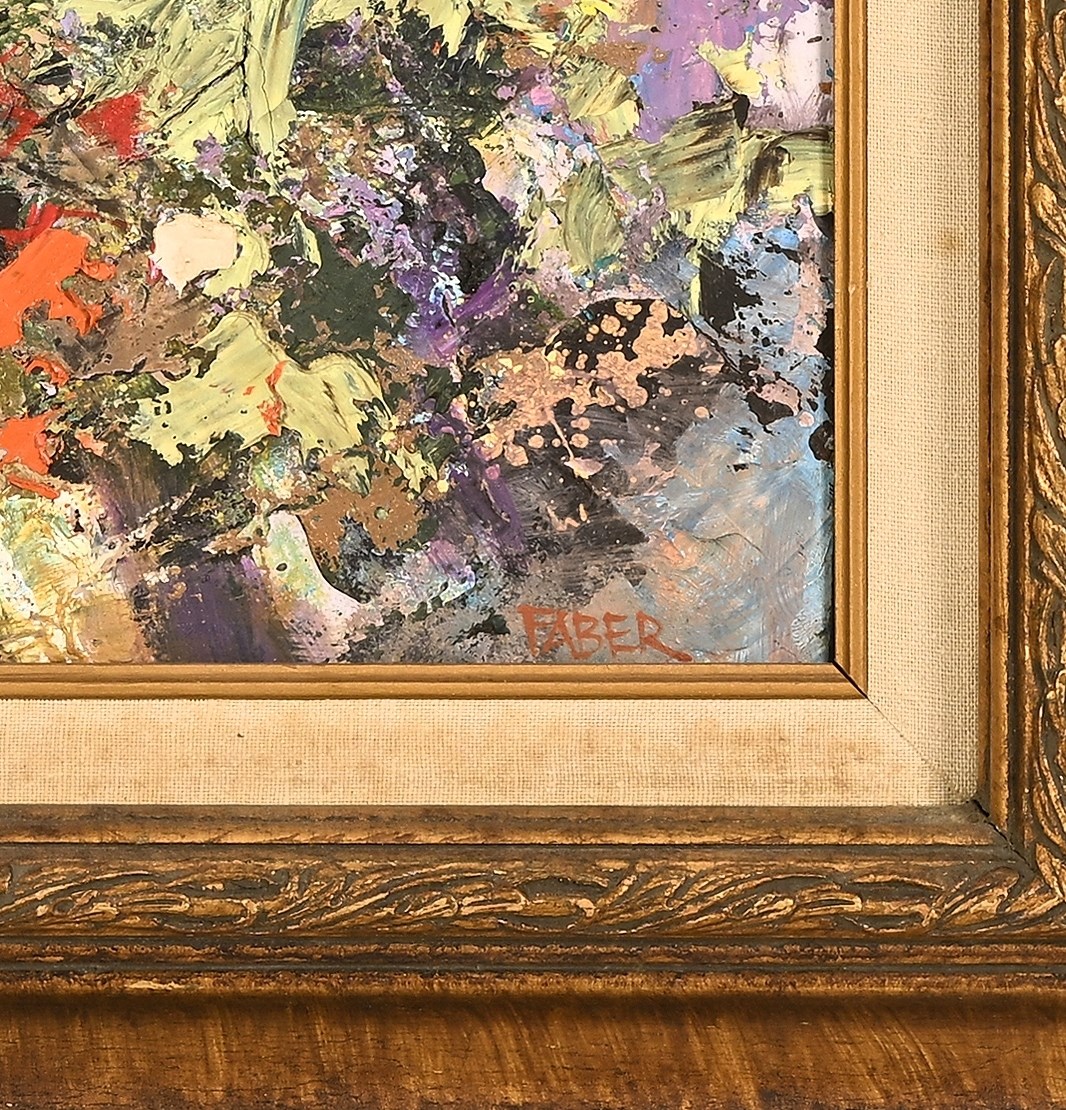
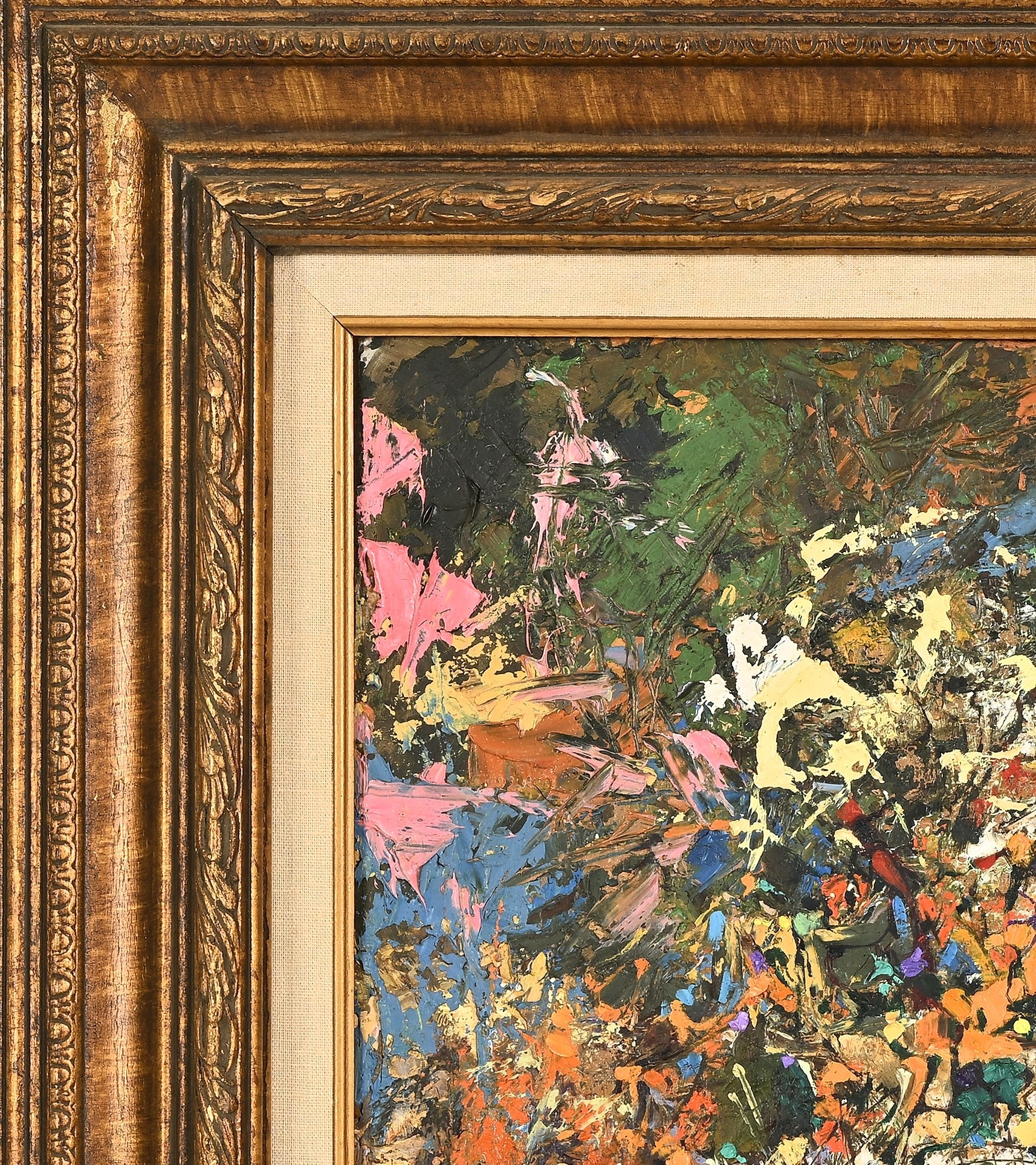
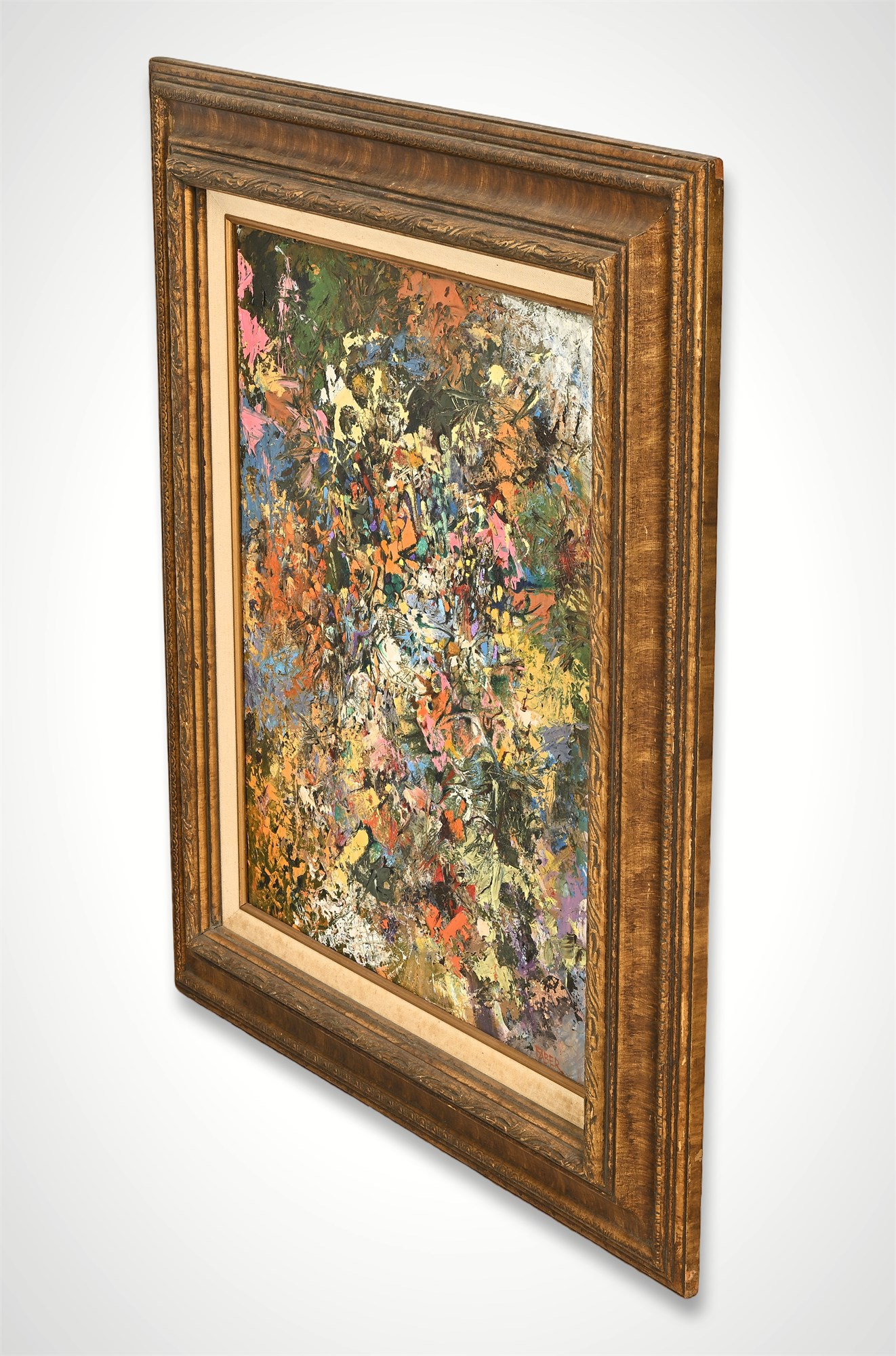
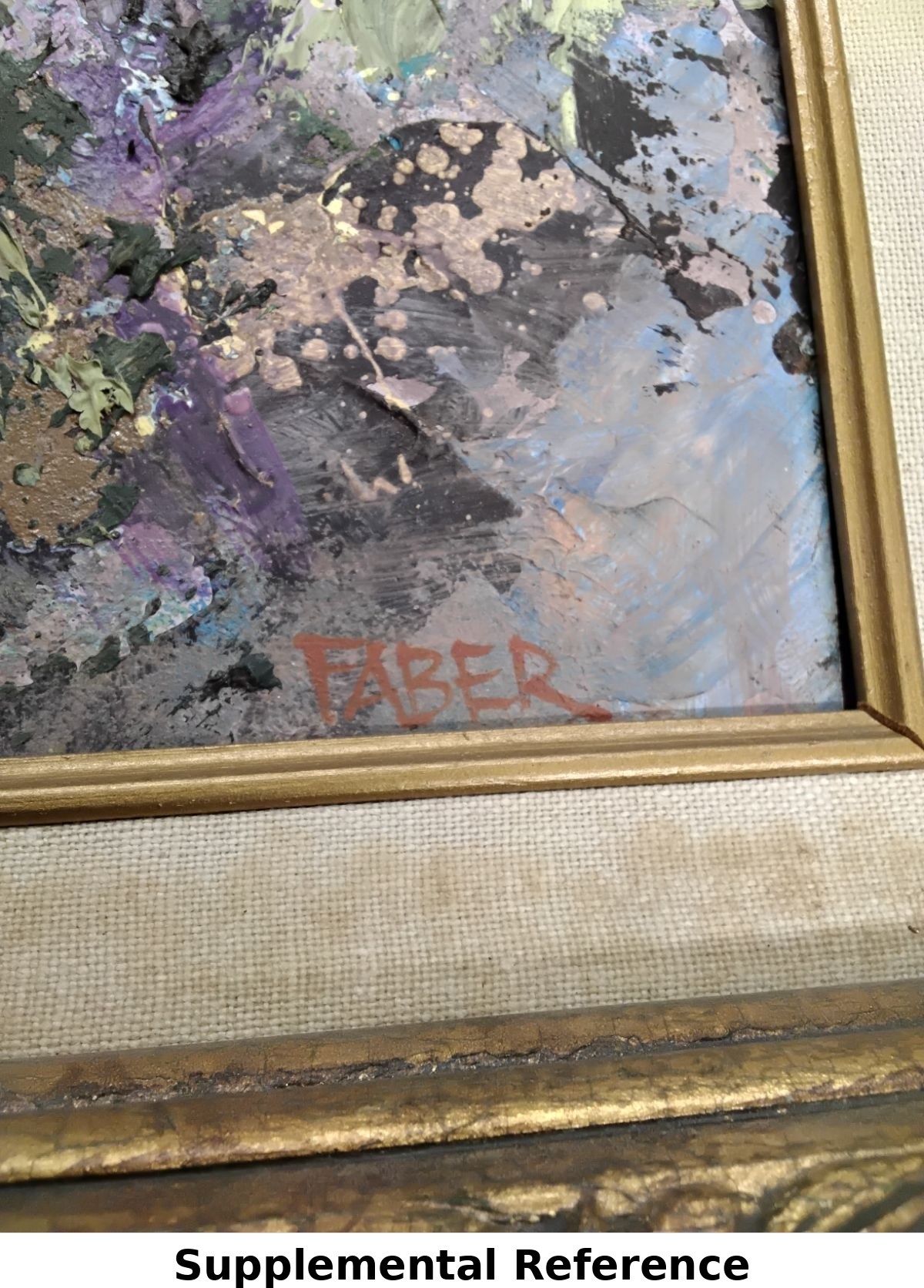
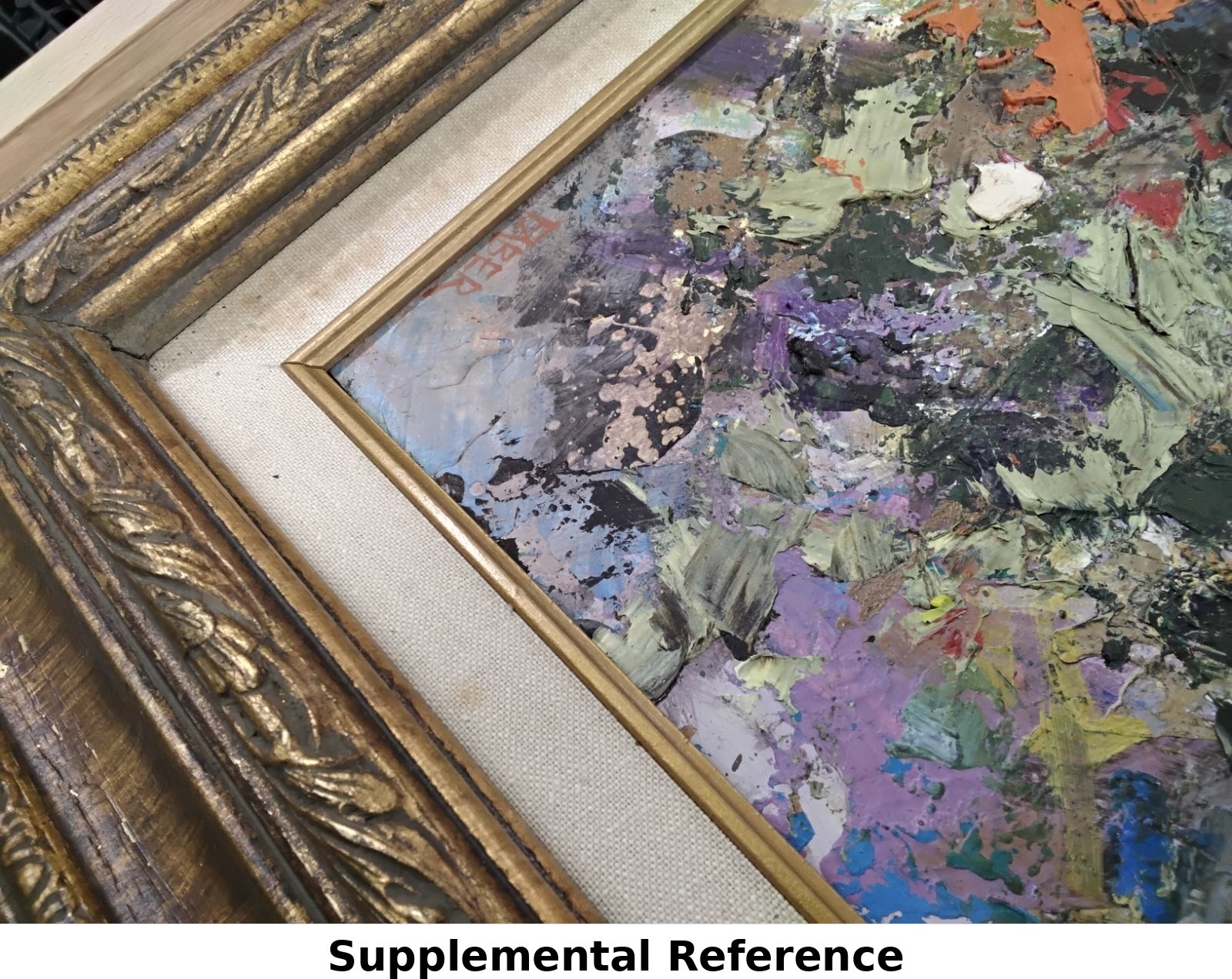
Original abstract oil painting by Carl Faber, signed lower right, executed on Masonite panel. This dynamic composition features a dense, all-over arrangement with no fixed focal point, guiding the eye across a richly textured surface. Bold, gestural strokes and palette knife work build heavy impasto, with vivid passages of orange, green, pink, blue, and cream layered and reworked to create depth and movement. The rigid Masonite support allows for thick application and scraping, contributing to the painting’s pronounced texture and physical presence.
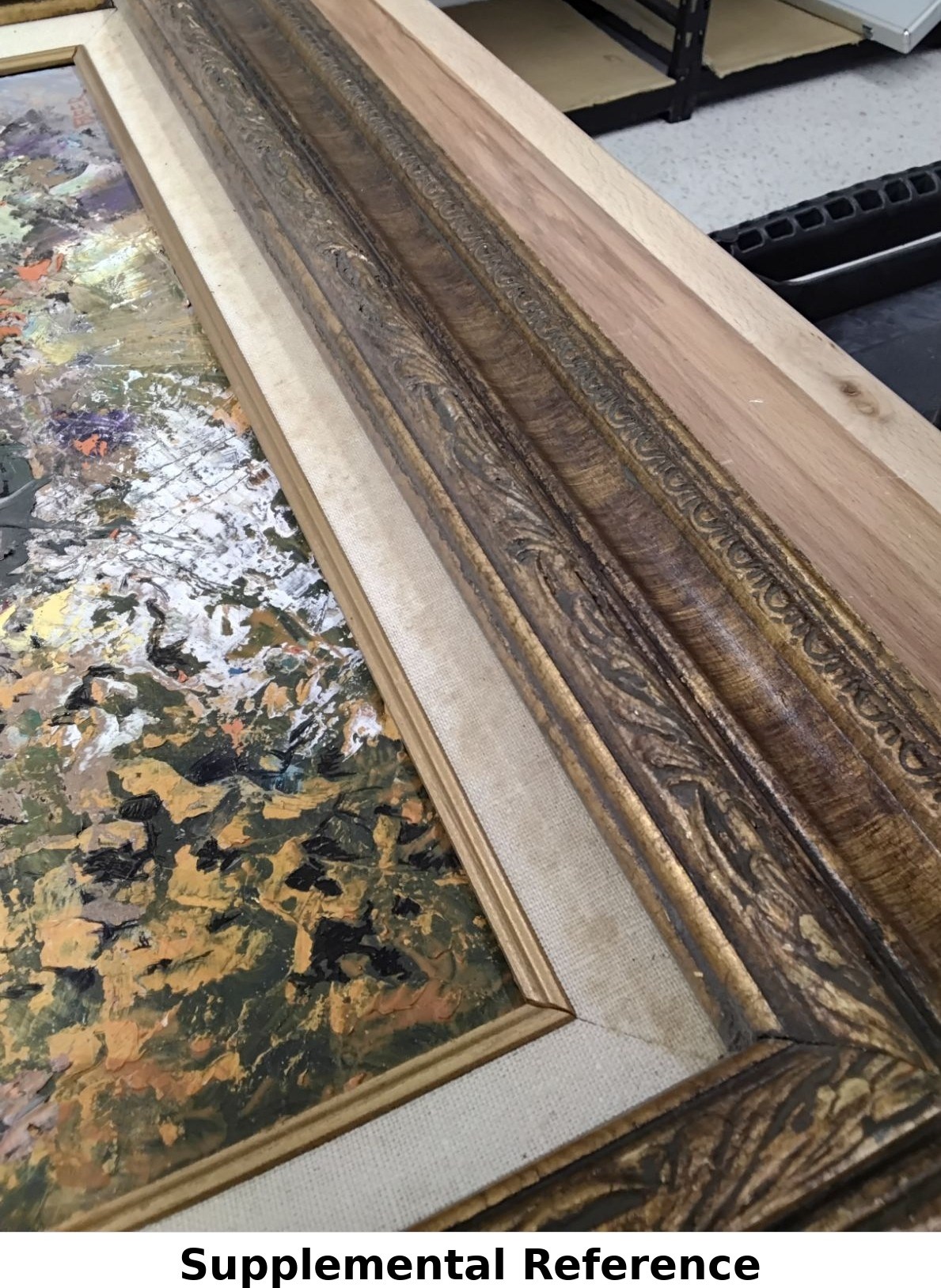
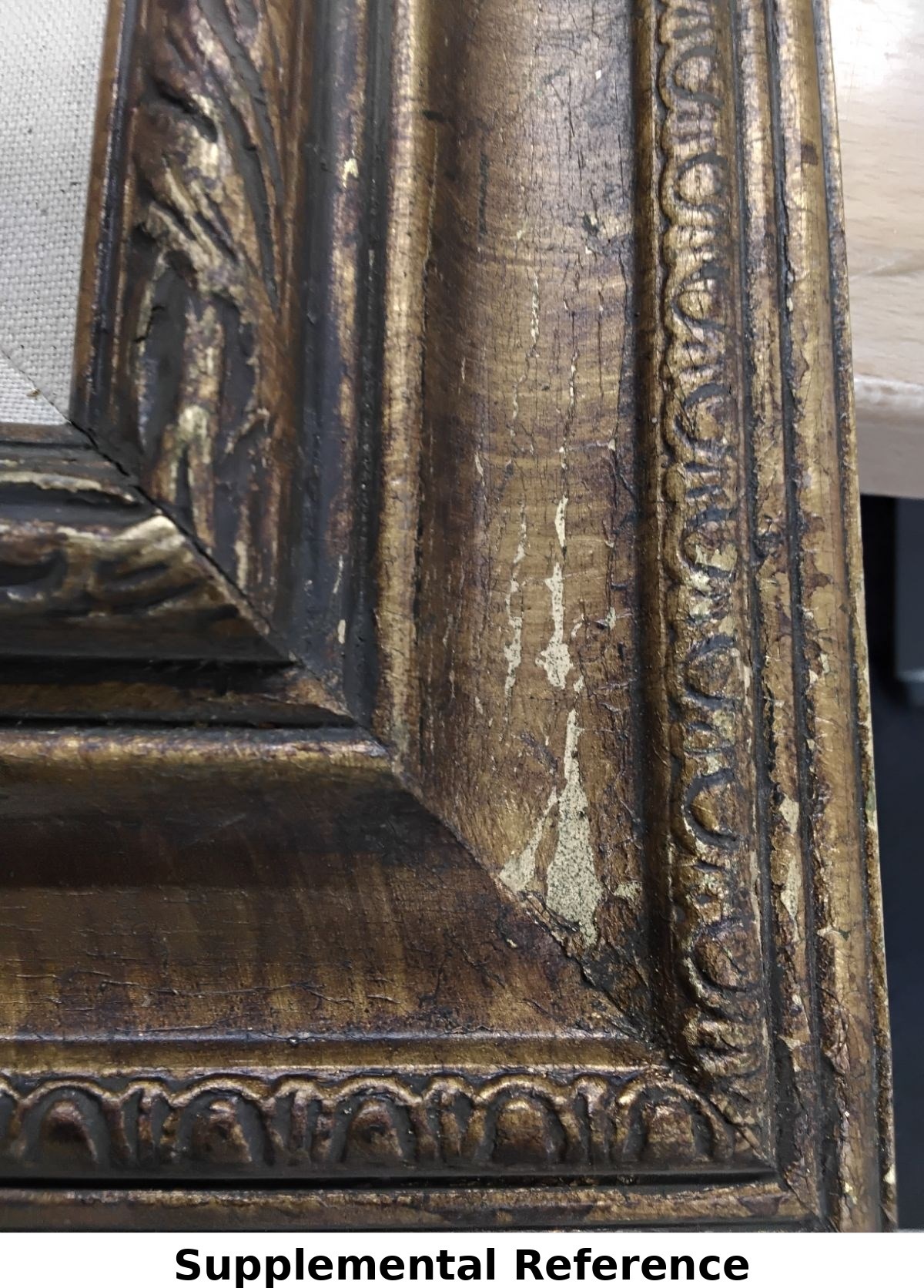
The work reflects a process-driven, abstract expressionist approach, with energetic mark-making and a strong emphasis on surface, color interaction, and spontaneity. Its visual intensity and tactile quality make it a striking statement piece, presented in a vintage carved wood frame with gilt finish and linen matting.
Condition:
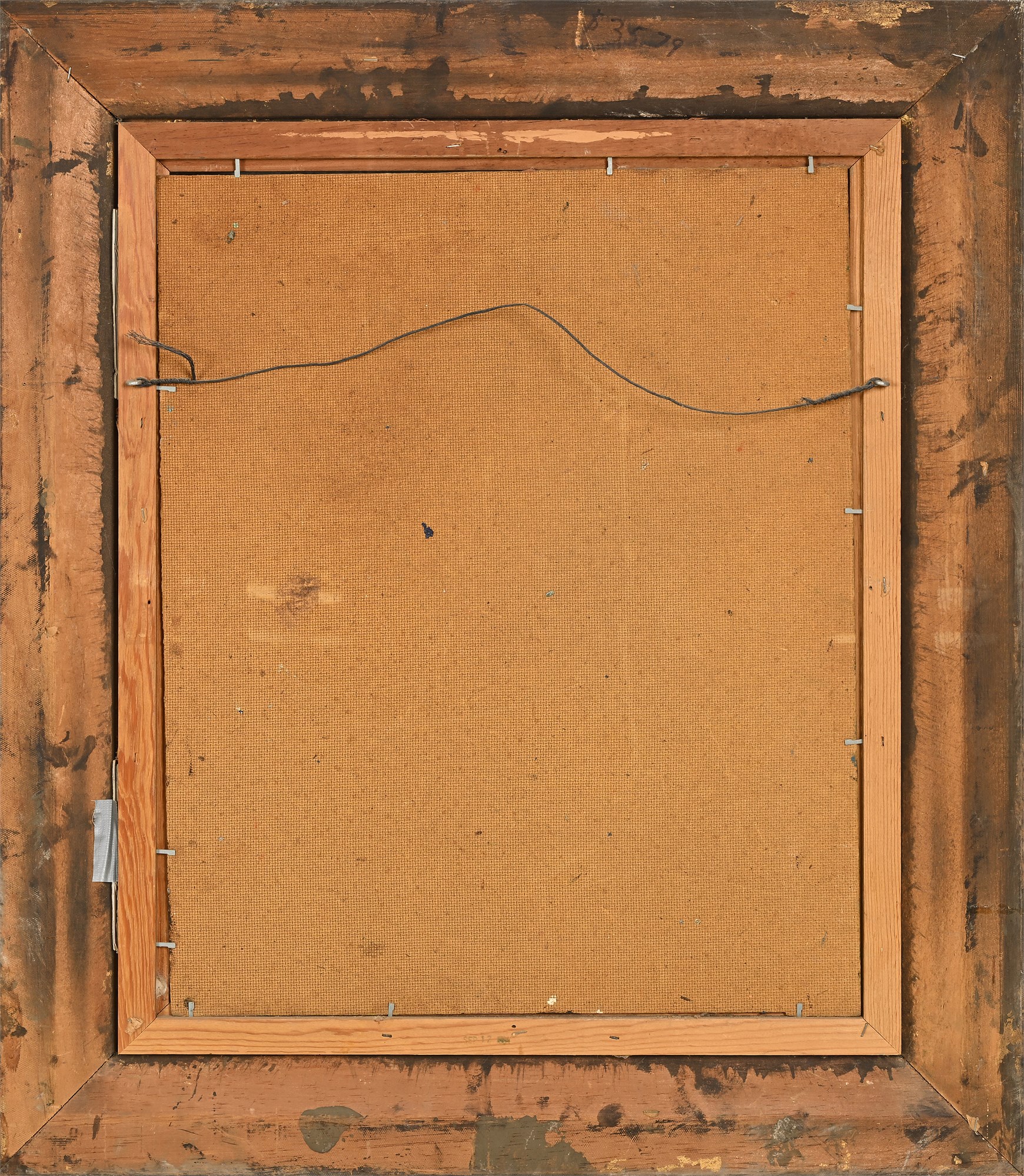
In good overall condition. Staining to the matting is present but does not impact the artwork. The painting shows minor age-appropriate craquelure. The frame exhibits light wear with minor craquelure and surface imperfections.
Dimensions:
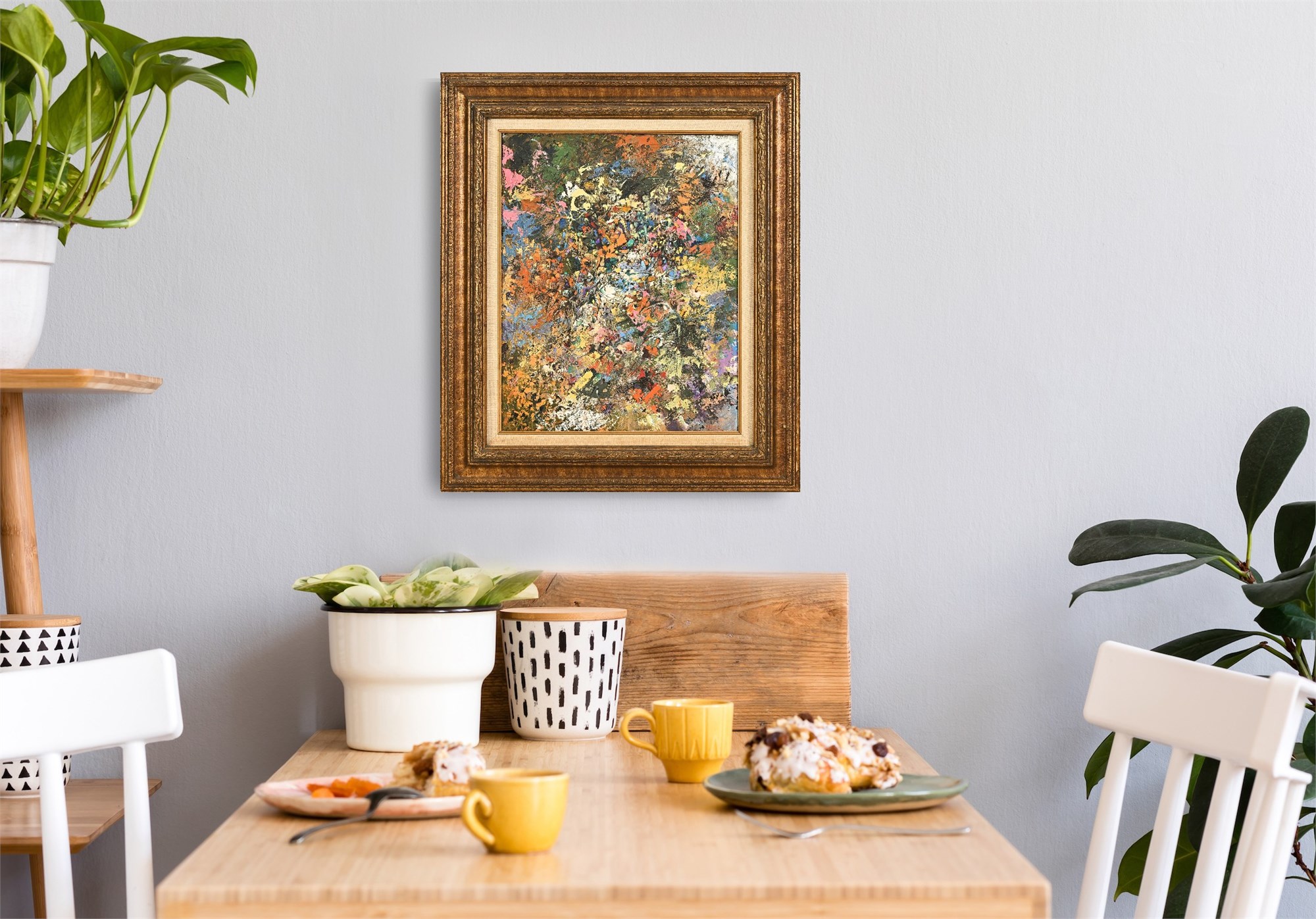
Overall: 27 3/4 x 23 3/4 x 1 1/2 inches
Visible: 19 1/2 x 15 1/2 inches
Artist Biography — Carl Faber
(Delaware — East Mojave — Gila, New Mexico)
Carl Faber was an American painter who spent the better part of his working life in the desert Southwest, developing a distinctive body of work rooted in sustained, first-hand observation of the natural world. He studied commercial art at a vocational school in Delaware, and worked professionally in sign painting, metalwork, business displays, and silkscreening in Florida and California before redirecting his energies entirely toward easel painting.
In 1972, Faber moved to the East Mojave desert to focus on landscape painting, studying the desert terrain that would become his hallmark subject for more than three decades. His artwork and austere desert lifestyle attracted attention from both local and national press during the 1980s, and organizations such as the Sierra Club and Friends of the Mojave Road brought a steady stream of visitors and buyers to his remote studio. It was in the East Mojave that Faber developed his philosophy of field painting — a rigorous commitment to painting directly from nature rather than from photographic reference, a practice he defended on both technical and philosophical grounds.
Faber's experiences with LSD in the 1960s shaped his perception of the natural world in ways he believed gave him an unusually acute sensitivity to color, light, and structural relationships in nature. This perceptual intensity carried through into his studio work as well — evident in the compressed chromatic energy and restless formal invention of canvases such as the present work. His training as a sign painter gave him a command of calligraphy and the importance of accurate, deft brushstrokes, producing a freshness and clarity achieved through single, confident marks rather than reworked passages.
Faber illustrated his partner Adrienne Knute's botanical study Plants of the East Mojave, published in 1991 and reprinted in 2002, demonstrating both his draftsmanship and his deep engagement with the Mojave ecosystem. He and Adrienne first came to Gila Hot Springs, New Mexico, in 2004 — originally seeking a winter home — but fell in love with the place and made it their permanent residence. It is from this final chapter of his life, based in the Gila wilderness near Silver City, that the present work originates.
Faber was known as a committed teacher who accepted students on a non-commercial basis, preferring to pass on his technical knowledge and philosophical outlook to those he judged capable of genuine dedication. He described his approach as one that "would have nothing to do with money." A notice from the ACE Studio Art Gallery in Silver City confirmed his passing, the date of which has not yet been independently verified in published sources. His work remains held in private collections across the Southwest and beyond.