Robert R. Anderson — "What Do The People At The End of The World Do?" 1973 View Watchlist >
- Winning Bid: $464.00
- 43 Bid(s) View Bid History
- High Bidder: Mesillabound
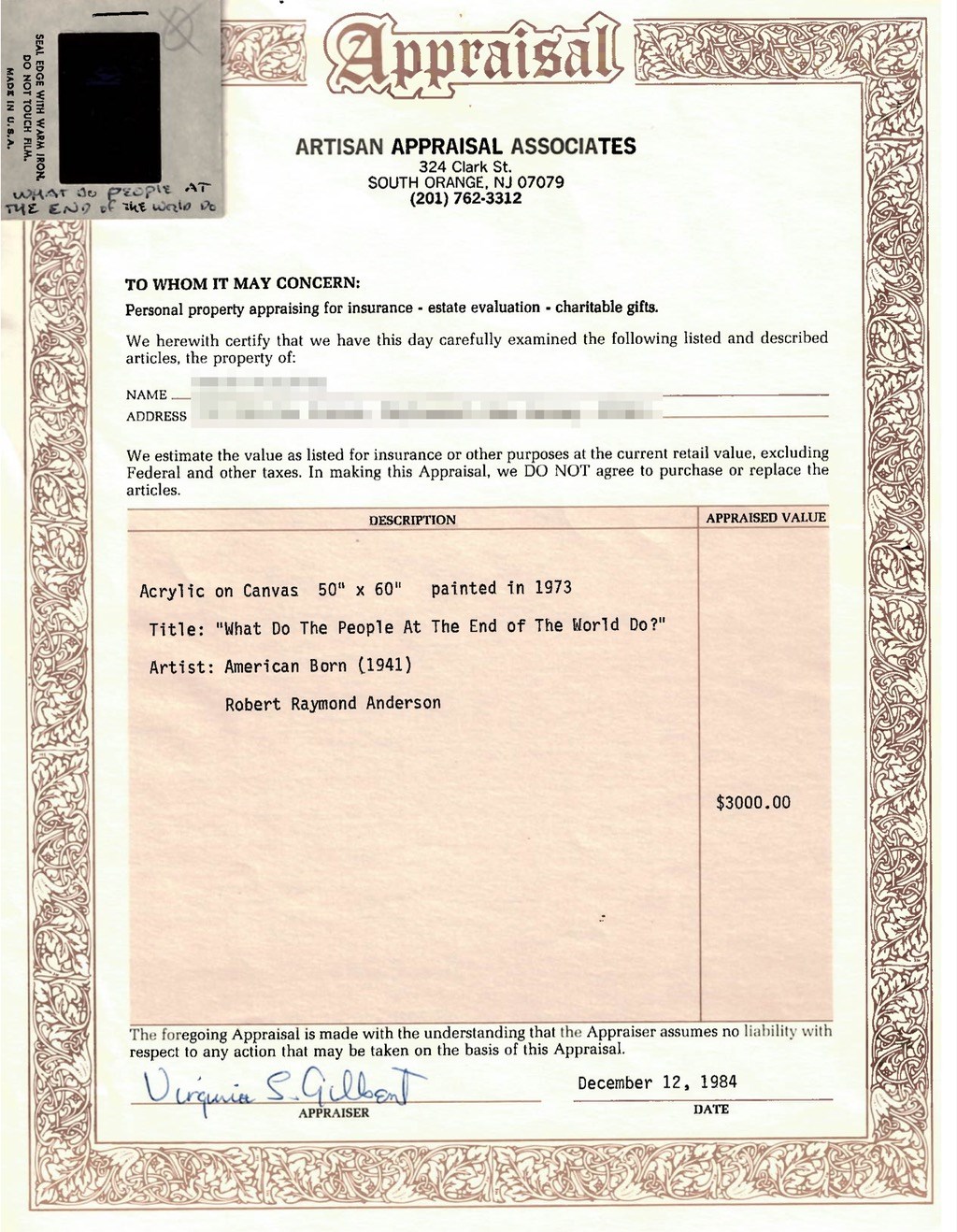
 Appraisal.pdf
Seller Accepts Credit Cards
Payment and pickup instructions will be available on your invoice (under "My Account") at the conclusion of this auction.
Lot # C870
System ID # 27352600
Start Date
End Date
8 Watching
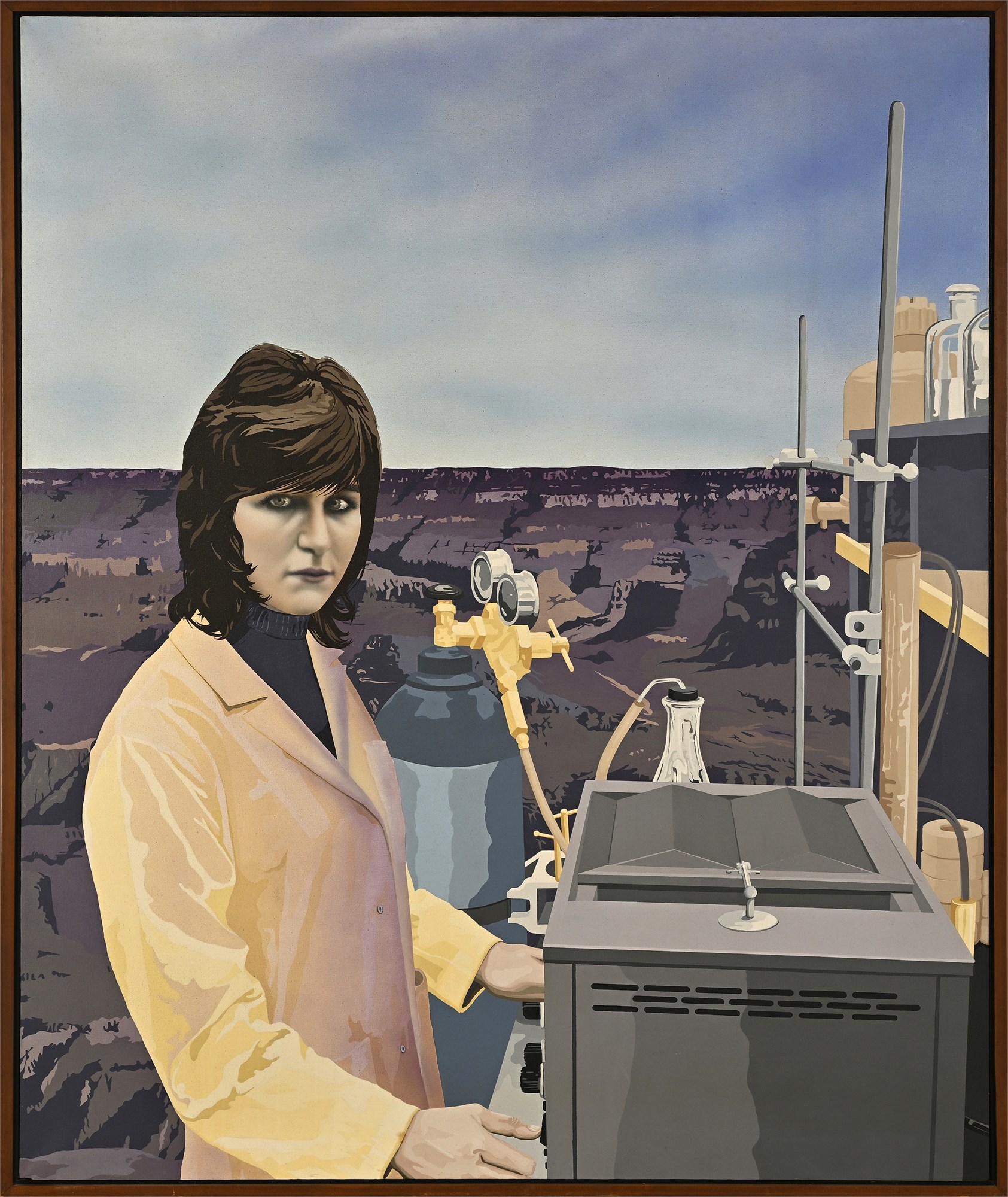
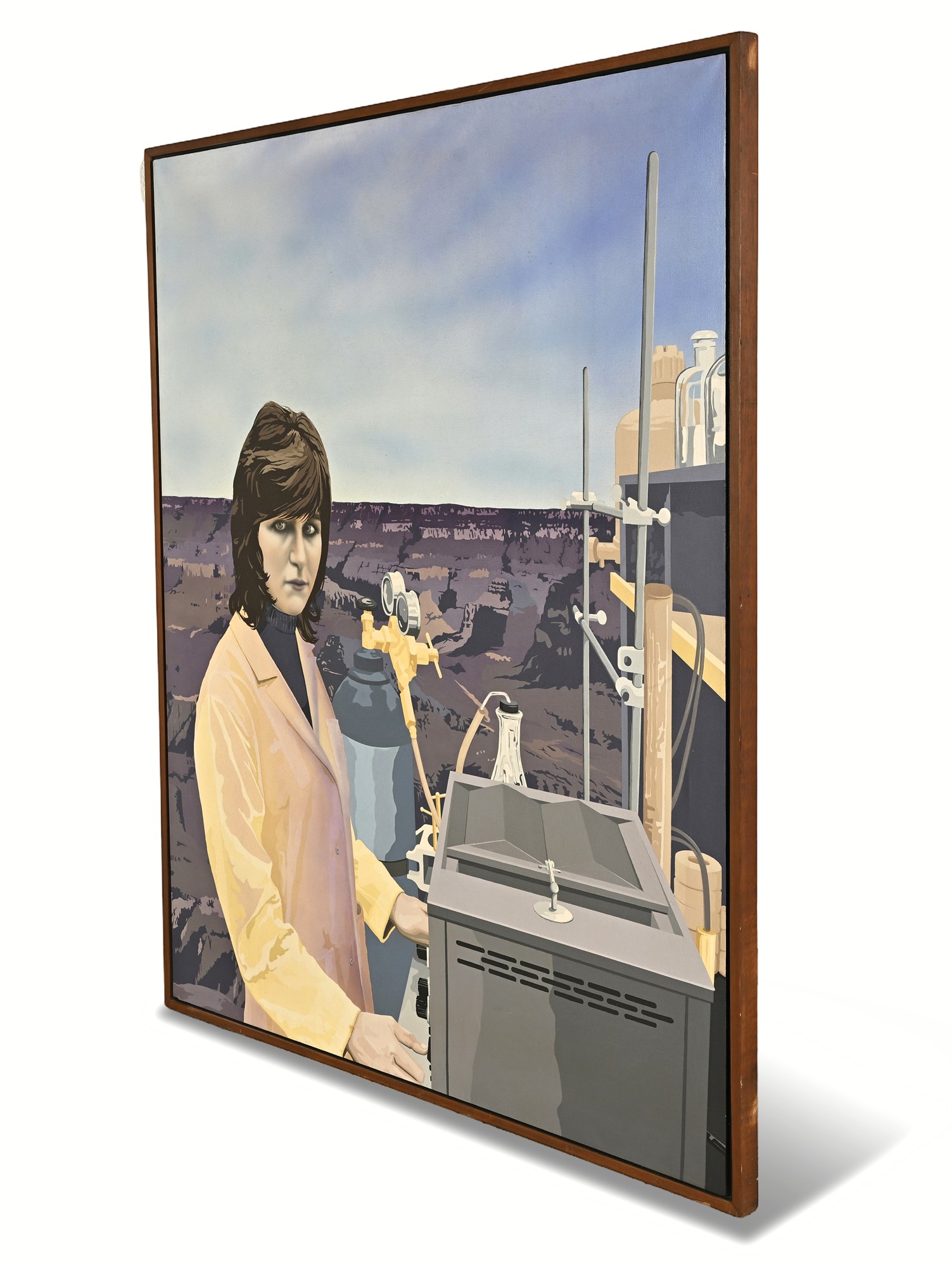
Robert R. Anderson — "What Do The People At The End of The World Do?" 1973
"What Do The People At The End of The World Do?"
That's the title. Anderson painted the answer.
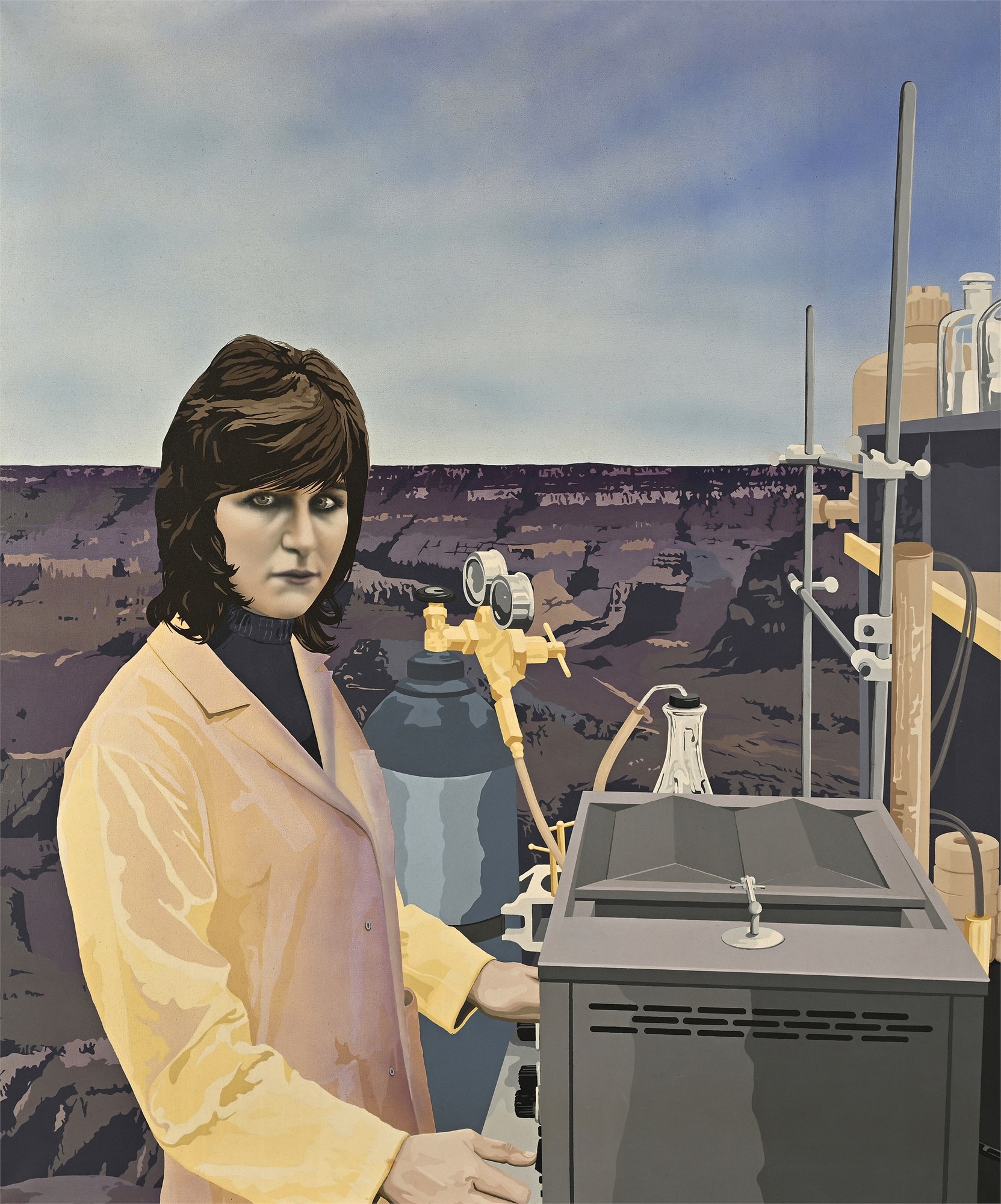
A young woman in a pale yellow laboratory coat stands at a gray analytical equipment console — pressure regulator assembly, metal support rods, flexible tubing, a round-bottom flask, and a blue gas cylinder — while a vast canyon landscape stretches impossibly behind her under a flat, overcast sky. The layered purples, mauves, and warm tans read unmistakably as the Grand Canyon or Rio Grande Gorge. She has no logical business being there. Anderson makes no effort to pretend otherwise.
The canyon horizon runs straight across the canvas behind both the figure and the equipment without transition — interior and exterior collapsed into a single flat plane. The equipment detail carries the hyper-specificity of photographic source painting: gauge markings, regulator valves, flask geometry rendered with mechanical precision. The figure is softer — a warmer airbrush pass against the hard-edged machinery and the posterized landscape behind her.
She faces the viewer directly. Composed. Unreadable. Authority without affect.
Painted in 1973 — the year of the Arab oil embargo, Watergate, and Vietnam withdrawal — the title was not abstract. "The end of the world" meant something specific to American audiences that year. Anderson's answer: a woman in a laboratory, running her experiment, holding her ground. She is not decorating a space. She is not smiling for the painter. She is working. At near-mural scale, rendered with the same formal gravity given to any canonical subject, she is the most serious figure in the room — and the canyon behind her is everyone else's problem.
PROVENANCE Appraisal on file: Artisan Appraisal Associates, 324 Clark St., South Orange, NJ — appraised December 12, 1984 by Virginia S. Gilboa at $3,000 (insurance/retail value). Document accompanies the lot.
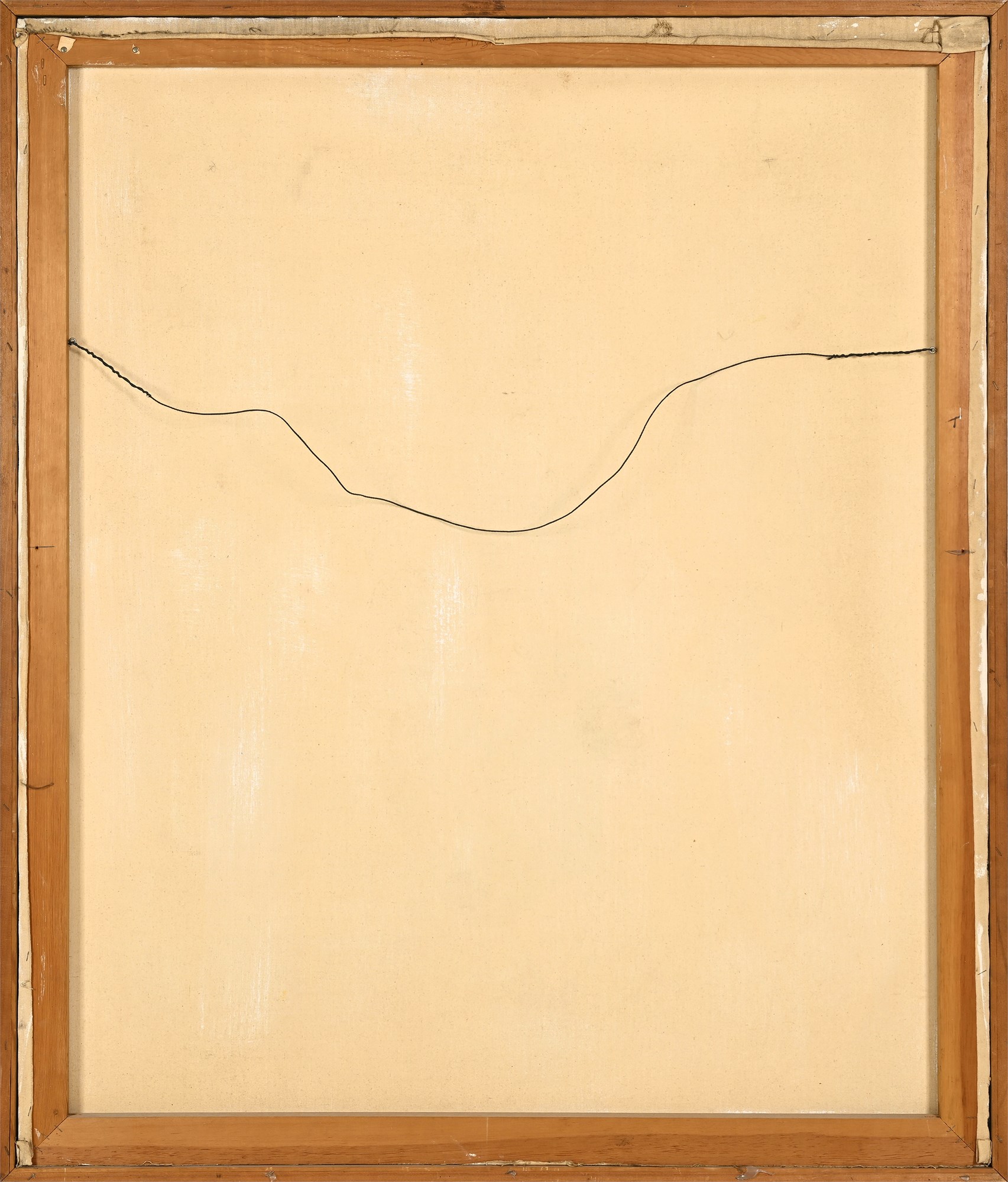
CONDITION Good. The acrylic paint surface is vibrant with no cracking, inpainting, or canvas losses visible. Minor scuffing to the frame is consistent with age and handling and does not detract from presentation.
DIMENSIONS / SPECIFICATIONS
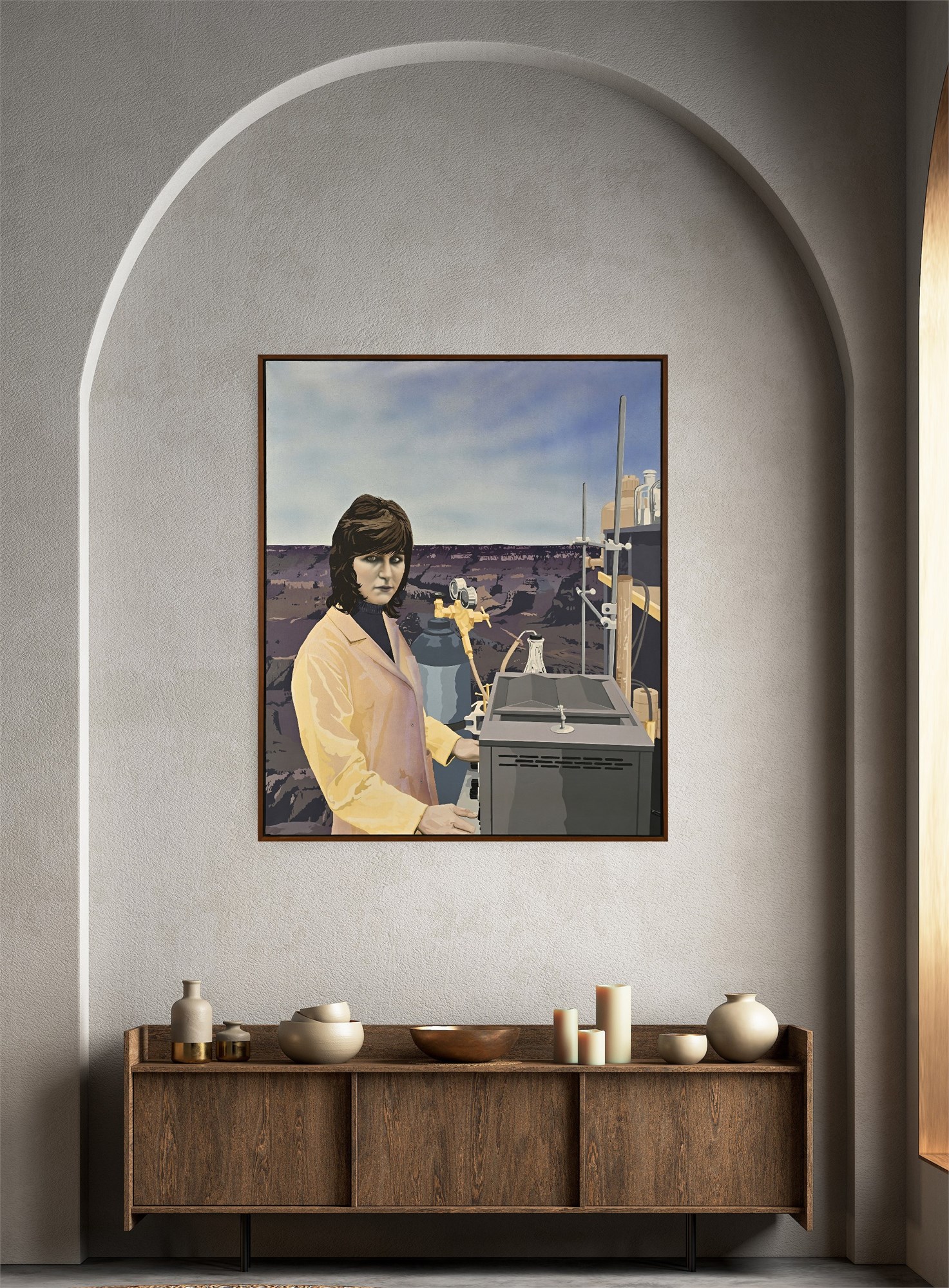
- Overall: 62" H × 52¼" W × 1½" D
- Visible (sight line): 60" H × 50¼" W
- Medium: Acrylic on canvas, airbrush technique
- Frame: Walnut-toned wood, flush-edge profile
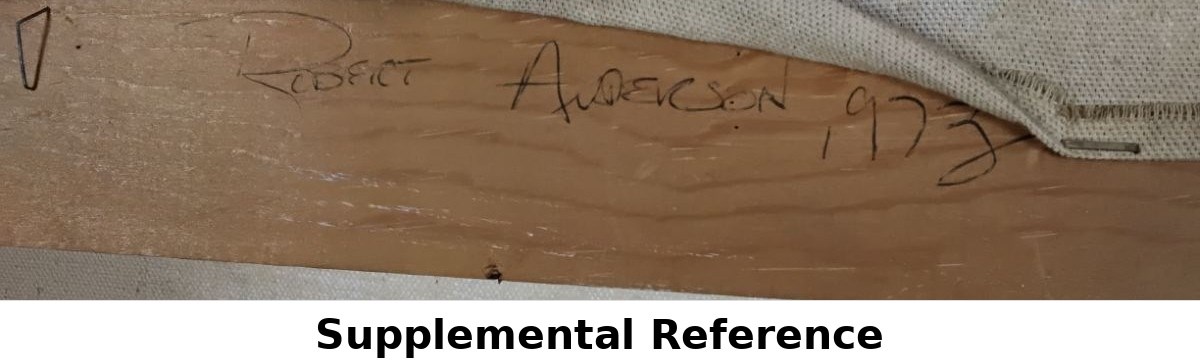
- Inscription: "Robert Anderson, 1973" — upper stretcher bar
- Provenance document: Artisan Appraisal Associates, South Orange, NJ — December 12, 1984, appraised value $3,000
ARTIST BIOGRAPHY Robert Raymond Anderson (American, b. 1941) received his Master of Fine Arts from Pratt Institute in 1972 and began exhibiting immediately through the New Jersey State Council on the Arts, the Brooklyn Museum, the New Jersey State Museum, and the Montclair Art Museum. By the mid-1970s he was showing at the Morris Museum of Arts and Sciences, the Newark Museum, the Summit Art Center, Fairleigh Dickinson University, and in group exhibitions at the James Yu Gallery in New York.
His method was precise and deliberate. Anderson worked from photographic sources, combining hard-edged airbrush rendering for foreground objects with softer feathering for figures, then setting both against flat, posterized backgrounds sourced from entirely separate photographs. The spatial impossibility was intentional. Critics described the work as operating in a surrealist vein that "reaches into moods" and "suggests mysteries of personality, character, and the mind."
His paintings entered the permanent collections of the University of Massachusetts Amherst, Muhlenberg College, the Morris Museum of Arts and Sciences, SUNY Brockport, Bloomfield College, and AT&T, among others. He received fellowships from the National Endowment for the Arts and the New Jersey State Council on the Arts, taught college-level painting and drawing, and served as a contributing editor to a national art magazine.