Adrian Wall Jemez Pueblo Alabaster Sculpture Signed Native American View Watchlist >
- Winning Bid: $500.00
- 63 Bid(s) View Bid History
- High Bidder: Cblandford
Seller Accepts Credit Cards
Payment and pickup instructions will be available on your invoice (under "My Account") at the conclusion of this auction.
Lot # C468
System ID # 27125620
Start Date
End Date
4 Watching
Adrian Wall Jemez Pueblo Alabaster Sculpture Signed Native American
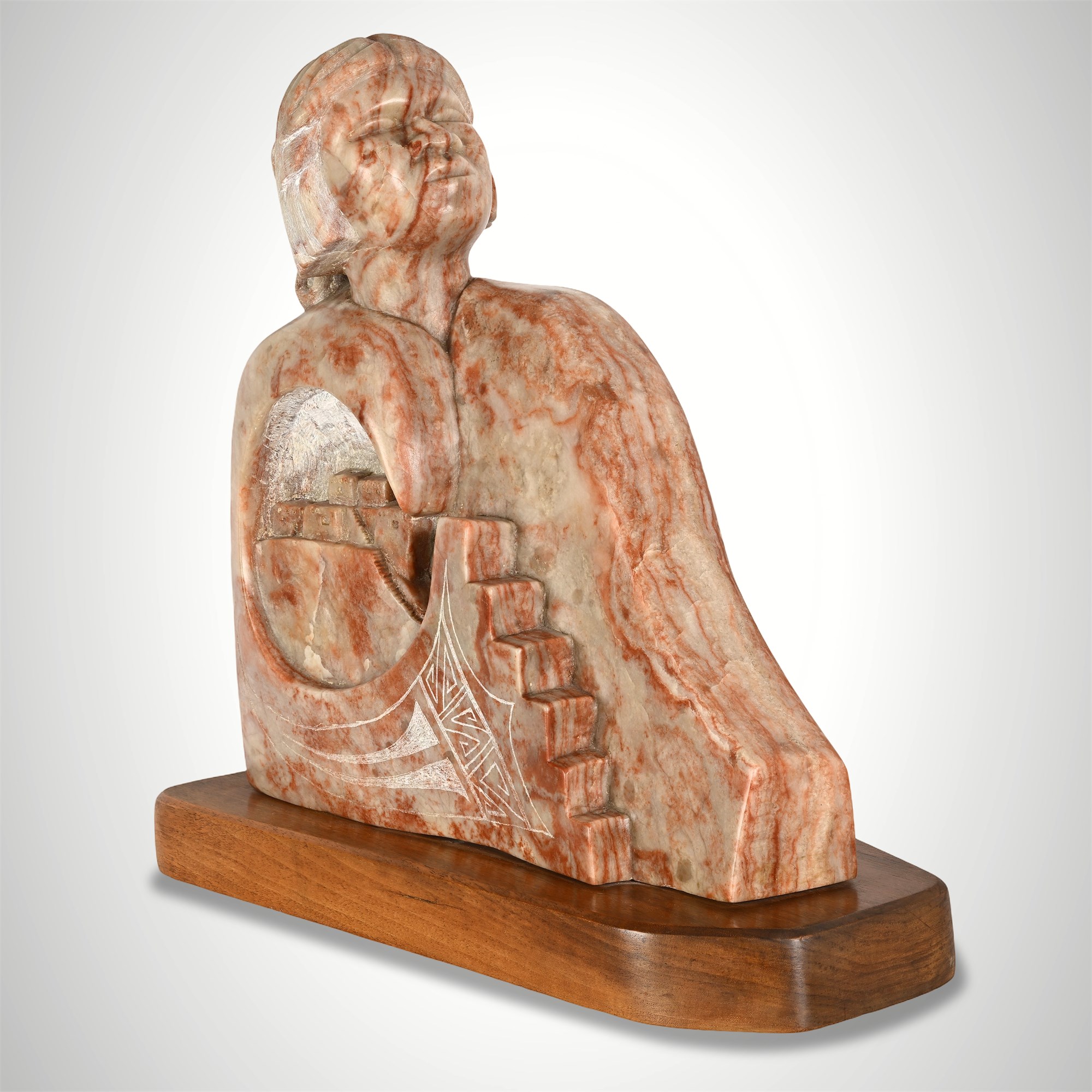
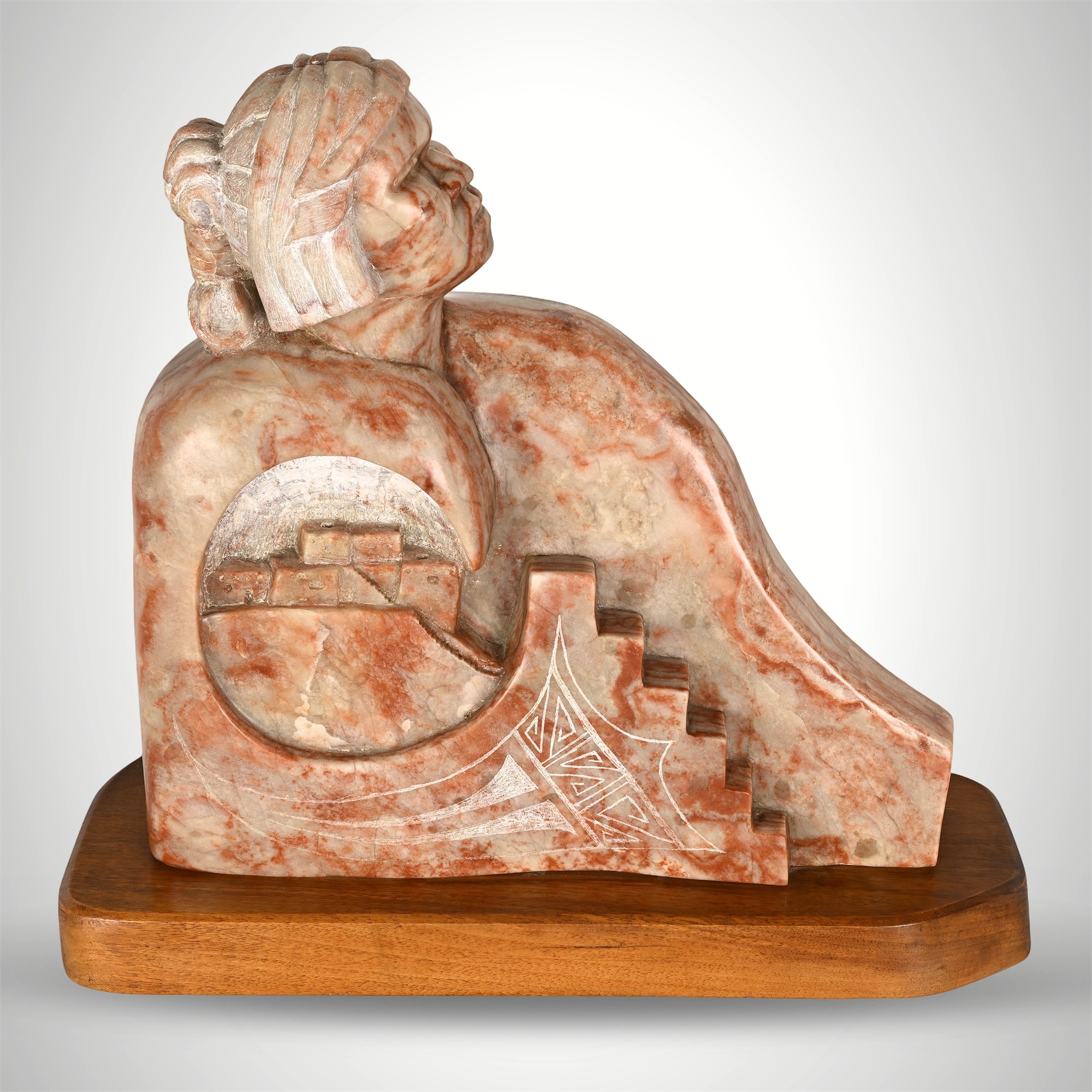
Adrian Wall (Jemez Pueblo, b. 1970) is among the most accomplished stone sculptors working in the American Southwest today — a fellowship recipient, museum-collected artist, and member of the Indigenous Sculptors Society whose work is held in the permanent collections of the Eiteljorg Museum, the Indian Pueblo Cultural Center Museum, and the Hauku Museum. Working almost exclusively in Utah alabaster, Wall is celebrated for his command of the stone's dramatic veining as a compositional element, and for his ability to fuse figurative carving, architectural relief, and incised ceremonial mark-making into sculptures that function simultaneously as objects of beauty and as coherent theological statements. This substantial hand-carved example, ca. 2000, is a particularly complete expression of his vision.
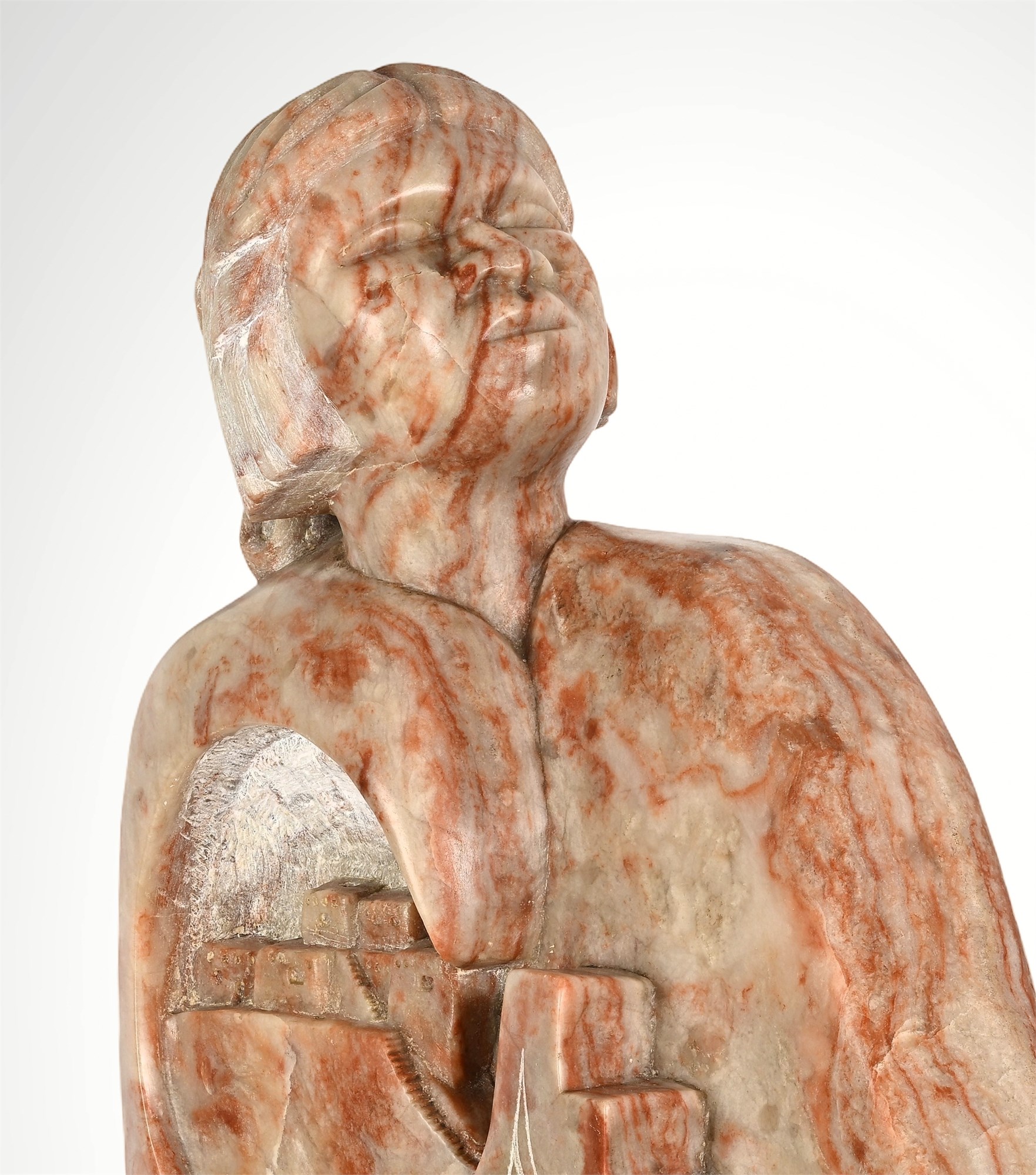
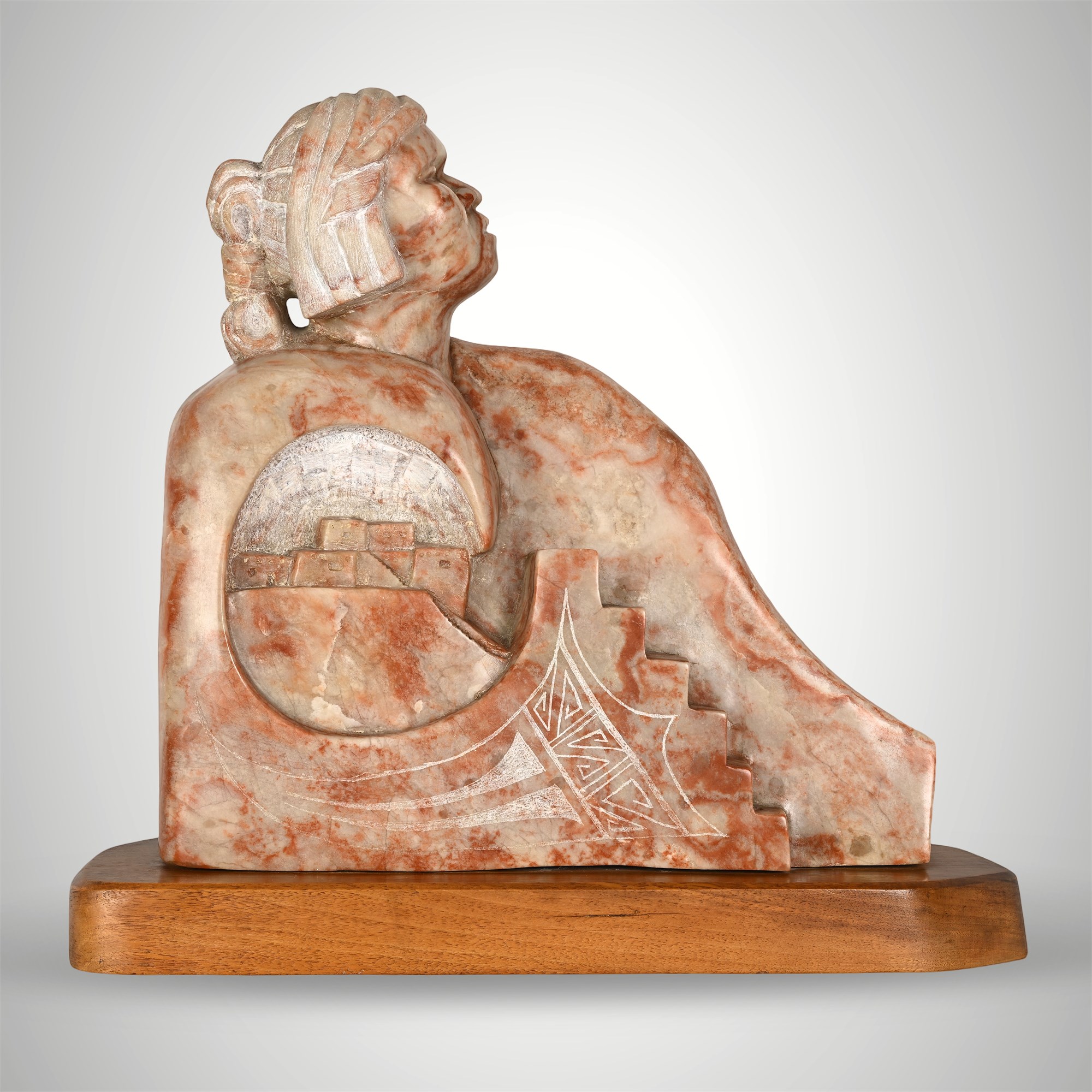
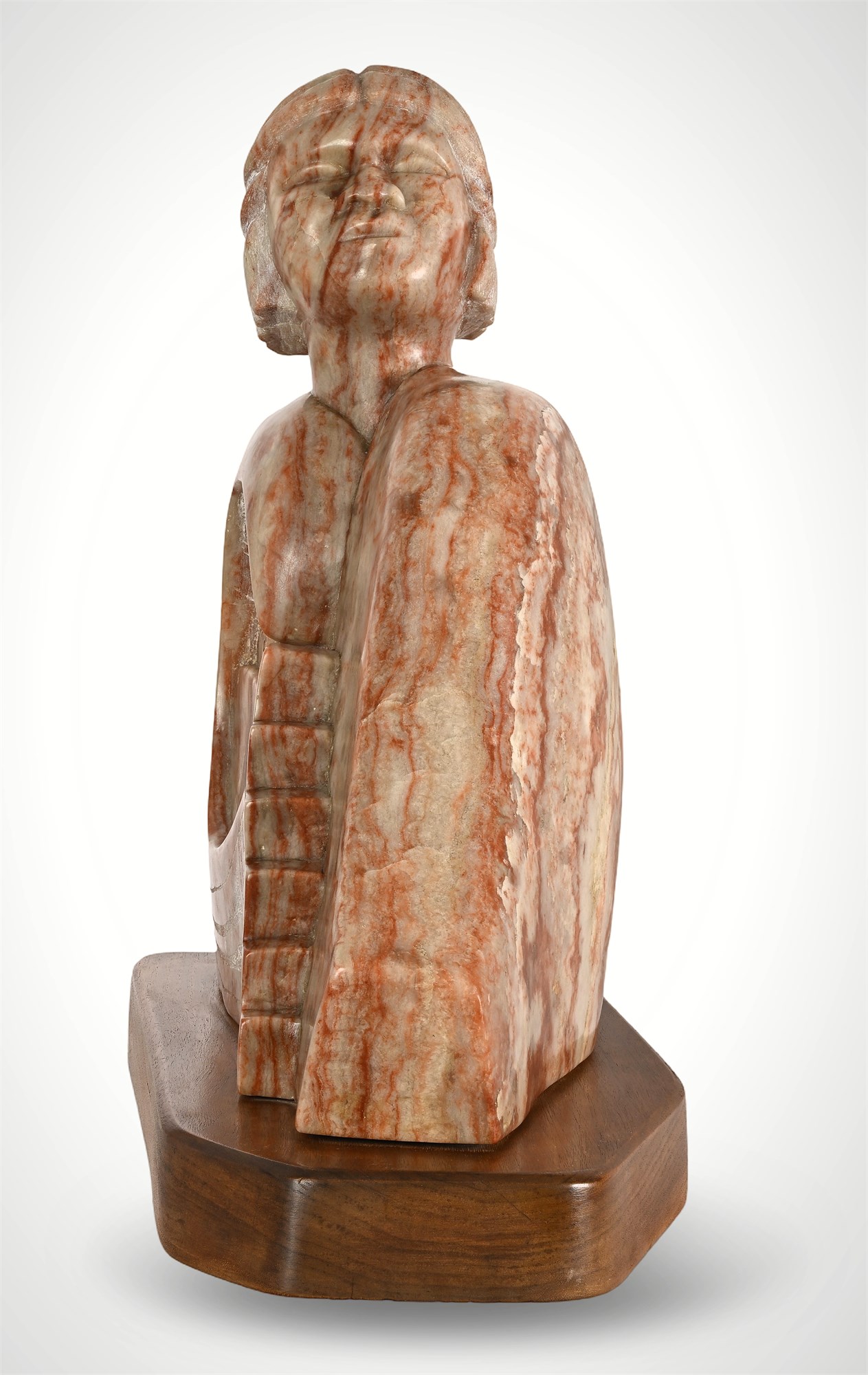
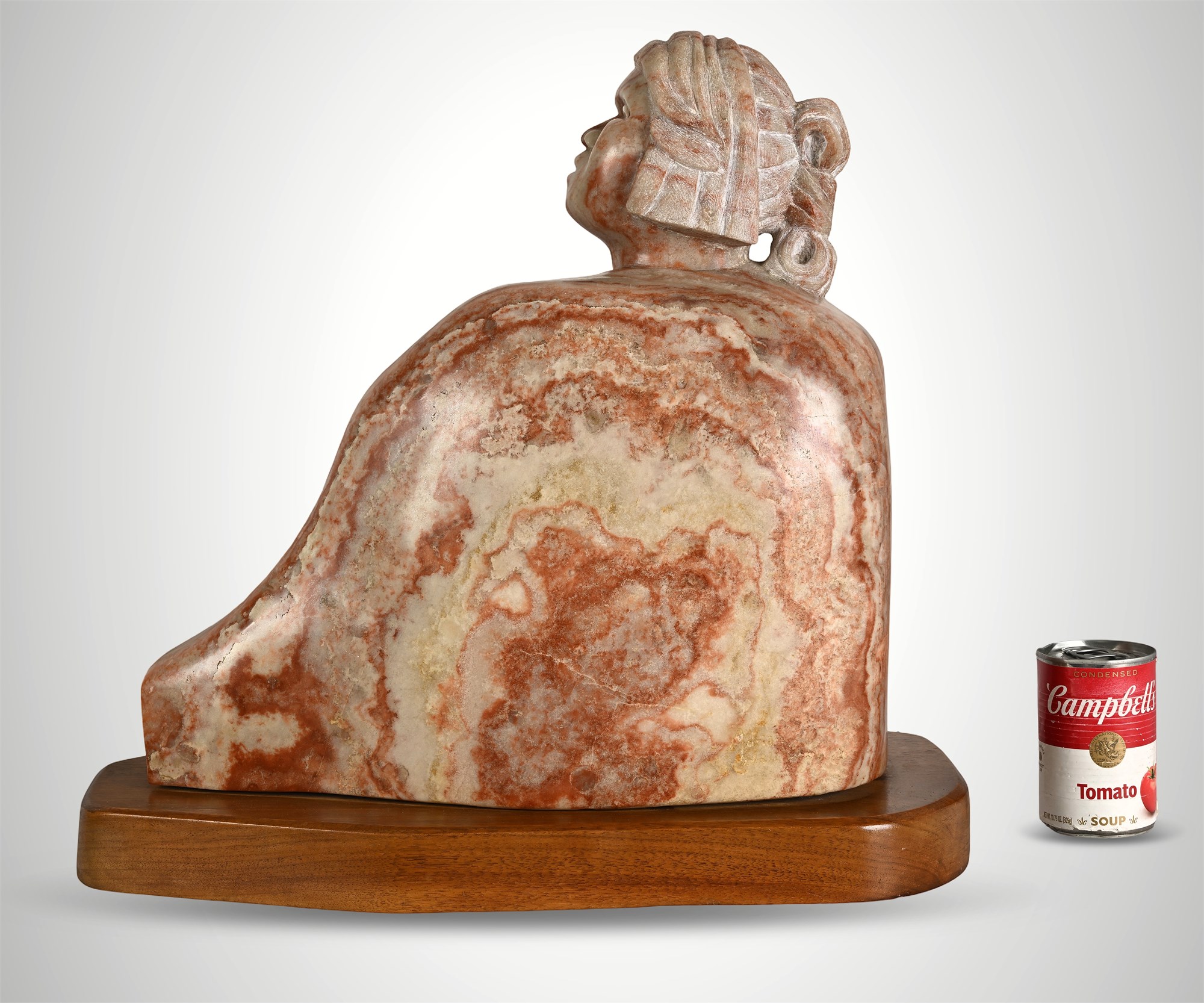
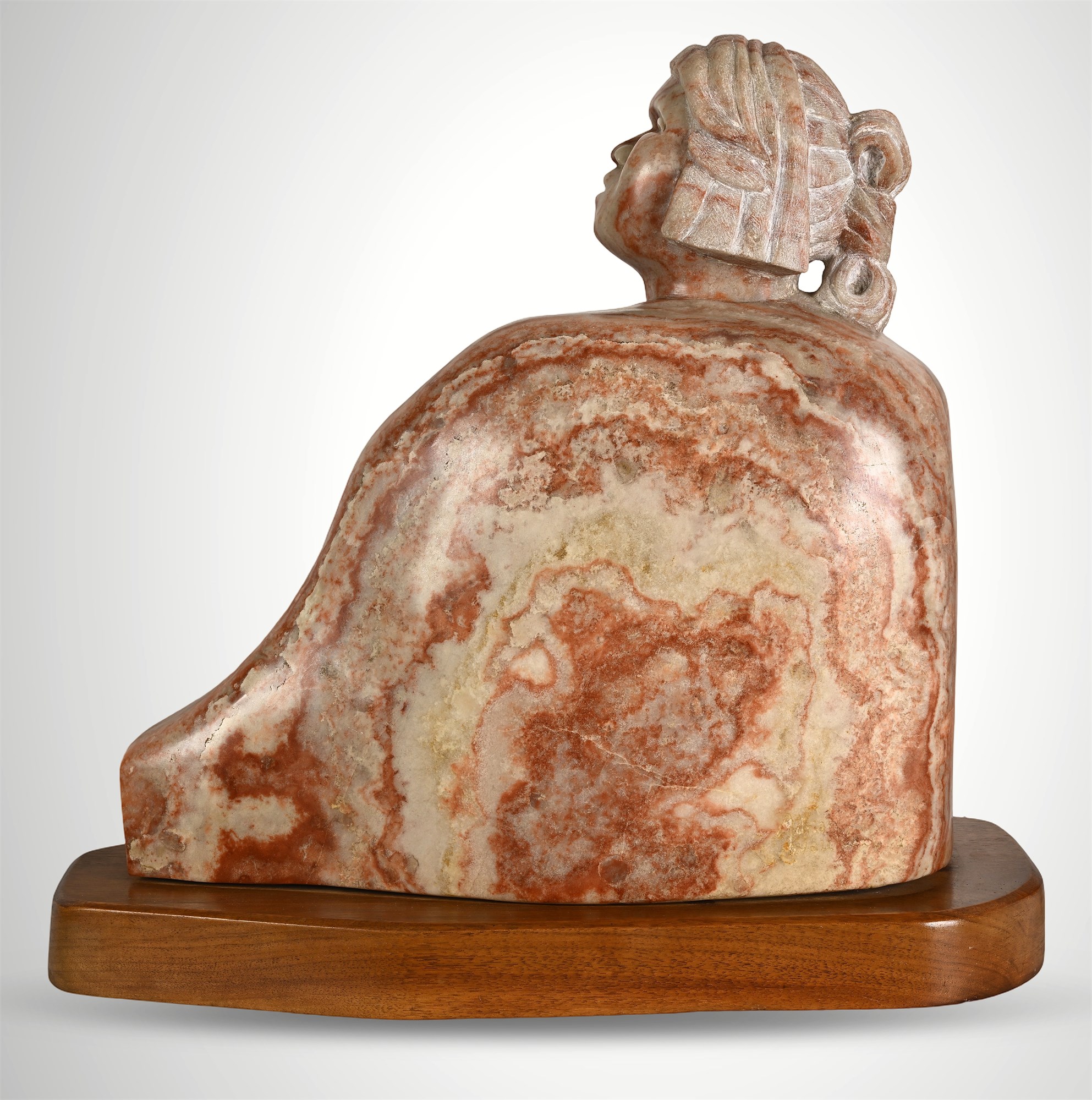
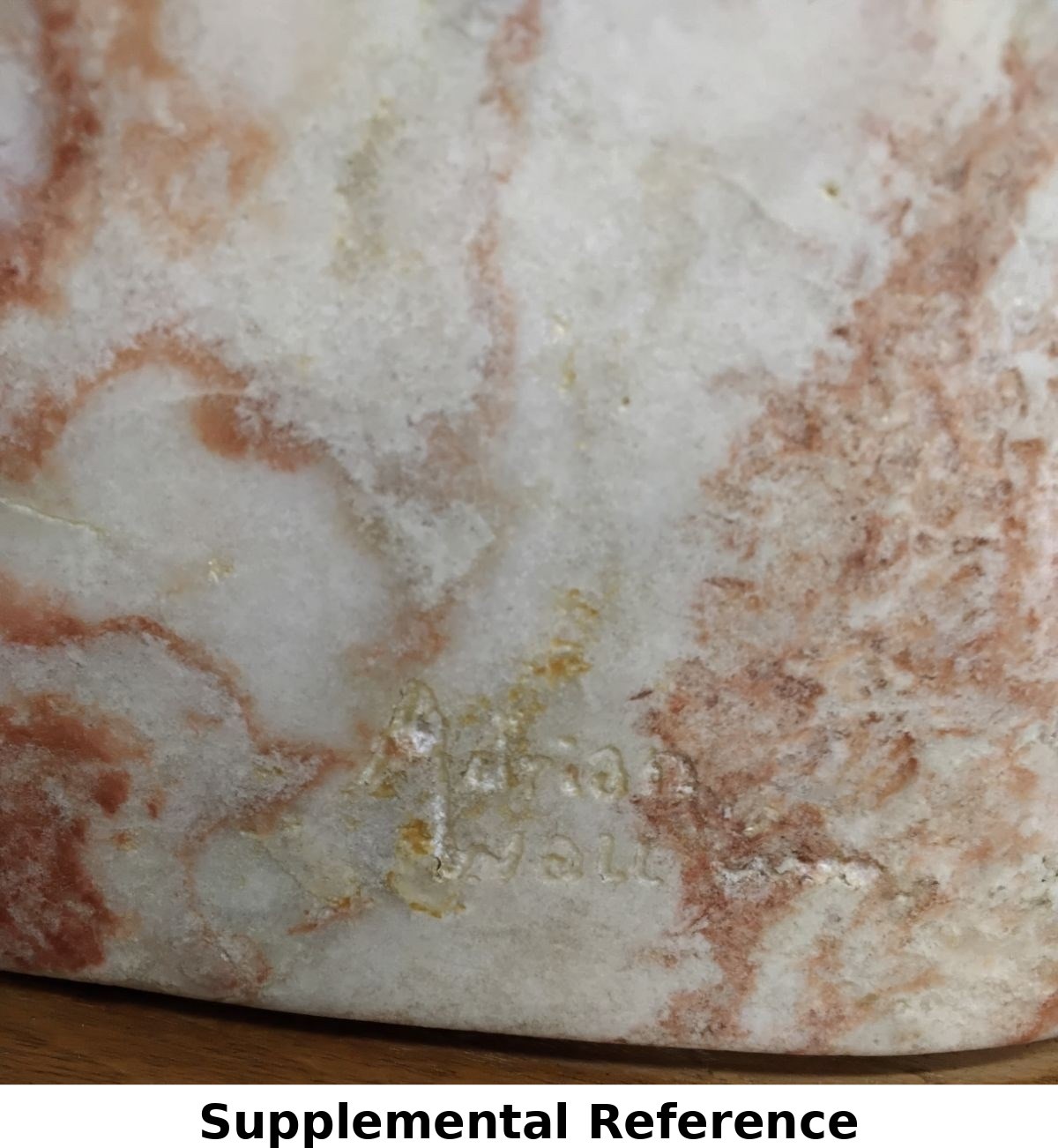
The figure is depicted seated, head thrown back and face lifted skyward — the posture of prayer, of song, of a people asking the sky for rain. In Pueblo cosmology, rain is not merely weather. It is the central sacred covenant between the living and the divine, the act on which survival has always depended. Wall has given this figure's face the lightest, most luminous stone in the entire piece — the cream-white veining pools there as if the alabaster itself understood the assignment. At the chest, a circular aperture opens like a cave mouth in a canyon wall, and through it an ancestral pueblo village is visible in low relief — stacked adobe masonry, a kiva form, terraced architecture emerging from the stone. The figure does not merely represent a Pueblo person. It carries the pueblo within its own body. To the right, the stone descends in the stepped cascade of the Jemez kiva form — in Pueblo tradition, the stages of human life: birth, life, death, and the passage beyond. Below the portal, Wall has incised a program of white-highlighted ceremonial markings drawn directly from Jemez regalia: a triangular mountain or storm-cloud form with nested chevrons and radiating lines, the arcing concentric lines of rain in motion, water answering the upturned face. The uncarved reverse is left raw, its swirling geological banding exposed — the earth itself, honored as both material and meaning. Signed to the rear. Ex private collection.
CONDITION
Excellent. Warm, polished surface with crisp carved detail throughout — no damage observed.
DIMENSIONS / SPECIFICATIONS
- Overall: 17.5" H × 19" W × 8.5" D
- Weight: 65 lbs
- Base thickness: 1.75"
- Medium: Hand-carved Utah alabaster
- Base: Walnut, oval form
- Date: Ca. 2000
- Provenance: Ex private collection
- Signature: Incised rear — Adrian Wall
- Campbell's Soup Can (4" H) Shown for Scale
ABOUT THE ARTIST
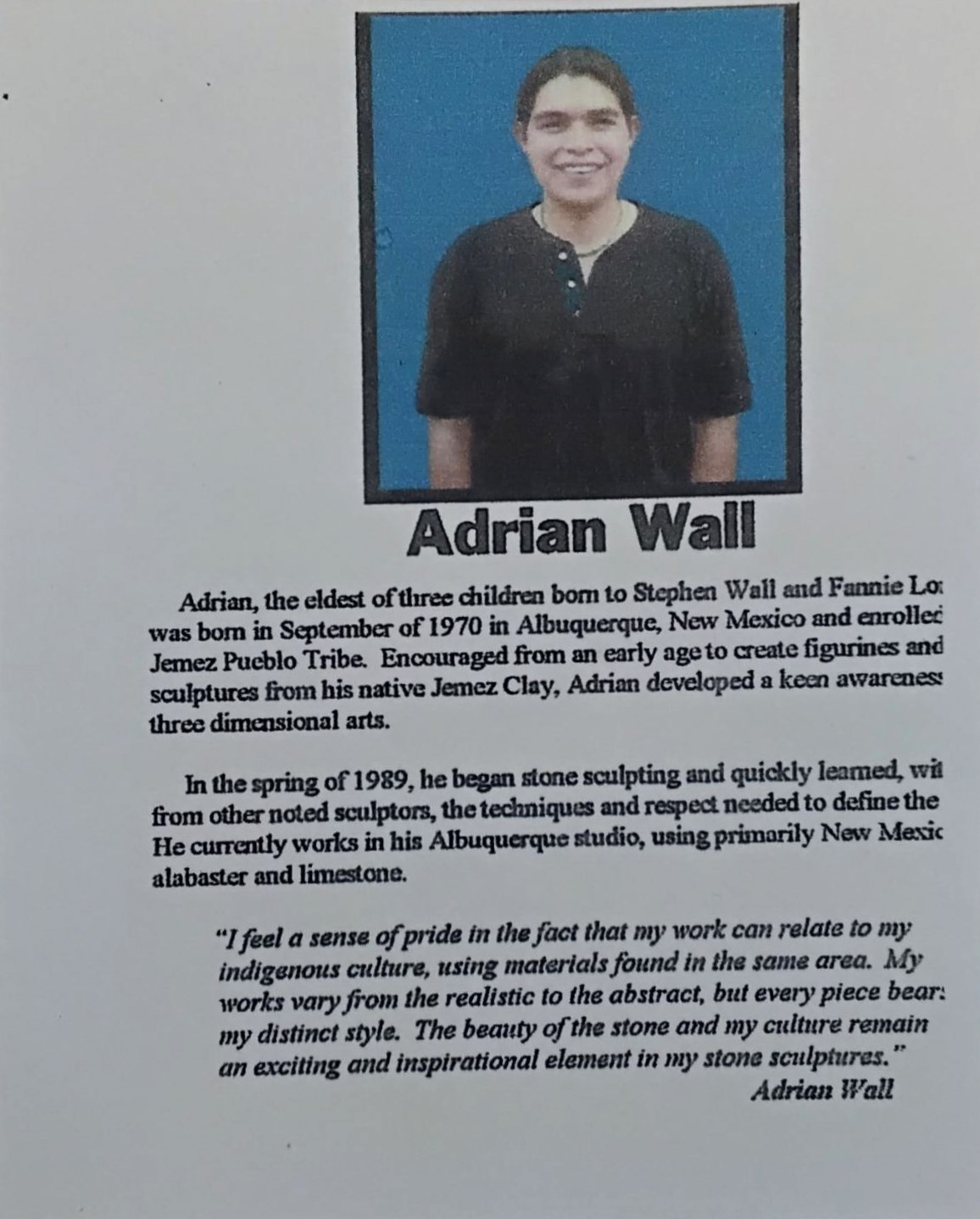
Adrian Wall (b. 1970) is a stone sculptor from Jemez Pueblo, New Mexico, of Jemez, Chippewa, and Laguna heritage. He comes from a prominent artistic family — Kathleen Wall, Steve Wall, and Fannie Loretto are all recognized figures in the Southwestern art world. He began sculpting in his late teens and earned his BFA from the Institute of American Indian Arts in 2014.
Working primarily in Utah alabaster, Wall is known for blending figurative detail with abstract forms, with subject matter rooted in Pueblo architecture, ceremony, and spiritual iconography. His work encompasses perceptions of environment, spiritual beliefs, and subsistence — and in his own words: "My focus is on the Pueblo experience, whether it be capturing the solace of a song or prayer in stone or the playful mischief of a Koshari, these are the images that inspire me."
His accolades include Best in Division at the Eiteljorg Museum Indian Market and 1st place at the Cherokee Indian Market (2007). He is a member of the Indigenous Sculptors Society and has received fellowships from the National Museum of the American Indian, the School for Advanced Research (Rollin and Mary Ella King Native Artist Fellowship), and the Southwest Association for Indian Arts. His work is held in the permanent collections of the Eiteljorg Museum, the Indian Pueblo Cultural Center Museum, and the Hauku Museum, as well as private collections across the United States.