James Nathan Muir "Rescue Under Fire" Bronze 1980 — AP/15 View Watchlist >
- Winning Bid: $7,927.77
- 180 Bid(s) View Bid History
- High Bidder: luissanmartin
Seller Accepts Credit Cards
Payment and pickup instructions will be available on your invoice (under "My Account") at the conclusion of this auction.
Lot # C452
System ID # 27101648
Start Date
End Date
9 Watching
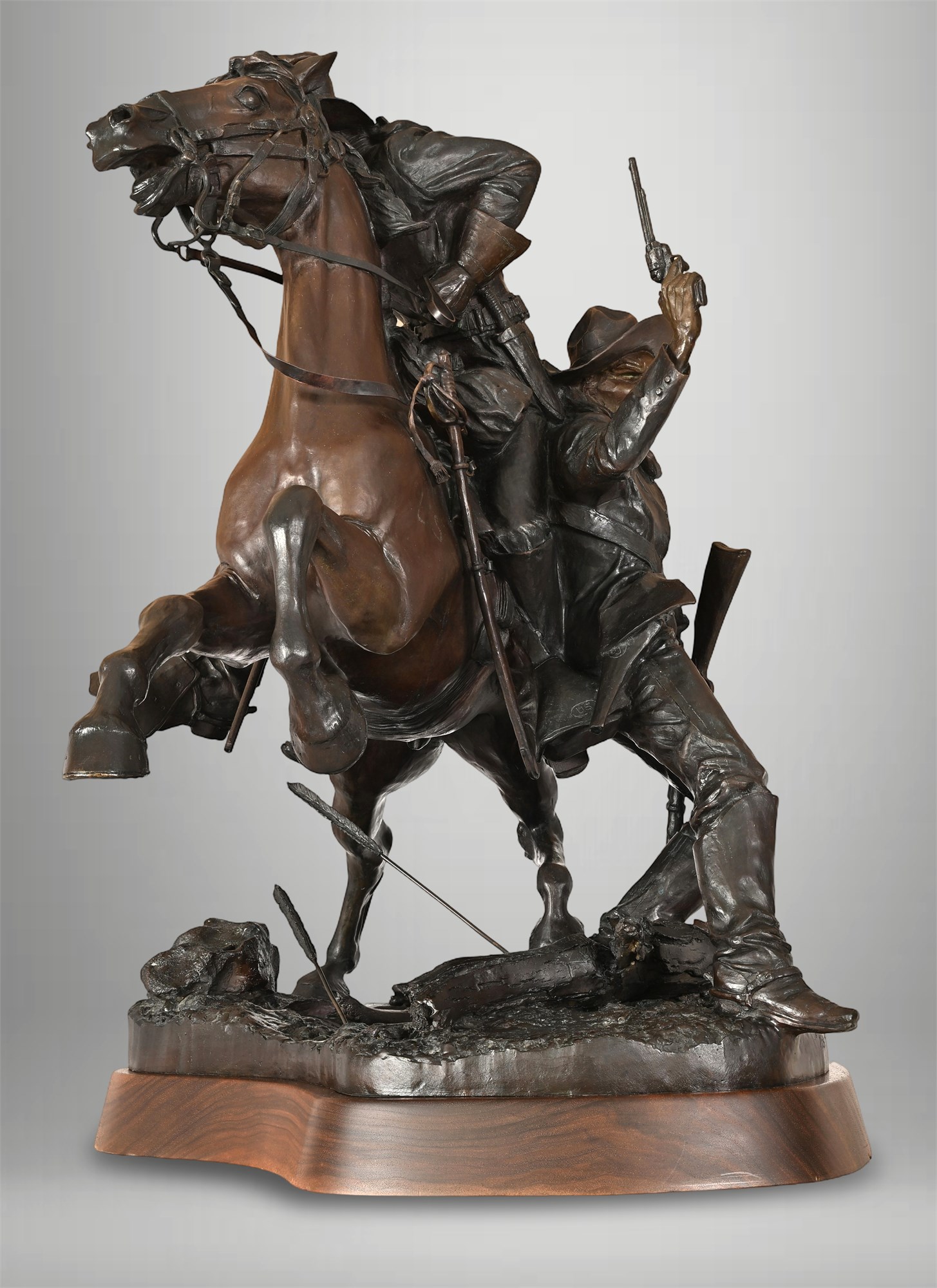
James Nathan Muir "Rescue Under Fire" Bronze 1980 — AP/15
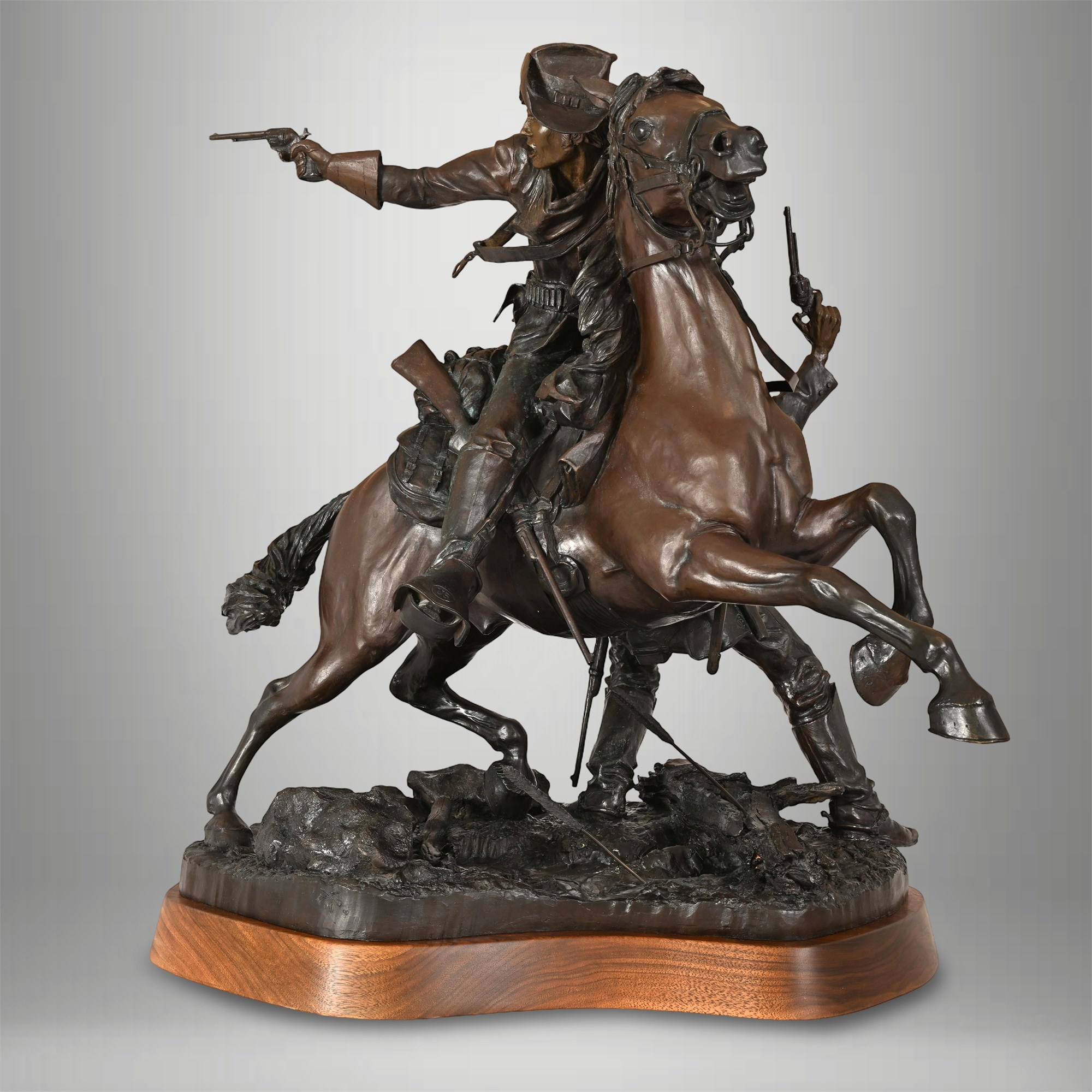
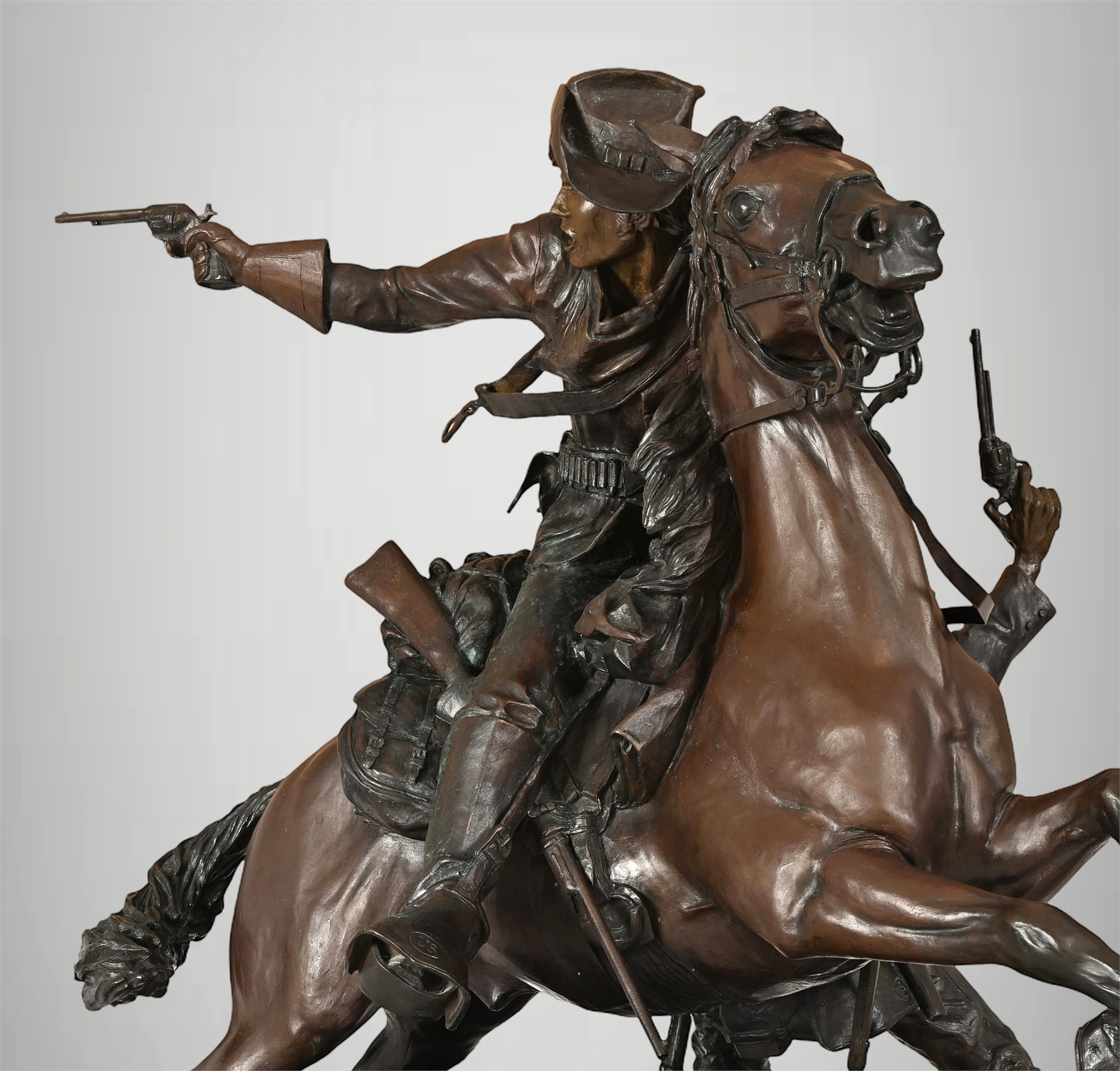
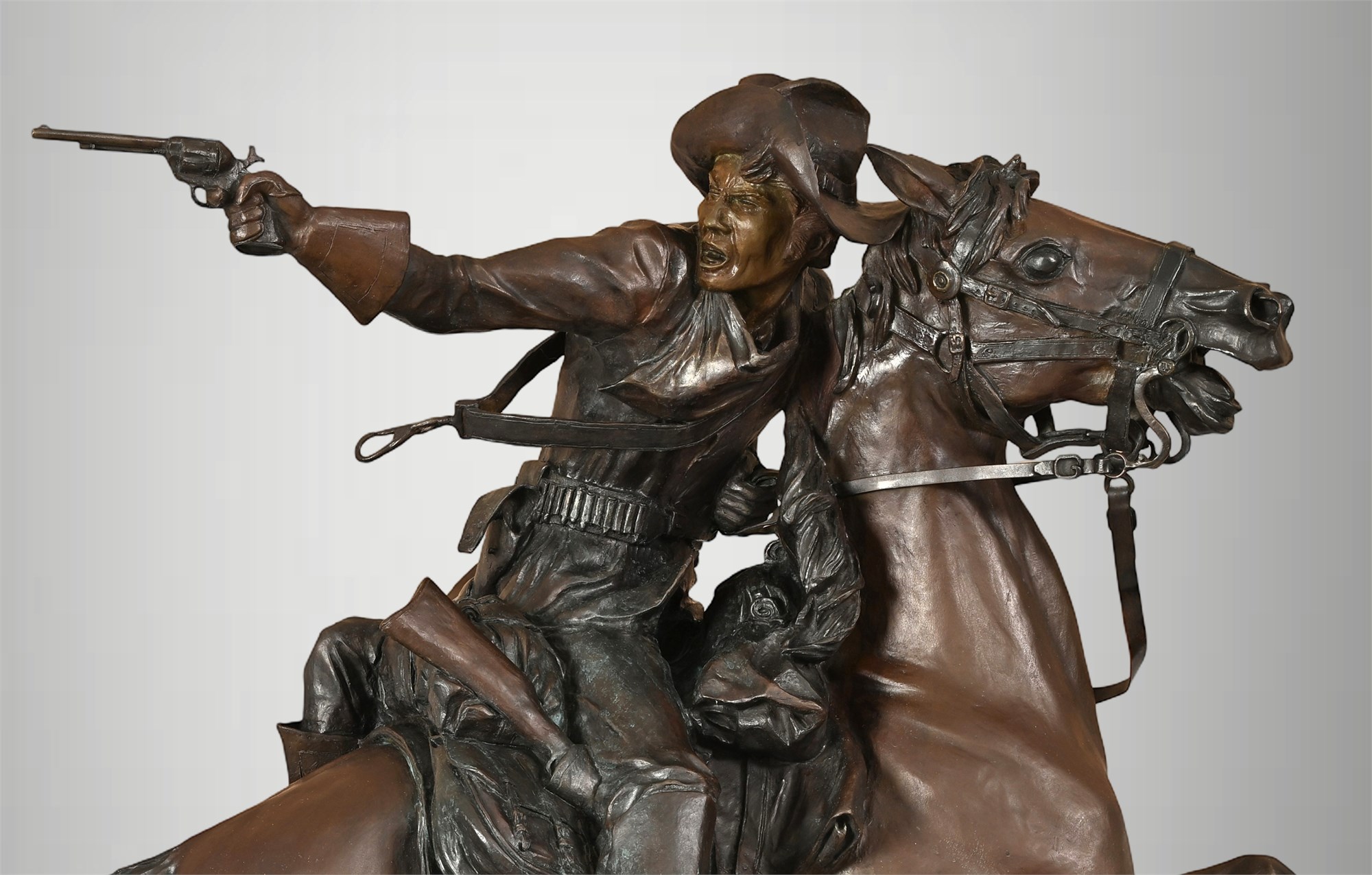
"Rescue Under Fire" is a monumental lost-wax cast bronze by James Nathan Muir (American, b. 1945, Indianapolis) — one of the most decorated public sculptors working in the American West today, with permanent installations at West Point, the U.S. Cavalry Museum, the Gettysburg Battlefield Museum, the George W. Bush Presidential Library, The Alamo, and the Birkenau Museum at Auschwitz, among more than 110 publicly commissioned works worldwide.
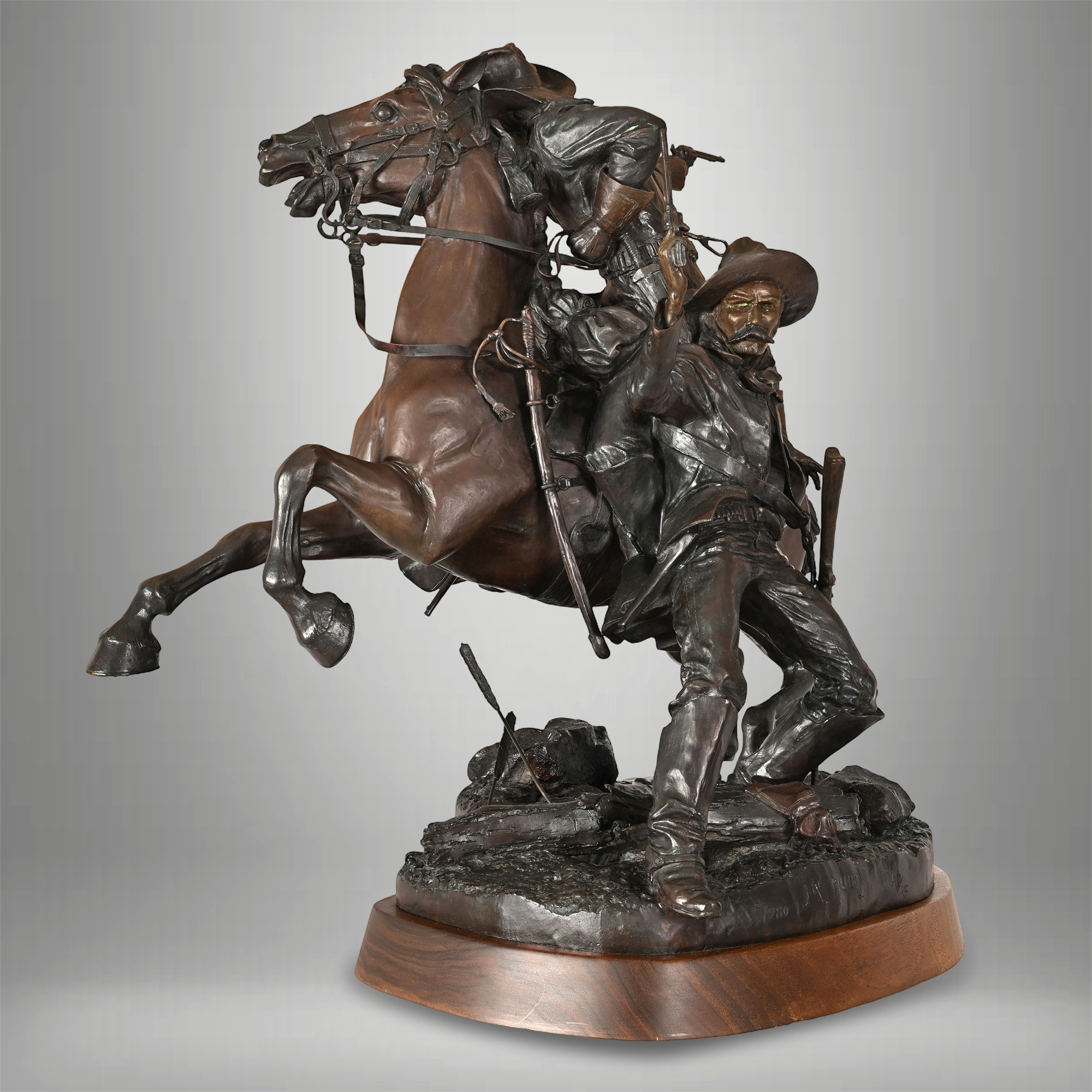
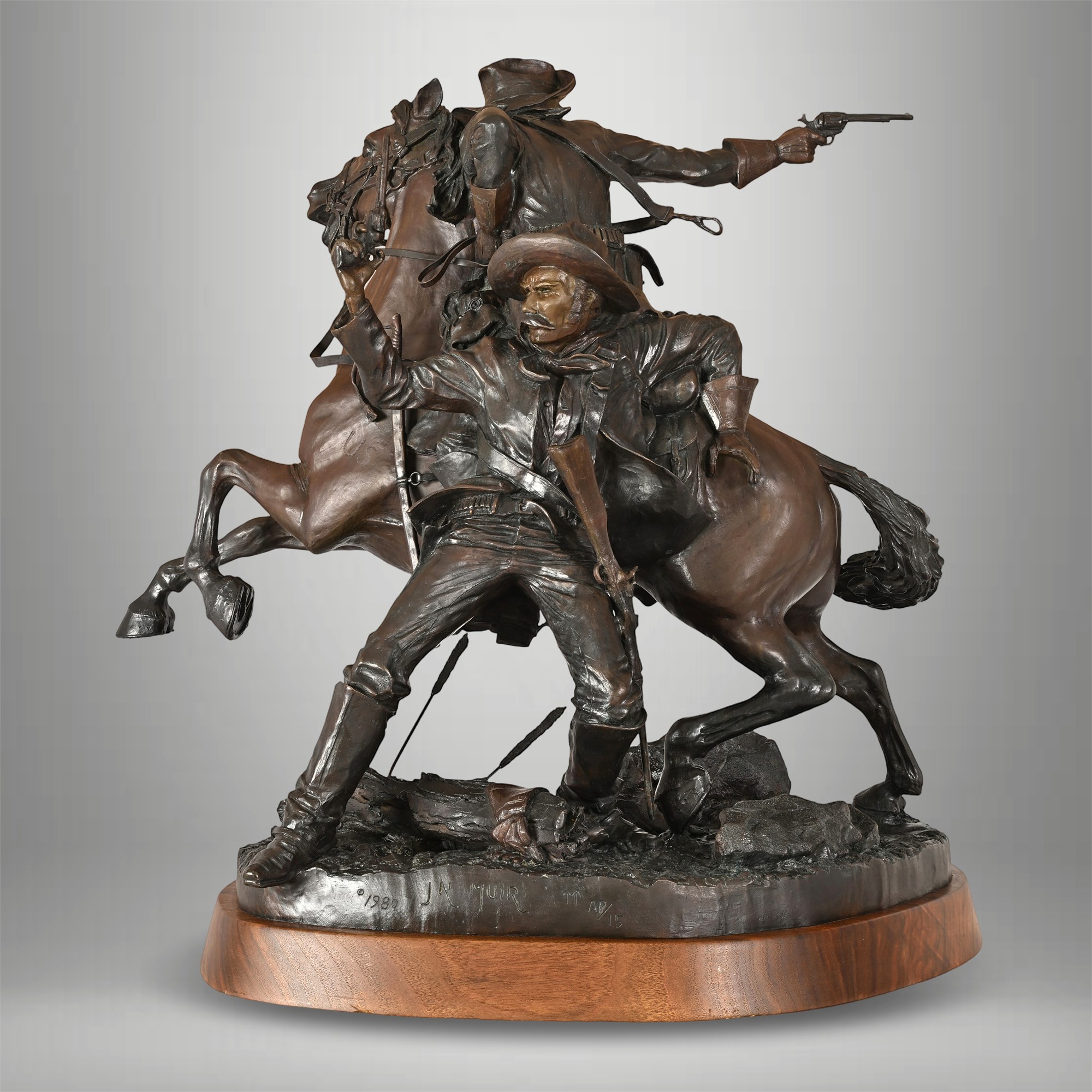
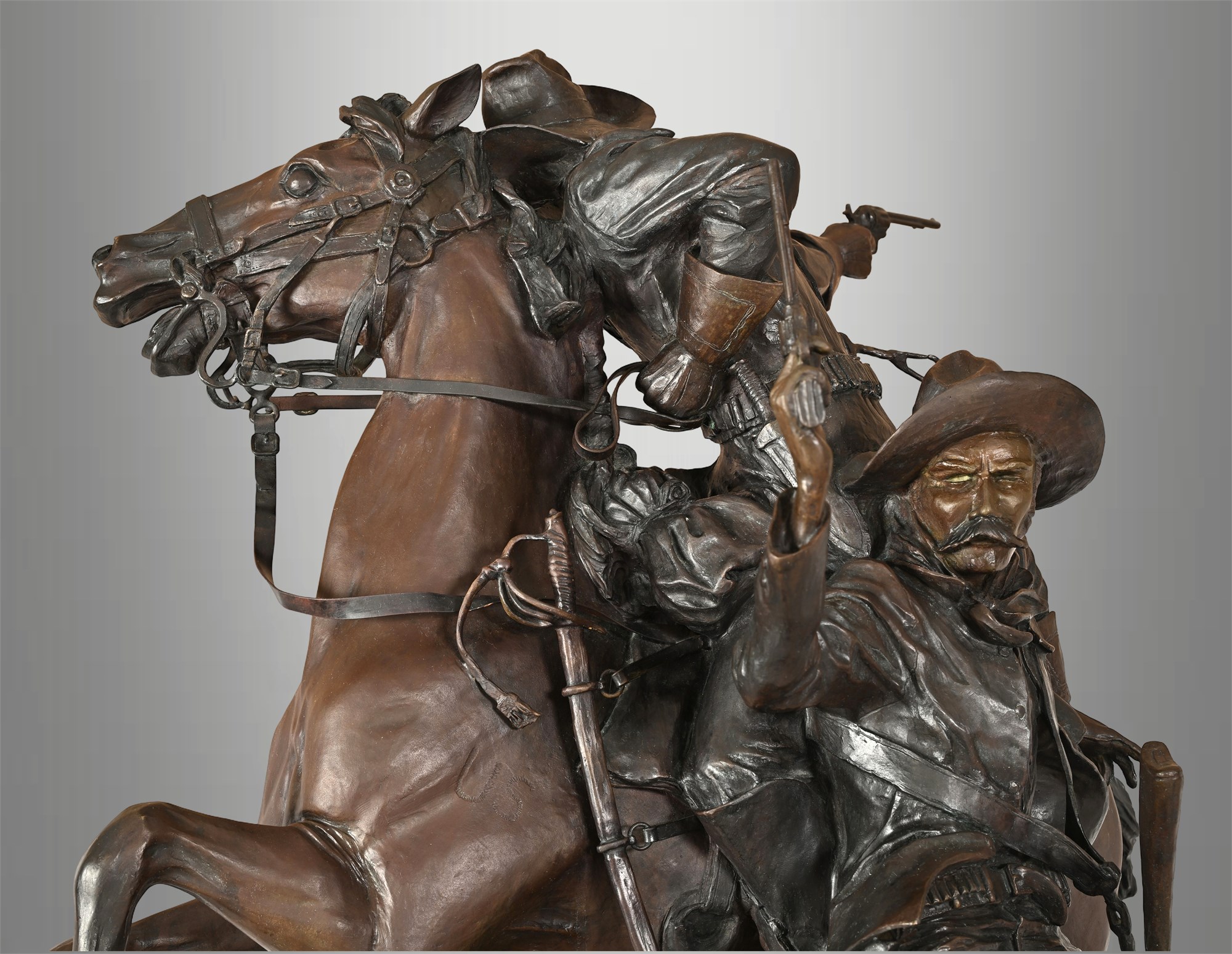
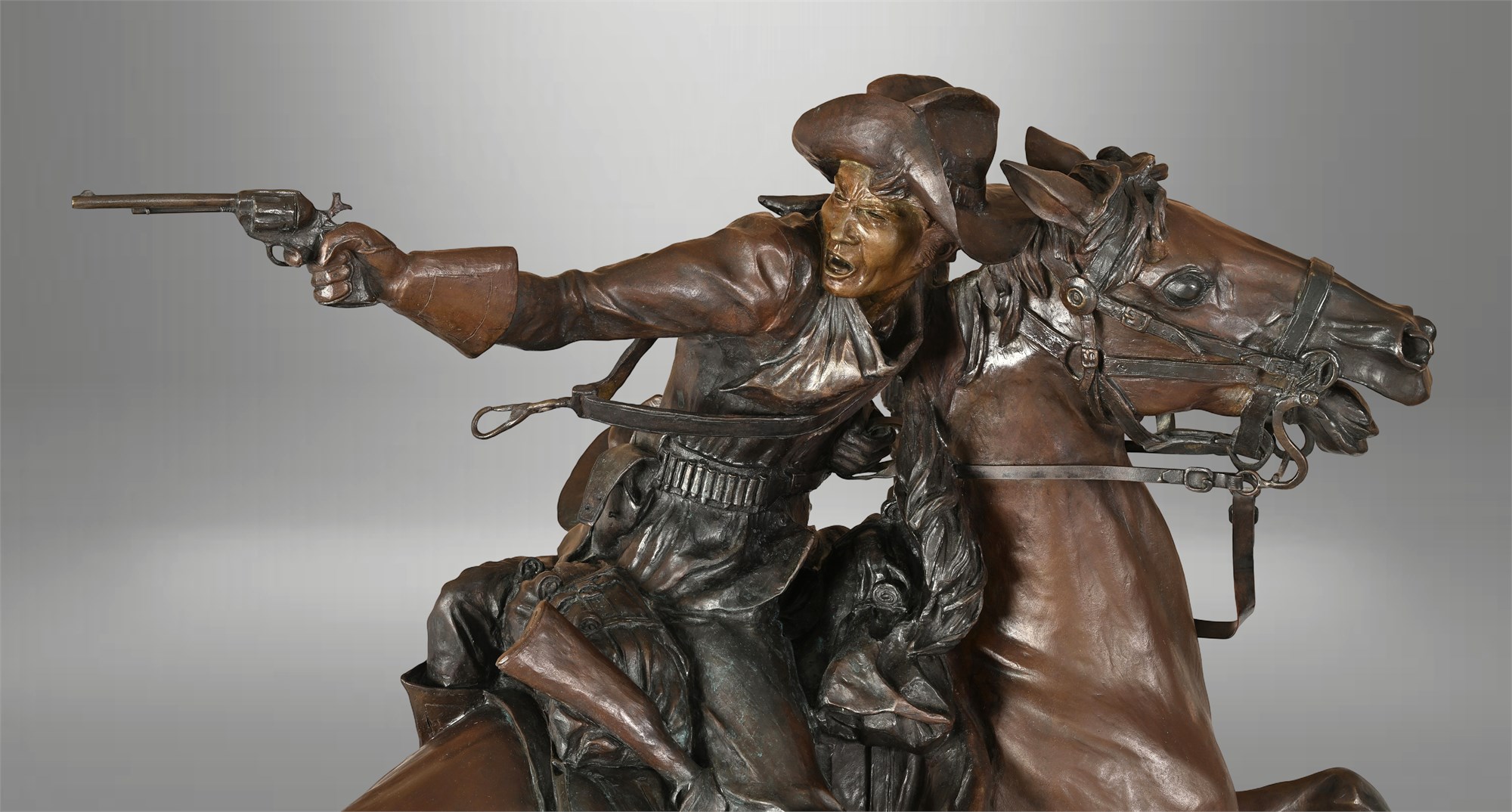
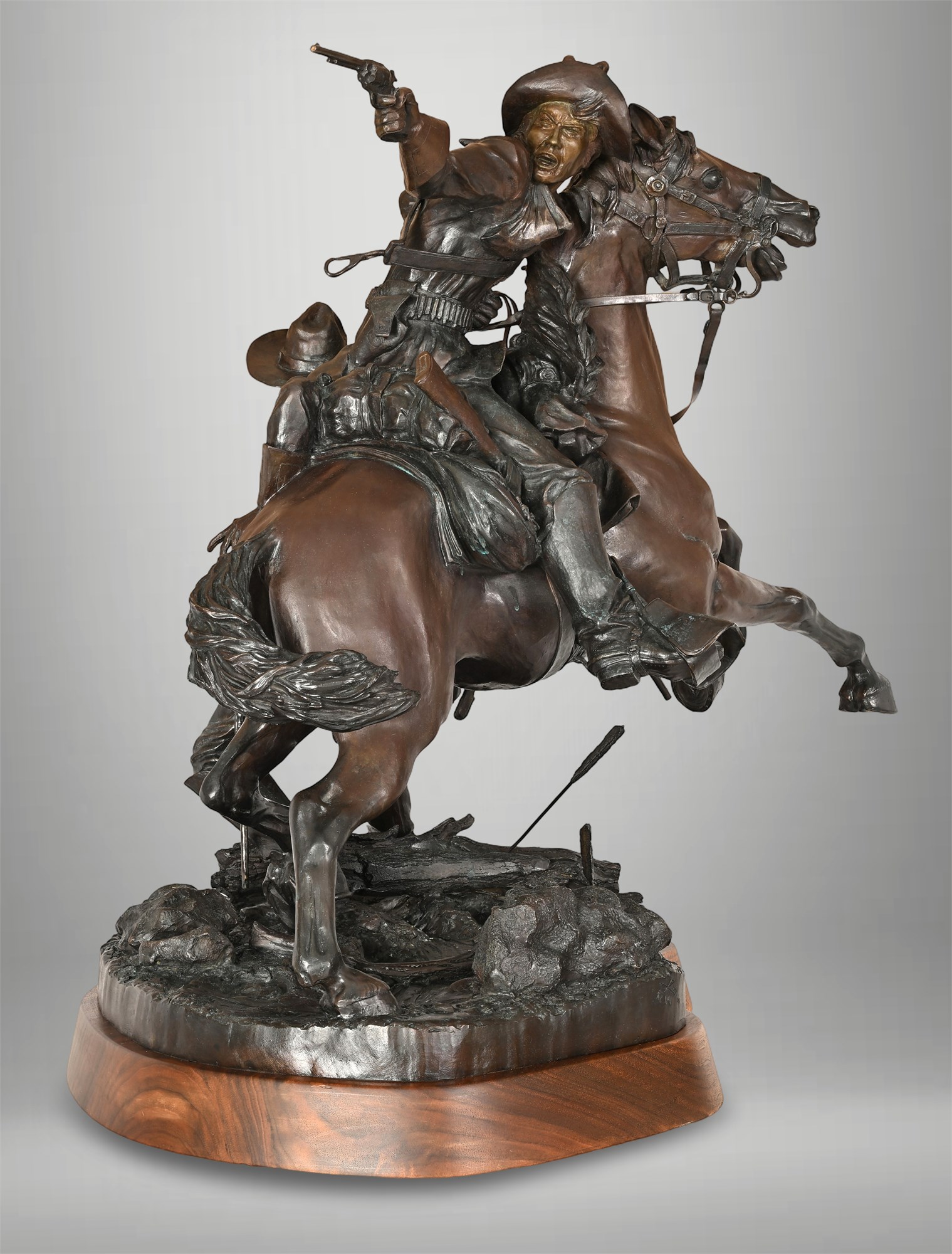
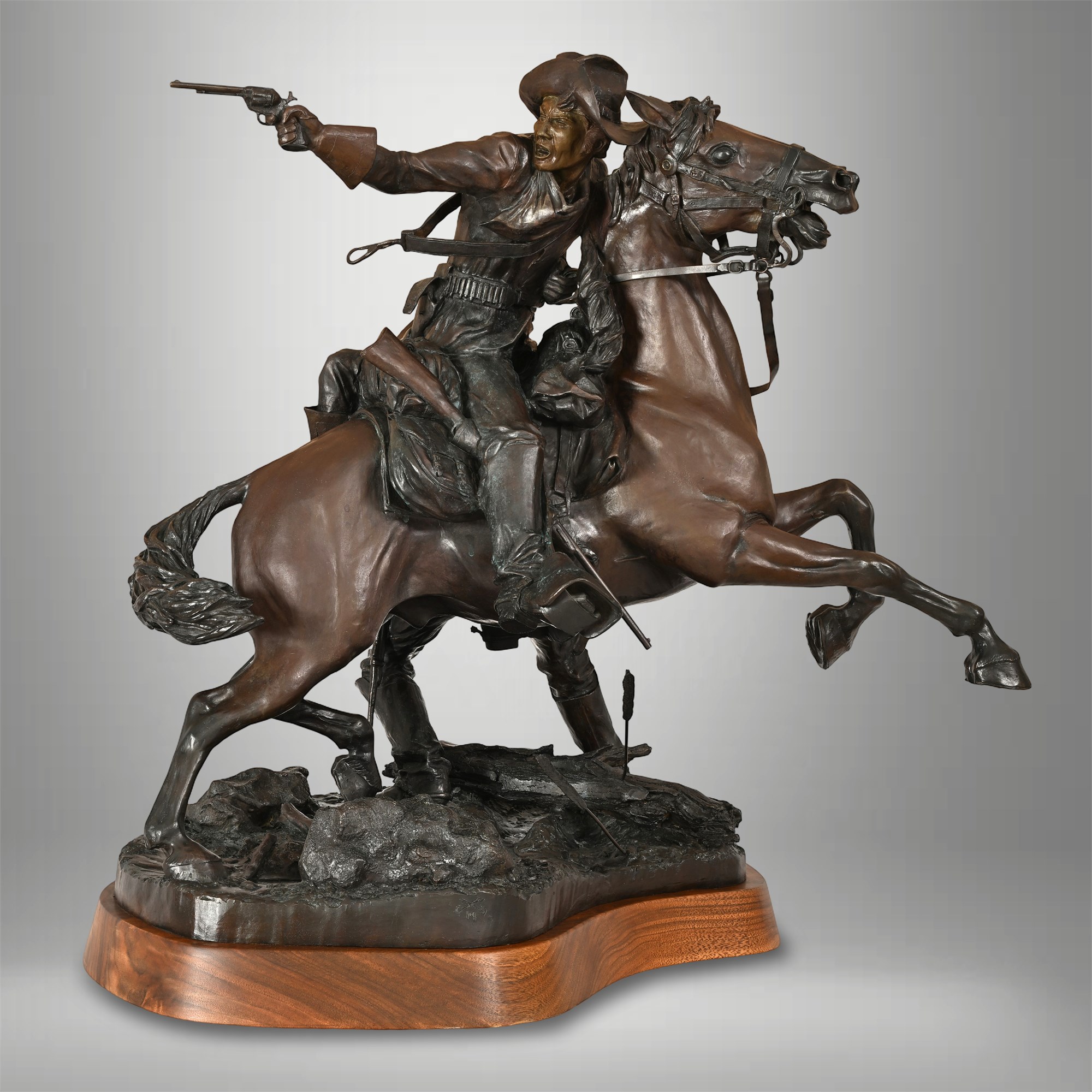
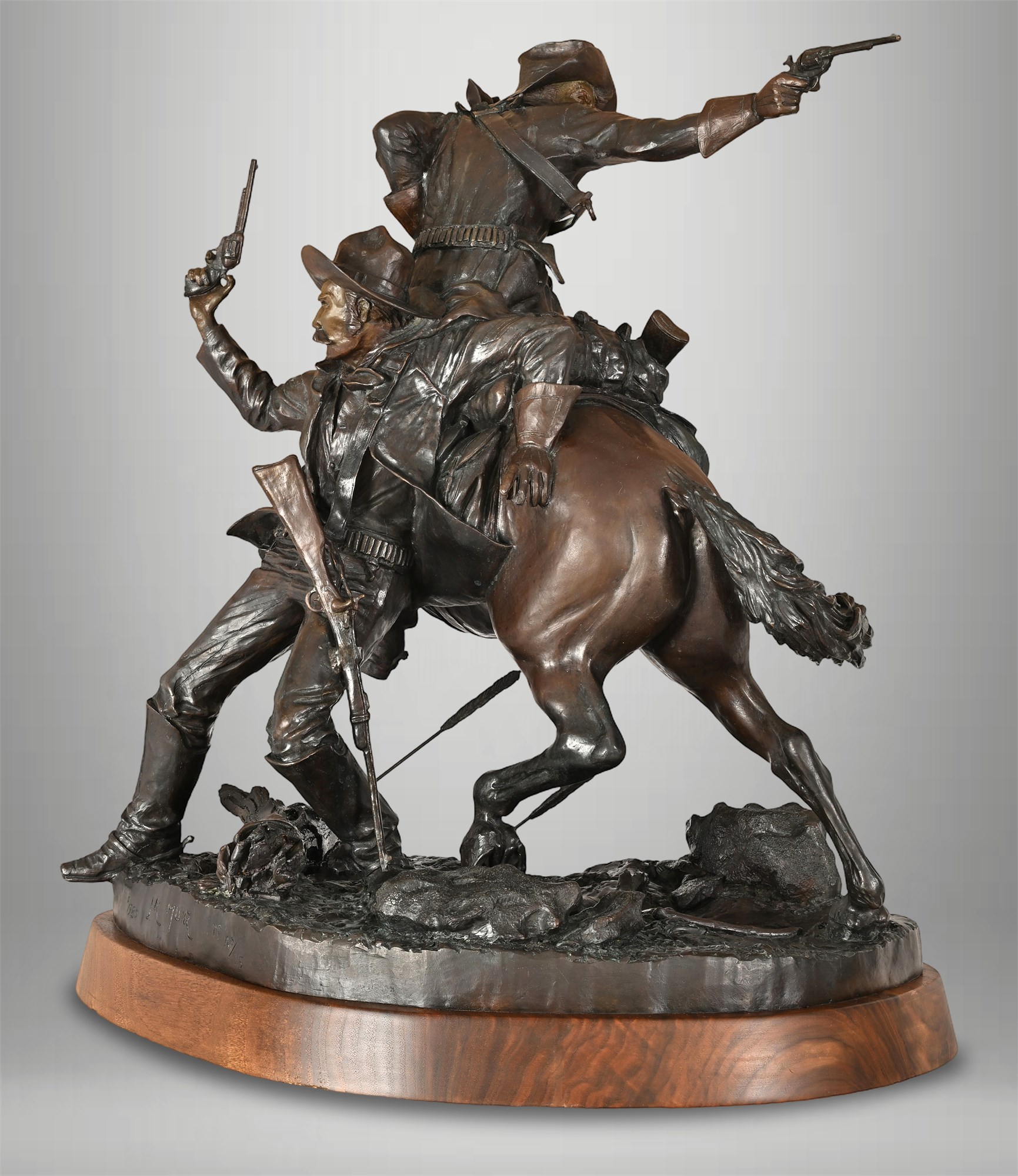
Muir came to sculpture with a biography unlike any of his peers: West Point cadet, six-year U.S. Army and Air Force veteran, Indiana University business graduate. When he put his hands to clay professionally for the first time in Sedona, Arizona, this is what emerged. The composition depicts two frontiersmen — a mounted soldier firing from atop a rearing horse, and a dismounted comrade fighting alongside him — locked together in a last, defiant stand.
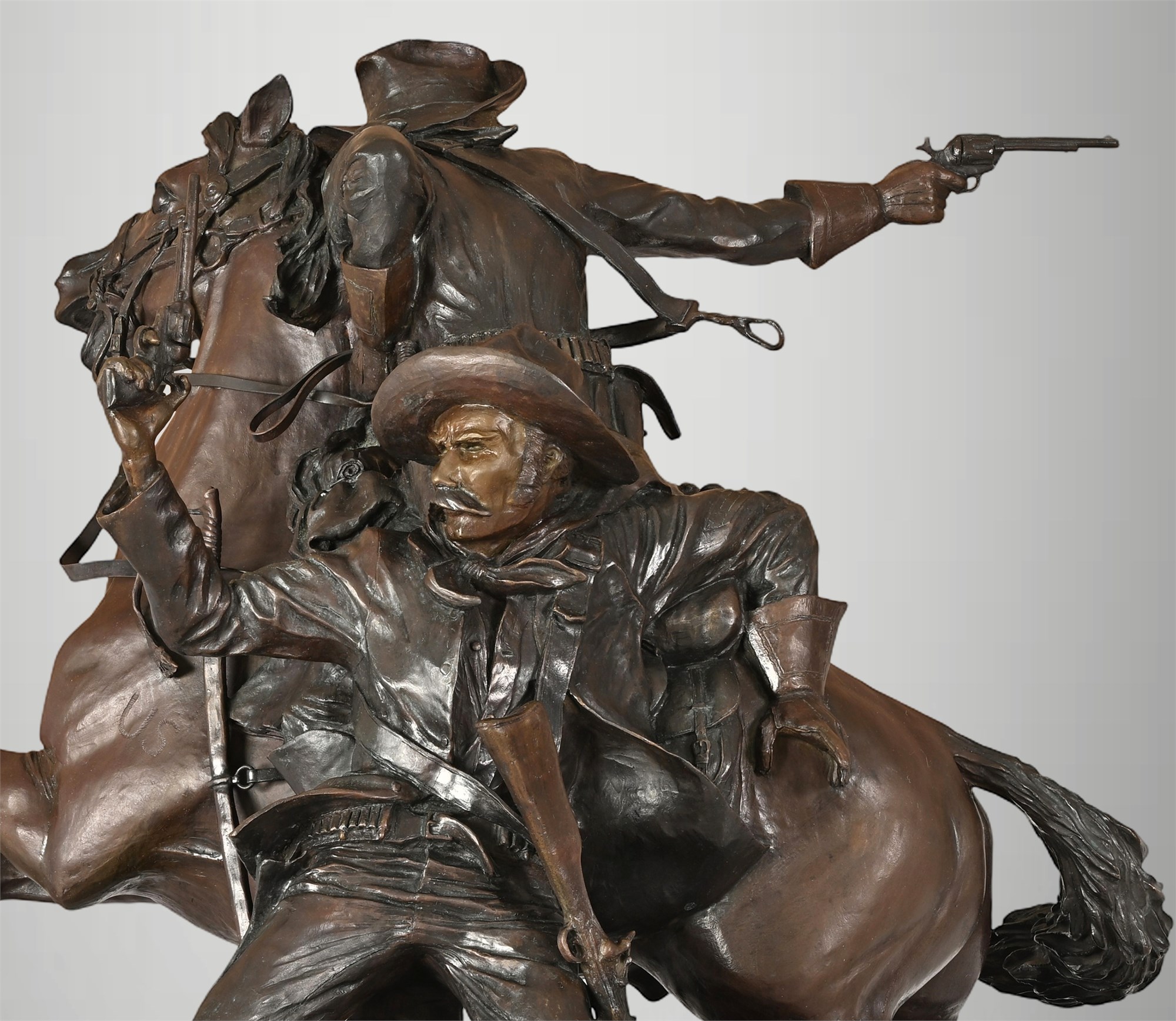
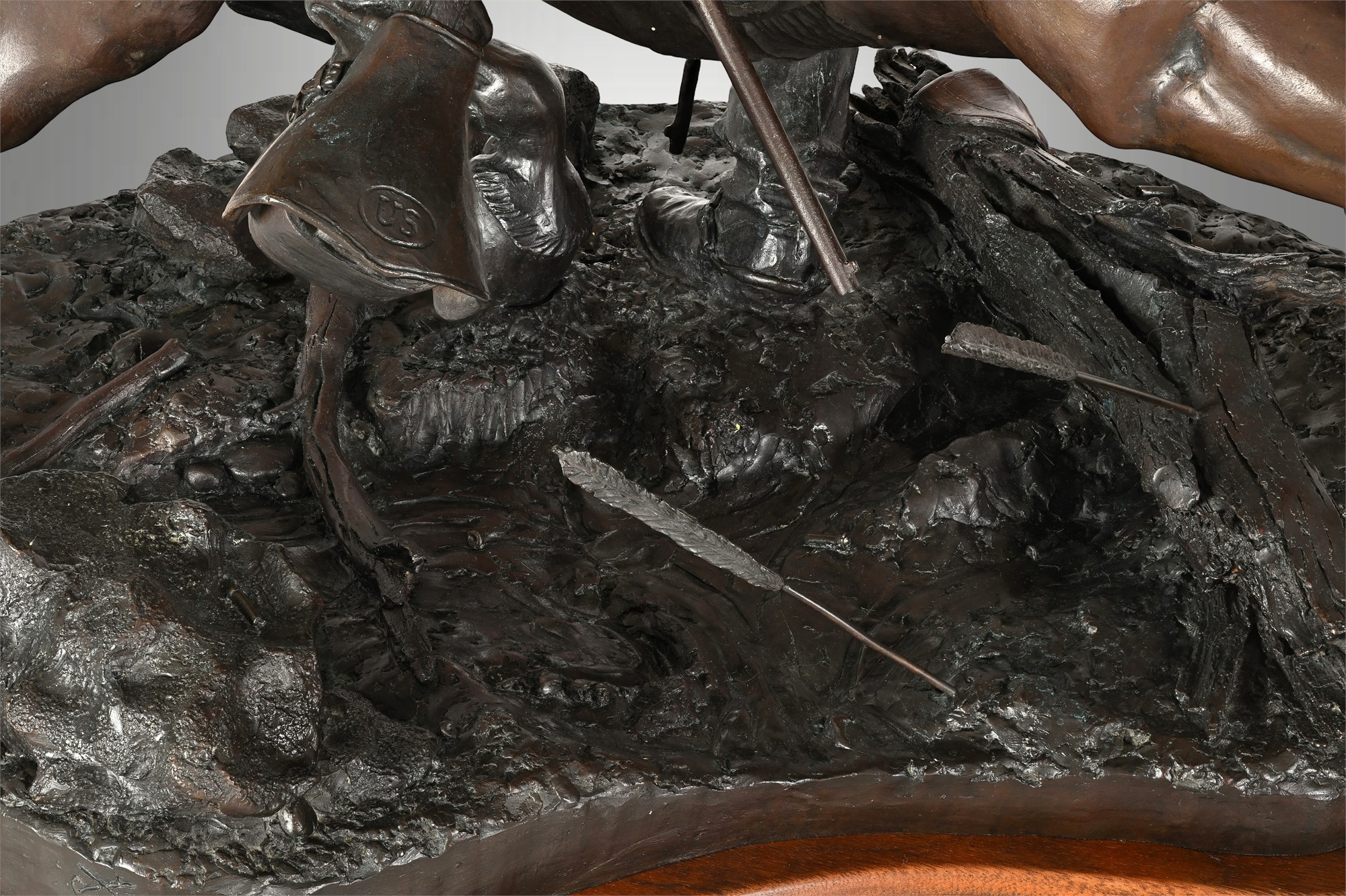
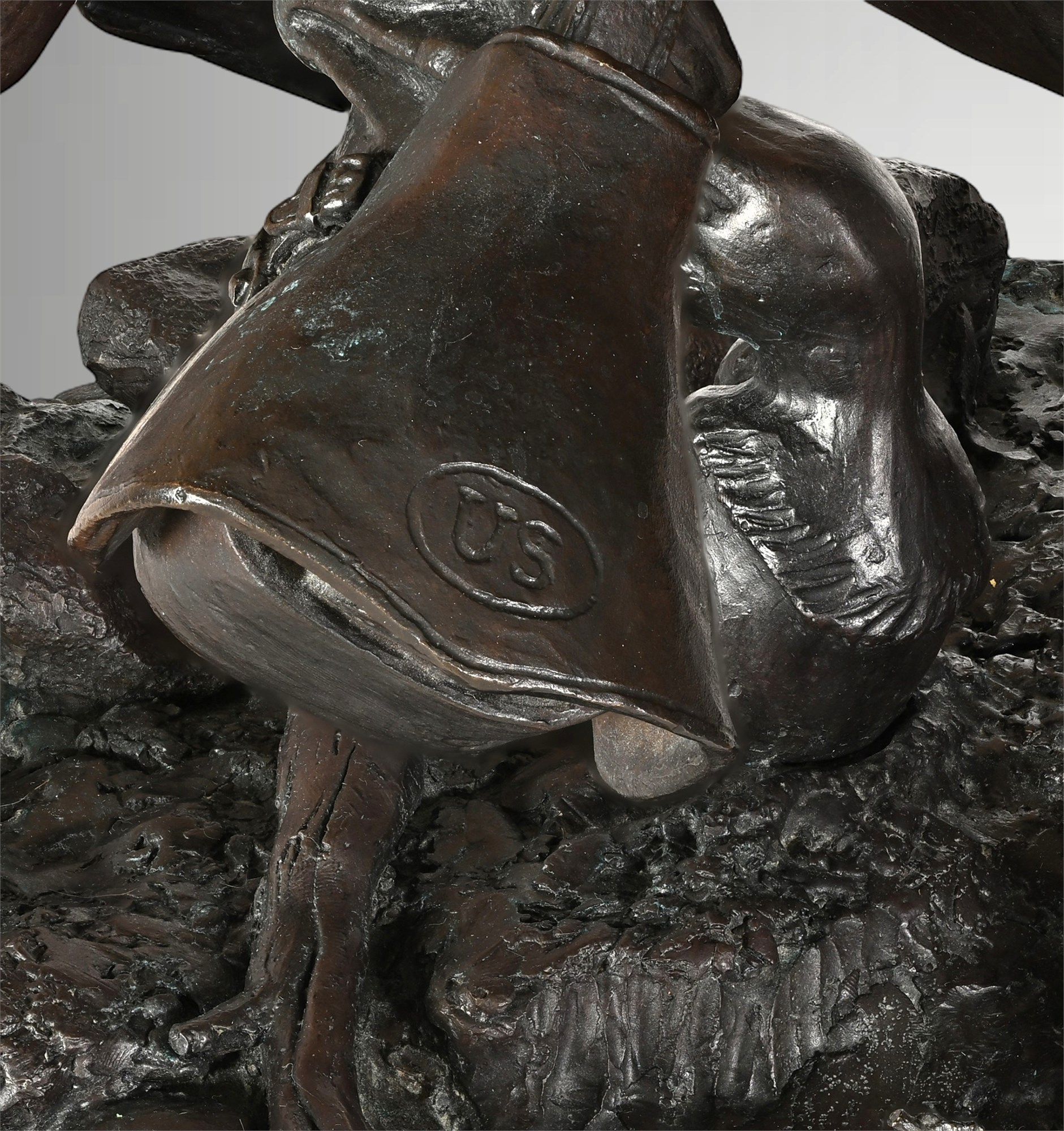
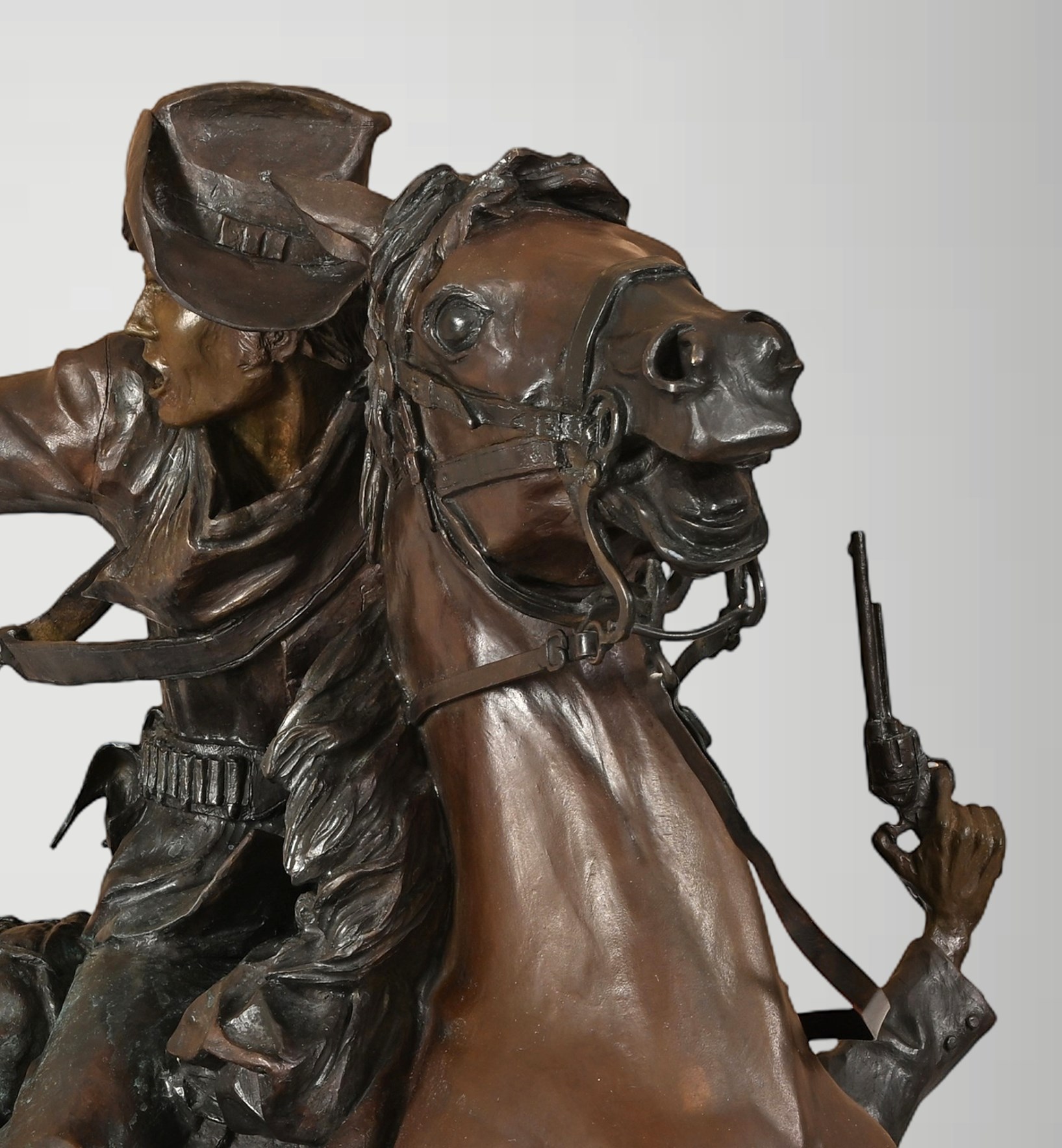
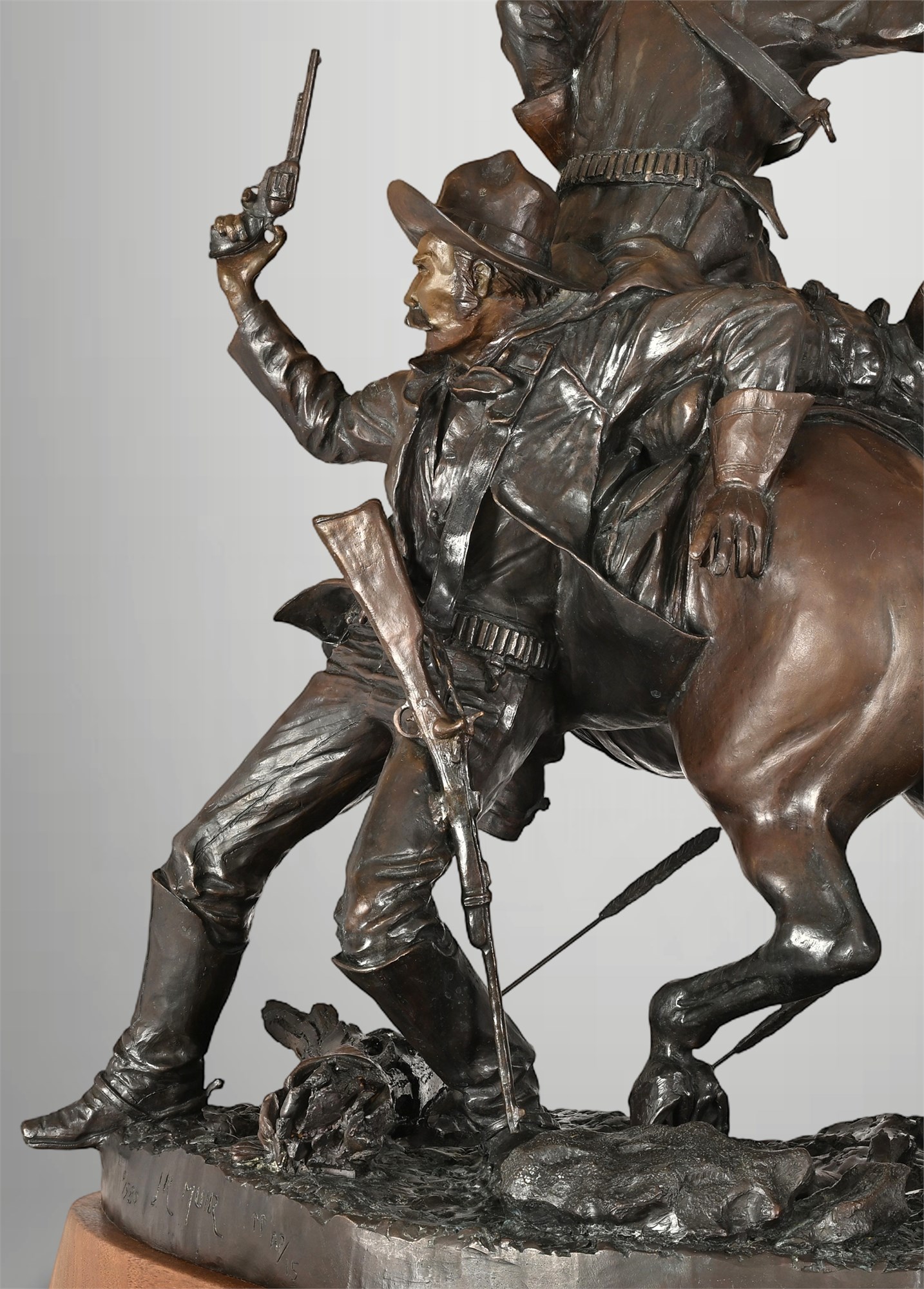
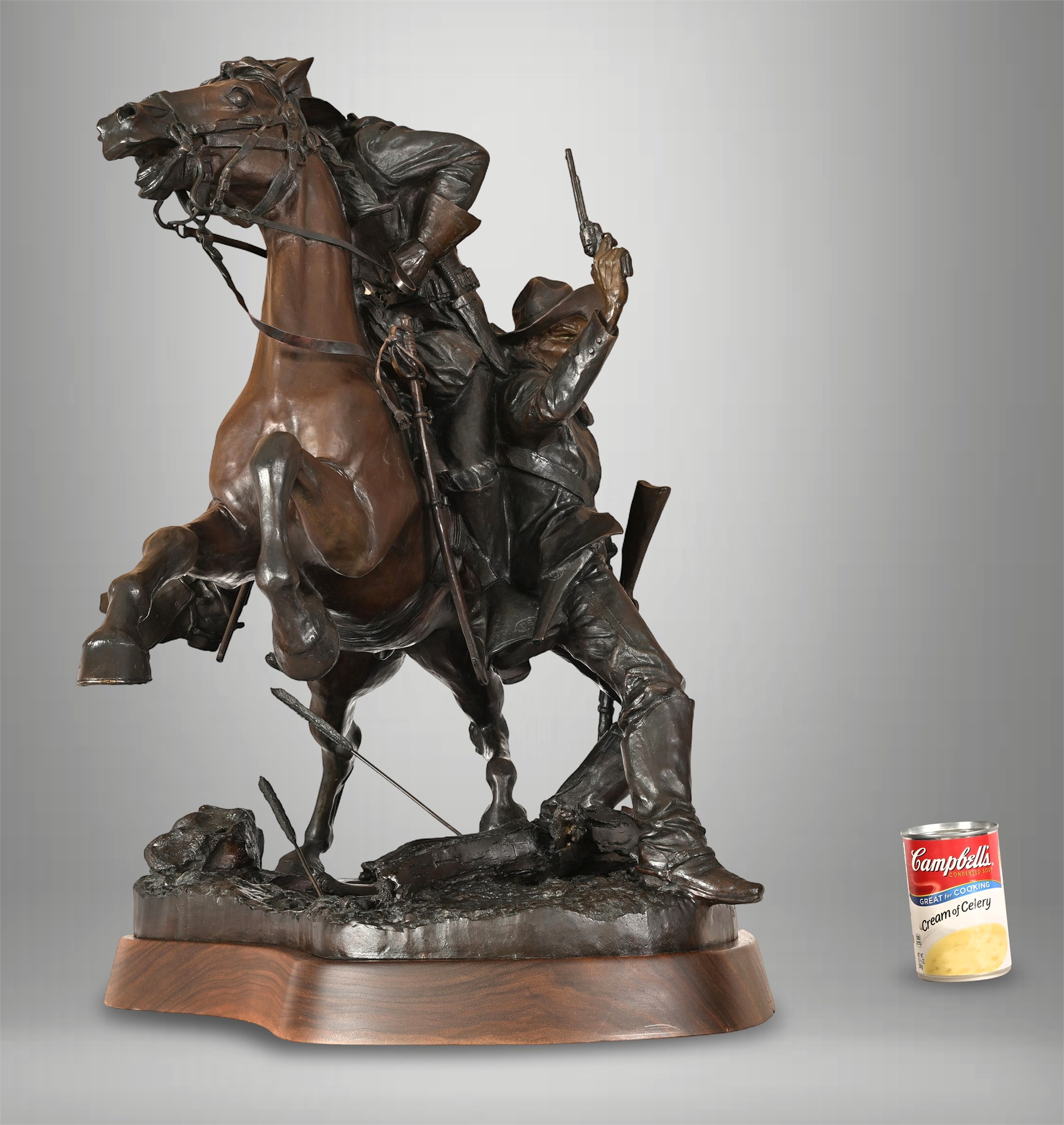
Every inch of the casting rewards close attention. A US-marked cavalry saddlebag tumbles beneath the horse's hooves. Arrows and splintered timber litter the rocky ground. Cartridge belts cross both figures. The bridle hardware is rendered with separately cast metal components, the revolver cylinders individually articulated, the expressions of both men captured at the precise instant courage overtakes fear. The horse carries a warm reddish-brown patina against the deep, cooler tones of the figures — a deliberate multi-temperature finish that gives the group a visual depth photographs struggle to convey.
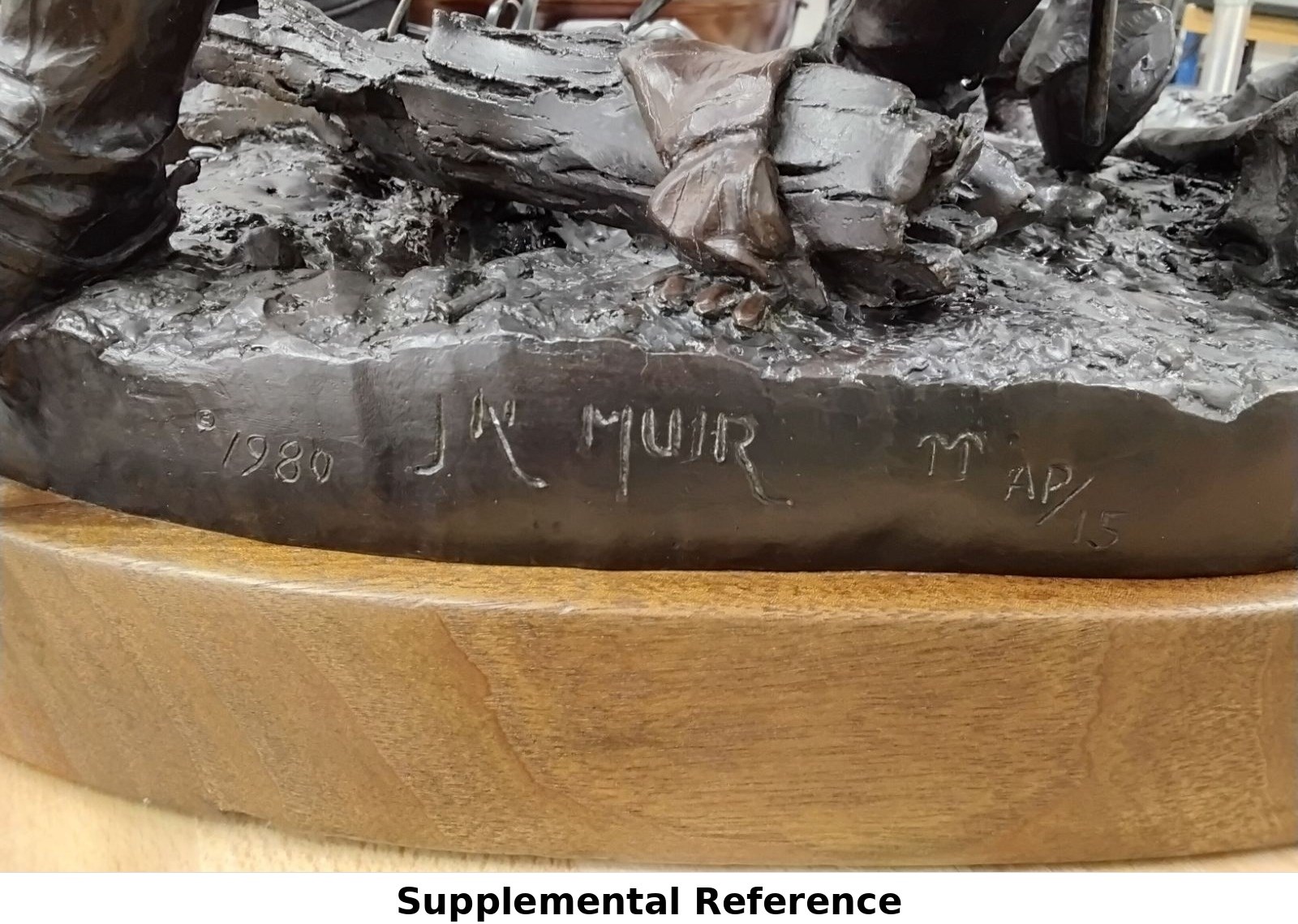
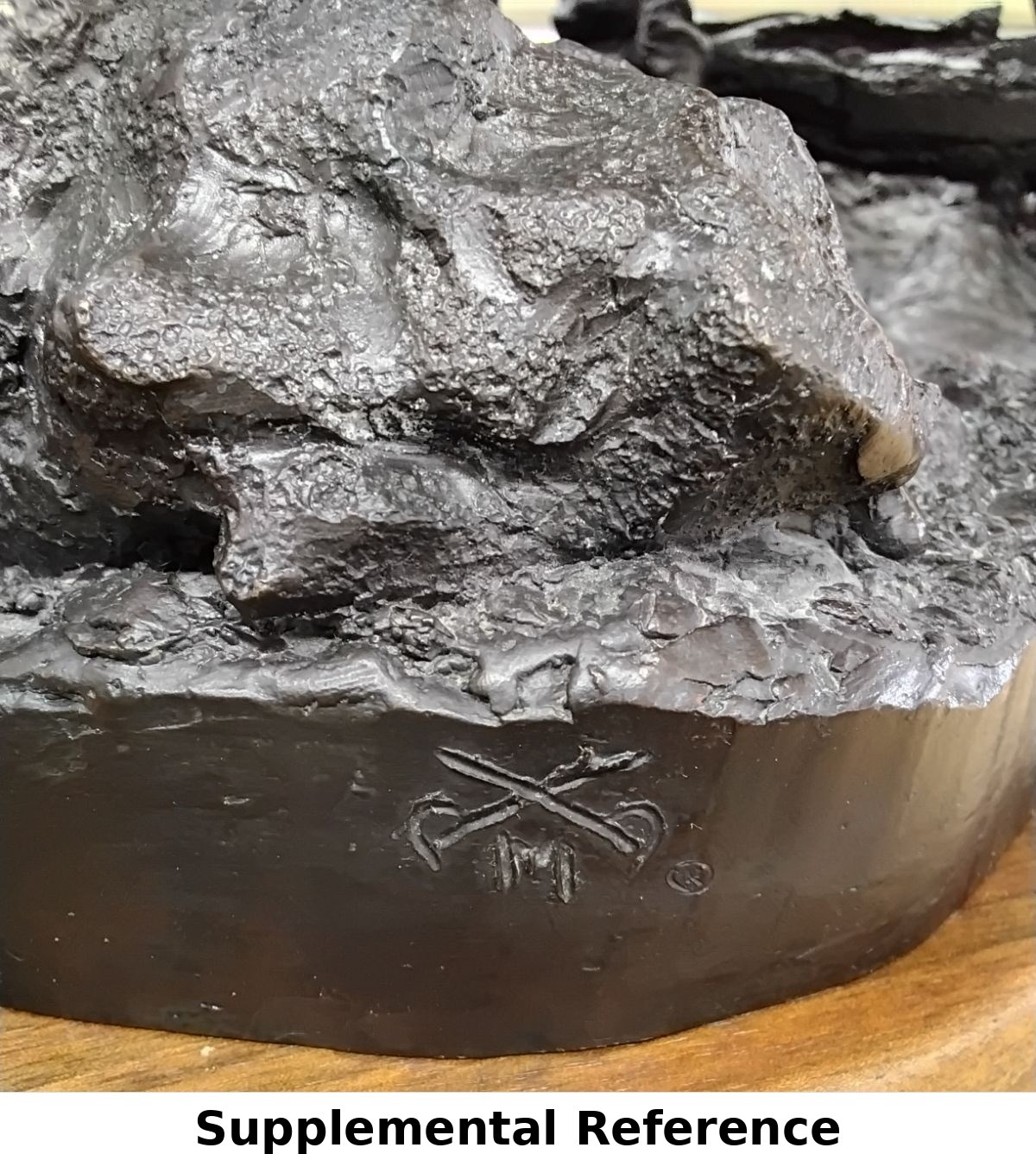
The bronze rests on a 1.75" shaped walnut base with a swivel mechanism that invites examination from every angle, and bears the incised signature "© 1980 J.N. MUIR" alongside the cast crossed-rifles cipher of Seraph M Fine Art Bronze, the Sedona foundry Muir established in 1982.
This example is designated AP/15 — one of only fifteen Artist Proofs cast alongside the standard numbered edition, traditionally held by the artist rather than released to the public. Comparable numbered edition examples of "Rescue Under Fire" have appeared at Heritage Auctions and Selkirk Auctioneers; the AP designation sits above and apart from those lots in rarity, origin, and collector standing. Muir's auction record reached $16,000 at Altermann Galleries, Santa Fe — and that was over two decades ago. A work of this scale, subject, and designation, in this condition, has not been on the market in years.
CONDITION
Excellent. The multi-tone patination is rich, stable, and fully intact across all surfaces with no losses, repairs, cleaning, or repatination noted. The walnut swivel base is clean with no warping, splits, or surface breaks.
DIMENSIONS / SPECIFICATIONS
- Height: 24"
- Width: 24"
- Depth: 18"
- Base Thickness: 1.75"
- Base Type: Shaped walnut, swiveling 360°
- Weight: Approx. 100 lbs
- Edition: AP/15 (Artist Proof)
- Inscription: © 1980 J.N. MUIR M AP/15 (incised on bronze base)
- Foundry Mark: Cast crossed-rifles over "M" cipher (Seraph M Fine Art Bronze, Sedona, AZ)
- Date: 1980
- Artist: James Nathan Muir (American, b. 1945)
- Campbell's Soup Can (4" H) Shown for Scale
ARTIST BIOGRAPHY — James Nathan Muir (American, b. 1945)
James Nathan Muir was born in Indianapolis, Indiana in 1945. His path to sculpture was anything but direct — and that circuitous route is precisely what makes his work what it is.
Muir attended the United States Military Academy at West Point before completing his B.S. degree at Indiana University in 1970, having served six years across both the U.S. Army and Air Force. Unlike many artists, Muir came to his vocation relatively late in life. After working at ranches in both Texas and Arizona, he finally settled in Sedona, Arizona, and there embarked on a career in sculpting, specializing in equestrian subjects of the American Frontier and Civil War.
His professional sculpting career began in Sedona in 1980 — the year "Rescue Under Fire" was created. He owned his own bronze casting foundry, Seraph M Fine Art Bronze, from 1982 to 1988 in Sedona, Arizona. Works cast during that window — including Artist Proofs of his earliest compositions — were produced under his direct supervision, at his own facility, with the standards of a man who had built his life around a personal code of honor.
Allegorical Art is the term Muir uses to describe his work — art filled with symbolic meaning, bridging the centuries from historical military subjects to social, political, and spiritual commentary. His sculptures speak of Duty, Honor, Courage, and Justice.
Muir is a member of the Society of American Historical Artists. In 2005 he founded the Human Liberty ARTT Foundation (Artistic Responsibility To Truth), whose mission is to promote human liberty through the arts and education, and to place sculptures and monuments to courage, hope, and freedom around the world.
His public installations now number more than 150 works. Public collections include the United States Military Academy at West Point, the U.S. Cavalry Museum at Fort Riley, the University of Arizona, the Booth Museum in Georgia, the Birkenau Museum at Auschwitz, St. Louis University, the Gettysburg Battlefield Museum, Texas A&M University, the Sons of the American Revolution Headquarters, the Atlanta Historical Society, Paul Harvey Broadcasting Headquarters, The Alamo in San Antonio, and the Chapel of the Holy Cross in Sedona — among the most prominent private collections in America.
His first book, Lanterns Along The Path, published in 2004, was carried nationwide by Barnes & Noble and received the 2004 Pinnacle Book Achievement Award in the Inspirational Category.
"Rescue Under Fire," dated 1980, stands at the origin point of one of the most consequential careers in American Western sculpture — the very first year a West Point cadet, soldier, rancher, and horseman finally put bronze to his lifelong convictions.