Daniel Oyster, Reading PA — Early 19th-Century Cherry Tall Case Clock with Moon View Watchlist >
- Winning Bid: $775.00
- 61 Bid(s) View Bid History
- High Bidder: MedinaFineArt
Seller Accepts Credit Cards
Payment and pickup instructions will be available on your invoice (under "My Account") at the conclusion of this auction.
Lot # A953
System ID # 26263731
Start Date
End Date
10 Watching
Daniel Oyster, Reading, Pennsylvania
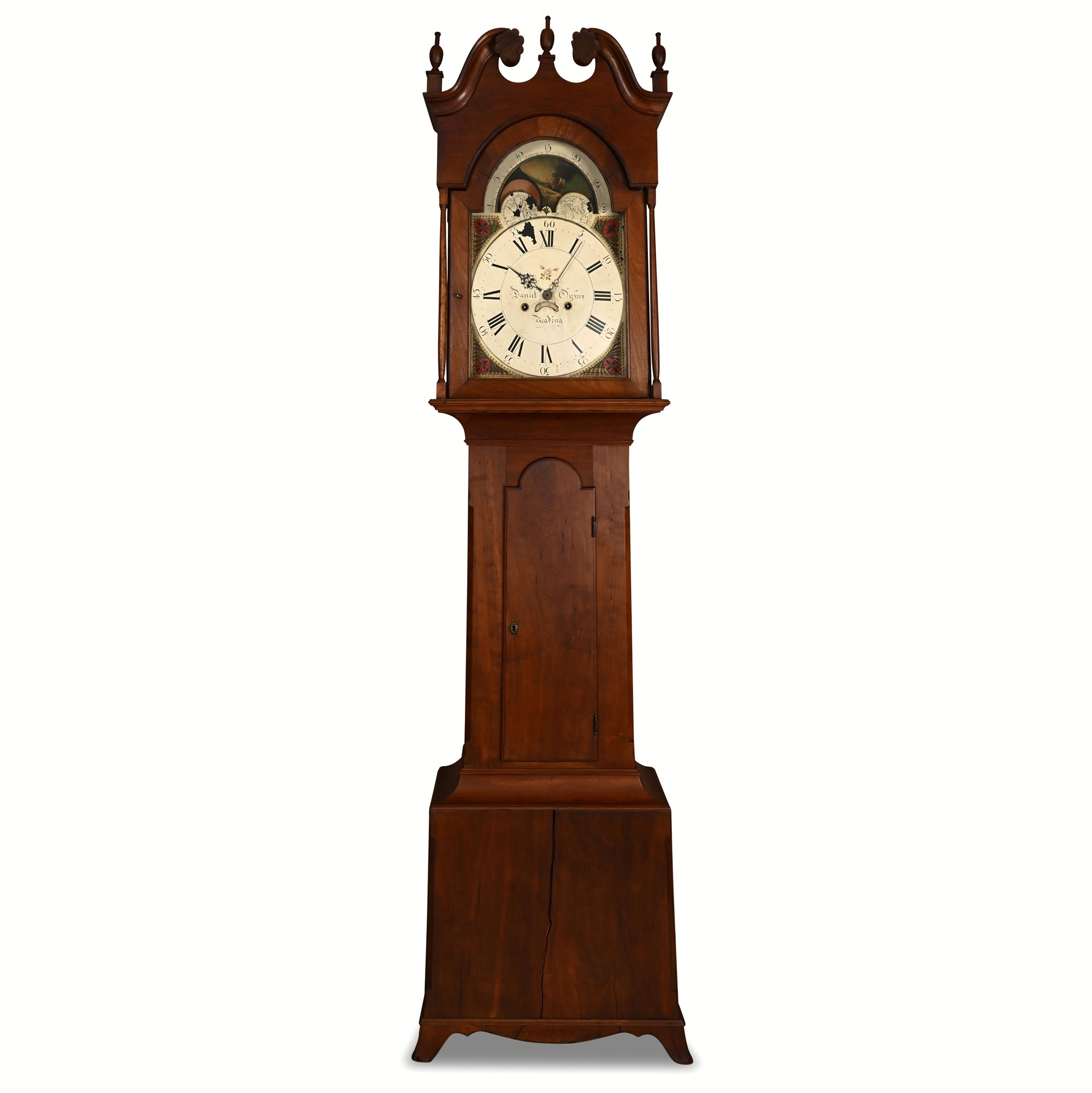
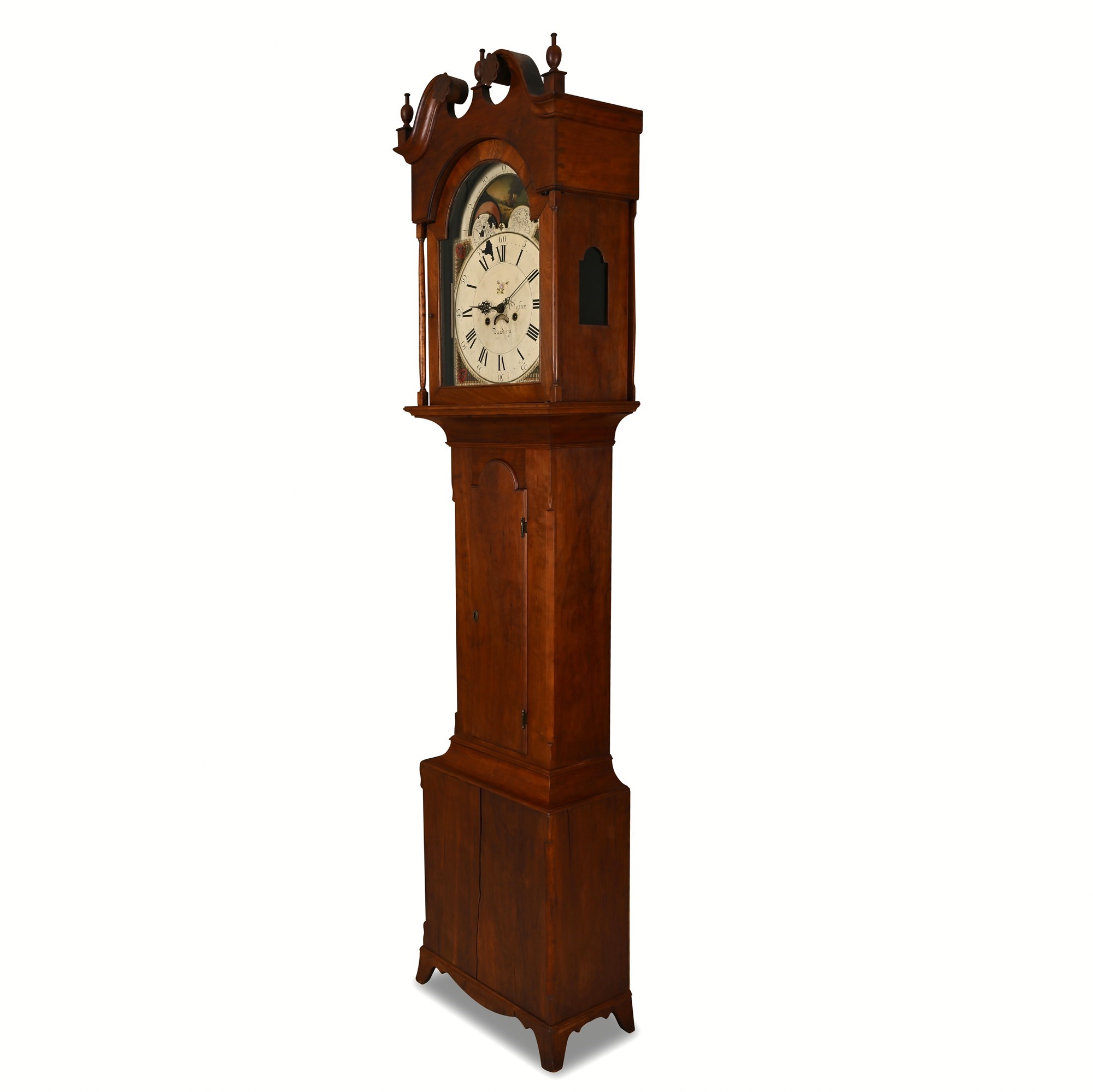
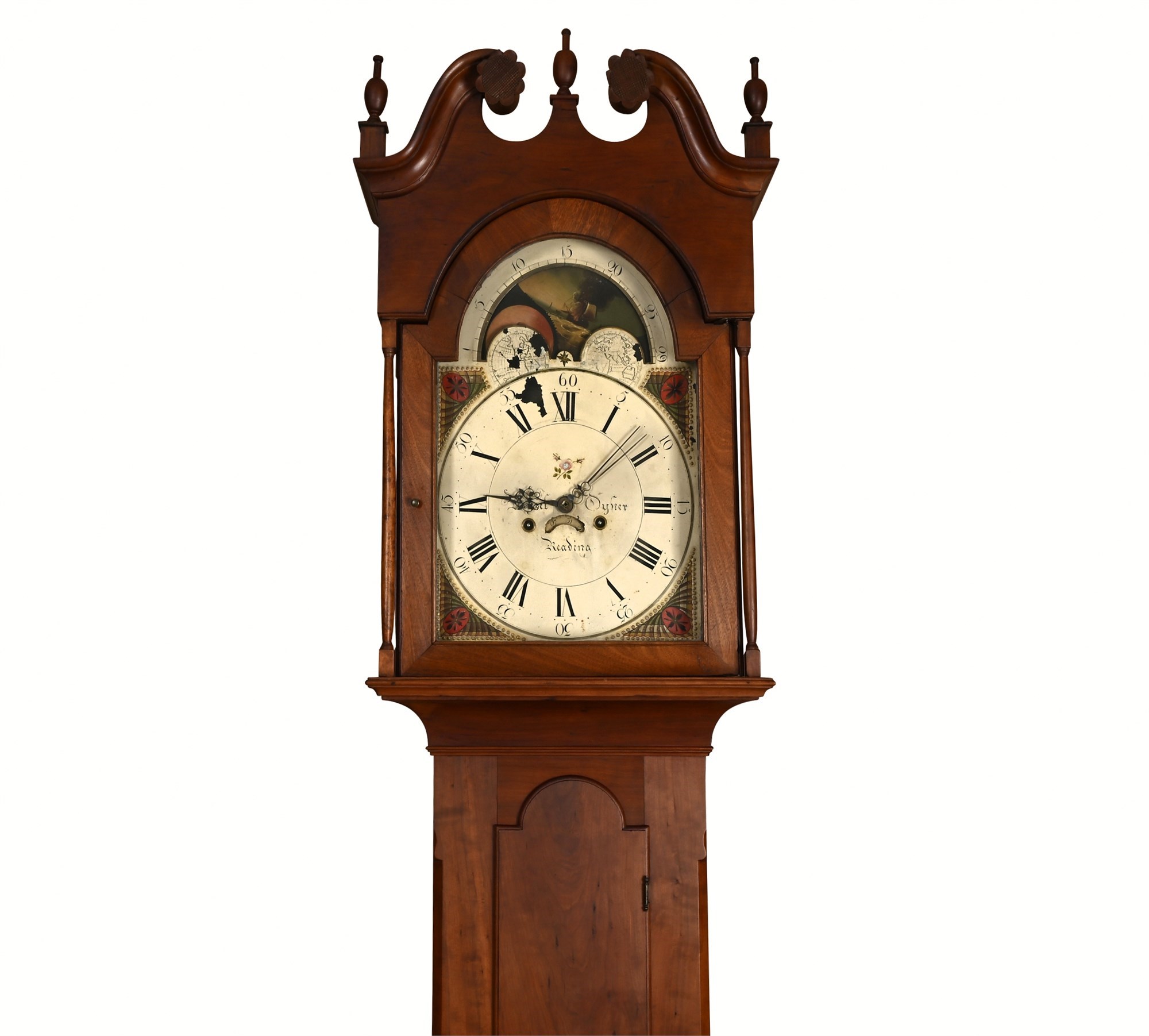
Early 19th-Century Cherry Tall Case Clock with Moon Phase Dial and Original Eight-Day Brass Movement
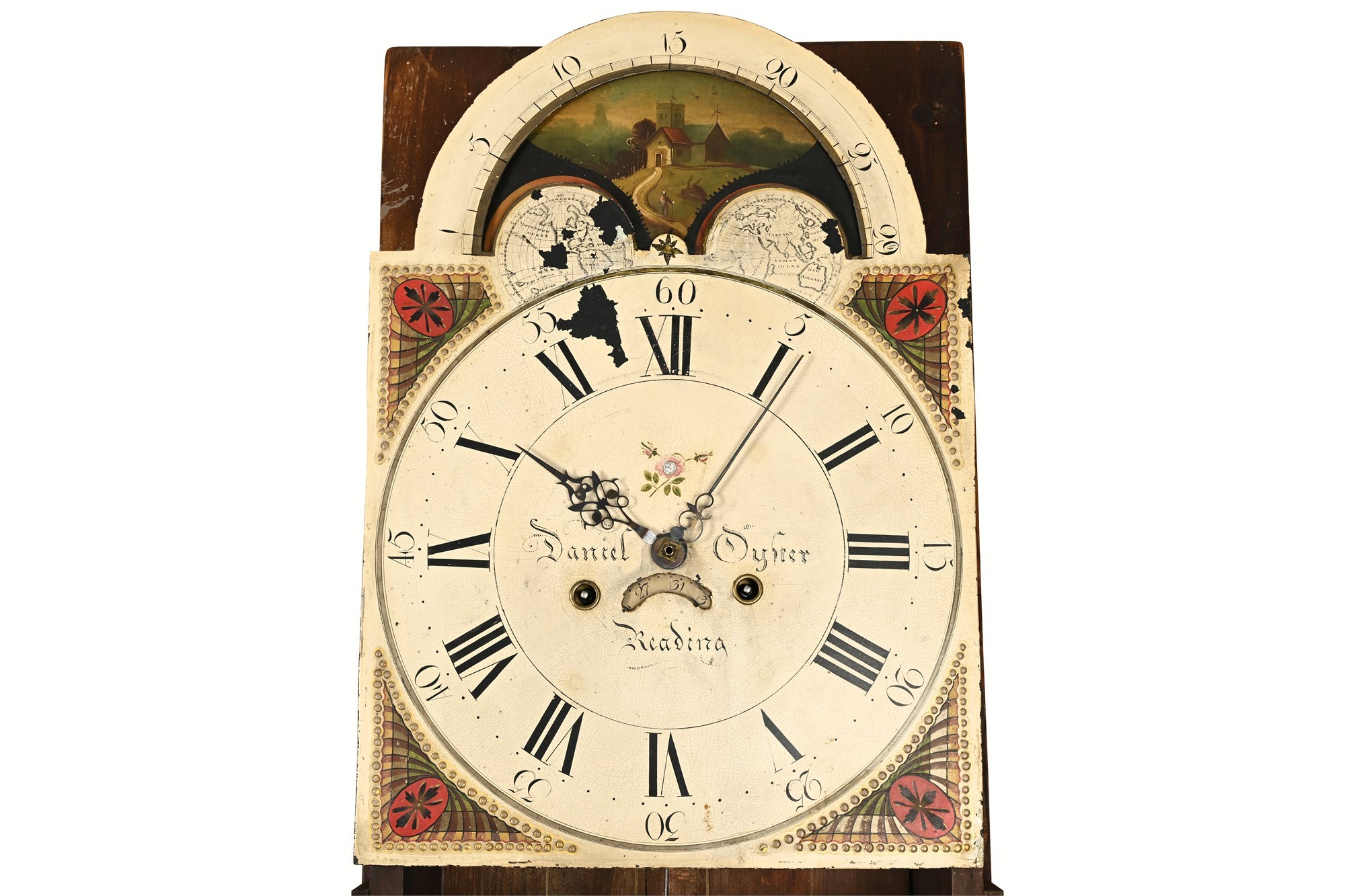
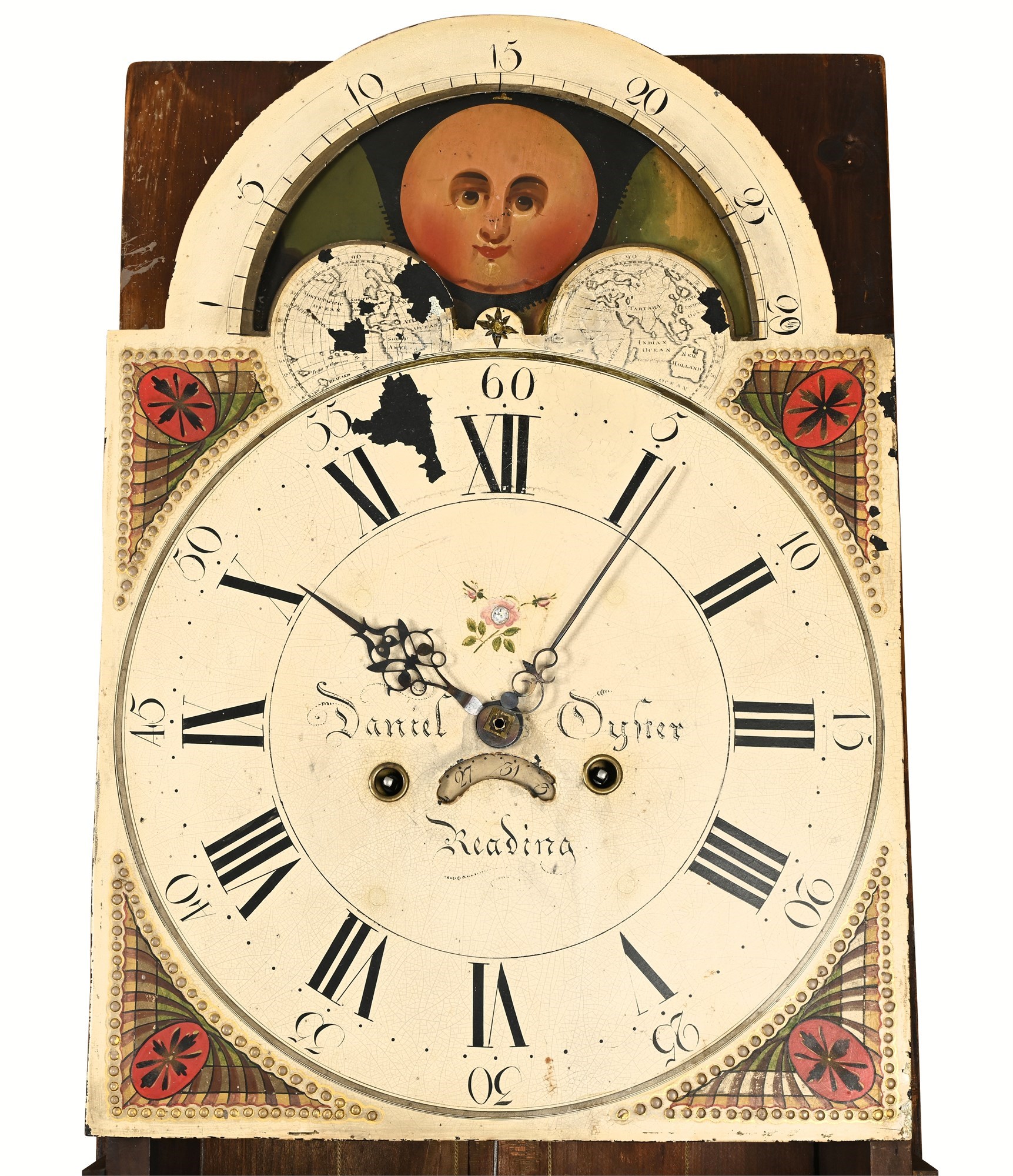
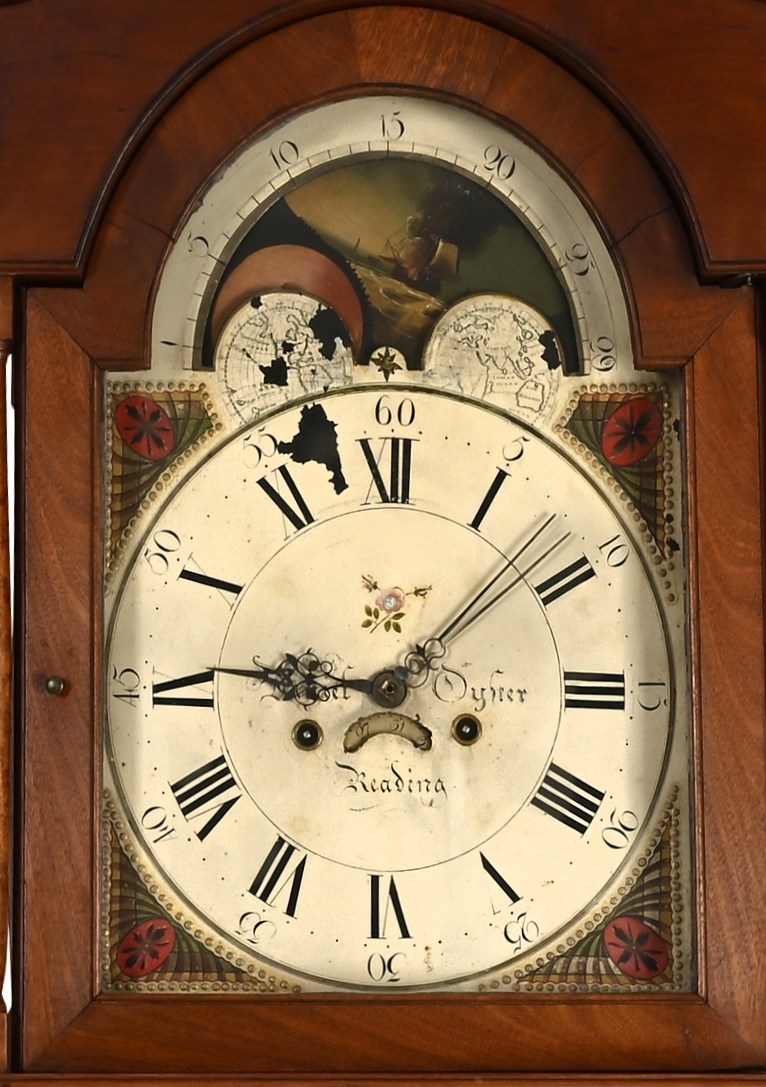
A finely crafted early 19th-century tall case clock signed “Daniel Oyster / Reading”, representing one of the most complete and well-preserved examples of Berks County, Pennsylvania horology, circa 1810–1820. Daniel Oyster (1767–1845) was a leading Reading clockmaker, active from the 1790s through the 1840s, whose work exemplifies the technical precision and aesthetic grace of early American Federal craftsmanship.
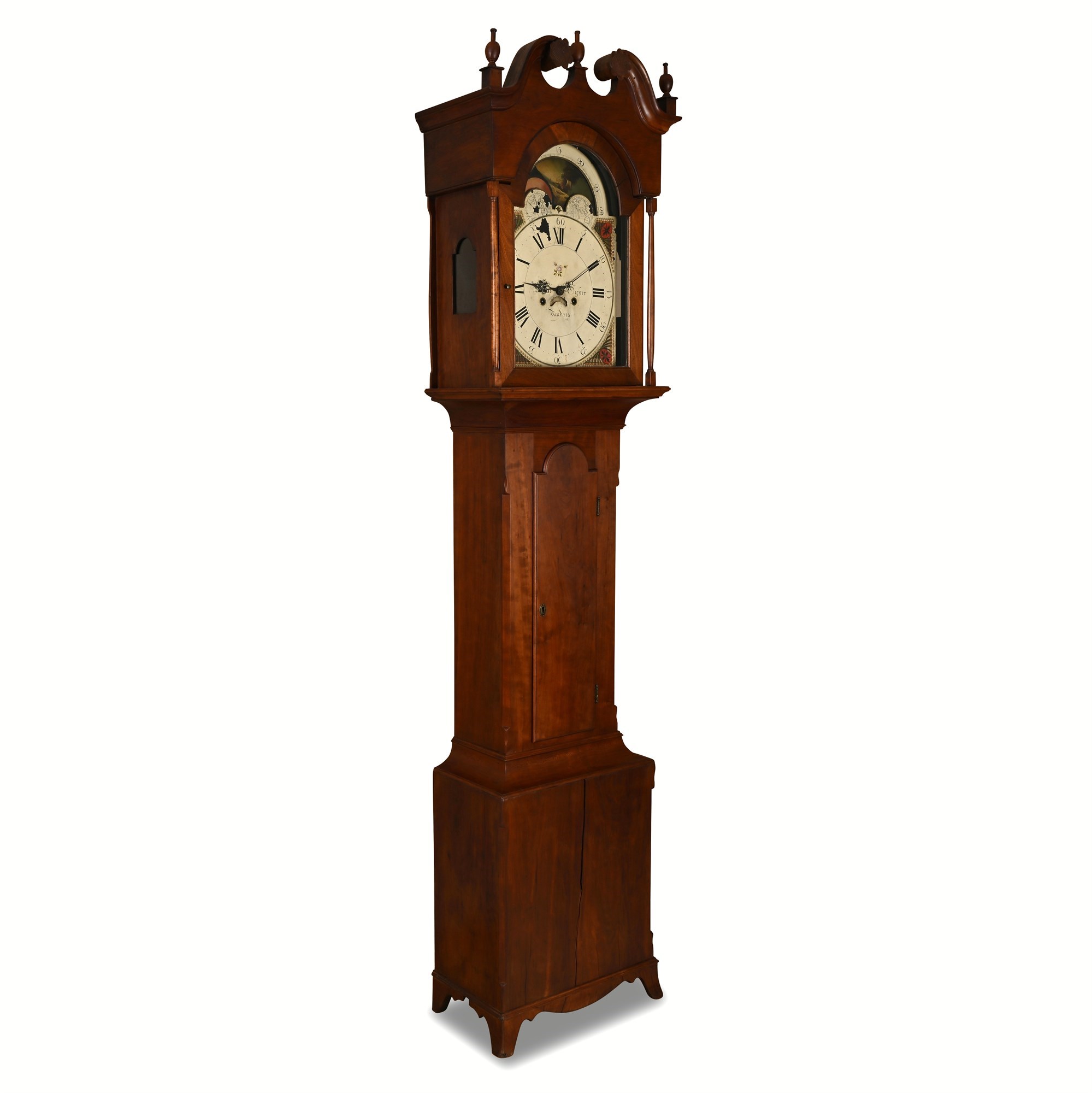
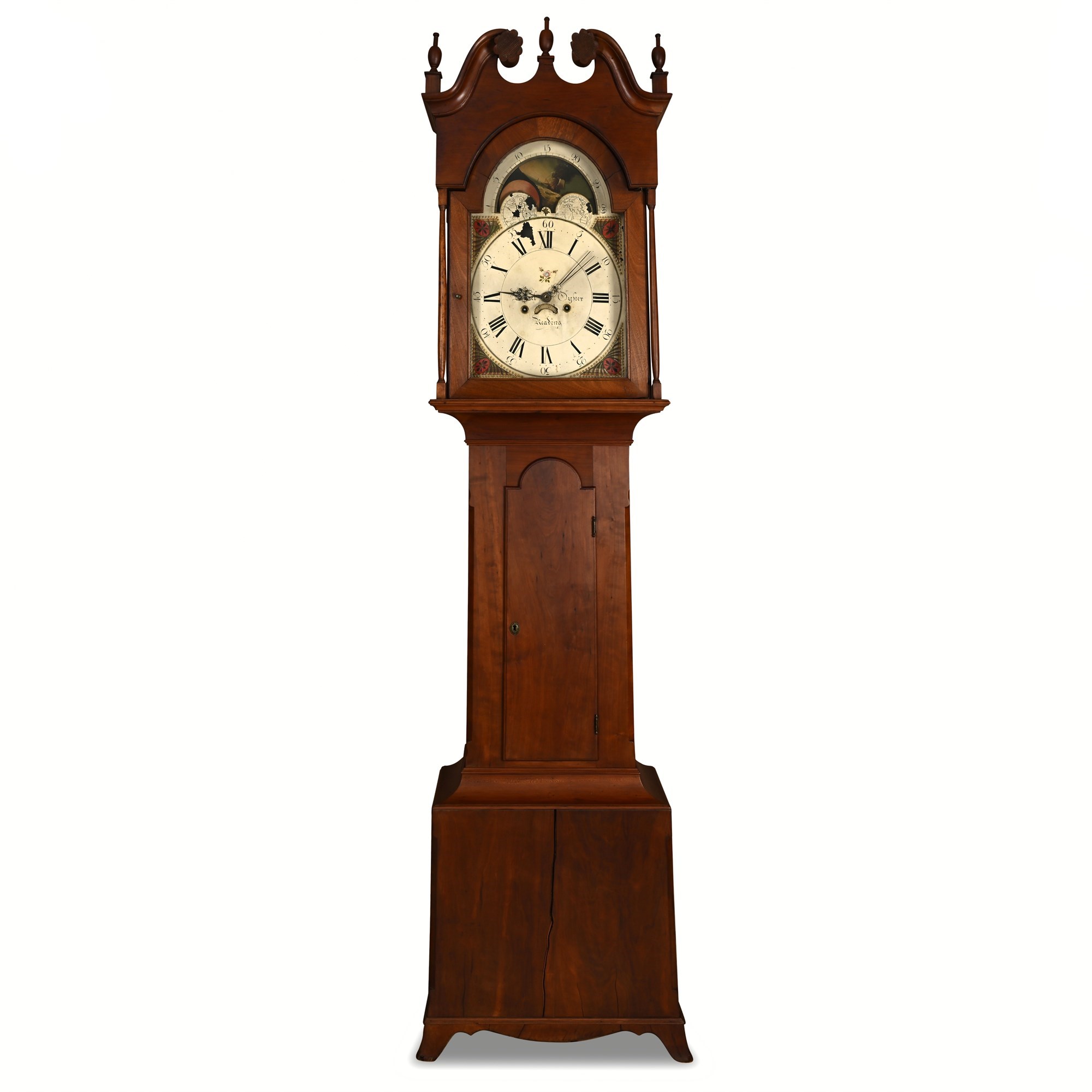
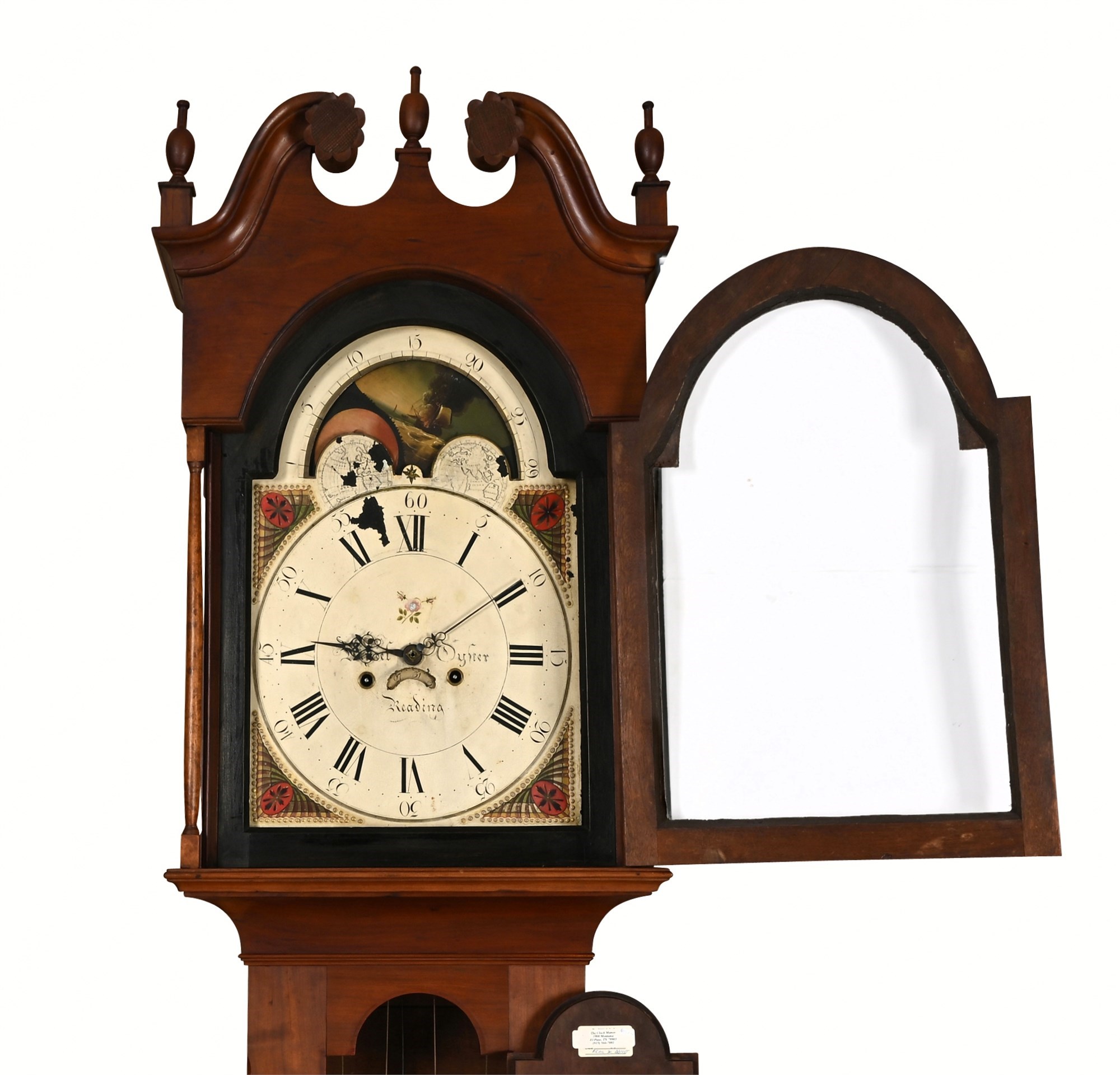
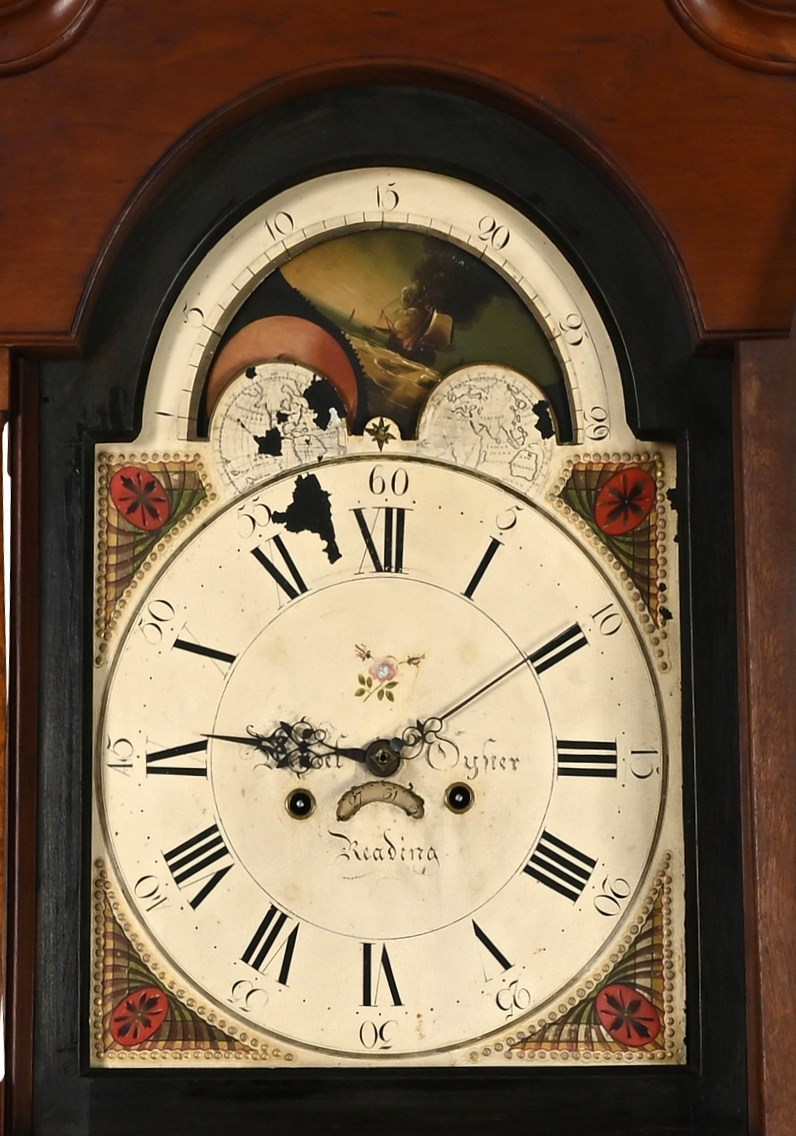
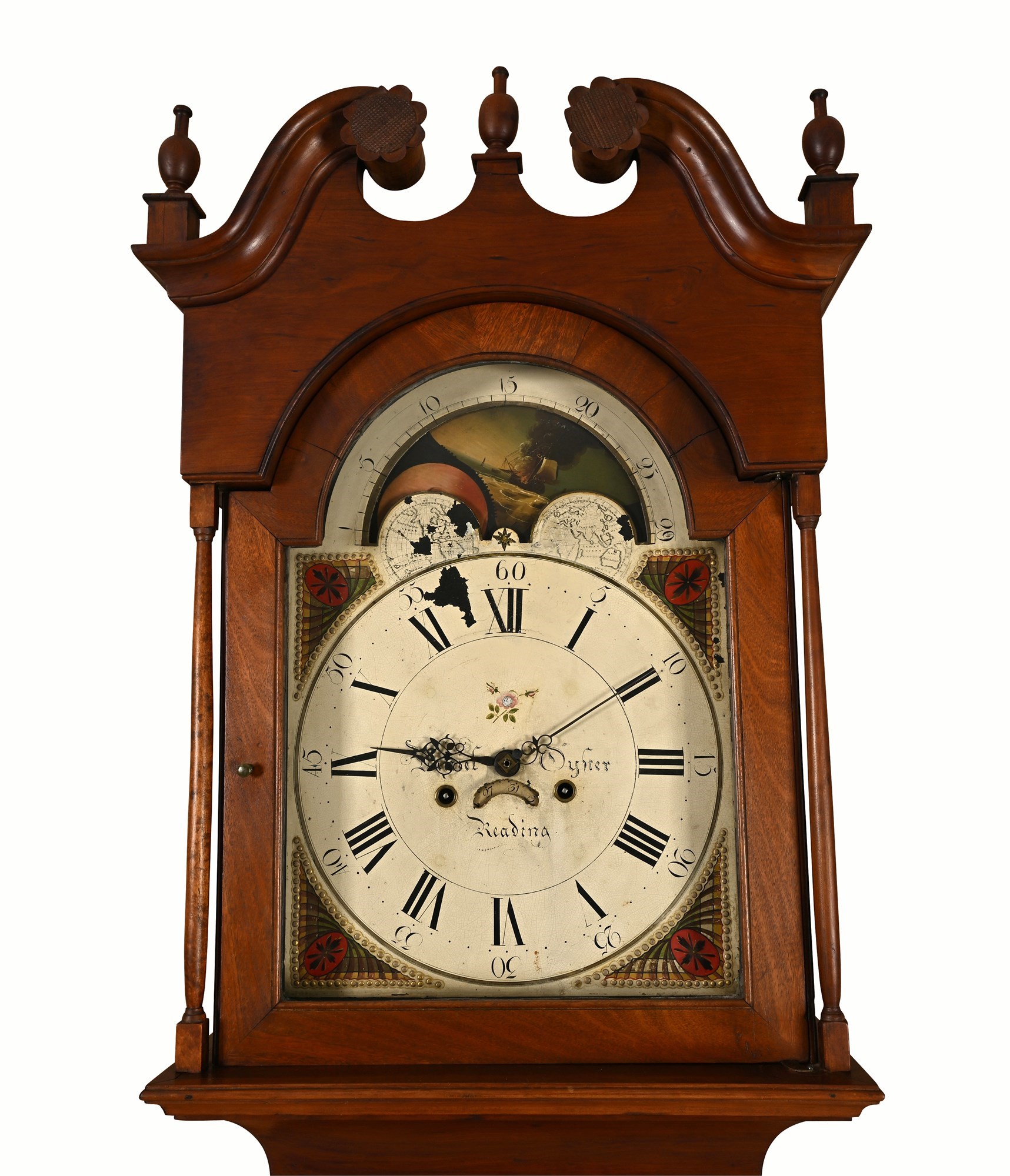
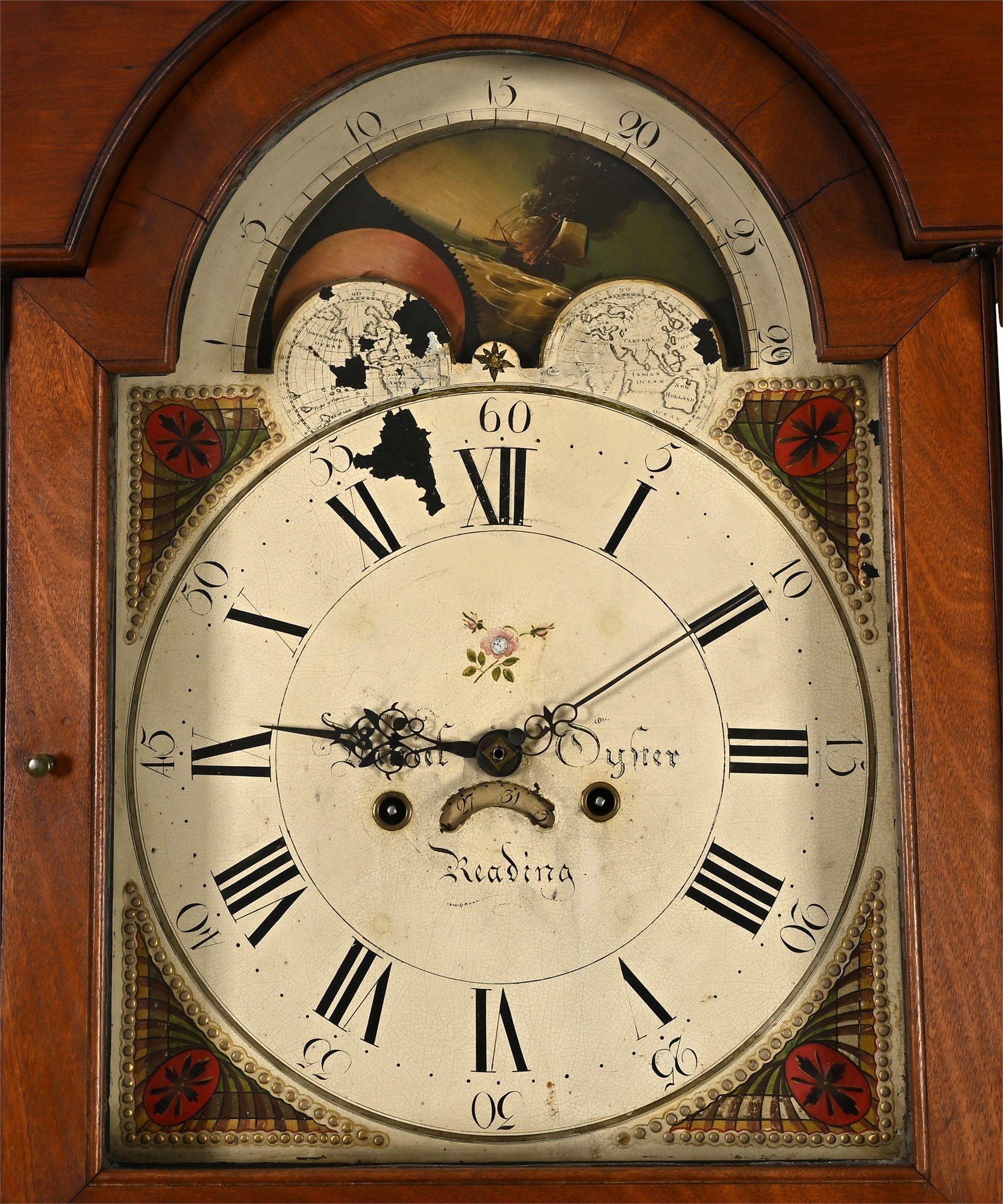
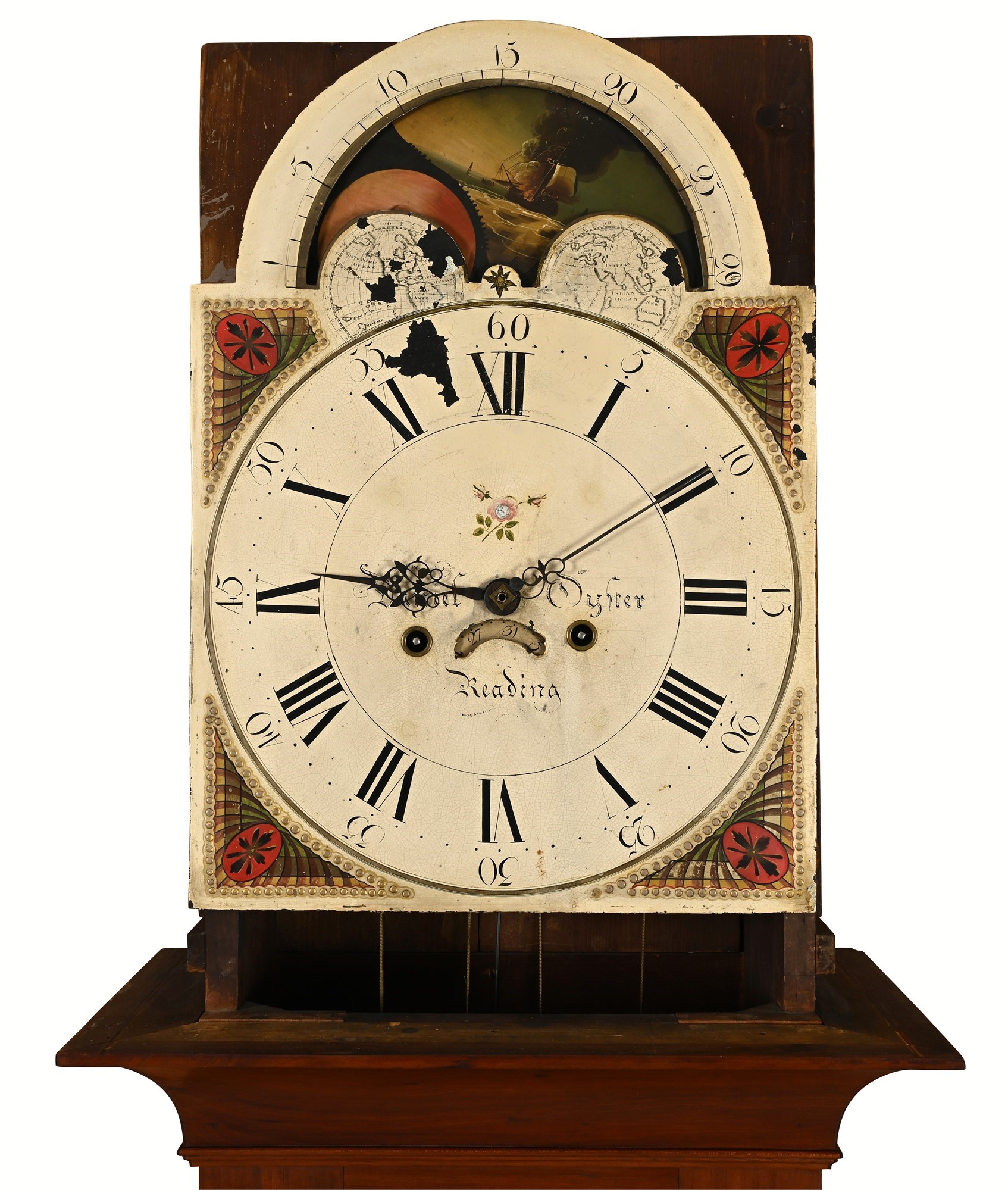
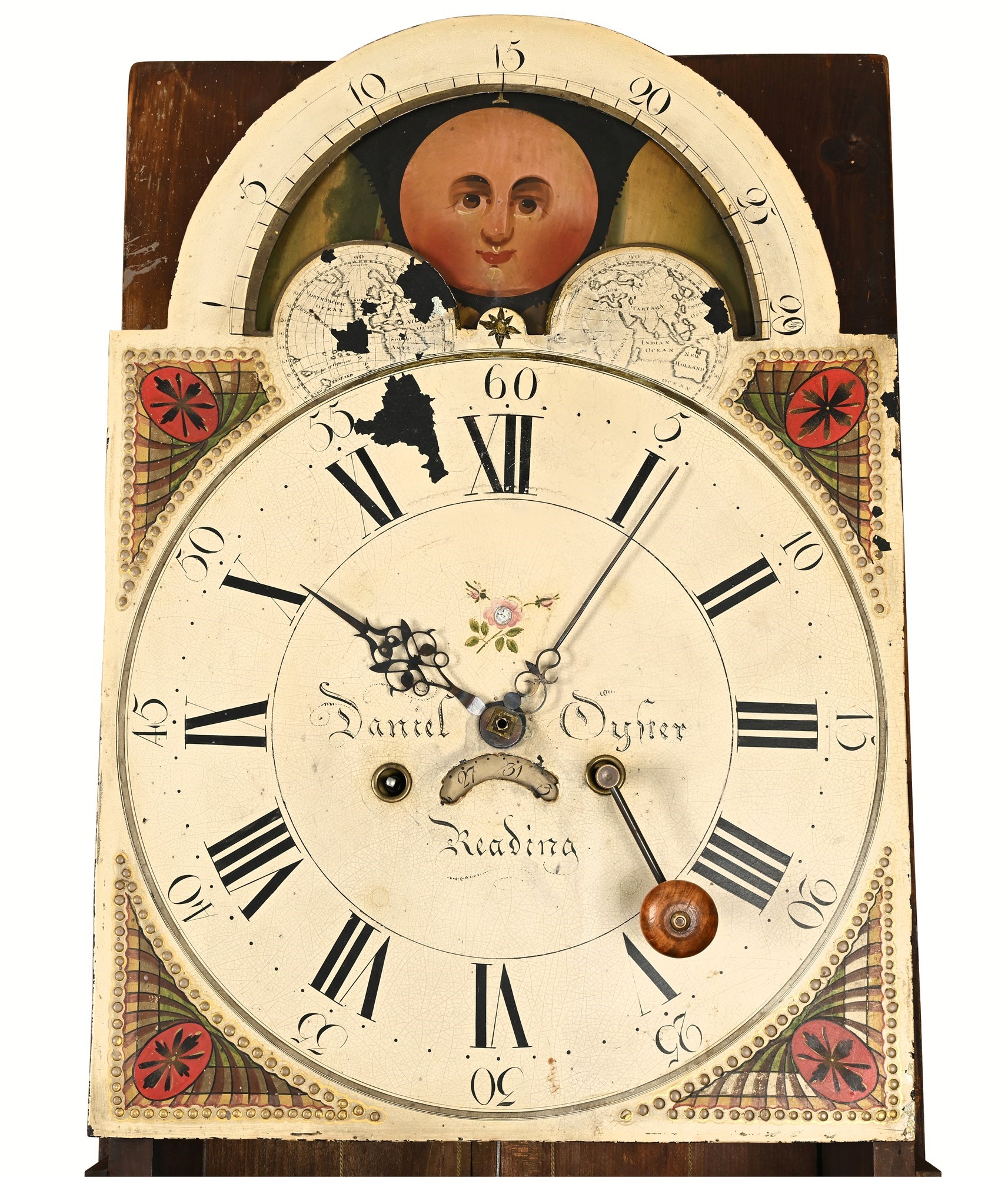
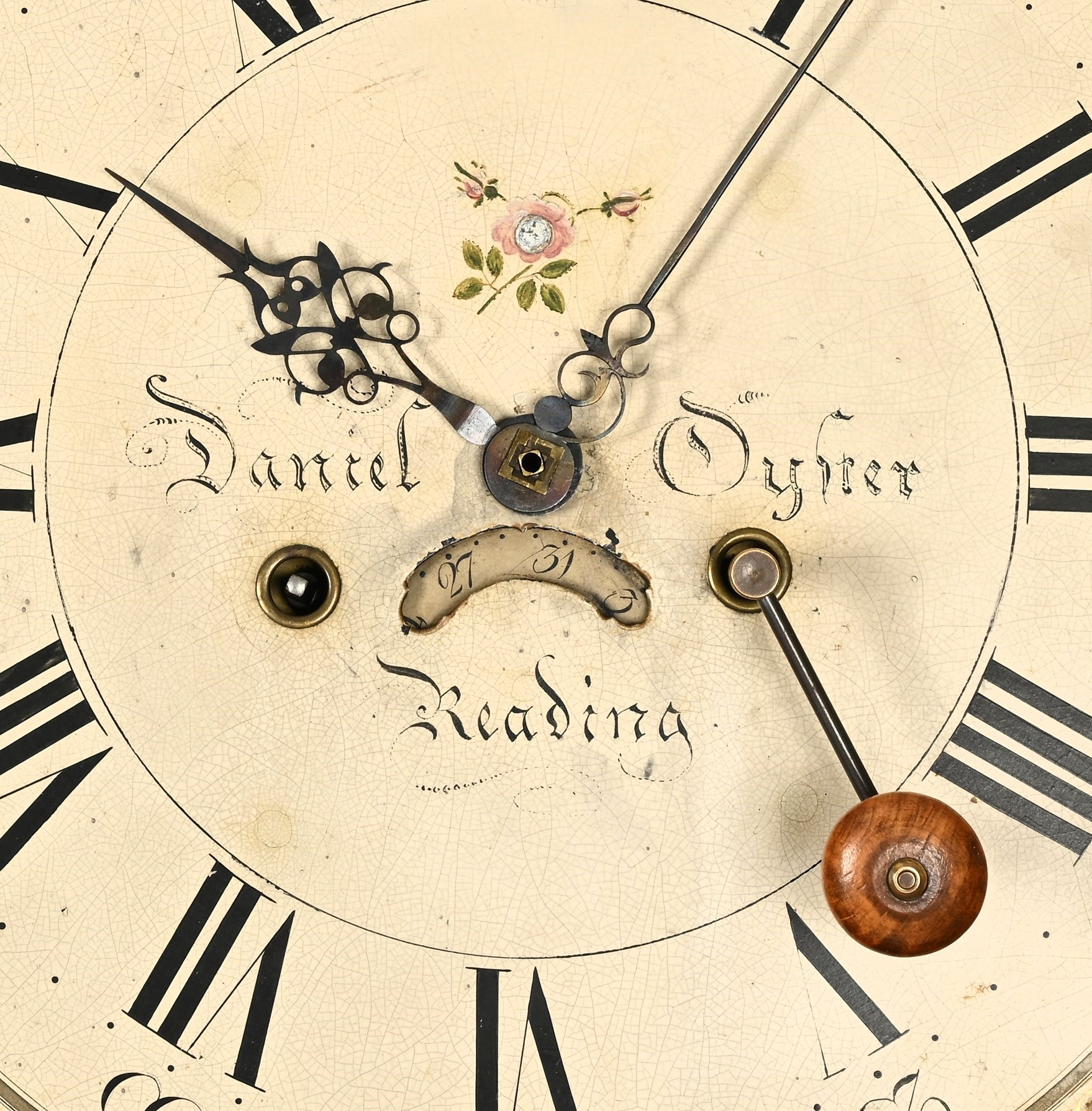
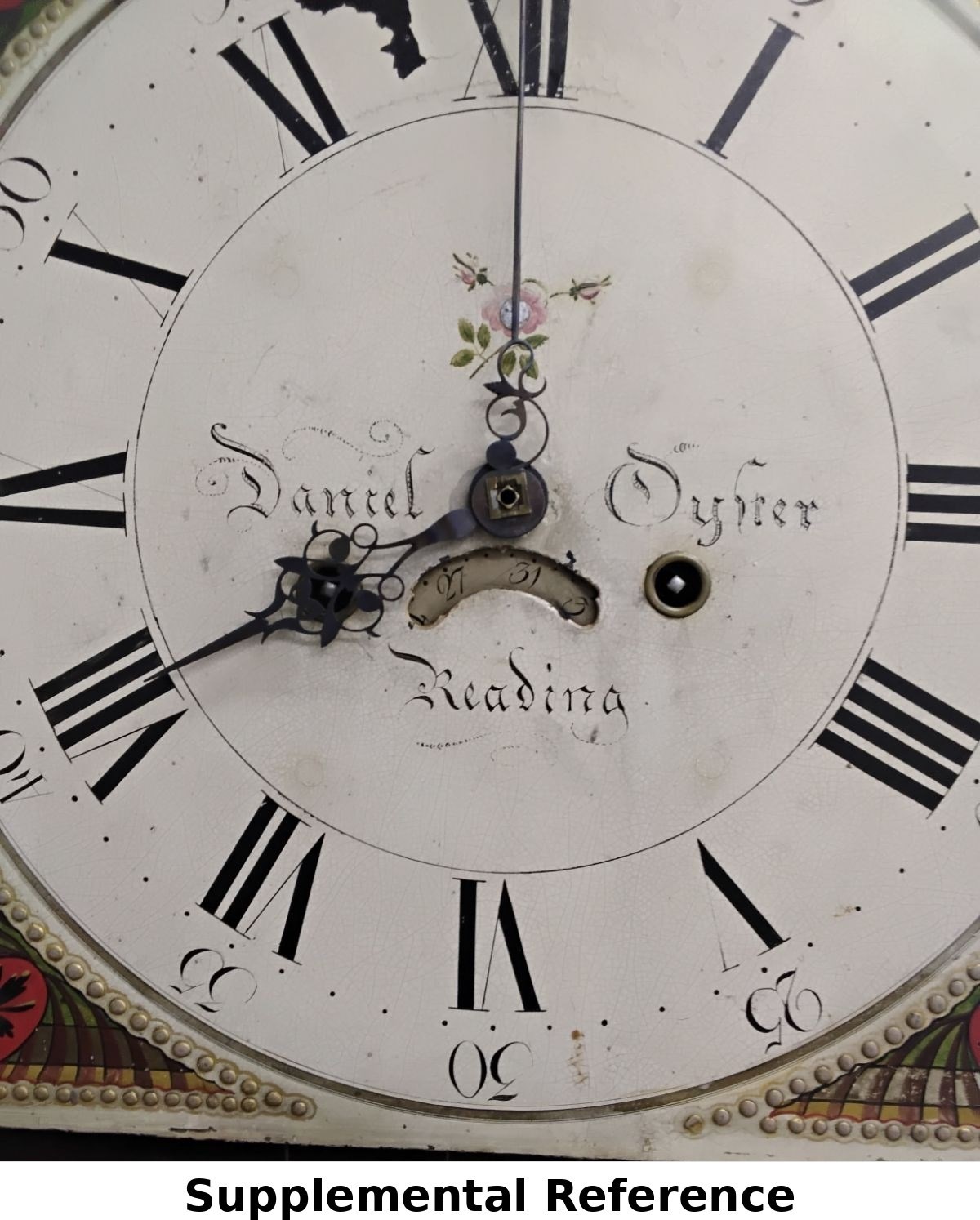
The arched painted dial displays Roman numerals, a floral bouquet, and a moon phase disk alternating between lunar and pastoral scenes, flanked by hemispheric maps. The dial corners feature vivid red and green fan spandrels, typical of Oyster’s Reading output, and the chapter ring retains its original black enamel numerals.
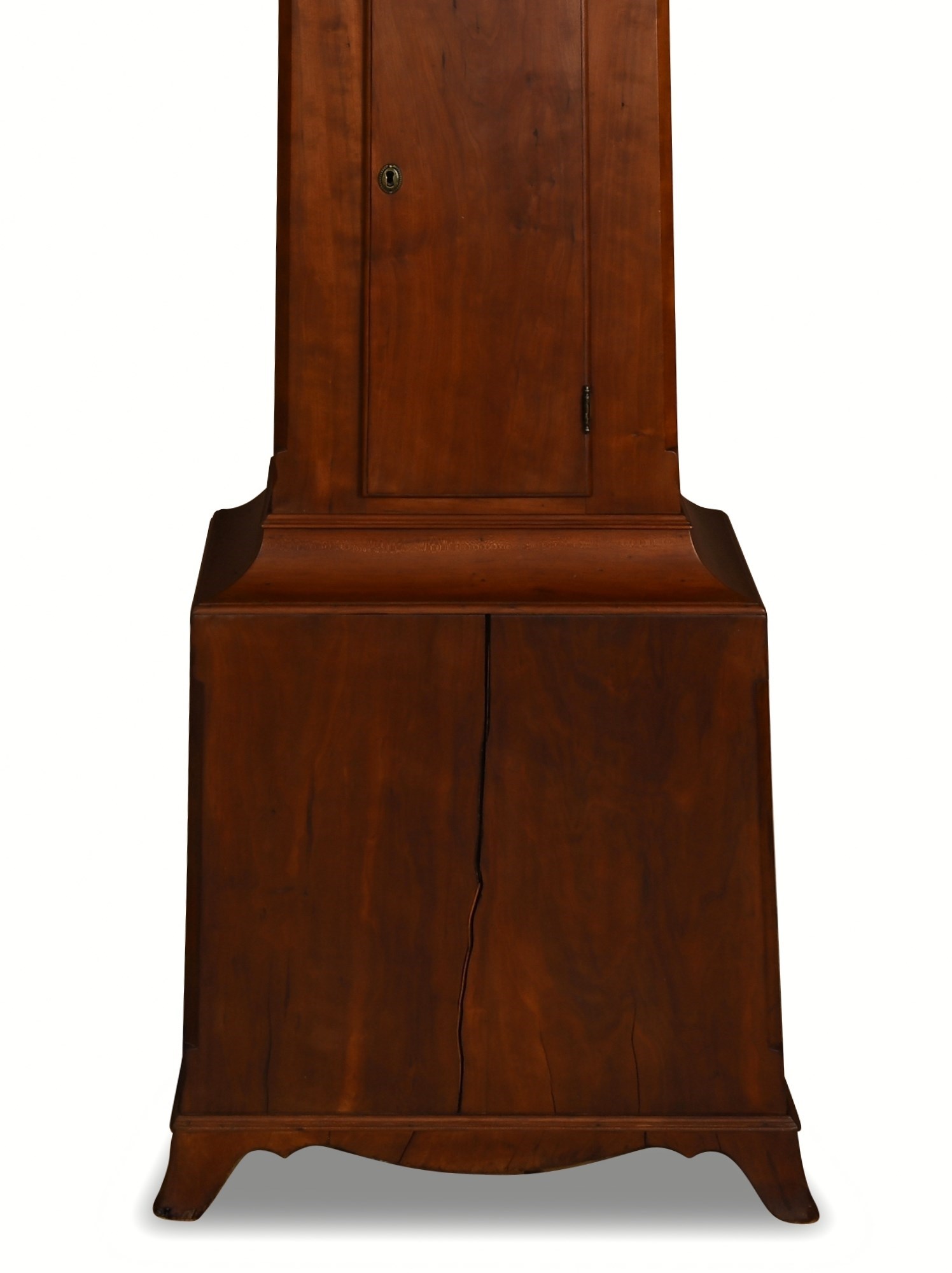
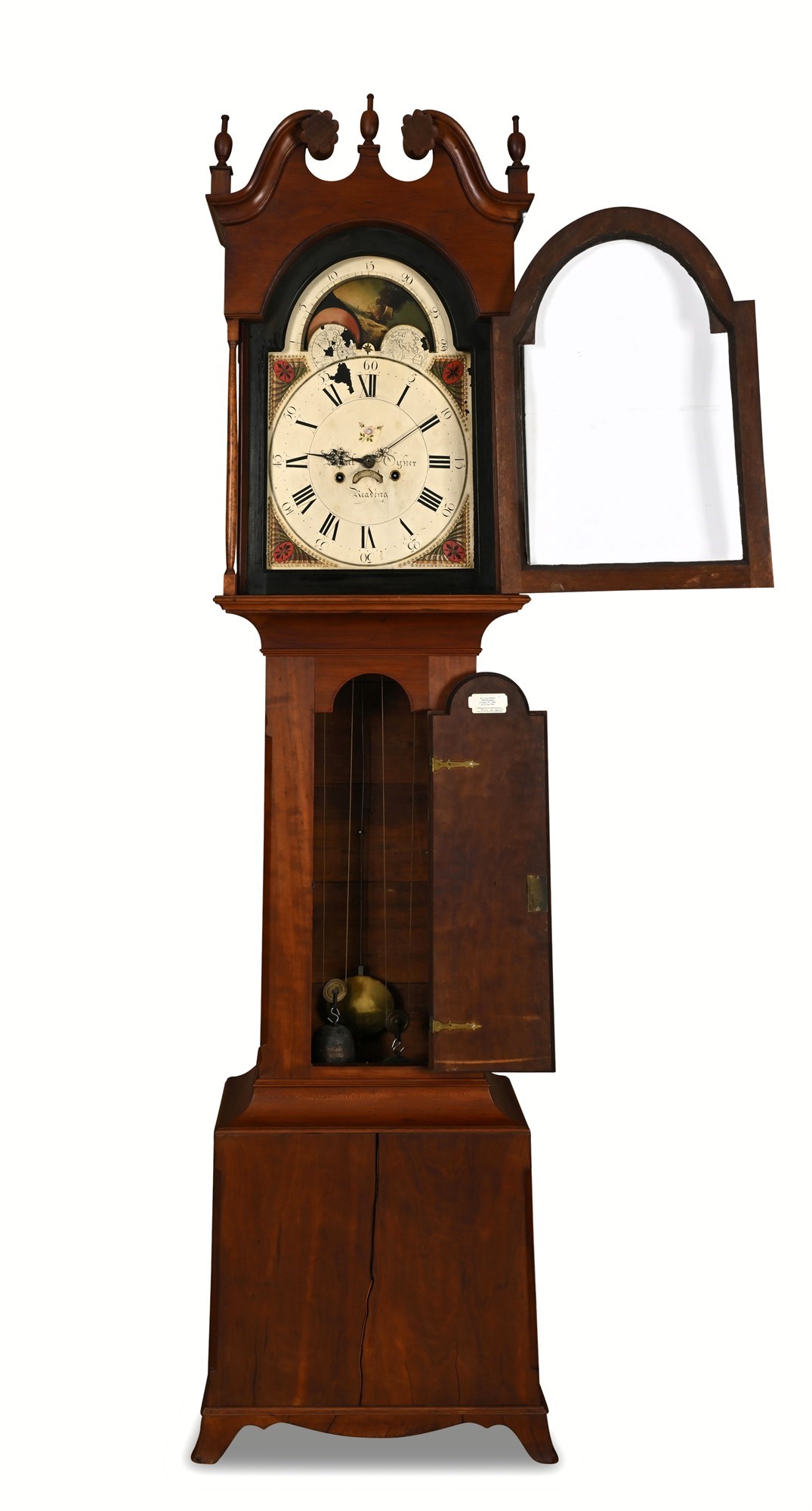
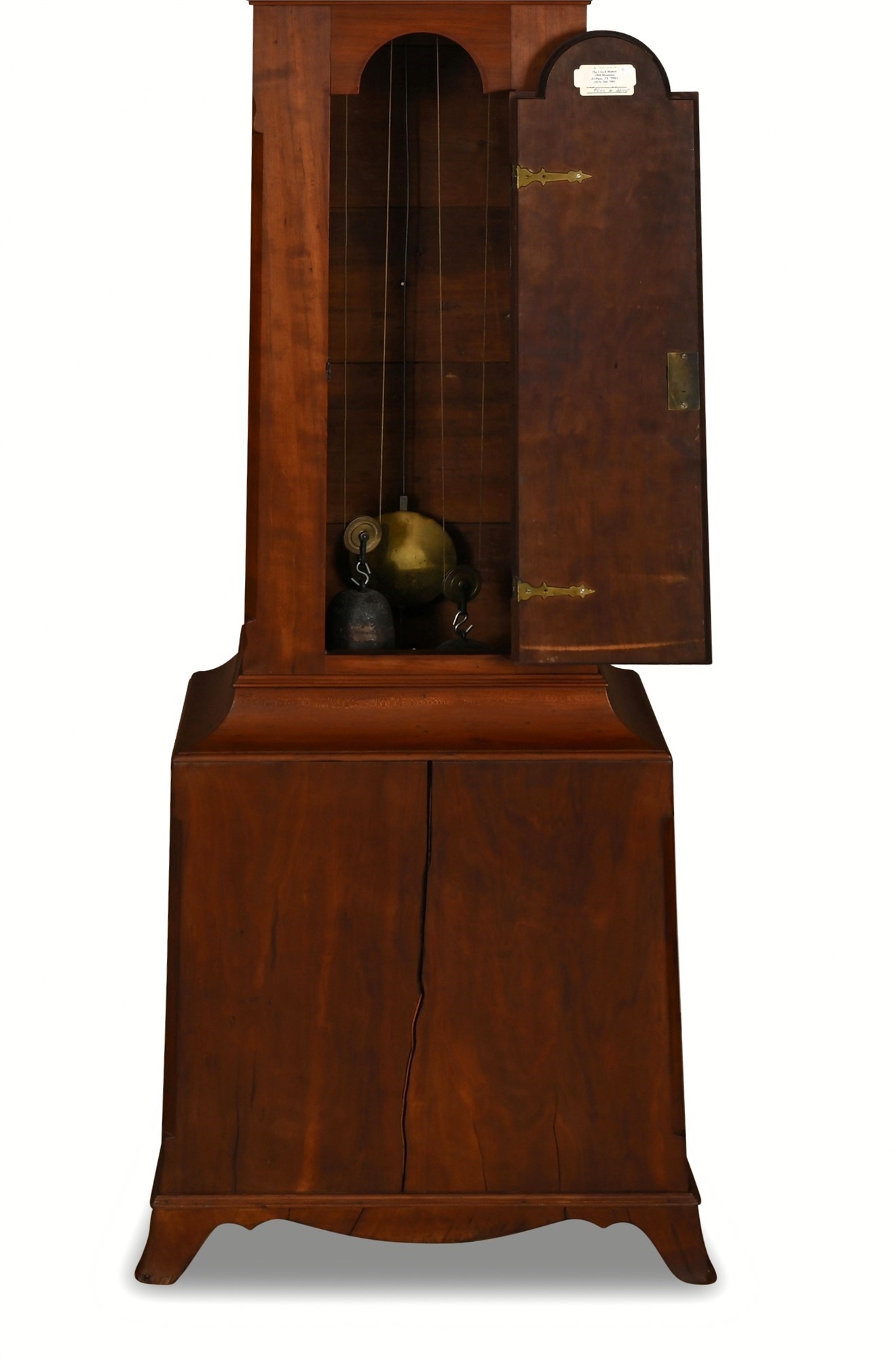
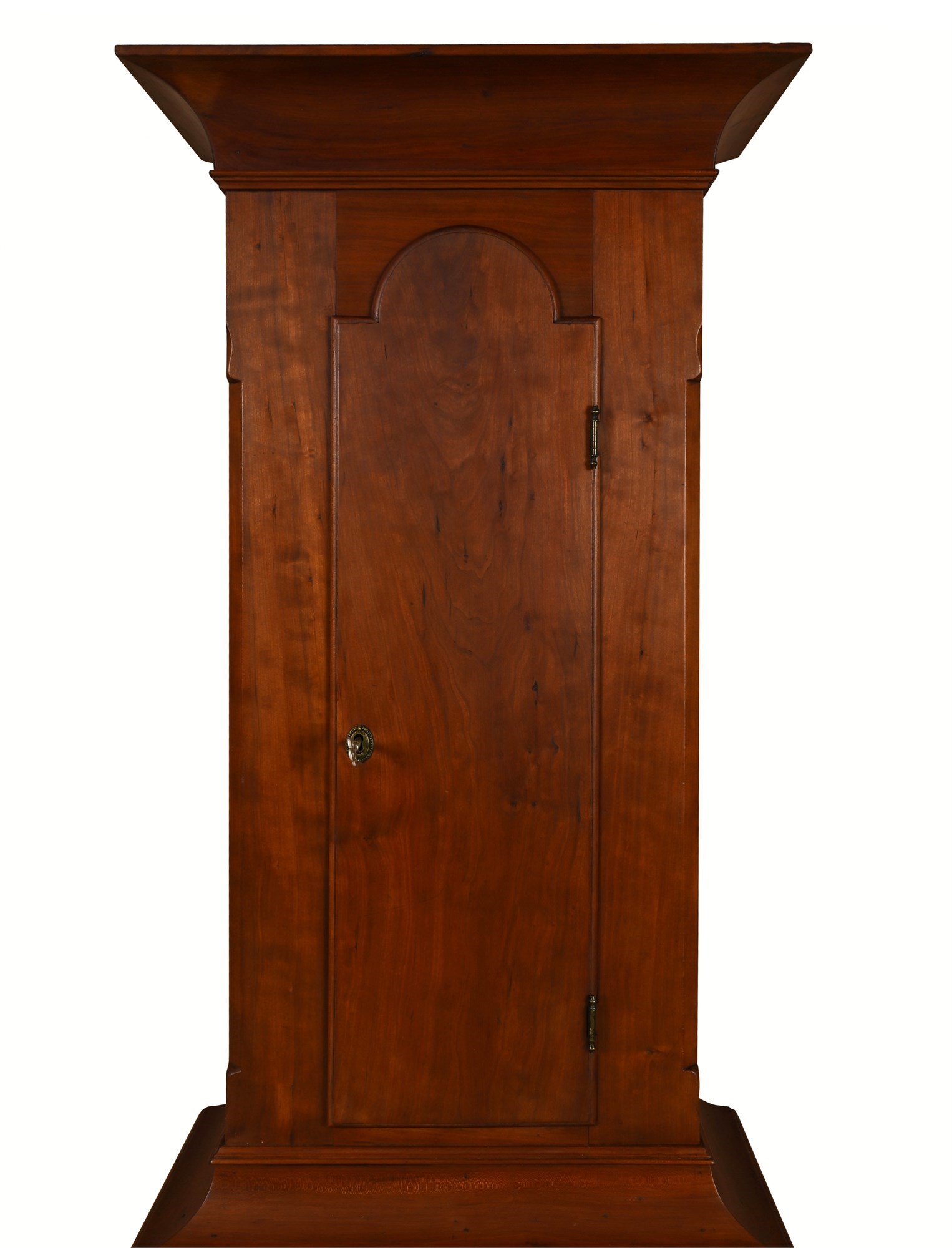
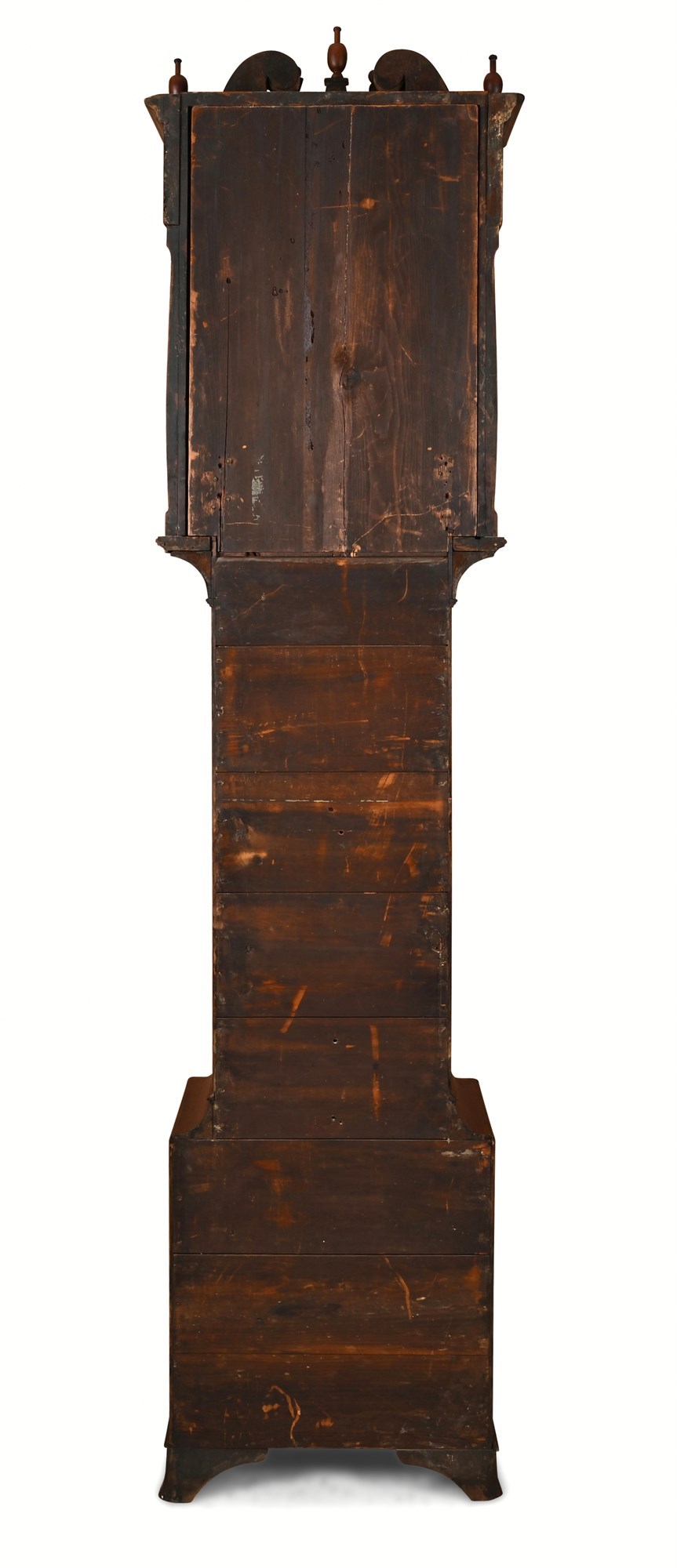
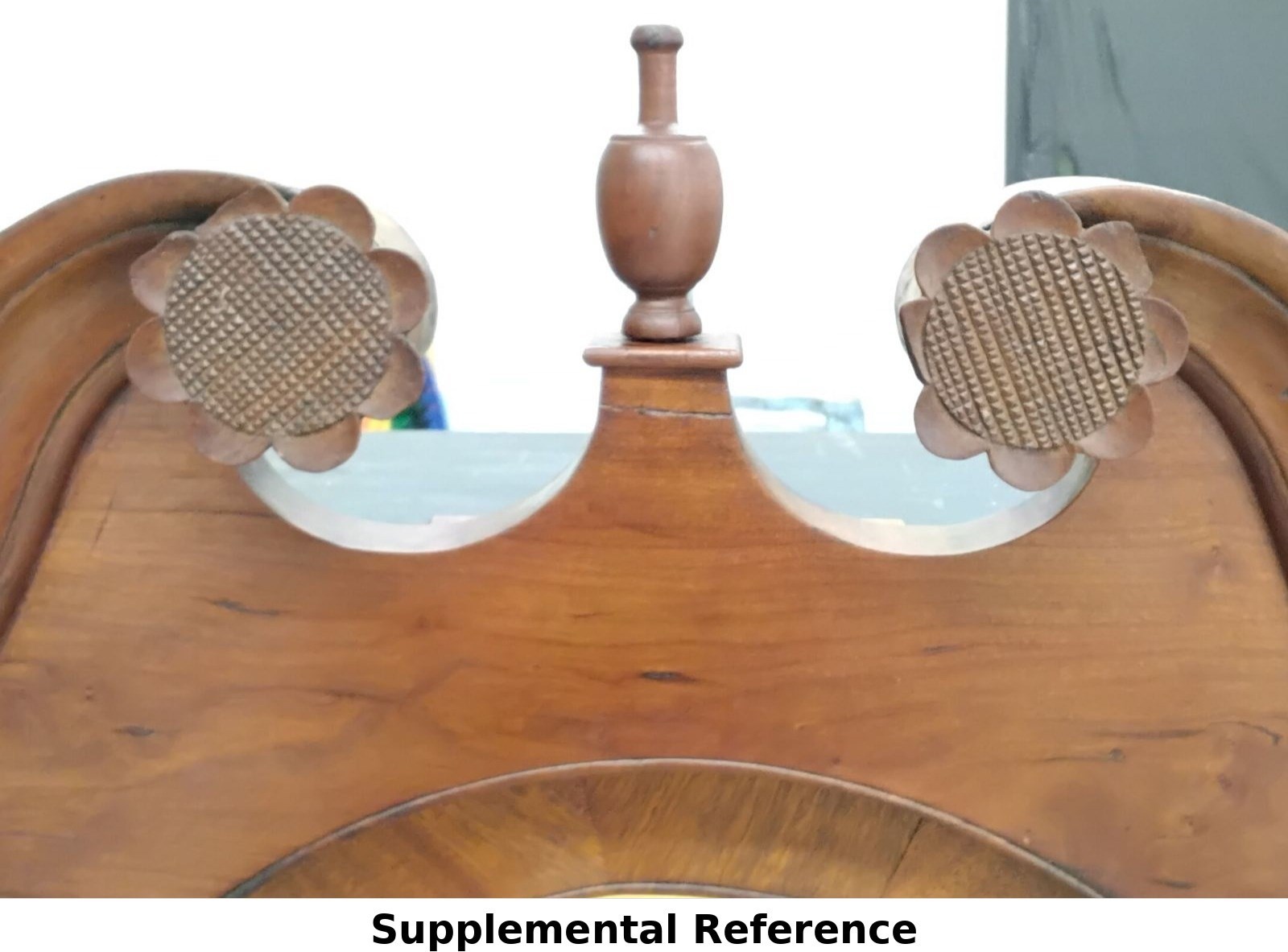
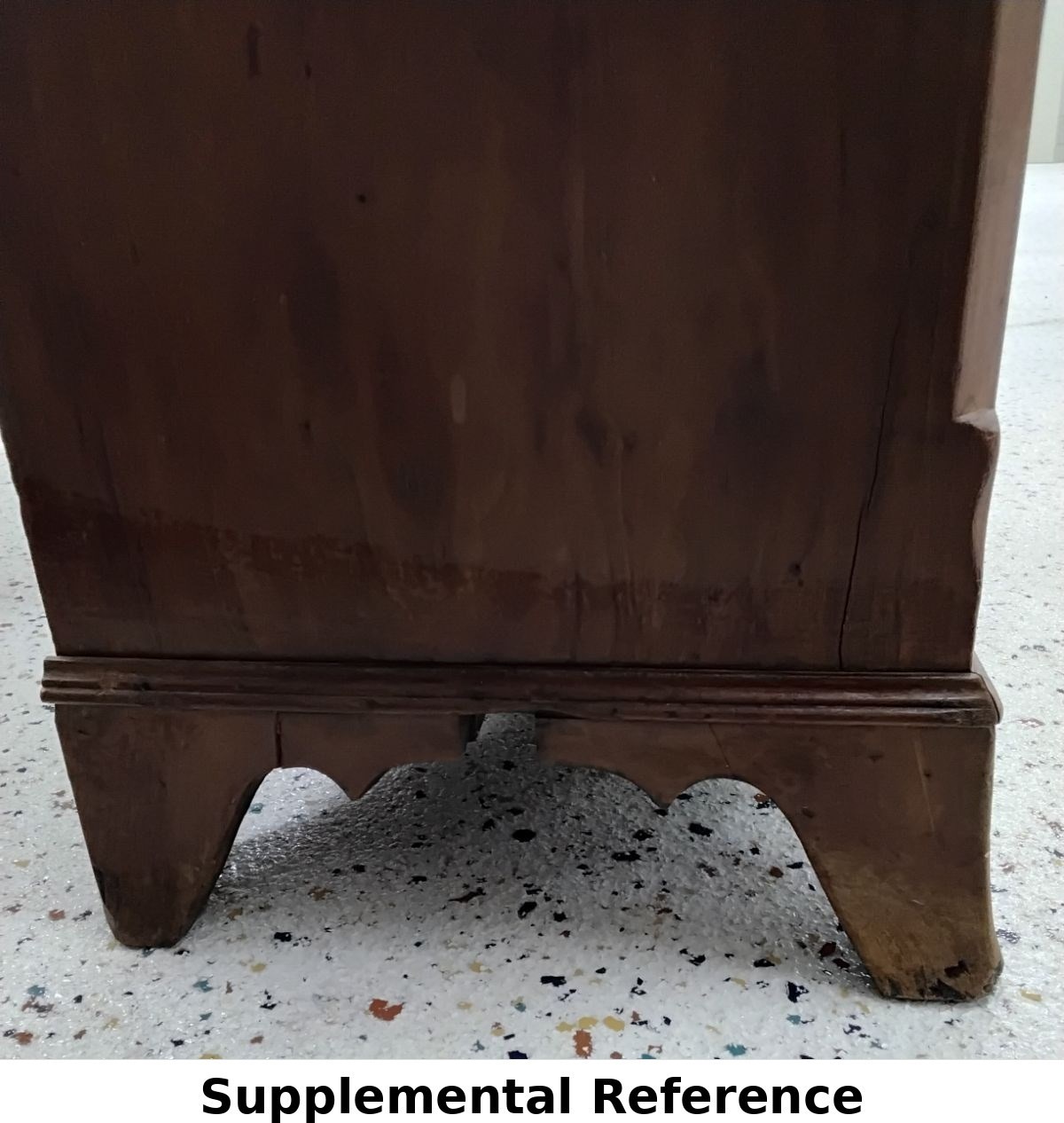
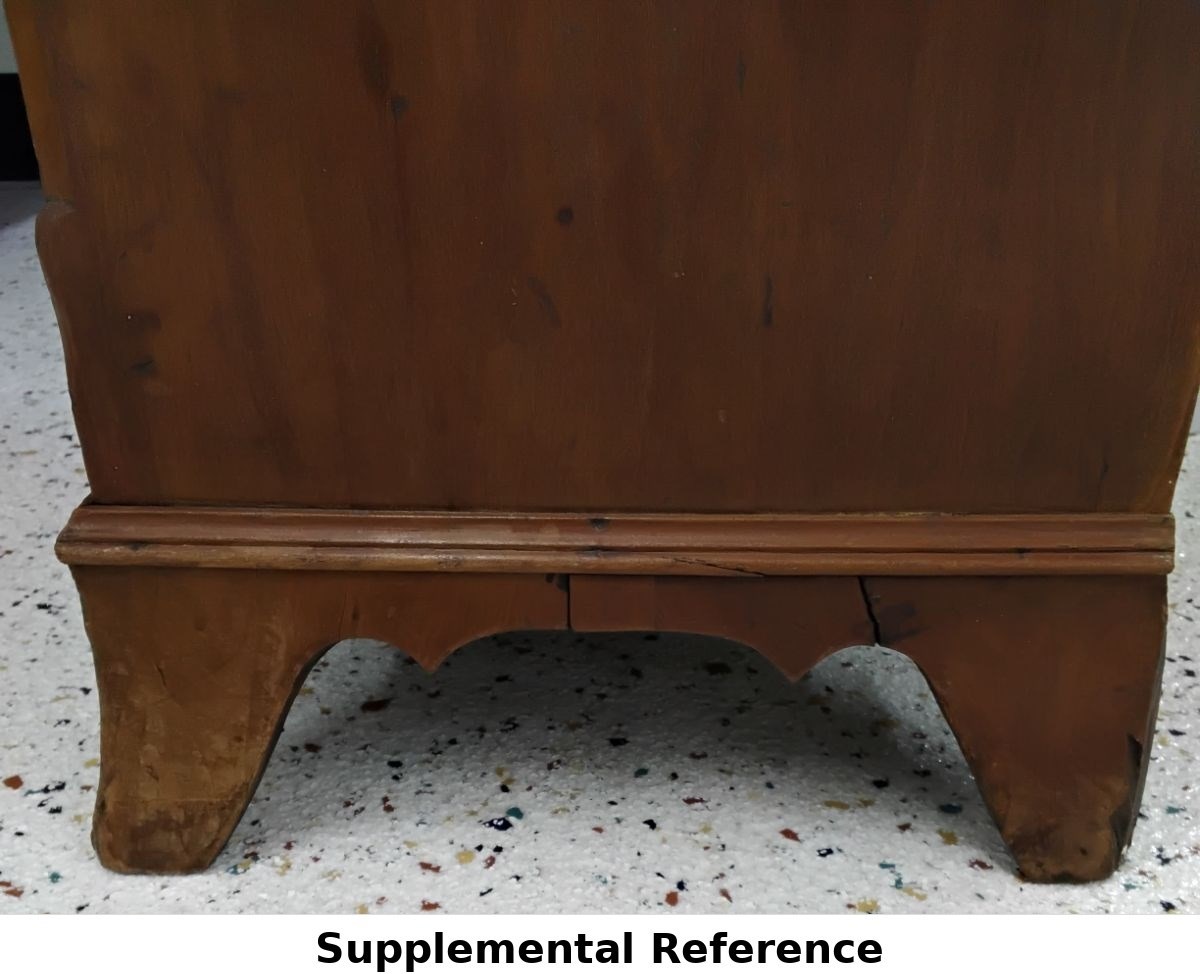
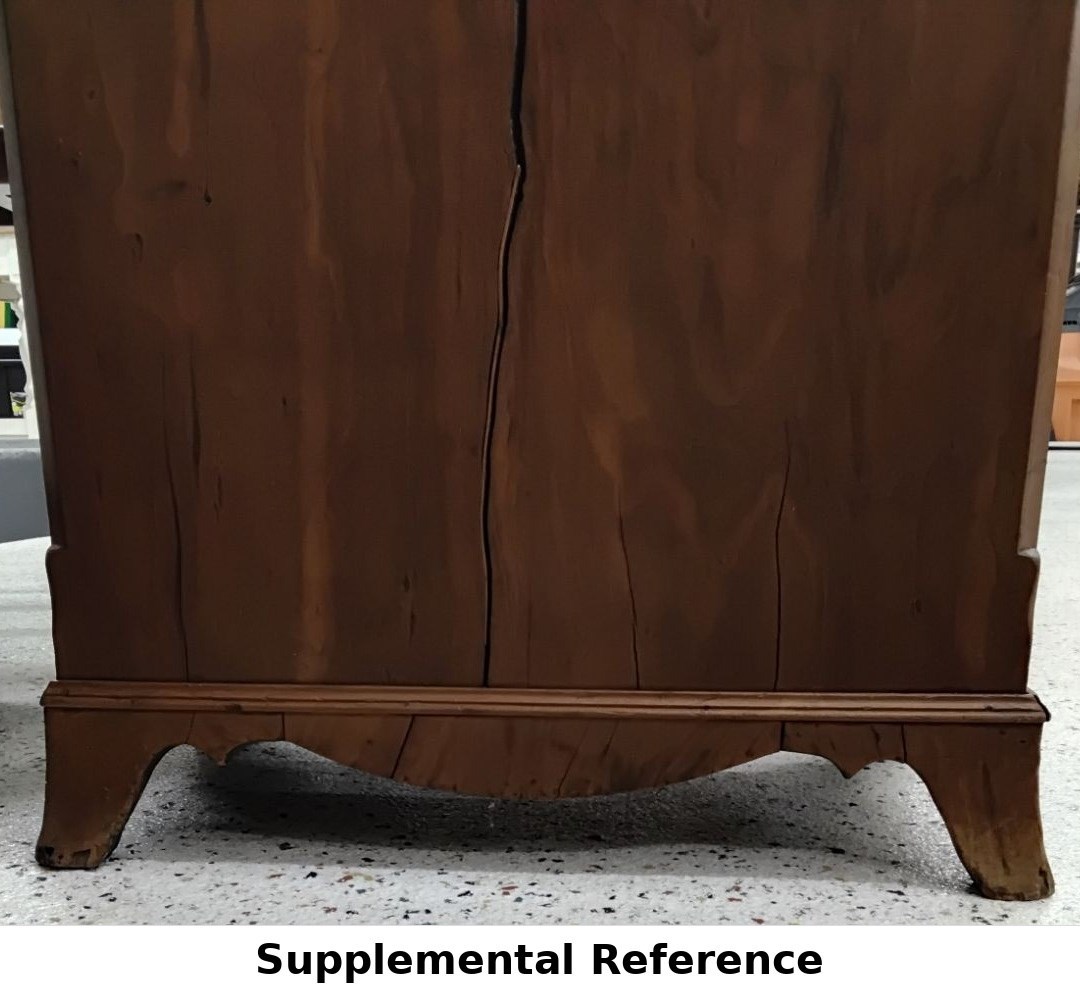
The cherry case is a model of Federal-era refinement, its swan’s-neck pediment carved from a single solid piece of wood and adorned with three turned finials and floral rosettes. The arched bonnet door and shaped side lights rise above a long arched waist door and ogee bracket feet. The surface shows a rich, even patina.
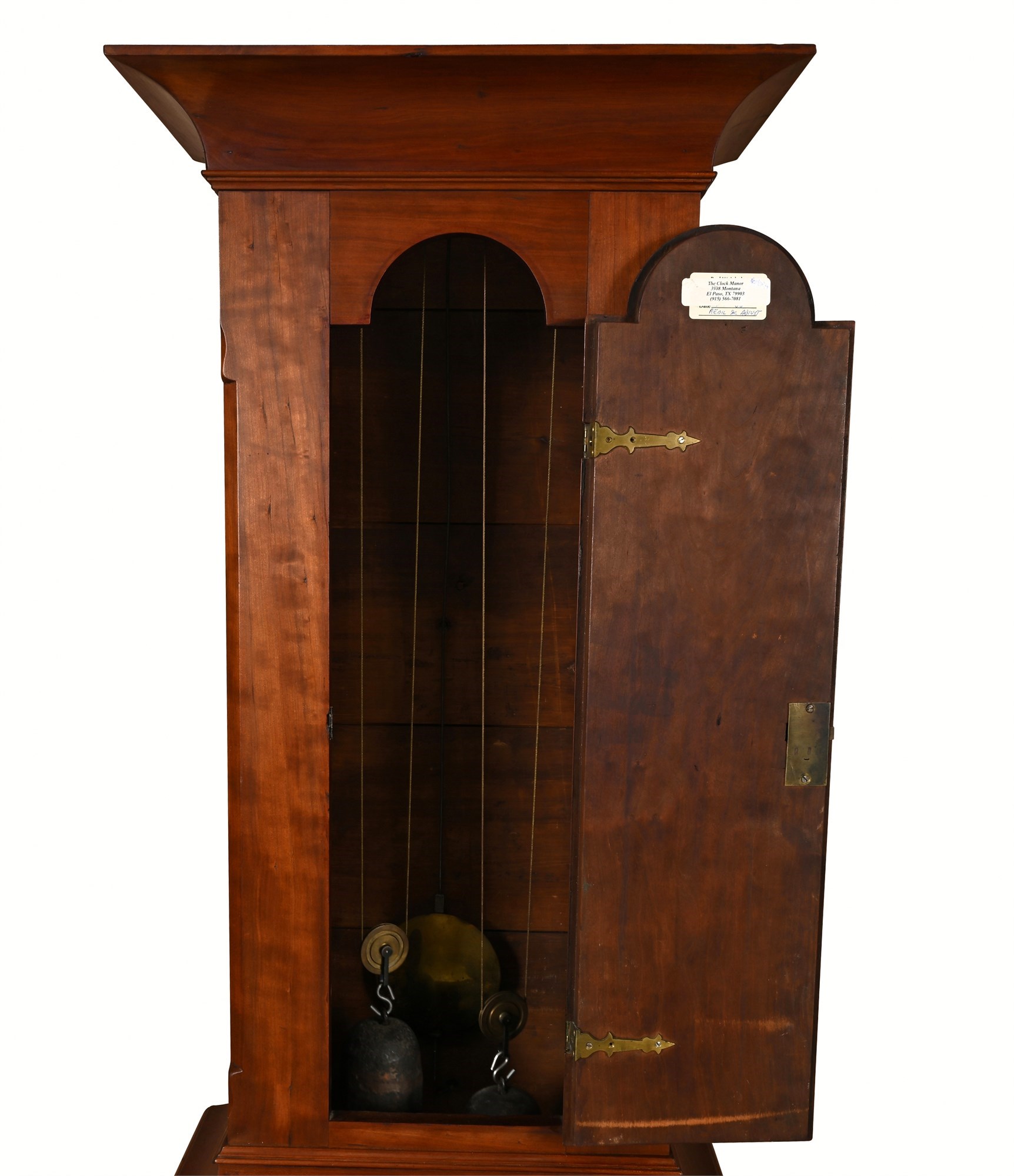
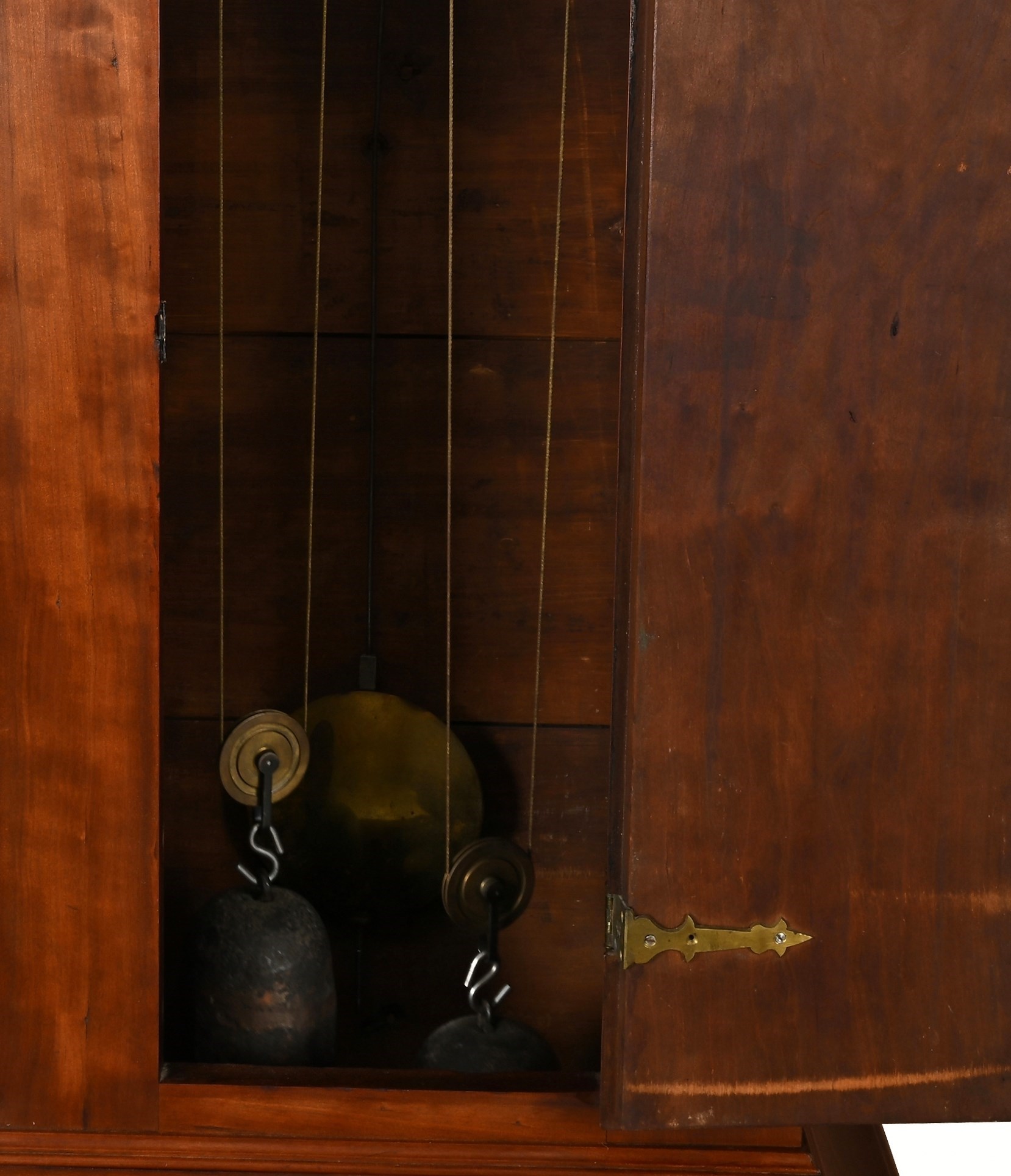
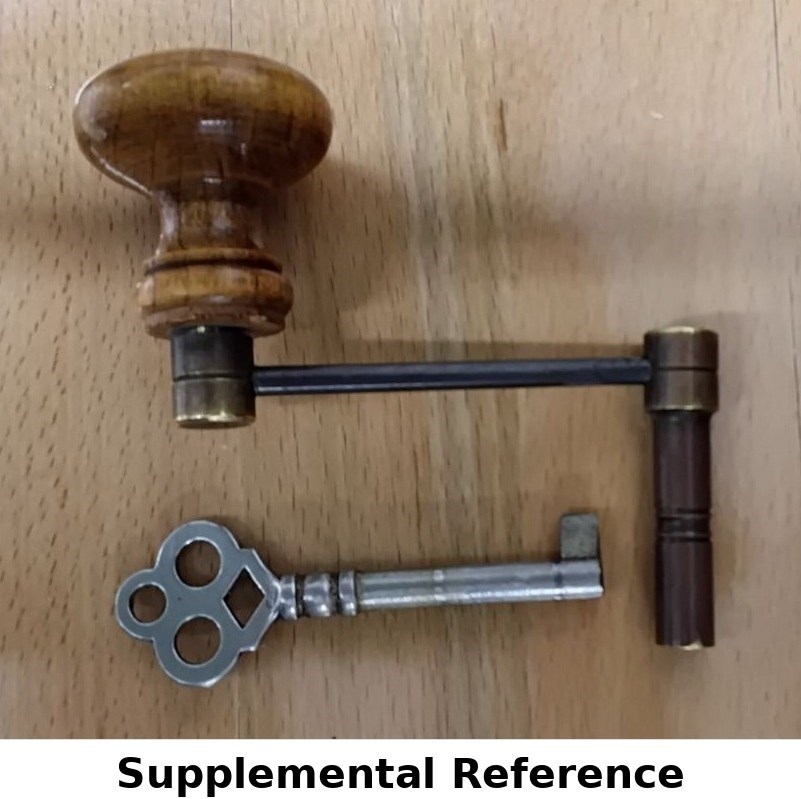
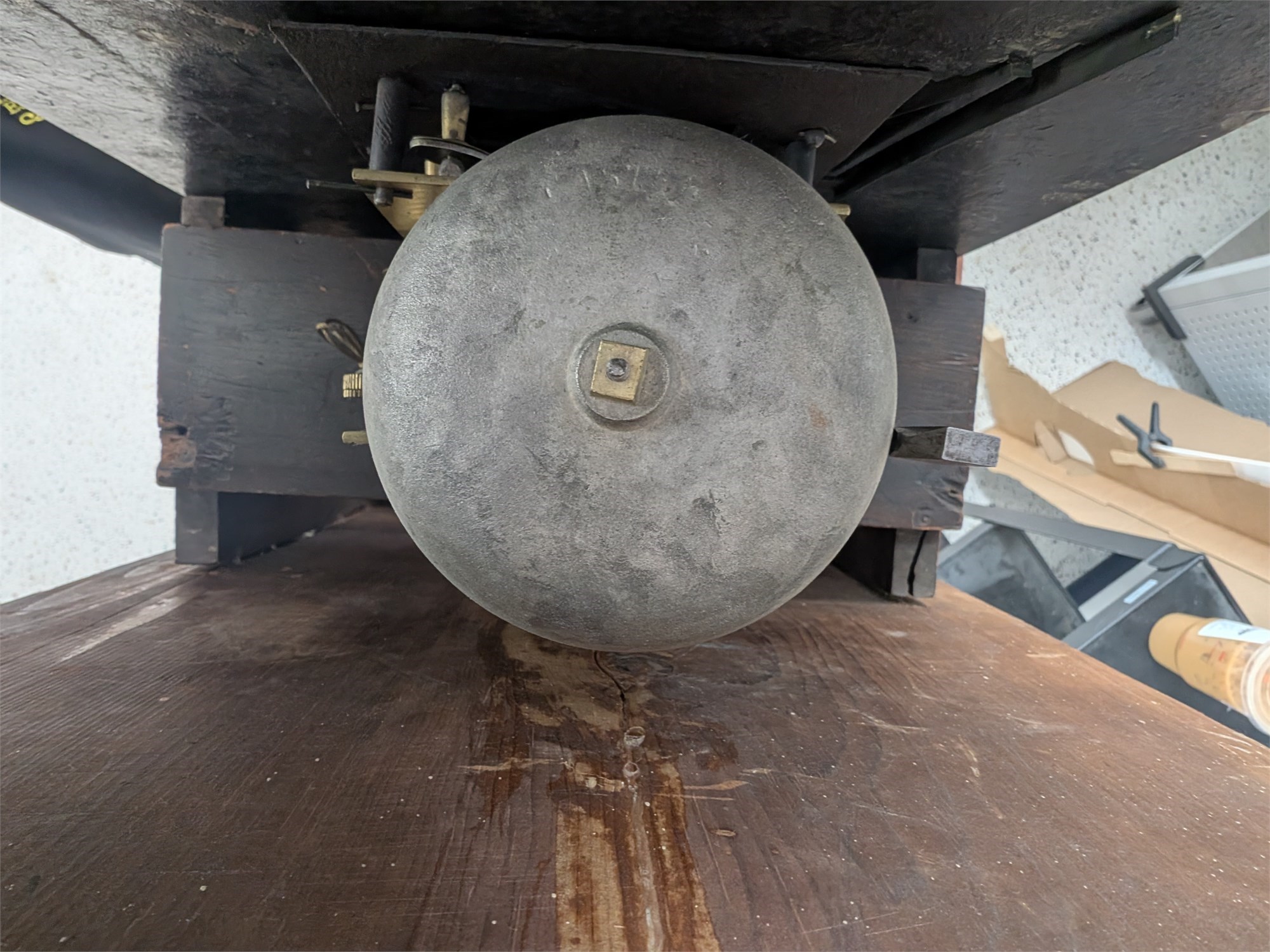
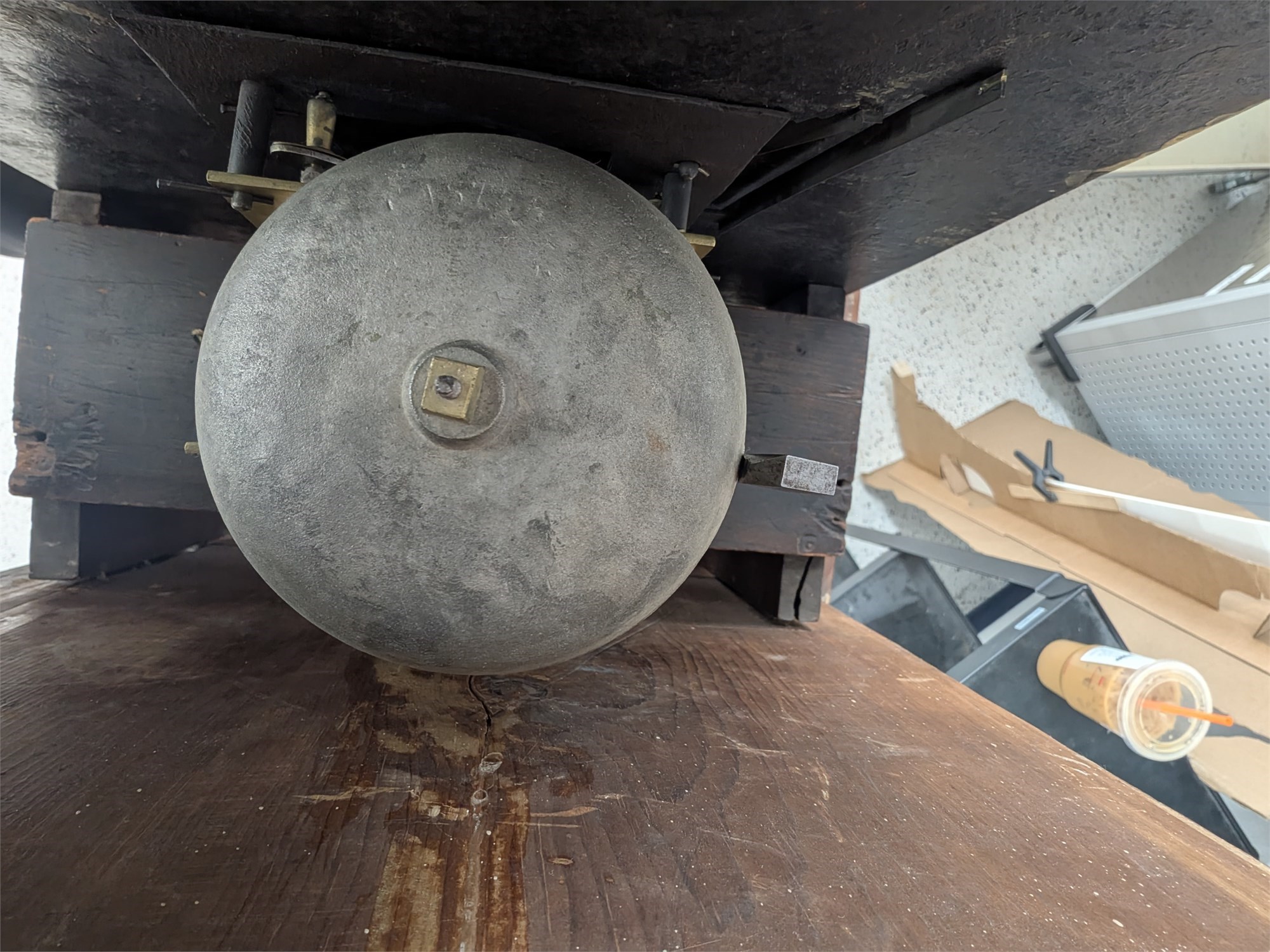
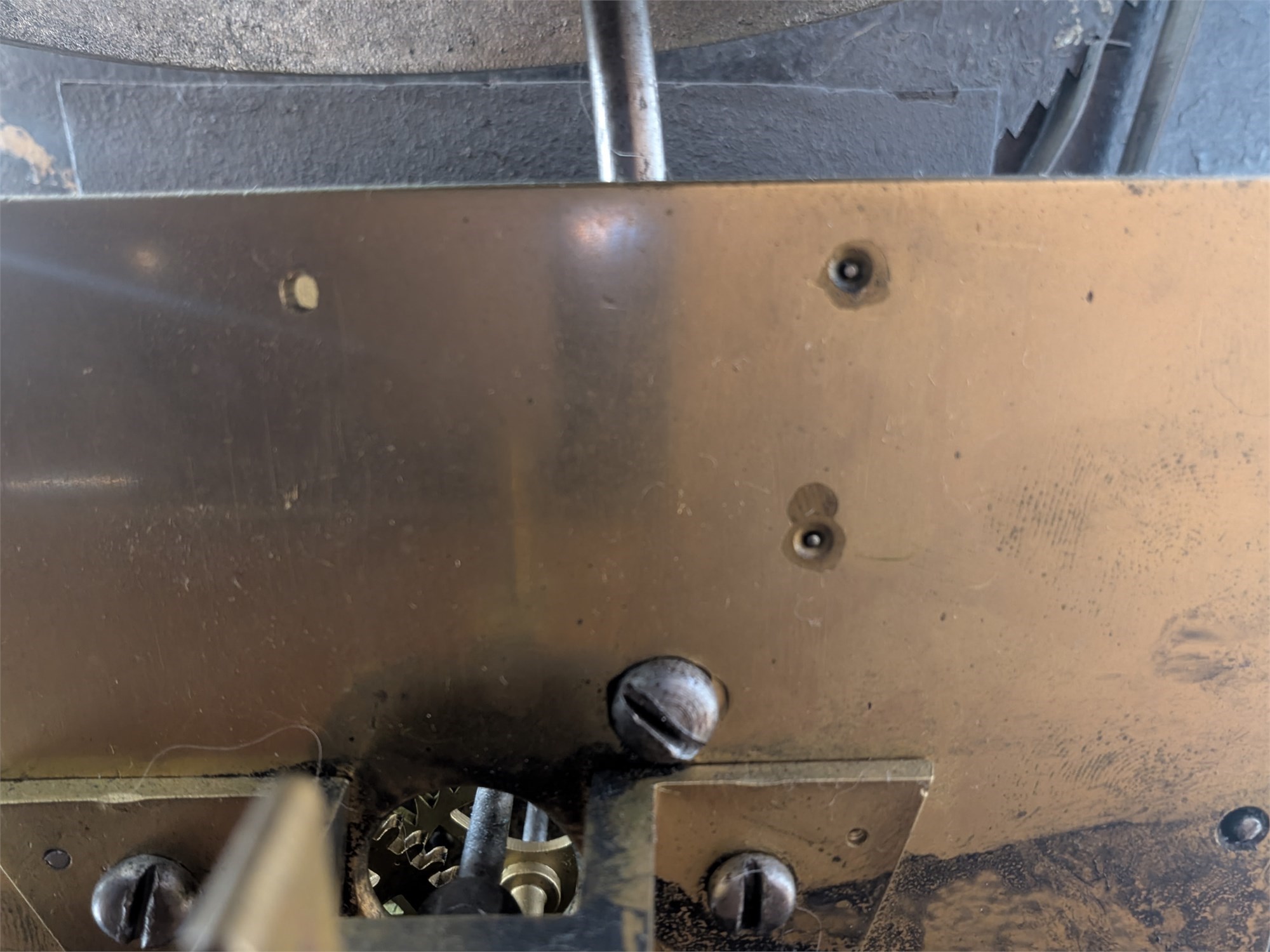
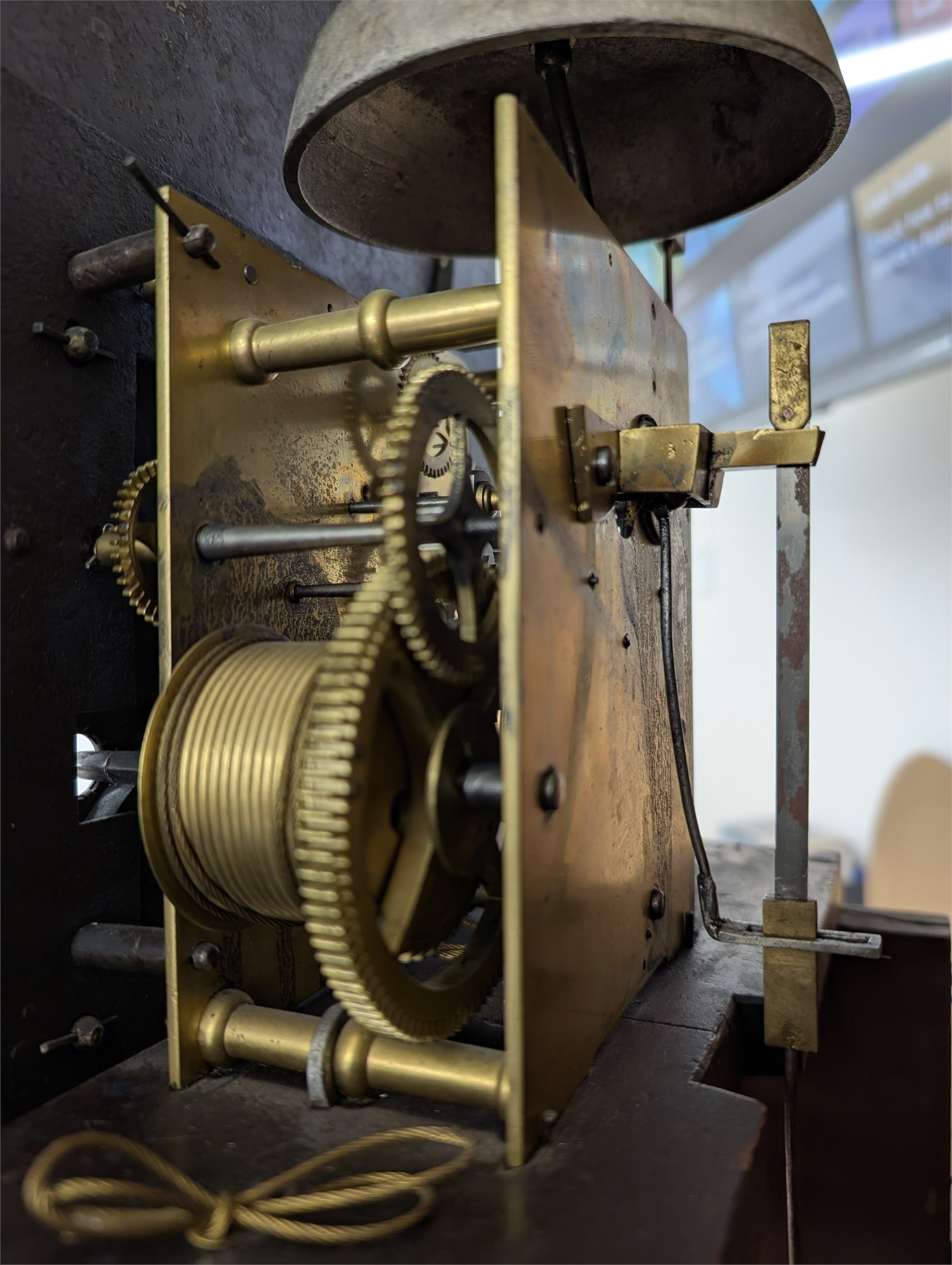
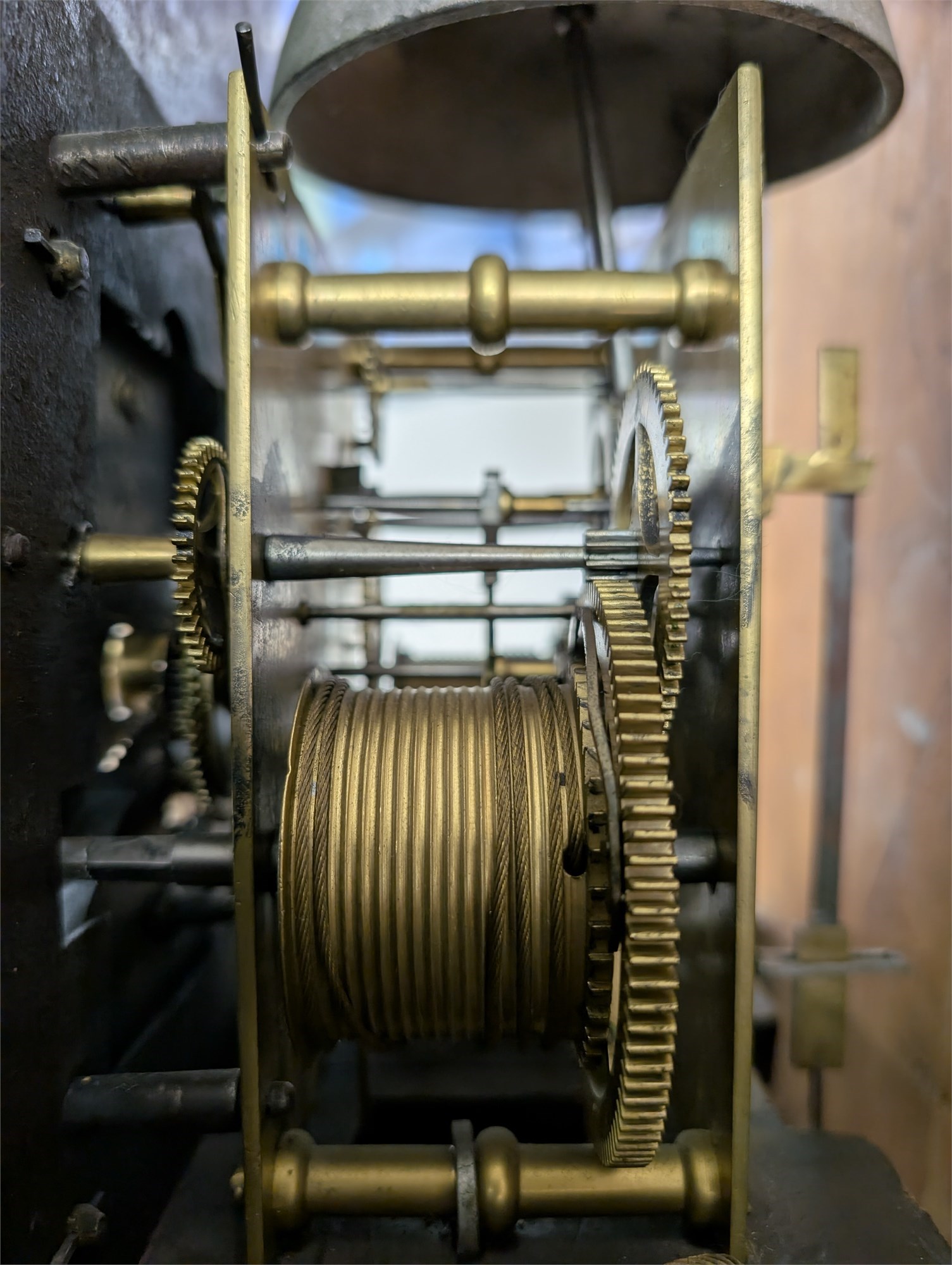
The original eight-day brass movement features five turned pillars, hand-cut wheels, and anchor recoil escapement, striking the hours on a single bell. The movement remains mounted on its original seatboard and retains its pendulum, cast iron weights, bell, winding key, and door key. The winding drums now carry braided wire cables, a later but appropriate service replacement for the original cord, ensuring safe operation without altering the historical integrity of the movement.
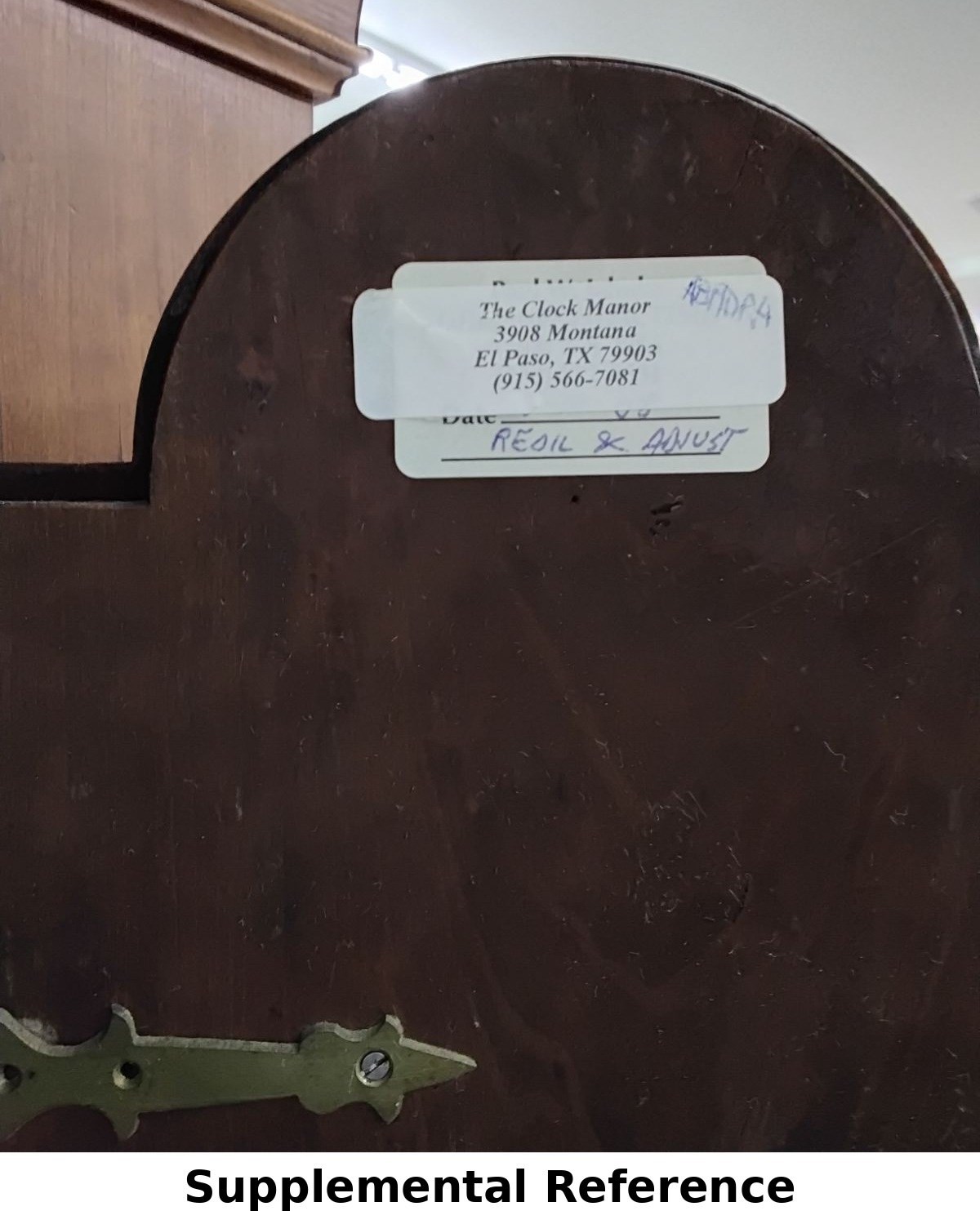
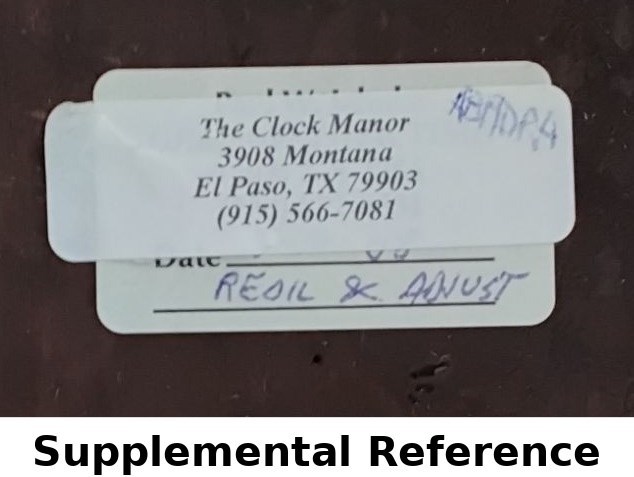
A service label from The Clock Manor, El Paso, TX indicates the clock was professionally re-oiled and adjusted, and it presently runs and keeps time accurately.
Appraisal Documentation
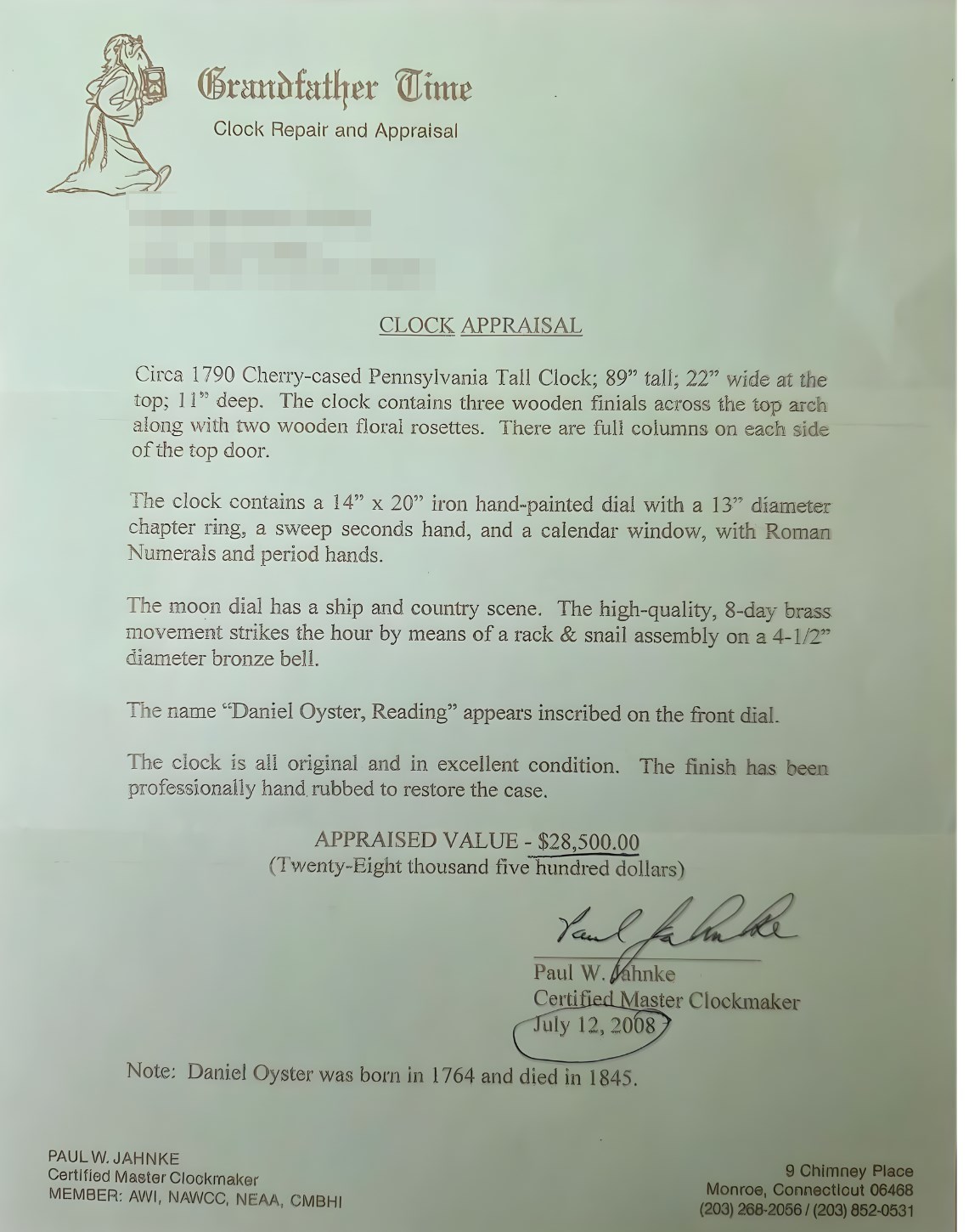
Accompanying the clock is a written appraisal dated July 12, 2008, prepared by Paul W. Jahnke, Certified Master Clockmaker, of Grandfather Time — Clock Repair and Appraisal, Connecticut. The appraisal identifies the clock as a cherry-cased Pennsylvania tall clock signed “Daniel Oyster, Reading,” noting an eight-day brass movement with rack-and-snail strike, hand-painted iron dial with sweep seconds and calendar aperture, and original case elements including finials and floral rosettes.
At the time of issuance, the clock was assigned an appraised value of $28,500.00. Appraisals reflect market conditions and valuation standards at the time issued and should not be interpreted as a guaranteed sale price; however, this document provides independent professional support regarding authenticity, construction quality, and completeness.
Dimensions
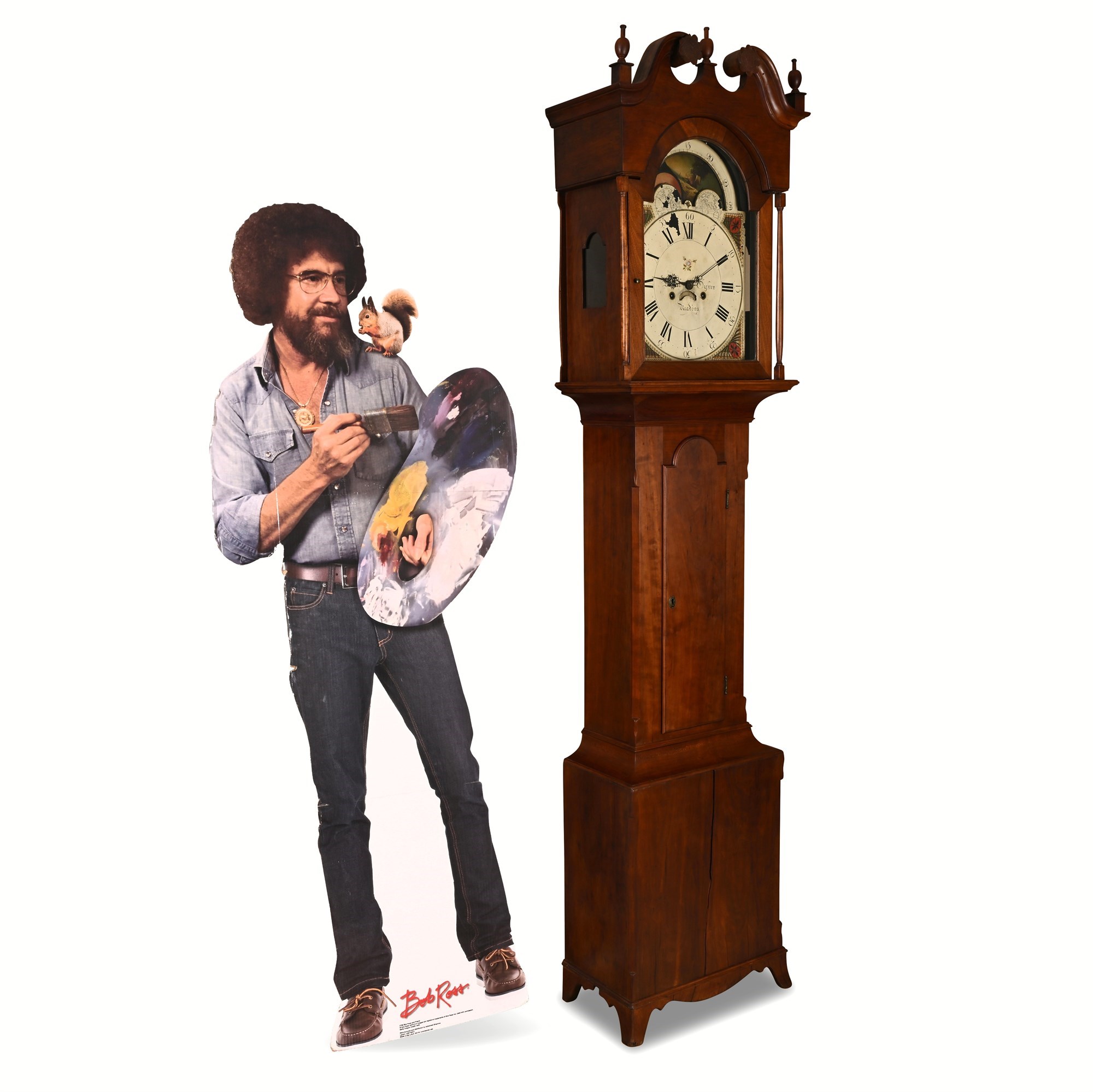
Height: 90 in. Width: 20.25 in. Depth: 11.25 in.
Condition
Excellent mechanical and visual integrity. Expected age-related wear, including minor case splits, small chips to painted petals, and light surface abrasions. Painted dial with stable craquelure and light flaking. Case and movement appear original throughout, with only period-appropriate maintenance interventions.
Provenance and References
Comparable signed clocks by Daniel Oyster have appeared in major American decorative arts auctions:
- Pook & Pook, Inc., Charming Forge Mansion Sale, Oct. 1, 2010 – Walnut tall case clock with moon phase dial – $13,000
- Conestoga Auction Co., May 19, 2018 – Astronomical Chippendale cherry tall case clock – $21,500
- Pook & Pook / WorthPoint, Apr. 18, 2008 – Reading Chippendale walnut tall case clock – $16,380
Documented examples of Oyster’s work are also illustrated in Machmer, Berks County Tall Case Clocks 1750–1850 and Gibbs, Pennsylvania Clocks & Watches, both identifying Oyster as one of Reading’s most productive and stylistically influential makers.
Historical Context
Oyster’s clocks occupy a pivotal place in the evolution of early American clockmaking, uniting Germanic technical tradition with the Federal aesthetic emerging after the Revolutionary era. His painted dials—often imported from the Birmingham dial trade—were assembled with locally made brass works and custom Reading cabinetry, making each example uniquely expressive of Pennsylvania’s artisanal identity.
This clock exemplifies the Berks County ideal: sturdy, refined, and enduringly elegant. The one-piece bonnet carving, original mechanical integrity, and surviving moon phase dial mark it as a superior and authentic specimen of early 19th-century American horology.
A Note from James:
Among Pennsylvania’s early 19th-century clockmakers, Daniel Oyster stands apart for the quiet sophistication of his work. His tall case clocks embody a balance between Reading’s Germanic precision and the clean, architectural grace that defined the emerging Federal style after the Revolution. This particular example captures that harmony beautifully—its moon phase dial, untouched cherry case, and original brass movement all working together to tell not just the time, but the story of a craftsman at the height of his discipline. For collectors of American horology, it represents the rare convergence of authenticity, artistry, and mechanical integrity that defines Oyster’s finest surviving work.