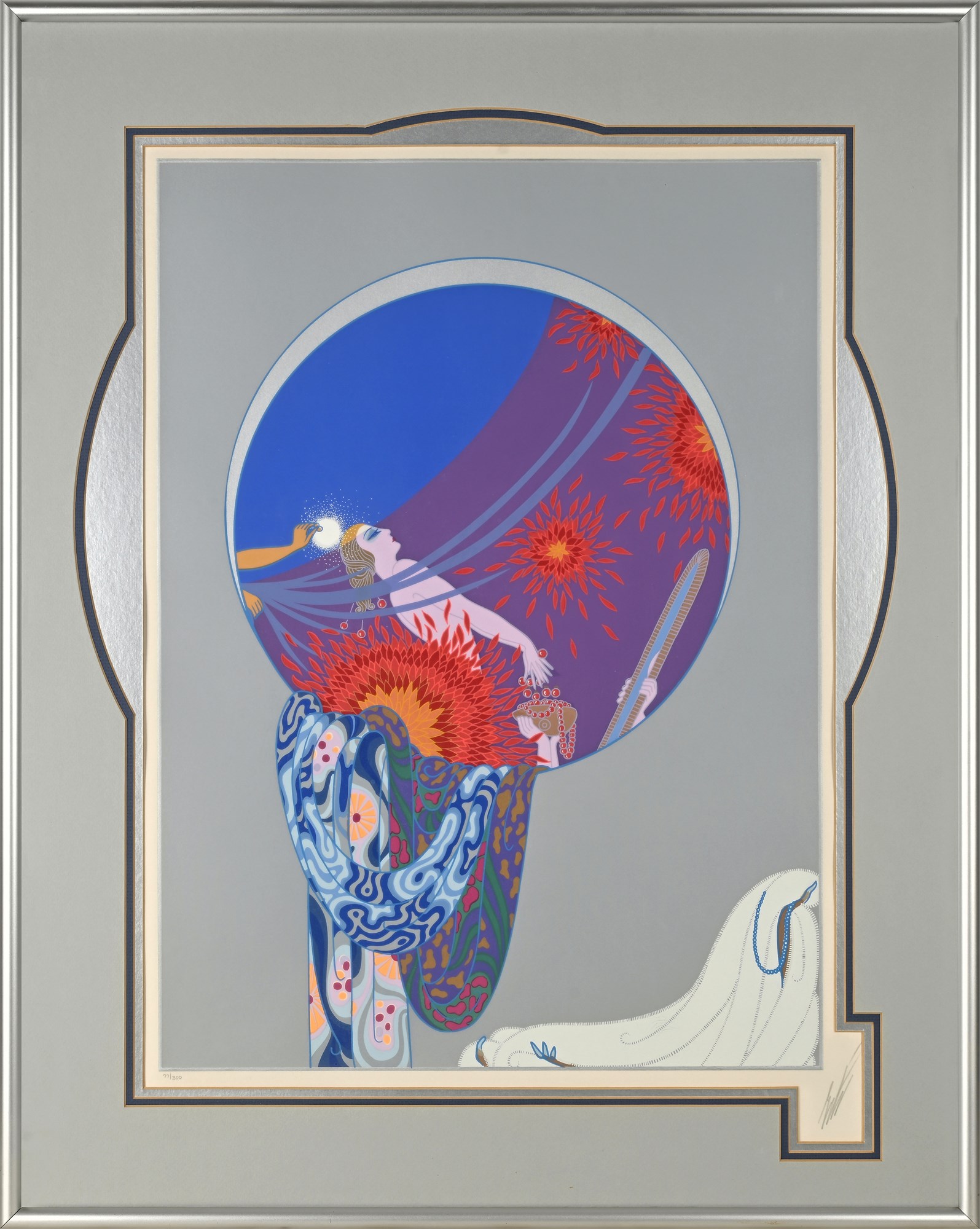
Erté “Nature’s Vanity” 1982 Serigraph, Signed 77/300, Framed View Watchlist >
- Winning Bid: $925.00
- 51 Bid(s) View Bid History
- High Bidder: KBD6501
Seller Accepts Credit Cards
Payment and pickup instructions will be available on your invoice (under "My Account") at the conclusion of this auction.
Lot # K602
System ID # 25202518
Start Date
End Date
2 Watching
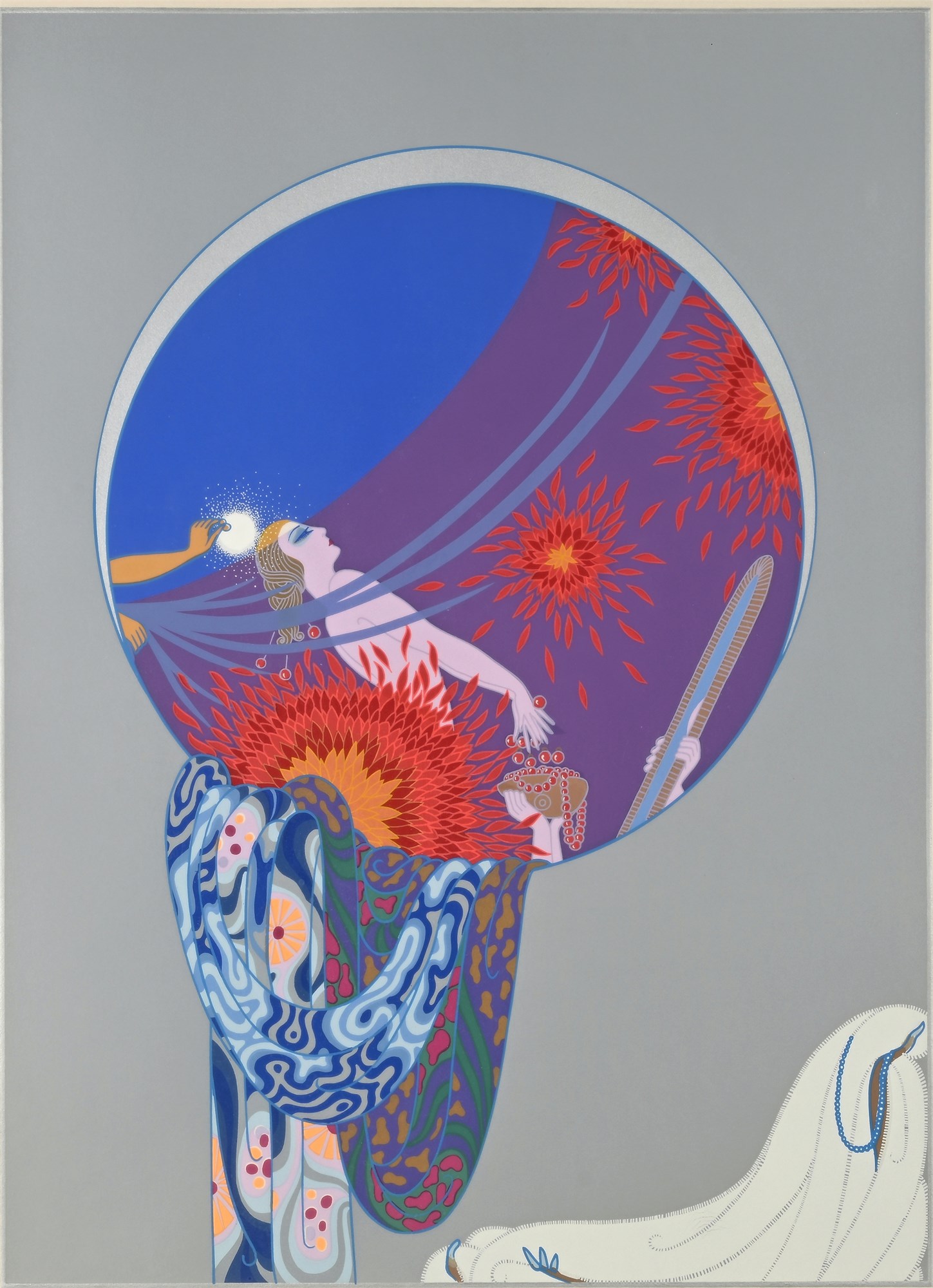
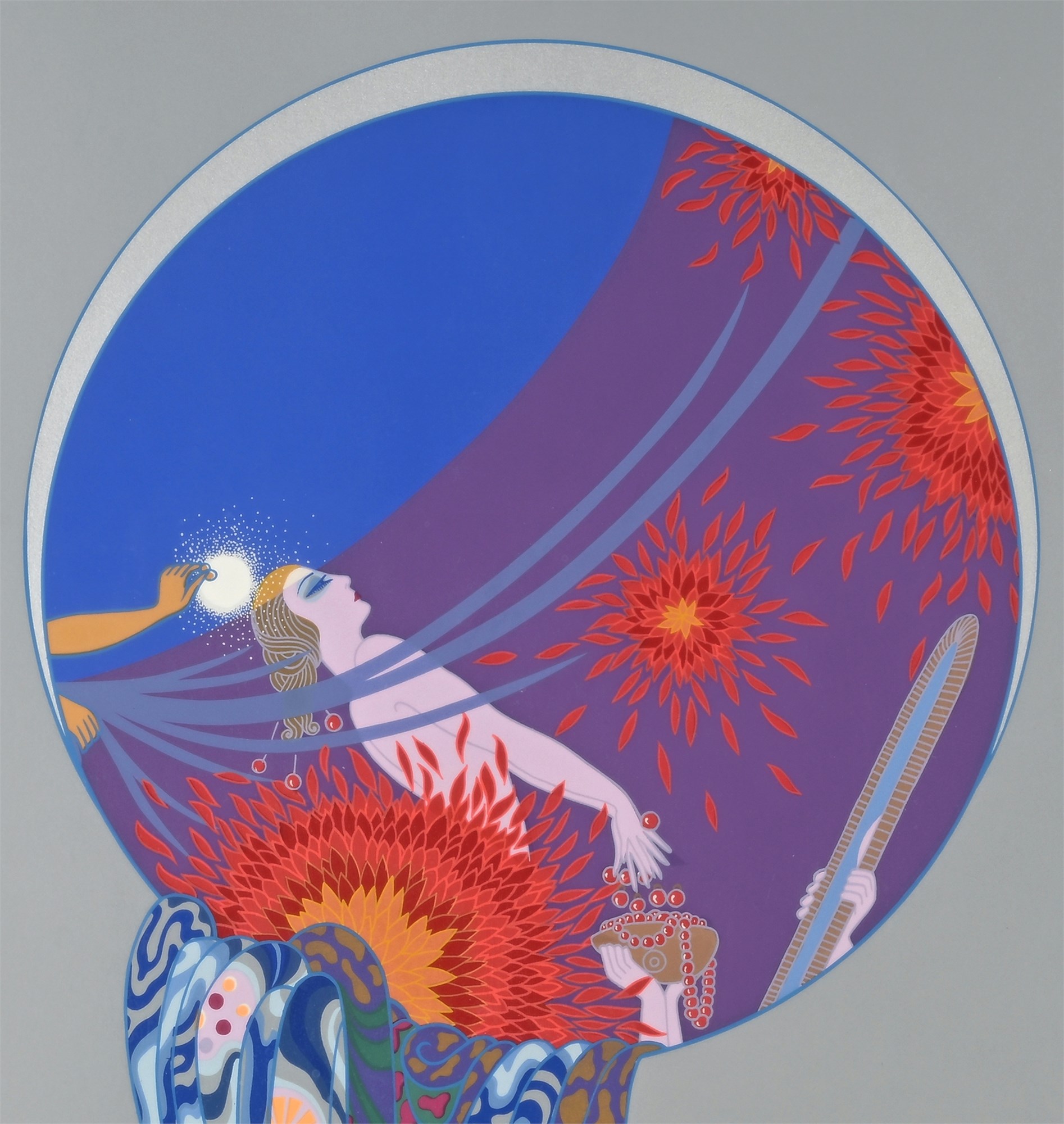
Erté “Nature’s Vanity” 1982 Serigraph, Signed 77/300, Framed
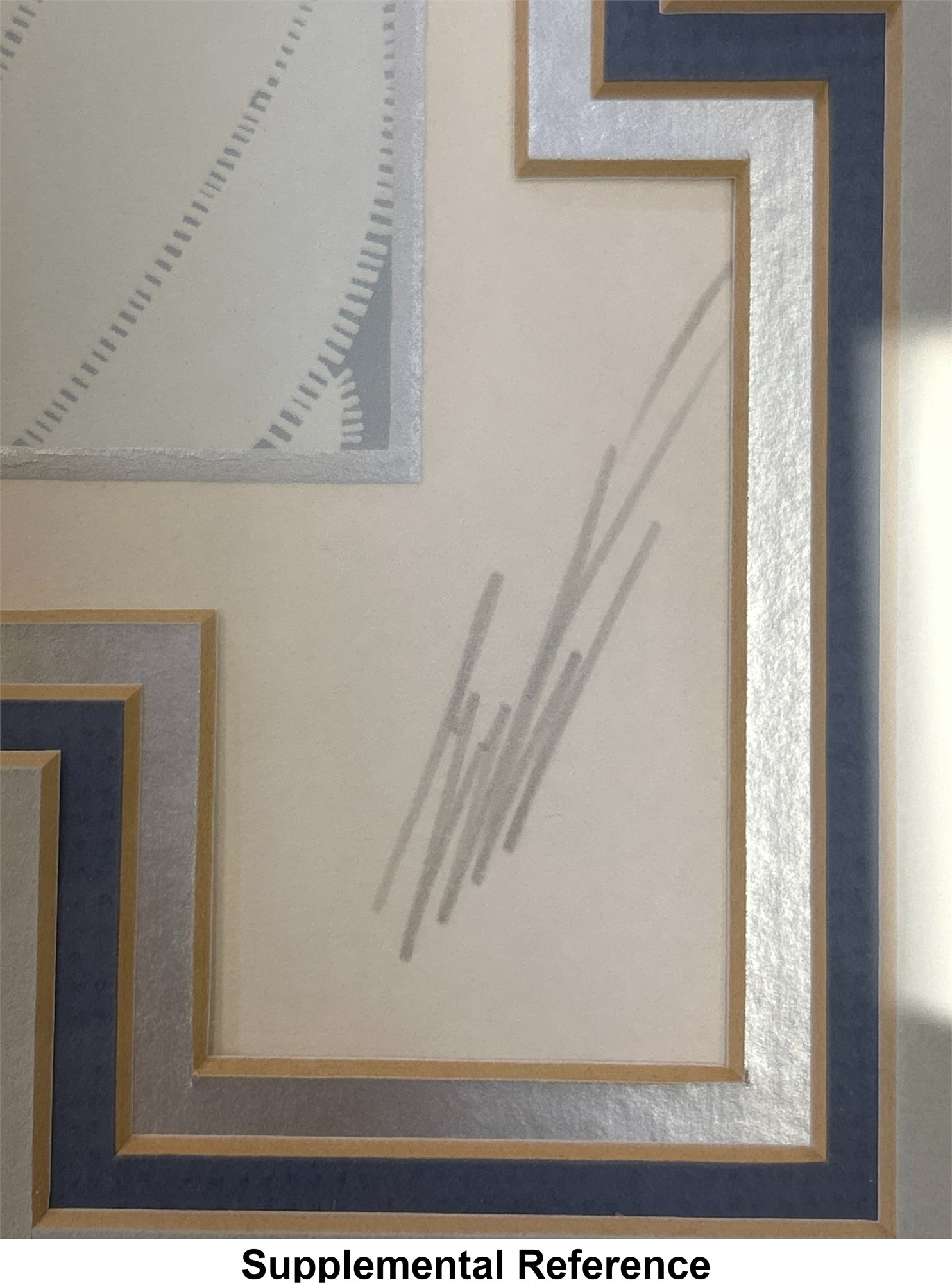
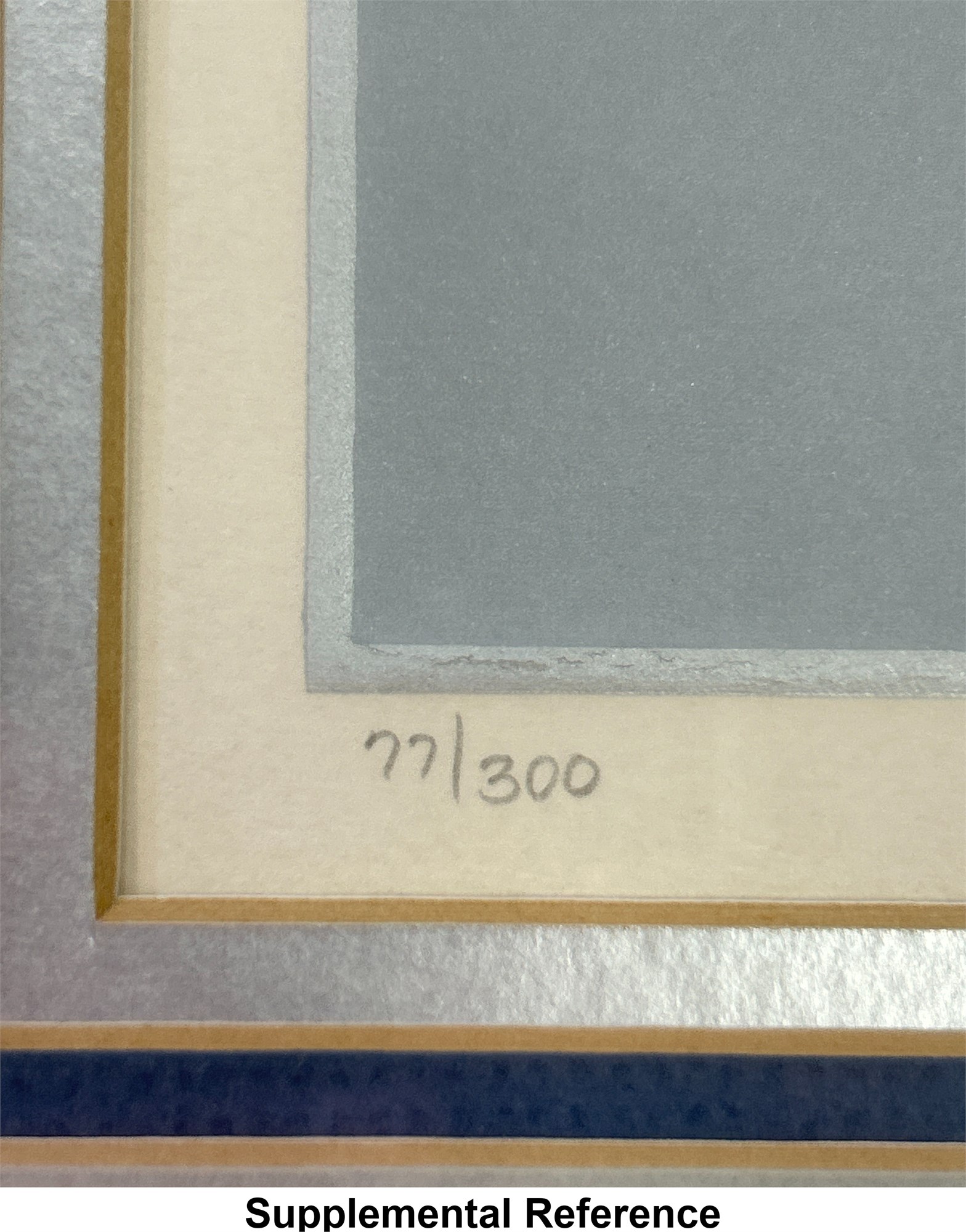
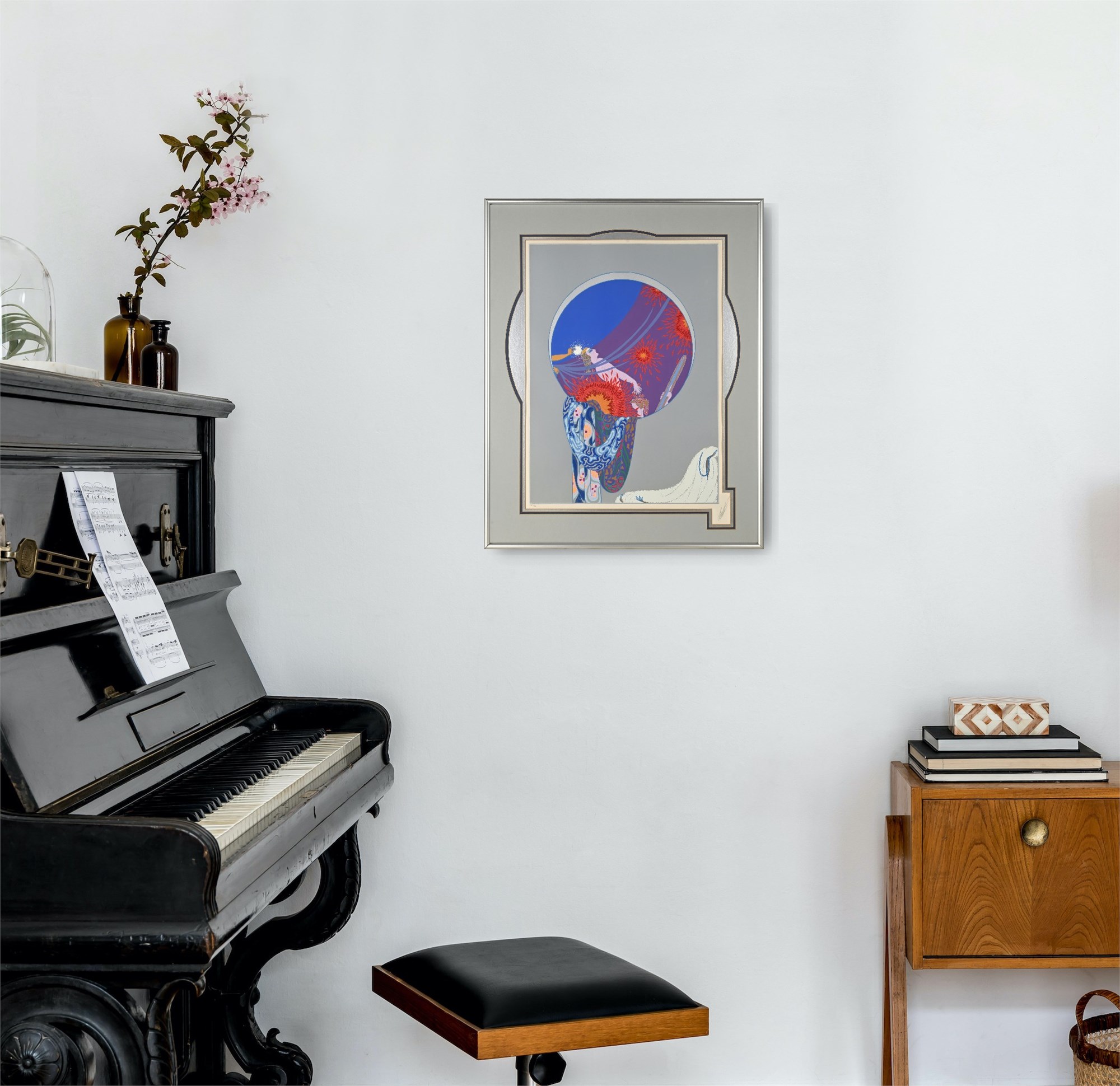
Erté’s Nature’s Vanity (1982) is a limited-edition serigraph from an edition of 300, presented here in a beautifully coordinated triple-mat and silver-tone frame. The composition features a reclining figure surrounded by stylized drapery, floral motifs, and radiant geometric elements—an arrangement that highlights Erté’s distinct Art Deco vocabulary. Executed in rich jewel tones, the work demonstrates the artist’s refined approach to pattern, color, and decorative balance. It is signed in pencil at the lower right and numbered 77/300, consistent with known authentic editions.
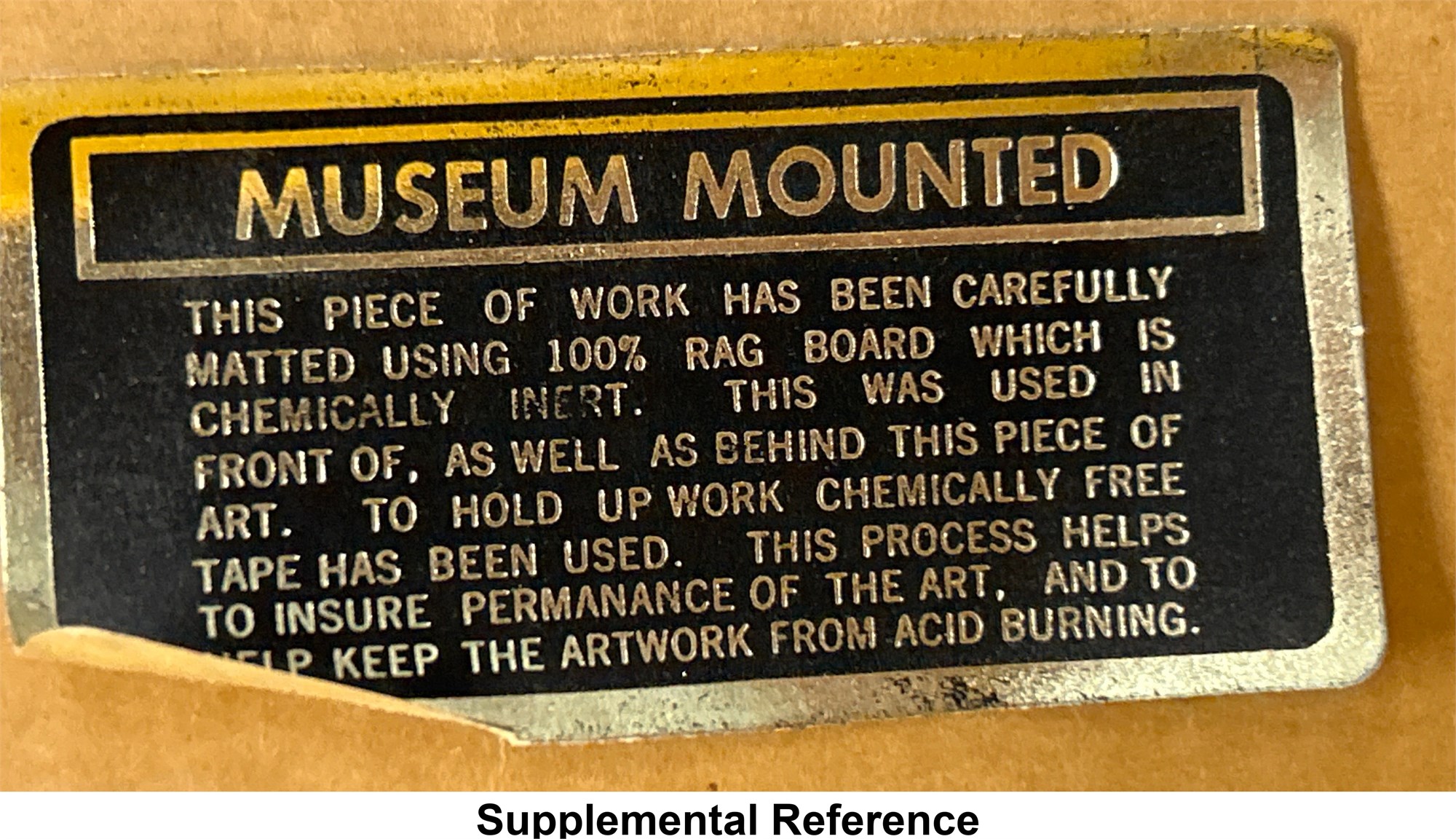
The verso includes the original “Museum Mounted” label, indicating professional, acid-free materials and careful handling.
CONDITION
In good condition overall, with strong color and a clean presentation. Some small debris is visible behind the glass, and the frame shows light handling wear. Mats remain well-fitted and even. No visible creases or tears to the print. Refer to photos for additional details.
DIMENSIONS
- Overall (framed): 33.5" × 26.75" × 1.5"
- Visible image area: 25" × 18"
Artist Biography — Erté (Romain de Tirtoff, 1892–1990)
Erté, born Romain de Tirtoff in St. Petersburg in 1892, became one of the defining creative forces of the Art Deco movement. Relocating to Paris in 1912, he adopted the name “Erté” from the French pronunciation of his initials, and quickly entered the world of haute couture, fashion illustration, and theatrical design. His long association with Harper’s Bazaar—spanning more than two decades—established him as a leading stylist of the period, while his collaborations with the Folies Bergère, the Paris Opera, and major theatrical productions helped shape his distinctive visual language.
Known for elongated figures, intricate drapery, geometric ornament, and a sense of stage-like drama, Erté created an aesthetic that blended elegance with precise graphic structure. During the 1970s and 1980s, he produced an extensive body of limited-edition serigraphs, lithographs, and bronze sculptures that translated his Art Deco vision into fine art for collectors worldwide. His works remain highly sought after for their decorative sophistication, theatrical flair, and historical significance within 20th-century design.
Erté continued creating into his late 90s, leaving behind a prolific legacy that secured his position as one of the most enduring and recognizable masters of the Art Deco style.