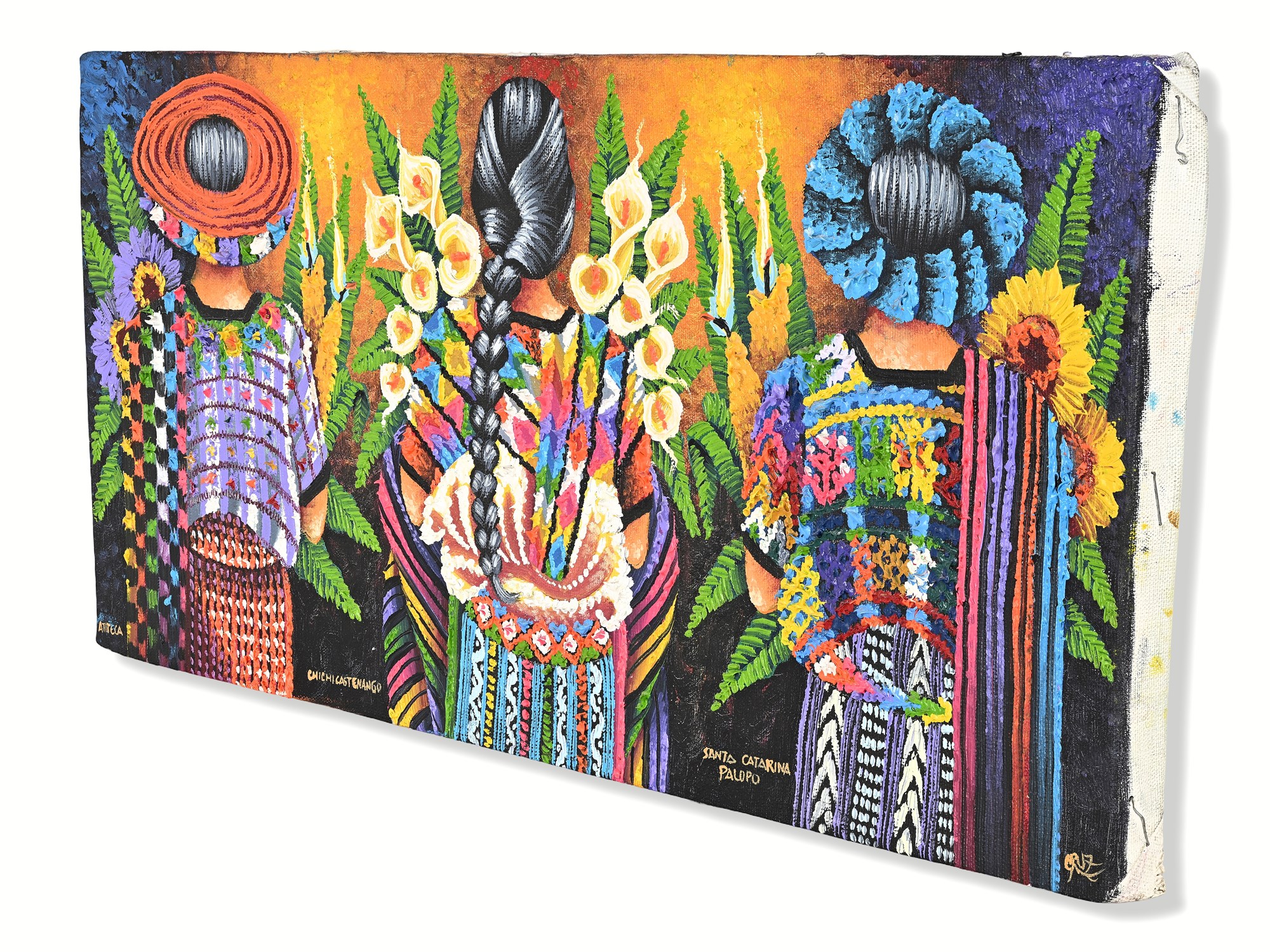
Cruz Sunú Original Oil – Guatemalan Women & Textiles, 7" x 15.25" View Watchlist >
- Winning Bid: $375.00
- 73 Bid(s) View Bid History
- High Bidder: twinforks
Seller Accepts Credit Cards
Payment and pickup instructions will be available on your invoice (under "My Account") at the conclusion of this auction.
Lot # K483
System ID # 25131791
Start Date
End Date
3 Watching
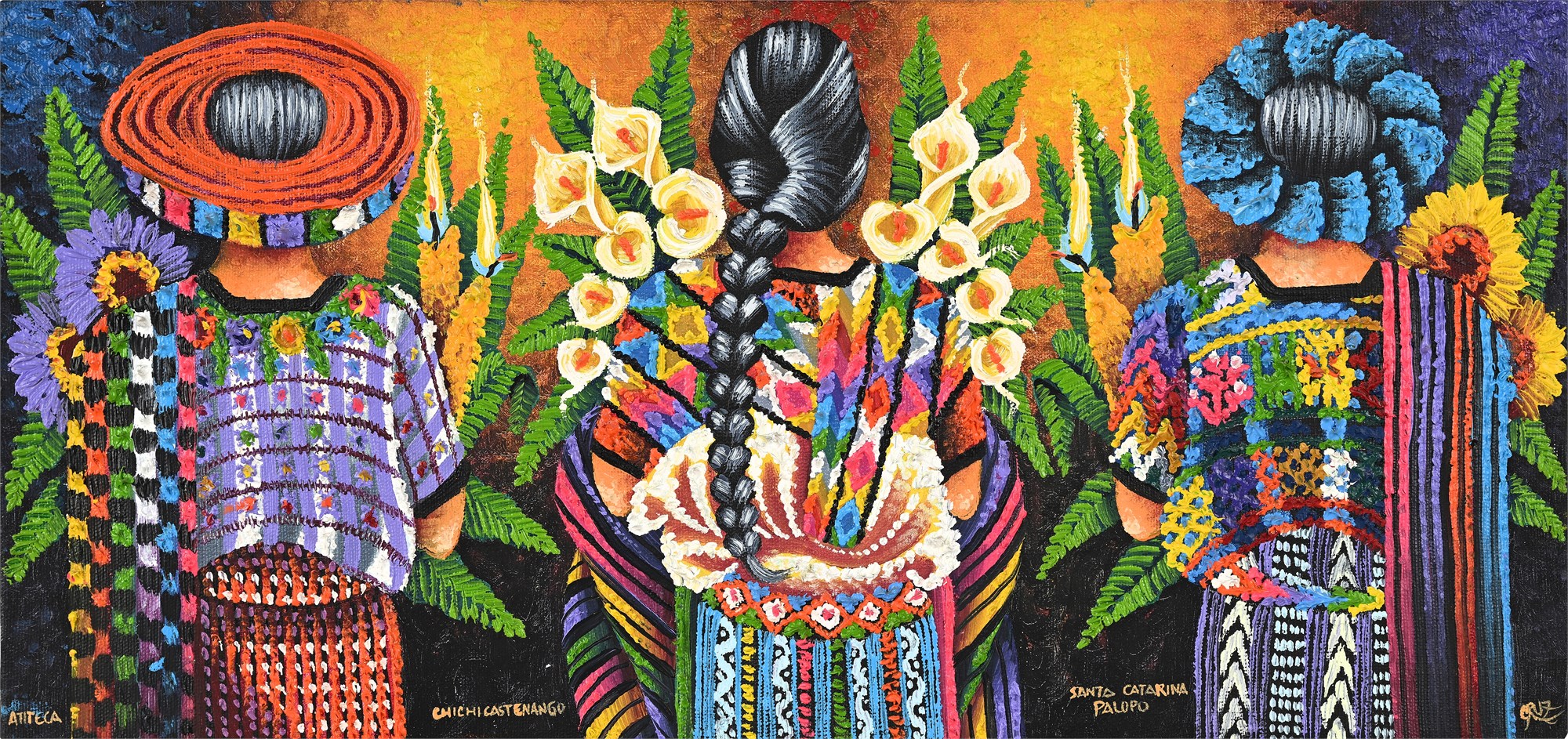
Cruz Sunú Original Oil – Guatemalan Women & Textiles, 7" x 15.25"
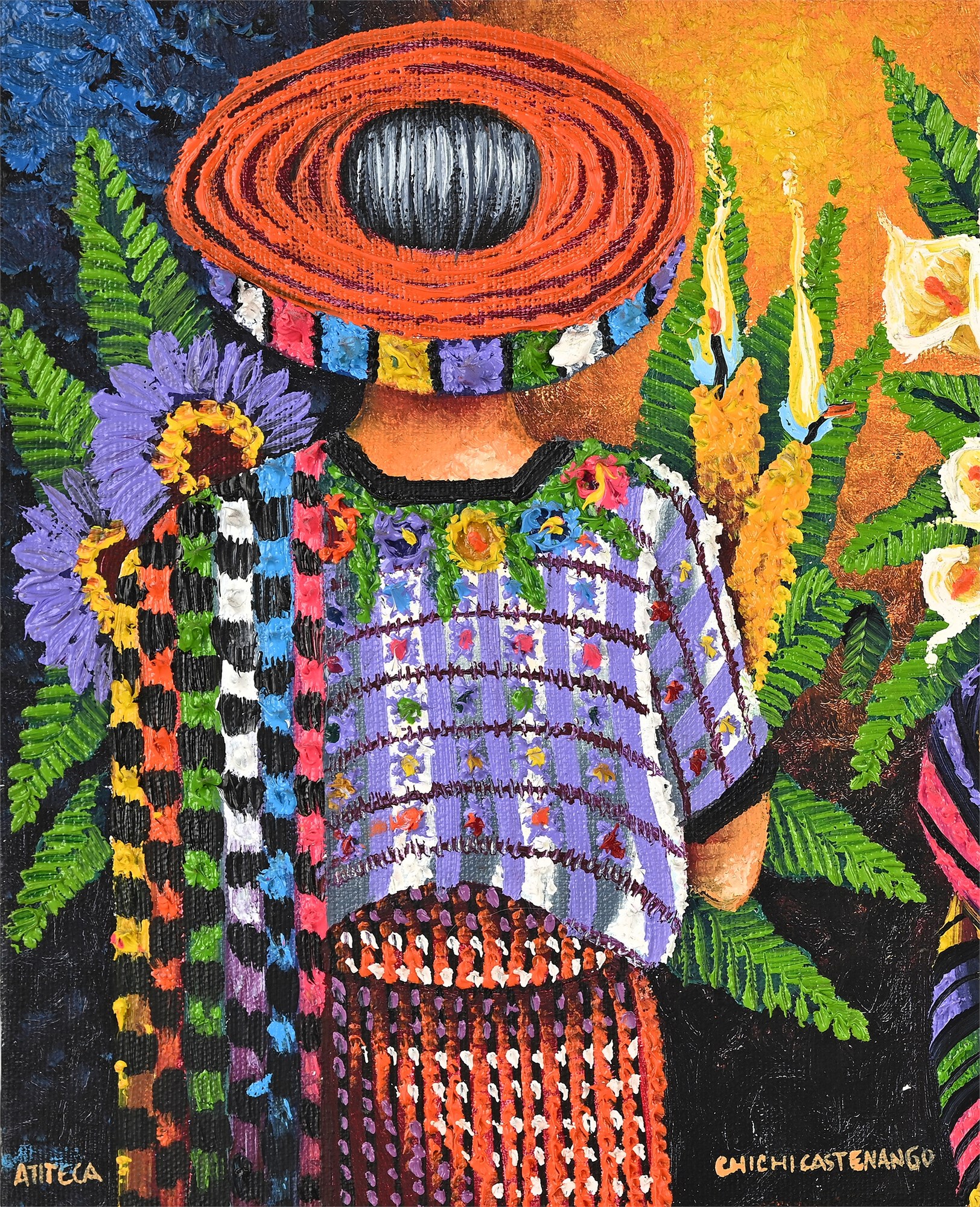
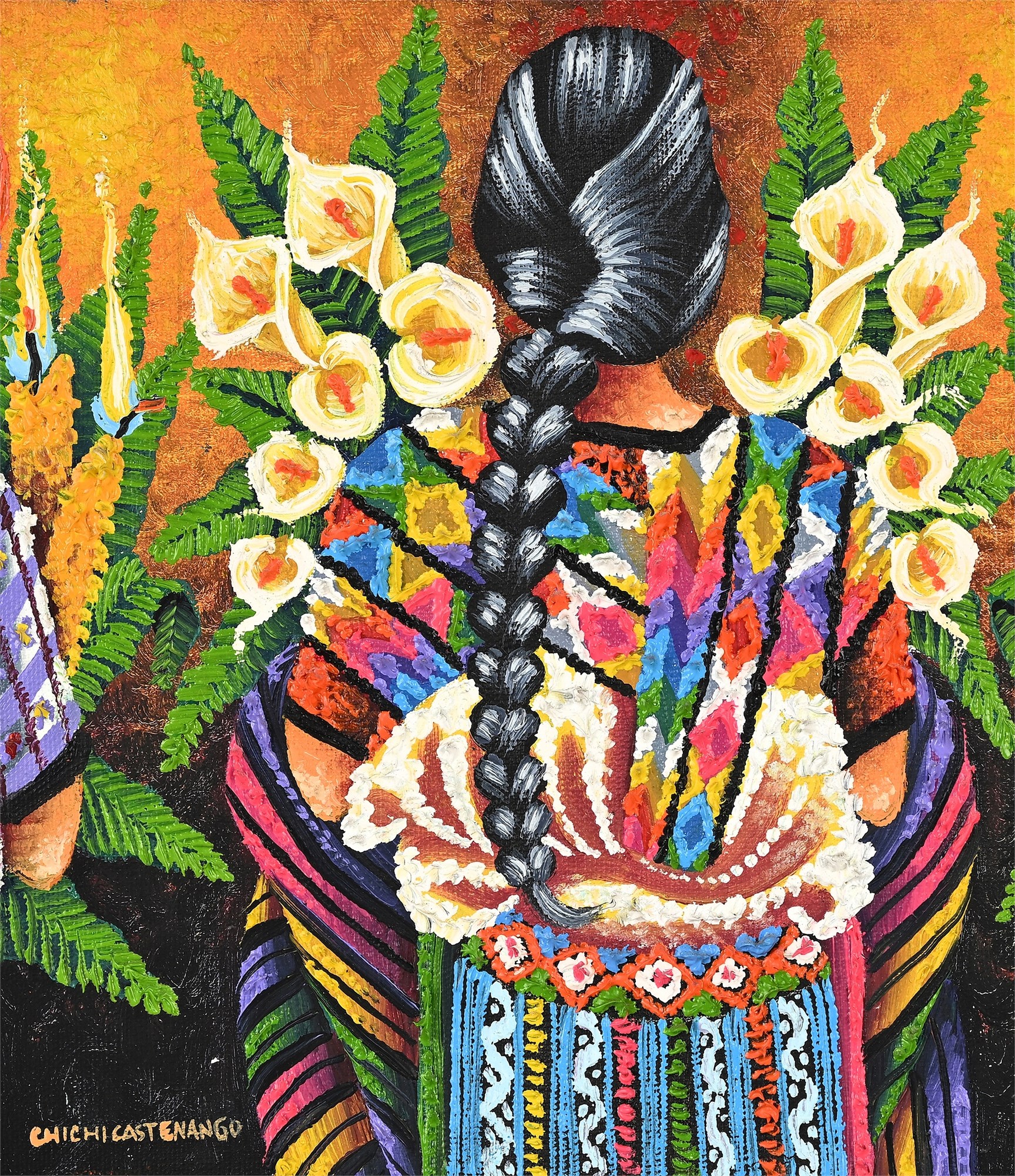
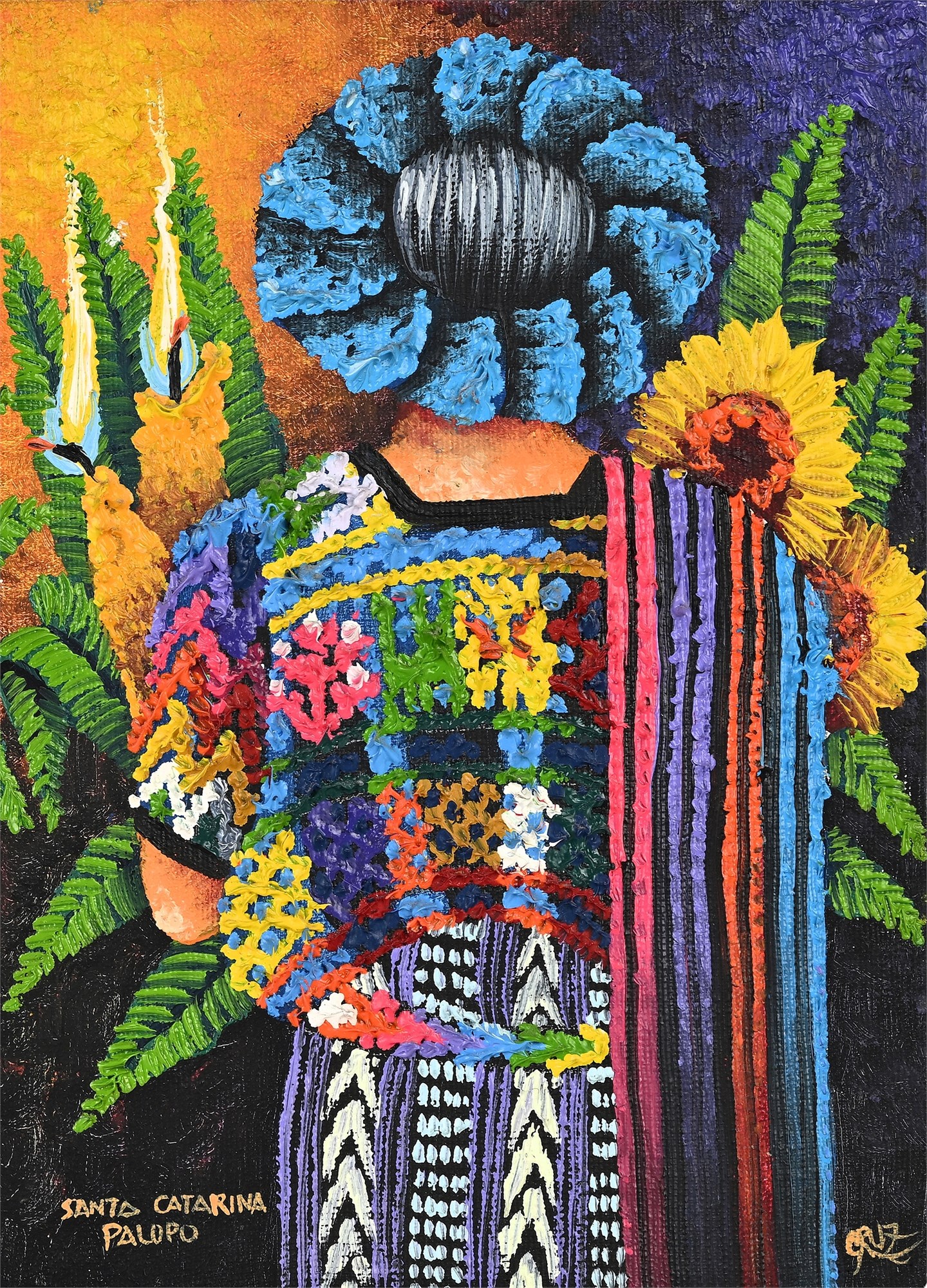
This original oil painting by Pedro Arnold “Cruz” Sunú, a renowned Tz’utujil Maya artist from Sololá, Guatemala, exemplifies his celebrated “espaldas” style. Sunú is internationally recognized for his deeply textured oil technique and his respectful portrayal of indigenous women as cultural bearers. Here, three figures appear in traditional huipiles from Atiteca, Chichicastenango, and Santa Catarina Palopó, each garment rendered with thick, sculptural brushwork that mimics the feel of woven fabric—Sunú’s signature method.
The artist’s vibrant palette and rich layering highlight the unique textile patterns associated with each village, capturing the cultural identity and craftsmanship of Guatemala’s highland communities. Signed at the lower right and painted on stretched canvas, the piece reflects the narrative depth and material beauty that define Sunú’s most sought-after works. A compelling addition for collectors of Latin American or Maya-inspired art.
Condition
Good condition. No damage or wear.
Dimensions
Height: 7 inches
Width: 15.25 inches
Artist Biography
Pedro Arnold Cruz Sunú is an acclaimed Guatemalan painter whose work celebrates the cultural richness of the Maya–Tz’utujil community. Born in Sololá, Guatemala, he grew up immersed in the vibrant traditions, textiles, and spiritual life of his people—an influence that would shape his artistic identity from a young age. Surrounded by the colors of markets, ceremonies, and the natural beauty around Lake Atitlán, Sunú developed an early passion for painting, encouraged by a family deeply connected to local customs.
Despite his strong artistic drive, Sunú’s childhood was marked by financial hardship. One of eight children in a farming family, he left school at thirteen to help support his household. Determined to pursue art, he saved enough by 1998 to enroll in the Escuela Nacional de Artes Plásticas in Guatemala City, a leading institution for fine arts, sculpture, and graphic arts. Although he could only complete three of the five years due to family obligations, his training laid the technical foundation that he continued to refine independently upon returning home.
By 2004, Sunú was gaining recognition, selling paintings to galleries in Santiago Atitlán and later exhibiting in Guatemala City and La Antigua. His signature artistic contribution is the development of the “espaldas” (backs) series—portraits of indigenous women shown from behind, dressed in intricately patterned huipiles unique to more than twenty Guatemalan villages. To achieve the illusion of woven fabric, Sunú uses extremely thick, layered oil paint, producing a tactile, textile-like surface that has become central to his visual language. He honors Maya women as cultural bearers, using pattern, color, and narrative structure to preserve and elevate their traditions.
Sunú’s work extends beyond aesthetic value; it is deeply rooted in storytelling. His paintings often depict ritual life, daily labor, Mayan symbolism, and the natural world. He has exhibited widely—throughout Guatemala, the United States, Canada, Honduras, and abroad—and continues to gain international attention for bridging tradition with contemporary expression.
Today, Pedro Arnold “Cruz” Sunú lives and works in San Pedro La Laguna, where he remains committed not only to painting but also to sustaining indigenous artistic practices, collaborating with local artisans, and supporting cultural preservation within his community.