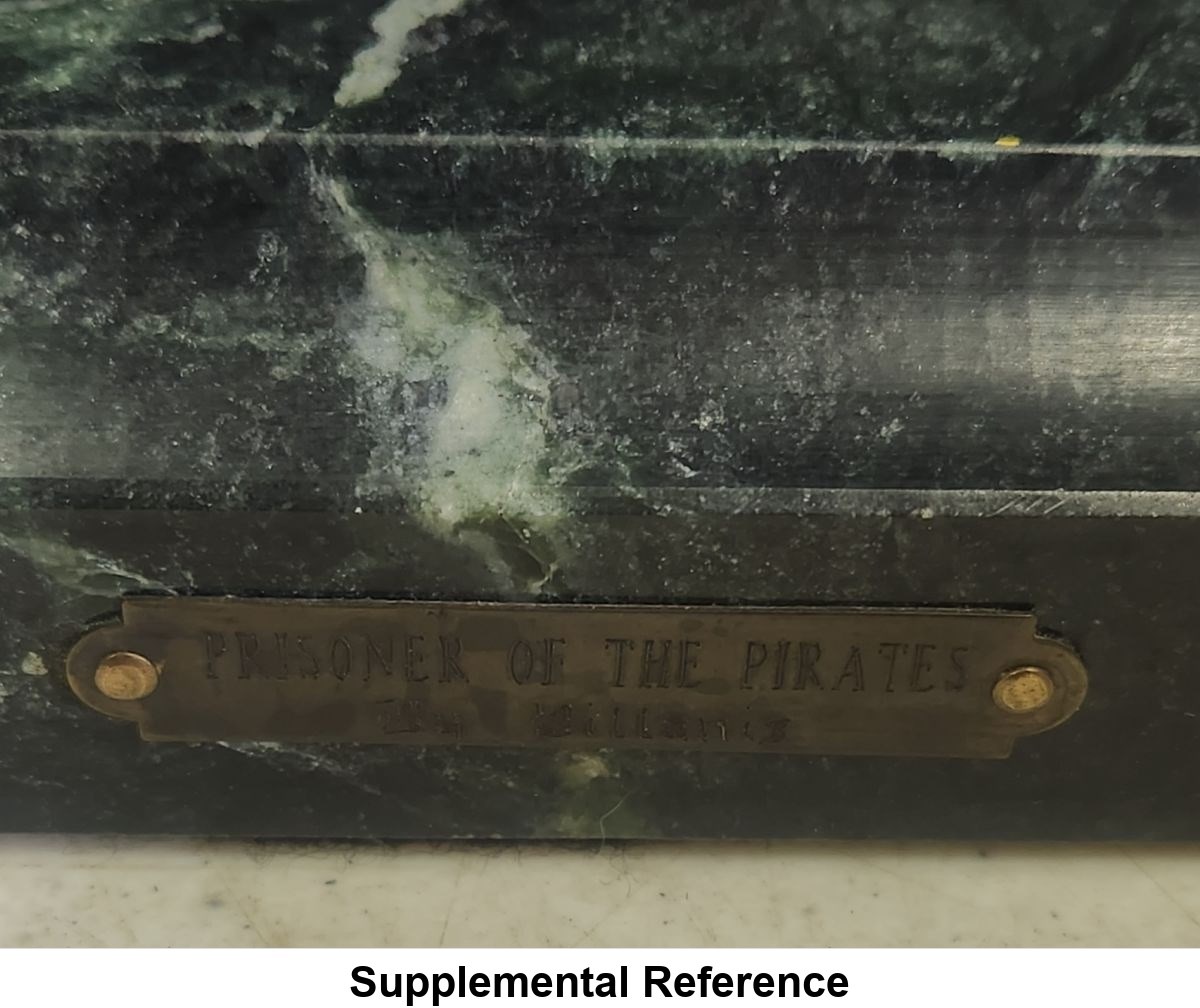
Villanis “Prisoner of the Pirates” Bronze, Société des Bronzes, 34" View Watchlist >
- Winning Bid: $1,475.00
- 92 Bid(s) View Bid History
- High Bidder: bigtop
Seller Accepts Credit Cards
Payment and pickup instructions will be available on your invoice (under "My Account") at the conclusion of this auction.
Lot # K362
System ID # 25060186
Start Date
End Date
4 Watching
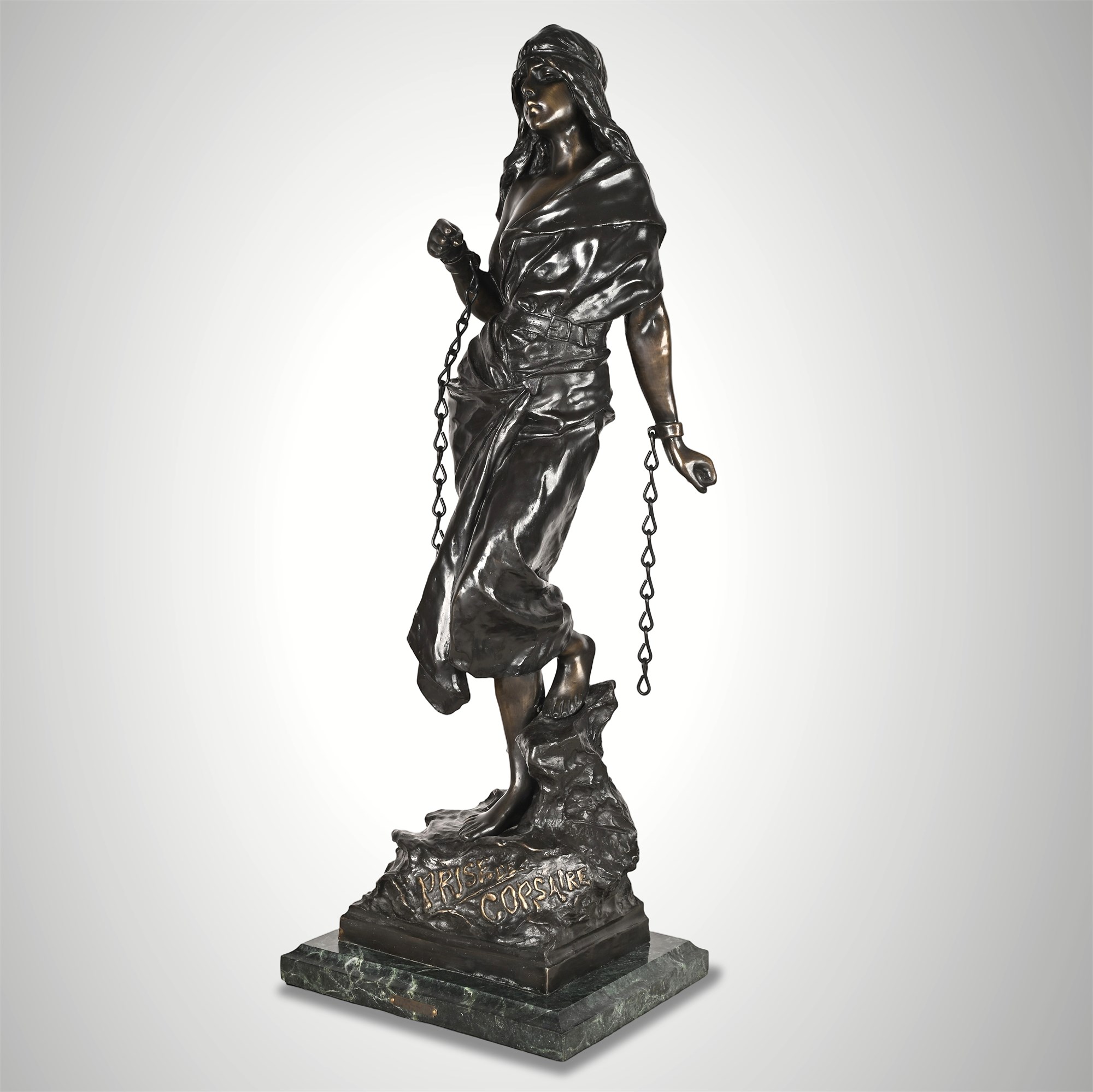
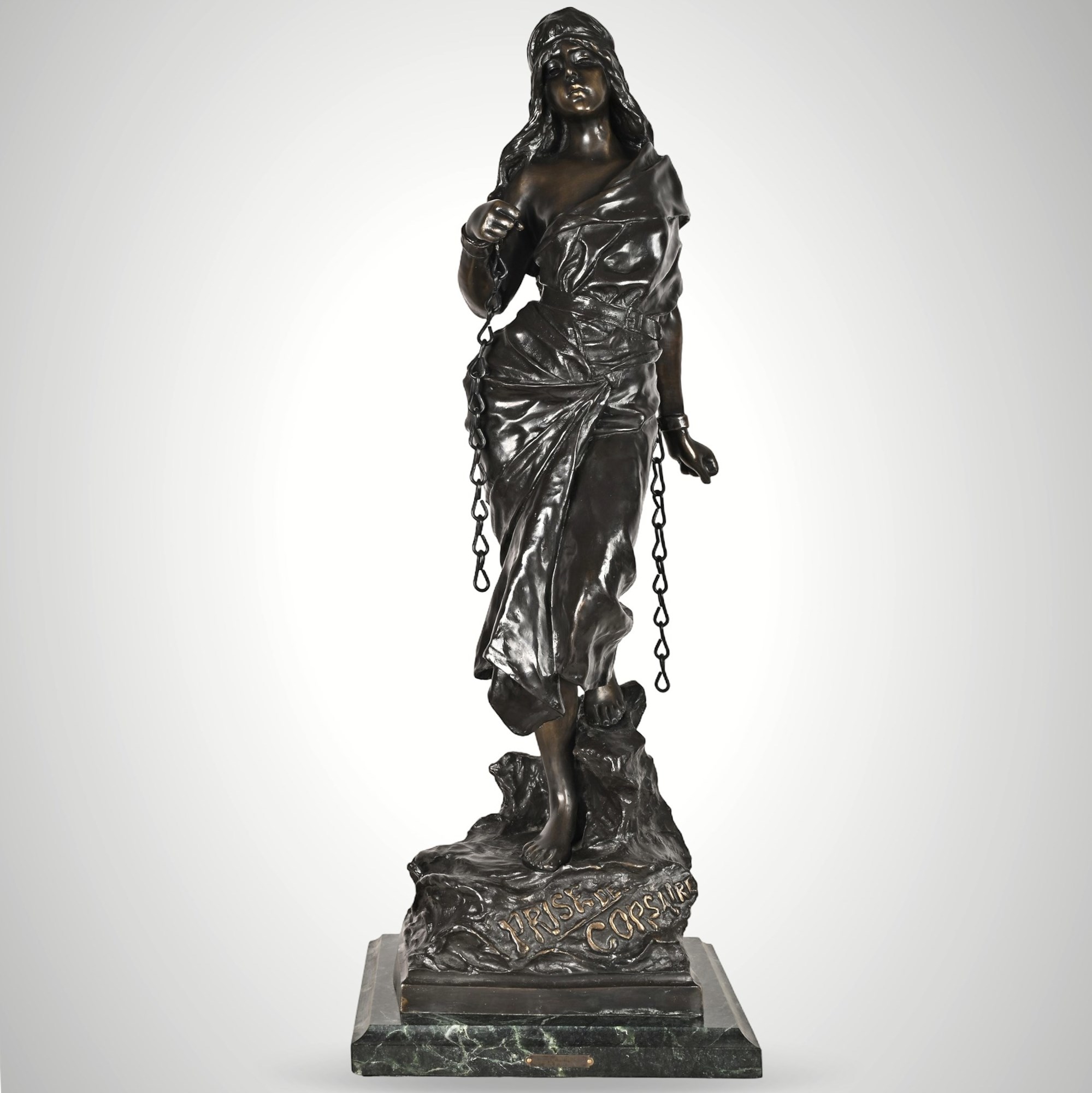
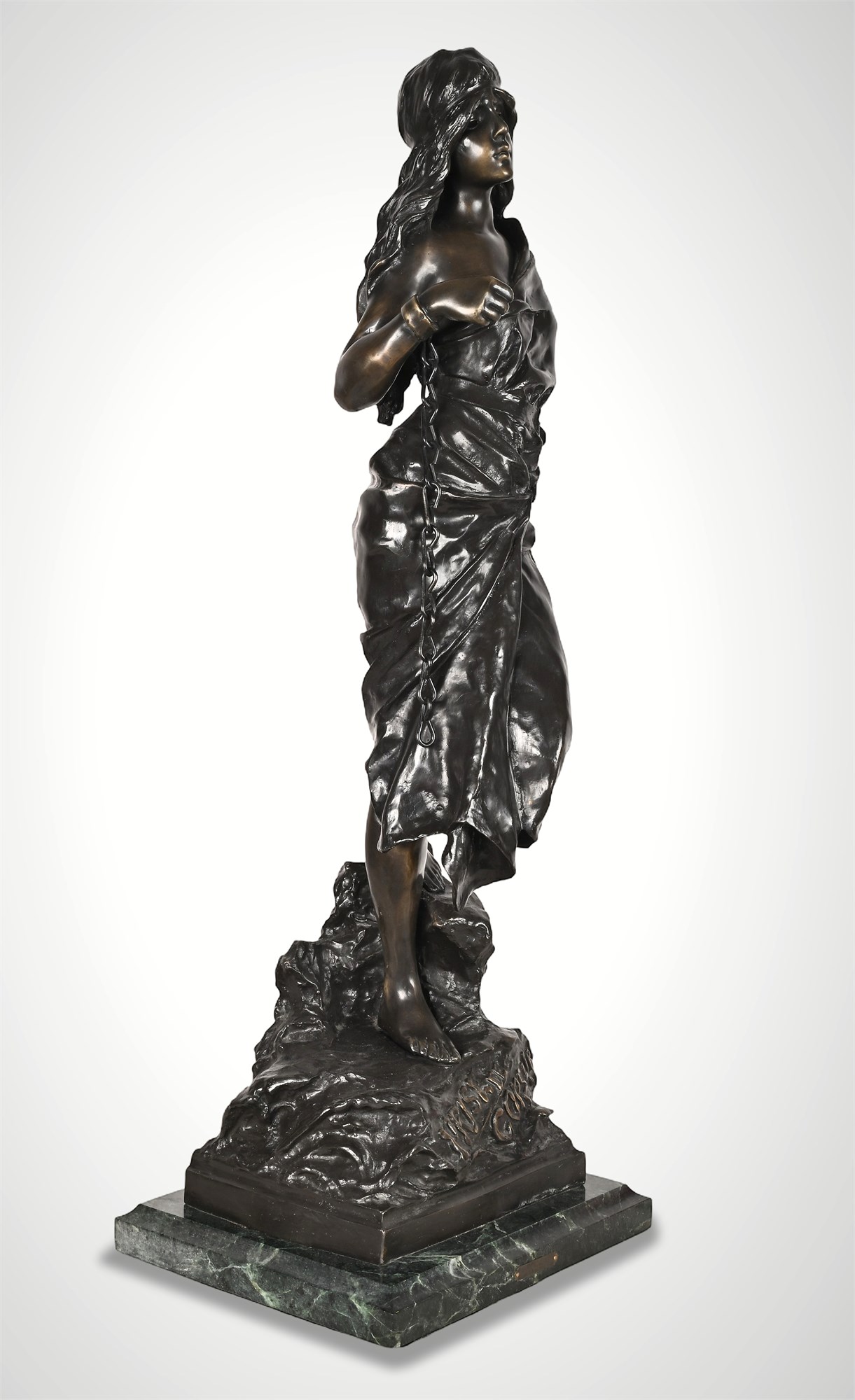
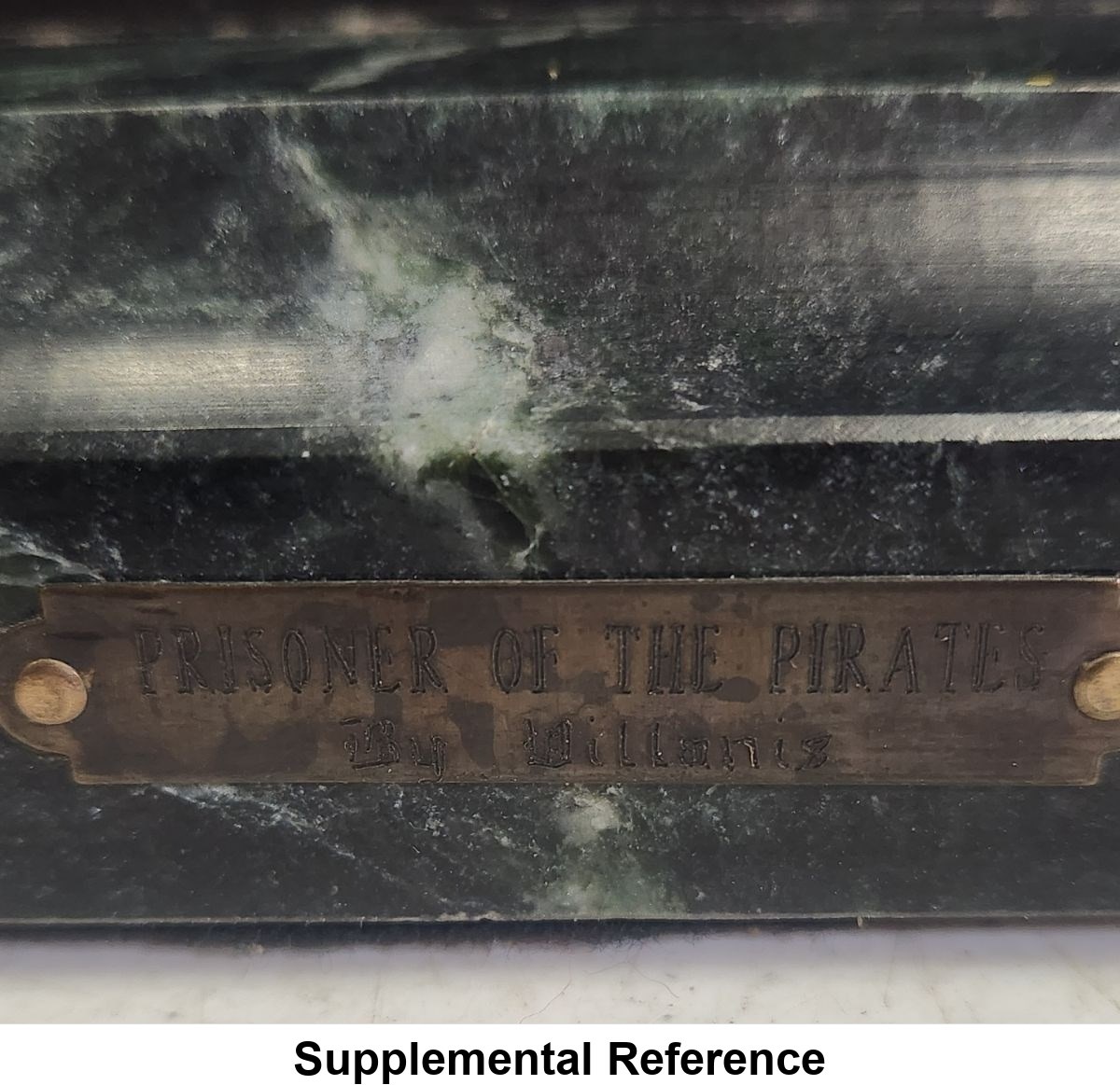
Villanis “Prisoner of the Pirates” Bronze, Société des Bronzes, 34"
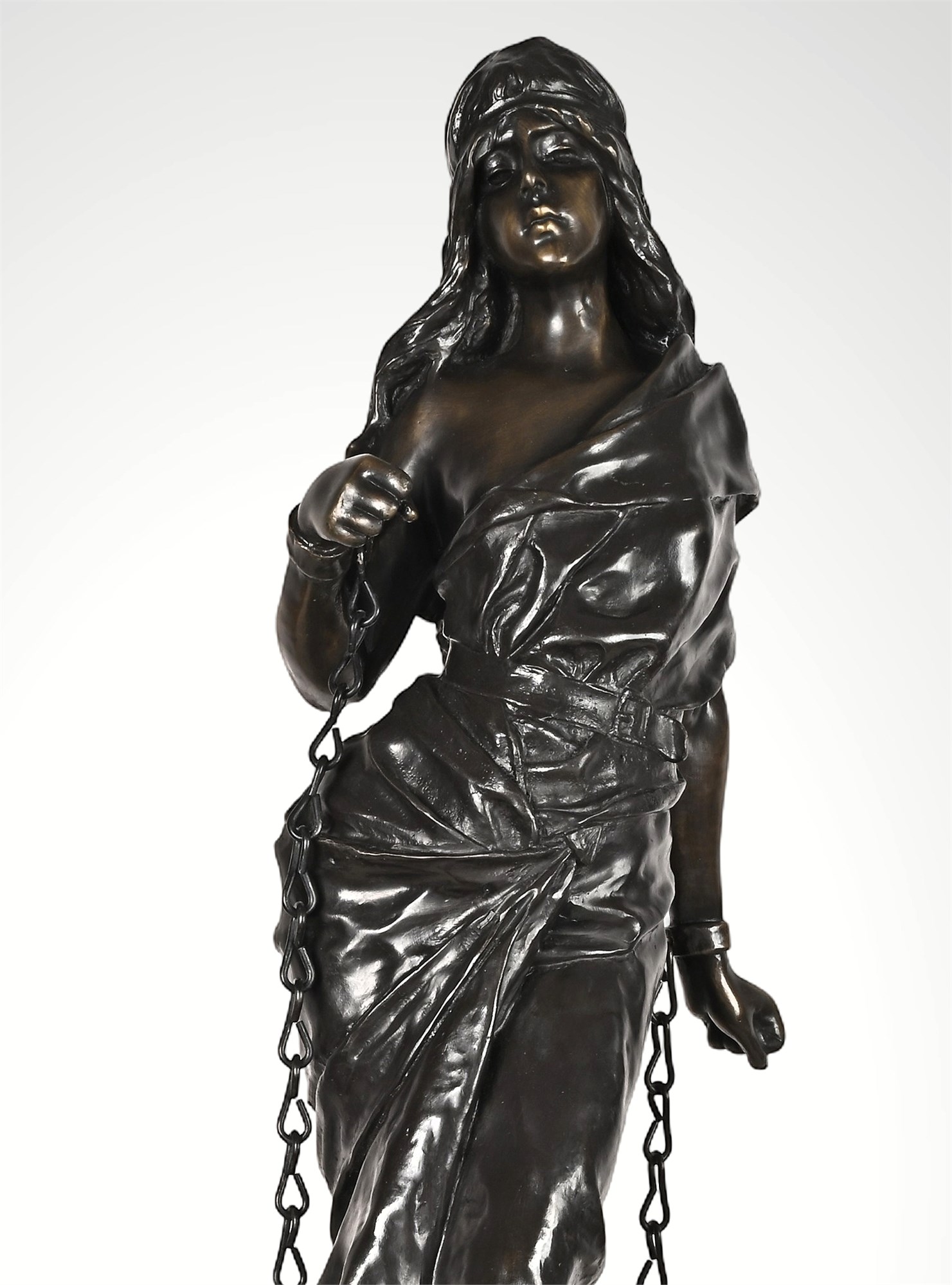
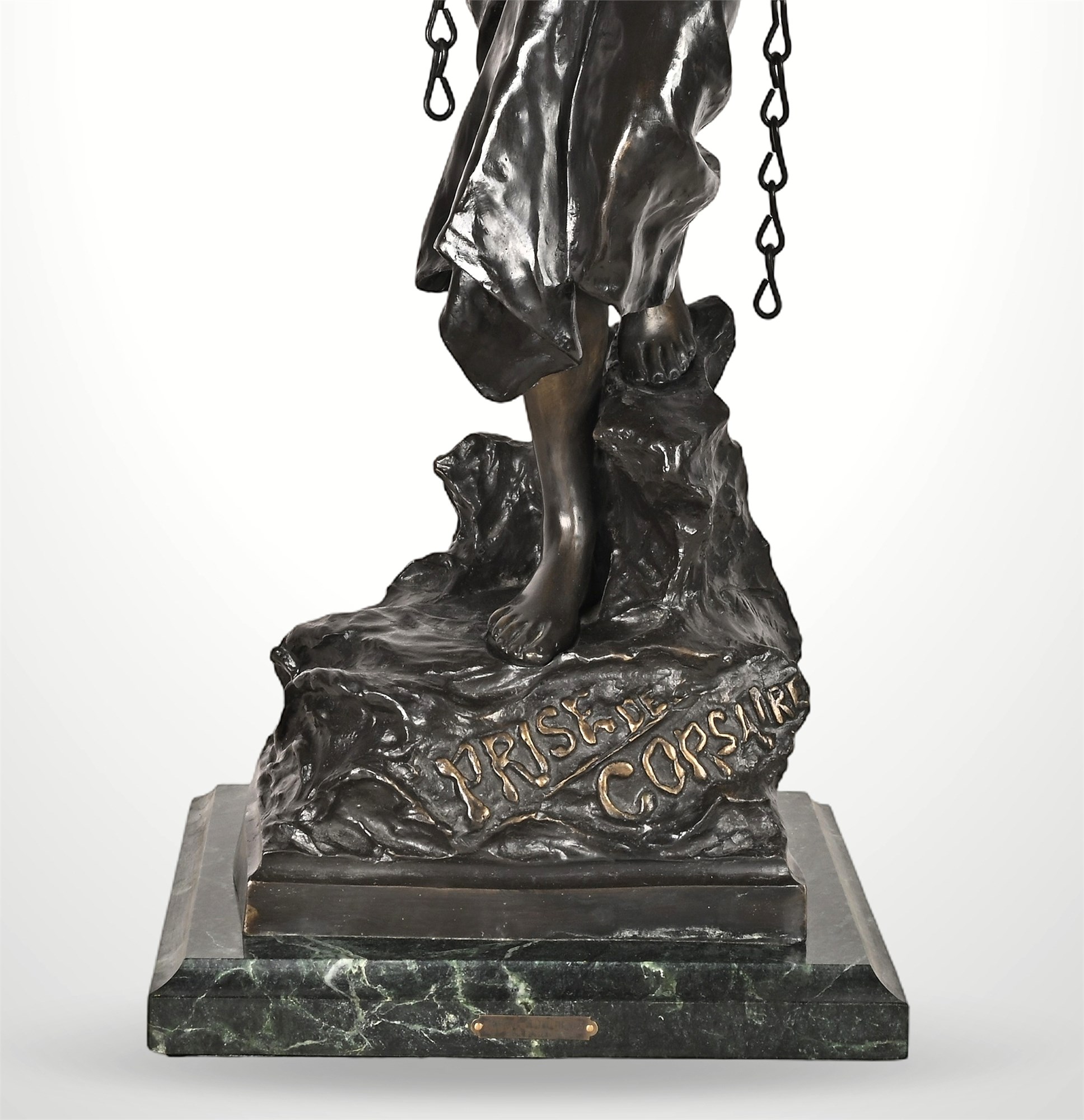
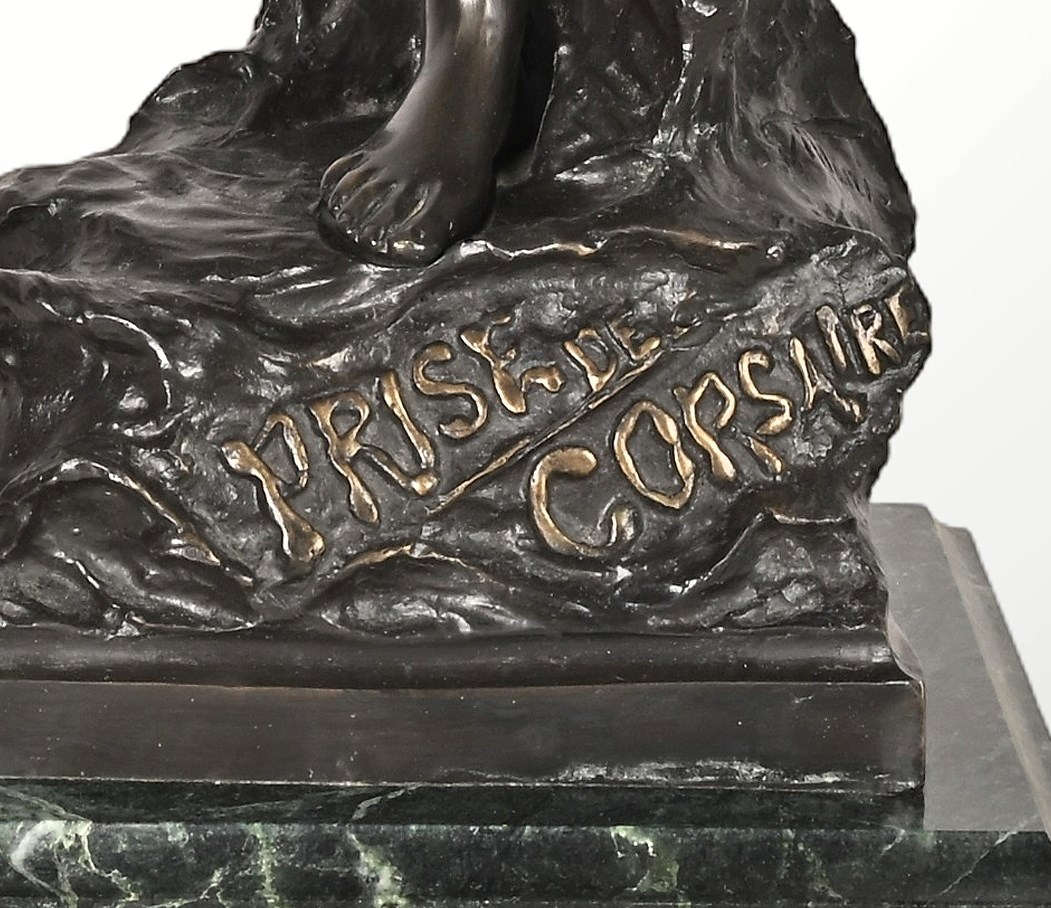
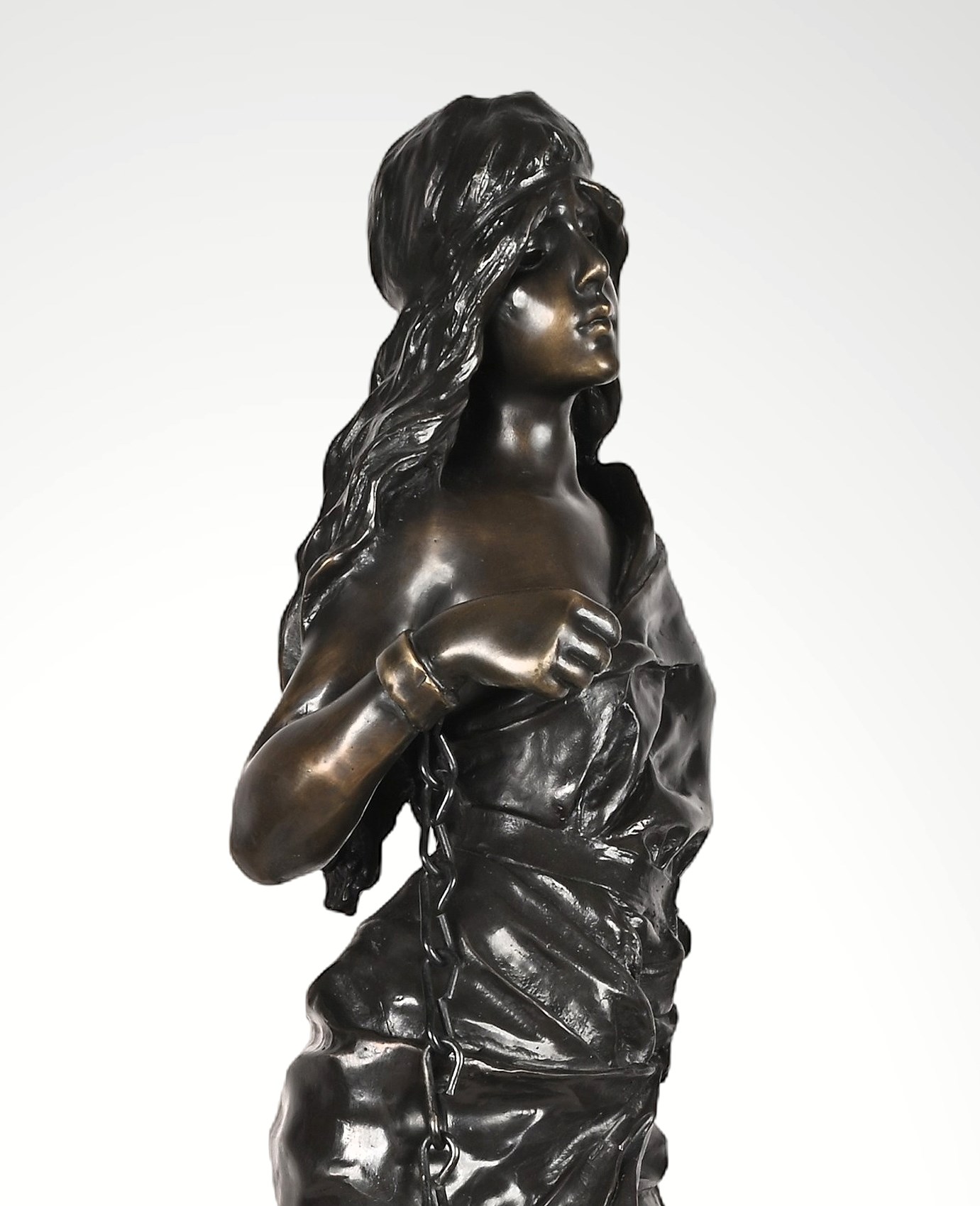
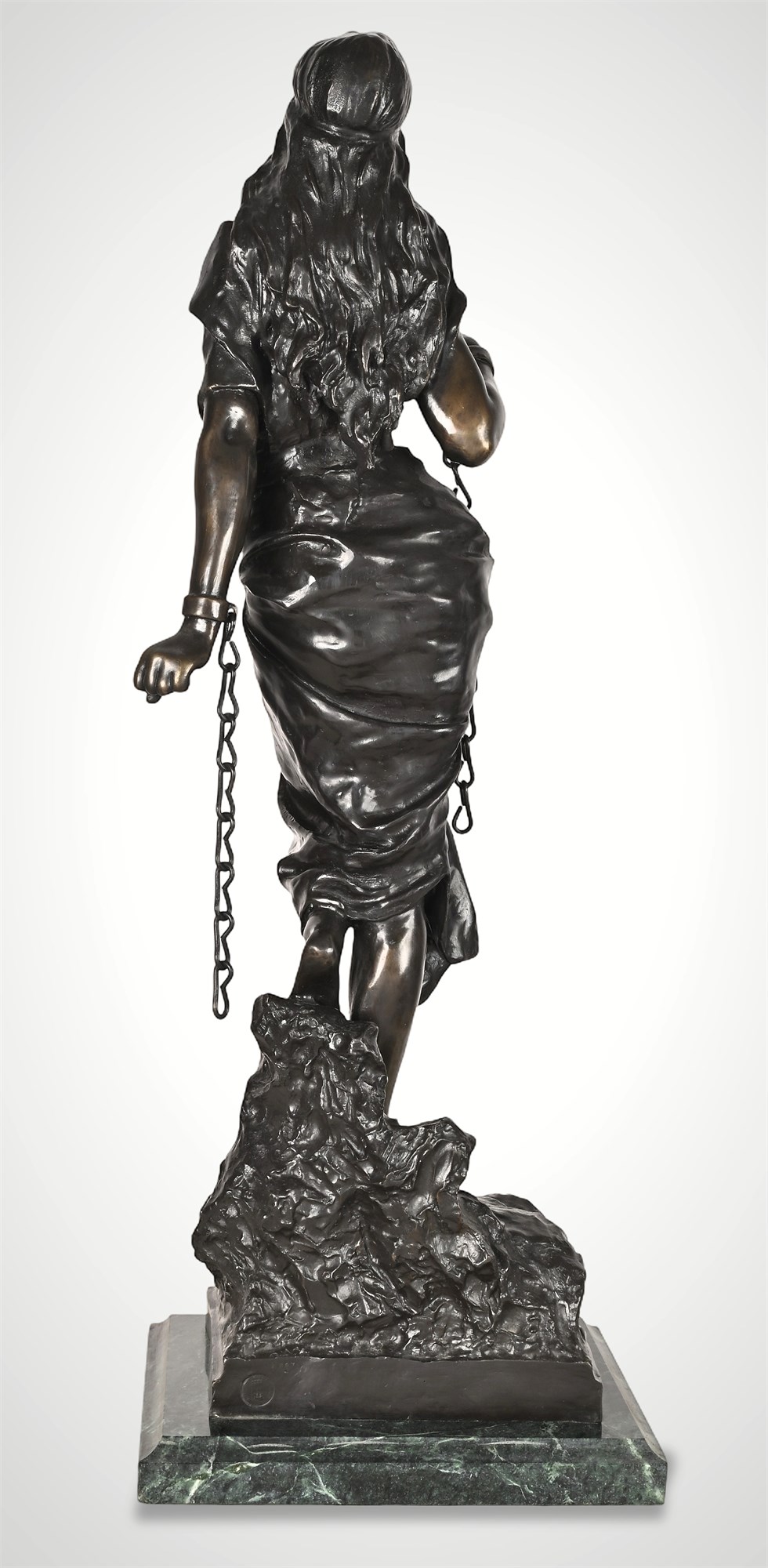
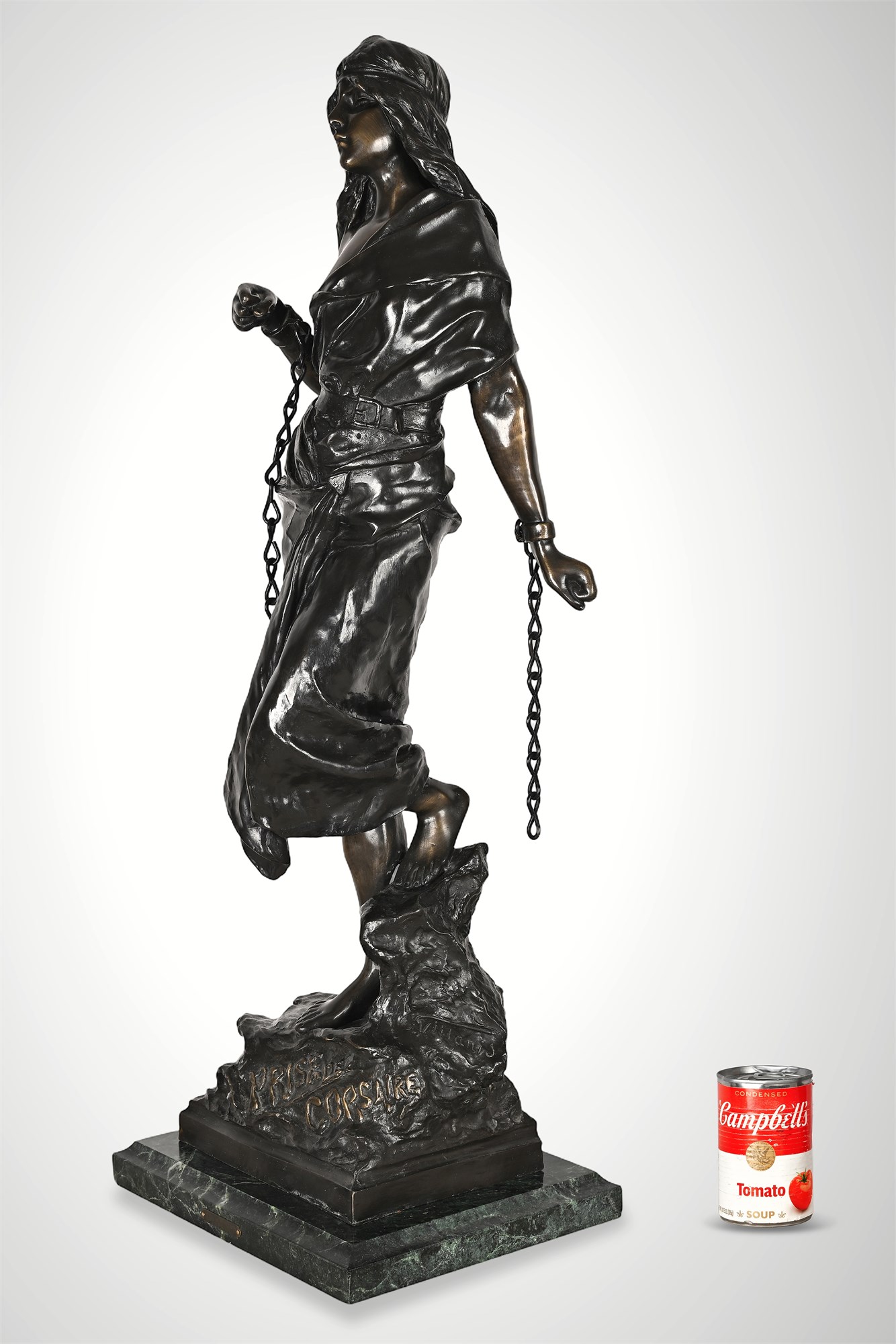
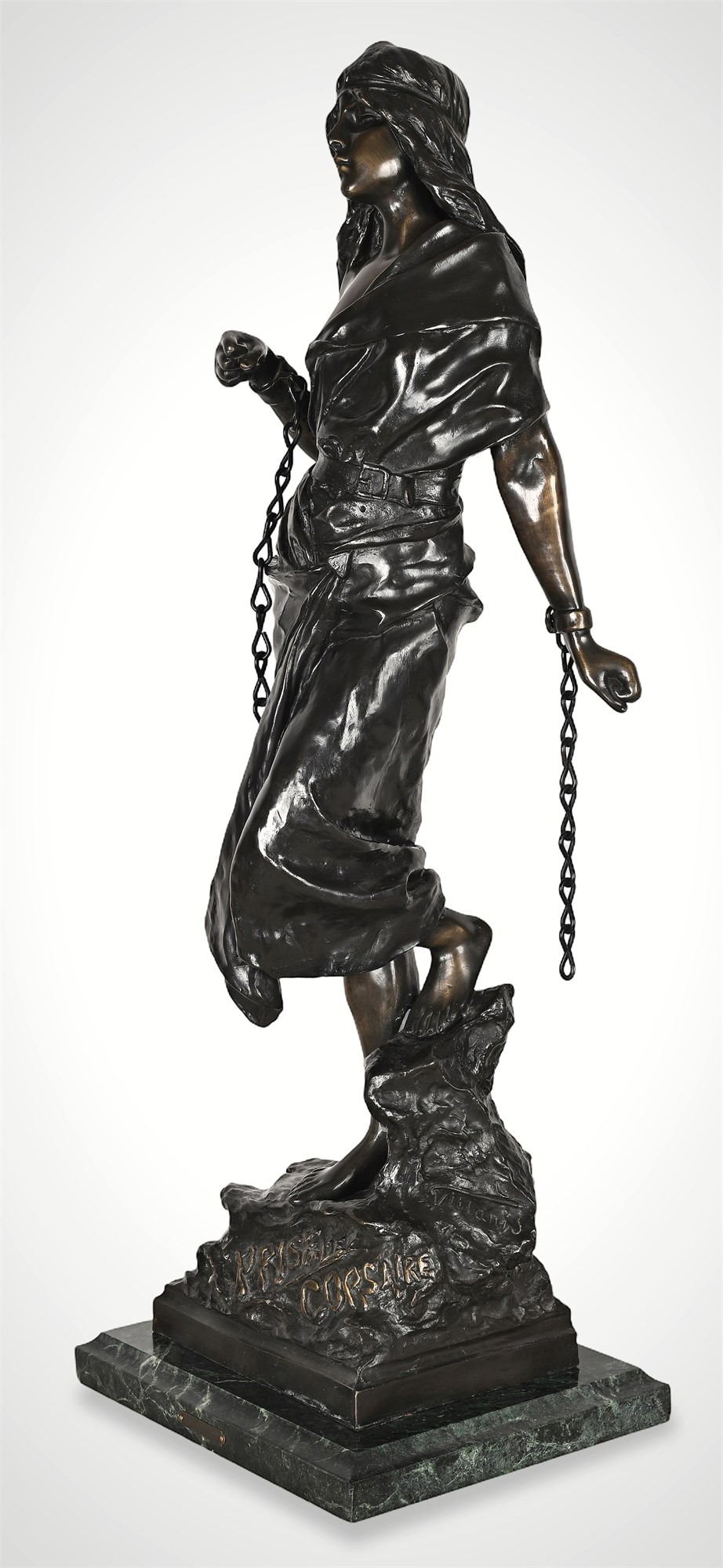
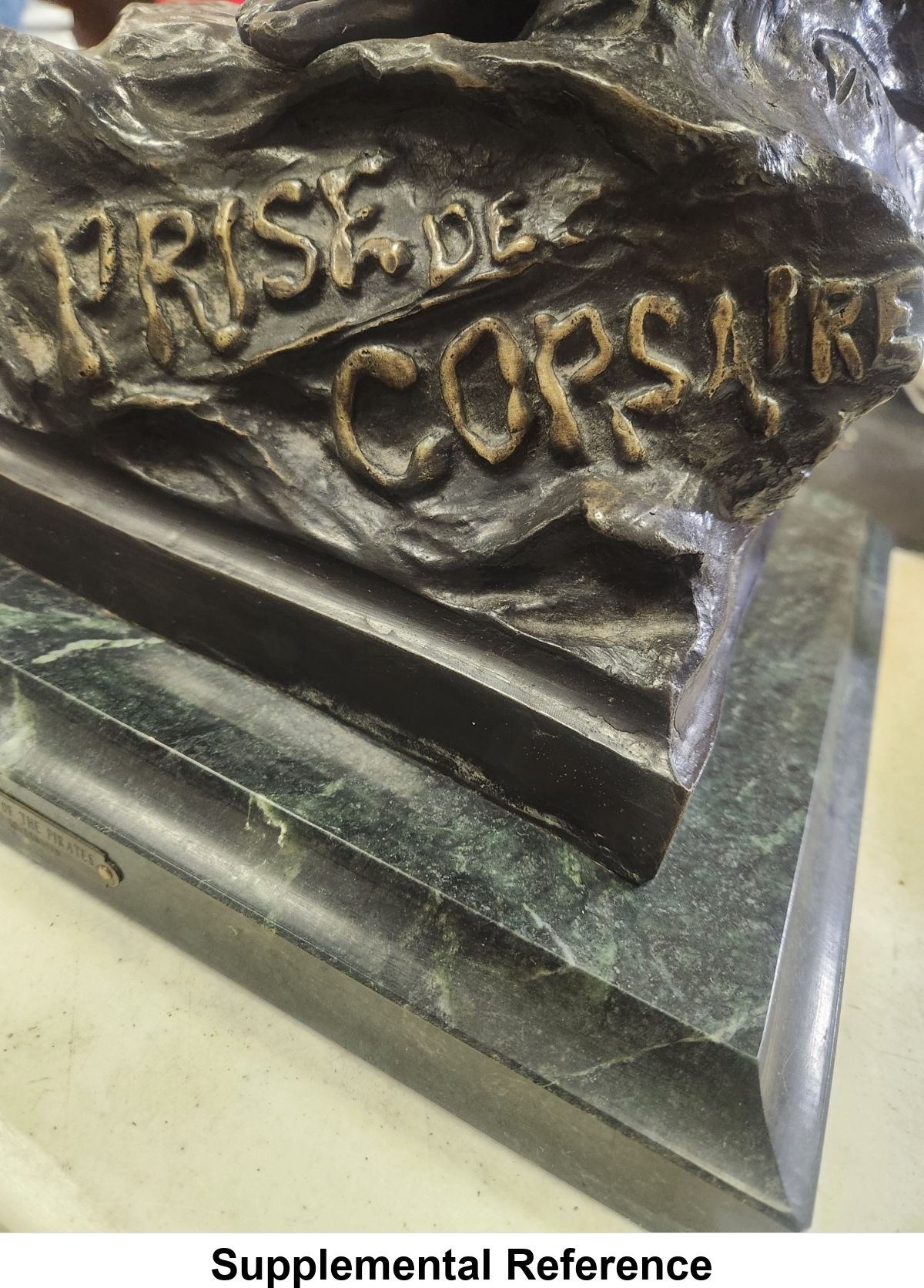
An exceptional and dramatic bronze sculpture titled “Prisoner of the Pirates (Prise de Corsaire)” by Auguste Villanis, cast by the renowned Société des Bronzes de Paris. This commanding full-figure composition depicts a captive young woman standing upon a naturalistic rocky base, her posture combining tension and grace. She steps forward with her wrists bound by original hanging chains, a powerful visual narrative central to the work’s emotional impact. Villanis renders her features with great sensitivity: a solemn downward gaze, elegantly modeled hair, and a slight forward lean that conveys both vulnerability and resilience.
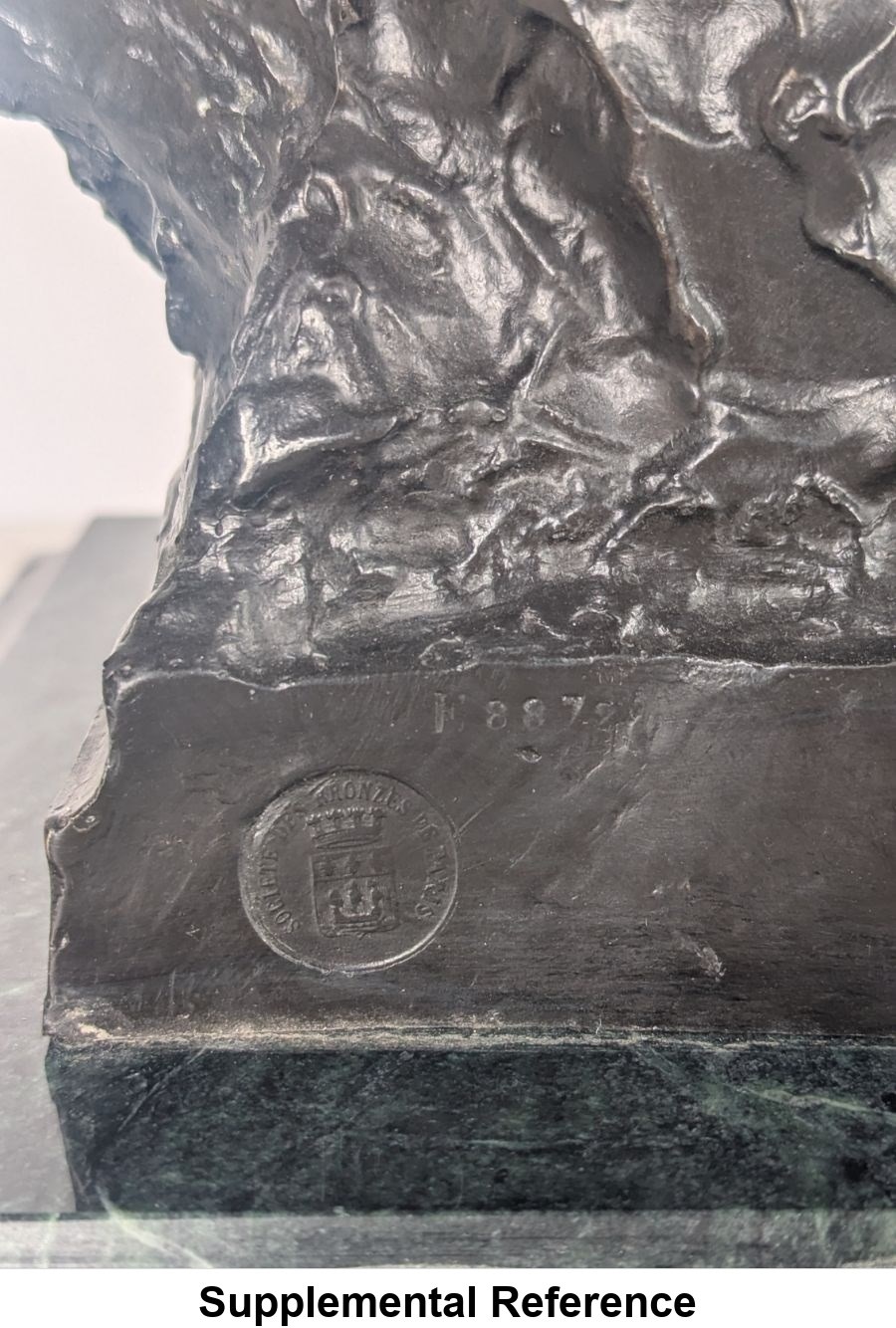
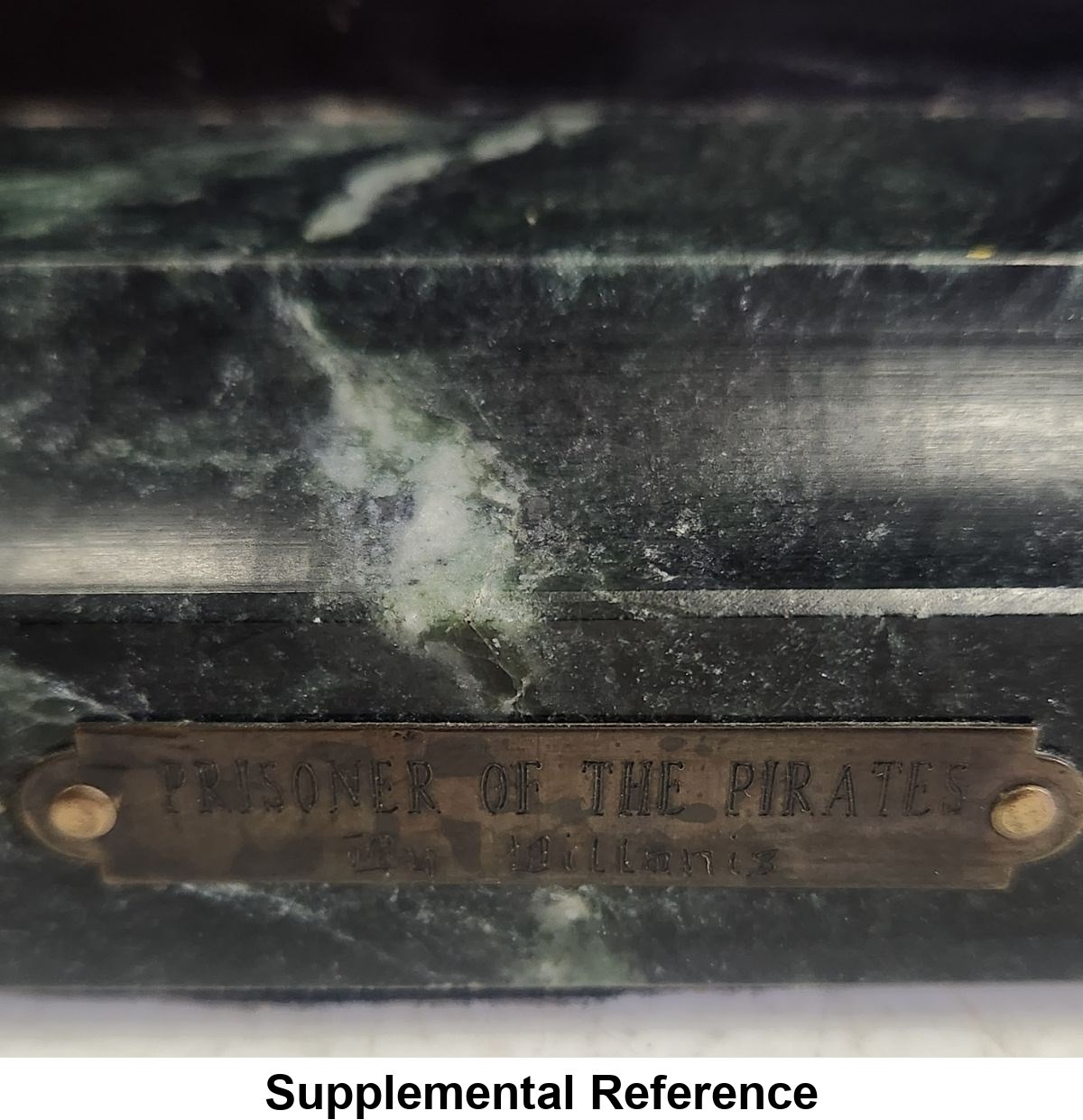
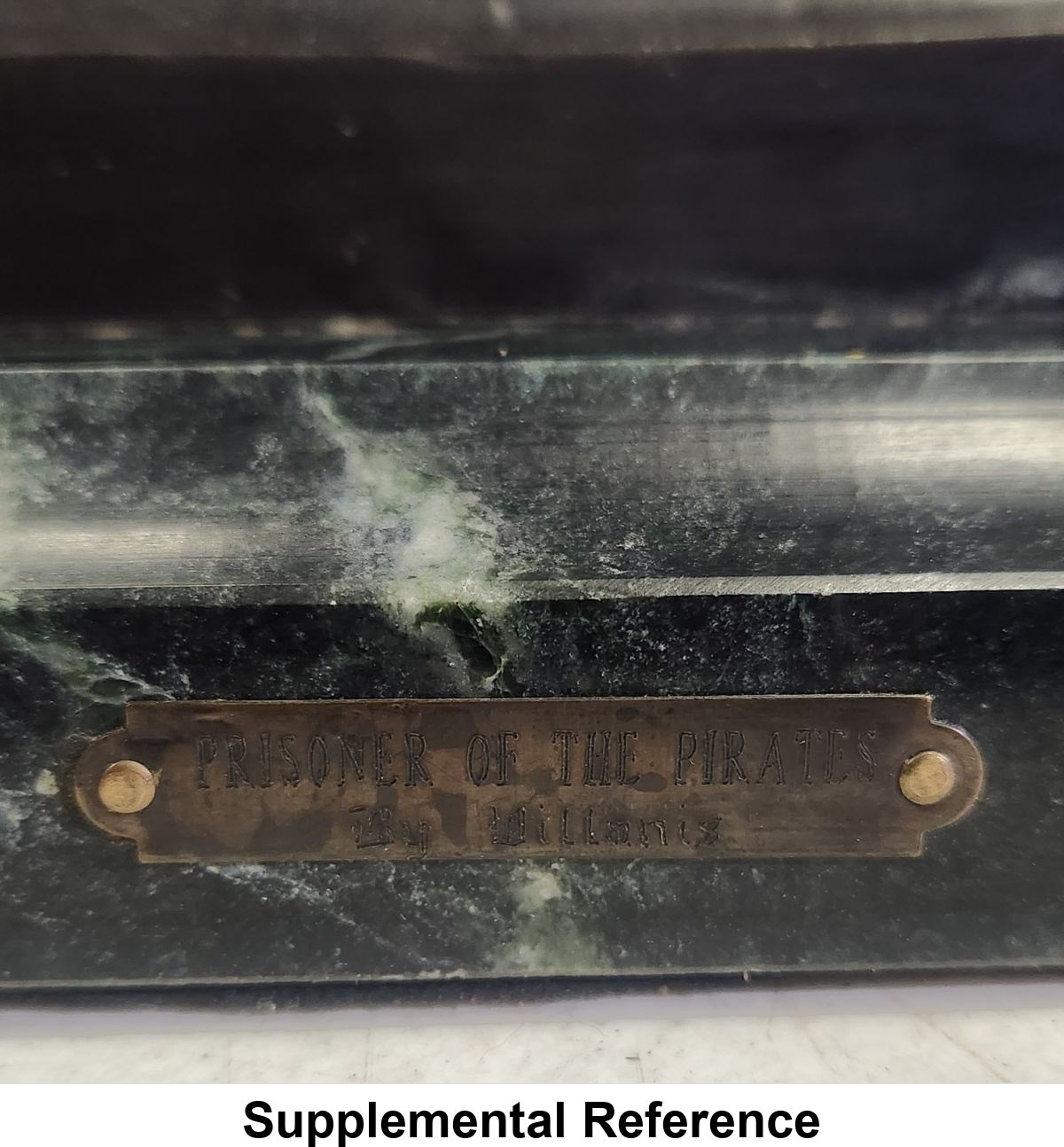
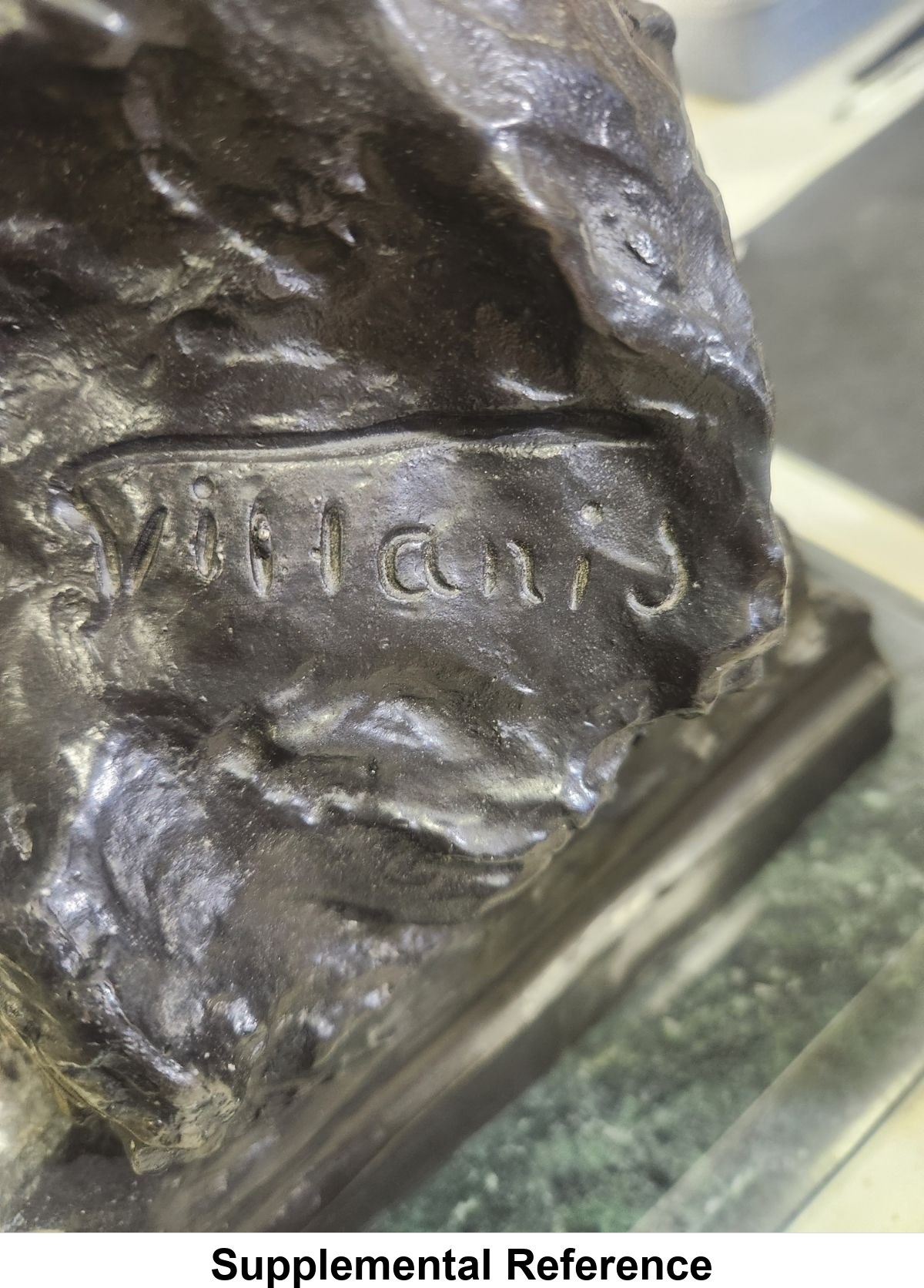
The artist’s incised signature appears on the base, accompanied by the foundry’s circular seal and stamped casting number E8872, confirming an authorized Parisian production. The bronze displays Villanis’ characteristic mastery of drapery, with sweeping diagonal folds that accentuate the figure’s movement and silhouette. Its rich, dark patina highlights the sculptor’s fine surface modeling, catching light across raised contours and subtle textures.
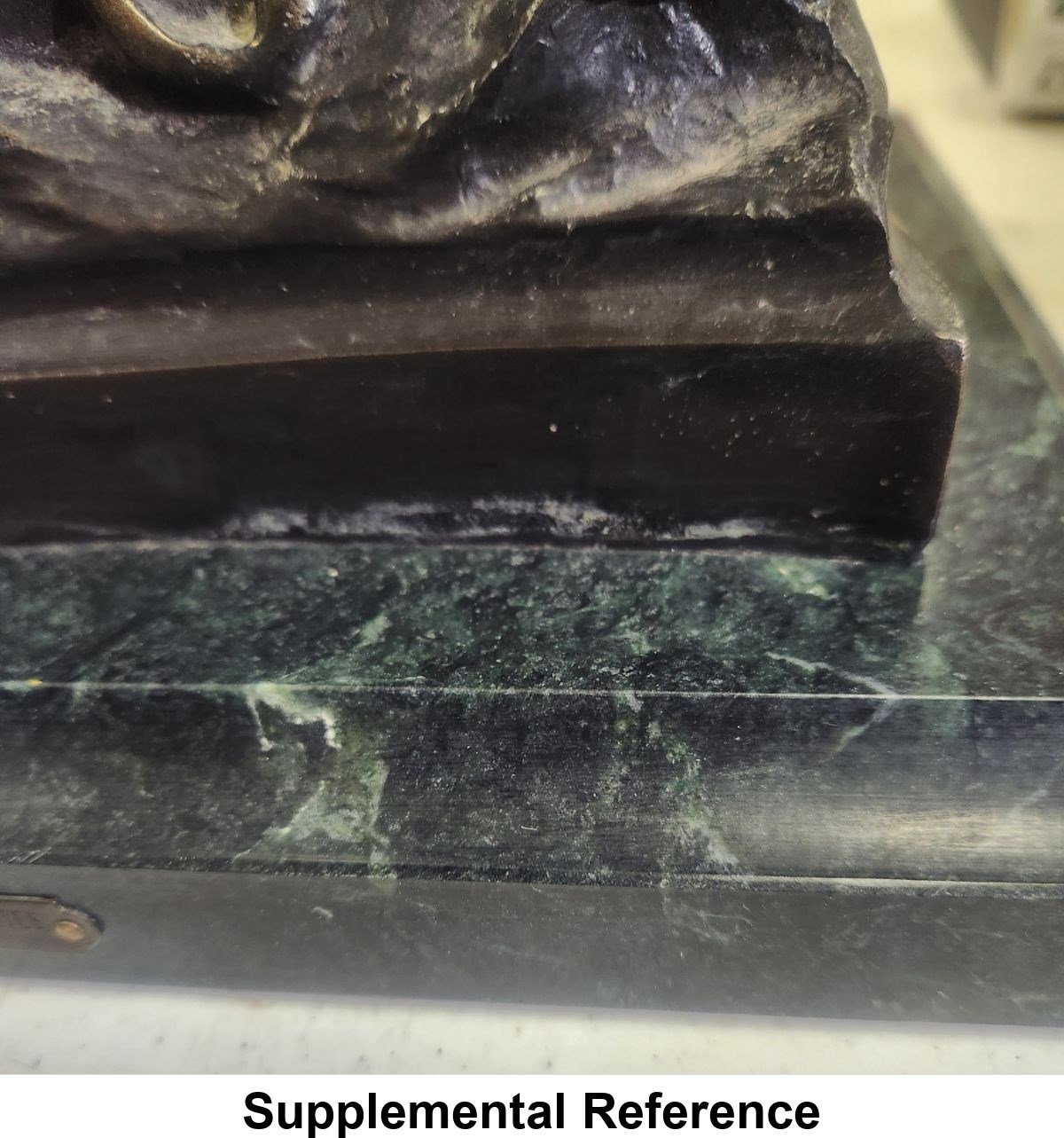
Mounted on its original green marble plinth, the sculpture stands an impressive 34 inches tall and weighs 55 lbs, giving it remarkable presence. Large-scale full-figure works by Villanis are significantly rarer than his busts and allegorical portraits, and this example represents one of his most theatrical and narratively charged creations. Its combination of size, foundry pedigree, original elements, and expressive composition makes it a standout acquisition for collectors of Belle Époque French bronzes and late-19th-century academic sculpture.
CONDITION
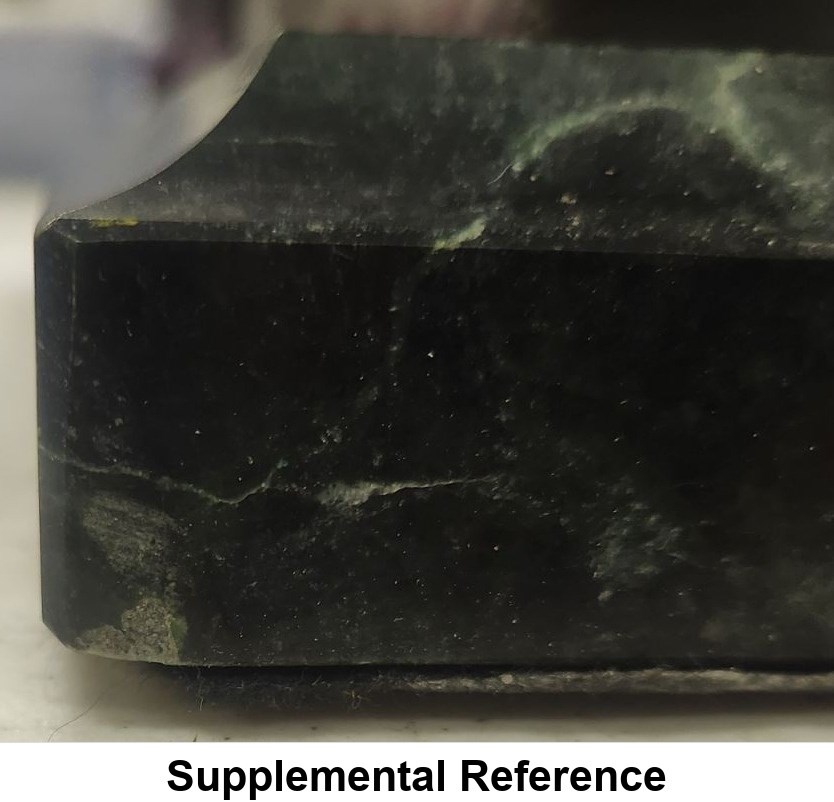
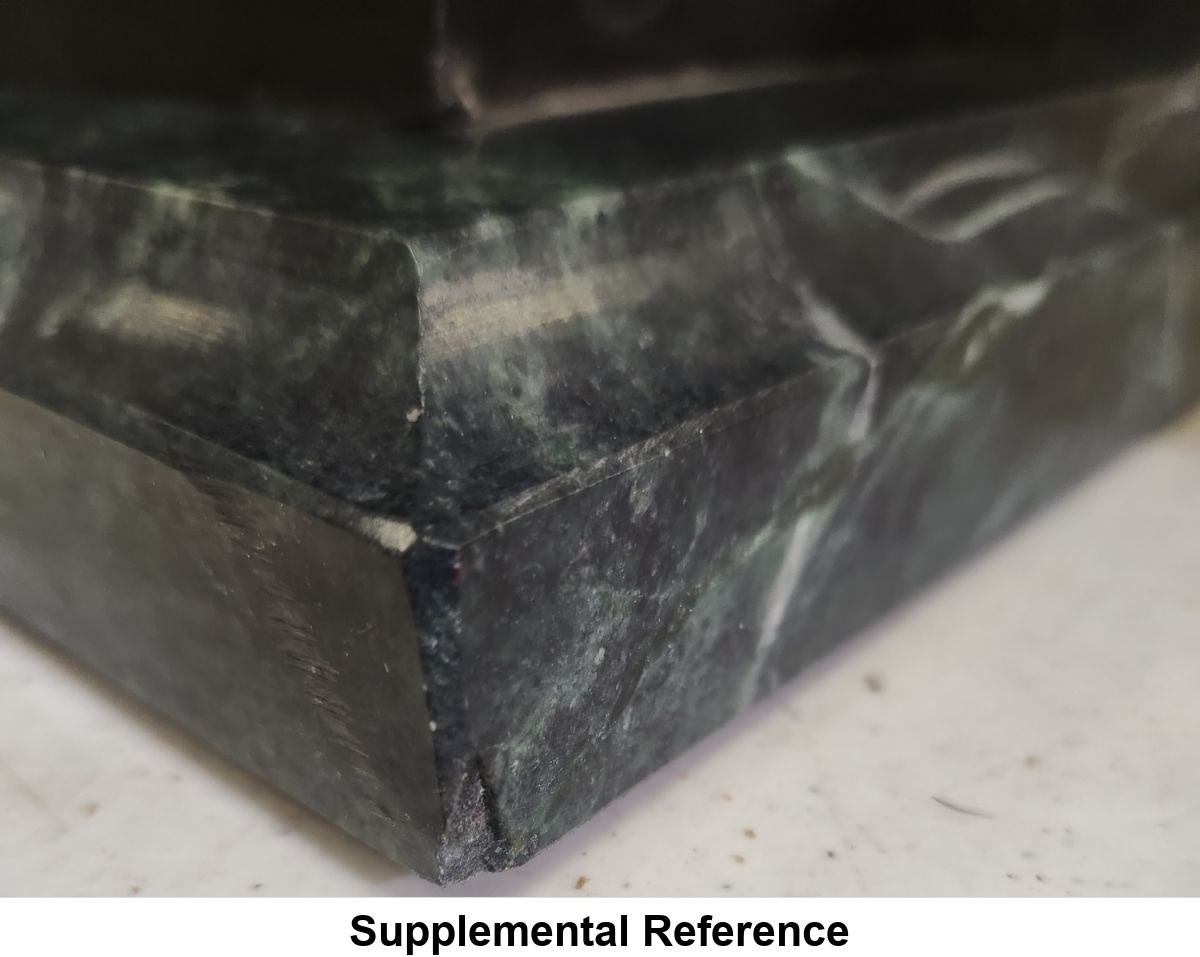
In very good condition overall, showing light surface wear to the bronze consistent with age and natural handling. The patina remains attractive and stable, with no areas of loss or discoloration. The chains are original and fully intact. The green marble base shows minor edge nicks typical of age but retains its form and structural integrity. All markings—including signature, foundry seal, and casting number E8872—are crisp and clearly legible. No structural issues or repairs observed.
DIMENSIONS
34" × 12" × 10"
Weight: 55 lbs
Soup for Scale in Photo
Auguste Villanis (1857–1914) — Artist Overview
Auguste Villanis was a prominent French sculptor of the late 19th and early 20th century, best known for his expressive female figures and finely modeled allegorical subjects. Born in Lyon in 1857, he trained formally at the Accademia di Belle Arti in Florence, where he developed the refined modeling, elegant drapery, and emotional expressiveness that would define his mature style.
After returning to France, Villanis lived and worked primarily in Paris, exhibiting regularly at the Salon des Artistes Français from the 1880s onward. His works were widely produced in bronze during his lifetime, often in cooperation with respected Parisian foundries such as Société des Bronzes de Paris, Susse Frères, and Moreau. Many of his sculptures exist in multiple authorized castings, typically sold through art houses and luxury retailers of the period.
Villanis’ oeuvre focuses heavily on romantic, mythological, and literary female subjects—figures such as “Dolorosa,” “Néréide,” “Sapho,” and “Faustine”—characterized by expressive poses and flowing garments. His sculptures were highly popular with collectors both in France and abroad, contributing to their broad distribution during the Belle Époque.
Today, Villanis is recognized as one of the signature sculptors of the Romantic / Symbolist bronze tradition, with works frequently appearing in fine art auctions. Large-scale bronzes, especially those retaining original patina, foundry stamps, and intact structural elements (such as chains), are particularly desirable.